×

Mexico🇲🇽 | best attractionsWhere to Find the 10 Best attractions in Mexico

Mexico’s attractions are a study in contrasts, shaped by sprawling deserts, dense jungles, colonial cities, and sun-drenched coastlines. For the backpacker or independent traveler, understanding these regional differences is crucial. The bustling streets of Mexico City offer a whirlwind of museums, street food, and nightlife, but navigating crowds and traffic demands patience and a sharp sense of direction. Meanwhile, the Yucatán Peninsula’s archaeological sites like Chichén Itzá draw hordes during peak season, pushing budgets and testing your tolerance for tourist traps. Up north, the Copper Canyon’s rugged terrain promises fewer crowds but requires more logistical planning and a readiness for rougher travel conditions. Choosing the right attraction in Mexico isn’t just about ticking off landmarks; it’s about matching your vibe, budget, and appetite for cultural immersion with the season and local realities. This balance shapes whether your trip feels like a chore or a genuine dive into Mexico’s layered soul.

By Johan Kruseman 🇳🇱 | Updated June 6, 2026
Explore the best festivals in Mexico

Why go?Why Travelers Love These Spots

Why These Attractions Matter


Mexico’s attractions carry a weight that goes beyond picturesque snapshots or Instagram-ready moments. Unlike many countries where tourist sites are neatly packaged for quick consumption, Mexico demands a bit more patience and curiosity. The payoff is a layered experience where history, culture, and geography collide in ways that feel raw and unfiltered. This is a place where ancient ruins don’t just sit behind velvet ropes but are often surrounded by the hum of local life, where colonial architecture shares space with vibrant street markets, and where natural wonders stretch from arid deserts to lush jungles. The trade-off here is clear: you won’t always find the polished, easy-access attractions typical of more tourist-centric countries, but you will find authenticity … read more 👉
Why These Attractions Matter


Mexico’s attractions carry a weight that goes beyond picturesque snapshots or Instagram-ready moments. Unlike many countries where tourist sites are neatly packaged for quick consumption, Mexico demands a bit more patience and curiosity. The payoff is a layered experience where history, culture, and geography collide in ways that feel raw and unfiltered. This is a place where ancient ruins don’t just sit behind velvet ropes but are often surrounded by the hum of local life, where colonial architecture shares space with vibrant street markets, and where natural wonders stretch from arid deserts to lush jungles. The trade-off here is clear: you won’t always find the polished, easy-access attractions typical of more tourist-centric countries, but you will find authenticity that rewards those willing to navigate uneven roads, language barriers, and crowds that swell unpredictably.


The country’s vast size and diverse climates mean that travel logistics can be a headache. Distances between key sites are often underestimated, and public transportation, while improving, can be a mixed bag—sometimes charmingly local, sometimes frustratingly slow. This makes Mexico less suitable for travelers who want to tick off a checklist with minimal fuss. Instead, it favors those who appreciate depth over breadth, who understand that a longer journey often leads to richer stories. The infrastructure around major attractions varies widely; some places are tourist-ready with clear signage and amenities, while others require a bit of grit and improvisation.


Culturally, Mexico’s attractions are steeped in centuries of indigenous and colonial history, layered with ongoing traditions that are very much alive. This makes the experience less about passive observation and more about engaging with a living culture—sometimes loud, sometimes chaotic, often surprising. The crowds can be intense, especially during holidays or peak seasons, which means timing and patience become part of the adventure. In short, Mexico’s attractions matter because they offer a complex, textured experience that challenges the typical tourist mindset and rewards those who dive beneath the surface.
Why These Made the Cut
The list of best attractions in Mexico is created based on cultural significance or entertainment value. If you feel a attraction is missing in this list, please let us know.

When to go?Timing Your Visit for the Best Experience

Seasonal Realities of Visiting Mexico’s Attractions


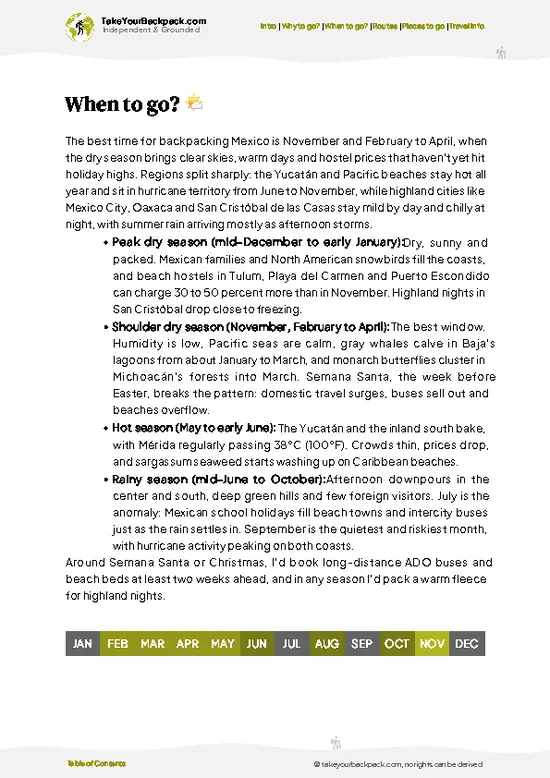
Mexico’s climate plays a starring role in shaping your experience, but it’s not as simple as “sunshine all year.” The country broadly swings between a dry season and a wet season, and understanding this rhythm is key to dodging the worst crowds and weather headaches.

The dry season, roughly spanning the cooler months, is when most travelers flock. It’s easy to see why: less rain means fewer muddy trails, clearer skies for ruins and vistas, and a break from the humidity that can turn sightseeing into a slog. But this convenience comes at a price. Expect higher costs and thicker crowds, especially around holidays and school breaks. If you’re chasing Instagram-perfect shots without elbowing through throngs, this is the time to brace yourself … read more 👉

Seasonal Realities of Visiting Mexico’s Attractions


Mexico’s climate plays a starring role in shaping your experience, but it’s not as simple as “sunshine all year.” The country broadly swings between a dry season and a wet season, and understanding this rhythm is key to dodging the worst crowds and weather headaches.

The dry season, roughly spanning the cooler months, is when most travelers flock. It’s easy to see why: less rain means fewer muddy trails, clearer skies for ruins and vistas, and a break from the humidity that can turn sightseeing into a slog. But this convenience comes at a price. Expect higher costs and thicker crowds, especially around holidays and school breaks. If you’re chasing Instagram-perfect shots without elbowing through throngs, this is the time to brace yourself or book well in advance.

Then there’s the wet season, which tends to stretch through the warmer months. Yes, afternoon downpours are frequent and sometimes dramatic, but they rarely last all day. The upside? Attractions are quieter, prices dip, and the landscape bursts into lush green life that the dry season can’t match. Just be prepared for occasional disruptions—some outdoor activities might get rained out, and dirt roads can turn into slip-and-slide challenges. It’s a trade-off between solitude and spontaneity.

Shoulder seasons, those transitional windows between wet and dry, offer a middle ground. Crowds thin out, and the weather is often a mix of sun and showers. Costs tend to be more reasonable, but the unpredictability means packing for both heat and rain. If you’re flexible and can handle a bit of weather roulette, these periods can yield a more authentic experience without the full tourist stampede.

Ultimately, timing your visit means balancing what you’re willing to tolerate: the buzz and premium of peak dry months or the quieter, greener, but wetter alternatives. Mexico’s attractions don’t disappear in the rain—they just ask you to adjust your expectations and maybe your shoes.

attraction hoppingTips for Visiting Multiple Destinations

How to Combine the Best Attractions of Mexico Into One Trip


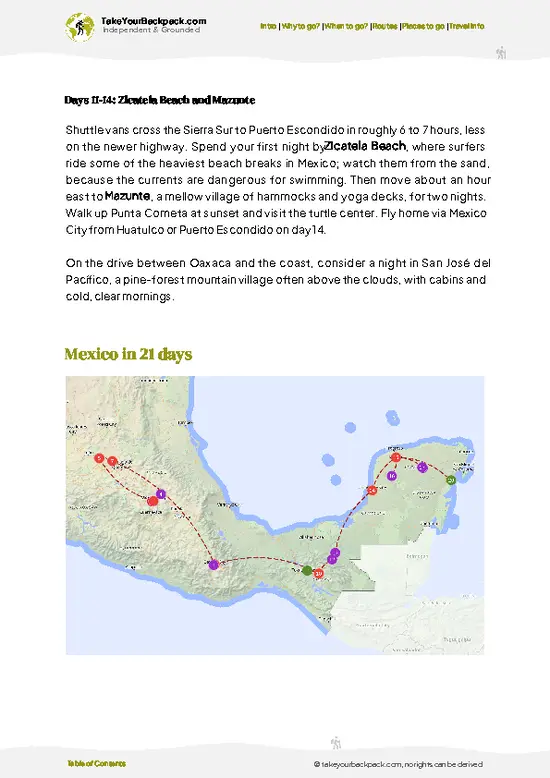
Start by thinking in regions rather than random dots on a map. Mexico’s vastness demands a logical flow—jumping from the Yucatán Peninsula to Baja California and back to Mexico City in a week is a recipe for exhaustion and wasted travel days. Group your stops into clusters: the cultural heartland around Mexico City, the beach and ruins combo in the Yucatán, and the Pacific coast’s laid-back vibes. This way, you minimize transit time and maximize actual exploring.

Expect to spend at least two to three days per major stop if you want to avoid feeling like you’re just ticking boxes. Archaeological sites, colonial towns, and natural wonders each deserve their own pace. Rushing through ruins in the morning and beaches in the afternoon … read more 👉

How to Combine the Best Attractions of Mexico Into One Trip


Start by thinking in regions rather than random dots on a map. Mexico’s vastness demands a logical flow—jumping from the Yucatán Peninsula to Baja California and back to Mexico City in a week is a recipe for exhaustion and wasted travel days. Group your stops into clusters: the cultural heartland around Mexico City, the beach and ruins combo in the Yucatán, and the Pacific coast’s laid-back vibes. This way, you minimize transit time and maximize actual exploring.

Expect to spend at least two to three days per major stop if you want to avoid feeling like you’re just ticking boxes. Archaeological sites, colonial towns, and natural wonders each deserve their own pace. Rushing through ruins in the morning and beaches in the afternoon sounds tempting but leaves little room for soaking in the atmosphere or unexpected detours. Real travel magic happens when you slow down enough to notice the small details—like the way light hits a centuries-old church or the smell of fresh tortillas at a local market.

A common trap is trying to cram too many highlights into a short trip, which leads to a checklist mentality and travel fatigue. Another is underestimating distances—Mexico’s highways can be unpredictable, and public transport isn’t always punctual. Factor in buffer time and be ready to adjust plans on the fly.

Balancing speed and depth is the ultimate trade-off. Zoom through to cover more ground but risk missing the soul of each place, or linger longer and see fewer spots but with richer experiences. Budget plays a role too: flying between regions saves time but adds cost, while buses are cheaper but slower. Comfort versus adventure is another axis—overnight buses might save hotel expenses but can leave you drained.

Ultimately, the best approach is strategic flexibility: plan a rough route with realistic time blocks, then let the journey breathe. That’s where the real Mexico reveals itself, beyond the glossy Instagram shots and tourist crowds.

The ListMust-Visit attractions in Mexico

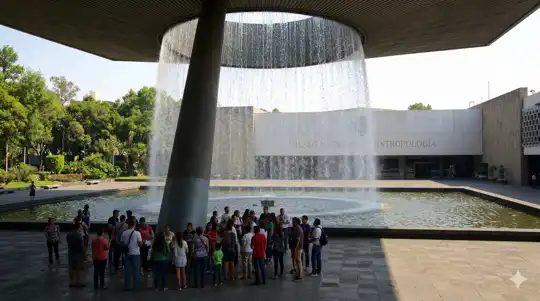
1 National Museum of Anthropology

Aztec Sun Stone, Maya relics, monumental halls

Survey Mexico’s pre-Hispanic civilizations through iconic artifacts and detailed dioramas in an expansive, purpose-built museum.

Mexico - National Museum of Anthropology

2 Frida Kahlo Museum

Blue House, artist’s studio, personal artifacts

Step into the intimate spaces where Frida Kahlo lived and worked, surrounded by her art, collections, and daily life objects.

mexico-attraction-frida-kahlo-museum
© Google |

3 Palacio de Bellas Artes

Art nouveau dome, murals, performance hall

Attend concerts or view murals by renowned artists in a building that blends architectural styles and cultural programming.

mexico-attraction-palacio-de-bellas-artes
© Google |

4 Museo Nacional de Historia

Chapultepec Castle, imperial rooms, panoramic terraces

Walk through Mexico’s political and social history, from independence to revolution, inside a hilltop castle with city views.

mexico-attraction-museo-nacional-de-historia
© Google |

5 Museo Soumaya

Silver façade, Rodin sculptures, private collection

Browse an eclectic mix of European and Mexican art, including rare pieces, in a strikingly modern architectural landmark.

6 Museo Maya de Cancún

Maya artifacts, coastal ruins, glass-walled galleries

Observe ancient objects and explore nearby archaeological sites, all within a modern space designed for context and clarity.

7 Museo de las Momias de Guanajuato

Naturally mummified bodies, local legends, underground vaults

View preserved remains and learn about burial practices and the unique conditions that created Guanajuato’s famous mummies.

8 Museo Tamayo Arte Contemporáneo

Contemporary installations, Tamayo’s works, forest setting

Engage with international contemporary art and the legacy of Rufino Tamayo in a museum surrounded by Chapultepec Park.

9 Museo de las Culturas de Oaxaca

Zapotec treasures, colonial monastery, ethnographic displays

Experience Oaxaca’s cultural diversity with archaeological finds, indigenous textiles, and regional artifacts in a historic setting.

mexico-attraction-museo-de-las-culturas-de-oaxaca
© Google |

10 Museo Amparo

Colonial mansion, pre-Hispanic art, rooftop views

Browse layered exhibits spanning centuries, from ancient ceramics to contemporary installations, inside a restored Puebla landmark.

11 Museo Universitario Arte Contemporáneo

Experimental art, university campus, large-scale projects

Experience cutting-edge exhibitions and ambitious installations in a space dedicated to new artistic practices.

12 Museo Nacional de Arte

Neoclassical palace, Mexican masters, grand staircases

Appreciate centuries of Mexican painting and sculpture in a landmark building with impressive interiors and curated collections.

13 Museo de Arte Moderno

20th-century paintings, sculpture gardens, domed galleries

Encounter Mexico’s modern artistic movements through curated works and outdoor pieces in a distinctive architectural setting.

14 Museo de la Ciudad de México

Urban history, temporary exhibits, former palace

Trace the evolution of Mexico City through artifacts, maps, and changing displays inside a centuries-old civic building.

15 Museo de la Revolución Mexicana

Revolutionary memorabilia, period rooms, political posters

Examine the social and political changes of the Mexican Revolution through personal effects, documents, and recreated environments.

16 Museo de la Cultura Maya

Maya cosmology, stelae replicas, interactive displays

Learn about Maya beliefs, daily life, and achievements through immersive exhibits and reconstructed monuments.

17 Museo Iconográfico del Quijote

Don Quixote art, literary memorabilia, themed galleries

Survey interpretations of Cervantes’ character through paintings, sculptures, and rare editions in a dedicated museum.

18 Museo de la Estampa

Printmaking, graphic arts, limited edition works

Discover Mexico’s print traditions and contemporary graphic art through rotating exhibitions and specialized collections.

19 Templo Mayor Museum

Aztec ruins, ceremonial offerings, city center excavation

Explore the remains of the main Aztec temple and view artifacts unearthed from the heart of ancient Tenochtitlan.

20 Parador Turístico Gratuito Río Puyacatengo

River swimming, picnic areas, forested trails

Relax by clear waters, enjoy shaded walks, and use basic facilities at this free riverside stop popular with locals.

Think you know Mexico?

Prove you’re a true local — uncover 10 lesser-known attractions in Mexico that locals tend to keep to themselves.
Loading the map 🌍

Expert viewInsights from Locals and Experts

Expert Commentary


Mexico’s attractions come with a built-in paradox: you want to see as much as possible, but the country’s sheer scale and diversity demand a ruthless sense of prioritization. Trying to cram in every famous site is a fast track to exhaustion and disappointment. Instead, aim for a handful—three to five major attractions is a sweet spot for most travelers. This allows you to savor each experience without feeling like you’re sprinting through a checklist.

Budget-wise, Mexico is famously affordable, but that’s a bit of a myth if you chase the “Instagram version” of travel. Entrance fees to major sites can be surprisingly steep, especially for foreigners, and guided tours or transportation add up quickly. Factor in the cost of getting between regions—distances are vast, and infrastructure … read more 👉

Expert Commentary


Mexico’s attractions come with a built-in paradox: you want to see as much as possible, but the country’s sheer scale and diversity demand a ruthless sense of prioritization. Trying to cram in every famous site is a fast track to exhaustion and disappointment. Instead, aim for a handful—three to five major attractions is a sweet spot for most travelers. This allows you to savor each experience without feeling like you’re sprinting through a checklist.

Budget-wise, Mexico is famously affordable, but that’s a bit of a myth if you chase the “Instagram version” of travel. Entrance fees to major sites can be surprisingly steep, especially for foreigners, and guided tours or transportation add up quickly. Factor in the cost of getting between regions—distances are vast, and infrastructure varies wildly. You might spend a few hours on a bus that feels like a test of your patience, or shell out for a domestic flight to save time. The trade-off is clear: cheaper ground travel means longer days and less flexibility; flying costs more but buys you precious hours.

Time is another currency you’ll spend fast here. Attractions aren’t just about the site itself, but the journey and the local culture surrounding it. Some places demand a full day or more to appreciate properly, especially if you want to avoid the crowds or explore nearby villages and markets. Rushing through ruins or museums is a disservice to their history and your own curiosity. Plan for at least half a day per major attraction, and don’t underestimate the time needed for travel logistics.

Regional variation is a defining feature. The north and south of Mexico offer vastly different vibes, climates, and cultural experiences. Infrastructure in tourist-heavy areas tends to be better, but that often means more crowds and higher prices. Venture off the beaten path, and you’ll find fewer tourists and more authentic encounters, but also less reliable transport and fewer English speakers. This is where your patience and flexibility pay off. It’s not just about seeing a place, but about engaging with its rhythms and people.

Safety is a practical concern that deserves a straightforward mention. Mexico’s reputation varies widely depending on where you go. Stick to well-trodden tourist areas and use common sense—avoid traveling at night on isolated roads, keep valuables discreet, and trust your instincts. Local advice is invaluable here; a friendly shopkeeper or hotel staff member can steer you clear of trouble spots. Remember, millions of travelers visit Mexico safely every year, but a little vigilance goes a long way.

Cultural respect is another layer to consider. Mexico’s rich traditions and indigenous communities are not just backdrops for your photos. Approach them with curiosity and humility. Learn a few words of Spanish, ask permission before photographing people, and support local artisans rather than buying mass-produced souvenirs. These small gestures deepen your experience and help sustain the communities that make Mexico’s attractions truly special.

One of the quirks of traveling in Mexico is the crowds. Popular sites can feel like a theme park on steroids, especially during holidays or weekends. Early mornings or late afternoons are your best bet to dodge the throngs. If you’re lucky, you’ll catch a moment of quiet where the place reveals its soul beyond the selfie sticks and tour groups. Sometimes, the real magic is in those fleeting, unscripted moments when you’re the only one left wandering ancient stones or deserted plazas.

Infrastructure can be a mixed bag. Some attractions have well-maintained facilities, clear signage, and helpful guides. Others are more rugged, requiring a bit of grit and improvisation. This is where your gear and mindset matter. Comfortable shoes, water, and a willingness to embrace the unexpected will serve you better than a rigid itinerary. The reward? A sense of discovery that no polished brochure can replicate.

Finally, the local food scene around attractions is often overlooked but essential. Street vendors and small eateries offer authentic flavors that are part of the cultural fabric. Don’t be shy about trying regional specialties, but also be mindful of hygiene and your own tolerance. Eating well and safely fuels your adventure and connects you to the place in a way that sightseeing alone can’t.

In short, the best attractions in Mexico are not just about ticking off landmarks. They’re about balancing ambition with patience, cost with value, and crowds with quiet moments. You’ll come away with more than photos—you’ll have stories shaped by the country’s complexity and your own willingness to dive in, warts and all. That’s the real magic behind the myth.

✈️ The backpacker research shortcutMexico Travel Guide

An offline-friendly backpacking guide with optimized travel routes, ranked highlights, transport advice, and the best areas to stay.
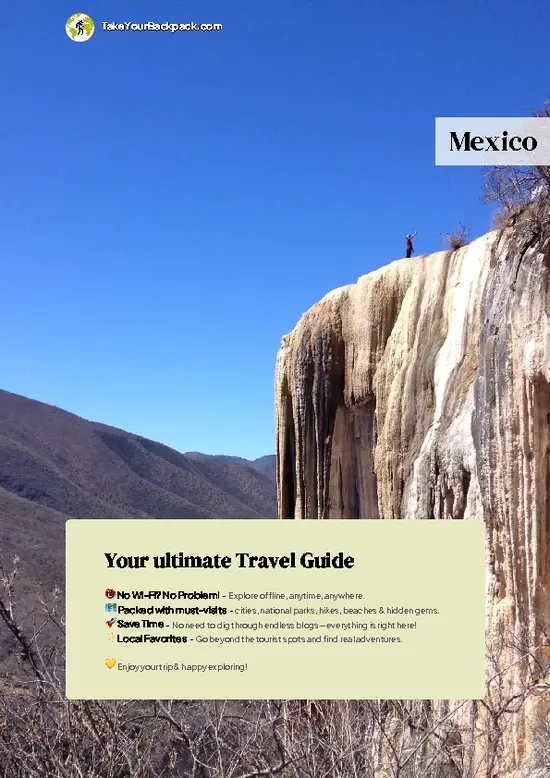
example page 0 from our offline Travel Guide for Mexico
example page 1 from our offline Travel Guide for Mexico
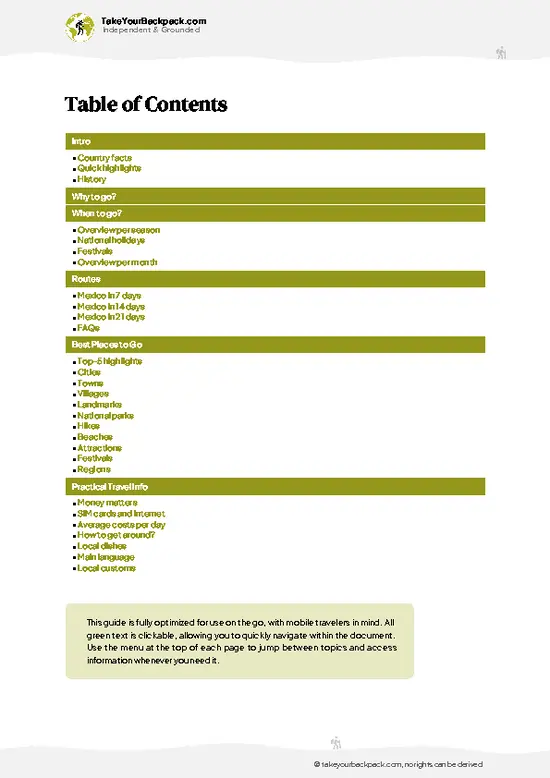
example page 2 from our offline Travel Guide for Mexico
example page 3 from our offline Travel Guide for Mexico
example page 4 from our offline Travel Guide for Mexico
example page 5 from our offline Travel Guide for Mexico
example page 6 from our offline Travel Guide for Mexico
example page 7 from our offline Travel Guide for Mexico
The digital guide (532 pages) contains:
147 highlights, ranked by travel appeal
Optimized 7, 14 & 21-day travel routes
Cities, national parks, landmarks, beaches
How to get around
Offline-friendly for travel without Wi-Fi
👉 Click to see all 30+ guide features

📅 Plan smarter in minutes, not weeks
Month by month travel advice
Festivals & national holidays
Budget expectations

🗺️ Go to the right places, skip the overrated ones
Honest pros & cons of destinations
Top hikes, parks & viewpoints
Lesser-known places most travelers miss
Clear “worth it vs skip it” guidance

🛏️ Travel smoothly without rookie mistakes
Best areas to stay
Transport systems explained simply
Common scams & safety advice
SIM cards, money & practical tips

🌍 Understand the country, not just visit it
Culture & traditions
52 Essential phrases & customs
Festivals worth planning around
Traveler-friendly historical context
Insights that make places more meaningful

📱 Built for real travel conditions
Fully downloadable PDF
Works completely offline
Optimized for phone use
Useful in remote areas & buses
Everything in one place
Save weeks of stressful planning
Get instant access to your full guide. 30‑day money-back guarantee.


By proceeding you agree to our terms.
Sent to your inbox immediately after payment • 100% Secure Checkout
Best Backpacking Travel Advisor 2025 tourism awardBest Backpacking
Travel Advisor
2025
What others say about Take Your Backpack Guides:
⭐⭐⭐⭐⭐
Fantastic, amazing amount of information!
⭐⭐⭐⭐⭐
My goodness this is amazing, it's what I've been looking for hats off too you!
⭐⭐⭐⭐⭐
I think this is absolutely BRILLIANT
⭐⭐⭐⭐
Very complete and informative. It's still missing places, but I gotta to commend you
⭐⭐⭐⭐⭐
This is truly amazing, thank you, can't wait to explore it with my kids!
⭐⭐⭐⭐⭐
Awesome resource, thank you!
⭐⭐⭐⭐⭐
This is amazing! Can't wait to explore the ones I haven't seen
⭐⭐⭐⭐
I love this! Well done, great idea.
⭐⭐⭐⭐⭐
Thanks for taking the time to make this gem!
⭐⭐⭐⭐⭐
This might be the best website I've ever seen.
⭐⭐⭐⭐⭐
Congratulations, and thank you so much for your work; it's incredibly valuable.
⭐⭐⭐⭐
In all seriousness I think you did a great job pointing out the important spots
⭐⭐⭐⭐⭐
10/10 very good
⭐⭐⭐⭐⭐
As someone who's only just starting to visit regularly this is awesome, thank you.
⭐⭐⭐⭐
Thank you very much! I'm going to visit my dad, it's going to be very useful!
⭐⭐⭐⭐⭐
This is really cool! We'll be travelling for the first time and this definitely come in handy.
⭐⭐⭐⭐⭐
You are now our minister of culture, congratulations 👨‍💼
⭐⭐⭐⭐⭐
Just wanted to tell you that this is a pearl! Going to follow your recommendations.
⭐⭐⭐⭐⭐
This is so cool. I'll definitely be using the resource for my travels soon.
⭐⭐⭐⭐⭐
This is very impressive! Good work.
⭐⭐⭐⭐⭐
This is an amazing and informative site. Very well done!

🛏️ Where to stay?Accommodation Highlights

Hostels and budget accommodation are widely available across Mexico, concentrated in major tourist hubs and beach towns; supply is strongest in Mexico City, Oaxaca, Playa del Carmen, Tulum, Cancún, Puerto Escondido and Guadalajara, but beach towns are seasonal and fill fast so book early.
Mexico City — Roma/Condesa (nightlife, safe, walkable) or Centro Histórico (closest to museums and plazas but noisy and higher petty‑theft risk); Oaxaca Centro — compact, cultural and usually quiet at night; Playa del Carmen Centro/Quinta Avenida — nightlife and ferry links but crowded and touristy; Tulum Pueblo — cheaper and lively while the beach strip is quieter and much more expensive; Cancún Downtown … read more 👉
Hostels and budget accommodation are widely available across Mexico, concentrated in major tourist hubs and beach towns; supply is strongest in Mexico City, Oaxaca, Playa del Carmen, Tulum, Cancún, Puerto Escondido and Guadalajara, but beach towns are seasonal and fill fast so book early.
Mexico City — Roma/Condesa (nightlife, safe, walkable) or Centro Histórico (closest to museums and plazas but noisy and higher petty‑theft risk); Oaxaca Centro — compact, cultural and usually quiet at night; Playa del Carmen Centro/Quinta Avenida — nightlife and ferry links but crowded and touristy; Tulum Pueblo — cheaper and lively while the beach strip is quieter and much more expensive; Cancún Downtown — budget and local but farther from the Hotel Zone; Puerto Escondido Zicatela — surf and party scene, often noisy.
Choose neighborhoods by priority (beach vs culture vs nightlife), favor central streets for safety and transport links, expect noise in historic centers and surf towns, and always use lockers/locks and avoid isolated streets after dark.

If you enjoy meeting fellow travelers, consider choosing hostels with high ratings for atmosphere. On the other hand, if you prefer having your own space, a hotel might be a better option.

MexicoSee More of Mexico

👋 Meet the founderWho’s Behind Take Your Backpack?

Johan, backpacker and founder of TakeYourBackpackHi, I’m Johan (Netherlands 🇳🇱), the creator of TakeYourBackpack. Over the past decade, I’ve backpacked through 80+ countries across six continents, gaining extensive experience with independent travel, long-term trips, and overland routes.

This site is built on a combination of firsthand travel experience and carefully curated insights from other backpackers. Many guides are based on places I’ve personally visited, while others bring together tips, observations, and practical advice shared by trusted travelers I’ve met along the way.

The goal is to provide realistic, experience-driven guidance — not generic itineraries — so you can explore destinations with better context, clearer expectations, and more confidence.

Get full Mexico guide •
Instant download • 147 highlights • Full Offline guide