v2.webp)
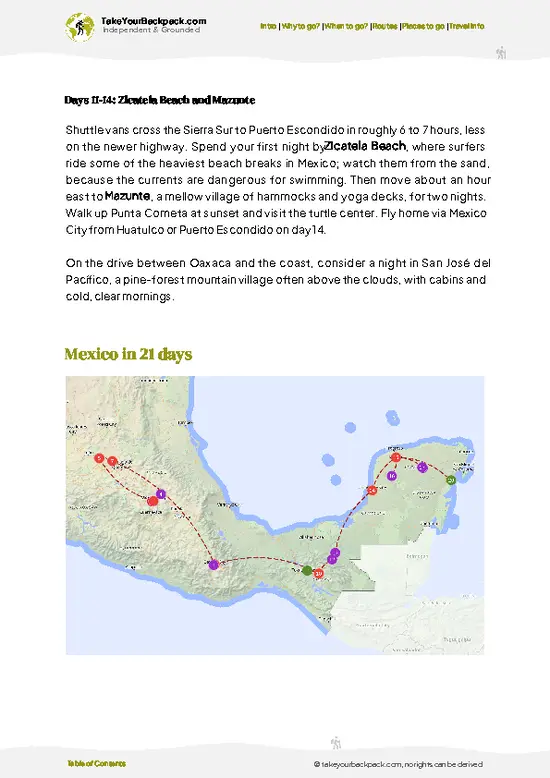
- Plaza Vasco de Quiroga: The big arcaded square, named for the 16th-century bishop, is the town’s living room, with trees, fountain, craft stalls and cheap eats. Go in the morning or at dusk. Free, 1 to 2 hours.
- Basílica de Nuestra Señora de la Salud: Pilgrims come to the hillside basilica for a venerated Virgin made of cornstalk paste, and Vasco de Quiroga’s tomb is inside. Go in the morning. Free, about 45 minutes.
- Muelle General (Lake Pátzcuaro dock): Boats leave here for Janitzio island, with its fish restaurants and statue of Morelos at the top. Go on a weekday morning to avoid queues. Roughly US$4 to 6 round trip, 3 to 4 hours with the island.
- Biblioteca Gertrudis Bocanegra: A former church with a huge mural by Juan O’Gorman on Michoacán’s history, a few blocks from the main square. Open
- Plaza Vasco de Quiroga: The big arcaded square, named for the 16th-century bishop, is the town’s living room, with trees, fountain, craft stalls and cheap eats. Go in the morning or at dusk. Free, 1 to 2 hours.
- Basílica de Nuestra Señora de la Salud: Pilgrims come to the hillside basilica for a venerated Virgin made of cornstalk paste, and Vasco de Quiroga’s tomb is inside. Go in the morning. Free, about 45 minutes.
- Muelle General (Lake Pátzcuaro dock): Boats leave here for Janitzio island, with its fish restaurants and statue of Morelos at the top. Go on a weekday morning to avoid queues. Roughly US$4 to 6 round trip, 3 to 4 hours with the island.
- Biblioteca Gertrudis Bocanegra: A former church with a huge mural by Juan O’Gorman on Michoacán’s history, a few blocks from the main square. Open weekdays. Free, 20 to 30 minutes.
- Casa de los Once Patios: A former convent turned into a cluster of craft workshops with copper, lacquer, textiles and guitars. Go before the afternoon lull. Free to browse, 1 hour.
Spotted a mistake or missing something? Contact us.

Morelia City Tour

Monarch Butterfly Tour (Departing from Morelia)

Pátzcuaro Tour From Morelia

Patzcuaro & Janitzio Private Tour

Monarch Butterfly Private Tour (Morelia)

Patzcuaro, Santa Clara del Cobre -Copper Town- & Tzintzuntzan

Tour: Getting to know Morelia with friends

Michoacan Archaeology Tour: Tingambato, Ihuatzio & Tzintzuntzan

Morelia City Tour


 Best Backpacking
.jpg) Hi, I’m Johan (Netherlands 🇳🇱), the creator of TakeYourBackpack. Over the past 3 decades, I’ve backpacked through 90+ countries across six continents, gaining extensive experience with independent travel, long-term trips, and overland routes.
Hi, I’m Johan (Netherlands 🇳🇱), the creator of TakeYourBackpack. Over the past 3 decades, I’ve backpacked through 90+ countries across six continents, gaining extensive experience with independent travel, long-term trips, and overland routes.