×

Mexico🇲🇽 | best townsWhere to Find the 10 Best towns in Mexico

Towns in Mexico come in flavors that have little in common beyond a main square and a church that has seen things. The colonial highlands (Oaxaca, Guanajuato, Chiapas) offer cobblestones, cool nights and markets that make supermarkets look apologetic. The Pacific and Caribbean coasts trade that for humidity, surf and prices that jump the moment a cruise ship appears. The Yucatán Peninsula is flat, hot and full of cenotes, with tourist crowds to match. The north and Baja are sparse, with long gaps between fuel stops and very few other backpackers.

Costs swing widely. A highland town can feed you well for US$8 to 15 a day, while a beach town will charge that for a smoothie and an opinion. Independent travel is easy on the well-worn routes, thanks to a deep network of long-distance buses, and the main decision is simply which Mexico you feel like visiting.

By Johan Kruseman 🇳🇱 | Updated October 20, 2026
Explore the best villages in Mexico

Why go?Why Travelers Love These Spots

Mexico is built for towns in a way few countries manage, and the reason starts with history. The Spanish laid out settlements around a central plaza, church and market, and they did it again and again over three centuries, often on top of Indigenous centers that were already doing the job. The result is a country where a town of 30,000 people can still have a walkable core, a bandstand, and a taco stand open past midnight. The plaza is the living room, and everyone is invited, including you.

Geography does the rest. Mountain ranges and high plateaus split the country into pockets, so a colonial silver town in the central highlands, a Maya-speaking market town in Chiapas, and a fishing village on the Pacific feel like different countries sharing a currency. Silver wealth in the 1500s to 1700s … read more 👉
Mexico is built for towns in a way few countries manage, and the reason starts with history. The Spanish laid out settlements around a central plaza, church and market, and they did it again and again over three centuries, often on top of Indigenous centers that were already doing the job. The result is a country where a town of 30,000 people can still have a walkable core, a bandstand, and a taco stand open past midnight. The plaza is the living room, and everyone is invited, including you.

Geography does the rest. Mountain ranges and high plateaus split the country into pockets, so a colonial silver town in the central highlands, a Maya-speaking market town in Chiapas, and a fishing village on the Pacific feel like different countries sharing a currency. Silver wealth in the 1500s to 1700s also left behind baroque churches and aqueducts in places that never became big cities, which is why so many towns look better preserved than their size suggests.

Infrastructure is the quiet advantage. The long-distance bus network is among the best in Latin America, with first-class coaches (ADO, ETN, Primera Plus) that have assigned seats and air-conditioning aggressive enough to require a sweater at 35°C. Vans called colectivos fill the gaps to smaller places, and fares are typically a few dollars per hour of travel.

What a traveler should know before choosing Mexico for towns: the country is large, and distances between regions run 8 to 20 hours by road, so a quick hop is rarely quick. Altitude matters, since many highland towns sit at 1,800 to 2,300 meters and nights can be cold even when days are warm. Popular towns have also split into two economies, one priced for cruise-and-weekend visitors and one priced for locals, and the gap can be double or triple on lodging. Cash still runs the small places, ATMs are scarce in the villages, and basic Spanish turns a transaction into a conversation. Bring both, and the towns reward the effort.
Why These Made the Cut
The list of best towns in Mexico is created based on charm, local culture, atmosphere, hidden gems, and visitor appeal. If you feel a town is missing in this list, please let us know.

When to go?Timing Your Visit for the Best Experience

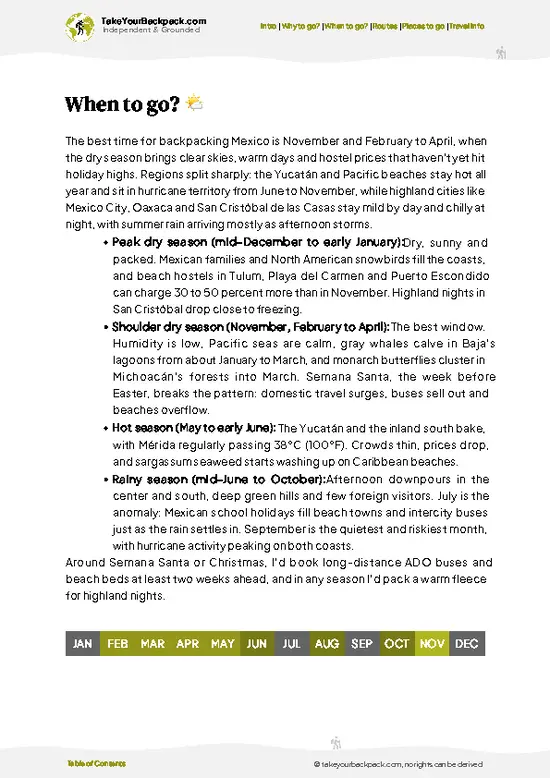
The best window: The best months for towns in Mexico are November to March, when most of the country is dry, sunny and not yet roasting. Highland days sit around 20 to 27°C (68 to 80°F), though nights in places above 2,000 meters can fall to 3 to 8°C, so the packing list needs a sweater that most people forget exists.

Rainy season and shoulder months: The rainy season runs roughly from June to October across most of the country, usually as predictable afternoon downpours instead of all-day gloom. Mornings stay clear, the hills turn green and prices dip. It is a decent bargain for highland towns. On the coasts and the Yucatán, humidity is heavy, temperatures reach 32 to 36°C (90 to 97°F), and hurricane season peaks from August to October on both the Pacific and Caribbean sides. April, May … read more 👉
The best window: The best months for towns in Mexico are November to March, when most of the country is dry, sunny and not yet roasting. Highland days sit around 20 to 27°C (68 to 80°F), though nights in places above 2,000 meters can fall to 3 to 8°C, so the packing list needs a sweater that most people forget exists.

Rainy season and shoulder months: The rainy season runs roughly from June to October across most of the country, usually as predictable afternoon downpours instead of all-day gloom. Mornings stay clear, the hills turn green and prices dip. It is a decent bargain for highland towns. On the coasts and the Yucatán, humidity is heavy, temperatures reach 32 to 36°C (90 to 97°F), and hurricane season peaks from August to October on both the Pacific and Caribbean sides. April, May and early November count as shoulder months: April and May are the hottest, especially on the Pacific side and inland lowlands, where 35°C or more is normal before the rains break.

Peak periods that change plans: Two stretches matter. Semana Santa (the week before Easter) and the Christmas to New Year period fill buses and hostels, and beds in popular towns can cost 30 to 60 percent more. Day of the Dead (October 31 to November 2) is the single most booked period in southern and central towns, so reserve weeks ahead. Mexican school holidays in July and August also push beach prices up.

Regional differences: The Caribbean coast is best from December to April, apart from seaweed (sargassum) blooms that can foul beaches from spring into summer. The north and Baja swing hot in summer, over 38°C in many desert towns, and are best in winter. Chiapas and Oaxaca are driest from November to April, though road blockades can happen at any time of year.

town hoppingTips for Visiting Multiple Destinations

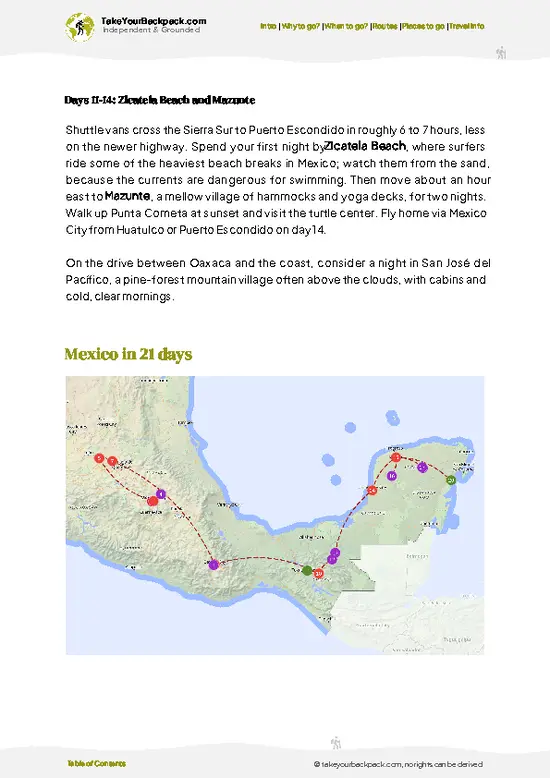
How long you need: A trip linking several Mexican towns needs 14 to 21 days, and three weeks is comfortable if you want more than a blur of bus windows. Under 10 days, stick to one region.

Regions that cluster well: The central highlands work as a single block: Mexico City acts as the hub, with the colonial towns of the Bajío (Guanajuato, Querétaro, San Miguel de Allende) within 3 to 5 hours by bus. The south pairs Oaxaca with Chiapas, though the road between them takes 10 to 12 hours, so most people take an overnight bus or fly. The Yucatán Peninsula is a third block, connected by frequent buses from Mérida and Cancún, with 2 to 4 hours between most stops.

Direction and pacing: A sensible shape is to land in Mexico City, loop through the highlands, head south to Oaxaca and Chiapas, then … read more 👉
How long you need: A trip linking several Mexican towns needs 14 to 21 days, and three weeks is comfortable if you want more than a blur of bus windows. Under 10 days, stick to one region.

Regions that cluster well: The central highlands work as a single block: Mexico City acts as the hub, with the colonial towns of the Bajío (Guanajuato, Querétaro, San Miguel de Allende) within 3 to 5 hours by bus. The south pairs Oaxaca with Chiapas, though the road between them takes 10 to 12 hours, so most people take an overnight bus or fly. The Yucatán Peninsula is a third block, connected by frequent buses from Mérida and Cancún, with 2 to 4 hours between most stops.

Direction and pacing: A sensible shape is to land in Mexico City, loop through the highlands, head south to Oaxaca and Chiapas, then fly or take a long bus to the Yucatán and leave from Cancún. Reversing it works too. Cancún flights are often cheaper for arrivals, so check open-jaw tickets. Budget 2 to 3 nights per town. Smaller places can be absorbed in two, while larger towns with day trips need three or four. Between regions, allow a full day: Mexico City to Oaxaca is about 6 to 7 hours by bus (or a 1-hour flight), and Oaxaca to San Cristóbal is around 10 to 12 hours.

Planning mistakes: The classic error is underestimating distances by reading a map like it is a European one. Adding a Baja or northern town into a southern trip can cost two travel days for one stop. Another is stacking overnight buses back to back, which saves hotel money and costs you the following day. Space them out. Also avoid arriving in a new town after dark with no booking, because many bus stations sit far from the center. Choose daytime departures for scenic or mountain routes, and let flights handle the biggest gaps.

The ListMust-Visit towns in Mexico

1 Tulum

Cenote Zací, mural walls, Batey bar, Aldea Zama

Cool off in an open-top cenote in town, follow street art through the pueblo, and eat early tacos before the market fills.

mexico-city-tulum
© Google |

2 Isla Mujeres

Playa Norte, ferry-dock malecón, turtle sanctuary, reef snorkeling

Swim in shallow water off the north beach, visit the turtle sanctuary, then book a boat to nearby reefs and underwater sculptures.

mexico-city-isla-mujeres
© Google |

3 Zihuatanejo

Fishermen's pier, Playa La Ropa, Las Gatas cove, fish market

Buy the catch behind the pier, take a panga to a snorkeling cove, and end the day at the plaza with its chess players.

4 Ixtapa

Palmar beach, marina docks, Isla Ixtapa, seaside bike path

Catch a short boat from the marina to the island, snorkel at calm Playa Coral, and bike the boulevard path at sunset.

5 Santa María Huatulco

Inland Oaxaca, market meals, church plaza, bay piers

Eat cheap regional dishes at the market, browse artisan stalls around the plaza, and book a local boat trip from the small piers.

6 Loreto

Jesuit mission, Sea of Cortez, panga fleet, fish tacos

Sit in front of the first mission in the region, then head out by small boat to islands inside the marine park.

mexico-city-loreto
© Google |

7 Todos Santos

Pacific desert coast, art galleries, Hotel California, mission church

Browse artist studios and street murals, stop at the famous hotel courtyard, and eat fish tacos at family-run counters.

mexico-city-todos-santos
© Google |

8 Taxco

Silver workshops, Santa Prisca, cable car, steep alleys

Climb cobbled alleys to a baroque church, watch silversmiths at work, then ride the cable car for views over red-tiled roofs.

mexico-city-taxco
© Google |

9 Tequila

Agave fields, La Rojeña, tequila museum, old train station

Tour working distilleries to see how tequila is made, add the national museum, and finish with plaza evenings among colonial facades.

mexico-city-tequila
© Google |

10 Valle de Bravo

Reservoir lake, La Peña paragliding, Velo de Novia, cobbled center

Rent a boat or paddleboard on the reservoir, climb to the paragliding launch, and walk to a waterfall near Avándaro.

mexico-city-valle-de-bravo
© Google |

11 Pátzcuaro

Purépecha lake, Once Patios, cemetery customs, Calvario viewpoint

Browse craft workshops in connected courtyards, ride from the lakeside pier, and climb the hill above the roofs and church towers.

mexico-city-patzcuaro
© Google |

12 Tepoztlán

Cerro pyramid, Sunday tianguis, temazcal, convent plaza

Hike the steep trail to a hilltop temple, then sample market snacks and book a sweat-lodge ceremony led by local guides.

mexico-city-tepoztlan
© Google |

13 Comala

Whitewashed lanes, Colima sweets, Pedro Páramo house, volcano views

Wander the plaza and its dulcerías, taste local preserves at hacienda cafés, and climb to a lookout facing Volcán de Colima.

14 Tlacotalpan

Papaloapan riverfront, pastel arcades, seafood, river boats

Stroll a colorful historic center beside the river, eat fresh fish by the water, and take a slow boat trip on the Papaloapan.

15 Aculco

Basalt canyons, Salto de la Novia, stone riverwalks, mill ruins

Walk river paths past old stone bridges and mill ruins, then follow the spray to a waterfall tied to a local bride legend.

Think you know Mexico?

Prove you’re a true local — uncover 5 lesser-known towns in Mexico that locals tend to keep to themselves.
Loading the map 🌍

Expert viewInsights from Locals and Experts

How many towns to visit: Five to seven towns is the right number for most trips of two to three weeks. Fewer, and you will wonder why you booked a flight; more, and you will remember mostly bus stations. Mexican towns reward lingering, since the best moments tend to happen on the second evening, when the café staff recognize you and the plaza starts to make sense.

Choosing between kinds of towns: Colonial highland towns suit culture and food travelers and anyone short on time. They are walkable, cool and full of museums, markets and cooking classes. Indigenous-region towns in Chiapas and Oaxaca suit people who want textiles, festivals and quieter streets, and who can handle slower transport. Beach and Caribbean towns suit those who want sun, diving or surf, but they are the most expensive … read more 👉
How many towns to visit: Five to seven towns is the right number for most trips of two to three weeks. Fewer, and you will wonder why you booked a flight; more, and you will remember mostly bus stations. Mexican towns reward lingering, since the best moments tend to happen on the second evening, when the café staff recognize you and the plaza starts to make sense.

Choosing between kinds of towns: Colonial highland towns suit culture and food travelers and anyone short on time. They are walkable, cool and full of museums, markets and cooking classes. Indigenous-region towns in Chiapas and Oaxaca suit people who want textiles, festivals and quieter streets, and who can handle slower transport. Beach and Caribbean towns suit those who want sun, diving or surf, but they are the most expensive and the most crowded. Northern and Baja towns suit confident independent travelers with time, a love of empty roads and a tolerance for limited hostel choice. Mixing one coastal stop with several inland ones usually gives the best value.

What it costs: Budget US$30 to 50 a day in highland and inland towns: dorm beds run US$8 to 15, a comida corrida (set lunch) is 80 to 150 pesos (US$4 to 8), and long-distance buses cost roughly US$3 to 6 per hour of travel in first class. Beach and Caribbean towns push that to US$50 to 80, with dorms at US$15 to 30 and tourist-zone dinners easily over US$15. Entry fees for archaeological sites are usually 80 to 600 pesos (US$4 to 30), with the larger sites at the top of that range. Local guides charge about US$15 to 40 for a half day, and a cooking class or mezcal tasting is US$30 to 70. Add a US$5 to 15 a day buffer for taxis and colectivos. Prices are quoted in Mexican pesos, and small bills help, since vendors often struggle to break 500-peso notes.

Safety and cultural considerations: Most popular towns are safe for visitors who take ordinary care. Check your government’s travel advisories for specific states, since risk varies enormously by region, and avoid night driving and night buses on certain highways. Stick to first-class bus lines, use app-based or hotel-arranged taxis after dark, and keep phones out of sight on crowded streets. Tap water is not drinkable almost everywhere, so use bottled or filtered water, and be careful with ice in unfamiliar places. At higher altitudes, the sun is stronger than it feels.

Culturally, a greeting matters. Say buenos días when entering a shop or restaurant, and expect the same. Ask before photographing people, especially in Indigenous communities, where some villages and churches ban photos altogether. Tip 10 to 15 percent in restaurants, and a few pesos for bag handlers and guides. Dress modestly for church visits.

The honest part about crowds: the famous town squares are busiest from late morning to early evening and on weekends, when Mexican families arrive in force. Go early or on weekdays and you will see the same streets with half the elbows. That is when the details are best, like the smell of fresh tortillas at dawn, the hand-painted signs and the market stalls opening one by one.

✈️ The backpacker research shortcutMexico Travel Guide

An offline-friendly backpacking guide with optimized travel routes, ranked highlights, transport advice, and the best areas to stay.
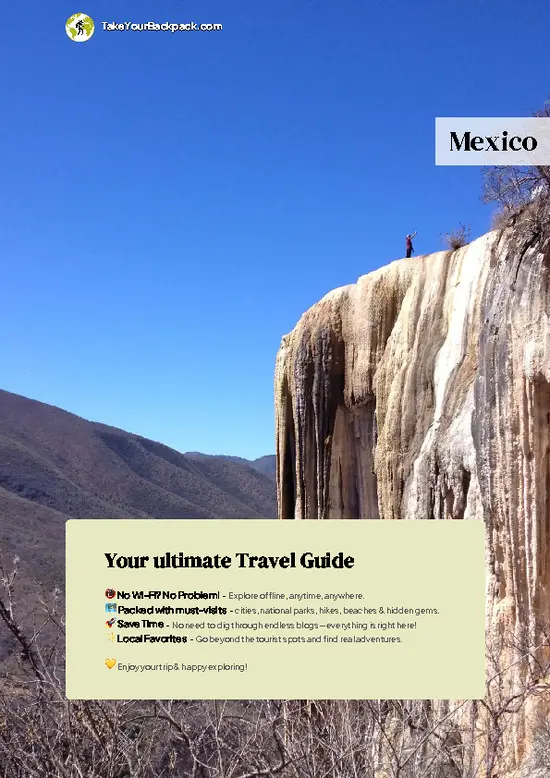
example page 0 from our offline Travel Guide for Mexico
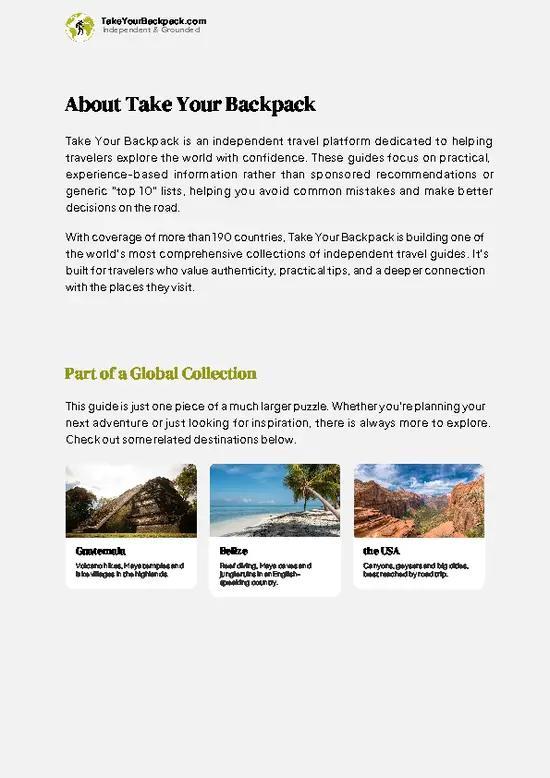
example page 1 from our offline Travel Guide for Mexico
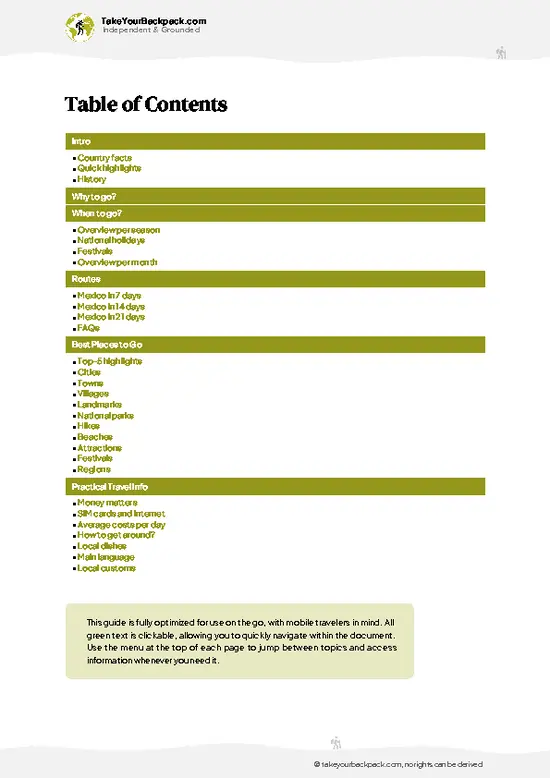
example page 2 from our offline Travel Guide for Mexico
example page 3 from our offline Travel Guide for Mexico
example page 4 from our offline Travel Guide for Mexico
example page 5 from our offline Travel Guide for Mexico
example page 6 from our offline Travel Guide for Mexico
example page 7 from our offline Travel Guide for Mexico
The digital guide (402 pages) contains:
✅ 138 highlights, ranked by travel appeal
✅ Optimized 7, 14 & 21-day travel routes
✅ Cities, national parks, landmarks, beaches
✅ How to get around
✅ Offline-friendly for travel without Wi-Fi
👉 Click to see all 30+ guide features

📅 Plan smarter in minutes, not weeks
✅ Month by month travel advice
✅ Festivals & national holidays
✅ Budget expectations

🗺️ Go to the right places, skip the overrated ones
✅ Honest pros & cons of destinations
✅ Top hikes, parks & viewpoints
✅ Lesser-known places most travelers miss
✅ Clear “worth it vs skip it” guidance

🛏️ Travel smoothly without rookie mistakes
✅ Best areas to stay
✅ Transport systems explained simply
✅ Common scams & safety advice
✅ SIM cards, money & practical tips

🌍 Understand the country, not just visit it
✅ Culture & traditions
✅ 52 Essential phrases & customs
✅ Festivals worth planning around
✅ Traveler-friendly historical context
✅ Insights that make places more meaningful

📱 Built for real travel conditions
✅ Fully downloadable PDF
✅ Works completely offline
✅ Optimized for phone use
✅ Useful in remote areas & buses
✅ Everything in one place
Stop searching, start planning
Get instant access to your full guide. 30‑day money-back guarantee.
+ Add another guide for just

By proceeding you agree to our terms.
Sent to your inbox immediately after payment • 100% Secure Checkout
Best Backpacking Travel Advisor 2025 tourism awardBest Backpacking
Travel Advisor
2025
What others say about Take Your Backpack Guides:
⭐⭐⭐⭐⭐
Fantastic, amazing amount of information!
⭐⭐⭐⭐⭐
My goodness this is amazing, it's what I've been looking for hats off too you!
⭐⭐⭐⭐⭐
I think this is absolutely BRILLIANT
⭐⭐⭐⭐
Very complete and informative. It's still missing places, but I gotta to commend you
⭐⭐⭐⭐⭐
This is truly amazing, thank you, can't wait to explore it with my kids!
⭐⭐⭐⭐⭐
Awesome resource, thank you!
⭐⭐⭐⭐⭐
This is amazing! Can't wait to explore the ones I haven't seen
⭐⭐⭐⭐
I love this! Well done, great idea.
⭐⭐⭐⭐⭐
Thanks for taking the time to make this gem!
⭐⭐⭐⭐⭐
This might be the best website I've ever seen.
⭐⭐⭐⭐⭐
Congratulations, and thank you so much for your work; it's incredibly valuable.
⭐⭐⭐⭐
In all seriousness I think you did a great job pointing out the important spots
⭐⭐⭐⭐⭐
10/10 very good
⭐⭐⭐⭐⭐
As someone who's only just starting to visit regularly this is awesome, thank you.
⭐⭐⭐⭐
Thank you very much! I'm going to visit my dad, it's going to be very useful!
⭐⭐⭐⭐⭐
This is really cool! We'll be travelling for the first time and this definitely come in handy.
⭐⭐⭐⭐⭐
You are now our minister of culture, congratulations 👨‍💼
⭐⭐⭐⭐⭐
Just wanted to tell you that this is a pearl! Going to follow your recommendations.
⭐⭐⭐⭐⭐
This is so cool. I'll definitely be using the resource for my travels soon.
⭐⭐⭐⭐⭐
This is very impressive! Good work.
⭐⭐⭐⭐⭐
This is an amazing and informative site. Very well done!

🛏️ Where to stay?Top Places to Consider Staying

Mexico has one of the deepest hostel scenes in Latin America, with dorm beds typically running MXN 250 to 500 (about US$13 to 28) and private rooms in guesthouses from roughly MXN 700 (US$38). In Mexico City, the Centro Histórico puts you steps from the main museums and is the cheapest, though some blocks empty out after dark, while Roma and Condesa cost a bit more but give you leafy, walkable streets, good bars and a safer feel at night. Elsewhere, San Cristóbal de las Casas and central Oaxaca offer quiet, cheap stays within walking distance of everything, and Playa del Carmen and Tulum pack in party hostels near the beach at noticeably higher prices.

If you enjoy meeting fellow travelers, consider … read more 👉
Mexico has one of the deepest hostel scenes in Latin America, with dorm beds typically running MXN 250 to 500 (about US$13 to 28) and private rooms in guesthouses from roughly MXN 700 (US$38). In Mexico City, the Centro Histórico puts you steps from the main museums and is the cheapest, though some blocks empty out after dark, while Roma and Condesa cost a bit more but give you leafy, walkable streets, good bars and a safer feel at night. Elsewhere, San Cristóbal de las Casas and central Oaxaca offer quiet, cheap stays within walking distance of everything, and Playa del Carmen and Tulum pack in party hostels near the beach at noticeably higher prices.

If you enjoy meeting fellow travelers, consider choosing hostels with high ratings for atmosphere. On the other hand, if you prefer having your own space, a hotel might be a better option.

MexicoMore Places Across Mexico

👋 Meet the founderWho’s Behind Take Your Backpack?

Johan, backpacker and founder of TakeYourBackpackHi, I’m Johan (Netherlands 🇳🇱), the creator of TakeYourBackpack. Over the past 3 decades, I’ve backpacked through 90+ countries across six continents, gaining extensive experience with independent travel, long-term trips, and overland routes.

This site is built on a combination of firsthand travel experience and carefully curated insights from other backpackers. Many guides are based on places I’ve personally visited, while others bring together tips, observations, and practical advice shared by trusted travelers I’ve met along the way.

The goal is to provide realistic, experience-driven guidance — not generic itineraries — so you can explore destinations with better context, clearer expectations, and more confidence.