v2.webp)
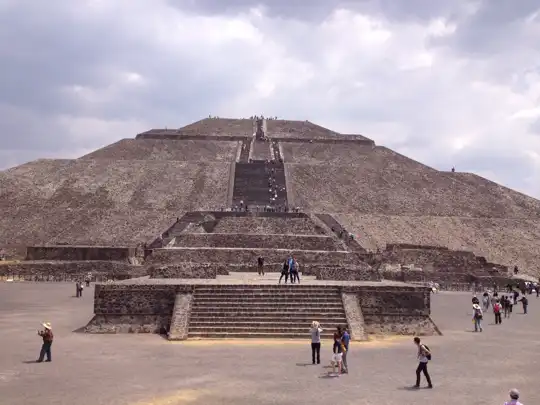
- Pyramid of the Sun: The third-largest pyramid in the world by volume, it rises about 65 meters from a broad, stepped base. Climbing is closed, but the view from the plaza and the surrounding platforms shows how the structure dominates the avenue.
- Pyramid of the Moon: Smaller but set at the north end of the avenue, so it frames the whole city plan. Its platform plaza is the best spot for photographs looking south down the Avenue of the Dead.
- Avenue of the Dead: The ceremonial spine of the city, lined with platforms and temples. The name was given by the Aztecs, who believed the mounds were tombs.
- Temple of the Feathered Serpent: Inside the Ciudadela, its facade carries carved serpent heads and goggle-eyed figures, often linked to Tlaloc or the Fire Serpent. Tunnels beneath it were found to contain
- Pyramid of the Sun: The third-largest pyramid in the world by volume, it rises about 65 meters from a broad, stepped base. Climbing is closed, but the view from the plaza and the surrounding platforms shows how the structure dominates the avenue.
- Pyramid of the Moon: Smaller but set at the north end of the avenue, so it frames the whole city plan. Its platform plaza is the best spot for photographs looking south down the Avenue of the Dead.
- Avenue of the Dead: The ceremonial spine of the city, lined with platforms and temples. The name was given by the Aztecs, who believed the mounds were tombs.
- Temple of the Feathered Serpent: Inside the Ciudadela, its facade carries carved serpent heads and goggle-eyed figures, often linked to Tlaloc or the Fire Serpent. Tunnels beneath it were found to contain offerings and burials.
- Ciudadela: A vast sunken square ringed by platforms, large enough to hold tens of thousands of people. It is the likely seat of rulers and ceremony.
- Palace of Quetzalpapalotl: A restored complex near the Moon plaza with carved pillars of bird-butterfly figures and traces of original paint. It is among the most detailed stone carving on site.
- Tepantitla murals: Fading paintings of a lush paradise scene with water, figures and plants, set in a residential compound away from the main axis. It is quiet and rewarding if you value details over scale.
- Museo de la Cultura Teotihuacana: A small museum near the southern entrance with ceramics, masks and a scale model of the city. It helps make sense of what you are walking through.
Spotted a mistake or missing something? Contact us.

Teotihuacán: Private Tour from Mexico City

Private from Mexico City: Pyramids of Teotihuacan & Basilica of Guadalupe

Teotihuacan Sunrise Tour from Mexico City

Teotihuacan Early Access - Private Half Day Tour

Guided tour EN Teotihuacan - Breakfast EN cave-round transport

Private Teotihuacán Tour from Mexico City

Private Tour with Archaeologist and VR Experience at Teotihuacan

Private Tour to Teotihuacán with Transportation

Private Tour: Teotihuacan Pyramids Basilica of Guadalupe from CDMX

 Best Backpacking
.jpg) Hi, I’m Johan (Netherlands 🇳🇱), the creator of TakeYourBackpack. Over the past 3 decades, I’ve backpacked through 90+ countries across six continents, gaining extensive experience with independent travel, long-term trips, and overland routes.
Hi, I’m Johan (Netherlands 🇳🇱), the creator of TakeYourBackpack. Over the past 3 decades, I’ve backpacked through 90+ countries across six continents, gaining extensive experience with independent travel, long-term trips, and overland routes.