×

Mexico🇲🇽 | best landmarksWhere to Find the 10 Best landmarks in Mexico

Landmarks in Mexico come in three moods, and picking the wrong one is how you end up in a ticket queue at noon wondering about your life choices. The Maya ruins of the Yucatán Peninsula are the famous ones: flat jungle, heavy heat, tour buses by 10 a.m. and entry fees that climb past US$25 at the big sites. The highlands and central valleys trade that for colonial plazas, cathedrals and pyramids you can reach by a US$2 to 6 city bus or colectivo, with far fewer crowds before lunch. The south and the Pacific side (Oaxaca, Chiapas) feel slower, rougher and cheaper, and often need a long minibus ride on switchbacks. For backpacking or any independent travel, the rule is simple: the closer a landmark sits to a beach resort, the more it costs and the earlier you should arrive.

By Johan Kruseman 🇳🇱 | Updated October 20, 2026
Explore the best national parks in Mexico

Why go?Why Travelers Love These Spots

Mexico is unusually rich in landmarks because several civilizations built big, and then a Spanish colonial empire built bigger on top of them, sometimes literally with the same stones. The result is a country where a pre-Hispanic pyramid, a baroque church and a 20th-century mural can share a single city center. Few countries stack that many layers of history so close together.

Geography decides what you see and how you get there. The central plateau concentrated people and power, so its sites sit within a day of Mexico City by bus. The lowland jungle of the southeast hid its cities under vegetation, and the humidity still makes visiting a sweaty exercise. Desert and mountain sites in the north are sparser and more spread out, which means more driving per landmark.

Infrastructure is a real … read more 👉
Mexico is unusually rich in landmarks because several civilizations built big, and then a Spanish colonial empire built bigger on top of them, sometimes literally with the same stones. The result is a country where a pre-Hispanic pyramid, a baroque church and a 20th-century mural can share a single city center. Few countries stack that many layers of history so close together.

Geography decides what you see and how you get there. The central plateau concentrated people and power, so its sites sit within a day of Mexico City by bus. The lowland jungle of the southeast hid its cities under vegetation, and the humidity still makes visiting a sweaty exercise. Desert and mountain sites in the north are sparser and more spread out, which means more driving per landmark.

Infrastructure is a real advantage. First-class buses (ADO, ETN and similar) are comfortable, frequent and priced fairly, and most major sites have a nearby town with hostels from roughly US$10 to 20 a night. The weak point is the final stretch: the last few kilometers to a ruin often depend on a colectivo, a taxi or your own wheels.

Before choosing Mexico for landmarks, know that entry fees are low at small sites and steep at famous ones, and that foreign visitors usually pay more than Mexican residents. Many sites close one day a week, most often Monday. Bring cash in pesos, since small ticket booths and parking lots rarely take cards. Plan for sun and altitude too: a pyramid has no shade, and Mexico City sits above 2,200 meters, so your first climb will punish you with an embarrassing shortness of breath.
How the List Was Created
The list of best unique sites in Mexico is created based on history or culture, wow factor, atmosphere, quirks, and memorability. If you feel a unique site is missing in this list, please let us know.

When to go?Timing Your Visit for the Best Experience

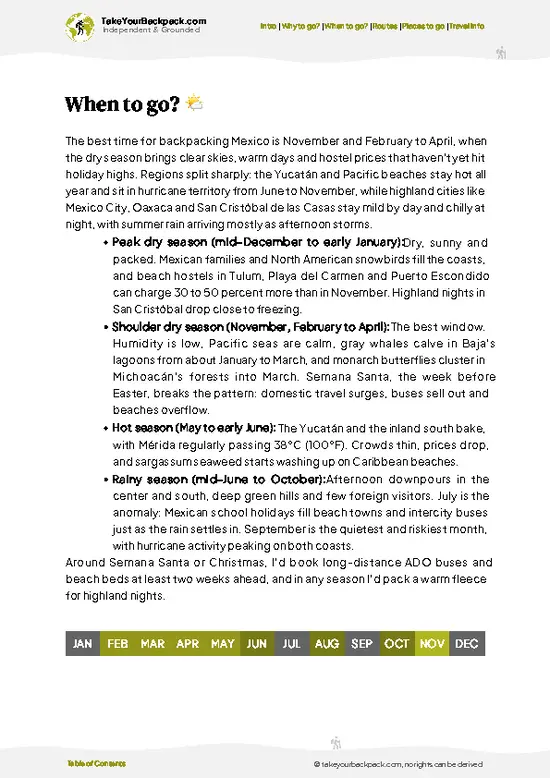
Best months and the weather behind them: November to April is the best window for landmarks in Mexico, because the rainy season has ended, skies are mostly clear and the jungle and highland sites are dry underfoot. Mexico also forgives few mistakes about heat, so timing matters more than you would expect.
Dry season and crowds: In the Yucatán Peninsula, December to March brings highs of about 27 to 32°C, which is the polite way of saying you can stand outside without melting. April and May are hotter, often 35°C or more, and the ruins have almost no shade. In the central highlands (Mexico City, Puebla, Oaxaca valleys), days are mild at 20 to 26°C, with cold nights that dip to 5 to 8°C in winter.

Peak periods that change decisions: Christmas to New Year, Semana Santa (the week before Easter) … read more 👉
Best months and the weather behind them: November to April is the best window for landmarks in Mexico, because the rainy season has ended, skies are mostly clear and the jungle and highland sites are dry underfoot. Mexico also forgives few mistakes about heat, so timing matters more than you would expect.
Dry season and crowds: In the Yucatán Peninsula, December to March brings highs of about 27 to 32°C, which is the polite way of saying you can stand outside without melting. April and May are hotter, often 35°C or more, and the ruins have almost no shade. In the central highlands (Mexico City, Puebla, Oaxaca valleys), days are mild at 20 to 26°C, with cold nights that dip to 5 to 8°C in winter.

Peak periods that change decisions: Christmas to New Year, Semana Santa (the week before Easter) and the days around Day of the Dead in late October and early November. Hostel and hotel prices can rise 30 to 100 percent, and popular sites fill with domestic tourists. Book beds early and arrive at opening time, usually 8 a.m.

Shoulder and wet seasons: May to October is the rainy season. Rain typically arrives as a hard afternoon downpour, so mornings are often fine, and lodging is cheaper by 20 to 40 percent. Rainfall in the southeast and Chiapas can exceed 150 mm a month at the peak. Hurricane season runs June to November, with the greatest risk for the Caribbean and Pacific coasts from August to October, so keep flexible plans there.

September to early November and late April to May are quieter shoulders if you can handle heat or showers. Roads in the mountains of Oaxaca and Chiapas can also be affected by landslides in the wet months, which adds hours to bus rides.

unique site hoppingTips for Visiting Multiple Destinations

How many days to plan: A trip combining several landmarks in Mexico needs 14 to 21 days, and anything shorter turns into a tour of bus stations. Mexico is bigger than most first-timers assume, and the map lies about distances.
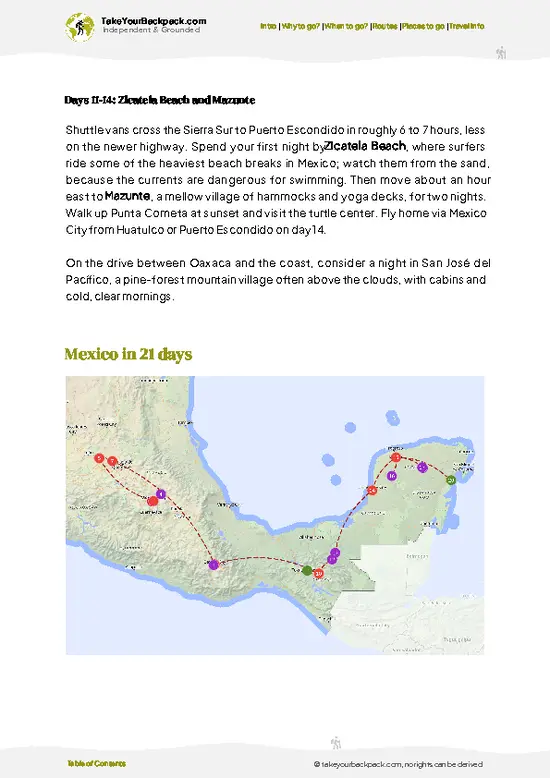
Regions that cluster well: The central highlands work as one block: Mexico City and nearby towns are linked by frequent buses of 1 to 4 hours. Oaxaca sits a 6 to 8 hour bus (or a 1-hour flight) from the capital, and fits naturally as the next stop. The Yucatán Peninsula is its own cluster, with Mérida, Valladolid and Cancún linked by 2 to 4 hour rides. Chiapas (San Cristóbal) is another separate block, about 10 to 12 hours from Oaxaca by overnight bus.

A sensible direction is north to south: begin in Mexico City, continue to Oaxaca, then Chiapas, then finish in the Yucatán, … read more 👉
How many days to plan: A trip combining several landmarks in Mexico needs 14 to 21 days, and anything shorter turns into a tour of bus stations. Mexico is bigger than most first-timers assume, and the map lies about distances.
Regions that cluster well: The central highlands work as one block: Mexico City and nearby towns are linked by frequent buses of 1 to 4 hours. Oaxaca sits a 6 to 8 hour bus (or a 1-hour flight) from the capital, and fits naturally as the next stop. The Yucatán Peninsula is its own cluster, with Mérida, Valladolid and Cancún linked by 2 to 4 hour rides. Chiapas (San Cristóbal) is another separate block, about 10 to 12 hours from Oaxaca by overnight bus.

A sensible direction is north to south: begin in Mexico City, continue to Oaxaca, then Chiapas, then finish in the Yucatán, where you can fly out of Cancún or Mérida. Linking the highlands and the peninsula by land takes 20 hours or more, so a flight of 2 to 3 hours is often worth the US$60 to 150.

Time per stop: Allow half a day for a single ruin or colonial plaza, a full day for a large archaeological zone, and two to four days in a big city with several landmarks nearby. Arrive early, since the sun is brutal from noon and tour groups appear around 10 a.m.

Common planning mistakes: The most common is cramming too many stops into too few days, because 8 hours on a bus is a day, not a transfer. Instead, book overnight buses only on long hops and spend the next morning slowly. Another is ignoring the weekly closing day, usually Monday, so check opening days before you fix the order. Finally, travelers underestimate altitude and heat, so leave a rest day after arriving in the highlands.

The ListMust-Visit landmarks in Mexico

1 Chichen Itza

El Castillo echo, giant ball court, observatory, skull platform

Clap at the foot of the Kukulkan pyramid to hear the chirp, then walk to the ball court, the Caracol and the Sacred Cenote.

Mexico - Chichen Itza

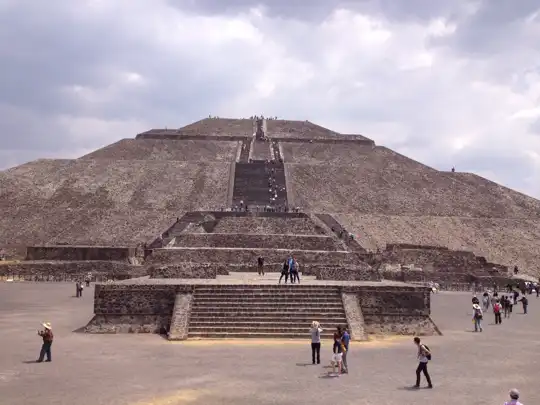
2 Pyramids of Teotihuacan

Avenue of the Dead, Sun and Moon pyramids, feathered serpent, painted murals

Walk the long avenue between enormous pyramids, see serpent carvings in the Ciudadela, and seek out faded murals in the quiet side compounds.

Mexico - the Pyramids of Teotihuacan

3 Cenote Ik Kil

Open sinkhole, spiral stairs, hanging roots, jump platform

Descend a slick stone staircase into a 60-meter round shaft and swim under dangling roots, swallows and thin waterfalls.

mexico-unique-site-cenote-ik-kil
© Google | Andres Alvarez

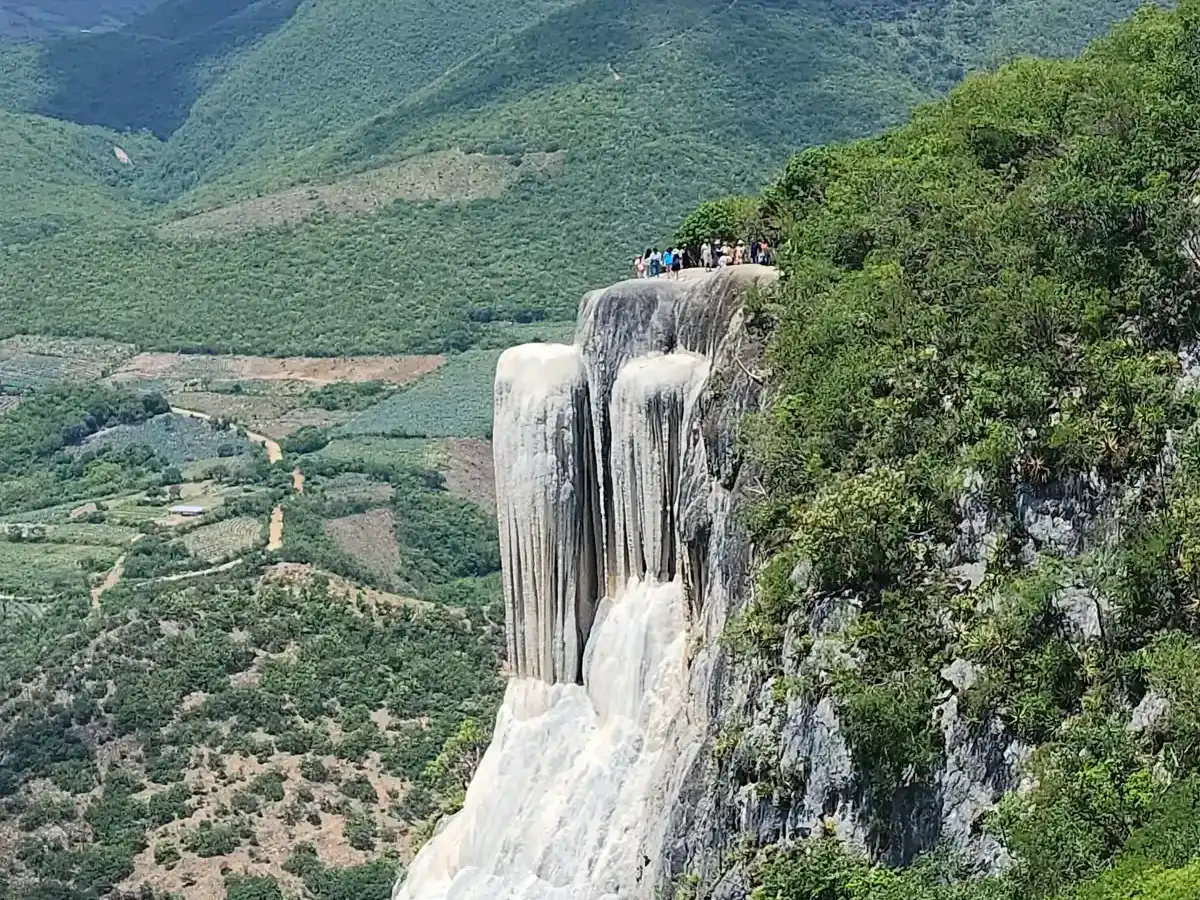
4 Hierve el Agua

Petrified falls, rim pools, mineral crust, Zapotec valley

Hike the loop below two frozen-looking cliffs of mineral rock, then swim in rim pools overlooking the valley and eat tlayudas afterward.

mexico-unique-site-hierve-el-agua
© Google | Enrique Lara

5 Cascadas de Agua Azul

Travertine staircase, upstream trail, footbridges, marked swim pools

Follow a dirt trail upriver beside terraced falls, cross small footbridges, and swim only in the calm marked pools near the entrance.

mexico-unique-site-cascadas-de-agua-azul
© Google | Daniel Plotnik

6 Monte Albán

Leveled summit, Danzantes carvings, Great Plaza, valley views

Cross a vast Zapotec plaza, study carved dancer slabs and the arrowhead observatory, then climb a platform for views over Oaxaca’s valleys.

7 Palenque

Pakal’s pyramid, jungle trails, palace tower, howler monkeys

Walk between carved temples and the tower of the Palace as howlers roar overhead, then continue to the waterfalls down the road.

Mexico - Palenque

8 Uxmal

Rounded Magician pyramid, Puuc latticework, Venus-aligned palace, night light show

Circle an oddly steep pyramid, read the carved mosaics of the Nunnery and Governor’s Palace, and climb the Great Pyramid for canopy views.

mexico-unique-site-uxmal
© Google | Maggy De La Rocke

9 Monarch Butterfly Biosphere Reserve

Oyamel firs, winter monarchs, horseback climb, high-altitude trails

Climb at about 3,000 meters, on foot or by horse, to fir trunks and branches layered in orange wings that open in midday sun.

mexico-unique-site-monarch-butterfly-biosphere-reserve
© Google | Cristina Casas

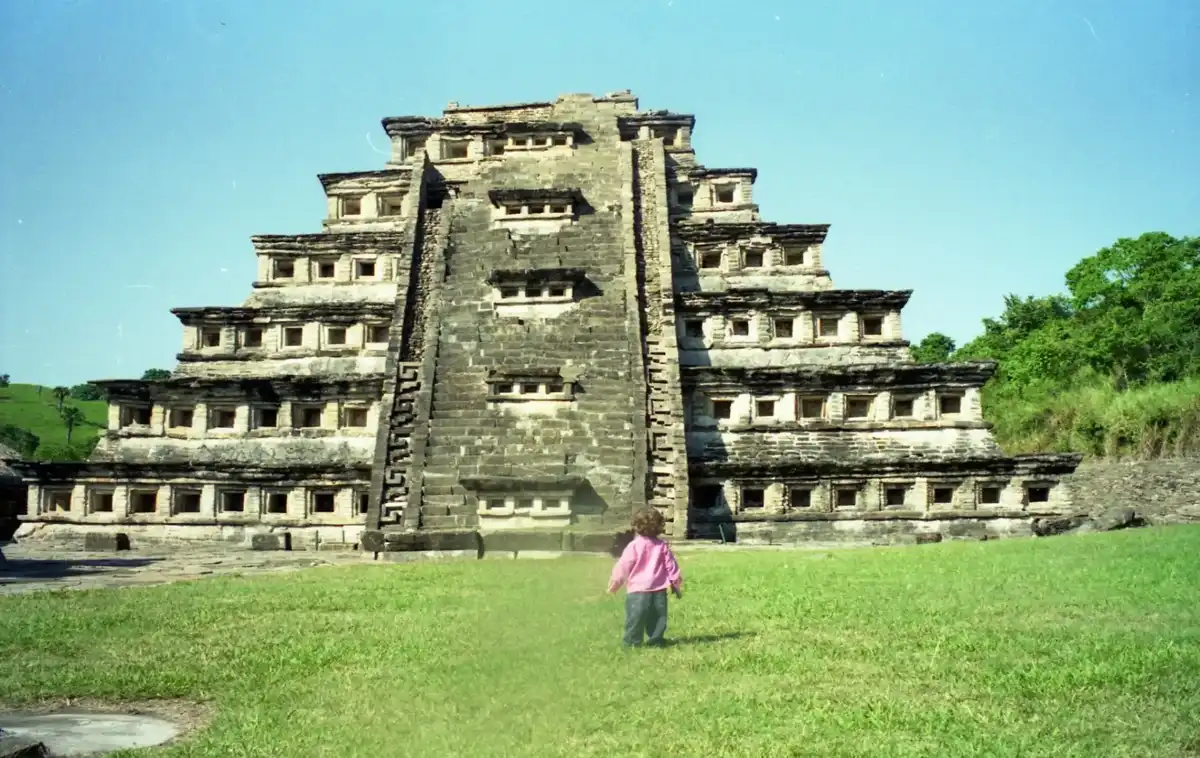
10 El Tajín

Niche pyramid, carved ball courts, Totonac fliers, Papantla hills

Study relief panels on two ball courts and a pyramid of recessed niches, then catch the voladores spiraling down a tall pole.

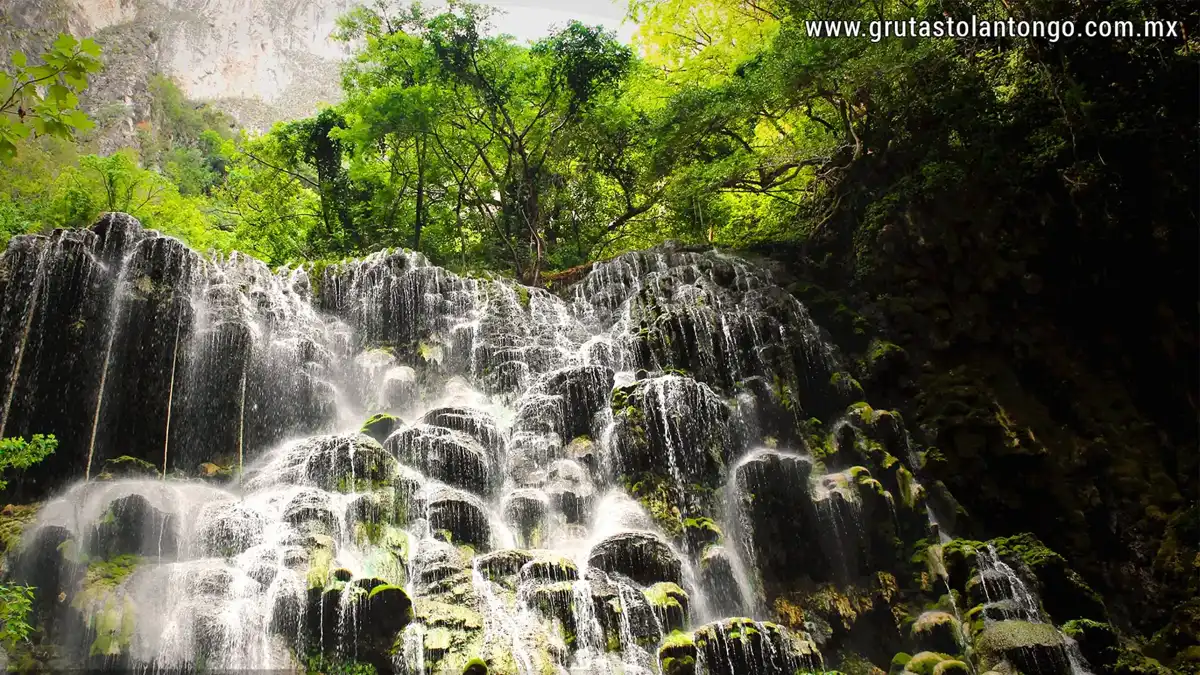
11 Grutas de Tolantongo

Thermal river, cliff pools, hot tunnel, canyon camping

Soak in steaming turquoise pools above the canyon, crawl through a warm tunnel to the cave spring, and camp beside the river.

mexico-unique-site-grutas-de-tolantongo
© Google | Grutas Tolantongo

12 Xilitla

Concrete surrealism, stairs to nowhere, jungle pools, foggy mountain town

Climb slippery staircases and arches among waterfalls at Las Pozas, then swim in the cool pools and visit the old convent in town.

mexico-unique-site-xilitla
© Google | Cynthia Michel

13 Sótano de las Golondrinas

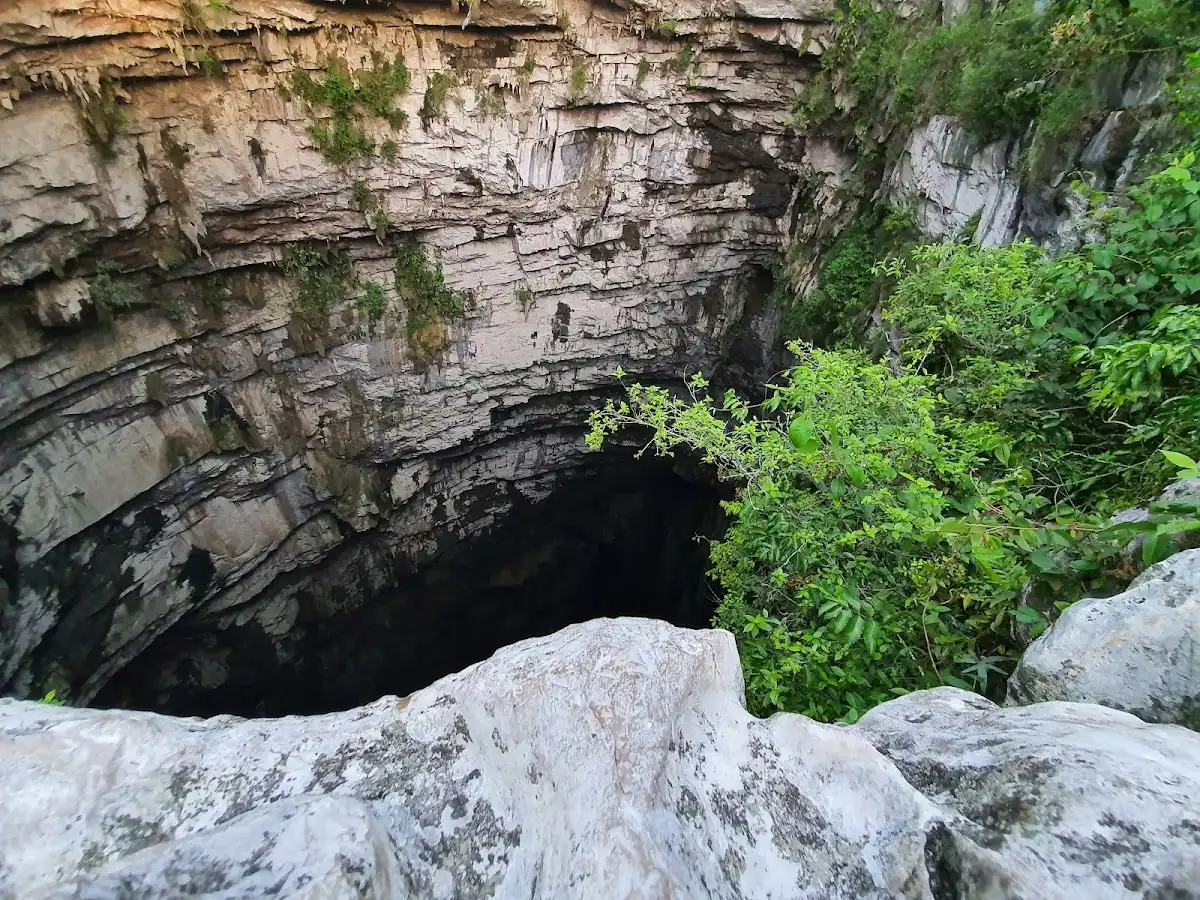
370-meter shaft, swift exodus, rim platform, Huasteca forest

Stand at the rim before first light as thousands of swifts and parakeets spiral out of the pit, then breakfast on zacahuil at the gate.

mexico-unique-site-sotano-de-las-golondrinas
© Google |

14 Xochicalco

Plumed serpent carvings, cave observatory, hilltop causeways, Morelos valley

Trace coiled serpents on a carved pyramid, walk stone causeways above sugarcane valleys, and watch noon sunlight enter the underground observatory.

mexico-unique-site-xochicalco
© Google | Armando Calderon

15 Río Lagartos

Estuary flamingos, pink salt ponds, mangrove channels, mud pool

Board a small boat at dawn to find flamingos in the shallows, then drive east to the pink lagoons and smear on spring mud.

mexico-unique-site-rio-lagartos
© Google |

16 Agua Blanca Park

Milky-blue cascades, limestone terraces, lifejacket swims, riverside fried fish

Wade through stepped turquoise pools below the main cascade, then add a guided cave walk and a jungle trail before a fish lunch by the river.

17 Cascada de Tamul

105-meter drop, boat upriver, river confluence, canyon swim

Paddle or motor up the Santa María between green canyon walls to a towering limestone falls, then float in its spray with a life jacket.

Think you know Mexico?

Prove you’re a true local — uncover 7 lesser-known landmarks in Mexico that locals tend to keep to themselves.
Loading the map 🌍

Expert viewInsights from Locals and Experts

How many landmarks to visit: Aim for 8 to 12 landmarks on a trip of two to three weeks, and treat anything above that as a hobby for people with unlimited patience. After about the fifth set of stone steps, they blur together, and your enthusiasm drops faster than the entry-ticket line moves. Spread them across different types so each one feels distinct.
Choosing between types: Mexico offers ancient ruins, colonial churches and plazas, and natural or modern sites such as caves, canyons and murals. If you love history, put the archaeological zones first and give them early mornings. If your budget is tight, favor colonial towns and plazas, where walking the streets is free and only the interiors cost money. For photography and low crowds, choose the lesser-known ruins in Chiapas, Oaxaca or the … read more 👉
How many landmarks to visit: Aim for 8 to 12 landmarks on a trip of two to three weeks, and treat anything above that as a hobby for people with unlimited patience. After about the fifth set of stone steps, they blur together, and your enthusiasm drops faster than the entry-ticket line moves. Spread them across different types so each one feels distinct.
Choosing between types: Mexico offers ancient ruins, colonial churches and plazas, and natural or modern sites such as caves, canyons and murals. If you love history, put the archaeological zones first and give them early mornings. If your budget is tight, favor colonial towns and plazas, where walking the streets is free and only the interiors cost money. For photography and low crowds, choose the lesser-known ruins in Chiapas, Oaxaca or the interior of the Yucatán over the headline sites on the Caribbean coast. Adventurous travelers can add cenotes, canyon rims and volcano viewpoints, which are usually cheaper and more physical.
What it costs: Budget US$30 to 50 a day for a backpacker who stays in hostels (US$10 to 20 a night), eats in markets (US$3 to 6 a meal) and uses buses. Add US$10 to 25 on days when you visit a major archaeological zone. Entry fees range from about 80 to 100 pesos (US$4 to 5) at small sites up to 600 to 700 pesos (US$30 to 36) at the busiest ones, and foreign visitors may pay more than residents. Church interiors are often free or cost a small donation, while museums run 70 to 250 pesos (US$4 to 13). Guides at ruins typically ask 500 to 1,200 pesos (US$25 to 60) for a group tour, and are worth it at complex sites where signs are thin. Colectivos and local buses to sites cost 20 to 100 pesos (US$1 to 5), taxis more. Parking and camera fees sometimes appear, and cash is the safest way to pay.
Safety and etiquette: Landmarks themselves are generally comfortable and well-patrolled in daylight, and the main risks are sun, dehydration and altitude. Bring 2 liters of water, a hat, and sunscreen, because shade is scarce. Use first-class buses and travel by day on rural roads, and check current advisories for the state you plan to visit before you go. Keep valuables out of sight in crowded plazas and metro stations. Taxis arranged through your accommodation or by app are safer than hailing on the street late at night.

Culturally, many churches are active places of worship. Dress modestly, remove your hat, skip flash photography and avoid walking through during Mass. At ruins, climbing is now banned on most major pyramids, and guards enforce it with whistles, so do not test them. Drones need permits and are usually prohibited. Some Indigenous communities restrict photography of people and ceremonies, so ask first, and expect a small fee in a few places. Vendors at the entrances are part of the experience and a polite “no, gracias” works well, though buying a cold drink from one is often better than haggling over a plastic jaguar whistle.
What makes the journey worth it: The reward is not the ticket line but the details once you are through it. Go early and you get low light on carved stone, the sound of birds in the jungle and a plaza that still belongs mostly to locals. My practical advice is to book the headline site at opening time and spend the afternoon at a quiet one. Mexico gives you a lot of history for the money, provided you accept that the sun, the queues and the bus schedules are part of the bargain.

✈️ The backpacker research shortcutMexico Travel Guide

An offline-friendly backpacking guide with optimized travel routes, ranked highlights, transport advice, and the best areas to stay.
example page 0 from our offline Travel Guide for Mexico
example page 1 from our offline Travel Guide for Mexico
example page 2 from our offline Travel Guide for Mexico
example page 3 from our offline Travel Guide for Mexico
example page 4 from our offline Travel Guide for Mexico
example page 5 from our offline Travel Guide for Mexico
example page 6 from our offline Travel Guide for Mexico
example page 7 from our offline Travel Guide for Mexico
The digital guide (402 pages) contains:
✅ 138 highlights, ranked by travel appeal
✅ Optimized 7, 14 & 21-day travel routes
✅ Cities, national parks, landmarks, beaches
✅ How to get around
✅ Offline-friendly for travel without Wi-Fi
👉 Click to see all 30+ guide features

📅 Plan smarter in minutes, not weeks
✅ Month by month travel advice
✅ Festivals & national holidays
✅ Budget expectations

🗺️ Go to the right places, skip the overrated ones
✅ Honest pros & cons of destinations
✅ Top hikes, parks & viewpoints
✅ Lesser-known places most travelers miss
✅ Clear “worth it vs skip it” guidance

🛏️ Travel smoothly without rookie mistakes
✅ Best areas to stay
✅ Transport systems explained simply
✅ Common scams & safety advice
✅ SIM cards, money & practical tips

🌍 Understand the country, not just visit it
✅ Culture & traditions
✅ 52 Essential phrases & customs
✅ Festivals worth planning around
✅ Traveler-friendly historical context
✅ Insights that make places more meaningful

📱 Built for real travel conditions
✅ Fully downloadable PDF
✅ Works completely offline
✅ Optimized for phone use
✅ Useful in remote areas & buses
✅ Everything in one place
Stop searching, start planning
Get instant access to your full guide. 30‑day money-back guarantee.
+ Add another guide for just

By proceeding you agree to our terms.
Sent to your inbox immediately after payment • 100% Secure Checkout
Best Backpacking Travel Advisor 2025 tourism awardBest Backpacking
Travel Advisor
2025
What others say about Take Your Backpack Guides:
⭐⭐⭐⭐⭐
Fantastic, amazing amount of information!
⭐⭐⭐⭐⭐
My goodness this is amazing, it's what I've been looking for hats off too you!
⭐⭐⭐⭐⭐
I think this is absolutely BRILLIANT
⭐⭐⭐⭐
Very complete and informative. It's still missing places, but I gotta to commend you
⭐⭐⭐⭐⭐
This is truly amazing, thank you, can't wait to explore it with my kids!
⭐⭐⭐⭐⭐
Awesome resource, thank you!
⭐⭐⭐⭐⭐
This is amazing! Can't wait to explore the ones I haven't seen
⭐⭐⭐⭐
I love this! Well done, great idea.
⭐⭐⭐⭐⭐
Thanks for taking the time to make this gem!
⭐⭐⭐⭐⭐
This might be the best website I've ever seen.
⭐⭐⭐⭐⭐
Congratulations, and thank you so much for your work; it's incredibly valuable.
⭐⭐⭐⭐
In all seriousness I think you did a great job pointing out the important spots
⭐⭐⭐⭐⭐
10/10 very good
⭐⭐⭐⭐⭐
As someone who's only just starting to visit regularly this is awesome, thank you.
⭐⭐⭐⭐
Thank you very much! I'm going to visit my dad, it's going to be very useful!
⭐⭐⭐⭐⭐
This is really cool! We'll be travelling for the first time and this definitely come in handy.
⭐⭐⭐⭐⭐
You are now our minister of culture, congratulations 👨‍💼
⭐⭐⭐⭐⭐
Just wanted to tell you that this is a pearl! Going to follow your recommendations.
⭐⭐⭐⭐⭐
This is so cool. I'll definitely be using the resource for my travels soon.
⭐⭐⭐⭐⭐
This is very impressive! Good work.
⭐⭐⭐⭐⭐
This is an amazing and informative site. Very well done!

🛏️ Where to stay?Accommodation Highlights

Mexico has one of the deepest hostel scenes in Latin America, with dorm beds typically running MXN 250 to 500 (about US$13 to 28) and private rooms in guesthouses from roughly MXN 700 (US$38). In Mexico City, the Centro Histórico puts you steps from the main museums and is the cheapest, though some blocks empty out after dark, while Roma and Condesa cost a bit more but give you leafy, walkable streets, good bars and a safer feel at night. Elsewhere, San Cristóbal de las Casas and central Oaxaca offer quiet, cheap stays within walking distance of everything, and Playa del Carmen and Tulum pack in party hostels near the beach at noticeably higher prices.

If you enjoy meeting fellow travelers, consider … read more 👉
Mexico has one of the deepest hostel scenes in Latin America, with dorm beds typically running MXN 250 to 500 (about US$13 to 28) and private rooms in guesthouses from roughly MXN 700 (US$38). In Mexico City, the Centro Histórico puts you steps from the main museums and is the cheapest, though some blocks empty out after dark, while Roma and Condesa cost a bit more but give you leafy, walkable streets, good bars and a safer feel at night. Elsewhere, San Cristóbal de las Casas and central Oaxaca offer quiet, cheap stays within walking distance of everything, and Playa del Carmen and Tulum pack in party hostels near the beach at noticeably higher prices.

If you enjoy meeting fellow travelers, consider choosing hostels with high ratings for atmosphere. On the other hand, if you prefer having your own space, a hotel might be a better option.

MexicoSee More of Mexico

👋 Meet the founderWho’s Behind Take Your Backpack?

Johan, backpacker and founder of TakeYourBackpackHi, I’m Johan (Netherlands 🇳🇱), the creator of TakeYourBackpack. Over the past 3 decades, I’ve backpacked through 90+ countries across six continents, gaining extensive experience with independent travel, long-term trips, and overland routes.

This site is built on a combination of firsthand travel experience and carefully curated insights from other backpackers. Many guides are based on places I’ve personally visited, while others bring together tips, observations, and practical advice shared by trusted travelers I’ve met along the way.

The goal is to provide realistic, experience-driven guidance — not generic itineraries — so you can explore destinations with better context, clearer expectations, and more confidence.