×

Mexico🇲🇽 | townsTulumCenote Zací, mural walls, Batey bar, Aldea Zama | things to do and best time to go

Explore TlacotalpanExplore Valle de Bravo

Backpacking in Tulum
🏆 Top picktown ranked #1
By Johan Kruseman 🇳🇱 | Updated October 20, 2026

Tulum was once a sleepy fishing village with a few palapa huts on the sand and a ruined Maya wall above the water. Today it is a stretch of boutique hotels, smoothie bars and rental scooters, with prices to match in the beach zone. Tulum sits on the Caribbean coast in the state of Quintana Roo in southeastern Mexico, south of Playa del Carmen. The pueblo along the main avenue is where backpackers actually live: hostels, taco stands, cafés and easy company at communal tables. Beach clubs are pricey, and the road to them is a parade of taxis and bicycles. But the ruins, the cenotes and the sea are real, and getting here is simple by bus. I still connect Tulum with the thump of a bicycle bell and the smell of charcoal and grilled pork drifting off the taco stands after dark. Meeting people is easy, because everyone is hunting the same cenote. Evenings end with a cold drink and al pastor dripping onto a paper plate.

Discover everything you want to know in the 📖 Mexico Travel Guide.


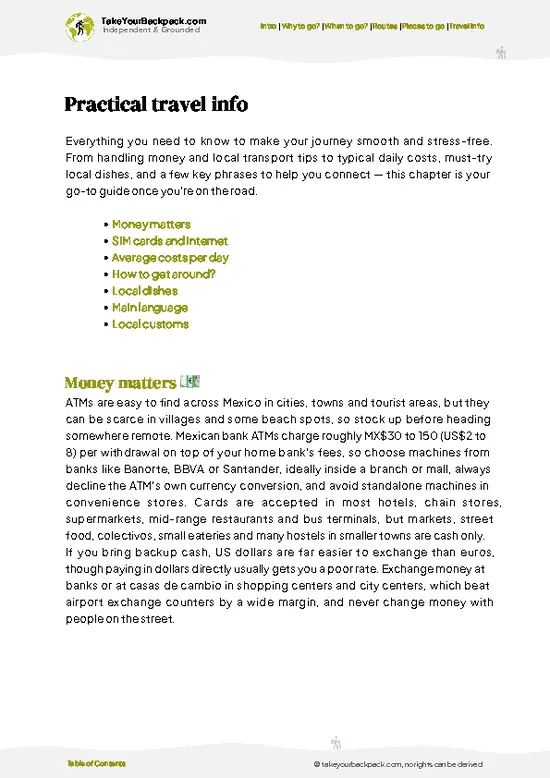
example page 0 from our offline Travel Guide for Mexico
example page 1 from our offline Travel Guide for Mexico
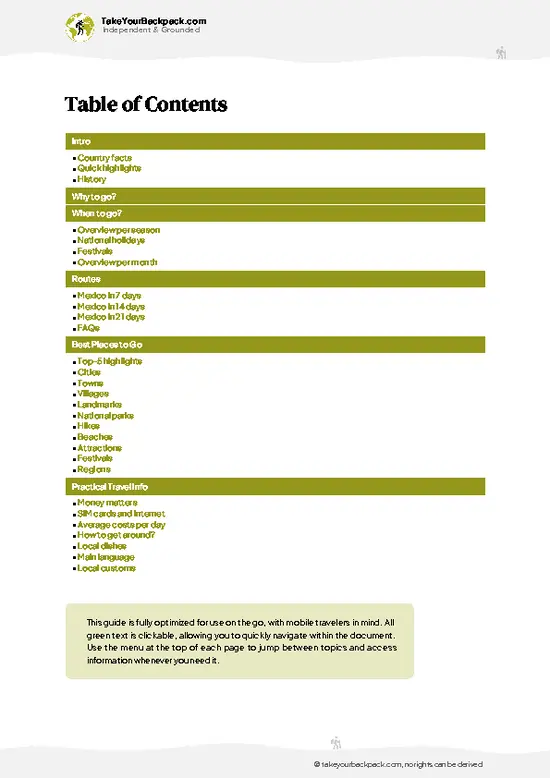
example page 2 from our offline Travel Guide for Mexico
example page 3 from our offline Travel Guide for Mexico
example page 4 from our offline Travel Guide for Mexico
example page 5 from our offline Travel Guide for Mexico
example page 6 from our offline Travel Guide for Mexico
example page 7 from our offline Travel Guide for Mexico
Loading the map 🌍
CLICK TO FILTER
cities
towns
villages
landmarks
national parks
hikes
beaches
attractions
festivals
regions
SHOW COUNTRY’S BESTSHOW ALL

✨ Why go?
Ranked #1 town in Mexico
What makes this town worth visiting

Tulum works because so much sits within a short bike or colectivo ride of one walkable pueblo. The Tulum archaeological site perches on a cliff above turquoise water, and a swim at the little beach below it is one of the better ways to cool off after the stone paths. Inland, limestone sinkholes such as Gran Cenote give you clear water, turtles and snorkeling over stalactites, all without a long expedition. Most travelers stay two or three nights, and those who like to move slowly stretch to four or five, mixing cenote mornings with long beach afternoons. The social side is easy. Hostels run group outings, and solo travelers fall into dinner plans fast. Budget-minded people do best by sleeping in town, eating at the taco stands along the avenue, and visiting the pricey beach strip only for … read more 👉
Tulum works because so much sits within a short bike or colectivo ride of one walkable pueblo. The Tulum archaeological site perches on a cliff above turquoise water, and a swim at the little beach below it is one of the better ways to cool off after the stone paths. Inland, limestone sinkholes such as Gran Cenote give you clear water, turtles and snorkeling over stalactites, all without a long expedition. Most travelers stay two or three nights, and those who like to move slowly stretch to four or five, mixing cenote mornings with long beach afternoons. The social side is easy. Hostels run group outings, and solo travelers fall into dinner plans fast. Budget-minded people do best by sleeping in town, eating at the taco stands along the avenue, and visiting the pricey beach strip only for an afternoon on a public stretch of sand. Hikers and party seekers may find it thin, since the walking is flat and nightlife is more about mezcal and live music than big clubs. For beach lovers, swimmers and anyone who wants Maya history and sinkholes in one place, it is hard to beat.

💡 HighlightsWhat this place is best known for

  1. Tulum Archaeological Zone: The walled Maya port, with El Castillo overlooking the Caribbean, is the reason most people come. Walk the paths, spot iguanas, then go down to the small beach for a swim. Arrive at opening to beat tour groups and the heat. Entry is about US$5 to 6 plus a small parking or access fee, and it takes 1.5 to 2 hours.
  2. Gran Cenote: A cave-and-open-air sinkhole with clear water, turtles and stalactites, good for snorkeling. Go early or late afternoon when fewer tour buses are there. Entry is about US$20 to 25, with snorkel gear rental extra, and you need 1.5 to 2 hours.
  3. Parque del Jaguar and the Tulum pueblo: Not a park in a formal sense but the central avenue Tulum, lined with taco stands, mezcal bars, murals and shops. Evenings are lively and cooler, and a stroll plus a
… read more 👉
  1. Tulum Archaeological Zone: The walled Maya port, with El Castillo overlooking the Caribbean, is the reason most people come. Walk the paths, spot iguanas, then go down to the small beach for a swim. Arrive at opening to beat tour groups and the heat. Entry is about US$5 to 6 plus a small parking or access fee, and it takes 1.5 to 2 hours.
  2. Gran Cenote: A cave-and-open-air sinkhole with clear water, turtles and stalactites, good for snorkeling. Go early or late afternoon when fewer tour buses are there. Entry is about US$20 to 25, with snorkel gear rental extra, and you need 1.5 to 2 hours.
  3. Parque del Jaguar and the Tulum pueblo: Not a park in a formal sense but the central avenue Tulum, lined with taco stands, mezcal bars, murals and shops. Evenings are lively and cooler, and a stroll plus a meal fits in 1.5 to 2 hours. Free to wander, with food from US$2 to 4 per taco plate.
  4. Playa Paraíso: A wide public beach with white sand, close to the ruins and one of the best places to swim without a beach club fee. Mornings are calm. Free, and a half day easily disappears here. Bring your own drinks to save money.
  5. Tulum Sian Ka’an access and Laguna Kaan Luum: A turquoise lagoon with a deep blue sinkhole at its center, a short ride from the pueblo and calmer than the cenotes. Late morning gives the best color. Entry is about US$5 to 8, and a stay of 2 to 3 hours works well.
Tulum also anchors day trips to the Coba ruins, the Sian Ka’an biosphere reserve, Akumal for turtles and the Mayan site of Muyil. For a first visit, the Tulum Archaeological Zone is the one to do, with a swim at the beach below.
Spotted a mistake or missing something? Contact us.

Things to do around Tulum

Ratings based on Tripadvisor reviews. When you book through this link, you support our work at no extra cost to you.

🏘️ NeighborhoodsUnderstanding the local layout

Tulum splits into three zones that feel like three different trips, and the gaps between them are longer than the map suggests.
  • Tulum Pueblo (the town) runs along Avenida Tulum, a strip of taquerias, tour offices, taco carts and mezcal bars. Walkable end to end in 20 minutes, loud with scooters and loud with music after dark. Order al pastor at a corner stand and eat standing with locals for a few dollars.
  • Aldea Zamá sits just south of the town center, with tree-lined lanes, boutique restaurants and cocktail bars. It is walkable from the pueblo, and the reward is a decent cappuccino with air conditioning and no one shouting about snorkel tours.
  • Hotel Zone (Zona Hotelera) is the 10 km beach road of boutique hotels, beach clubs and yoga decks, where a smoothie can cost as much as your dorm bed.
… read more 👉
Tulum splits into three zones that feel like three different trips, and the gaps between them are longer than the map suggests.
  • Tulum Pueblo (the town) runs along Avenida Tulum, a strip of taquerias, tour offices, taco carts and mezcal bars. Walkable end to end in 20 minutes, loud with scooters and loud with music after dark. Order al pastor at a corner stand and eat standing with locals for a few dollars.
  • Aldea Zamá sits just south of the town center, with tree-lined lanes, boutique restaurants and cocktail bars. It is walkable from the pueblo, and the reward is a decent cappuccino with air conditioning and no one shouting about snorkel tours.
  • Hotel Zone (Zona Hotelera) is the 10 km beach road of boutique hotels, beach clubs and yoga decks, where a smoothie can cost as much as your dorm bed. Walking it is a commitment, so rent a bike. Public beach access points exist, and the payoff is white sand and turquoise water without a minimum spend.
  • Archaeological Zone is the Maya walled site on the cliffs at the north end of the beach road. Come early, because tour buses and iguanas both take over by late morning. You get Caribbean views from a 13th-century watchtower, and a swim at the small beach below.
  • La Veleta lies west of the highway, a residential, slightly bohemian patch of cafes, co-working spots and vegan kitchens. It is 15 minutes by bike from the pueblo and calmer at night. You get a quiet breakfast and a glimpse of how long-term residents live.

⌛️ 1 dayA smart one-day plan

8:00 AM, Tulum Archaeological Zone: Start at the ruins when they open, since the stone paths are still cool and tour buses have not arrived. Wander past El Castillo and the Temple of the Frescoes, then take the stairs down to the small beach for a swim. Allow about two hours, then ride or taxi back to the pueblo.
10:30 AM, Taco breakfast on Avenida Tulum: Grab a plate of cochinita pibil or egg dishes at a local stand and a cold fruit drink. The avenue is easiest to walk, and you can wander in and out of small shops.
12:00 PM, Gran Cenote: Rent a bike or hop in a colectivo to this cave-and-sinkhole system. Swim and snorkel through clear water, looking for turtles and stalactites. The water is calm and chilly after the morning heat. Plan about two hours.
2:30 PM, Cenote Cristal and Escondido: Most … read more 👉
8:00 AM, Tulum Archaeological Zone: Start at the ruins when they open, since the stone paths are still cool and tour buses have not arrived. Wander past El Castillo and the Temple of the Frescoes, then take the stairs down to the small beach for a swim. Allow about two hours, then ride or taxi back to the pueblo.
10:30 AM, Taco breakfast on Avenida Tulum: Grab a plate of cochinita pibil or egg dishes at a local stand and a cold fruit drink. The avenue is easiest to walk, and you can wander in and out of small shops.
12:00 PM, Gran Cenote: Rent a bike or hop in a colectivo to this cave-and-sinkhole system. Swim and snorkel through clear water, looking for turtles and stalactites. The water is calm and chilly after the morning heat. Plan about two hours.
2:30 PM, Cenote Cristal and Escondido: Most visitors head straight back to town, but these two cenotes sit across the road from each other and are quieter. Their open pools are ringed by jungle and good for floating and swimming with few crowds. Stay an hour or so.
4:30 PM, Playa Paraíso: Take a taxi or bike to the public beach for the late afternoon. The sand is white, the water shallow and easy for swimming. Bring your own snacks and watch the pelicans.
7:00 PM, Dinner back in the pueblo: Return along the avenue for tacos al pastor, a mezcal tasting and live music. The town is cooler at night, and the walk back to your hostel is short and easy.

🌤️ When to go?Weather, crowds, and seasonal trade-offs

November to April is the easiest window for Tulum, with dry days and sea breezes. Highs run 27 to 30°C (81 to 86°F), nights 19 to 22°C (66 to 72°F), and daylight lasts roughly 11 to 13 hours across the year.
  • Dry Season (November to April): Comfortable, sunny and busiest. December to early January and Easter week bring the highest prices and fullest beaches.
  • Shoulder (May and June): Hotter at 31 to 34°C (88 to 93°F), with thinner crowds and lower bed rates. Sargassum seaweed can pile onto the beaches from spring into summer.
  • Rainy Season (July to October): Humid, 30 to 35°C (86 to 95°F), with afternoon downpours and mosquitoes. Cenotes are quiet and prices drop. Hurricane risk peaks from August to October.
  • Winter Fronts (December to February): Occasional northerlies bring cloudy, breezy days with
… read more 👉
November to April is the easiest window for Tulum, with dry days and sea breezes. Highs run 27 to 30°C (81 to 86°F), nights 19 to 22°C (66 to 72°F), and daylight lasts roughly 11 to 13 hours across the year.
  • Dry Season (November to April): Comfortable, sunny and busiest. December to early January and Easter week bring the highest prices and fullest beaches.
  • Shoulder (May and June): Hotter at 31 to 34°C (88 to 93°F), with thinner crowds and lower bed rates. Sargassum seaweed can pile onto the beaches from spring into summer.
  • Rainy Season (July to October): Humid, 30 to 35°C (86 to 95°F), with afternoon downpours and mosquitoes. Cenotes are quiet and prices drop. Hurricane risk peaks from August to October.
  • Winter Fronts (December to February): Occasional northerlies bring cloudy, breezy days with sea temperatures slightly cooler, sometimes dipping to 16°C (61°F) at night.
Visit in late January or November to catch good weather before or after the price peaks.


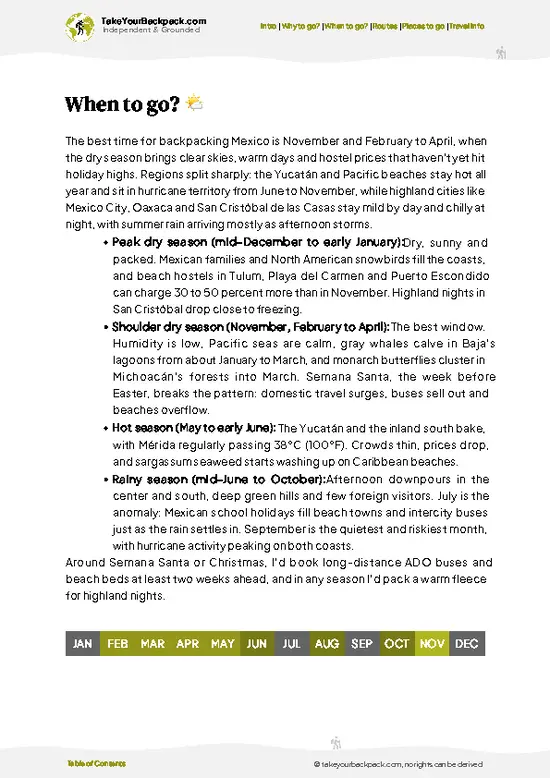
source: climatestotravel.comJANJanuary: highly recommended for travelingFEBFebruary: highly recommended for travelingMARMarch: highly recommended for travelingAPRApril: highly recommended for travelingMAYMay: good for travelingJUNJune: fair for travelingJULJuly: fair for travelingAUGAugust: fair for travelingSEPSeptember: fair for travelingOCTOctober: good for travelingNOVNovember: highly recommended for travelingDECDecember: highly recommended for traveling
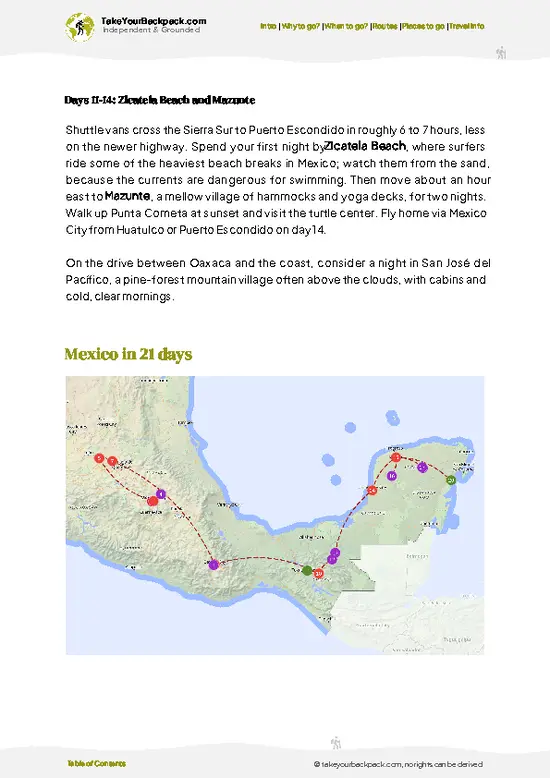
mexico-city-tulum v1
© Google |

✈️ The backpacker research shortcutMexico Travel Guide

An offline-friendly backpacking guide with optimized travel routes, ranked highlights, transport advice, and the best areas to stay.
example page 0 from our offline Travel Guide for Mexico
example page 1 from our offline Travel Guide for Mexico
example page 2 from our offline Travel Guide for Mexico
example page 3 from our offline Travel Guide for Mexico
example page 4 from our offline Travel Guide for Mexico
example page 5 from our offline Travel Guide for Mexico
example page 6 from our offline Travel Guide for Mexico
example page 7 from our offline Travel Guide for Mexico
The digital guide (402 pages) contains:
✅ 138 highlights, ranked by travel appeal
✅ Optimized 7, 14 & 21-day travel routes
✅ Cities, national parks, landmarks, beaches
✅ How to get around
✅ Offline-friendly for travel without Wi-Fi
👉 Click to see all 30+ guide features

📅 Plan smarter in minutes, not weeks
✅ Month by month travel advice
✅ Festivals & national holidays
✅ Budget expectations

🗺️ Go to the right places, skip the overrated ones
✅ Honest pros & cons of destinations
✅ Top hikes, parks & viewpoints
✅ Lesser-known places most travelers miss
✅ Clear “worth it vs skip it” guidance

🛏️ Travel smoothly without rookie mistakes
✅ Best areas to stay
✅ Transport systems explained simply
✅ Common scams & safety advice
✅ SIM cards, money & practical tips

🌍 Understand the country, not just visit it
✅ Culture & traditions
✅ 52 Essential phrases & customs
✅ Festivals worth planning around
✅ Traveler-friendly historical context
✅ Insights that make places more meaningful

📱 Built for real travel conditions
✅ Fully downloadable PDF
✅ Works completely offline
✅ Optimized for phone use
✅ Useful in remote areas & buses
✅ Everything in one place
Stop searching, start planning
Get instant access to your full guide. 30‑day money-back guarantee.
+ Add another guide for just

By proceeding you agree to our terms.
Sent to your inbox immediately after payment • 100% Secure Checkout
Best Backpacking Travel Advisor 2025 tourism awardBest Backpacking
Travel Advisor
2025
What others say about Take Your Backpack Guides:
⭐⭐⭐⭐⭐
Fantastic, amazing amount of information!
⭐⭐⭐⭐⭐
My goodness this is amazing, it's what I've been looking for hats off too you!
⭐⭐⭐⭐⭐
I think this is absolutely BRILLIANT
⭐⭐⭐⭐
Very complete and informative. It's still missing places, but I gotta to commend you
⭐⭐⭐⭐⭐
This is truly amazing, thank you, can't wait to explore it with my kids!
⭐⭐⭐⭐⭐
Awesome resource, thank you!
⭐⭐⭐⭐⭐
This is amazing! Can't wait to explore the ones I haven't seen
⭐⭐⭐⭐
I love this! Well done, great idea.
⭐⭐⭐⭐⭐
Thanks for taking the time to make this gem!
⭐⭐⭐⭐⭐
This might be the best website I've ever seen.
⭐⭐⭐⭐⭐
Congratulations, and thank you so much for your work; it's incredibly valuable.
⭐⭐⭐⭐
In all seriousness I think you did a great job pointing out the important spots
⭐⭐⭐⭐⭐
10/10 very good
⭐⭐⭐⭐⭐
As someone who's only just starting to visit regularly this is awesome, thank you.
⭐⭐⭐⭐
Thank you very much! I'm going to visit my dad, it's going to be very useful!
⭐⭐⭐⭐⭐
This is really cool! We'll be travelling for the first time and this definitely come in handy.
⭐⭐⭐⭐⭐
You are now our minister of culture, congratulations 👨‍💼
⭐⭐⭐⭐⭐
Just wanted to tell you that this is a pearl! Going to follow your recommendations.
⭐⭐⭐⭐⭐
This is so cool. I'll definitely be using the resource for my travels soon.
⭐⭐⭐⭐⭐
This is very impressive! Good work.
⭐⭐⭐⭐⭐
This is an amazing and informative site. Very well done!

🛏️ Where to stay?Best areas to stay in Mexico

Tulum Pueblo is the best base for a budget stay, with the widest choice of dorm beds, usually US$12 to 30 a night, along and just off Avenida Tulum and the quieter streets in La Veleta. Prices rise sharply in December to April, so book ahead then.
The pueblo wins on transport, because the bus station, colectivo stops, bike rental shops and cheap taquerias are all within a short walk. Streets are generally lively and well lit until late, and a solo traveler can walk home from dinner on the main avenue without fuss. Noise is the issue. Rooms facing Avenida Tulum get motorbikes and bass until the … read more 👉
Tulum Pueblo is the best base for a budget stay, with the widest choice of dorm beds, usually US$12 to 30 a night, along and just off Avenida Tulum and the quieter streets in La Veleta. Prices rise sharply in December to April, so book ahead then.
The pueblo wins on transport, because the bus station, colectivo stops, bike rental shops and cheap taquerias are all within a short walk. Streets are generally lively and well lit until late, and a solo traveler can walk home from dinner on the main avenue without fuss. Noise is the issue. Rooms facing Avenida Tulum get motorbikes and bass until the early hours, so ask for a back room or bring earplugs.
La Veleta, a short ride west of the highway, is the better pick if you want sleep over social buzz. You find smaller hostels, guesthouses with kitchens, and a calmer, residential feel. Streets are darker and unpaved in places, so bring a flashlight or use a taxi after dark, and a bike makes it easy to get in and out.
The beach road has almost no real budget beds, and nights there cost several times more. Staying in town and cycling to the sea is the practical solution.

🚌 Getting aroundHow to get from A to B

From the ADO bus station on Avenida Tulum, the center is a 5 to 10 minute walk, or a US$2 to 4 taxi ride if you are hauling a pack in the heat. Tulum is really a long, thin line of road, and distances between the town, beach and ruins are bigger than they look. Traffic jams on the beach road are legendary, and a bike often beats a car.
  • Walking works well within the pueblo, where everything from tacos to bus tickets sits along a few blocks. It is free, and you pass the best street food on foot. Skip it for the beach road, where sidewalks come and go and the sun is merciless.
  • Bicycle rental costs US$5 to 12 a day, and a bike path runs most of the way along the beach road. A ride from town to the ruins takes about 20 to 30 minutes, and you will pass the beach clubs at a pace that lets you pick
… read more 👉
From the ADO bus station on Avenida Tulum, the center is a 5 to 10 minute walk, or a US$2 to 4 taxi ride if you are hauling a pack in the heat. Tulum is really a long, thin line of road, and distances between the town, beach and ruins are bigger than they look. Traffic jams on the beach road are legendary, and a bike often beats a car.
  • Walking works well within the pueblo, where everything from tacos to bus tickets sits along a few blocks. It is free, and you pass the best street food on foot. Skip it for the beach road, where sidewalks come and go and the sun is merciless.
  • Bicycle rental costs US$5 to 12 a day, and a bike path runs most of the way along the beach road. A ride from town to the ruins takes about 20 to 30 minutes, and you will pass the beach clubs at a pace that lets you pick one.
  • Colectivos are shared vans leaving from Calle 2 Oriente and nearby for Playa del Carmen (about US$3 to 4, 1 hour) and for the cenotes along the highway. They run from early morning until about 9 pm. You squeeze in beside locals and pay the driver, with cooling by open window.
  • Taxis are unmetered, so agree on the price first. Town to the ruins runs about US$8 to 15, and to the Hotel Zone about US$10 to 20, depending on distance. A taxi is worth it after dark, when the beach road bikes lose their appeal.
  • ADO and other buses link Tulum to Cancún (about 2 hours, US$10 to 15), Playa del Carmen (1 hour), Valladolid and Bacalar. Buses run through the day and into the night, and the air conditioning is strong, so keep a layer handy.

👛 Costs (as of 20 October 2026)Travel costs and budget guide for Tulum

Tulum costs backpackers about US$48 to 112 a day, which is higher than most Mexican towns, with a total of US$80 in high season on my table.
CategoryBudget RangeLocal Reality
Dorm accommodationUS$15 to 30 (high season US$25)Beds in the pueblo run US$12 to 18 in low season and climb in winter. Beach road dorms cost more.
MealsUS$15 to 25 (US$20)Tacos cost US$1 to 2 each, set lunches US$5 to 8, and sit-down dinners US$12 to 20. Beach club meals cost far more.
Local transportUS$3 to 12 (US$8)Colectivos cost US$2 to 4, bike rental US$5 to 12 a day, and taxis US$8 to 20.
Basic activities and entry feesUS$10 to 30 (US$20)Ruins cost about US$5 to 6, Gran Cenote about US$18 to 20, and some beach access points are free.
MiscellaneousUS$5 to 15 (US$7)Water, sunscreen, laundry and the odd mezcal.
Total Daily
… read more 👉
Tulum costs backpackers about US$48 to 112 a day, which is higher than most Mexican towns, with a total of US$80 in high season on my table.
CategoryBudget RangeLocal Reality
Dorm accommodationUS$15 to 30 (high season US$25)Beds in the pueblo run US$12 to 18 in low season and climb in winter. Beach road dorms cost more.
MealsUS$15 to 25 (US$20)Tacos cost US$1 to 2 each, set lunches US$5 to 8, and sit-down dinners US$12 to 20. Beach club meals cost far more.
Local transportUS$3 to 12 (US$8)Colectivos cost US$2 to 4, bike rental US$5 to 12 a day, and taxis US$8 to 20.
Basic activities and entry feesUS$10 to 30 (US$20)Ruins cost about US$5 to 6, Gran Cenote about US$18 to 20, and some beach access points are free.
MiscellaneousUS$5 to 15 (US$7)Water, sunscreen, laundry and the odd mezcal.
Total Daily BudgetUS$48 to 112 (US$80)One high-season dorm bed counted.
Save by eating at taquerias and markets in the pueblo and renting a bike for the week, since beach road restaurants charge two to three times as much for similar food.
⚠️ Prices can change and everyone travels differently, so take this as a rough guide. Hope it helps you plan your adventure!

🚌 Day tripsWhere to go beyond the main area

Tulum works very well as a base for day trips, with colectivos and ADO buses reaching most sites within one to two hours for a few dollars.
Cobá Ruins:
These jungle ruins lie about 45 minutes inland by colectivo or bus (US$3 to 5 each way), plus an entry fee of roughly US$5 to 6. You can climb Nohoch Mul, one of the tallest Maya pyramids in the region, and rent a bike to cover the shaded paths. Go early, between November and April, to beat the heat. Total cost is about US$20 with lunch. First-timers often arrive at noon and wilt.

Gran Cenote and Cenote Route:
Gran Cenote sits about 10 minutes from town, reachable by bike, taxi or colectivo for under US$10 round trip, with entry around US$18 to 20. Clear water, turtles and stalactites reward snorkelers. Arrive at opening to avoid tour groups, … read more 👉
Tulum works very well as a base for day trips, with colectivos and ADO buses reaching most sites within one to two hours for a few dollars.
Cobá Ruins:
These jungle ruins lie about 45 minutes inland by colectivo or bus (US$3 to 5 each way), plus an entry fee of roughly US$5 to 6. You can climb Nohoch Mul, one of the tallest Maya pyramids in the region, and rent a bike to cover the shaded paths. Go early, between November and April, to beat the heat. Total cost is about US$20 with lunch. First-timers often arrive at noon and wilt.

Gran Cenote and Cenote Route:
Gran Cenote sits about 10 minutes from town, reachable by bike, taxi or colectivo for under US$10 round trip, with entry around US$18 to 20. Clear water, turtles and stalactites reward snorkelers. Arrive at opening to avoid tour groups, and rinse off sunscreen first, because many cenotes ban it. Budget US$25 to 35 for the day if you add a second cenote.

Sian Ka’an Biosphere Reserve:
This protected reserve of mangroves, lagoons and reef begins just south of the Hotel Zone. Guided boat tours cost roughly US$60 to 120 for half a day, and wildlife viewing is best in the morning. Dry months give calmer water. Many first-timers pick the cheapest tour and get a rushed visit, so check group size.
👉 Explore Sian Ka’an
Akumal:
Akumal Bay is about 30 minutes north by colectivo (US$2 to 3), and you can swim with green sea turtles over seagrass. A guide is required, costing about US$20 to 30, and reef-safe sunscreen only. Go early for fewer swimmers, and avoid touching the turtles. Total budget is roughly US$35 to 45.

🛡️ SafetySafety Tips and Common Scams in Tulum

Tulum is broadly safe for backpackers, and most problems are small ones. Drive-by petty theft is rare, but phones and bags left on beach towels or on bikes do disappear, so lock your bike and keep valuables with you while swimming. Take extra care along dark stretches of the beach road at night, where lighting is patchy and bike paths are uneven. Use a taxi after dinner and agree on the fare first, as there are no meters. Solo travelers, including women, do fine in the pueblo, though catcalling and persistent tour touts on Avenida Tulum are everyday annoyances that a firm “no gracias” handles. Beach clubs and restaurants sometimes add a service charge or minimum spend, so check the bill before paying. ATMs inside shops are safer than standalone ones, and withdrawing pesos gives a better rate … read more 👉
Tulum is broadly safe for backpackers, and most problems are small ones. Drive-by petty theft is rare, but phones and bags left on beach towels or on bikes do disappear, so lock your bike and keep valuables with you while swimming. Take extra care along dark stretches of the beach road at night, where lighting is patchy and bike paths are uneven. Use a taxi after dinner and agree on the fare first, as there are no meters. Solo travelers, including women, do fine in the pueblo, though catcalling and persistent tour touts on Avenida Tulum are everyday annoyances that a firm “no gracias” handles. Beach clubs and restaurants sometimes add a service charge or minimum spend, so check the bill before paying. ATMs inside shops are safer than standalone ones, and withdrawing pesos gives a better rate than accepting dynamic conversion. Drugs offered on the street are best declined, since police attention is real. Drink only from sealed bottles or filtered water.

FAQTraveler FAQ

Tulum is worth a proper visit, not only a stopover, because the Maya walled city sits on a cliff above Caribbean water and the cenotes inland are some of the best swimming in the region. Entry to the Tulum archaeological site is roughly US$5 to 8, and Gran Cenote or Cenote Dos Ojos run about US$20 to 25 each. Beach days along the Tulum hotel zone road and tacos in the town center fill out a stay that is more rewarding than a quick photo stop.
Tulum suits 3 to 4 days for most backpackers. That gives you one morning at the ruins (go when they open to beat tour buses and heat), one or two cenote days, and an afternoon on the beach, with a spare day for Sian Ka’an or a Coba day trip. A budget traveler spending US$55 to 80 a day will cover all of this without rushing.
Tulum works as a day trip from Playa del Carmen, which is about 1 hour by colectivo van for US$3 to 4, and it is feasible from Cancun in roughly 2 hours by ADO bus (US$10 to 15 each way). The ruins and one cenote fit into a long day if you leave before 8 a.m. Staying at least one night in Tulum is better, since the beach clubs, evening taco streets and early-morning ruins entry are hard to squeeze into daylight bus schedules.
⚠️ Things can change over time, so always validate details locally before you go.

Other Mexican towns near Tulum

Explore more nearby:

  • Isla Mujeres—Playa Norte, ferry-dock malecón, turtle sanctuary, reef snorkeling| 137 km away
  • Tlacotalpan—Papaloapan riverfront, pastel arcades, seafood, river boats| 877 km away
  • Santa María Huatulco—Inland Oaxaca, market meals, church plaza, bay piers| 1055 km away

💡 Not sure where to go next?
Create a personalized itinerary for Mexico including Tulum and the places that fit your trip.

Generate my itinerary

👉 Discover all towns

Or checkout all Mexico has to offer (think cities, towns, villages, national parks, hikes, beaches, festivals)
Country photo of Mexico

We 💚 feedbackSumming up the experience

Many travelers book a beach-zone room and then spend their budget on taxis and cover charges. Sleep in the pueblo, rent a bike, and use the public beaches instead. I would visit the ruins first thing in the morning, before the tour buses and heat build up.

✈️ When did I visit Mexico?
As part of my 1.5 year travel around the world trip, I visited Mexico in February and March 2016. Had to hurry a bit as I didn’t want to miss the free performance of the Rolling Stones in Cuba.

✍️ Help improve this page!
The information on this page is based on my own backpacking experience in Mexico, supplemented with up-to-date research and feedback from other travelers. Travel details can change, so if you notice anything outdated or incomplete, feel free to let me know.


🙋‍♂️ Give feedback

👋 Meet the founderWho’s Behind Take Your Backpack?

Johan, backpacker and founder of TakeYourBackpackHi, I’m Johan (Netherlands 🇳🇱), the creator of TakeYourBackpack. Over the past 3 decades, I’ve backpacked through 90+ countries across six continents, gaining extensive experience with independent travel, long-term trips, and overland routes.

This site is built on a combination of firsthand travel experience and carefully curated insights from other backpackers. Many guides are based on places I’ve personally visited, while others bring together tips, observations, and practical advice shared by trusted travelers I’ve met along the way.

The goal is to provide realistic, experience-driven guidance — not generic itineraries — so you can explore destinations with better context, clearer expectations, and more confidence.