
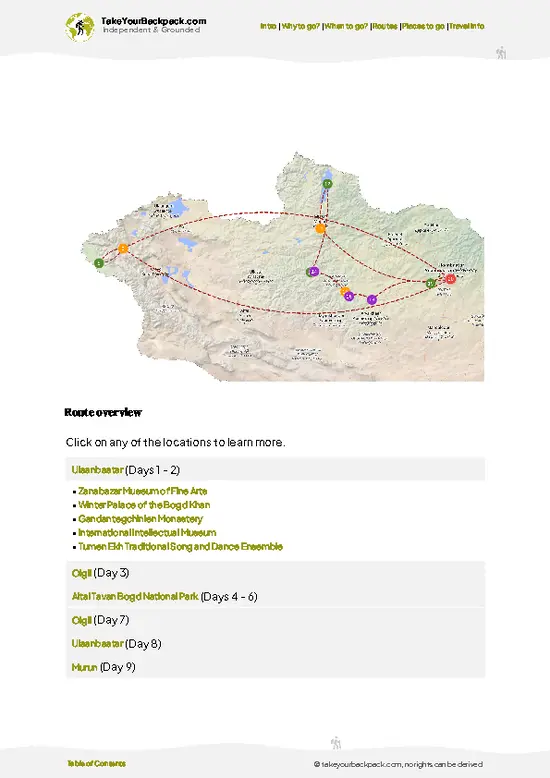
- The Five Peaks / Khüiten Peak panorama — The trek’s namesake massif is a dramatic cluster of jagged summits rising out of the steppe; Khüiten is Mongolia’s highest point. Standing in the valley and looking up at those five “saints” is a different kind of alpine theater — raw, windswept, and almost empty of other people, so the scale feels personal in a way that busier mountain ranges rarely offer.
- Potanin Glacier (Mongolia’s largest glacier) — A real glacier up close: blue ice, crevassed moraines and the roar of meltwater. It’s not the Himalaya’s ice ocean, but for Mongolia it’s the headline feature — accessible, photogenic, and a stark reminder you’re hiking in truly high, glaciated terrain rather than rolling hills.
- Khoton & Khurgan Twin Lakes — Deep turquoise lakes tucked under steep
- The Five Peaks / Khüiten Peak panorama — The trek’s namesake massif is a dramatic cluster of jagged summits rising out of the steppe; Khüiten is Mongolia’s highest point. Standing in the valley and looking up at those five “saints” is a different kind of alpine theater — raw, windswept, and almost empty of other people, so the scale feels personal in a way that busier mountain ranges rarely offer.
- Potanin Glacier (Mongolia’s largest glacier) — A real glacier up close: blue ice, crevassed moraines and the roar of meltwater. It’s not the Himalaya’s ice ocean, but for Mongolia it’s the headline feature — accessible, photogenic, and a stark reminder you’re hiking in truly high, glaciated terrain rather than rolling hills.
- Khoton & Khurgan Twin Lakes — Deep turquoise lakes tucked under steep cliffs and grasslands. Campsites on their shores are some of the best in the region: mirror reflections at dawn, trout in the water, and a dramatic mountain backdrop. If you like evenings by a cold lake with nobody else around, this is peak trekking romance (budget-friendly and unforgettable).
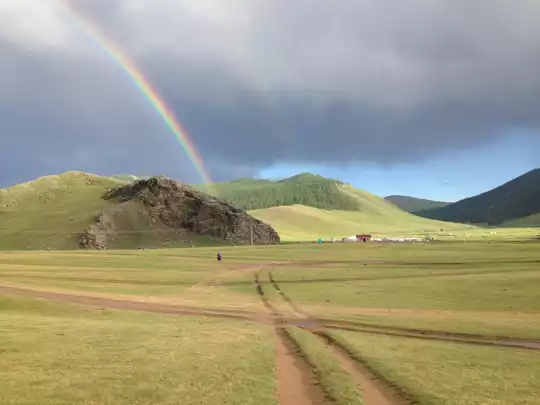
- Nomadic Kazakh culture and ger camps — The trek threads through active seasonal pastures; you’ll often camp near gers and meet Kazakh herders, sometimes see eagle hunters or sample fresh airag (fermented mare’s milk). That human element — simple hospitality, yak/horse corrals, and a real working landscape — lifts the trip out of the “just scenery” category and makes it uniquely Mongolian.
- Wildlife and high-alpine meadows — Marmots whistling from the tussocks, ibex or argali on rocky ridges, raptors wheeling above — wildlife encounters are frequent and feel wild because the route is remote. Snow leopard sightings are extremely rare, but the geology and ecology here are classic Altai: big sky, big animals, and flower-strewn summers that beat many lower-elevation trails for solitude and biodiversity.
Spotted a mistake or missing something? Contact us.

 Best Backpacking
 Hi, I’m Johan (Netherlands 🇳🇱), the creator of TakeYourBackpack. Over the past 3 decades, I’ve backpacked through 90+ countries across six continents, gaining extensive experience with independent travel, long-term trips, and overland routes.