×

Mongolia🇲🇳 | best hikesExplore the 4 Best hikes in Mongolia

Mongolia’s hiking trails are a testament to the country’s vast, untamed beauty, offering a unique blend of rugged landscapes and cultural richness. From the soaring peaks of the Altai Mountains to the expansive steppes, each region presents distinct challenges and rewards. Trail difficulty varies widely; some paths demand serious endurance, while others welcome casual walkers.

Seasonal changes significantly affect your experience. Summer brings long daylight hours, perfect for exploration, but also requires careful planning for altitude acclimatization. In contrast, autumn offers stunning foliage but shorter days and cooler temperatures.

Choosing the right hike shapes your entire trip. A trek through the Gobi Desert immerses you in local nomadic culture, while a climb in the Khangai Mountains rewards you with breathtaking vistas. Each choice influences your budget, safety, and overall vibe, making it essential for backpackers and independent travelers to align their hikes with personal goals and local conditions.

By Johan Kruseman 🇳🇱 | Updated June 11, 2026
Explore the best beaches in Mongolia

Why go?Why These hike Stand Out

Mongolia’s hikes matter because they offer a raw, unfiltered connection to the land, where the vastness of the steppe meets the rugged Altai Mountains. The terrain variety is staggering; from rolling grasslands to steep, rocky ascents, each step reveals a new facet of this wild landscape. Hikers can traverse high-altitude trails that challenge the lungs and legs, rewarding them with panoramic views that stretch to the horizon.

However, this beauty comes with trade-offs. The trail infrastructure is often rudimentary, meaning that while the paths may lead to breathtaking vistas, they can also demand a level of self-sufficiency and navigation skills that some may find daunting. The difficulty of these hikes often correlates directly with the scenic reward; the more remote the trail, the more … read more 👉
Mongolia’s hikes matter because they offer a raw, unfiltered connection to the land, where the vastness of the steppe meets the rugged Altai Mountains. The terrain variety is staggering; from rolling grasslands to steep, rocky ascents, each step reveals a new facet of this wild landscape. Hikers can traverse high-altitude trails that challenge the lungs and legs, rewarding them with panoramic views that stretch to the horizon.

However, this beauty comes with trade-offs. The trail infrastructure is often rudimentary, meaning that while the paths may lead to breathtaking vistas, they can also demand a level of self-sufficiency and navigation skills that some may find daunting. The difficulty of these hikes often correlates directly with the scenic reward; the more remote the trail, the more profound the experience, but also the greater the challenge.

Seasonality plays a crucial role in planning hikes. Summer offers milder weather and vibrant landscapes, but it can also bring crowds to popular areas. Conversely, spring and autumn provide solitude and stunning colors, yet they come with unpredictable weather and potential safety concerns.

Mongolia’s cultural and historical context adds depth to every hike. The trails often weave through areas steeped in nomadic traditions, where the landscape tells stories of ancient tribes and the resilience of the people. Yet, the logistics of accessing these trails can be complex. Travel times can be lengthy, and the remoteness of some areas means that immersive experiences often require a commitment to time and effort.

In essence, hiking in Mongolia is not just about reaching a destination; it’s about engaging with a landscape that is as challenging as it is rewarding, where every step is a testament to the spirit of exploration.
Why These Made the Cut
The list of best hikes in Mongolia is created based on scenery, challenge, trail quality, landmarks, and overall enjoyment. If you feel a hike is missing in this list, please let us know.

When to go?Seasonal Guide to Visiting

Seasonality in Mongolia


Mongolia’s hiking landscape transforms dramatically with the seasons. Spring, from late March to May, brings a thawing earth and blooming flora. Trails become accessible, but lingering snow and mud can complicate navigation. Daylight hours increase, offering more time to explore, yet temperatures can fluctuate wildly, requiring layered clothing for comfort.

Summer, particularly June to August, is the peak hiking season. Trails are in prime condition, and the weather is generally stable. Expect long days filled with sunlight, perfect for tackling ambitious routes. However, this is also when the country sees the most visitors. Crowds can be a factor, especially in popular areas, and accommodation prices may rise. Hydration becomes crucial as temperatures soar, and … read more 👉

Seasonality in Mongolia


Mongolia’s hiking landscape transforms dramatically with the seasons. Spring, from late March to May, brings a thawing earth and blooming flora. Trails become accessible, but lingering snow and mud can complicate navigation. Daylight hours increase, offering more time to explore, yet temperatures can fluctuate wildly, requiring layered clothing for comfort.

Summer, particularly June to August, is the peak hiking season. Trails are in prime condition, and the weather is generally stable. Expect long days filled with sunlight, perfect for tackling ambitious routes. However, this is also when the country sees the most visitors. Crowds can be a factor, especially in popular areas, and accommodation prices may rise. Hydration becomes crucial as temperatures soar, and altitude can amplify fatigue.

Autumn, from September to early November, offers a different charm. The air cools, and the landscape shifts to vibrant hues. This shoulder season sees fewer hikers, providing a more solitary experience. However, as temperatures drop, trails may become less reliable, and daylight hours shorten. Planning hikes earlier in the day is essential to avoid being caught out after dark.

Winter, from late November to March, presents significant challenges. Snow covers many trails, and temperatures plunge, making hiking strenuous and potentially dangerous. While the scenery is starkly beautiful, the cold demands careful preparation and a focus on safety.

Understanding these seasonal patterns is vital for planning hikes in Mongolia. Each season offers unique rewards and challenges, making it essential to balance safety with the desire for scenic experiences.

hike hoppingPlanning Your Route Efficiently

General Routing Logic

Mongolia’s vastness demands a strategic approach. Cluster hikes by region to minimize travel time and maximize exploration. Start in the north with the rugged Altai Mountains, then head east toward the expansive steppe. This route not only conserves energy but also allows for a gradual acclimatization to altitude.

Typical Time Needed

Allocate at least three days for each major hiking area. This includes time for recovery, as altitude can sap energy. Factor in a day for travel between regions, allowing for spontaneous stops along the way. A well-paced itinerary balances hiking intensity with rest, ensuring that fatigue doesn’t overshadow the experience.

Common Planning Mistakes

Many travelers underestimate the physical demands of Mongolia’s terrain. Rushing from … read more 👉

General Routing Logic

Mongolia’s vastness demands a strategic approach. Cluster hikes by region to minimize travel time and maximize exploration. Start in the north with the rugged Altai Mountains, then head east toward the expansive steppe. This route not only conserves energy but also allows for a gradual acclimatization to altitude.

Typical Time Needed

Allocate at least three days for each major hiking area. This includes time for recovery, as altitude can sap energy. Factor in a day for travel between regions, allowing for spontaneous stops along the way. A well-paced itinerary balances hiking intensity with rest, ensuring that fatigue doesn’t overshadow the experience.

Common Planning Mistakes

Many travelers underestimate the physical demands of Mongolia’s terrain. Rushing from one hike to another can lead to burnout. Prioritize quality over quantity; it’s better to savor a few trails than to rush through many. Also, avoid overpacking the schedule. Flexibility is key; weather can change rapidly, and trails may require adjustments.

Trade-offs and Constraints

Consider the trade-off between speed and depth of experience. A faster pace might allow for more hikes, but it can dilute the richness of each encounter. Budget constraints often lead to compromises in comfort, but investing in a local guide can enhance the experience significantly. Weigh the effort against the reward; sometimes, the most challenging trails yield the most breathtaking views.

Pacing Strategies

Pacing is crucial. Start with moderate hikes to build stamina, then tackle more challenging routes as confidence grows. Incorporate rest days after strenuous hikes to recharge. This approach not only enhances enjoyment but also ensures that each hike remains a rewarding adventure.

The ListThe Best hikes of Mongolia

1 Altai Tavan Bogd Trek

glacial valleys, alpine lakes, Kazakh eagle culture, border peaks

Traverse remote high-altitude terrain, pass ancient petroglyphs, and encounter nomadic herders living at the intersection of Mongolia, Russia, and China.

mongolia-hike-altai-tavan-bogd-trek
© Google |

2 Kharkhiraa Turgen Mountains Trek

boulder fields, wildflower meadows, glacial rivers, Uvs province

Ascend rugged slopes dotted with wildflowers, cross icy streams, and camp beneath dramatic peaks rarely visited by outsiders.

3 Khangai Mountain Range Trek

rolling hills, forested valleys, hot springs, nomad camps

Follow winding trails through larch forests and grassy uplands, stopping at natural hot springs and sharing tea with local herders.

4 Yolyn Am

deep gorge, ice field, Gobi wildlife, narrow canyon

Walk through a shaded chasm where ice lingers through summer, watching for wild goats and lammergeiers overhead in the Gobi’s cool heart.

Loading the map 🌍

Expert viewInsights from Locals and Experts

Trail Logistics

Mongolia’s vastness demands a strategic approach to hiking. Aim for at least three to five hikes to truly grasp the country’s diverse landscapes. Each hike offers a unique flavor, from the rolling hills of the steppe to the rugged Altai Mountains. Plan for a mix of day hikes and multi-day treks to balance intensity and recovery.

Expect to spend anywhere from a few hours to several days on the trails. Day hikes can range from 4 to 10 hours, while multi-day treks might stretch over a week. Factor in travel time between hikes, as distances can be deceptive in this expansive terrain. Budget-wise, prepare for a range that accommodates local guides, gear rentals, and food. A modest budget can stretch far if you embrace local cuisine and stay in ger camps, but splurging on a guided … read more 👉

Trail Logistics

Mongolia’s vastness demands a strategic approach to hiking. Aim for at least three to five hikes to truly grasp the country’s diverse landscapes. Each hike offers a unique flavor, from the rolling hills of the steppe to the rugged Altai Mountains. Plan for a mix of day hikes and multi-day treks to balance intensity and recovery.

Expect to spend anywhere from a few hours to several days on the trails. Day hikes can range from 4 to 10 hours, while multi-day treks might stretch over a week. Factor in travel time between hikes, as distances can be deceptive in this expansive terrain. Budget-wise, prepare for a range that accommodates local guides, gear rentals, and food. A modest budget can stretch far if you embrace local cuisine and stay in ger camps, but splurging on a guided trek can elevate the experience.

Altitude and Recovery

Altitude is a significant player in Mongolia. Many trails ascend quickly, so acclimatization is crucial. If you’re venturing into the Altai or Khentii ranges, expect elevations above 3,000 meters. Take your time; allow at least two days of gradual ascent to minimize altitude sickness. Listen to your body—headaches and fatigue are signals to slow down.

Recovery is equally important. After a long day on the trail, prioritize hydration and nutrition. Local dishes like buuz (steamed dumplings) and khuushuur (fried meat pies) are hearty and restorative. A cold beer at the end of the day isn’t just a treat; it’s a cultural experience. Just remember, pacing yourself is key.

Difficulty and Pacing

Mongolia’s trails vary widely in difficulty. Some paths are well-trodden and manageable, while others demand serious grit. Expect rocky terrain, steep ascents, and unpredictable weather. Choose hikes that match your fitness level and experience. If you’re a beginner, opt for gentler trails and build up to the more challenging ones.

Pacing is essential. Don’t rush; the journey is as rewarding as the destination. On multi-day treks, plan for shorter days to allow for exploration and rest. A good rule of thumb is to hike for about 6 hours a day, leaving time for breaks and soaking in the scenery. The landscapes shift dramatically, and each pause reveals something new—a herd of wild horses, a distant mountain range, or a stunning sunset.

Planning and Prioritizing Hikes

When planning your hikes, consider the seasonal variations. Summer (June to August) is the most popular time, but it can get crowded. Spring and autumn offer fewer tourists and stunning colors, though weather can be unpredictable. Winter hiking is an option, but it requires specialized gear and experience.

Prioritize hikes based on your interests—whether it’s cultural immersion, wildlife spotting, or sheer physical challenge. Research local customs and be respectful of the nomadic lifestyle. Engage with local herders; they often have stories and insights that enrich your experience.

Transportation can be a challenge. Roads are often unpaved, and travel times can stretch. Consider hiring a local guide or joining a tour for logistical support. This not only eases the burden of navigation but also enhances your understanding of the landscape and culture.

Safety and Cultural Considerations

Safety is paramount. Always inform someone of your hiking plans, especially if you’re venturing into remote areas. Carry a first-aid kit and know basic wilderness survival skills. Cell service can be spotty, so a GPS device or map is invaluable.

Culturally, be aware of local customs. Mongolia is rich in traditions, and showing respect goes a long way. Greet locals with a smile and a nod; it’s a simple gesture that fosters goodwill. When visiting sacred sites, follow local guidelines and be mindful of your surroundings.

In summary, the trails of Mongolia are as diverse as the country itself. With careful planning, a spirit of adventure, and respect for the land and its people, you’ll find that the journey is filled with grit, beauty, and unforgettable moments. Embrace the challenge, and let the trails lead you to the heart of Mongolia.

✈️ The backpacker research shortcutMongolia Travel Guide

An offline-friendly backpacking guide with optimized travel routes, ranked highlights, transport advice, and the best areas to stay.
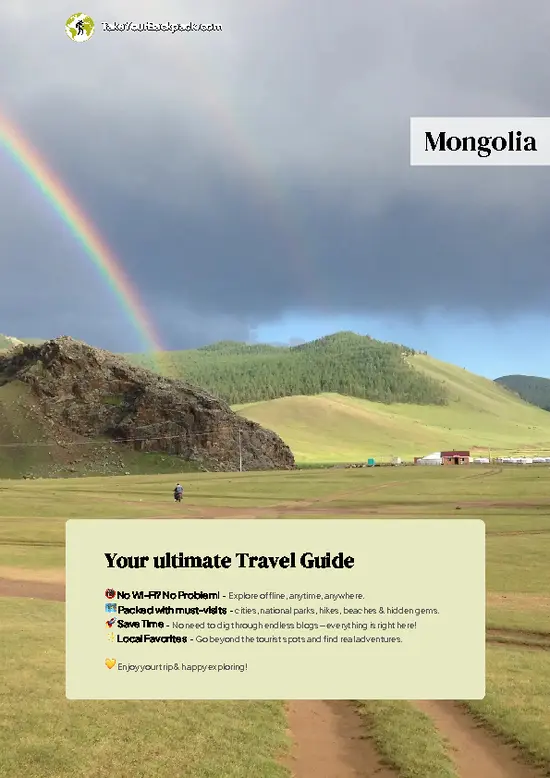
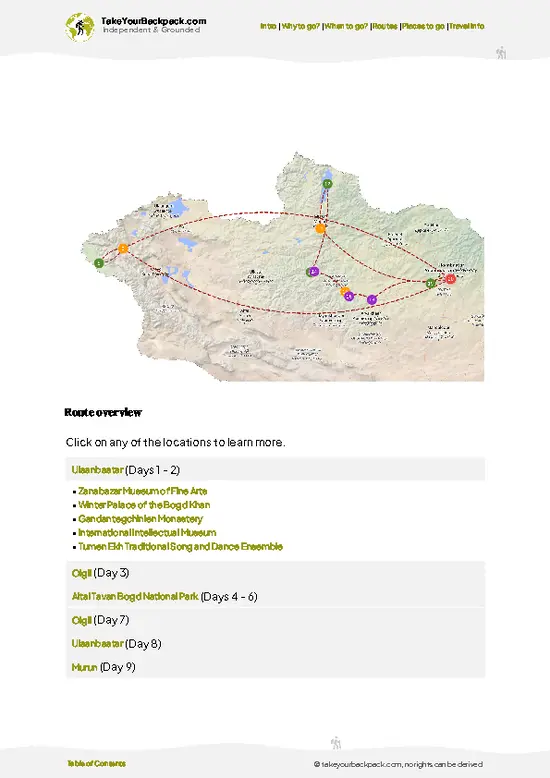
example page 0 from our offline Travel Guide for Mongolia
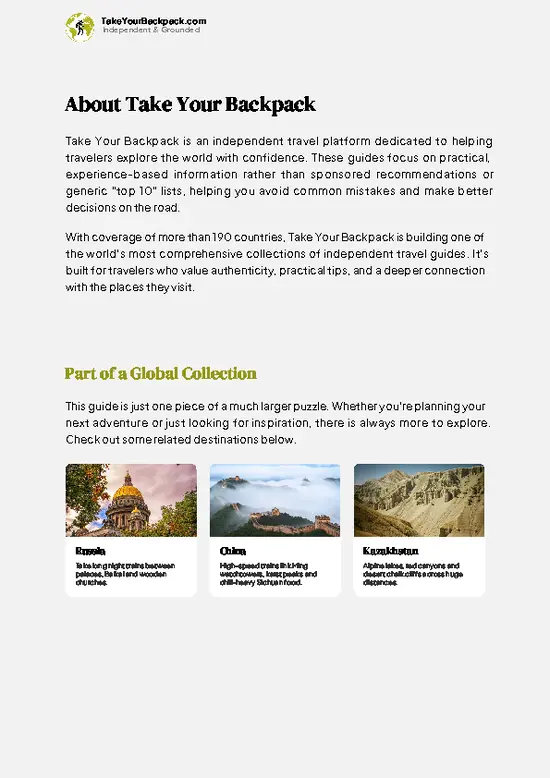
example page 1 from our offline Travel Guide for Mongolia
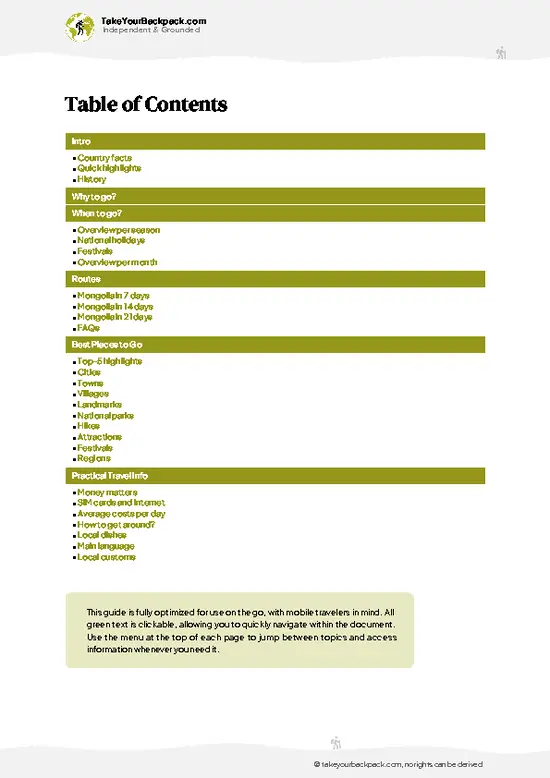
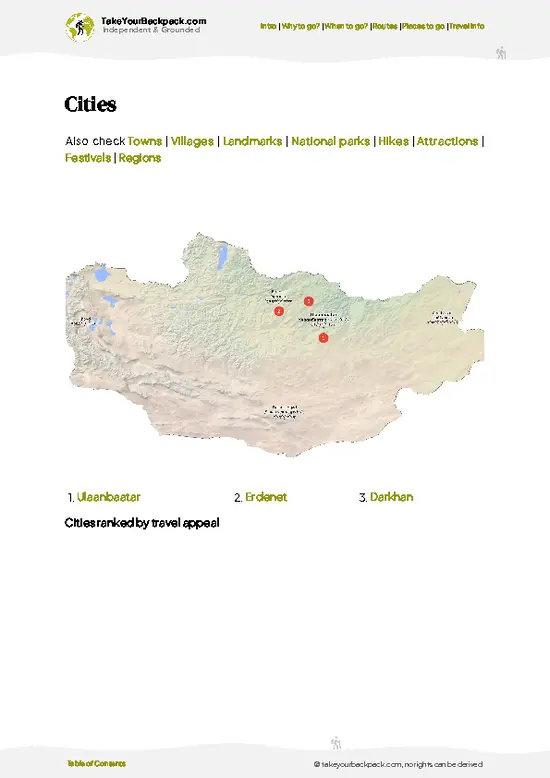
example page 2 from our offline Travel Guide for Mongolia
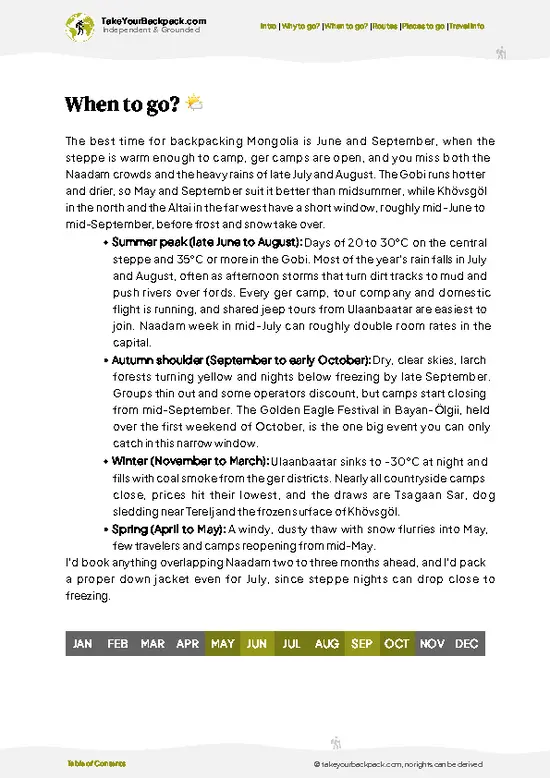
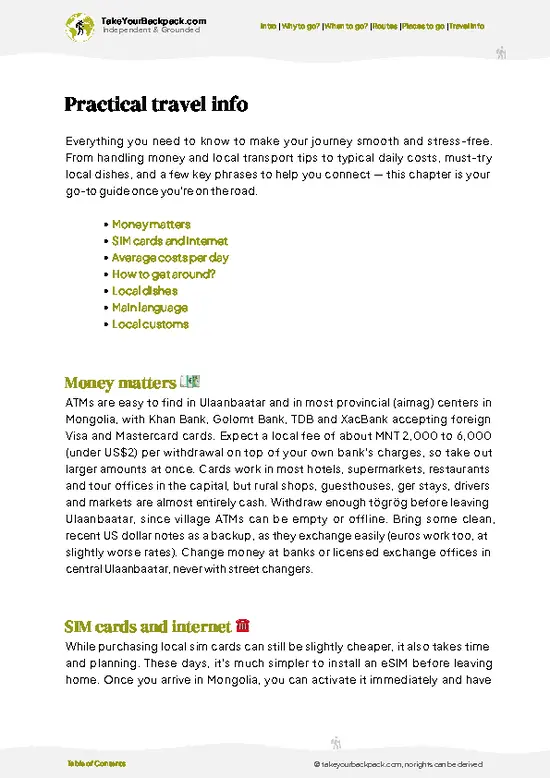
example page 3 from our offline Travel Guide for Mongolia
example page 4 from our offline Travel Guide for Mongolia
example page 5 from our offline Travel Guide for Mongolia
example page 6 from our offline Travel Guide for Mongolia
example page 7 from our offline Travel Guide for Mongolia
The digital guide (282 pages) contains:
70 highlights, ranked by travel appeal
Optimized 7, 14 & 21-day travel routes
Cities, national parks, landmarks, beaches
How to get around
Offline-friendly for travel without Wi-Fi
👉 Click to see all 30+ guide features

📅 Plan smarter in minutes, not weeks
Month by month travel advice
Festivals & national holidays
Budget expectations

🗺️ Go to the right places, skip the overrated ones
Honest pros & cons of destinations
Top hikes, parks & viewpoints
Lesser-known places most travelers miss
Clear “worth it vs skip it” guidance

🛏️ Travel smoothly without rookie mistakes
Best areas to stay
Transport systems explained simply
Common scams & safety advice
SIM cards, money & practical tips

🌍 Understand the country, not just visit it
Culture & traditions
52 Essential phrases & customs
Festivals worth planning around
Traveler-friendly historical context
Insights that make places more meaningful

📱 Built for real travel conditions
Fully downloadable PDF
Works completely offline
Optimized for phone use
Useful in remote areas & buses
Everything in one place
Save weeks of stressful planning
Get instant access to your full guide. 30‑day money-back guarantee.


By proceeding you agree to our terms.
Sent to your inbox immediately after payment • 100% Secure Checkout
Best Backpacking Travel Advisor 2025 tourism awardBest Backpacking
Travel Advisor
2025
What others say about Take Your Backpack Guides:
⭐⭐⭐⭐⭐
Fantastic, amazing amount of information!
⭐⭐⭐⭐⭐
My goodness this is amazing, it's what I've been looking for hats off too you!
⭐⭐⭐⭐⭐
I think this is absolutely BRILLIANT
⭐⭐⭐⭐
Very complete and informative. It's still missing places, but I gotta to commend you
⭐⭐⭐⭐⭐
This is truly amazing, thank you, can't wait to explore it with my kids!
⭐⭐⭐⭐⭐
Awesome resource, thank you!
⭐⭐⭐⭐⭐
This is amazing! Can't wait to explore the ones I haven't seen
⭐⭐⭐⭐
I love this! Well done, great idea.
⭐⭐⭐⭐⭐
Thanks for taking the time to make this gem!
⭐⭐⭐⭐⭐
This might be the best website I've ever seen.
⭐⭐⭐⭐⭐
Congratulations, and thank you so much for your work; it's incredibly valuable.
⭐⭐⭐⭐
In all seriousness I think you did a great job pointing out the important spots
⭐⭐⭐⭐⭐
10/10 very good
⭐⭐⭐⭐⭐
As someone who's only just starting to visit regularly this is awesome, thank you.
⭐⭐⭐⭐
Thank you very much! I'm going to visit my dad, it's going to be very useful!
⭐⭐⭐⭐⭐
This is really cool! We'll be travelling for the first time and this definitely come in handy.
⭐⭐⭐⭐⭐
You are now our minister of culture, congratulations 👨‍💼
⭐⭐⭐⭐⭐
Just wanted to tell you that this is a pearl! Going to follow your recommendations.
⭐⭐⭐⭐⭐
This is so cool. I'll definitely be using the resource for my travels soon.
⭐⭐⭐⭐⭐
This is very impressive! Good work.
⭐⭐⭐⭐⭐
This is an amazing and informative site. Very well done!

🛏️ Where to stay?Best Places to Stay in Mongolia

Yes — hostels and budget guesthouses are common in Ulaanbaatar and available in smaller cities, with budget ger camps in tourist areas like the Gobi for remote stays.
Sukhbaatar Square / Peace Avenue (city center) has the largest selection and best access to museums, restaurants, transport and nightlife but is noisier and slightly pricier; Bayangol and areas near the train station are quieter and cheaper with easy market access but sit a bit farther from key sights; ger camps offer direct access to landscapes at low cost but are seasonal, very basic, often cold at night and require transport planning.
Book ahead in summer and holidays, carry cash, and expect simpler heating and sanitation … read more 👉
Yes — hostels and budget guesthouses are common in Ulaanbaatar and available in smaller cities, with budget ger camps in tourist areas like the Gobi for remote stays.
Sukhbaatar Square / Peace Avenue (city center) has the largest selection and best access to museums, restaurants, transport and nightlife but is noisier and slightly pricier; Bayangol and areas near the train station are quieter and cheaper with easy market access but sit a bit farther from key sights; ger camps offer direct access to landscapes at low cost but are seasonal, very basic, often cold at night and require transport planning.
Book ahead in summer and holidays, carry cash, and expect simpler heating and sanitation outside the city to avoid unpleasant surprises.

If you enjoy meeting fellow travelers, consider choosing hostels with high ratings for atmosphere. On the other hand, if you prefer having your own space, a hotel might be a better option.

MongoliaExplore Mongolia

👋 Meet the founderWho’s Behind Take Your Backpack?

Johan, backpacker and founder of TakeYourBackpackHi, I’m Johan (Netherlands 🇳🇱), the creator of TakeYourBackpack. Over the past decade, I’ve backpacked through 80+ countries across six continents, gaining extensive experience with independent travel, long-term trips, and overland routes.

This site is built on a combination of firsthand travel experience and carefully curated insights from other backpackers. Many guides are based on places I’ve personally visited, while others bring together tips, observations, and practical advice shared by trusted travelers I’ve met along the way.

The goal is to provide realistic, experience-driven guidance — not generic itineraries — so you can explore destinations with better context, clearer expectations, and more confidence.

Get full Mongolia guide •
Instant download • 70 highlights • Full Offline guide