
- The outer wall and ring of stupas — Built from stones taken from the ruins of Karakorum, the low mud-brick wall studded with dozens of small white stupas gives Erdene Zuu its instantly recognizable silhouette. Originally about 108 stupas were planned; the uneven, slightly leaning little chortens are lovely to walk along at dusk and feel like a direct link to Mongolia’s imperial past.
- The Tsogchin (main assembly) hall — A large, richly decorated temple at the heart of the complex, filled with gilded statues, carved pillars, and intricate murals. It’s where the scale and artistry of Mongolian Buddhist worship really show up: you can spend a long time just tracing the woodwork and noticing details that survived the 20th-century purges.
- Ancient thangkas, ritual objects and museum rooms — Several
- The outer wall and ring of stupas — Built from stones taken from the ruins of Karakorum, the low mud-brick wall studded with dozens of small white stupas gives Erdene Zuu its instantly recognizable silhouette. Originally about 108 stupas were planned; the uneven, slightly leaning little chortens are lovely to walk along at dusk and feel like a direct link to Mongolia’s imperial past.
- The Tsogchin (main assembly) hall — A large, richly decorated temple at the heart of the complex, filled with gilded statues, carved pillars, and intricate murals. It’s where the scale and artistry of Mongolian Buddhist worship really show up: you can spend a long time just tracing the woodwork and noticing details that survived the 20th-century purges.
- Ancient thangkas, ritual objects and museum rooms — Several buildings now display centuries-old thangka paintings, robes, masks and ritual instruments rescued from destruction or saved by local lamas. For a budget traveler, this is the best place in the area to see real monastic artifacts without paying for a private collection.
- Connections to Karakorum and Mongol imperial history — Erdene Zuu was literally built with stones from the old capital; wander from the monastery to the nearby Karakorum ruins and the small museum to get the full picture. The site’s mix of steppe empire archaeology and monastic architecture is unusual and historically rich.
- The variety of temple styles packed into a small complex — Tibetan-style chapels, Tibetan-Mongol statues, Mongolian wood carving and Chinese influences sit side-by-side. That mashup makes the place feel like a condensed survey of regional Buddhist art and architecture without having to travel across several countries.
- Living monastic life and daily rituals — This is not just a static museum: monks still study and chant here, prayer wheels spin, and locals come to light butter lamps. Catching a short prayer session or the smell of incense gives a sense of Mongolia’s continuing spiritual life that photos don’t convey.
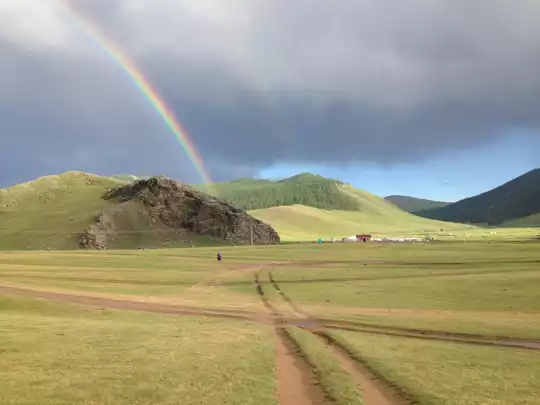
- Setting in the Orkhon Valley and viewpoints — The monastery sits in an open, windswept valley with distant low hills and a sense of wide space that’s classic Mongolia. Walk up the perimeter or nearby low ridges for simple panoramas, good sunset light on the white stupas, and some calm after the tourist traffic. (Personal favorite: walking the outer wall at sunset — the light on the stupas and the silence are quietly memorable.)
Spotted a mistake or missing something? Contact us.


 Best Backpacking
 Hi, I’m Johan (Netherlands 🇳🇱), the creator of TakeYourBackpack. Over the past 3 decades, I’ve backpacked through 90+ countries across six continents, gaining extensive experience with independent travel, long-term trips, and overland routes.