v2.webp)
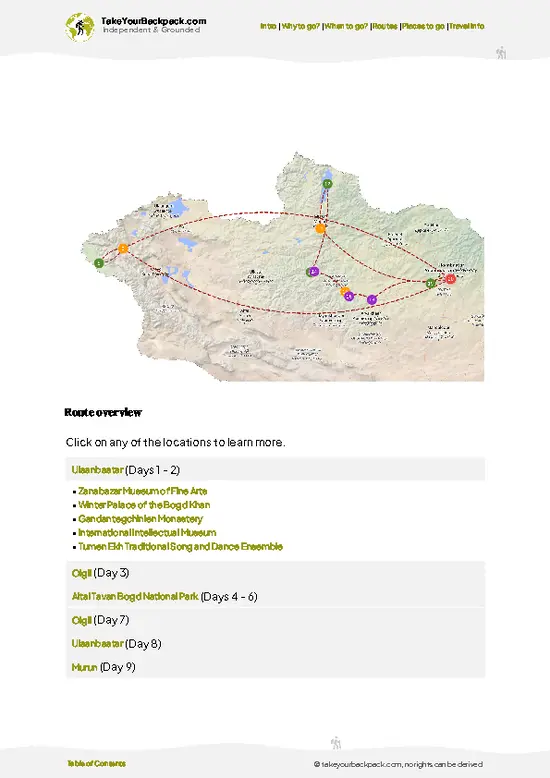
- Turtle Rock (Melkhii Khad) — The unmistakable stone that looks like a turtle lounging on the valley floor. Short climbable ledges give great viewpoints and it’s the most photographed marker of Terelj’s landscape — you can walk right up to it and sit on the rocks.
- Aryabal Meditation Temple — A colorful hilltop Buddhist temple with prayer wheels, ritual flags and sweeping views over the valley. People come here for the peaceful atmosphere, a short climb (stairs and paths) and a taste of contemporary monastic life outside Ulaanbaatar.
- Tuul River banks and riverside meadows — Wide, grassy riverbanks that are perfect for picnics, short walks, fishing and watching nomads move their livestock. It’s the literal lifeline of the village and where daily local life unfolds most visibly.
- Terelj National
- Turtle Rock (Melkhii Khad) — The unmistakable stone that looks like a turtle lounging on the valley floor. Short climbable ledges give great viewpoints and it’s the most photographed marker of Terelj’s landscape — you can walk right up to it and sit on the rocks.
- Aryabal Meditation Temple — A colorful hilltop Buddhist temple with prayer wheels, ritual flags and sweeping views over the valley. People come here for the peaceful atmosphere, a short climb (stairs and paths) and a taste of contemporary monastic life outside Ulaanbaatar.
- Tuul River banks and riverside meadows — Wide, grassy riverbanks that are perfect for picnics, short walks, fishing and watching nomads move their livestock. It’s the literal lifeline of the village and where daily local life unfolds most visibly.
- Terelj National Park entrance & visitor area — The practical first stop: maps, permits, local guide contacts and basic exhibits about the park’s wildlife and landscape. Good place to orient yourself and book treks or rides without wandering blind into the countryside.
- Family-run ger camps and homestays — Staying in a guest ger with a local family is the single-best way to get real food, demonstrations of dairy work and honest conversation. These camps are visitable year-round and make the culture tangible instead of just a photo op.
- Local ovoo shrines and prayer poles — Small sacred cairns on ridgelines and at crossroads where locals leave offerings and perform short rituals. Even without participating, watching or joining the brief circling tradition gives real insight into Mongolian spiritual practice.
- Short hiking loops and hilltop viewpoints (Turtle Rock loop) — Doable half-day hikes that take you up ridgelines and into quiet side-valleys; they reward you with different angles on the park’s rock formations and intimate encounters with grazing horses and eagles.
- Horseback riding stations and local riding trails — Short guided rides from the village let non-expert riders experience Mongolia’s basic transport culture. Routes follow rivers and meadows, and many operators will stop for a tea or a photo-friendly rest.
- Bouldering and easy rock-climbing areas — The granite outcrops around Turtle Rock are popular for informal scrambling and bouldering; you don’t need fancy gear for many routes, just sensible shoes and a spotter. It’s a tactile way to engage the landscape.
- Evening cultural programs at ger camps (music, throat-singing, storytelling) — Small, honest performances — not staged stadium shows — where you can hear long-song and throat-singing, see traditional garments and try simple folk dishes. These nights are where stories and jokes are exchanged, not just photos.
Spotted a mistake or missing something? Contact us.

Cooking Class in a Traditional Ger Home in Ulaanbaatar Suburbs

Private tour wth Olivia: Genghis Statue-Turtle Rock-Terelj-Zaisan

Private 3-Day Tour of National Parks From Ulaanbaatar

Ulaanbaatar Walking Tour & Cooking Class in a Mongolian Home

Day Trip to Terelj National Park & Giant Chinggis Khaan Statue

Ulaanbaatar Signature Tour – Mongolia’s Capital in One Day

Full Day Private Tour in Terelj National Park with Horse Riding

Full Day Chinggis Khaan Statue & Terelj NP Tour +Horseride, Eagle

Horse riding in Terelj National Park


 Best Backpacking
.jpg) Hi, I’m Johan (Netherlands 🇳🇱), the creator of TakeYourBackpack. Over the past 3 decades, I’ve backpacked through 90+ countries across six continents, gaining extensive experience with independent travel, long-term trips, and overland routes.
Hi, I’m Johan (Netherlands 🇳🇱), the creator of TakeYourBackpack. Over the past 3 decades, I’ve backpacked through 90+ countries across six continents, gaining extensive experience with independent travel, long-term trips, and overland routes.