×

Mongolia🇲🇳 | citiesUlaanbaatarMonastery courtyards, traffic chaos, modern towers | things to do and best time to go

Explore Mongolian Military MuseumExplore Golden Eagle Festival

Backpacking in Ulaanbaatar
🏆 Top pickcity ranked #1
By Johan Kruseman 🇳🇱 | Updated July 19, 2026

You land in Ulaanbaatar and hit your first big fork: do you burn two days and a chunk of cash organizing a Gobi or steppe trip from here, or do you stay put and actually get to know the city? That choice matters, because UB is where you trade time, money, and comfort for how deep your Mongolia experience goes.

Ulaanbaatar sits in the north‑central part of Mongolia, in a bowl of hills along the Tuul River, and it feels like a frontier hub more than a polished capital. For backpackers, it’s chaotic but useful: cheap guesthouses, easy train and tour logistics, and plenty of other travelers clustering around Sükhbaatar Square, the State Department Store, and the Soviet-era apartment blocks in between. The city itself is rough around the edges—traffic, winter smog, concrete—but the National Museum, Gandan Monastery, and the bar scene around Seoul Street are genuinely worth your time. It’s safer and more social than smaller Mongolian towns, but also less romantic than the countryside you came for.

Discover everything you want to know in the 📖 Mongolia Travel Guide.


Get your Mongolia guide
68 ranked highlights, routes & tips, works offline (272 pages)
Loading the map 🌍
CLICK TO FILTER
cities
towns
villages
landmarks
national parks
hikes
attractions
festivals
regions
SHOW COUNTRY’S BESTSHOW ALL

✨ Why go?
Ranked #1 city in Mongolia
What sets this place apart

Ulaanbaatar is a strategic hub for backpackers, offering a unique blend of affordability and accessibility. It’s a city where you can stretch your budget without sacrificing comfort. Hostels here are not just cheap; they often provide a vibrant atmosphere, making it easy to connect with fellow travelers. The food scene is diverse, from hearty local dishes to international options, ensuring you can refuel without breaking the bank.

The city is walkable, allowing you to explore its character at your own pace. You’ll find plenty of highlights that can be visited in a day or two, making it a perfect base for day trips to the surrounding countryside. This is where Ulaanbaatar shines; it’s not just a stopover but a launchpad for adventures into Mongolia’s vast landscapes.

Nightlife is surprisingly … read more 👉
Ulaanbaatar is a strategic hub for backpackers, offering a unique blend of affordability and accessibility. It’s a city where you can stretch your budget without sacrificing comfort. Hostels here are not just cheap; they often provide a vibrant atmosphere, making it easy to connect with fellow travelers. The food scene is diverse, from hearty local dishes to international options, ensuring you can refuel without breaking the bank.

The city is walkable, allowing you to explore its character at your own pace. You’ll find plenty of highlights that can be visited in a day or two, making it a perfect base for day trips to the surrounding countryside. This is where Ulaanbaatar shines; it’s not just a stopover but a launchpad for adventures into Mongolia’s vast landscapes.

Nightlife is surprisingly lively, with bars and clubs that cater to a mix of locals and travelers. Plus, onward travel options are straightforward, whether you’re heading to the Gobi Desert or other parts of Asia. If you’re looking for a place that balances culture, convenience, and community, Ulaanbaatar fits the bill perfectly.
Want to include Ulaanbaatar in your Mongolia route?
Create a personalized Mongolia itinerary that includes Ulaanbaatar and the places that fit your trip — based on your travel style, budget, and available time. Get your route in seconds.

Generate my trip

💡 HighlightsWhat this place is best known for

  1. Sukhbaatar Square (Chinggis/Sukhbaatar Square) — The heart of Ulaanbaatar where politics, celebrations, and people-watching meet. Stand by the big equestrian statue, watch the changing of the flag or a street protest, and get a feel for how the city centers public life.
  2. Gandantegchinlen Monastery (Gandan) — The largest active Buddhist monastery in Mongolia with a huge gilded Avalokitesvara statue, daily prayers and a real monk-and-devotee atmosphere. It’s the best place to hear live chanting, see butter lamps up close, and learn how Buddhism threads through modern Mongolian life.
  3. Choijin Lama Temple Museum — A compact, beautifully preserved temple complex full of intricate woodwork, thangka paintings and ritual objects. Quiet, easy to explore, and great for seeing pre-socialist religious
read more 👉
  1. Sukhbaatar Square (Chinggis/Sukhbaatar Square) — The heart of Ulaanbaatar where politics, celebrations, and people-watching meet. Stand by the big equestrian statue, watch the changing of the flag or a street protest, and get a feel for how the city centers public life.
  2. Gandantegchinlen Monastery (Gandan) — The largest active Buddhist monastery in Mongolia with a huge gilded Avalokitesvara statue, daily prayers and a real monk-and-devotee atmosphere. It’s the best place to hear live chanting, see butter lamps up close, and learn how Buddhism threads through modern Mongolian life.
  3. Choijin Lama Temple Museum — A compact, beautifully preserved temple complex full of intricate woodwork, thangka paintings and ritual objects. Quiet, easy to explore, and great for seeing pre-socialist religious art without needing a long detour.
  4. Bogd Khan Palace Museum (Winter Palace) — The winter residence of Mongolia’s last monarch, stuffed with robes, gifts from foreign dignitaries and Buddhist relics. The small park around it and adjacent museum buildings make for a slow, very visual dive into late-imperial Mongolia.
  5. National Museum of Mongolia — One place to understand Mongolia from prehistoric mammoths through to the Mongol Empire and the socialist era. Good displays, lots of original artifacts, and the context you’ll want before wandering other sites.
  6. Zanabazar Museum of Fine Arts — Home to Mongolia’s classical and modern masterpieces: Buddhist sculpture by Zanabazar, fine paintings and surprisingly excellent collections of contemporary Mongolian art. It’s the best spot in the city for art that actually feels Mongolian rather than Soviet.
  7. Mongolian Natural History Museum — Dusty, sometimes-weirdly-charming exhibits with large taxidermy, dinosaur bones and displays of the steppe’s flora and fauna. It’s a time capsule experience and useful if you want to recognize animals and geology before heading into the countryside.
  8. Narantuul Market (Black Market) — Chaotic, loud and absolutely essential for bargain cashmere, boots, winter gear and street food (try a fresh steamy buuz). Bring small bills, haggle politely, and treat it like a practical cultural experience rather than a polished shopping mall.
  9. Zaisan Memorial and Hill — A Soviet-era mosaic and monument honoring WWII allies with a steep climb (or short taxi ride) to panoramic views over Ulaanbaatar. It’s part memorial, part viewpoint and a good sunset spot away from the traffic below.
  10. State Academic Theatre of Opera and Ballet (and local performance venues) — Catching a performance here (or at smaller local venues) is a great way to see Mongolia’s blend of classical and traditional music/dance. Cheap tickets, grand Soviet interiors and often-surprising talent make an evening out memorable.
A few excellent day trips from Ulaanbaatar: Terelj National Park (rock formations, gers and short hikes), Tsonjin Boldog with the giant Genghis Khan statue, and Hustai National Park to see wild Przewalski’s horses — Hustai is my personal favorite.
Spotted a mistake or missing something? Contact us.

Things to do in Ulaanbaatar

Ratings based on Tripadvisor reviews. When you book through this link, you support our work at no extra cost to you.

🏘️ NeighborhoodsKey areas and districts to know

Ulaanbaatar is a city of contrasts, where tradition meets modernity. Understanding its neighborhoods will help you navigate your experience like a pro.

Downtown (Sukhbaatar Square): This is the heart of Ulaanbaatar. It’s bustling, with cafes, shops, and cultural sites like the National Museum. Perfect for first-timers, it’s walkable and offers easy access to public transport. Expect a lively atmosphere, especially at night, but it can be pricier. Ideal for short stays.

Chinatown: A vibrant area filled with eateries and shops. It’s less touristy, giving you a taste of local life. Prices are reasonable, and the vibe is relaxed. Walkability is decent, but you’ll want to use public transport for longer distances. Great for longer stays if you want to immerse yourself.

Bayanzurkh: This residential … read more 👉
Ulaanbaatar is a city of contrasts, where tradition meets modernity. Understanding its neighborhoods will help you navigate your experience like a pro.

Downtown (Sukhbaatar Square): This is the heart of Ulaanbaatar. It’s bustling, with cafes, shops, and cultural sites like the National Museum. Perfect for first-timers, it’s walkable and offers easy access to public transport. Expect a lively atmosphere, especially at night, but it can be pricier. Ideal for short stays.

Chinatown: A vibrant area filled with eateries and shops. It’s less touristy, giving you a taste of local life. Prices are reasonable, and the vibe is relaxed. Walkability is decent, but you’ll want to use public transport for longer distances. Great for longer stays if you want to immerse yourself.

Bayanzurkh: This residential neighborhood offers a quieter experience. It’s more affordable, with local markets and parks. While nightlife is limited, it’s perfect for those seeking peace after a day of exploration. Public transport is accessible, making it suitable for longer stays.

Songinokhairkhan: A bit off the beaten path, this area is known for its local flavor. Prices are low, and you’ll find authentic Mongolian experiences. Walkability can be tricky, so public transport is your friend. Best for adventurous backpackers looking for a longer stay.

Ulaanbaatar’s Outskirts: For those craving nature, the outskirts offer stunning landscapes and hiking opportunities. Costs can vary, but you’ll find budget options. Transport can be limited, so plan ahead. Ideal for longer stays if you want to escape the city buzz.

⌛️ 1 daySeeing the highlights in 24 hours

Ulaanbaatar, the capital of Mongolia, is a fascinating blend of modernity and tradition. It’s a city where the past meets the present, with sprawling ger districts alongside sleek skyscrapers. The energy here is palpable, and every corner offers a glimpse into the rich nomadic culture that defines the country.

Start your day in the bustling Sukhbaatar Square, the heart of the city. Grab a cup of traditional milk tea from a nearby café and soak in the morning atmosphere. The square is surrounded by impressive government buildings and the iconic statue of Genghis Khan, a perfect backdrop for your first photos.

As the morning unfolds, head to the National Museum of Mongolia. It’s a short walk from the square and offers a deep dive into Mongolia’s history, from prehistoric times to the socialist … read more 👉
Ulaanbaatar, the capital of Mongolia, is a fascinating blend of modernity and tradition. It’s a city where the past meets the present, with sprawling ger districts alongside sleek skyscrapers. The energy here is palpable, and every corner offers a glimpse into the rich nomadic culture that defines the country.

Start your day in the bustling Sukhbaatar Square, the heart of the city. Grab a cup of traditional milk tea from a nearby café and soak in the morning atmosphere. The square is surrounded by impressive government buildings and the iconic statue of Genghis Khan, a perfect backdrop for your first photos.

As the morning unfolds, head to the National Museum of Mongolia. It’s a short walk from the square and offers a deep dive into Mongolia’s history, from prehistoric times to the socialist era. The exhibits are well-curated, and you’ll leave with a richer understanding of the country’s unique identity.

For lunch, venture into the nearby area of 1st Khoroo, where you’ll find local eateries serving authentic Mongolian dishes. Try the buuz (steamed dumplings) at a family-run spot. It’s a taste of home-cooked comfort that many tourists overlook.

In the afternoon, make your way to the Zaisan Memorial. It’s a bit of a hike, but the panoramic views of the city and surrounding mountains are worth every step. This spot is often skipped by tourists, but it offers a peaceful escape and a chance to reflect on Mongolia’s history.

As evening approaches, return to the city center and explore the vibrant streets of the Chingeltei district. Here, you’ll find a mix of street food vendors and cozy restaurants. Grab a plate of khorkhog (barbecue) and enjoy the lively atmosphere.

End your day at a local bar, where you can mingle with locals and fellow travelers. Ulaanbaatar may be a small city, but its spirit is immense. Embrace the rhythm of the day, and you’ll leave with stories that linger long after you’ve returned home.
Turn your Ulaanbaatar visit into an Mongolia adventure
Build a complete Mongolia route with Ulaanbaatar, hidden gems, must-see destinations, and realistic travel times included.

Generate my trip

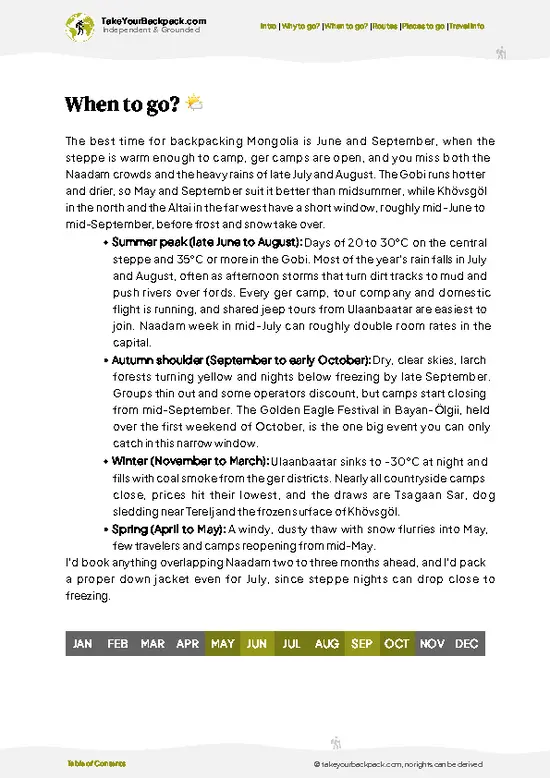
🌤️ When to go?Best time to visit Ulaanbaatar


  • Weather: Ulaanbaatar’s climate is sharply continental. Winters are brutally cold, often plunging below -20°C (-4°F), making outdoor activities tough. Summers, from June to August, are mild and dry, with temperatures hovering between 15-25°C (59-77°F), ideal for hiking and exploring.

  • Temperature: Spring and autumn can be unpredictable, swinging from chilly mornings near freezing (0°C/32°F) to warmer afternoons. Summer offers the most stable warmth, while winter demands serious cold-weather gear.

  • Daylight Hours: In summer, Ulaanbaatar enjoys long days—up to 16 hours of daylight—perfect for maximizing your trekking and sightseeing time. Winter days shrink to about 8 hours, limiting outdoor exploration.

  • Crowds: Tourist numbers peak in summer, especially July, coinciding with the Naadam
read more 👉

  • Weather: Ulaanbaatar’s climate is sharply continental. Winters are brutally cold, often plunging below -20°C (-4°F), making outdoor activities tough. Summers, from June to August, are mild and dry, with temperatures hovering between 15-25°C (59-77°F), ideal for hiking and exploring.

  • Temperature: Spring and autumn can be unpredictable, swinging from chilly mornings near freezing (0°C/32°F) to warmer afternoons. Summer offers the most stable warmth, while winter demands serious cold-weather gear.

  • Daylight Hours: In summer, Ulaanbaatar enjoys long days—up to 16 hours of daylight—perfect for maximizing your trekking and sightseeing time. Winter days shrink to about 8 hours, limiting outdoor exploration.

  • Crowds: Tourist numbers peak in summer, especially July, coinciding with the Naadam Festival. This means more energy and events but also higher prices and busier spots. Shoulder seasons (late spring and early autumn) offer quieter experiences.

  • Seasonal Activities: Summer is festival season, with Naadam showcasing wrestling, archery, and horse racing. Winter brings opportunities for winter sports and experiencing nomadic life in snow-covered landscapes, but with fewer tourists.

  • Price Fluctuations: Accommodation and tours spike in summer, especially around Naadam. Off-season, particularly winter, sees steep discounts but at the cost of harsh conditions and limited services.


Pro-tip: Target late May or early September for a sweet spot—pleasant weather, manageable crowds, and better prices. You’ll feel like you’ve cracked the code on Ulaanbaatar’s timing puzzle.


source: climatestotravel.comJANJanuary: below average for travelingFEBFebruary: below average for travelingMARMarch: fair for travelingAPRApril: good for travelingMAYMay: highly recommended for travelingJUNJune: excellent for travelingJULJuly: excellent for travelingAUGAugust: excellent for travelingSEPSeptember: highly recommended for travelingOCTOctober: good for travelingNOVNovember: fair for travelingDECDecember: below average for traveling
when-to-go

✈️ The backpacker research shortcutMongolia Travel Guide

An offline-friendly backpacking guide with optimized travel routes, ranked highlights, transport advice, and the best areas to stay.
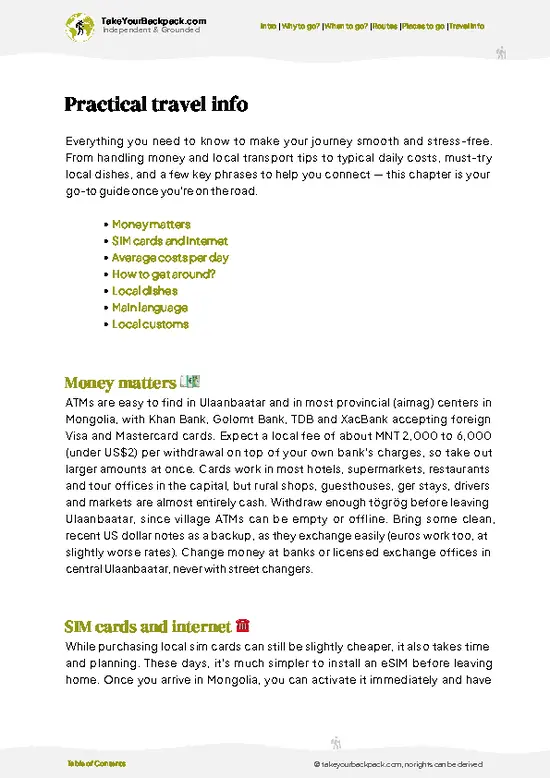
example page 0 from our offline Travel Guide for Mongolia
example page 1 from our offline Travel Guide for Mongolia
example page 2 from our offline Travel Guide for Mongolia
example page 3 from our offline Travel Guide for Mongolia
example page 4 from our offline Travel Guide for Mongolia
example page 5 from our offline Travel Guide for Mongolia
example page 6 from our offline Travel Guide for Mongolia
example page 7 from our offline Travel Guide for Mongolia
The digital guide (272 pages) contains:
68 highlights, ranked by travel appeal
Optimized 7, 14 & 21-day travel routes
Cities, national parks, landmarks, beaches
How to get around
Offline-friendly for travel without Wi-Fi
👉 Click to see all 30+ guide features

📅 Plan smarter in minutes, not weeks
Month by month travel advice
Festivals & national holidays
Budget expectations

🗺️ Go to the right places, skip the overrated ones
Honest pros & cons of destinations
Top hikes, parks & viewpoints
Lesser-known places most travelers miss
Clear “worth it vs skip it” guidance

🛏️ Travel smoothly without rookie mistakes
Best areas to stay
Transport systems explained simply
Common scams & safety advice
SIM cards, money & practical tips

🌍 Understand the country, not just visit it
Culture & traditions
52 Essential phrases & customs
Festivals worth planning around
Traveler-friendly historical context
Insights that make places more meaningful

📱 Built for real travel conditions
Fully downloadable PDF
Works completely offline
Optimized for phone use
Useful in remote areas & buses
Everything in one place
Save weeks of stressful planning
Get instant access to your full guide. 30‑day money-back guarantee.


By proceeding you agree to our terms.
Sent to your inbox immediately after payment • 100% Secure Checkout
Best Backpacking Travel Advisor 2025 tourism awardBest Backpacking
Travel Advisor
2025
What others say about Take Your Backpack Guides:
⭐⭐⭐⭐⭐
Fantastic, amazing amount of information!
⭐⭐⭐⭐⭐
My goodness this is amazing, it's what I've been looking for hats off too you!
⭐⭐⭐⭐⭐
I think this is absolutely BRILLIANT
⭐⭐⭐⭐
Very complete and informative. It's still missing places, but I gotta to commend you
⭐⭐⭐⭐⭐
This is truly amazing, thank you, can't wait to explore it with my kids!
⭐⭐⭐⭐⭐
Awesome resource, thank you!
⭐⭐⭐⭐⭐
This is amazing! Can't wait to explore the ones I haven't seen
⭐⭐⭐⭐
I love this! Well done, great idea.
⭐⭐⭐⭐⭐
Thanks for taking the time to make this gem!
⭐⭐⭐⭐⭐
This might be the best website I've ever seen.
⭐⭐⭐⭐⭐
Congratulations, and thank you so much for your work; it's incredibly valuable.
⭐⭐⭐⭐
In all seriousness I think you did a great job pointing out the important spots
⭐⭐⭐⭐⭐
10/10 very good
⭐⭐⭐⭐⭐
As someone who's only just starting to visit regularly this is awesome, thank you.
⭐⭐⭐⭐
Thank you very much! I'm going to visit my dad, it's going to be very useful!
⭐⭐⭐⭐⭐
This is really cool! We'll be travelling for the first time and this definitely come in handy.
⭐⭐⭐⭐⭐
You are now our minister of culture, congratulations 👨‍💼
⭐⭐⭐⭐⭐
Just wanted to tell you that this is a pearl! Going to follow your recommendations.
⭐⭐⭐⭐⭐
This is so cool. I'll definitely be using the resource for my travels soon.
⭐⭐⭐⭐⭐
This is very impressive! Good work.
⭐⭐⭐⭐⭐
This is an amazing and informative site. Very well done!

🛏️ Where to stay?Best areas and accommodation options

Central Bayanzürkh District is the sweet spot for backpackers in Ulaanbaatar. It’s close enough to the city center to tap into the pulse of local life without drowning in tourist noise. This area strikes a solid balance between safety and social energy, making it a natural magnet for solo travelers and budget adventurers. Hostels here cluster around main roads and markets, so you’re never far from a lively café or a street vendor selling buuz (Mongolian dumplings). The vibe is casual but connected, with a steady flow of fellow backpackers swapping stories over cheap tea or local beer.

Compared … read more 👉
Central Bayanzürkh District is the sweet spot for backpackers in Ulaanbaatar. It’s close enough to the city center to tap into the pulse of local life without drowning in tourist noise. This area strikes a solid balance between safety and social energy, making it a natural magnet for solo travelers and budget adventurers. Hostels here cluster around main roads and markets, so you’re never far from a lively café or a street vendor selling buuz (Mongolian dumplings). The vibe is casual but connected, with a steady flow of fellow backpackers swapping stories over cheap tea or local beer.

Compared to the more sterile, business-heavy Sukhbaatar District, Bayanzürkh feels more authentic and approachable. It’s not as polished or expensive as the luxury hotel zones near the National Museum, but that’s exactly why it works for those who want to stretch their budget without sacrificing comfort or safety. You’re trading a bit of upscale polish for a genuine slice of urban Mongolian life and a community of like-minded travelers.

If you venture further out to the ger districts, you’ll find cheaper stays but at the cost of longer commutes and fewer social opportunities. Bayanzürkh nails the sweet spot: walkable, safe, social, and wallet-friendly. It’s the practical choice that keeps you plugged into the city’s rhythm without burning time or cash on taxis and isolation.

🚌 Getting aroundHow to get from A to B

Ulaanbaatar moves at its own rhythm—a blend of Soviet-era order and the raw pulse of a city still carving out its modern identity. The streets can feel like a chessboard where every move counts, but the pieces don’t always follow the rules. Timetables exist, but they’re more like guidelines than gospel. You’ll find yourself toggling between waiting for a bus that might show up on time and hopping on a marshrutka (minibus) that leaves the moment it’s full, no matter the clock. This city’s flow demands you read the room, or rather, the street, and make choices that balance your time, money, and comfort like a strategic game.


  • Walking: The purest way to absorb Ulaanbaatar’s vibe, especially in the central districts. Free, obviously, and often faster than waiting for public transit during rush
read more 👉
Ulaanbaatar moves at its own rhythm—a blend of Soviet-era order and the raw pulse of a city still carving out its modern identity. The streets can feel like a chessboard where every move counts, but the pieces don’t always follow the rules. Timetables exist, but they’re more like guidelines than gospel. You’ll find yourself toggling between waiting for a bus that might show up on time and hopping on a marshrutka (minibus) that leaves the moment it’s full, no matter the clock. This city’s flow demands you read the room, or rather, the street, and make choices that balance your time, money, and comfort like a strategic game.


  • Walking: The purest way to absorb Ulaanbaatar’s vibe, especially in the central districts. Free, obviously, and often faster than waiting for public transit during rush hour. But be ready for uneven sidewalks and the occasional gust of cold wind. Great for short hops and soaking in street life.


  • Public Buses: Operate roughly from 7:00 AM to 10:00 PM, with fares around 300-500 MNT (about $0.10-$0.15). They’re cheap and cover most of the city, but expect slow rides due to frequent stops and traffic jams. Comfort is basic—no air conditioning, crowded during peak hours. Best if you’re patient and want to stretch your budget.


  • Marshrutkas (Minibuses): These are the wild cards of Ulaanbaatar transit. They leave when full, not on a fixed schedule, so timing is unpredictable. Fares hover around 500-700 MNT ($0.15-$0.25). Faster than buses because they skip some stops, but can be cramped and chaotic. Ideal if you want to save time without spending much, but be ready for a bit of a squeeze.


  • Taxis: Widely available and negotiable, with prices starting around 3000 MNT ($1) for short rides. More comfortable and direct, but costs add up quickly. Use them strategically—say, for late-night returns or when you’re hauling gear. Apps like Namba Taxi make haggling less necessary, but always confirm the fare upfront.


  • Bicycles: Not a mainstream option yet, but gaining traction among locals and expats. Renting a bike costs about 10,000-15,000 MNT per day ($3-$5). It’s a middle ground between walking and public transit—fast, flexible, and cheap, but weather-dependent and limited by the city’s hilly terrain and traffic conditions.


Understanding these trade-offs is your key to mastering Ulaanbaatar’s transit puzzle. You can’t have it all—speed, comfort, and low cost rarely coexist here. Instead, pick your battles: save money by walking or taking buses, save time with marshrutkas or taxis, or prioritize comfort when it really counts. This isn’t just getting from A to B; it’s about hacking the city’s pulse to make your trip smoother and richer.

👛 Costs (as of 19 July 2026)Typical daily expenses

Backpacking in Ulaanbaatar, Mongolia, offers a unique blend of affordability and cultural immersion, but knowing where your money goes helps you play the budget game smartly.
  • Dorm Accommodation (High Season and Off-Season): In peak tourist months (June to August), dorm beds in hostels typically run between $8 and $15 per night. Off-season, especially winter, prices drop to around $5 to $10. The difference reflects demand and heating costs—winter stays can be colder but cheaper.
  • Meals: Street food and local eateries are your best bets for budget meals, costing roughly $2 to $5 per meal. A filling bowl of buuz (Mongolian dumplings) or a simple noodle dish keeps you fueled without breaking the bank. Western-style cafes or restaurants push prices up to $7-$12 per meal.
  • Local Transport: Single
read more 👉
Backpacking in Ulaanbaatar, Mongolia, offers a unique blend of affordability and cultural immersion, but knowing where your money goes helps you play the budget game smartly.
  • Dorm Accommodation (High Season and Off-Season): In peak tourist months (June to August), dorm beds in hostels typically run between $8 and $15 per night. Off-season, especially winter, prices drop to around $5 to $10. The difference reflects demand and heating costs—winter stays can be colder but cheaper.
  • Meals: Street food and local eateries are your best bets for budget meals, costing roughly $2 to $5 per meal. A filling bowl of buuz (Mongolian dumplings) or a simple noodle dish keeps you fueled without breaking the bank. Western-style cafes or restaurants push prices up to $7-$12 per meal.
  • Local Transport: Single rides on Ulaanbaatar’s buses or minibuses cost about $0.20 to $0.50. It’s a cheap way to get around, but expect crowded conditions and limited English signage.
  • City Transport Pass: For frequent travel, a monthly transport card costs around $10-$15, which can be a smart investment if you plan to explore extensively without relying on taxis.
  • Basic Activities/Entry Fees: Museums and cultural sites generally charge between $2 and $5 for entry. Some popular spots like the National Museum of Mongolia or the Zanabazar Museum might be on the higher end but still very affordable compared to global standards.
  • Miscellaneous Expenses: Think SIM cards, bottled water, or a quick coffee—budget around $2 to $5 daily. Internet cafes and laundry services are also inexpensive, usually under $3 per use.

All told, a realistic daily budget for backpacking in Ulaanbaatar ranges from about $15 on the leanest days to $35 if you lean into a bit more comfort or activity. This spread lets you decide if you want to stretch your dollars for extra experiences or keep it lean and local.
⚠️ Prices can change and everyone travels differently, so take this as a rough guide. Hope it helps you plan your adventure!

🚌 Day tripsExploring the surroundings

Ulaanbaatar is a fantastic launchpad for day trips that immerse you in Mongolia’s wild landscapes and rich culture. Here are some standout options that pack a punch without requiring an overnight stay.

**Terelj National Park**
Just an hour’s drive from Ulaanbaatar, Terelj National Park is a must-visit for its stunning granite formations and lush valleys. You can hike to the iconic Turtle Rock or visit the Aryabal Meditation Temple for a dose of tranquility. The park is a playground for outdoor enthusiasts, offering horseback riding and even a chance to stay in a traditional ger. Budget around $10 for transport and a few extra bucks for food. The best time to go is late spring to early fall when the weather is mild. A common mistake? Underestimating the park’s size; plan your hikes accordingly … read more 👉
Ulaanbaatar is a fantastic launchpad for day trips that immerse you in Mongolia’s wild landscapes and rich culture. Here are some standout options that pack a punch without requiring an overnight stay.

**Terelj National Park**
Just an hour’s drive from Ulaanbaatar, Terelj National Park is a must-visit for its stunning granite formations and lush valleys. You can hike to the iconic Turtle Rock or visit the Aryabal Meditation Temple for a dose of tranquility. The park is a playground for outdoor enthusiasts, offering horseback riding and even a chance to stay in a traditional ger. Budget around $10 for transport and a few extra bucks for food. The best time to go is late spring to early fall when the weather is mild. A common mistake? Underestimating the park’s size; plan your hikes accordingly to avoid rushing.
👉 Explore Terelj National Park

**Genghis Khan Equestrian Statue**
Only 54 kilometers from the city, this colossal statue is a striking tribute to Mongolia’s legendary leader. Standing at 40 meters tall, it’s not just a photo op; you can climb to the top for panoramic views of the surrounding steppe. The entrance fee is about $3, and you can easily catch a shared taxi for around $5. Spring and autumn offer the best weather for this trip. Many first-timers miss the nearby museum, which provides fascinating insights into Mongolian history.


**Khustai National Park**
Home to the endangered Przewalski’s horse, Khustai National Park is about 90 kilometers from Ulaanbaatar. The park is a haven for wildlife enthusiasts, offering a chance to spot these rare horses in their natural habitat. The entrance fee is around $5, and a shared taxi will cost you about $10. Aim for late afternoon visits when the animals are most active. A common pitfall is not bringing binoculars; you’ll want to see those horses up close!


**Buddha Park**
A short 30-minute ride from the city, Buddha Park features a massive statue of Buddha and a serene atmosphere perfect for reflection. The park is free to enter, making it a budget-friendly choice. While it’s lovely year-round, visiting during sunrise or sunset offers a magical experience. First-timers often overlook the smaller shrines scattered around the park, which are equally captivating.


**Zaisan Memorial**
This memorial offers a panoramic view of Ulaanbaatar and the surrounding mountains, just a 20-minute drive from the city center. The hike up is steep but rewarding, and it’s free to enter. The best time to visit is early morning or late afternoon to avoid the heat and crowds. Many visitors miss the historical significance of the murals at the base, which depict Mongolia’s Soviet-era history.
Want to know what more Mongolia offers?
The Mongolia Travel Guide describes 68 highlights, from cities to national parks, from beaches to hikes

Get the Travel Guide -

🍲 FoodEating & Drinking in Ulaanbaatar

In Ulaanbaatar, **food** is a vibrant reflection of Mongolia’s nomadic heritage. You can’t miss trying **buuz**, steamed dumplings filled with juicy meat, often served with a side of tangy dipping sauce. Another must-try is **khuushuur**, a fried version that’s crispy and savory, perfect for grabbing on the go from street vendors.

The local drinking culture is equally captivating. **Airag**, fermented mare’s milk, is a traditional drink that might challenge your palate but is worth the experience. It’s often served in a communal bowl, embodying the spirit of sharing. Don’t shy away from **vodka** either; it’s a staple at any gathering, and you’ll find locals toasting with sincerity.

Backpackers will find their culinary adventures in bustling **markets** and street stalls, where the air … read more 👉
In Ulaanbaatar, **food** is a vibrant reflection of Mongolia’s nomadic heritage. You can’t miss trying **buuz**, steamed dumplings filled with juicy meat, often served with a side of tangy dipping sauce. Another must-try is **khuushuur**, a fried version that’s crispy and savory, perfect for grabbing on the go from street vendors.

The local drinking culture is equally captivating. **Airag**, fermented mare’s milk, is a traditional drink that might challenge your palate but is worth the experience. It’s often served in a communal bowl, embodying the spirit of sharing. Don’t shy away from **vodka** either; it’s a staple at any gathering, and you’ll find locals toasting with sincerity.

Backpackers will find their culinary adventures in bustling **markets** and street stalls, where the air is thick with the aroma of grilled meats and spices. Casual eateries offer hearty meals that won’t break the bank, while cozy cafés serve up rich, milky tea that warms you from the inside out.

When dining, remember to show respect by accepting food with both hands and offering a toast before sipping your drink. This isn’t just a meal; it’s a chance to connect with the culture and the people. Embrace the quirks, and you’ll savor every moment.

🛡️ SafetyScams, Hazards, and Annoyances

Ulaanbaatar is generally safe, but like any city, it has its quirks. Stay aware in crowded areas like Sukhbaatar Square and the market. Pickpocketing can happen, especially during festivals or busy times, so keep your valuables close.

If you’re solo, be mindful at night. The city has a lively nightlife, but stick to well-lit areas and avoid wandering too far off the beaten path. Taxis are reliable, but use reputable apps like Bolt or Yandex to avoid overcharging.

Scams are rare, but a common annoyance is aggressive street vendors. Politely decline and keep moving. Another tip: be cautious with currency exchange. Use official exchange offices or banks to avoid unfavorable rates.

Overall, carry yourself with confidence. A friendly demeanor goes a long way. Engage with locals; they’re often … read more 👉
Ulaanbaatar is generally safe, but like any city, it has its quirks. Stay aware in crowded areas like Sukhbaatar Square and the market. Pickpocketing can happen, especially during festivals or busy times, so keep your valuables close.

If you’re solo, be mindful at night. The city has a lively nightlife, but stick to well-lit areas and avoid wandering too far off the beaten path. Taxis are reliable, but use reputable apps like Bolt or Yandex to avoid overcharging.

Scams are rare, but a common annoyance is aggressive street vendors. Politely decline and keep moving. Another tip: be cautious with currency exchange. Use official exchange offices or banks to avoid unfavorable rates.

Overall, carry yourself with confidence. A friendly demeanor goes a long way. Engage with locals; they’re often eager to help. By staying aware and making smart choices, you’ll navigate Ulaanbaatar smoothly and enjoy its unique character.

More places to explore across Mongolia

Ulaanbaatar isn’t the only highlight in Mongolia. Explore all what Mongolia has to offer.
Country photo of Mongolia

We 💚 feedbackWhat to keep in mind

Ulaanbaatar is a fascinating blend of history and modernity, where you can sip on a latte in a sleek café and then wander through ancient Buddhist temples. It’s a city that challenges your perceptions. But be ready for the cold—winters bite hard, and the infrastructure can feel a bit rough around the edges. Embrace the quirks, and you’ll find a vibrant culture that’s worth every chilly moment.

✈️ When did I visit Mongolia?
As part of my 1.5 year travel around the world trip, I visited Mongolia in July 2015. After a month of horse-riding and hitch-hiking I took the TransMongolia express to China.

✍️ Help improve this page!
The information on this page is based on my own backpacking experience in Mongolia, supplemented with up-to-date research and feedback from other travelers. Travel details can change, so if you notice anything outdated or incomplete, feel free to let me know.


🙋‍♂️ Give feedback

👋 Meet the founderWho’s Behind Take Your Backpack?

Johan, backpacker and founder of TakeYourBackpackHi, I’m Johan (Netherlands 🇳🇱), the creator of TakeYourBackpack. Over the past decade, I’ve backpacked through 80+ countries across six continents, gaining extensive experience with independent travel, long-term trips, and overland routes.

This site is built on a combination of firsthand travel experience and carefully curated insights from other backpackers. Many guides are based on places I’ve personally visited, while others bring together tips, observations, and practical advice shared by trusted travelers I’ve met along the way.

The goal is to provide realistic, experience-driven guidance — not generic itineraries — so you can explore destinations with better context, clearer expectations, and more confidence.

Get full Mongolia guide •
Instant download • 68 highlights • Full Offline guide