v2.webp)
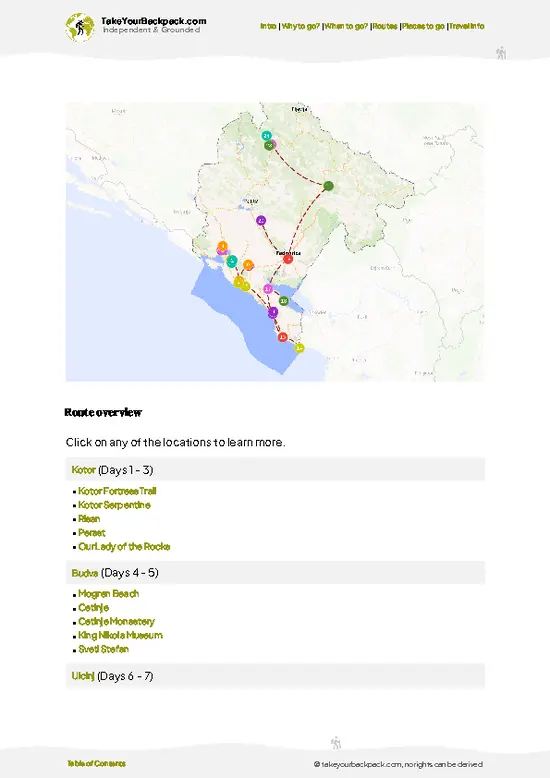
- Perast Riva (the waterfront promenade) — The heart of the town: a narrow seafront lined with low Baroque palaces, fishing boats and café terraces. It’s where Perast’s maritime history and everyday life meet, great for people-watching and soaking up views of the two islets across the bay.
- St. Nicholas Church and its bell tower (Crkva Sv. Nikole) — The big 17th-18th century parish church with a climbable bell tower. The climb is short but the panorama over Perast’s red roofs, the harbor and the bay is worth the stairs; you’ll also see plaques and memorials to local seamen inside.
- Perast Maritime Museum (Pomorski muzej) — Housed in an old palace, the small museum packs model ships, naval charts, portraits and objects from Perast’s seafaring past. It’s compact but gives the clearest sense
- Perast Riva (the waterfront promenade) — The heart of the town: a narrow seafront lined with low Baroque palaces, fishing boats and café terraces. It’s where Perast’s maritime history and everyday life meet, great for people-watching and soaking up views of the two islets across the bay.
- St. Nicholas Church and its bell tower (Crkva Sv. Nikole) — The big 17th-18th century parish church with a climbable bell tower. The climb is short but the panorama over Perast’s red roofs, the harbor and the bay is worth the stairs; you’ll also see plaques and memorials to local seamen inside.
- Perast Maritime Museum (Pomorski muzej) — Housed in an old palace, the small museum packs model ships, naval charts, portraits and objects from Perast’s seafaring past. It’s compact but gives the clearest sense of why Perast mattered on these waters.
- Zmajević Palace — One of Perast’s showpiece noble houses, notable for its façade, coats of arms and the Zmajević family story (they produced important clerics and patrons). Even if the interior isn’t always open, the architecture and carved details reward a close look.
- Bujović (Buća) Palace — Another elegant noble residence on the Riva; the façade, carved stonework and family inscriptions are classic Perast. It’s a good example of how wealthy naval families left their mark on the town’s streetscape.
- Main square and waterfront piazzetta — The small plaza in front of the church where fishermen, boatmen and locals converge. It’s a relaxed place to watch daily life, chat with boat crews, or base yourself before taking a short boat out to the islets.
- Perast old cemetery & churchyards — Quiet, atmospheric stone slabs and family tombs tucked behind churches and palaces. The inscriptions and weathered carvings tell local stories—sailors, captains and families who funded the town’s churches.
- Backstreets and stairways (the hidden lanes) — Walk away from the Riva into the narrow alleys where you’ll find tiny chapels, private courtyards, faded fresco fragments and unexpected viewpoints. These lanes are the best way to feel the village rhythm and find photo-worthy corners with almost no tourists.
- Small private galleries and artisan shops — Perast has a scattering of family-run galleries and craft shops selling maritime prints, local art and handcrafted souvenirs. They’re low-key but offer real local character and the chance to chat with makers or collectors.
- Little piers and viewpoint spots along the harbour — Hop down onto one of the small stone piers for an up-close look at traditional wooden skiffs, to watch the tidal light on the bay, or to photograph Perast framed against the islets. It’s simple, but those moments define the place.
Spotted a mistake or missing something? Contact us.

Blue Cave Kotor & Lady of the Rocks Private Tour (up to 5 people)

Self-tailored Private Kotor Boat Tour Pay by the Hour

Lady of the Rocks & Perast Old Town Private Tour (up to 5 people)

Exciting And Historical Perast - Private tour

Perast Luxury private tour -Our Lady of the Rocks and Blue Cave

Kotor - Perast | Unforgettable Montenegro Experience

Blue Cave & Perast Private Boat Tour from Herceg Novi (3h 30min)

Guided Perast and Kotor Speedboat Tour - Rick Steves Recommended

Lady of the Rock and Mamula with Blue Cave Private Tour


 Best Backpacking
.jpg) Hi, I’m Johan (Netherlands 🇳🇱), the creator of TakeYourBackpack. Over the past 3 decades, I’ve backpacked through 90+ countries across six continents, gaining extensive experience with independent travel, long-term trips, and overland routes.
Hi, I’m Johan (Netherlands 🇳🇱), the creator of TakeYourBackpack. Over the past 3 decades, I’ve backpacked through 90+ countries across six continents, gaining extensive experience with independent travel, long-term trips, and overland routes.