×

Morocco🇲🇦 | landmarksAït BenhaddouRammed-earth ksar, Ounila River crossing, agadir summit, film locations | things to do and best time to go

Explore Dadès GorgesExplore Erg Chebbi

Backpacking in Aït Benhaddou
UNESCO World Heritage site
🏆 Top pickunique site ranked #1
By Johan Kruseman 🇳🇱 | Updated October 22, 2026

The mud-brick ksar that has stood in for ancient Rome, Egypt and Yunkai on screen is why everyone comes, and the view of it from the riverbank deserves your photos. What gets overlooked is that the walk inside is the weaker half. The lanes are lined with the same rugs and argan oil, and most rooms are empty. The climb to the top is the part worth your time. Aït Benhaddou sits in southern Morocco, northwest of Ouarzazate, along the old caravan road below the High Atlas. I drank a fresh orange juice at a terrace café facing the walls for US$2, and the view cost nothing extra. Skip the souvenir hunt. Unlike the Taourirt Kasbah in Ouarzazate, a single palace you tour room by room, this is a whole fortified village you read from the outside.

Discover everything you want to know in the 📖 Morocco Travel Guide.


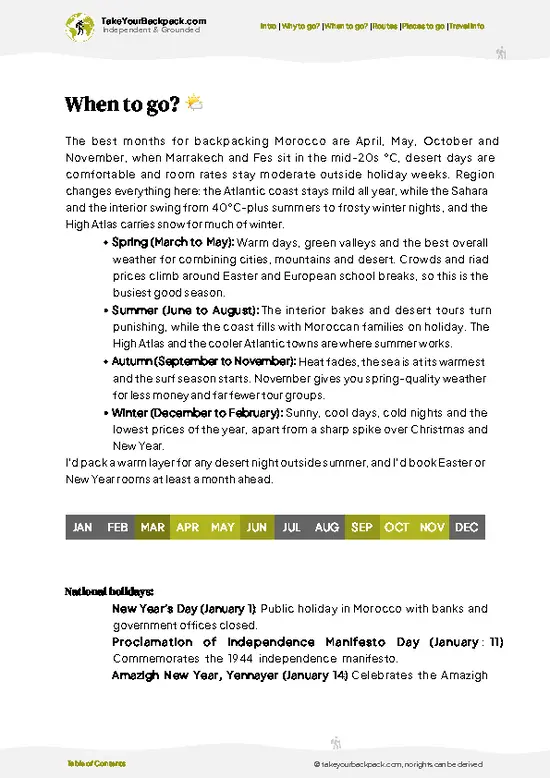
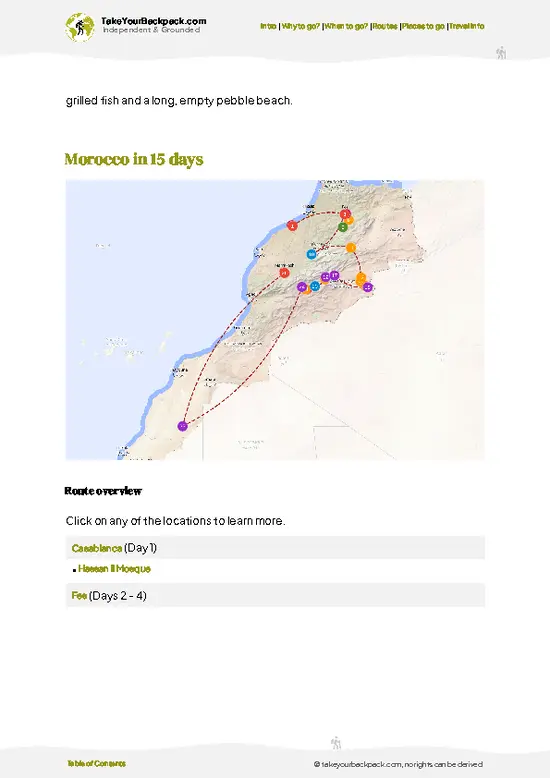
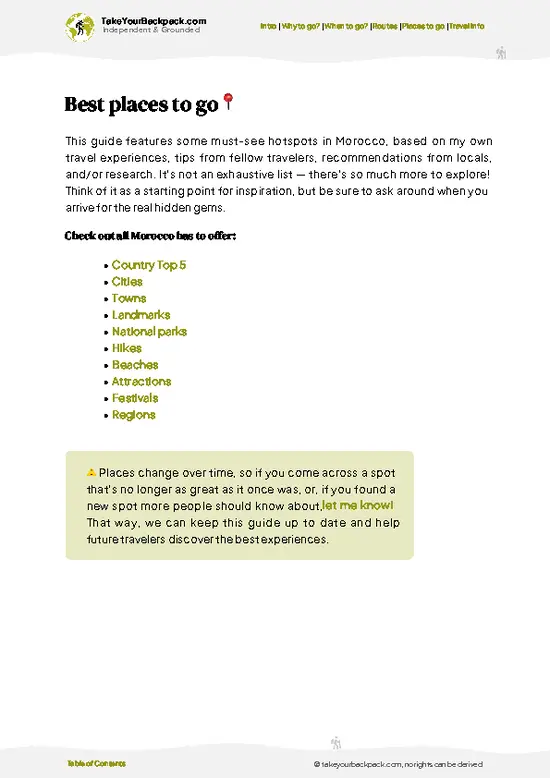
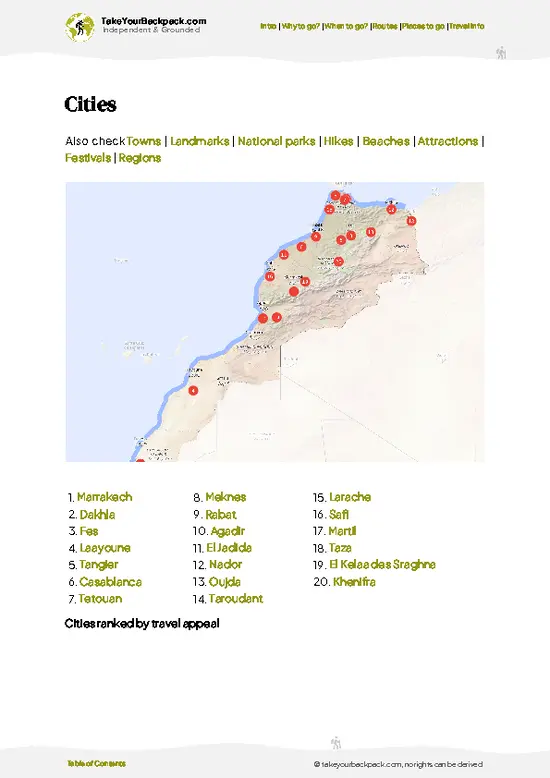
example page 0 from our offline Travel Guide for Morocco
example page 1 from our offline Travel Guide for Morocco
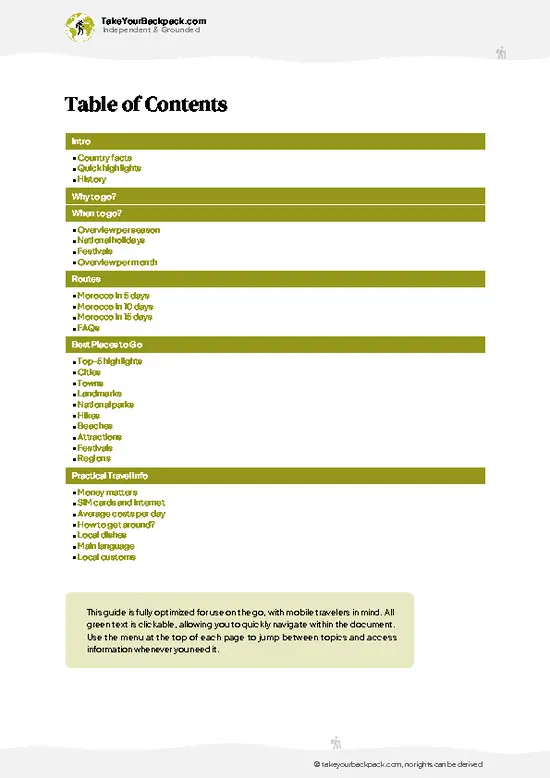
example page 2 from our offline Travel Guide for Morocco
example page 3 from our offline Travel Guide for Morocco
example page 4 from our offline Travel Guide for Morocco
example page 5 from our offline Travel Guide for Morocco
example page 6 from our offline Travel Guide for Morocco
example page 7 from our offline Travel Guide for Morocco
Loading the map 🌍
CLICK TO FILTER
cities
towns
landmarks
national parks
hikes
beaches
attractions
festivals
regions
SHOW COUNTRY’S BESTSHOW ALL

✨ Why go?
Ranked #1 unique site in Morocco
Why Aït Benhaddou should be on your travel list

Aït Benhaddou earns its place because it is the most complete example of southern Moroccan earthen architecture you can walk through, and entering the ksar itself is free. Towers with zigzag brick patterns, narrow lanes and a hilltop granary survive in a form that few other ksour in the valleys can match. Nowhere else along the pre-Saharan route lets you see so many defensive details in one compact climb.
The second reason is geography. Aït Benhaddou sits on the road that links Marrakech and the Draa Valley, so it breaks a long drive over the High Atlas without costing you a detour. Add it to a loop through Ouarzazate, the date palms of Skoura and the dunes beyond, and it becomes the natural overnight stop in the middle.
Third, it works for people who like to sleep nearby. The guesthouses on … read more 👉
Aït Benhaddou earns its place because it is the most complete example of southern Moroccan earthen architecture you can walk through, and entering the ksar itself is free. Towers with zigzag brick patterns, narrow lanes and a hilltop granary survive in a form that few other ksour in the valleys can match. Nowhere else along the pre-Saharan route lets you see so many defensive details in one compact climb.
The second reason is geography. Aït Benhaddou sits on the road that links Marrakech and the Draa Valley, so it breaks a long drive over the High Atlas without costing you a detour. Add it to a loop through Ouarzazate, the date palms of Skoura and the dunes beyond, and it becomes the natural overnight stop in the middle.
Third, it works for people who like to sleep nearby. The guesthouses on the new village side face the ksar across the river, which means you can see it with few other visitors once the tour buses leave. Stay the night and you get the walls to yourself in the cooler hours, when the clay shifts from pale ochre to deep red.

💡 HighlightsThe experiences that define the visit

  1. The ksar from the riverbank: The classic view, with the whole cluster of towers rising up the hillside from the Ounila River. This is the picture that earned the site its UNESCO listing, and it is free.
  2. Crossing the Ounila River: You reach the ksar on foot, over a stretch of stepping stones and sandbags or a footbridge when the water is high. It is a small crossing, yet it frames the village against the sky.
  3. The main gateway and lanes: Inside, the alleys narrow between rammed-earth walls and low doorways. The stonework changes from house to house, and you can see the difference between rebuilt sections and original ones.
  4. Decorated towers and kasbah houses: The corner towers carry geometric patterns of recessed brick. A few private houses let you climb to their roofs for around US$1 to 2, and
… read more 👉
  1. The ksar from the riverbank: The classic view, with the whole cluster of towers rising up the hillside from the Ounila River. This is the picture that earned the site its UNESCO listing, and it is free.
  2. Crossing the Ounila River: You reach the ksar on foot, over a stretch of stepping stones and sandbags or a footbridge when the water is high. It is a small crossing, yet it frames the village against the sky.
  3. The main gateway and lanes: Inside, the alleys narrow between rammed-earth walls and low doorways. The stonework changes from house to house, and you can see the difference between rebuilt sections and original ones.
  4. Decorated towers and kasbah houses: The corner towers carry geometric patterns of recessed brick. A few private houses let you climb to their roofs for around US$1 to 2, and the stairs are steep and uneven.
  5. The agadir at the summit: The collective granary at the top once stored the village’s grain behind thick walls. The climb takes about 20 to 30 minutes at a slow pace, and the panorama covers the palm groves, the river bed and the Atlas foothills.
  6. Film-set legacy: Productions such as Gladiator, Lawrence of Arabia and Game of Thrones used the ksar as a backdrop. Local guides point out the exact corners used, and it helps you read the place as more than a ruin.
  7. Saffron and tea paintings: Several artists in the ksar paint with saffron and tea rather than ordinary pigments. A demonstration is usually free, and small pieces cost a few dollars if you want one.
  8. Terrace cafés on the far bank: The rooftops on the new village side face the walls directly. A mint tea or orange juice costs just a few dollars, and the view is better than anything you see from the lanes.
Aït Benhaddou is best started from the riverbank view in the first hour of daylight, because the angle shows how the towers stack up the hill before you climb into them.
Spotted a mistake or missing something? Contact us.

Things to do around Aït Benhaddou

Ratings based on Tripadvisor reviews. When you book through this link, you support our work at no extra cost to you.

🌤️ When to go?Seasonal considerations and timing

  • Spring (March to May): Days of 22 to 30°C (72 to 86°F) and cool nights of 8 to 14°C (46 to 57°F) make the kasbah lanes and nearby hills easy to walk. Midday light is long and clear, and this is also when tour buses arrive in force.
  • Summer (June to August): Highs of 36 to 42°C (97 to 108°F) push sightseeing into early morning and evening. Crowds thin and room rates drop, but the stone alleys hold heat well into the night.
  • Autumn (September to November): Highs ease from 33°C (91°F) in September to around 22°C (72°F) by November. Daylight runs about 11 to 12 hours, the Ounila valley is quiet, and prices stay moderate.
  • Winter (December to February): Days of 15 to 20°C (59 to 68°F) turn to nights near 0 to 4°C (32 to 39°F), and the snow on the High Atlas can be seen from the ridge. Daylight is only
… read more 👉
  • Spring (March to May): Days of 22 to 30°C (72 to 86°F) and cool nights of 8 to 14°C (46 to 57°F) make the kasbah lanes and nearby hills easy to walk. Midday light is long and clear, and this is also when tour buses arrive in force.
  • Summer (June to August): Highs of 36 to 42°C (97 to 108°F) push sightseeing into early morning and evening. Crowds thin and room rates drop, but the stone alleys hold heat well into the night.
  • Autumn (September to November): Highs ease from 33°C (91°F) in September to around 22°C (72°F) by November. Daylight runs about 11 to 12 hours, the Ounila valley is quiet, and prices stay moderate.
  • Winter (December to February): Days of 15 to 20°C (59 to 68°F) turn to nights near 0 to 4°C (32 to 39°F), and the snow on the High Atlas can be seen from the ridge. Daylight is only about 10 hours. Rooms are cheapest, though unheated guesthouses feel cold.
Arrive for the late afternoon, when day-trip groups have left and the mud walls are nearly empty.


source: climatestotravel.comJANJanuary: fair for travelingFEBFebruary: good for travelingMARMarch: excellent for travelingAPRApril: excellent for travelingMAYMay: highly recommended for travelingJUNJune: fair for travelingJULJuly: below average for travelingAUGAugust: below average for travelingSEPSeptember: highly recommended for travelingOCTOctober: excellent for travelingNOVNovember: highly recommended for travelingDECDecember: fair for traveling
when-to-go

✈️ The backpacker research shortcutMorocco Travel Guide

An offline-friendly backpacking guide with optimized travel routes, ranked highlights, transport advice, and the best areas to stay.
example page 0 from our offline Travel Guide for Morocco
example page 1 from our offline Travel Guide for Morocco
example page 2 from our offline Travel Guide for Morocco
example page 3 from our offline Travel Guide for Morocco
example page 4 from our offline Travel Guide for Morocco
example page 5 from our offline Travel Guide for Morocco
example page 6 from our offline Travel Guide for Morocco
example page 7 from our offline Travel Guide for Morocco
The digital guide (424 pages) contains:
✅ 112 highlights, ranked by travel appeal
✅ Optimized 5, 10 & 15-day travel routes
✅ Cities, national parks, landmarks, beaches
✅ How to get around
✅ Offline-friendly for travel without Wi-Fi
👉 Click to see all 30+ guide features

📅 Plan smarter in minutes, not weeks
✅ Month by month travel advice
✅ Festivals & national holidays
✅ Budget expectations

🗺️ Go to the right places, skip the overrated ones
✅ Honest pros & cons of destinations
✅ Top hikes, parks & viewpoints
✅ Lesser-known places most travelers miss
✅ Clear “worth it vs skip it” guidance

🛏️ Travel smoothly without rookie mistakes
✅ Best areas to stay
✅ Transport systems explained simply
✅ Common scams & safety advice
✅ SIM cards, money & practical tips

🌍 Understand the country, not just visit it
✅ Culture & traditions
✅ 52 Essential phrases & customs
✅ Festivals worth planning around
✅ Traveler-friendly historical context
✅ Insights that make places more meaningful

📱 Built for real travel conditions
✅ Fully downloadable PDF
✅ Works completely offline
✅ Optimized for phone use
✅ Useful in remote areas & buses
✅ Everything in one place
Stop searching, start planning
Get instant access to your full guide. 30‑day money-back guarantee.
+ Add another guide for just

By proceeding you agree to our terms.
Sent to your inbox immediately after payment • 100% Secure Checkout
Best Backpacking Travel Advisor 2025 tourism awardBest Backpacking
Travel Advisor
2025
What others say about Take Your Backpack Guides:
⭐⭐⭐⭐⭐
Fantastic, amazing amount of information!
⭐⭐⭐⭐⭐
My goodness this is amazing, it's what I've been looking for hats off too you!
⭐⭐⭐⭐⭐
I think this is absolutely BRILLIANT
⭐⭐⭐⭐
Very complete and informative. It's still missing places, but I gotta to commend you
⭐⭐⭐⭐⭐
This is truly amazing, thank you, can't wait to explore it with my kids!
⭐⭐⭐⭐⭐
Awesome resource, thank you!
⭐⭐⭐⭐⭐
This is amazing! Can't wait to explore the ones I haven't seen
⭐⭐⭐⭐
I love this! Well done, great idea.
⭐⭐⭐⭐⭐
Thanks for taking the time to make this gem!
⭐⭐⭐⭐⭐
This might be the best website I've ever seen.
⭐⭐⭐⭐⭐
Congratulations, and thank you so much for your work; it's incredibly valuable.
⭐⭐⭐⭐
In all seriousness I think you did a great job pointing out the important spots
⭐⭐⭐⭐⭐
10/10 very good
⭐⭐⭐⭐⭐
As someone who's only just starting to visit regularly this is awesome, thank you.
⭐⭐⭐⭐
Thank you very much! I'm going to visit my dad, it's going to be very useful!
⭐⭐⭐⭐⭐
This is really cool! We'll be travelling for the first time and this definitely come in handy.
⭐⭐⭐⭐⭐
You are now our minister of culture, congratulations 👨‍💼
⭐⭐⭐⭐⭐
Just wanted to tell you that this is a pearl! Going to follow your recommendations.
⭐⭐⭐⭐⭐
This is so cool. I'll definitely be using the resource for my travels soon.
⭐⭐⭐⭐⭐
This is very impressive! Good work.
⭐⭐⭐⭐⭐
This is an amazing and informative site. Very well done!

🛏️ Where to stay?Best areas to stay in Morocco

The best base for backpackers is the village of Aït Benhaddou itself, on the far bank of the Asif Ounila river from the ksar. Staying here puts you within a five-minute walk of the old fortified village, so you can walk its alleys at dawn and after dusk when day groups are gone. Budget guesthouses and small riads cluster along the river and up the hillside, and many have rooftop terraces with ksar views and shared dinners where solo travelers end up talking with each other. The scene is small and quiet, so expect early nights rather than nightlife, and a sociable evening usually means a communal … read more 👉
The best base for backpackers is the village of Aït Benhaddou itself, on the far bank of the Asif Ounila river from the ksar. Staying here puts you within a five-minute walk of the old fortified village, so you can walk its alleys at dawn and after dusk when day groups are gone. Budget guesthouses and small riads cluster along the river and up the hillside, and many have rooftop terraces with ksar views and shared dinners where solo travelers end up talking with each other. The scene is small and quiet, so expect early nights rather than nightlife, and a sociable evening usually means a communal table, not a bar.

If you want more choice of food, ATMs and company, Ouarzazate sits about 30 km (19 miles) east and has the widest range of hostels and cheap hotels, plus shared taxis and buses running to Marrakech and the Draa valley. It suits travelers on a tight schedule or those relying on public transport. It is less atmospheric, but easier for meeting other backpackers.

A few families also run homestay-style rooms in the smaller villages along the Ounila valley road, which feel safe and welcoming and give a slower pace. Book ahead for spring weekends, when the village fills up.

👛 Costs (as of 22 October 2026)Typical daily expenses

A realistic backpacker budget for Aït Benhaddou is about US$46 a day, including a bed in high season, food, local transport and the ksar visit. Travelers pay in Moroccan dirhams, and cash is easiest in the village, where card machines are rare.
CategoryBudget RangeLocal Reality
Accommodation (high season)US$12 to 20Dorm bed or basic guesthouse room, often with breakfast included. Prices drop by about a quarter from June to August.
Accommodation (low season)US$8 to 15Winter rooms can be negotiated, though heating is limited.
Ksar entryUS$0 to 2Walking the alleys is free. Small donations or fees apply at the hilltop granary and private courtyards.
FoodUS$8 to 14Tagine or couscous in a village café costs US$4 to 8, and breakfast is often included in the room rate.
Local transportUS$3 to 8Shared taxis
… read more 👉
A realistic backpacker budget for Aït Benhaddou is about US$46 a day, including a bed in high season, food, local transport and the ksar visit. Travelers pay in Moroccan dirhams, and cash is easiest in the village, where card machines are rare.
CategoryBudget RangeLocal Reality
Accommodation (high season)US$12 to 20Dorm bed or basic guesthouse room, often with breakfast included. Prices drop by about a quarter from June to August.
Accommodation (low season)US$8 to 15Winter rooms can be negotiated, though heating is limited.
Ksar entryUS$0 to 2Walking the alleys is free. Small donations or fees apply at the hilltop granary and private courtyards.
FoodUS$8 to 14Tagine or couscous in a village café costs US$4 to 8, and breakfast is often included in the room rate.
Local transportUS$3 to 8Shared taxis and minibuses from Ouarzazate cost a few dollars per seat. A private taxi for the whole car is US$15 to 25.
ActivitiesUS$0 to 10Film studio visits in Ouarzazate cost US$7 to 10. Hiking above the ksar is free.
Water and extrasUS$2 to 4Bottled water, tea and small tips for guides or photo spots.
Total Daily BudgetUS$46Comfortable for one traveler using shared transport and guesthouse meals.


source: visitmorocco.com
⚠️ Prices can change and everyone travels differently, so take this as a rough guide. Hope it helps you plan your adventure!

FAQFrequently asked questions about Aït Benhaddou

Aït Benhaddou is a fortified village, or ksar, of red-earth clay buildings on the old caravan route between the Sahara and Marrakech. It sits beside the Asif Ounila river about 30 km (19 miles) from Ouarzazate and has been a UNESCO World Heritage Site since 1987. Its towers and walls have appeared in films such as Gladiator and Game of Thrones, and only a handful of families still live inside.
Aït Benhaddou needs about two to three hours for the ksar itself, including the climb to the hilltop granary for views over the valley. Staying one night lets you see the village at dawn and dusk with far fewer people, and that is what most backpackers do. If you add the Ounila valley or the film studios in Ouarzazate, plan two days.
Aït Benhaddou is reached by road from Marrakech in about 4 to 5 hours over the Tizi n’Tichka pass, or in roughly 30 to 40 minutes from Ouarzazate. Public buses from Marrakech to Ouarzazate cost around US$8 to 12, and from there a shared taxi or minibus to the village costs a few dollars. Many travelers take a guided tour from Marrakech at US$30 to 50 for a one-day or overnight trip.
⚠️ Things can change over time, so always validate details locally before you go.

Other Moroccan landmarks near Aït Benhaddou

Explore more nearby:

  • Imi-n-Ifri Natural Bridge—Limestone arch, stream cave, spring pools, Demnate| 77 km away
  • Ouzoud Falls—110-meter cascade, macaques, red cliffs, boat to the base| 114 km away
  • Dadès Gorges—Monkey Fingers rocks, Tamellalt hairpins, river path, kasbah valley| 120 km away

💡 Not sure where to go next?
Create a personalized itinerary for Morocco including Aït Benhaddou and the places that fit your trip.

Generate my itinerary

👉 Discover all landmarks

Or checkout all Morocco has to offer (think cities, towns, villages, national parks, hikes, beaches, festivals)
Country photo of Morocco

We 💚 feedbackWhat to keep in mind

Aït Benhaddou looks best in early morning or late afternoon, when the walls turn deep red and the day-trip buses have gone, and spring or autumn keeps the climb comfortable. I would sleep on the far bank for one night, climb to the granary once the lanes empty, and leave the souvenir stalls for last.

✈️ When did I visit Morocco?
In October 2011, I backpacked Morocco for two weeks, with climbing the Mount Toubkal in summer clothing as a highlight.

✍️ Help improve this page!
The information on this page is based on my own backpacking experience in Morocco, supplemented with up-to-date research and feedback from other travelers. Travel details can change, so if you notice anything outdated or incomplete, feel free to let me know.


🙋‍♂️ Give feedback

👋 Meet the founderWho’s Behind Take Your Backpack?

Johan, backpacker and founder of TakeYourBackpackHi, I’m Johan (Netherlands 🇳🇱), the creator of TakeYourBackpack. Over the past 3 decades, I’ve backpacked through 90+ countries across six continents, gaining extensive experience with independent travel, long-term trips, and overland routes.

This site is built on a combination of firsthand travel experience and carefully curated insights from other backpackers. Many guides are based on places I’ve personally visited, while others bring together tips, observations, and practical advice shared by trusted travelers I’ve met along the way.

The goal is to provide realistic, experience-driven guidance — not generic itineraries — so you can explore destinations with better context, clearer expectations, and more confidence.