v2.webp)
- Azrou Rock and Kasbah ruins: The basalt outcrop that named the town carries the remains of a kasbah from the Alaouite sultan Moulay Ismail’s era, built to watch the tribes of the Middle Atlas. The climb is short and rough, and the view over red roofs toward the cedar hills is best in late afternoon. Free, 30 to 45 minutes.
- Coopérative Artisanale: A long-running craft cooperative where cedar carvings, wool carpets and embroidered pieces are sold at fixed, tagged prices. Browsing is free and the staff do not push. Go in the morning when weavers are working. Allow 45 minutes to an hour; small carved items start around US$5 and carpets run from about US$50.
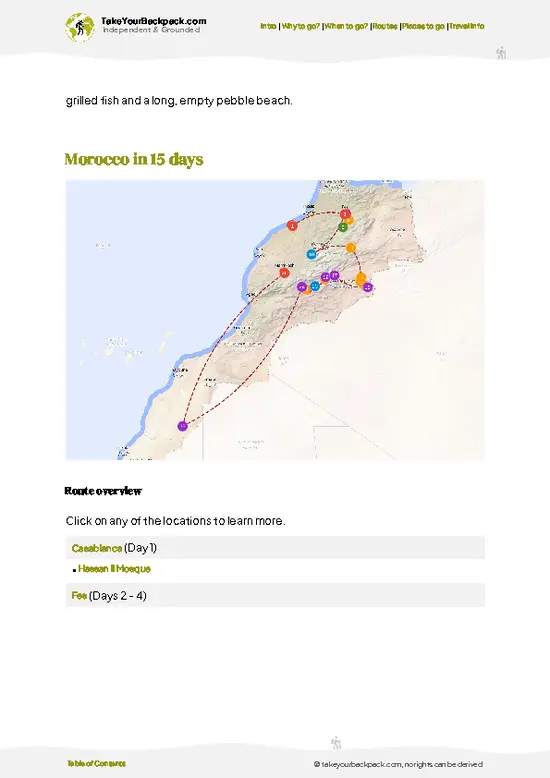
- Azrou souk: The weekly market draws farmers and herders from the surrounding hills. You see sheep, mule tack, vegetables, secondhand clothes
- Azrou Rock and Kasbah ruins: The basalt outcrop that named the town carries the remains of a kasbah from the Alaouite sultan Moulay Ismail’s era, built to watch the tribes of the Middle Atlas. The climb is short and rough, and the view over red roofs toward the cedar hills is best in late afternoon. Free, 30 to 45 minutes.
- Coopérative Artisanale: A long-running craft cooperative where cedar carvings, wool carpets and embroidered pieces are sold at fixed, tagged prices. Browsing is free and the staff do not push. Go in the morning when weavers are working. Allow 45 minutes to an hour; small carved items start around US$5 and carpets run from about US$50.
- Azrou souk: The weekly market draws farmers and herders from the surrounding hills. You see sheep, mule tack, vegetables, secondhand clothes and spices. Arrive early, as it thins out by early afternoon. Free to wander, 1 to 2 hours; carry small change.
- The old Berber quarter: The narrow lanes uphill from the center hold carpenters, bakers and tea sellers, and few other travelers. It is not polished, which is the point. Walk it before midday when the workshops are open. Free, about an hour.
- Cedar workshops on the main street: Small woodworking shops turn cedar into chests, bowls and chess sets, and you can watch the lathes run. The smell alone is worth stepping inside for. Expect to bargain; a hand-carved box costs about US$8 to 25. Half an hour is plenty.
Spotted a mistake or missing something? Contact us.

Authentic Guided Tour of Fez Medina & Souks

Fes to Desert journey through the heart of Morocco

Fez Tour Experience

Fes Medina Walking Tour

Cooking Class with Bread Workshop and Pastry in Fes

Fez Medina Private Walking Tour With Chouara Tannery

Discover the secrets of the Medina of Fez: guided cultural tour (private)

Private Half-Day Walking Tour of Fes Medina with Local Guide

2 days Sahara tour with overnight in luxury desert camp


 Best Backpacking
.jpg) Hi, I’m Johan (Netherlands 🇳🇱), the creator of TakeYourBackpack. Over the past 3 decades, I’ve backpacked through 90+ countries across six continents, gaining extensive experience with independent travel, long-term trips, and overland routes.
Hi, I’m Johan (Netherlands 🇳🇱), the creator of TakeYourBackpack. Over the past 3 decades, I’ve backpacked through 90+ countries across six continents, gaining extensive experience with independent travel, long-term trips, and overland routes.