v2.webp)
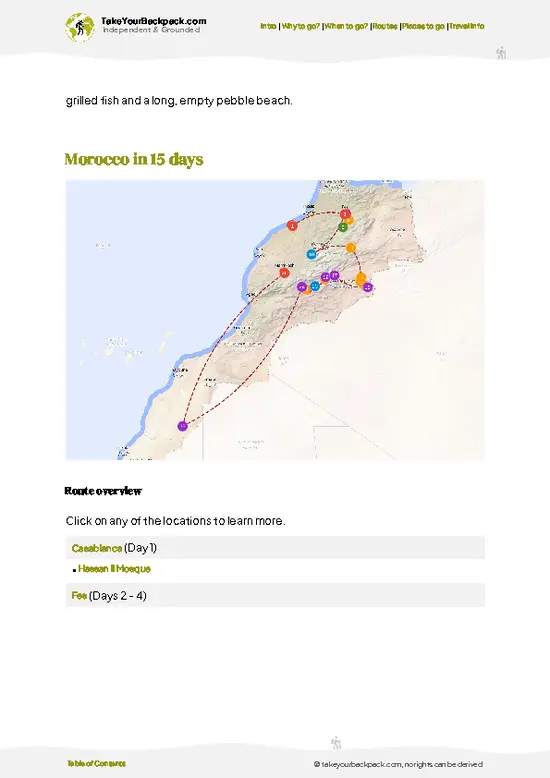
- Hassan II Mosque: The city’s signature sight, with a 210 meter minaret and a prayer hall that holds about 25,000 people, built partly over the Atlantic. Guided interior tours run in the morning, cost around US$13 and take 45 minutes to an hour. Allow another hour for the esplanade.
- Old Medina: Small, calm and far less pushy than other Moroccan medinas. Wander lanes of clothes, spice and bread sellers. Go in the morning, free, 1 to 2 hours.
- Habous Quarter (New Medina): A 1920s French-designed neighborhood in Moorish style with arcades, bookshops and pastry stands. Good for sweets and Moroccan olives. Free to stroll, 1.5 to 2 hours, best mid-morning.
- Art Deco Downtown: Boulevards around Place Mohammed V and Boulevard Mohammed V hold courthouse, post office and apartment blocks from the 1930s. Free,
- Hassan II Mosque: The city’s signature sight, with a 210 meter minaret and a prayer hall that holds about 25,000 people, built partly over the Atlantic. Guided interior tours run in the morning, cost around US$13 and take 45 minutes to an hour. Allow another hour for the esplanade.
- Old Medina: Small, calm and far less pushy than other Moroccan medinas. Wander lanes of clothes, spice and bread sellers. Go in the morning, free, 1 to 2 hours.
- Habous Quarter (New Medina): A 1920s French-designed neighborhood in Moorish style with arcades, bookshops and pastry stands. Good for sweets and Moroccan olives. Free to stroll, 1.5 to 2 hours, best mid-morning.
- Art Deco Downtown: Boulevards around Place Mohammed V and Boulevard Mohammed V hold courthouse, post office and apartment blocks from the 1930s. Free, 1 to 2 hours, softer light in late afternoon.
- La Corniche (Ain Diab): The seafront strip of beach clubs, cafés and promenade. Walk at sunset, free, 1 to 2 hours. Beach club day passes vary, roughly US$10 to 30.
- Rick’s Café: A recreation of the film bar, set in an old-medina house with a piano room. Dinner is pricey, from about US$35, but a drink in the early evening costs less. Allow 1 to 2 hours.
- Central Market (Marché Central): Fresh fish, olives and produce, with small grill counters serving fried fish lunches for about US$6 to 10. Go before 1 pm, allow an hour.
- Villa des Arts: A modest Art Deco villa with rotating contemporary Moroccan art. Entry is free or very low cost, and a visit takes about an hour. Open daytime, closed some days.
Spotted a mistake or missing something? Contact us.

Casablanca to Fez Private Transfer with Full Fez Tour and Lunch

7-days: Casablanca to Chefchaouen then Fes and Sahara Desert - Camel Trekking

12 Days Private Luxury Sightseeing Tour in Morocco

Morocco 10 - Day Luxury Private Tour

Magical Morocco 8 day

Private Day Trip to Marrakech from Casablanca

15 Days Morocco Private Grand Tour From North To South Starting From Casablanca

Atlas Trekking Morocco

12 Days from Casablanca

 Best Backpacking
.jpg) Hi, I’m Johan (Netherlands 🇳🇱), the creator of TakeYourBackpack. Over the past 3 decades, I’ve backpacked through 90+ countries across six continents, gaining extensive experience with independent travel, long-term trips, and overland routes.
Hi, I’m Johan (Netherlands 🇳🇱), the creator of TakeYourBackpack. Over the past 3 decades, I’ve backpacked through 90+ countries across six continents, gaining extensive experience with independent travel, long-term trips, and overland routes.