×

Morocco🇲🇦 | attractionsJemaa el-FnaNumbered grill stalls, halqa performers, rooftop terraces, juice carts | things to do and best time to go

Explore TichkaExplore Majorelle Garden & Berber Museum

Backpacking in Jemaa el-Fna
🏆 Top pickattraction ranked #1
By Johan Kruseman 🇳🇱 | Updated October 22, 2026

The food stalls here are numbered, and the stall numbers are posted on the signs, so you can look up the same stall again instead of getting lost among the smoke. Jemaa el-Fna is the main square of the medina in Marrakech, Morocco, a big open rectangle at the medina’s western edge, with the Koutoubia minaret rising to the southwest. Daytime is the weak part: orange juice sellers, snake charmers and monkey handlers want money for photos, and the animal acts are not worth your time or your conscience. Night is the point. Hundreds of stalls and gnawa musicians, storytellers and crowds fill the space, and it is loud, dense and free to walk through. I came out of an alley into the square and the smoke hit before the noise did, a gray wall of grilled lamb haze lit by gas lamps, with a drum somewhere inside it. Come after dark, keep small coins ready, and agree on a price before anyone takes a photo or sits you down.

Discover everything you want to know in the 📖 Morocco Travel Guide.


example page 0 from our offline Travel Guide for Morocco
example page 1 from our offline Travel Guide for Morocco
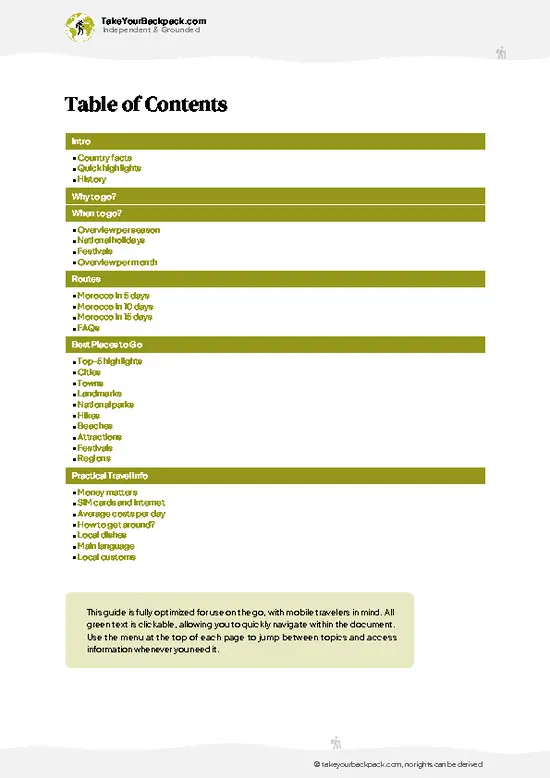
example page 2 from our offline Travel Guide for Morocco
example page 3 from our offline Travel Guide for Morocco
example page 4 from our offline Travel Guide for Morocco
example page 5 from our offline Travel Guide for Morocco
example page 6 from our offline Travel Guide for Morocco
example page 7 from our offline Travel Guide for Morocco
Loading the map 🌍
CLICK TO FILTER
cities
towns
landmarks
national parks
hikes
beaches
attractions
festivals
regions
SHOW COUNTRY’S BESTSHOW ALL

✨ Why go?
Ranked #1 attraction in Morocco
Why visitors keep coming back

Jemaa el-Fna is the reason many people put Marrakech on a Morocco route at all, and it earns the slot by changing completely between afternoon and night. By day it is a wide, dusty plaza and a place to cross on the way to the souks. After the light drops, more than 100 food stalls are rolled out and lit, and the square becomes a working open-air theater with Gnawa drummers, Berber musicians, Halqa storytellers who hold a ring of listeners in Arabic, and acrobats. That tradition is why UNESCO recognized the square’s cultural space as intangible heritage in 2008.

It also works as a practical anchor. Every route into the medina starts here, the souks run off the northern side, and the rooftop cafés around the edge give you a free look from above without committing to dinner. If you only get … read more 👉
Jemaa el-Fna is the reason many people put Marrakech on a Morocco route at all, and it earns the slot by changing completely between afternoon and night. By day it is a wide, dusty plaza and a place to cross on the way to the souks. After the light drops, more than 100 food stalls are rolled out and lit, and the square becomes a working open-air theater with Gnawa drummers, Berber musicians, Halqa storytellers who hold a ring of listeners in Arabic, and acrobats. That tradition is why UNESCO recognized the square’s cultural space as intangible heritage in 2008.

It also works as a practical anchor. Every route into the medina starts here, the souks run off the northern side, and the rooftop cafés around the edge give you a free look from above without committing to dinner. If you only get one evening in the city, spend it here. If you hate crowds and persistent sellers, a short visit is enough, and you can still see the best of it in an hour or two. The Koutoubia minaret nearby gives you a fixed point to find your way back.

💡 HighlightsWhat this place is best known for

  1. Night food stalls: The square’s signature. Numbered stalls grill lamb, sausages and fish, and serve harira soup, snail broth and fried vegetables at shared benches. Prices are posted, so check the menu card before you sit. Rows with locals eating are the safer bet.
  2. Halqa storytellers and musicians: Circles of onlookers form around Gnawa drummers, Berber singers and tellers of tales. Even without Arabic you catch the rhythm and the audience’s laughter. Tip the performers a few coins if you stay.
  3. Rooftop cafés at sunset: Terraces around the square, such as Café de France and Café Glacier, give a high view over the smoke and crowds for the price of a drink. Go up before dark and claim a front table.
  4. Fresh orange juice stalls: Rows of carts with pyramids of oranges squeeze a glass to order. Prices
… read more 👉
  1. Night food stalls: The square’s signature. Numbered stalls grill lamb, sausages and fish, and serve harira soup, snail broth and fried vegetables at shared benches. Prices are posted, so check the menu card before you sit. Rows with locals eating are the safer bet.
  2. Halqa storytellers and musicians: Circles of onlookers form around Gnawa drummers, Berber singers and tellers of tales. Even without Arabic you catch the rhythm and the audience’s laughter. Tip the performers a few coins if you stay.
  3. Rooftop cafés at sunset: Terraces around the square, such as Café de France and Café Glacier, give a high view over the smoke and crowds for the price of a drink. Go up before dark and claim a front table.
  4. Fresh orange juice stalls: Rows of carts with pyramids of oranges squeeze a glass to order. Prices are fixed and cheap, and it is the easiest local ritual to join on arrival.
  5. Koutoubia Mosque minaret: The 12th-century tower at the southwest edge anchors the square. Non-Muslims cannot enter, but the gardens around it are free, and the tower is lit at night.
  6. Souk Semmarine entrance: The main covered lane starts just north of the square. It is a gentle introduction to the medina’s market maze, with leather, lanterns and spices. Bargain hard and start at a third of the asking price.
  7. Dried fruit and nut stalls: Pyramids of dates, figs, almonds and walnuts line the edges. They are good for cheap hiking snacks, and vendors let you taste first.
  8. Henna artists: Women sit with pattern books in the early evening. Insist on seeing the price first and refuse anyone who starts drawing before you agree. Natural henna is brown or orange, not black.
For a first visit, take a table at a rooftop café just before dark, watch the stalls appear, then walk down for the night food stalls.
Spotted a mistake or missing something? Contact us.

Things to do around Jemaa el-Fna

Ratings based on Tripadvisor reviews. When you book through this link, you support our work at no extra cost to you.

🌤️ When to go?Seasonal considerations and timing

  • Spring (March to May): Daytime highs run 20 to 30°C (68 to 86°F), so the square is comfortable from morning to the late-night food stalls. Crowds and riad prices climb around Easter and in April.
  • Summer (June to August): Expect 35 to 42°C (95 to 108°F) by afternoon, with heat spikes above 45°C (113°F). The square stays nearly empty until late afternoon, then fills after dark. Rooms are cheapest now.
  • Autumn (September to November): Highs of 22 to 33°C (72 to 91°F) make this the easiest season for walking the medina. Prices rise again from October.
  • Winter (December to February): Days reach 17 to 20°C (63 to 68°F), but nights drop to 5 to 8°C (41 to 46°F), and the evening food stalls feel chilly. Christmas and New Year are the priciest weeks, and rain is possible.
  • Ramadan: Daytime food stalls and
… read more 👉
  • Spring (March to May): Daytime highs run 20 to 30°C (68 to 86°F), so the square is comfortable from morning to the late-night food stalls. Crowds and riad prices climb around Easter and in April.
  • Summer (June to August): Expect 35 to 42°C (95 to 108°F) by afternoon, with heat spikes above 45°C (113°F). The square stays nearly empty until late afternoon, then fills after dark. Rooms are cheapest now.
  • Autumn (September to November): Highs of 22 to 33°C (72 to 91°F) make this the easiest season for walking the medina. Prices rise again from October.
  • Winter (December to February): Days reach 17 to 20°C (63 to 68°F), but nights drop to 5 to 8°C (41 to 46°F), and the evening food stalls feel chilly. Christmas and New Year are the priciest weeks, and rain is possible.
  • Ramadan: Daytime food stalls and cafes are quiet, but the square erupts after sunset when the fast breaks, and the dates shift each year.
Arrive an hour before dusk, when snake charmers and storytellers set up and the grill smoke begins to rise.


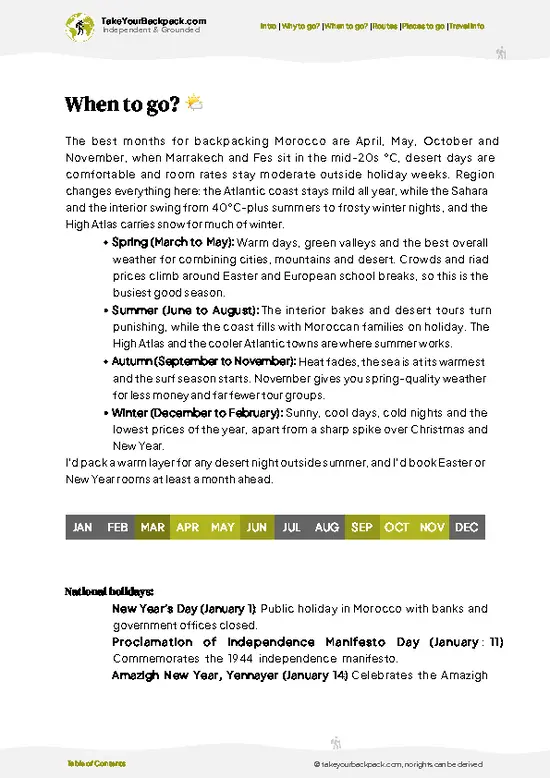
source: climatestotravel.comJANJanuary: highly recommended for travelingFEBFebruary: highly recommended for travelingMARMarch: highly recommended for travelingAPRApril: highly recommended for travelingMAYMay: highly recommended for travelingJUNJune: fair for travelingJULJuly: below average for travelingAUGAugust: below average for travelingSEPSeptember: highly recommended for travelingOCTOctober: highly recommended for travelingNOVNovember: excellent for travelingDECDecember: highly recommended for traveling
morocco-attraction-jemaa-el-fna v1
© Google |

✈️ The backpacker research shortcutMorocco Travel Guide

An offline-friendly backpacking guide with optimized travel routes, ranked highlights, transport advice, and the best areas to stay.
example page 0 from our offline Travel Guide for Morocco
example page 1 from our offline Travel Guide for Morocco
example page 2 from our offline Travel Guide for Morocco
example page 3 from our offline Travel Guide for Morocco
example page 4 from our offline Travel Guide for Morocco
example page 5 from our offline Travel Guide for Morocco
example page 6 from our offline Travel Guide for Morocco
example page 7 from our offline Travel Guide for Morocco
The digital guide (424 pages) contains:
✅ 112 highlights, ranked by travel appeal
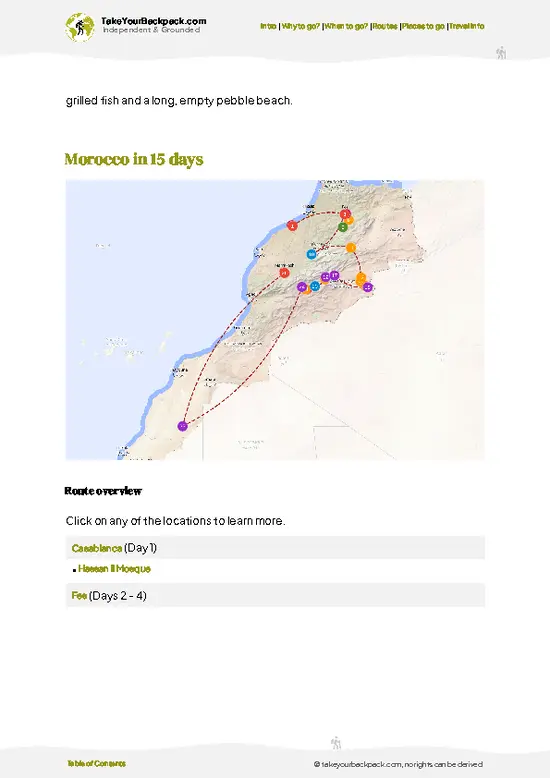
✅ Optimized 5, 10 & 15-day travel routes
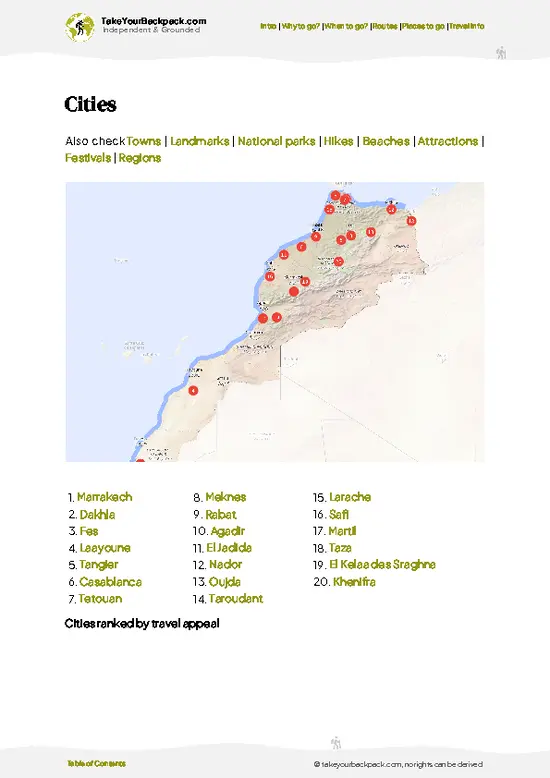
✅ Cities, national parks, landmarks, beaches
✅ How to get around
✅ Offline-friendly for travel without Wi-Fi
👉 Click to see all 30+ guide features

📅 Plan smarter in minutes, not weeks
✅ Month by month travel advice
✅ Festivals & national holidays
✅ Budget expectations

🗺️ Go to the right places, skip the overrated ones
✅ Honest pros & cons of destinations
✅ Top hikes, parks & viewpoints
✅ Lesser-known places most travelers miss
✅ Clear “worth it vs skip it” guidance

🛏️ Travel smoothly without rookie mistakes
✅ Best areas to stay
✅ Transport systems explained simply
✅ Common scams & safety advice
✅ SIM cards, money & practical tips

🌍 Understand the country, not just visit it
✅ Culture & traditions
✅ 52 Essential phrases & customs
✅ Festivals worth planning around
✅ Traveler-friendly historical context
✅ Insights that make places more meaningful

📱 Built for real travel conditions
✅ Fully downloadable PDF
✅ Works completely offline
✅ Optimized for phone use
✅ Useful in remote areas & buses
✅ Everything in one place
Stop searching, start planning
Get instant access to your full guide. 30‑day money-back guarantee.
+ Add another guide for just

By proceeding you agree to our terms.
Sent to your inbox immediately after payment • 100% Secure Checkout
Best Backpacking Travel Advisor 2025 tourism awardBest Backpacking
Travel Advisor
2025
What others say about Take Your Backpack Guides:
⭐⭐⭐⭐⭐
Fantastic, amazing amount of information!
⭐⭐⭐⭐⭐
My goodness this is amazing, it's what I've been looking for hats off too you!
⭐⭐⭐⭐⭐
I think this is absolutely BRILLIANT
⭐⭐⭐⭐
Very complete and informative. It's still missing places, but I gotta to commend you
⭐⭐⭐⭐⭐
This is truly amazing, thank you, can't wait to explore it with my kids!
⭐⭐⭐⭐⭐
Awesome resource, thank you!
⭐⭐⭐⭐⭐
This is amazing! Can't wait to explore the ones I haven't seen
⭐⭐⭐⭐
I love this! Well done, great idea.
⭐⭐⭐⭐⭐
Thanks for taking the time to make this gem!
⭐⭐⭐⭐⭐
This might be the best website I've ever seen.
⭐⭐⭐⭐⭐
Congratulations, and thank you so much for your work; it's incredibly valuable.
⭐⭐⭐⭐
In all seriousness I think you did a great job pointing out the important spots
⭐⭐⭐⭐⭐
10/10 very good
⭐⭐⭐⭐⭐
As someone who's only just starting to visit regularly this is awesome, thank you.
⭐⭐⭐⭐
Thank you very much! I'm going to visit my dad, it's going to be very useful!
⭐⭐⭐⭐⭐
This is really cool! We'll be travelling for the first time and this definitely come in handy.
⭐⭐⭐⭐⭐
You are now our minister of culture, congratulations 👨‍💼
⭐⭐⭐⭐⭐
Just wanted to tell you that this is a pearl! Going to follow your recommendations.
⭐⭐⭐⭐⭐
This is so cool. I'll definitely be using the resource for my travels soon.
⭐⭐⭐⭐⭐
This is very impressive! Good work.
⭐⭐⭐⭐⭐
This is an amazing and informative site. Very well done!

🛏️ Where to stay?Best areas to stay in Morocco

The best base is inside the medina's northern and southern streets within a ten-minute walk of Jemaa el-Fna, where hostels and budget riads cluster and most evenings end with a short, lit walk home.
The Mouassine quarter, just north-west of the square, is the social pick. It has rooftop terraces, cafes, and the souks right at the door, and it draws solo travelers who want to meet people over breakfast. Lanes are narrow and quieter than the square itself, so you sleep better than you might expect.
The Kasbah district to the south is calmer and a little cheaper. It's a good choice if you prefer less … read more 👉
The best base is inside the medina's northern and southern streets within a ten-minute walk of Jemaa el-Fna, where hostels and budget riads cluster and most evenings end with a short, lit walk home.
The Mouassine quarter, just north-west of the square, is the social pick. It has rooftop terraces, cafes, and the souks right at the door, and it draws solo travelers who want to meet people over breakfast. Lanes are narrow and quieter than the square itself, so you sleep better than you might expect.
The Kasbah district to the south is calmer and a little cheaper. It's a good choice if you prefer less hassle from touts, and you're close to the Saadian Tombs and El Badi Palace. Walks back to the square take about 15 minutes.
The streets directly around the square put you in the middle of the action, but rooms facing it can be loud until the early hours. Ask for a back room.
Gueliz, the modern city across the walls, has cheaper chain-style options and easier taxi access, but it lacks the medina atmosphere and is a 20 to 30 minute walk away. Save it for late arrivals by train.
At night, stay on the main lanes, and ask your hostel to meet you at the square's edge or send directions if you arrive after dark. Many medina alleys are unmarked.

👛 Costs (as of 22 October 2026)What things cost and how to budget

Jemaa el-Fna costs about US$35 to 60 a day for a backpacker, because the square itself is free and your money goes to food, a bed nearby, and a few paid sights in the surrounding medina.
CategoryBudget RangeLocal Reality
Entry to the squareUS$0Open to everyone, day and night. Photographing performers means paying them, often US$1 to 3.
Dorm bed (low season)US$8 to 12Medina hostels with rooftop terraces; cheapest in summer heat.
Dorm bed (high season)US$12 to 20Spring, autumn, and Christmas fill quickly, so book ahead.
FoodUS$8 to 15Grill stall dinners cost US$4 to 8. Fresh orange juice from the carts is about US$0.50 to 1, and you pay in dirhams.
Nearby sightsUS$3 to 8Saadian Tombs, El Badi Palace, and Bahia Palace charge small separate fees of about US$1 to 5 each.
Local transportUS$1 to 8Most of
… read more 👉
Jemaa el-Fna costs about US$35 to 60 a day for a backpacker, because the square itself is free and your money goes to food, a bed nearby, and a few paid sights in the surrounding medina.
CategoryBudget RangeLocal Reality
Entry to the squareUS$0Open to everyone, day and night. Photographing performers means paying them, often US$1 to 3.
Dorm bed (low season)US$8 to 12Medina hostels with rooftop terraces; cheapest in summer heat.
Dorm bed (high season)US$12 to 20Spring, autumn, and Christmas fill quickly, so book ahead.
FoodUS$8 to 15Grill stall dinners cost US$4 to 8. Fresh orange juice from the carts is about US$0.50 to 1, and you pay in dirhams.
Nearby sightsUS$3 to 8Saadian Tombs, El Badi Palace, and Bahia Palace charge small separate fees of about US$1 to 5 each.
Local transportUS$1 to 8Most of the medina is walkable. Petit taxis from the train station run US$2 to 5 with the meter on.
ExtrasUS$3 to 10Hammam visits cost US$3 to 12. Souk shopping depends on your bargaining.
Total Daily BudgetUS$35 to 60Based on a high-season dorm, street food, and one or two paid sights.
⚠️ Prices can change and everyone travels differently, so take this as a rough guide. Hope it helps you plan your adventure!

FAQCommon questions from travelers

Plan on two to three hours for a first visit, ideally arriving around late afternoon and staying into the evening. The square changes character completely at dusk, when the grill stalls open and the storytellers and musicians gather. Add half a day if you also want the nearby Koutoubia Mosque exterior and the souks just north of the square.
Yes, because Jemaa el-Fna has no entrance fee at all, and the main costs are optional. A grilled dinner at the food stalls runs US$4 to 8, fresh orange juice about US$0.50 to 1, and performers usually expect US$1 to 3 if you photograph them. Paid sights such as the Saadian Tombs and Bahia Palace nearby are a few dollars each.
Most travelers arrive by train or bus to Marrakech, then take a petit taxi to the square for US$2 to 5 with the meter running. Marrakech Menara Airport is about 6 km away, and the Number 19 bus goes to the square in around 20 to 30 minutes for under US$1. Taxis cannot enter the medina lanes, so the last stretch is a short walk.
⚠️ Things can change over time, so always validate details locally before you go.

Other Moroccan attractions near Jemaa el-Fna

Explore more nearby:

  • Koutoubia Mosque—77-meter minaret, carved facades, evening floodlights, first-mosque foundations| 1 km away
  • Bahia Palace—Marble Grand Court, painted cedar ceilings, vizier’s palace, orange-tree riad| 1 km away
  • El Badi Palace—Sunken orange gardens, rammed-earth walls, Koutoubia minbar, stork ramparts| 1 km away

💡 Not sure where to go next?
Create a personalized itinerary for Morocco including Jemaa el-Fna and the places that fit your trip.

Generate my itinerary

👉 Discover all attractions

Or checkout all Morocco has to offer (think cities, towns, villages, national parks, hikes, beaches, festivals)
Country photo of Morocco

We 💚 feedbackParting advice and final tips

Jemaa el-Fna trips people up when they arrive at midday, see dust and touts, and decide it is overrated. Come back after dark instead. I would eat at a numbered stall with a long local line, check the price before sitting, and keep photos for performers you are willing to pay.

✈️ When did I visit Morocco?
In October 2011, I backpacked Morocco for two weeks, with climbing the Mount Toubkal in summer clothing as a highlight.

✍️ Help improve this page!
The information on this page is based on my own backpacking experience in Morocco, supplemented with up-to-date research and feedback from other travelers. Travel details can change, so if you notice anything outdated or incomplete, feel free to let me know.


🙋‍♂️ Give feedback

👋 Meet the founderWho’s Behind Take Your Backpack?

Johan, backpacker and founder of TakeYourBackpackHi, I’m Johan (Netherlands 🇳🇱), the creator of TakeYourBackpack. Over the past 3 decades, I’ve backpacked through 90+ countries across six continents, gaining extensive experience with independent travel, long-term trips, and overland routes.

This site is built on a combination of firsthand travel experience and carefully curated insights from other backpackers. Many guides are based on places I’ve personally visited, while others bring together tips, observations, and practical advice shared by trusted travelers I’ve met along the way.

The goal is to provide realistic, experience-driven guidance — not generic itineraries — so you can explore destinations with better context, clearer expectations, and more confidence.