×

Mozambique🇲🇿 | citiesChokweirrigation canals, rice fields, floodplain settlements | things to do and best time to go

Explore MassingaExplore Marracuene

Backpacking in Chokwe
👀 For curious travelerscity ranked #19
By Johan Kruseman 🇳🇱 | Updated July 30, 2026

Everyone talks about Chokwe’s agricultural legacy—rice fields as far as the eye can see—but if you’re backpacking, the real question is: what’s here for you? Chokwe sits in southern Mozambique, a few hours inland from Maputo, and it’s more crossroads than destination. The vibe is gritty, honest, and local; you’ll find a lively central market, a few colonial-era buildings, and a riverfront that’s more functional than scenic. It’s cheap, safe by Mozambican standards, and refreshingly untouristed, but don’t expect hostels or a backpacker scene—this is where you come for real Mozambique, not curated experiences. Compared to Xai-Xai or Maputo, Chokwe is quieter, less polished, and best for travelers who value authenticity over amenities.

Discover everything you want to know in the 📖 Mozambique Travel Guide.
Loading the map 🌍
CLICK TO FILTER
cities
towns
national parks
hikes
beaches
attractions
festivals
regions
SHOW COUNTRY’S BESTSHOW ALL

✨ Why go?
Ranked #19 city in Mozambique
What makes this city worth visiting

Chokwe is a strategic stop for backpackers weaving through Mozambique. It offers a solid basecamp for day trips, making it easy to explore nearby attractions without the hassle of constant packing. The hostels here are budget-friendly and often buzzing with fellow travelers, creating a communal vibe that’s hard to resist.

You’ll find affordable food options that let you dive into local flavors without breaking the bank. The city is walkable, allowing you to soak in the atmosphere without relying on transport. When the sun sets, the nightlife kicks in, offering a taste of local culture and camaraderie. Plus, Chokwe’s easy onward travel options make it a convenient waypoint, whether you’re heading to the coast or deeper into the interior. It’s not just a stop; it’s a smart choice for the savvy backpacker.
Want to include Chokwe in your Mozambique route?
Create a personalized Mozambique itinerary that includes Chokwe and the places that fit your trip — based on your travel style, budget, and available time. Get your route in seconds.

Generate my trip

💡 HighlightsThe experiences that define the visit

  • Mercado Municipal de Chókwè — The town’s heartbeat: stalls of fresh produce, dried fish, rice sacks, household goods and small craft. Great for people-watching, bargaining and tasting street food while seeing how daily life here runs.
  • Chókwè Irrigation Scheme and Rice Fields — A working landscape rather than a postcard. Walking or cycling the network of canals and paddy edges gives a real feel for why this town exists: irrigated rice agriculture and the communities who farm it.
  • Limpopo riverbank inside town — The Limpopo’s urban edge is where fishermen launch, children swim, and older residents recall floods and rebuilding. It’s low-key, atmospheric and important to local history and economy.
  • Local artisan workshops and mask-makers — Chókwè and surrounding communities have skilled carvers
read more 👉
  • Mercado Municipal de Chókwè — The town’s heartbeat: stalls of fresh produce, dried fish, rice sacks, household goods and small craft. Great for people-watching, bargaining and tasting street food while seeing how daily life here runs.
  • Chókwè Irrigation Scheme and Rice Fields — A working landscape rather than a postcard. Walking or cycling the network of canals and paddy edges gives a real feel for why this town exists: irrigated rice agriculture and the communities who farm it.
  • Limpopo riverbank inside town — The Limpopo’s urban edge is where fishermen launch, children swim, and older residents recall floods and rebuilding. It’s low-key, atmospheric and important to local history and economy.
  • Local artisan workshops and mask-makers — Chókwè and surrounding communities have skilled carvers and textile workers. You can visit small workshops around the market to see masks, carvings and woven goods made and sold by the makers themselves.
  • Main Catholic parish / church square — More than a building: a social anchor. Visit for architecture, to observe a weekend mass, or to meet community volunteers who’ll happily chat about town life and recent history.
  • Main mosque and Muslim quarter — A chance to see another living side of Chókwè: the mosque’s Friday rhythms, local commerce nearby and simple, everyday architecture that speaks to the town’s diversity.
  • Weekly feira / livestock market — When market days happen (often weekly), the livestock trading area becomes lively and visual—cattle, goats, bargaining, transport logistics. It’s raw, noisy and a good way to understand rural ties to the town.
  • Estádio Municipal / local football ground — Catching a match here is one of the best ways to feel local pride and energy. Small stadiums in towns like Chókwè are social hubs on match day.
  • Railway platform and freight area — The modest station/platform area and the rail sidings give a sense of old transport lines that still move goods and people. It’s a quiet place to observe the town’s connection to larger logistics routes.
  • Community cultural spots and informal performance spaces — Not a single grand museum, but several community-run halls and outdoor spots where dance, storytelling and events happen. If you time it right you’ll see local music, dances and oral history being passed on.
A few nearby, visitable day trips from Chókwè: the provincial capital Xai-Xai (markets and the Limpopo estuary/beaches) and Massingir Dam / the gateway toward Limpopo National Park for river scenery and wildlife-focused excursions.
Spotted a mistake or missing something? Contact us.

🏘️ NeighborhoodsWhere things are and how it's laid out

Chokwe offers a unique blend of culture and convenience for backpackers ready to explore Mozambique. Here’s how the neighborhoods stack up:

Centro: This is the heart of Chokwe. It buzzes with local markets and street vendors. Costs are low, and you can easily walk to most attractions. Nightlife is modest, with a few bars to unwind after a day of exploring. Perfect for short stays, as you can soak in the local vibe quickly.

Matola: A bit quieter, Matola is ideal for those seeking a more relaxed atmosphere. It’s slightly more expensive but offers a peaceful retreat from the hustle. Walkability is decent, but public transport is your best bet for longer distances. Great for longer stays if you want to immerse yourself in local life.

Chokwe Riverside: This area boasts stunning views and a laid-back … read more 👉
Chokwe offers a unique blend of culture and convenience for backpackers ready to explore Mozambique. Here’s how the neighborhoods stack up:

Centro: This is the heart of Chokwe. It buzzes with local markets and street vendors. Costs are low, and you can easily walk to most attractions. Nightlife is modest, with a few bars to unwind after a day of exploring. Perfect for short stays, as you can soak in the local vibe quickly.

Matola: A bit quieter, Matola is ideal for those seeking a more relaxed atmosphere. It’s slightly more expensive but offers a peaceful retreat from the hustle. Walkability is decent, but public transport is your best bet for longer distances. Great for longer stays if you want to immerse yourself in local life.

Chokwe Riverside: This area boasts stunning views and a laid-back vibe. It’s a bit pricier, but the scenery is worth it. Walkability is good, and you’ll find cozy spots to chill. Perfect for both short and long stays, especially if you enjoy nature and tranquility.

⌛️ 1 day1-day itinerary for Chokwe

Chokwe, Mozambique, is a vibrant hub of culture and community, often overlooked by travelers. This city pulses with life, showcasing local artistry and the warmth of its people. Spend a day here, and you’ll uncover a blend of tradition and modernity that’s both refreshing and enlightening.

Start your morning at the bustling Mercado Municipal. The air is thick with the scent of fresh produce and spices. Engage with local vendors, and don’t miss the chance to try a pastel, a delicious pastry filled with savory goodness. Afterward, stroll through the nearby neighborhood of Chokwe Velho, where you can admire traditional mud-brick houses adorned with colorful murals.

In the afternoon, head to the Chokwe Cultural Center. This spot is often missed by tourists but offers a deep dive into the region’s … read more 👉
Chokwe, Mozambique, is a vibrant hub of culture and community, often overlooked by travelers. This city pulses with life, showcasing local artistry and the warmth of its people. Spend a day here, and you’ll uncover a blend of tradition and modernity that’s both refreshing and enlightening.

Start your morning at the bustling Mercado Municipal. The air is thick with the scent of fresh produce and spices. Engage with local vendors, and don’t miss the chance to try a pastel, a delicious pastry filled with savory goodness. Afterward, stroll through the nearby neighborhood of Chokwe Velho, where you can admire traditional mud-brick houses adorned with colorful murals.

In the afternoon, head to the Chokwe Cultural Center. This spot is often missed by tourists but offers a deep dive into the region’s rich heritage. You’ll find exhibitions showcasing local crafts and art, and perhaps catch a live performance of traditional music. Grab lunch at a local eatery, savoring dishes like xima and grilled fish, which reflect the region’s culinary roots.

As evening falls, make your way to the banks of the Limpopo River. The sunset here is a spectacle, painting the sky in hues of orange and pink. Find a cozy spot at a riverside café, where you can unwind with a drink and reflect on your day. Chokwe may not be on every traveler’s radar, but its charm and authenticity make it a worthy stop.
Turn your Chokwe visit into an Mozambique adventure
Build a complete Mozambique route with Chokwe, hidden gems, must-see destinations, and realistic travel times included.

Generate my trip

🌤️ When to go?Weather, crowds, and seasonal trade-offs


  • Topic: Weather – The dry season from May to October offers clear skies and minimal rain, perfect for trekking and outdoor activities. The wet season (November to April) brings heavy rains that can turn trails into mud baths and disrupt plans.

  • Topic: Temperature – Expect daytime highs around 25-30°C (77-86°F) during the dry months, cooling off at night to a comfortable 15-20°C (59-68°F). The wet season heats up to 30-35°C (86-95°F) with high humidity, making exertion tougher.

  • Topic: Daylight Hours – Daylight remains fairly consistent year-round, roughly 11-12 hours, so timing won’t affect how much you can explore each day.

  • Topic: Crowds – Chokwe sees fewer tourists overall, but the dry season attracts more local visitors and regional travelers, so expect slightly busier spots then.
read more 👉

  • Topic: Weather – The dry season from May to October offers clear skies and minimal rain, perfect for trekking and outdoor activities. The wet season (November to April) brings heavy rains that can turn trails into mud baths and disrupt plans.

  • Topic: Temperature – Expect daytime highs around 25-30°C (77-86°F) during the dry months, cooling off at night to a comfortable 15-20°C (59-68°F). The wet season heats up to 30-35°C (86-95°F) with high humidity, making exertion tougher.

  • Topic: Daylight Hours – Daylight remains fairly consistent year-round, roughly 11-12 hours, so timing won’t affect how much you can explore each day.

  • Topic: Crowds – Chokwe sees fewer tourists overall, but the dry season attracts more local visitors and regional travelers, so expect slightly busier spots then.

  • Topic: Seasonal Activities – Dry months are ideal for wildlife spotting and cultural festivals, while the wet season’s lush landscapes appeal to photographers but limit hiking options.

  • Topic: Price Fluctuations – Accommodation and transport costs rise during the dry season due to demand; the wet season offers bargains but at the cost of comfort and accessibility.


Pro-tip: Aim for the shoulder months of May or October to balance good weather, fewer crowds, and better prices—smart timing turns logistics into your advantage.


source: climatestotravel.comJANJanuary: fair for travelingFEBFebruary: fair for travelingMARMarch: fair for travelingAPRApril: fair for travelingMAYMay: highly recommended for travelingJUNJune: excellent for travelingJULJuly: excellent for travelingAUGAugust: excellent for travelingSEPSeptember: excellent for travelingOCTOctober: highly recommended for travelingNOVNovember: fair for travelingDECDecember: fair for traveling
when-to-go

✈️ The backpacker research shortcutMozambique Travel Guide

An offline-friendly backpacking guide with optimized travel routes, ranked highlights, transport advice, and the best areas to stay.
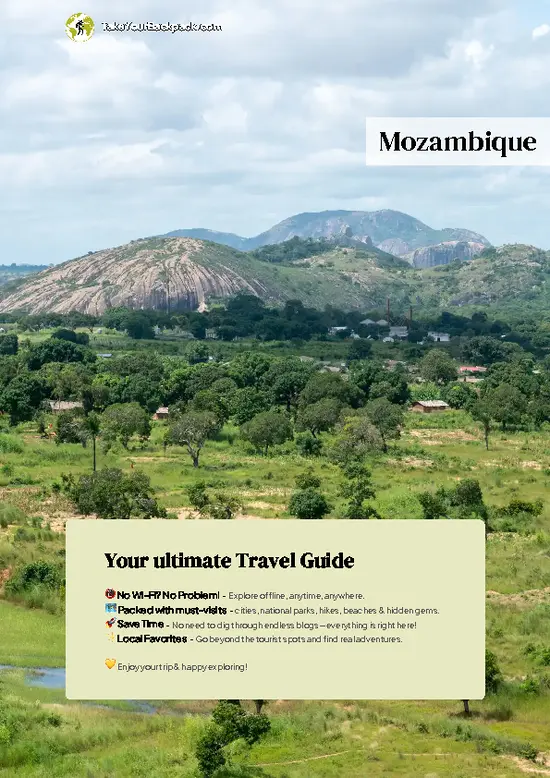
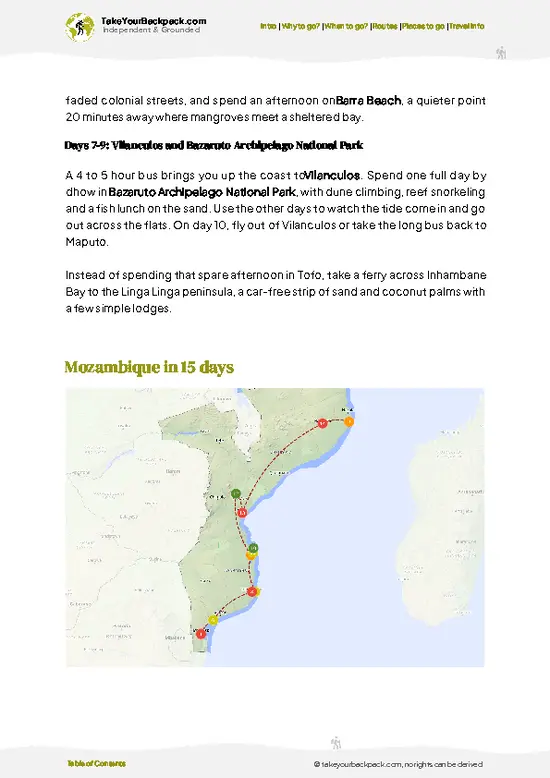
example page 0 from our offline Travel Guide for Mozambique
example page 1 from our offline Travel Guide for Mozambique
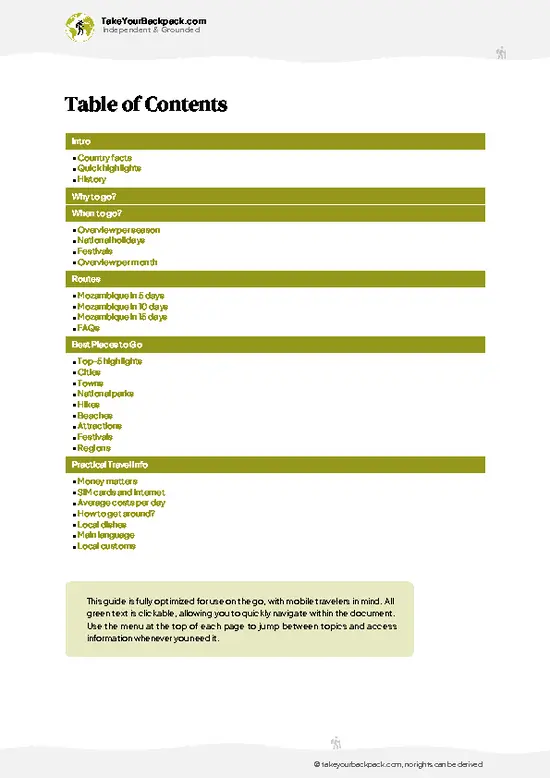
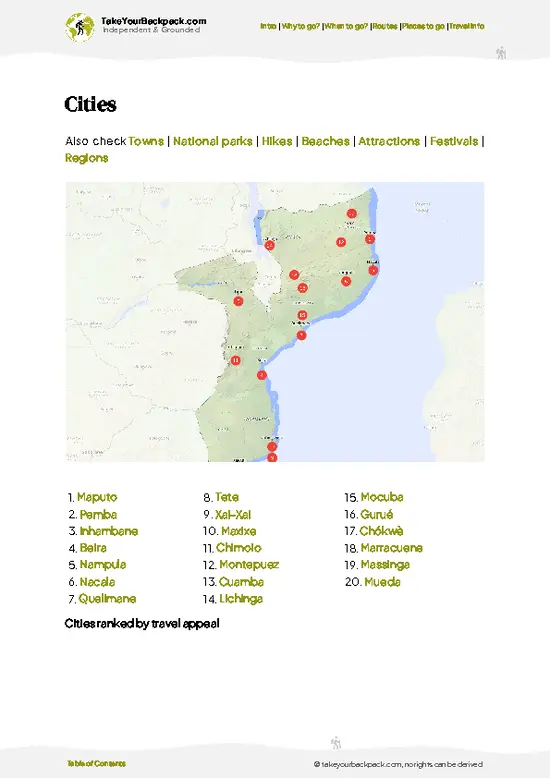
example page 2 from our offline Travel Guide for Mozambique
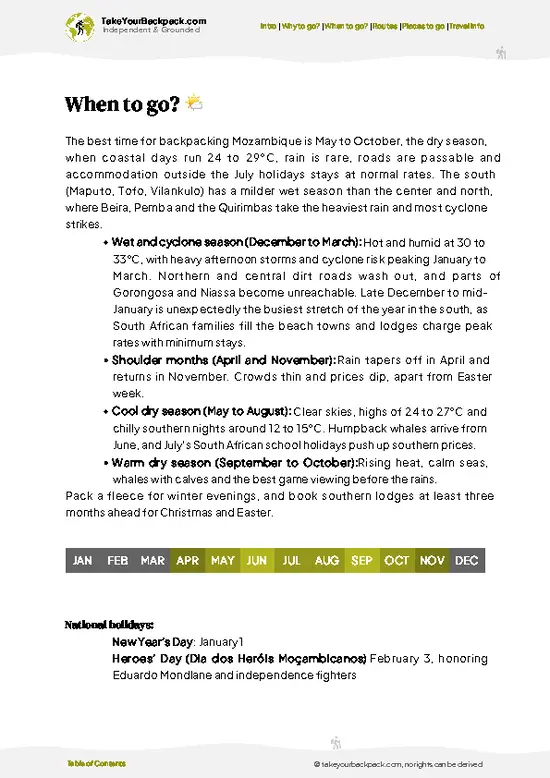
example page 3 from our offline Travel Guide for Mozambique
example page 4 from our offline Travel Guide for Mozambique
example page 5 from our offline Travel Guide for Mozambique
example page 6 from our offline Travel Guide for Mozambique
example page 7 from our offline Travel Guide for Mozambique
The digital guide (342 pages) contains:
87 highlights, ranked by travel appeal
Optimized 5, 10 & 15-day travel routes
Cities, national parks, landmarks, beaches
How to get around
Offline-friendly for travel without Wi-Fi
👉 Click to see all 30+ guide features

📅 Plan smarter in minutes, not weeks
Month by month travel advice
Festivals & national holidays
Budget expectations

🗺️ Go to the right places, skip the overrated ones
Honest pros & cons of destinations
Top hikes, parks & viewpoints
Lesser-known places most travelers miss
Clear “worth it vs skip it” guidance

🛏️ Travel smoothly without rookie mistakes
Best areas to stay
Transport systems explained simply
Common scams & safety advice
SIM cards, money & practical tips

🌍 Understand the country, not just visit it
Culture & traditions
52 Essential phrases & customs
Festivals worth planning around
Traveler-friendly historical context
Insights that make places more meaningful

📱 Built for real travel conditions
Fully downloadable PDF
Works completely offline
Optimized for phone use
Useful in remote areas & buses
Everything in one place
Save weeks of stressful planning
Get instant access to your full guide. 30‑day money-back guarantee.


By proceeding you agree to our terms.
Sent to your inbox immediately after payment • 100% Secure Checkout
Best Backpacking Travel Advisor 2025 tourism awardBest Backpacking
Travel Advisor
2025
What others say about Take Your Backpack Guides:
⭐⭐⭐⭐⭐
Fantastic, amazing amount of information!
⭐⭐⭐⭐⭐
My goodness this is amazing, it's what I've been looking for hats off too you!
⭐⭐⭐⭐⭐
I think this is absolutely BRILLIANT
⭐⭐⭐⭐
Very complete and informative. It's still missing places, but I gotta to commend you
⭐⭐⭐⭐⭐
This is truly amazing, thank you, can't wait to explore it with my kids!
⭐⭐⭐⭐⭐
Awesome resource, thank you!
⭐⭐⭐⭐⭐
This is amazing! Can't wait to explore the ones I haven't seen
⭐⭐⭐⭐
I love this! Well done, great idea.
⭐⭐⭐⭐⭐
Thanks for taking the time to make this gem!
⭐⭐⭐⭐⭐
This might be the best website I've ever seen.
⭐⭐⭐⭐⭐
Congratulations, and thank you so much for your work; it's incredibly valuable.
⭐⭐⭐⭐
In all seriousness I think you did a great job pointing out the important spots
⭐⭐⭐⭐⭐
10/10 very good
⭐⭐⭐⭐⭐
As someone who's only just starting to visit regularly this is awesome, thank you.
⭐⭐⭐⭐
Thank you very much! I'm going to visit my dad, it's going to be very useful!
⭐⭐⭐⭐⭐
This is really cool! We'll be travelling for the first time and this definitely come in handy.
⭐⭐⭐⭐⭐
You are now our minister of culture, congratulations 👨‍💼
⭐⭐⭐⭐⭐
Just wanted to tell you that this is a pearl! Going to follow your recommendations.
⭐⭐⭐⭐⭐
This is so cool. I'll definitely be using the resource for my travels soon.
⭐⭐⭐⭐⭐
This is very impressive! Good work.
⭐⭐⭐⭐⭐
This is an amazing and informative site. Very well done!

🛏️ Where to stay?How to pick the right area

Chokwe’s backpacker scene is concentrated around the central district, where safety and social energy intersect best for budget travelers. This area offers a cluster of modest hostels and guesthouses, making it easy to meet fellow adventurers without the hassle of sprawling transport. The vibe here is practical but welcoming—locals and travelers mingle in small cafés and markets, creating a low-key social pulse. Compared to the quieter, more residential outskirts, the center keeps you plugged into the city’s rhythm without sacrificing security. Venturing into less central neighborhoods risks isolation … read more 👉
Chokwe’s backpacker scene is concentrated around the central district, where safety and social energy intersect best for budget travelers. This area offers a cluster of modest hostels and guesthouses, making it easy to meet fellow adventurers without the hassle of sprawling transport. The vibe here is practical but welcoming—locals and travelers mingle in small cafés and markets, creating a low-key social pulse. Compared to the quieter, more residential outskirts, the center keeps you plugged into the city’s rhythm without sacrificing security. Venturing into less central neighborhoods risks isolation and fewer budget options, so if you want to maximize comfort and connection on a shoestring, the central district is your strategic base.

🚌 Getting aroundMoving around without the hassle

Chokwe moves at its own rhythm — not the clock’s, but the pulse of its people. Here, time is flexible, shaped by the ebb and flow of daily life rather than rigid schedules. You’ll find that the city’s transit options reflect this blend of structure and spontaneity. Knowing when to hold firm and when to adapt is your secret weapon. The trade-off map here isn’t just about dollars or minutes; it’s about reading the city’s tempo and choosing your battles wisely. Comfort often takes a backseat to practicality, but that’s where the real adventure begins.


  • Walking: The most reliable and free way to navigate Chokwe’s compact center. Expect uneven sidewalks and occasional street vendors, but nothing beats the intimacy of exploring on foot. Ideal for short hops and soaking in local life.

  • Minibus
read more 👉
Chokwe moves at its own rhythm — not the clock’s, but the pulse of its people. Here, time is flexible, shaped by the ebb and flow of daily life rather than rigid schedules. You’ll find that the city’s transit options reflect this blend of structure and spontaneity. Knowing when to hold firm and when to adapt is your secret weapon. The trade-off map here isn’t just about dollars or minutes; it’s about reading the city’s tempo and choosing your battles wisely. Comfort often takes a backseat to practicality, but that’s where the real adventure begins.


  • Walking: The most reliable and free way to navigate Chokwe’s compact center. Expect uneven sidewalks and occasional street vendors, but nothing beats the intimacy of exploring on foot. Ideal for short hops and soaking in local life.

  • Minibus Taxis: Running roughly from 6 AM to 7 PM, these are the budget traveler’s go-to. Fares hover around a dollar, but expect crowding and stops on demand. Speed varies with traffic and passenger load, so patience is key.

  • Motorcycle Taxis (Moto-taxis): Available almost 24/7, these zip through traffic faster than minibuses but cost about double. Comfort is minimal, and safety standards are loose, so buckle up mentally for a bumpy ride.

  • Shared Pickups: Operating mainly during market days and early mornings, these offer a middle ground—more space than minibuses but less frequent service. Prices are moderate, and the schedule is loosely fixed, so timing your trip is a strategic move.

👛 Costs (as of 30 July 2026)Money, prices, and spending tips

Backpacking in Chokwe, Mozambique, demands a clear-eyed view of where your money goes, so you can pick your battles between time, comfort, and cost.
  • Dorm Accommodation (High Season): Expect to pay around $10 to $15 per night. Options are limited and basic, but this is the going rate when demand spikes.
  • Dorm Accommodation (Off-Season): Prices drop to about $7 to $10. Fewer travelers mean better deals, but also fewer amenities and less choice.
  • Meals: Street food and local eateries will cost you roughly $3 to $6 per meal. Simple, filling, and authentic, but if you want something more Western or upscale, double that easily.
  • Local Transport: Minibus taxis and shared rides run about $0.50 to $1 per trip. They’re slow and crowded but unbeatable for budget travelers.
  • City Transport Pass: Not
read more 👉
Backpacking in Chokwe, Mozambique, demands a clear-eyed view of where your money goes, so you can pick your battles between time, comfort, and cost.
  • Dorm Accommodation (High Season): Expect to pay around $10 to $15 per night. Options are limited and basic, but this is the going rate when demand spikes.
  • Dorm Accommodation (Off-Season): Prices drop to about $7 to $10. Fewer travelers mean better deals, but also fewer amenities and less choice.
  • Meals: Street food and local eateries will cost you roughly $3 to $6 per meal. Simple, filling, and authentic, but if you want something more Western or upscale, double that easily.
  • Local Transport: Minibus taxis and shared rides run about $0.50 to $1 per trip. They’re slow and crowded but unbeatable for budget travelers.
  • City Transport Pass: Not commonly available in Chokwe. Most rely on informal transport, so budgeting for individual rides is more realistic.
  • Basic Activities/Entry Fees: Modest fees around $2 to $5 for local attractions or cultural sites. Many experiences are free or low-cost but require some local guidance to find.
  • Miscellaneous Expenses: Budget $2 to $5 daily for essentials like bottled water, snacks, or small tips. These add up and are easy to overlook.

The total daily budget for backpacking in Chokwe typically falls between $15 and $30. You’re trading off comfort and convenience for authenticity and savings, but with a bit of savvy, you can stretch your dollars without sacrificing the core experience.


source: visitmozambique.net
⚠️ Prices can change and everyone travels differently, so take this as a rough guide. Hope it helps you plan your adventure!

🚌 Day tripsWhere to go beyond the main area

Chokwe, Mozambique, is a strategic launchpad for day trips that blend adventure and cultural immersion. Here’s how to make the most of your time.

Limpopo National Park
Just a couple of hours from Chokwe, this park offers a chance to see elephants, lions, and a variety of birds in their natural habitat. The entrance fee is around $10, and you can easily spend a day hiking or driving through the park. The best time to visit is during the dry season (May to October) when wildlife is more active. A common mistake? Underestimating the park’s size; plan your route ahead to maximize your experience.
👉 Explore Limpopo National Park

Xai-Xai Beach
About three hours away, Xai-Xai Beach is a slice of paradise with soft sands and clear waters. Perfect for a day of relaxation or swimming, you can … read more 👉
Chokwe, Mozambique, is a strategic launchpad for day trips that blend adventure and cultural immersion. Here’s how to make the most of your time.

Limpopo National Park
Just a couple of hours from Chokwe, this park offers a chance to see elephants, lions, and a variety of birds in their natural habitat. The entrance fee is around $10, and you can easily spend a day hiking or driving through the park. The best time to visit is during the dry season (May to October) when wildlife is more active. A common mistake? Underestimating the park’s size; plan your route ahead to maximize your experience.
👉 Explore Limpopo National Park

Xai-Xai Beach
About three hours away, Xai-Xai Beach is a slice of paradise with soft sands and clear waters. Perfect for a day of relaxation or swimming, you can grab a meal at a local eatery for under $5. The best months are from May to September, avoiding the rainy season. Many first-timers forget to bring sunscreen; the sun can be relentless.


Chókwè Cultural Experience
Stay local and dive into the vibrant culture of Chokwe itself. Spend a day visiting local markets, sampling street food, and engaging with artisans. Costs are minimal—around $10 for food and small purchases. This experience is best enjoyed in the cooler months (April to September). A common oversight is not learning a few basic Portuguese phrases; it can open doors and enrich your interactions.


Pafuri Gate
For those seeking a bit of adventure, Pafuri Gate in Kruger National Park is about a three-hour drive. This area is less crowded and offers unique wildlife sightings. Expect to pay around $15 for entry. The dry season is ideal for spotting animals. First-timers often forget to bring binoculars; they can make all the difference in your wildlife viewing.
Want to know what more Mozambique offers?
The Mozambique Travel Guide describes 87 highlights, from cities to national parks, from beaches to hikes

Get the Travel Guide -

🍲 FoodEating & Drinking in Chokwe

In Chokwe, food is a vibrant tapestry of flavors that tells the story of its people. Dive into xima, a staple made from maize, often served alongside matapa, a rich dish of cassava leaves cooked in peanut sauce. Don’t miss the fresh fish from nearby rivers, grilled to perfection and bursting with local spices.

Street food stalls are where the magic happens. Grab a piri-piri chicken skewer or a handful of samosas from bustling markets. The atmosphere is electric, filled with laughter and the sizzling sounds of cooking.

When it comes to drinks, try a local cachaça, a sugarcane spirit that packs a punch. Sharing a drink is a communal affair, so don’t be surprised if you’re invited to join in. Embrace the custom of toasting with a hearty “Saúde!”—it’s all about connection here.

🛡️ SafetySafety Tips and Common Scams in Chokwe

Chokwe is generally safe, but a few smart moves can enhance your experience. Stay alert in crowded markets, where pickpockets might lurk. If you’re solo, avoid wandering too far after dark; stick to well-lit areas and travel with a buddy whenever possible.

Common scams are rare, but be cautious of overly friendly locals offering unsolicited help—politely decline and keep moving. Everyday annoyances include occasional language barriers; a few phrases in Portuguese can go a long way. Carry yourself confidently, and trust your instincts. With these strategies, you can navigate Chokwe smoothly and focus on the rich experiences waiting for you.

Other Mozambican cities near Chokwe

Explore more nearby:

  • Xai-Xai—Limpopo River mouth, long beaches, local seafood| 87 km away
  • Marracuene—river ferry, weekend retreats, Maputo escape| 138 km away
  • Maputo—broad avenues, art deco facades, urban nightlife| 165 km away

💡 Not sure where to go next?
Create a personalized itinerary for Mozambique including Chokwe and the places that fit your trip.

Generate my itinerary

👉 Discover all cities

Or checkout all Mozambique has to offer (think cities, towns, villages, national parks, hikes, beaches, festivals)
Country photo of Mozambique

We 💚 feedbackParting advice and final tips

Chokwe has a raw, authentic vibe that feels like stepping into a living postcard. The best surprise? The local markets bursting with color and life—don’t skip the street food. Just a heads-up: transport can be unpredictable, so keep your plans flexible. Embrace the chaos; it’s part of the charm. You’ll leave with stories, not just souvenirs.

✍️ Help improve this page!
The information on this page is based on in-depth research, insights shared by experienced travelers, and feedback from the local travel community in Mozambique. While every effort is made to keep the information accurate and current, conditions can change — so if you spot anything incorrect or outdated, please get in touch.


🙋‍♂️ Give feedback

👋 Meet the founderWho’s Behind Take Your Backpack?

Johan, backpacker and founder of TakeYourBackpackHi, I’m Johan (Netherlands 🇳🇱), the creator of TakeYourBackpack. Over the past decade, I’ve backpacked through 80+ countries across six continents, gaining extensive experience with independent travel, long-term trips, and overland routes.

This site is built on a combination of firsthand travel experience and carefully curated insights from other backpackers. Many guides are based on places I’ve personally visited, while others bring together tips, observations, and practical advice shared by trusted travelers I’ve met along the way.

The goal is to provide realistic, experience-driven guidance — not generic itineraries — so you can explore destinations with better context, clearer expectations, and more confidence.

Get full Mozambique guide •
Instant download • 87 highlights • Full Offline guide