×

Mozambique🇲🇿 | citiesMaputoCapital grit, Eiffel-circle station, prawns, jazz and art | things to do and best time to go

Explore InhambaneExplore Nampula

Backpacking in Maputo
🏆 Top pickcity ranked #1
By Johan Kruseman 🇳🇱 | Updated October 22, 2026

Maputo suits travelers who like their cities with grit, music and a bit of faded grandeur: people who will happily walk an avenue of jacaranda trees to reach a good plate of grilled prawns. If you want polished beach resorts or a checklist of headline sights, you will find it less rewarding, because the sights are modest and the pace of getting things done can test you. This is Mozambique’s capital, sitting on the western shore of Maputo Bay in the far south of the country. The good side is real character: Portuguese-era architecture, a live jazz scene, cheap seafood and a crowd that talks to you. The bad side is heat, traffic and uneven pavements. Spend your time in the Baixa and the Polana area, skip the outskirts, and don’t bother with the city beaches for swimming. Your first day could start with coffee and a pastel de nata, then a wander through the old center, ending with prawns and a cold beer as the city warms up for the evening.

Discover everything you want to know in the 📖 Mozambique Travel Guide.


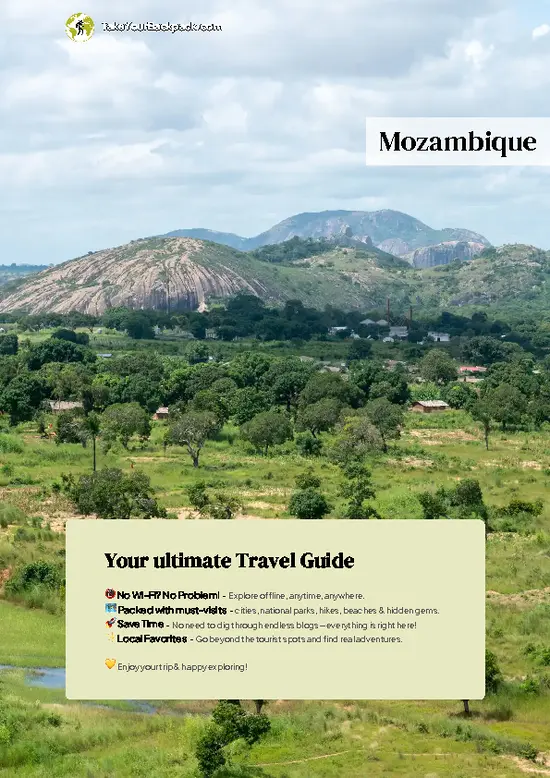
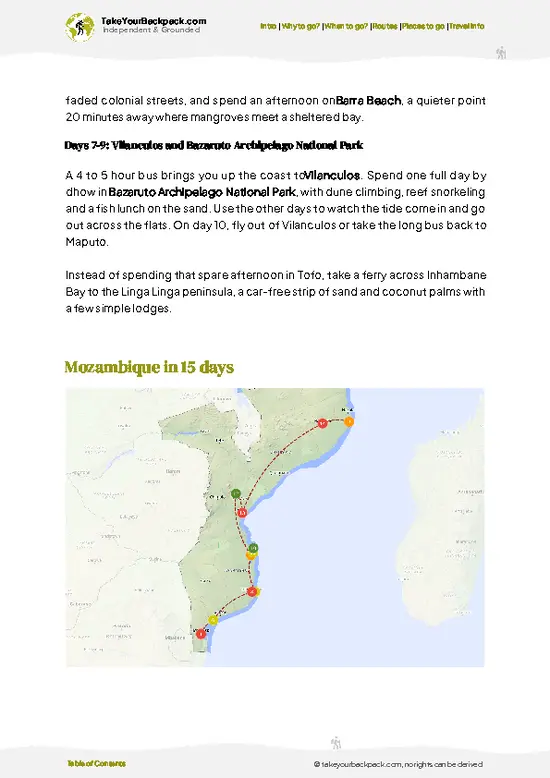
example page 0 from our offline Travel Guide for Mozambique
example page 1 from our offline Travel Guide for Mozambique
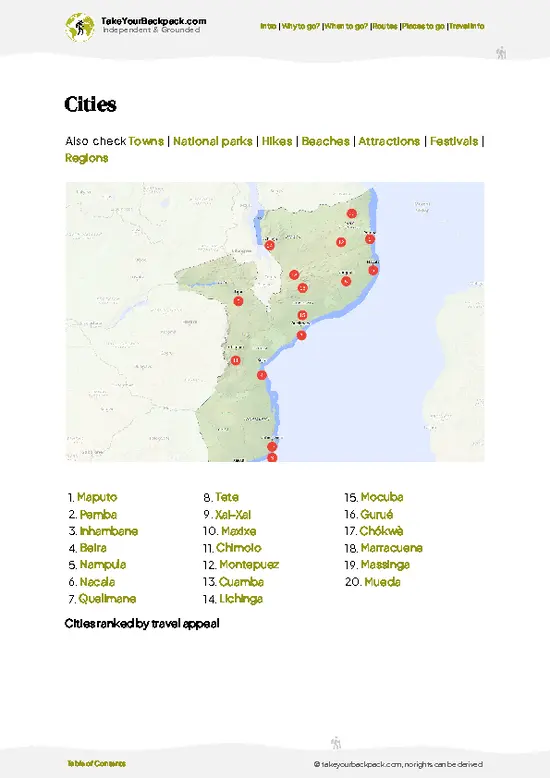
example page 2 from our offline Travel Guide for Mozambique
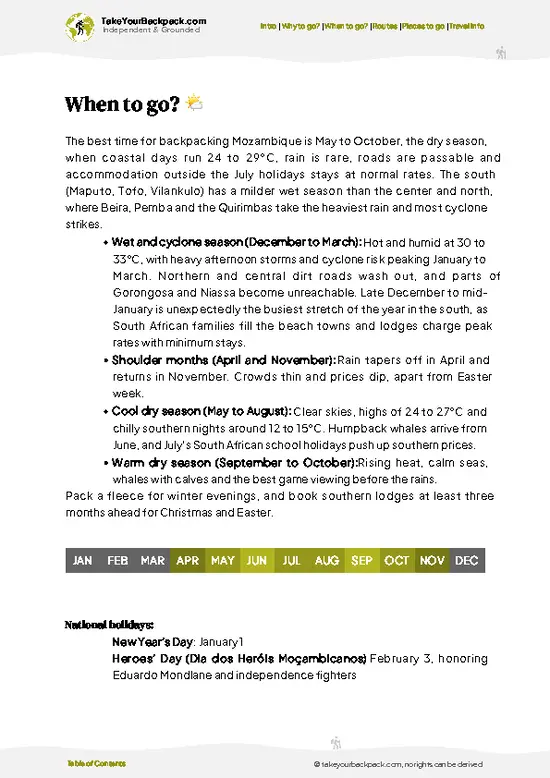
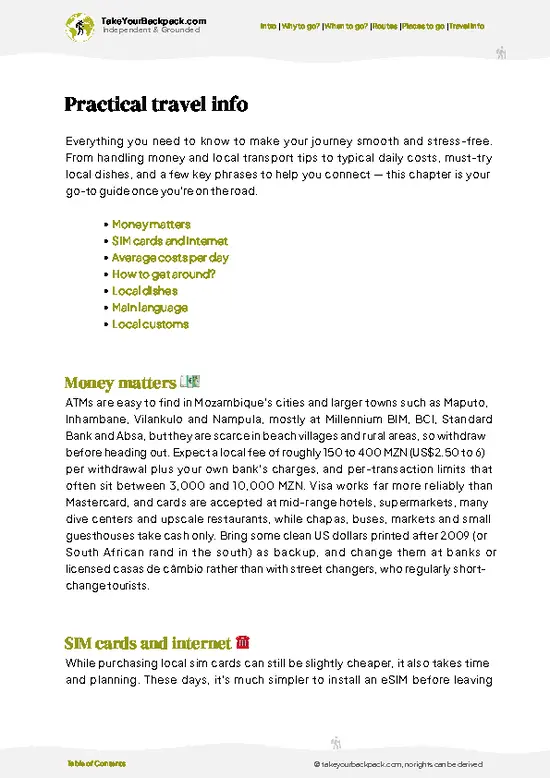
example page 3 from our offline Travel Guide for Mozambique
example page 4 from our offline Travel Guide for Mozambique
example page 5 from our offline Travel Guide for Mozambique
example page 6 from our offline Travel Guide for Mozambique
example page 7 from our offline Travel Guide for Mozambique
Loading the map 🌍
CLICK TO FILTER
cities
towns
national parks
hikes
beaches
attractions
festivals
regions
SHOW COUNTRY’S BESTSHOW ALL

✨ Why go?
Ranked #1 city in Mozambique
What sets this place apart

Maputo works as the southern gateway for anyone moving between South Africa, Eswatini and the Mozambican coast, and it earns a stop on its own merits. The city packs an unusual density of things to do into a walkable core: you can cover Avenida 25 de Setembro and the old Baixa on foot, then hop in a taxi for the rest. Architecture fans get colonial-era buildings alongside Soviet-flavored apartment blocks and modernist work, which is rare to find in one place. Food is the other big pull. Maputo has the best seafood on the coast, plus Portuguese-influenced bakeries and grill houses where peri-peri prawns arrive by the kilo. Evenings lean toward live marrabenta and jazz, so you don’t need to hunt for nightlife. Hostels are limited compared with Cape Town or Johannesburg, so book ahead and expect … read more 👉
Maputo works as the southern gateway for anyone moving between South Africa, Eswatini and the Mozambican coast, and it earns a stop on its own merits. The city packs an unusual density of things to do into a walkable core: you can cover Avenida 25 de Setembro and the old Baixa on foot, then hop in a taxi for the rest. Architecture fans get colonial-era buildings alongside Soviet-flavored apartment blocks and modernist work, which is rare to find in one place. Food is the other big pull. Maputo has the best seafood on the coast, plus Portuguese-influenced bakeries and grill houses where peri-peri prawns arrive by the kilo. Evenings lean toward live marrabenta and jazz, so you don’t need to hunt for nightlife. Hostels are limited compared with Cape Town or Johannesburg, so book ahead and expect a social mix of overlanders and volunteers. As a base, it connects easily to island beaches and the border towns. It is best as two or three nights rather than a long stay, since the real beach time lies elsewhere.

💡 HighlightsThe experiences that define the visit

  1. Maputo Central Railway Station: Often named among the world’s most striking stations, it has a green dome and wrought iron work attributed to the Gustave Eiffel circle, though that link is debated. Wander the platforms and the colonial-era hall. Go in the morning for softer light. Free to enter, 30 minutes.
  2. Fortaleza de Maputo: This 19th-century fort holds old cannons, a courtyard and statues from the colonial era. Visit early before the heat builds. Entry is about US$1 to 2, and you need about 45 minutes.
  3. Mercado Central: A circular, covered market with stacked tropical fruit, spices, dried fish and cashews. Bargain gently and go before midday. Free to enter, 45 to 60 minutes.
  4. Catembe Ferry and Catembe: Cross the bay by ferry for views of the skyline from the water, then stroll the quiet village.
… read more 👉
  1. Maputo Central Railway Station: Often named among the world’s most striking stations, it has a green dome and wrought iron work attributed to the Gustave Eiffel circle, though that link is debated. Wander the platforms and the colonial-era hall. Go in the morning for softer light. Free to enter, 30 minutes.
  2. Fortaleza de Maputo: This 19th-century fort holds old cannons, a courtyard and statues from the colonial era. Visit early before the heat builds. Entry is about US$1 to 2, and you need about 45 minutes.
  3. Mercado Central: A circular, covered market with stacked tropical fruit, spices, dried fish and cashews. Bargain gently and go before midday. Free to enter, 45 to 60 minutes.
  4. Catembe Ferry and Catembe: Cross the bay by ferry for views of the skyline from the water, then stroll the quiet village. Fares are under US$1 and the trip takes 2 to 3 hours with a stop. Late afternoon is lovely.
  5. Núcleo de Arte: An artists’ cooperative with painting, sculpture and a shaded courtyard cafe. Go midweek for studio activity. Free to enter, 1 hour.
  6. Feira Popular and Mercado do Peixe: At the fish market, pick prawns or crab from the ice and have a nearby restaurant cook them. Go at lunch. Expect US$10 to 25 for a shared seafood meal, 1.5 to 2 hours.
  7. Casa de Ferro: The famous iron house is a prefabricated metal building from the late 19th century, curious and compact. Quick stop, free to view from outside, 15 minutes.
  8. Museu Nacional de Arte: Holds works by Malangatana and other major Mozambican artists. A good choice during midday heat. Entry about US$2 to 4, 1 hour.
For day trips beyond the city, Maputo travelers often head to Inhaca Island for snorkeling and reef walks, to Ponta do Ouro for dolphins and surf beaches, and to Marracuene for river-mouth lunches.
Start at the railway station in the morning, because it is free, compact and sets the architectural tone for the rest of the day.
Spotted a mistake or missing something? Contact us.

Things to do in Maputo

Ratings based on Tripadvisor reviews. When you book through this link, you support our work at no extra cost to you.

🏘️ NeighborhoodsHow different areas shape the experience

Maputo rewards anyone who walks it, and the best districts sit close enough to link on foot or with a short ride.
  • Baixa (Downtown) is the grid of Portuguese-era streets around the Praça da Independência. Hit the Iron House, the cathedral, the Municipal Market and the fort in one loop, then stop for a pastry in a tiled café. It's flat, compact and perfect for a morning. After dark it empties out, so skip it for nightlife.
  • Polana Cimento and Polana Caniço hold the leafy embassy streets, the Natural History Museum with its elephant exhibits, and Avenida Julius Nyerere's cafés. It's walkable and calm, and worth an afternoon, though little here is truly local.
  • Sommerschield is quiet, wealthy and residential. Skip it unless you're meeting someone for dinner.
  • Avenida 24 de Julho and Avenida Eduardo Mondlane
… read more 👉
Maputo rewards anyone who walks it, and the best districts sit close enough to link on foot or with a short ride.
  • Baixa (Downtown) is the grid of Portuguese-era streets around the Praça da Independência. Hit the Iron House, the cathedral, the Municipal Market and the fort in one loop, then stop for a pastry in a tiled café. It's flat, compact and perfect for a morning. After dark it empties out, so skip it for nightlife.
  • Polana Cimento and Polana Caniço hold the leafy embassy streets, the Natural History Museum with its elephant exhibits, and Avenida Julius Nyerere's cafés. It's walkable and calm, and worth an afternoon, though little here is truly local.
  • Sommerschield is quiet, wealthy and residential. Skip it unless you're meeting someone for dinner.
  • Avenida 24 de Julho and Avenida Eduardo Mondlane are the working arteries. Cheap eateries, markets and noisy traffic make them gritty, so cross them with purpose and don't linger.
  • Malhangalene and Alto Maé feel more everyday. Alto Maé has the famous Gustave Eiffel-designed railway station, a block of art-nouveau drama, and the Sunday craft stalls nearby are fun to browse.
  • Catembe sits across the bay. Take the ferry, wander the waterfront and eat grilled prawns with the families who do the same on weekends. It's a half-day escape and a good one.
  • Costa do Sol is the beach strip north of the center. It's a short ride away, loud at weekends and best for seafood and sundowners, not for swimming.

⌛️ 1 daySeeing the highlights in 24 hours

A walking day through the old center, with a market stop and a ferry crossing to finish.
8:00 AM: Pastelaria near Avenida 25 de Setembro. Start with strong coffee and a custard tart among office workers. It is a cheap, calm way to get your bearings before the heat builds. Then walk toward the railway station.
9:00 AM: Maputo Central Railway Station. Look at the dome, the hall and the old locomotives on the platforms. From here the fort is a short walk through the Baixa, past colonial facades and busy street vendors.
10:15 AM: Fortaleza de Maputo. Spend time in the courtyard among the cannons and old statues. It gives a sense of how the colonial city was defended and governed. Afterward, stroll to the market.
12:00 PM: Mercado Central. Browse fruit, spices and fish, then buy cashews for the road. … read more 👉
A walking day through the old center, with a market stop and a ferry crossing to finish.
8:00 AM: Pastelaria near Avenida 25 de Setembro. Start with strong coffee and a custard tart among office workers. It is a cheap, calm way to get your bearings before the heat builds. Then walk toward the railway station.
9:00 AM: Maputo Central Railway Station. Look at the dome, the hall and the old locomotives on the platforms. From here the fort is a short walk through the Baixa, past colonial facades and busy street vendors.
10:15 AM: Fortaleza de Maputo. Spend time in the courtyard among the cannons and old statues. It gives a sense of how the colonial city was defended and governed. Afterward, stroll to the market.
12:00 PM: Mercado Central. Browse fruit, spices and fish, then buy cashews for the road. The market is lively before lunch. A taxi or a longer walk takes you to your next stop.
1:30 PM: Mercado do Peixe. Choose prawns from the ice, then carry them next door to be grilled. Order cold beer and settle in. It is messy, loud and one of the best meals in town.
3:30 PM: Núcleo de Arte. Slip into the shaded courtyard to see local art and chat with artists. This is less visited than the big museums but gives a feel for the local creative scene. Take a taxi to the ferry terminal afterward.
5:00 PM: Catembe ferry. Cross the bay for skyline views as the light softens, wander the waterfront, then come back by ferry or boat for an evening of live music.

🌤️ When to go?Choosing the right time of year

May to September gives Maputo its most comfortable weather, with sunny days and cool nights.
  • Cool Dry Season (May to September): Days run about 22 to 26°C (72 to 79°F), nights dip to 13 to 16°C (55 to 61°F), and rain is rare. Days are shorter, with roughly 11 hours of light in June. The sea is chilly but beaches are pleasant. Crowds stay moderate, and prices are stable.
  • Hot Wet Season (November to March): Expect 28 to 32°C (82 to 90°F), heavy humidity and afternoon downpours that flood some streets. January and February bring the heaviest rain, and cyclone-related storms occasionally reach the coast. Daylight stretches to about 14 hours. Beach days are great between showers.
  • Shoulder Months (April, October): Warm, drier and quieter, around 24 to 28°C (75 to 82°F).
  • Holiday Peak (December to early
… read more 👉
May to September gives Maputo its most comfortable weather, with sunny days and cool nights.
  • Cool Dry Season (May to September): Days run about 22 to 26°C (72 to 79°F), nights dip to 13 to 16°C (55 to 61°F), and rain is rare. Days are shorter, with roughly 11 hours of light in June. The sea is chilly but beaches are pleasant. Crowds stay moderate, and prices are stable.
  • Hot Wet Season (November to March): Expect 28 to 32°C (82 to 90°F), heavy humidity and afternoon downpours that flood some streets. January and February bring the heaviest rain, and cyclone-related storms occasionally reach the coast. Daylight stretches to about 14 hours. Beach days are great between showers.
  • Shoulder Months (April, October): Warm, drier and quieter, around 24 to 28°C (75 to 82°F).
  • Holiday Peak (December to early January): South African visitors fill Costa do Sol and Catembe, and beds cost more.
Book early for late December, and otherwise aim for September or October when the heat is mild and rooms are easy to find.


source: climatestotravel.comJANJanuary: fair for travelingFEBFebruary: fair for travelingMARMarch: fair for travelingAPRApril: highly recommended for travelingMAYMay: excellent for travelingJUNJune: excellent for travelingJULJuly: excellent for travelingAUGAugust: excellent for travelingSEPSeptember: excellent for travelingOCTOctober: highly recommended for travelingNOVNovember: fair for travelingDECDecember: fair for traveling
when-to-go

✈️ The backpacker research shortcutMozambique Travel Guide

An offline-friendly backpacking guide with optimized travel routes, ranked highlights, transport advice, and the best areas to stay.
example page 0 from our offline Travel Guide for Mozambique
example page 1 from our offline Travel Guide for Mozambique
example page 2 from our offline Travel Guide for Mozambique
example page 3 from our offline Travel Guide for Mozambique
example page 4 from our offline Travel Guide for Mozambique
example page 5 from our offline Travel Guide for Mozambique
example page 6 from our offline Travel Guide for Mozambique
example page 7 from our offline Travel Guide for Mozambique
The digital guide (324 pages) contains:
✅ 78 highlights, ranked by travel appeal
✅ Optimized 5, 10 & 15-day travel routes
✅ Cities, national parks, landmarks, beaches
✅ How to get around
✅ Offline-friendly for travel without Wi-Fi
👉 Click to see all 30+ guide features

📅 Plan smarter in minutes, not weeks
✅ Month by month travel advice
✅ Festivals & national holidays
✅ Budget expectations

🗺️ Go to the right places, skip the overrated ones
✅ Honest pros & cons of destinations
✅ Top hikes, parks & viewpoints
✅ Lesser-known places most travelers miss
✅ Clear “worth it vs skip it” guidance

🛏️ Travel smoothly without rookie mistakes
✅ Best areas to stay
✅ Transport systems explained simply
✅ Common scams & safety advice
✅ SIM cards, money & practical tips

🌍 Understand the country, not just visit it
✅ Culture & traditions
✅ 52 Essential phrases & customs
✅ Festivals worth planning around
✅ Traveler-friendly historical context
✅ Insights that make places more meaningful

📱 Built for real travel conditions
✅ Fully downloadable PDF
✅ Works completely offline
✅ Optimized for phone use
✅ Useful in remote areas & buses
✅ Everything in one place
Stop searching, start planning
Get instant access to your full guide. 30‑day money-back guarantee.
+ Add another guide for just

By proceeding you agree to our terms.
Sent to your inbox immediately after payment • 100% Secure Checkout
Best Backpacking Travel Advisor 2025 tourism awardBest Backpacking
Travel Advisor
2025
What others say about Take Your Backpack Guides:
⭐⭐⭐⭐⭐
Fantastic, amazing amount of information!
⭐⭐⭐⭐⭐
My goodness this is amazing, it's what I've been looking for hats off too you!
⭐⭐⭐⭐⭐
I think this is absolutely BRILLIANT
⭐⭐⭐⭐
Very complete and informative. It's still missing places, but I gotta to commend you
⭐⭐⭐⭐⭐
This is truly amazing, thank you, can't wait to explore it with my kids!
⭐⭐⭐⭐⭐
Awesome resource, thank you!
⭐⭐⭐⭐⭐
This is amazing! Can't wait to explore the ones I haven't seen
⭐⭐⭐⭐
I love this! Well done, great idea.
⭐⭐⭐⭐⭐
Thanks for taking the time to make this gem!
⭐⭐⭐⭐⭐
This might be the best website I've ever seen.
⭐⭐⭐⭐⭐
Congratulations, and thank you so much for your work; it's incredibly valuable.
⭐⭐⭐⭐
In all seriousness I think you did a great job pointing out the important spots
⭐⭐⭐⭐⭐
10/10 very good
⭐⭐⭐⭐⭐
As someone who's only just starting to visit regularly this is awesome, thank you.
⭐⭐⭐⭐
Thank you very much! I'm going to visit my dad, it's going to be very useful!
⭐⭐⭐⭐⭐
This is really cool! We'll be travelling for the first time and this definitely come in handy.
⭐⭐⭐⭐⭐
You are now our minister of culture, congratulations 👨‍💼
⭐⭐⭐⭐⭐
Just wanted to tell you that this is a pearl! Going to follow your recommendations.
⭐⭐⭐⭐⭐
This is so cool. I'll definitely be using the resource for my travels soon.
⭐⭐⭐⭐⭐
This is very impressive! Good work.
⭐⭐⭐⭐⭐
This is an amazing and informative site. Very well done!

🛏️ Where to stay?Best areas to stay in Mozambique

The best budget bases are Polana and the Baixa, which together hold most of the hostel beds and low-cost guesthouses in Maputo. Polana, with its tree-lined streets, is the safer choice for a first stay. Walking home at night feels easier, taxis and ride apps are reliable, and cafés and shops are close. Dorm beds usually run about US$10 to 18, and private rooms in guesthouses US$30 to 55. It stays quiet after dark, which suits anyone wanting sleep.
The Baixa puts you within walking distance of the main museums, markets and the ferry. Chapas and taxis meet at its main avenues, so onward trips to … read more 👉
The best budget bases are Polana and the Baixa, which together hold most of the hostel beds and low-cost guesthouses in Maputo. Polana, with its tree-lined streets, is the safer choice for a first stay. Walking home at night feels easier, taxis and ride apps are reliable, and cafés and shops are close. Dorm beds usually run about US$10 to 18, and private rooms in guesthouses US$30 to 55. It stays quiet after dark, which suits anyone wanting sleep.
The Baixa puts you within walking distance of the main museums, markets and the ferry. Chapas and taxis meet at its main avenues, so onward trips to the bus stations are simple. Rooms are slightly cheaper than in Polana, but the area is deserted at night and some streets are noisy with traffic and early morning vendors. Stick to places on main streets, take a ride back after dark, and bring earplugs.
Beyond these two, Costa do Sol has beach stays but lies far from the center and gets noisy on weekends. Book ahead from December to January, when South African travelers fill beds.

🚌 Getting aroundHow to get around Maputo

A ride on a chapa, the shared minibus, costs roughly US$0.20 to 0.40 and you pay cash in meticais to a conductor who collects fares mid-journey. Maputo's center is compact enough to walk, but the sprawl beyond it needs wheels, and traffic clogs the main avenues at rush hour. Public transport is informal and crowded, so plan for some squeezing.
  • Walking: Do it in the Baixa and Polana, where sights cluster within 1 to 2 kilometers (about 1 mile). Take shade breaks at midday, since the heat is stiff.
  • Chapas: The workhorse of the city. They run from about 5 am to 8 or 9 pm, follow set routes with no signs, and need a local to point you to the right one. Worth it for Costa do Sol and Alto Maé, but skip them with a big pack.
  • Ride-hailing and taxis: Apps like Yango and Bolt are the easiest option in
… read more 👉
A ride on a chapa, the shared minibus, costs roughly US$0.20 to 0.40 and you pay cash in meticais to a conductor who collects fares mid-journey. Maputo's center is compact enough to walk, but the sprawl beyond it needs wheels, and traffic clogs the main avenues at rush hour. Public transport is informal and crowded, so plan for some squeezing.
  • Walking: Do it in the Baixa and Polana, where sights cluster within 1 to 2 kilometers (about 1 mile). Take shade breaks at midday, since the heat is stiff.
  • Chapas: The workhorse of the city. They run from about 5 am to 8 or 9 pm, follow set routes with no signs, and need a local to point you to the right one. Worth it for Costa do Sol and Alto Maé, but skip them with a big pack.
  • Ride-hailing and taxis: Apps like Yango and Bolt are the easiest option in town, with short trips at about US$2 to 5. Street taxis have no meter, so agree the fare first. Use the app after dark.
  • Tuk-tuks and motorbike taxis: Handy for short hops at US$1 to 3, though bargaining is needed and the fumes are heavy.
  • Catembe ferry: The best-value ride in the city, about US$0.50 each way, running every 30 to 60 minutes from early morning into the evening. It crosses the bay in about 15 minutes and delivers great skyline views. A bridge also links the two sides, but the ferry is far more fun.
For airport arrivals, a prebooked ride or app costs about US$6 to 12 for the short trip into town.

👛 Costs (as of 22 October 2026)How expensive it really is

Maputo costs about US$45 to 62 a day for a backpacker, making it pricier than much of Mozambique but still manageable. Prices are sensitive to South African tourist demand, and imported goods cost more. The table shows typical figures, with the total using high-season dorm beds.
CategoryBudget RangeLocal Reality
Dorm (high season)US$15 to 20Beds fill up from December to January, so book ahead.
Dorm (off-season)US$10 to 15Easier to find a bed and sometimes to negotiate.
MealsUS$10 to 18Market meals and bakery snacks cost US$2 to 5, and seafood is the splurge.
Local transportUS$2 to 6Chapas cost US$0.20 to 0.40 a ride, and apps or taxis are a few dollars.
City transport passNot availableNo pass exists, so pay cash per ride.
Activities and entry feesUS$3 to 10Museums and the fort cost only a few dollars
… read more 👉
Maputo costs about US$45 to 62 a day for a backpacker, making it pricier than much of Mozambique but still manageable. Prices are sensitive to South African tourist demand, and imported goods cost more. The table shows typical figures, with the total using high-season dorm beds.
CategoryBudget RangeLocal Reality
Dorm (high season)US$15 to 20Beds fill up from December to January, so book ahead.
Dorm (off-season)US$10 to 15Easier to find a bed and sometimes to negotiate.
MealsUS$10 to 18Market meals and bakery snacks cost US$2 to 5, and seafood is the splurge.
Local transportUS$2 to 6Chapas cost US$0.20 to 0.40 a ride, and apps or taxis are a few dollars.
City transport passNot availableNo pass exists, so pay cash per ride.
Activities and entry feesUS$3 to 10Museums and the fort cost only a few dollars each, while Inhaca costs more.
MiscellaneousUS$5 to 8Water, SIM data, snacks and a beer or two.
Total Daily BudgetUS$45 to 62Lower if you cook or skip paid activities.
Cook in your hostel kitchen and shop at the Municipal Market to cut food costs by a third.
⚠️ Prices can change and everyone travels differently, so take this as a rough guide. Hope it helps you plan your adventure!

🚌 Day tripsShort trips worth adding

Maputo works well as a base for easy day trips, since most of the region's best spots are within a couple of hours and reachable by chapa or ferry.
Inhaca Island: Inhaca has coral reefs, mangroves and quiet beaches, and snorkeling here beats anything on the mainland coast. Ferries leave from the Baixa and take about 2 to 3 hours, with a faster speedboat option at around 1 hour. Budget US$25 to 60 round trip including a snorkel rental. Go May to September for calmer seas. First-timers often miss the last boat back, so check the return time before you wander far.
👉 Explore Inhaca Island
Catembe: A 15-minute ferry hop gets you to Catembe's waterfront, with grilled fish and beach walks. Total costs are about US$8 to 20, mostly food. Weekends are lively, weekdays calm.

Bela Vista and Salamanga: South … read more 👉
Maputo works well as a base for easy day trips, since most of the region's best spots are within a couple of hours and reachable by chapa or ferry.
Inhaca Island: Inhaca has coral reefs, mangroves and quiet beaches, and snorkeling here beats anything on the mainland coast. Ferries leave from the Baixa and take about 2 to 3 hours, with a faster speedboat option at around 1 hour. Budget US$25 to 60 round trip including a snorkel rental. Go May to September for calmer seas. First-timers often miss the last boat back, so check the return time before you wander far.
👉 Explore Inhaca Island
Catembe: A 15-minute ferry hop gets you to Catembe's waterfront, with grilled fish and beach walks. Total costs are about US$8 to 20, mostly food. Weekends are lively, weekdays calm.

Bela Vista and Salamanga: South of the bay the road leads to quiet villages and the edge of Maputo Special Reserve zone. Chapas to Bela Vista take about 1.5 to 2 hours and cost around US$2 to 4. It is a trip for rural life and not for set sights, so go early and keep return times in mind.

Marracuene: About 30 to 45 minutes north, Marracuene sits on the Incomati River, with riverside seafood restaurants and a historic battle site. A chapa costs US$1 to 2. Sundays are busy with locals, so go on a weekday if you prefer quiet. Bring cash since cards are rarely accepted.
👉 Explore Marracuene

🍲 FoodWhat to Eat & Drink

Maputo's food shows its Portuguese and coastal roots, and the big draw is seafood. Order grilled prawns, usually the large tiger or langoustine variety, served with garlic butter or piri-piri sauce and cold beer. They run roughly US$10 to 25 a plate, with the price depending on size, and are best at waterfront spots in Costa do Sol or Catembe. Try matapa, a pounded-leaf stew with coconut and peanuts, and xima, the thick maize porridge that comes with it.
For cheap eats, go to the Municipal Market for fresh fruit, cashews and fish, or the Mercado do Peixe near the bay, where you pick your catch from ice and have it grilled nearby for a small fee. Street stalls sell pão com chouriço and samosas, a legacy of the Indian community, for under US$1.
Portuguese bakeries persist, selling pastéis de nata … read more 👉
Maputo's food shows its Portuguese and coastal roots, and the big draw is seafood. Order grilled prawns, usually the large tiger or langoustine variety, served with garlic butter or piri-piri sauce and cold beer. They run roughly US$10 to 25 a plate, with the price depending on size, and are best at waterfront spots in Costa do Sol or Catembe. Try matapa, a pounded-leaf stew with coconut and peanuts, and xima, the thick maize porridge that comes with it.
For cheap eats, go to the Municipal Market for fresh fruit, cashews and fish, or the Mercado do Peixe near the bay, where you pick your catch from ice and have it grilled nearby for a small fee. Street stalls sell pão com chouriço and samosas, a legacy of the Indian community, for under US$1.
Portuguese bakeries persist, selling pastéis de nata and strong espresso for about US$1 to 2. Local beer such as 2M is the standard drink, at US$1 to 2 in a casual bar. Locals eat late, with dinner often after 8 pm and weekends running long.

🛡️ SafetySafety Tips and Common Scams in Maputo

Maputo is manageable if you use normal city sense, and most problems are petty theft, not violence. Phones and cameras are the usual targets, particularly around the Baixa, markets and busy avenues, so keep them tucked away and your bag zipped in front. After dark, take a taxi or app ride even for short distances, and avoid walking along empty streets or the beaches. Solo travelers, including women, get by fine by keeping to central areas and arriving back before late evening. Traffic police sometimes stop drivers and tourists to ask for small payments over minor, vague infractions. Stay polite, carry a photocopy of your passport, and ask for an official receipt, and the matter usually ends quickly. Street money changers may shortchange you, so use ATMs in guarded lobbies or banks instead. … read more 👉
Maputo is manageable if you use normal city sense, and most problems are petty theft, not violence. Phones and cameras are the usual targets, particularly around the Baixa, markets and busy avenues, so keep them tucked away and your bag zipped in front. After dark, take a taxi or app ride even for short distances, and avoid walking along empty streets or the beaches. Solo travelers, including women, get by fine by keeping to central areas and arriving back before late evening. Traffic police sometimes stop drivers and tourists to ask for small payments over minor, vague infractions. Stay polite, carry a photocopy of your passport, and ask for an official receipt, and the matter usually ends quickly. Street money changers may shortchange you, so use ATMs in guarded lobbies or banks instead. Taking photos of government buildings, the airport and military sites can draw unwanted attention, so ask first.

FAQFrequently asked questions about Maputo

Two to three days is enough for Maputo itself. Spend one day on the Baixa, the Iron House, the railway station and the Municipal Market, a second on Polana museums and Catembe, and add a third for Inhaca Island, which takes 1 to 3 hours by boat each way.
Maputo is manageable for solo backpackers who take standard precautions, with petty theft the main risk. Take a taxi or app ride after dark, which costs about US$2 to 5 for most trips, and keep phones out of sight in the Baixa and around markets. Stay in Polana or the Baixa and carry a passport photocopy for police stops.
Maputo is known for its Portuguese-era architecture, seafood and nightlife. Highlights include the Iron House, the Eiffel-linked railway station, a lively art and music scene, and grilled prawns at about US$10 to 25 a plate. Catembe and Inhaca Island add easy escapes across the bay.
⚠️ Things can change over time, so always validate details locally before you go.

Other Mozambican cities near Maputo

Explore more nearby:

  • Marracuene—Incomati ferry, river prawns, estuary boats, windswept dunes| 28 km away
  • Xai-Xai—Surf beach, tidal pools, Limpopo mouth, beachfront seafood| 149 km away
  • Chókwè—Irrigation canals, rice paddies, Limpopo floodplain, market grills| 165 km away

💡 Not sure where to go next?
Create a personalized itinerary for Mozambique including Maputo and the places that fit your trip.

Generate my itinerary

👉 Discover all cities

Or checkout all Mozambique has to offer (think cities, towns, villages, national parks, hikes, beaches, festivals)
Country photo of Mozambique

We 💚 feedbackIs it worth it?

Maputo pairs best with a beach leg: spend two nights here for food and music, then push on to Tofo or Ponta do Ouro to unwind. I would book a seat at a live marrabenta or jazz night on your first evening and keep cash in small bills for taxis.

✍️ Help improve this page!
The information on this page is based on in-depth research, insights shared by experienced travelers, and feedback from the local travel community in Mozambique. While every effort is made to keep the information accurate and current, conditions can change — so if you spot anything incorrect or outdated, please get in touch.


🙋‍♂️ Give feedback

👋 Meet the founderWho’s Behind Take Your Backpack?

Johan, backpacker and founder of TakeYourBackpackHi, I’m Johan (Netherlands 🇳🇱), the creator of TakeYourBackpack. Over the past 3 decades, I’ve backpacked through 90+ countries across six continents, gaining extensive experience with independent travel, long-term trips, and overland routes.

This site is built on a combination of firsthand travel experience and carefully curated insights from other backpackers. Many guides are based on places I’ve personally visited, while others bring together tips, observations, and practical advice shared by trusted travelers I’ve met along the way.

The goal is to provide realistic, experience-driven guidance — not generic itineraries — so you can explore destinations with better context, clearer expectations, and more confidence.