×

Mozambique🇲🇿 | citiesInhambanepalm-fringed bay, dhow harbor, Portuguese-era churches | things to do and best time to go

Explore CuambaExplore Maputo

Backpacking in Inhambane
🏆 Top pickcity ranked #3
By Johan Kruseman 🇳🇱 | Updated June 10, 2026

If you crave the relentless buzz of a capital city, or expect every beach to come with a party hostel and Wi-Fi that never blinks, Inhambane will frustrate you. But that’s exactly why it works for backpackers who want Mozambique’s Indian Ocean coast with a side of real life. Inhambane sits halfway up the country’s curve, a mellow port town where faded Portuguese architecture and palm-lined avenues meet a working fishing harbor. The city’s cathedral and Mercado Central are worth a wander, but the real draw is the slow pace—think sunset strolls on the pier, not nightclub crawls. It’s cheaper than Maputo, safer than Beira, and less touristy than Tofo (though Tofo’s famous beaches are just a chapa ride away). You’ll meet travelers, but not in droves, and locals are curious but rarely pushy. Getting here takes effort, but that’s the filter: those who make it, stay for the vibe.

Discover everything you want to know in the 📖 Mozambique Travel Guide.
Loading the map 🌍
CLICK TO FILTER
cities
towns
national parks
hikes
beaches
attractions
festivals
regions
SHOW COUNTRY’S BESTSHOW ALL

✨ Why go?
Ranked #3 city in Mozambique
Why visitors keep coming back

Inhambane is a backpacker’s hub that balances time, money, and comfort perfectly. It’s not just a stopover; it’s a strategic basecamp for day trips to stunning beaches and cultural experiences. The hostels here are affordable and welcoming, often buzzing with fellow travelers eager to share stories and tips. You’ll find a range of food options, from local street vendors serving up fresh seafood to cozy cafes where you can savor a cold drink after a long day.

The city is walkable, making it easy to explore its vibrant streets and soak in the local vibe without burning through your budget on transport. When the sun sets, the nightlife comes alive, offering a mix of laid-back bars and lively spots where you can unwind and meet new friends. Plus, Inhambane’s location makes onward travel to other … read more 👉
Inhambane is a backpacker’s hub that balances time, money, and comfort perfectly. It’s not just a stopover; it’s a strategic basecamp for day trips to stunning beaches and cultural experiences. The hostels here are affordable and welcoming, often buzzing with fellow travelers eager to share stories and tips. You’ll find a range of food options, from local street vendors serving up fresh seafood to cozy cafes where you can savor a cold drink after a long day.

The city is walkable, making it easy to explore its vibrant streets and soak in the local vibe without burning through your budget on transport. When the sun sets, the nightlife comes alive, offering a mix of laid-back bars and lively spots where you can unwind and meet new friends. Plus, Inhambane’s location makes onward travel to other destinations in Mozambique a breeze, whether you’re heading to the coast or deeper inland.

If you’re after a place that offers both high-value experiences and a sense of community, Inhambane is worth more than just a fleeting visit.
Want to include Inhambane in your Mozambique route?
Create a personalized Mozambique itinerary that includes Inhambane and the places that fit your trip — based on your travel style, budget, and available time. Get your route in seconds.

Generate my trip

💡 HighlightsMust-see experiences and standout moments

  • Cathedral of Nossa Senhora da Conceição (Inhambane Cathedral) — the whitewashed Portuguese-era church that crowns the hill above town; you get a dose of history, frescoed interiors and a panoramic view over the bay that helps you understand why Inhambane was a colonial hub.
  • Museu de Inhambane (Inhambane Museum) — small but well-curated, the museum lays out the region’s history: local cultures, colonial trade (including the grim legacy of the slave and ivory trades), and traditional crafts. Good context before you wander the streets.
  • Mercado Municipal (Central Market) — chaos in the best way: spices, dried fish, piles of fresh seafood and vegetables, and loud haggling. It’s where locals shop and where you see everyday life up close (bring your camera and bargaining voice).
  • Dhow harbour
read more 👉
  • Cathedral of Nossa Senhora da Conceição (Inhambane Cathedral) — the whitewashed Portuguese-era church that crowns the hill above town; you get a dose of history, frescoed interiors and a panoramic view over the bay that helps you understand why Inhambane was a colonial hub.
  • Museu de Inhambane (Inhambane Museum) — small but well-curated, the museum lays out the region’s history: local cultures, colonial trade (including the grim legacy of the slave and ivory trades), and traditional crafts. Good context before you wander the streets.
  • Mercado Municipal (Central Market) — chaos in the best way: spices, dried fish, piles of fresh seafood and vegetables, and loud haggling. It’s where locals shop and where you see everyday life up close (bring your camera and bargaining voice).
  • Dhow harbour and Inhambane waterfront — the working harbor of wooden dhows, fishermen and ferry traffic is endlessly photogenic. Walk the quay at sunset, watch boats unload, and feel the rhythm of a seaside trading town.
  • Barra and the Barra Lighthouse (Farol da Barra) — the spit at the bay entrance is part-playground, part-working beach. The lighthouse and long sandbanks make for a peaceful stroll, great sunsets and easy swims at low tide.
  • Historic Portuguese quarter (Old Town walking route) — pastel stucco houses, carved doors and narrow lanes. There’s no single monument — the whole quarter is the attraction: poke into side streets, note the architecture and chat with shopkeepers.
  • Fish market and morning auction — arrive early to watch small boats bring in the catch and local buyers (and cooks) snap it up. It’s messy, noisy and unfiltered—one of the clearest ways to connect with coastal Mozambican food culture.
  • Artesanato stalls and local craft shops — stalls selling capulanas, woven baskets, carved wood and shell jewellery. Not a museum, but a living crafts scene where you can buy direct from makers and learn how items are used locally.
  • Seafront cafés and informal seafood shacks — the best way to sample Inhambane is to sit where the sea breeze hits the table: grilled prawns, piri-piri and coconut rice with views of the bay and passing dhows. Cheap, fresh and social.
  • Central Praça and municipal gardens — the town square is where people meet, musicians play and weekend markets pop up. It’s low-key but a good place to hang, watch kids play and catch impromptu cultural moments.
A few great day trips from Inhambane: Tofo (famous for diving, manta rays and whale-shark trips), Maxixe across the bay (market, ferry ride and a different town vibe), and the nearby bay islands/boat-accessible islets for short island trips.
Spotted a mistake or missing something? Contact us.

🏘️ NeighborhoodsWhere things are and how it's laid out

Inhambane is a vibrant coastal city that offers a mix of culture, relaxation, and adventure. Here’s how the neighborhoods stack up for backpackers:

Inhambane Town: This is the heart of the city. You’ll find bustling markets, local eateries, and a lively atmosphere. Costs are moderate, making it accessible for most budgets. Walkability is high, so you can easily explore on foot. Nightlife is low-key, with a few bars and restaurants, perfect for winding down after a day of exploration. It’s ideal for short stays, but longer visits can feel repetitive.

Tofo Beach: A short drive from the town, Tofo is famous for its stunning beach and vibrant backpacker scene. Expect higher prices here, especially for accommodations. The vibe is laid-back, with plenty of opportunities for diving and surfing. … read more 👉
Inhambane is a vibrant coastal city that offers a mix of culture, relaxation, and adventure. Here’s how the neighborhoods stack up for backpackers:

Inhambane Town: This is the heart of the city. You’ll find bustling markets, local eateries, and a lively atmosphere. Costs are moderate, making it accessible for most budgets. Walkability is high, so you can easily explore on foot. Nightlife is low-key, with a few bars and restaurants, perfect for winding down after a day of exploration. It’s ideal for short stays, but longer visits can feel repetitive.

Tofo Beach: A short drive from the town, Tofo is famous for its stunning beach and vibrant backpacker scene. Expect higher prices here, especially for accommodations. The vibe is laid-back, with plenty of opportunities for diving and surfing. Walkability is decent, but you might need a bike or a tuk-tuk for longer distances. Nightlife is more energetic, with beach parties and live music. This area is great for both short and extended stays, especially if you love the ocean.

Praia da Rocha: This area offers a quieter alternative to Tofo. It’s less touristy, with a more local feel. Costs are lower, making it a budget-friendly option. Walkability is moderate; you’ll want to plan your routes. Nightlife is minimal, focusing more on relaxation. Ideal for longer stays if you’re looking to unwind and soak in the local culture.

⌛️ 1 daySeeing the highlights in 24 hours

Inhambane, Mozambique, is a vibrant tapestry of culture, history, and stunning coastal beauty. This city, with its rich Portuguese colonial architecture and bustling markets, offers a unique blend of experiences that can make a single day feel both fulfilling and exciting.

Start your morning in the historic heart of Inhambane. Stroll through the Mercado Municipal, where the air is thick with the scent of fresh produce and spices. Engage with local vendors selling everything from tropical fruits to handmade crafts. Grab a breakfast of *pão* (bread) and *café* (coffee) from a nearby stall; it’s a simple yet delightful way to fuel your day.

After breakfast, head to the iconic Inhambane Cathedral. Its striking architecture and serene atmosphere provide a perfect backdrop for reflection. Spend … read more 👉
Inhambane, Mozambique, is a vibrant tapestry of culture, history, and stunning coastal beauty. This city, with its rich Portuguese colonial architecture and bustling markets, offers a unique blend of experiences that can make a single day feel both fulfilling and exciting.

Start your morning in the historic heart of Inhambane. Stroll through the Mercado Municipal, where the air is thick with the scent of fresh produce and spices. Engage with local vendors selling everything from tropical fruits to handmade crafts. Grab a breakfast of *pão* (bread) and *café* (coffee) from a nearby stall; it’s a simple yet delightful way to fuel your day.

After breakfast, head to the iconic Inhambane Cathedral. Its striking architecture and serene atmosphere provide a perfect backdrop for reflection. Spend some time here, soaking in the history and the local vibe. From there, make your way to the nearby waterfront. The views of the bay are breathtaking, and you might even catch sight of fishermen bringing in their morning catch.

In the afternoon, venture to the less-traveled neighborhood of Maxixe. Take a short ferry ride across the bay, which is an experience in itself. Once there, explore the local markets and enjoy a lunch of fresh seafood at a local eatery. The flavors here are authentic and will give you a taste of the region’s culinary heritage.

As the sun begins to set, return to Inhambane and head to Praia do Tofo. This beach is famous for its stunning sunsets and laid-back atmosphere. Grab a drink at one of the beach bars and watch as the sky transforms into a canvas of colors.

Your day in Inhambane will be a blend of cultural immersion and natural beauty, leaving you with memories that linger long after you’ve left. Embrace the rhythm of the city, and you’ll find that even a single day can be rich with experiences.
Turn your Inhambane visit into an Mozambique adventure
Build a complete Mozambique route with Inhambane, hidden gems, must-see destinations, and realistic travel times included.

Generate my trip

🌤️ When to go?Weather, crowds, and seasonal trade-offs


  • Topic: Weather and Temperature – Inhambane’s dry season, from May to October, offers the most comfortable backpacking conditions. Expect daytime highs around 25-28°C (77-82°F), with cooler nights dipping to 15-18°C (59-64°F). The wet season, November to April, brings heavy rains and humidity, pushing temperatures up to 30-33°C (86-91°F), which can sap your energy and complicate travel plans.

  • Topic: Daylight Hours – Daylight is fairly consistent year-round, averaging about 11 to 12 hours daily. However, during the dry season, clearer skies mean more reliable sunlight for early starts and late afternoon explorations, maximizing your trekking and beach time.

  • Topic: Crowds – Peak tourist influx aligns with the dry season, especially July and August, when European travelers escape their
read more 👉

  • Topic: Weather and Temperature – Inhambane’s dry season, from May to October, offers the most comfortable backpacking conditions. Expect daytime highs around 25-28°C (77-82°F), with cooler nights dipping to 15-18°C (59-64°F). The wet season, November to April, brings heavy rains and humidity, pushing temperatures up to 30-33°C (86-91°F), which can sap your energy and complicate travel plans.

  • Topic: Daylight Hours – Daylight is fairly consistent year-round, averaging about 11 to 12 hours daily. However, during the dry season, clearer skies mean more reliable sunlight for early starts and late afternoon explorations, maximizing your trekking and beach time.

  • Topic: Crowds – Peak tourist influx aligns with the dry season, especially July and August, when European travelers escape their winter. This means more social opportunities but also higher prices and busier accommodations. The shoulder months of May and October strike a balance with fewer crowds and still pleasant weather.

  • Topic: Seasonal Activities – Dry months are prime for diving, snorkeling, and fishing, as water visibility peaks and sea conditions calm. The wet season can limit these activities but brings lush landscapes and fewer tourists, ideal if you prefer solitude and green scenery.

  • Topic: Price Fluctuations – Expect accommodation and tour prices to spike during the dry season’s peak months. Booking ahead is crucial. The wet season offers lower prices and more bargaining power but comes with the trade-off of unpredictable weather and some closed services.


Pro-tip: Target the shoulder months of May or October for the smartest trade-off—good weather, manageable crowds, and better prices—letting you stretch your budget without sacrificing comfort or experience.


source: climatestotravel.comJANJanuary: fair for travelingFEBFebruary: fair for travelingMARMarch: fair for travelingAPRApril: fair for travelingMAYMay: highly recommended for travelingJUNJune: highly recommended for travelingJULJuly: excellent for travelingAUGAugust: excellent for travelingSEPSeptember: excellent for travelingOCTOctober: highly recommended for travelingNOVNovember: fair for travelingDECDecember: fair for traveling
when-to-go

✈️ The backpacker research shortcutMozambique Travel Guide

An offline-friendly backpacking guide with optimized travel routes, ranked highlights, transport advice, and the best areas to stay.
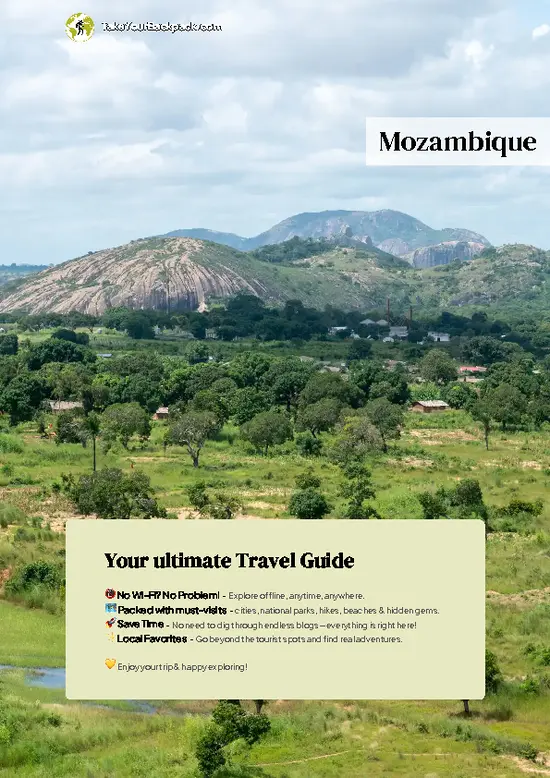
example page 0 from our offline Travel Guide for Mozambique
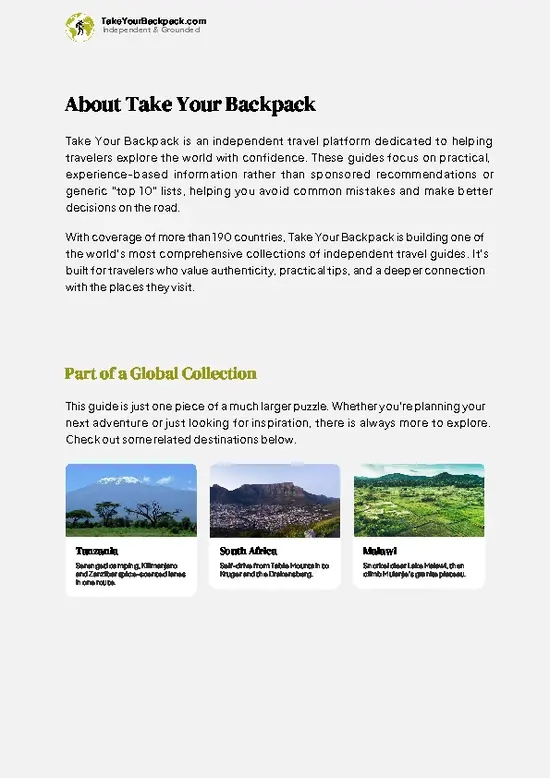
example page 1 from our offline Travel Guide for Mozambique
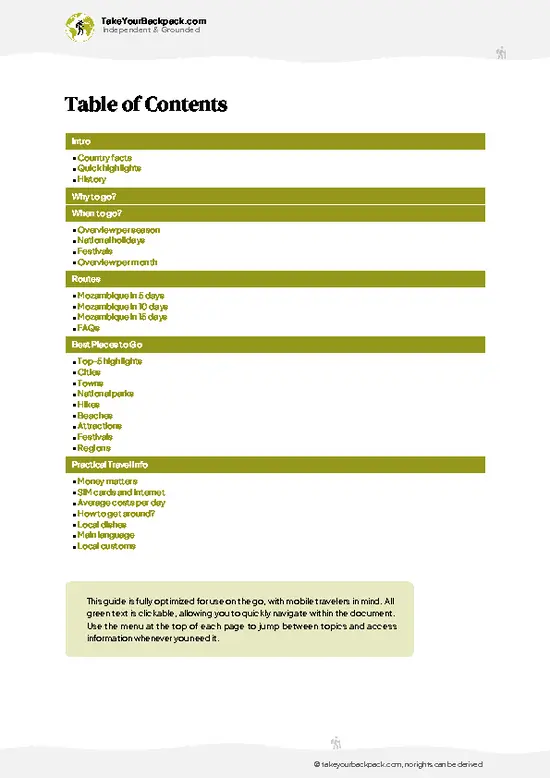
example page 2 from our offline Travel Guide for Mozambique
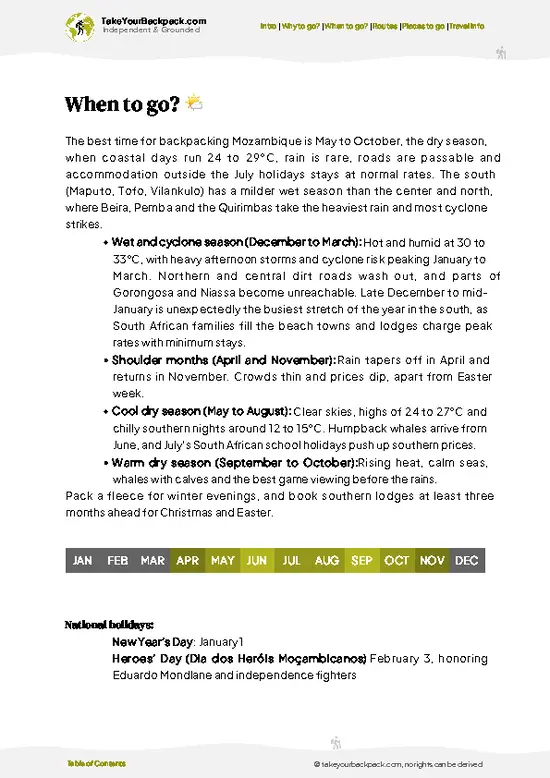
example page 3 from our offline Travel Guide for Mozambique
example page 4 from our offline Travel Guide for Mozambique
example page 5 from our offline Travel Guide for Mozambique
example page 6 from our offline Travel Guide for Mozambique
example page 7 from our offline Travel Guide for Mozambique
The digital guide (345 pages) contains:
86 highlights, ranked by travel appeal
Optimized 5, 10 & 15-day travel routes
Cities, national parks, landmarks, beaches
How to get around
Offline-friendly for travel without Wi-Fi
👉 Click to see all 30+ guide features

📅 Plan smarter in minutes, not weeks
Month by month travel advice
Festivals & national holidays
Budget expectations

🗺️ Go to the right places, skip the overrated ones
Honest pros & cons of destinations
Top hikes, parks & viewpoints
Lesser-known places most travelers miss
Clear “worth it vs skip it” guidance

🛏️ Travel smoothly without rookie mistakes
Best areas to stay
Transport systems explained simply
Common scams & safety advice
SIM cards, money & practical tips

🌍 Understand the country, not just visit it
Culture & traditions
52 Essential phrases & customs
Festivals worth planning around
Traveler-friendly historical context
Insights that make places more meaningful

📱 Built for real travel conditions
Fully downloadable PDF
Works completely offline
Optimized for phone use
Useful in remote areas & buses
Everything in one place
Save weeks of stressful planning
Get instant access to your full guide. 30‑day money-back guarantee.


By proceeding you agree to our terms.
Sent to your inbox immediately after payment • 100% Secure Checkout
Best Backpacking Travel Advisor 2025 tourism awardBest Backpacking
Travel Advisor
2025
What others say about Take Your Backpack Guides:
⭐⭐⭐⭐⭐
Fantastic, amazing amount of information!
⭐⭐⭐⭐⭐
My goodness this is amazing, it's what I've been looking for hats off too you!
⭐⭐⭐⭐⭐
I think this is absolutely BRILLIANT
⭐⭐⭐⭐
Very complete and informative. It's still missing places, but I gotta to commend you
⭐⭐⭐⭐⭐
This is truly amazing, thank you, can't wait to explore it with my kids!
⭐⭐⭐⭐⭐
Awesome resource, thank you!
⭐⭐⭐⭐⭐
This is amazing! Can't wait to explore the ones I haven't seen
⭐⭐⭐⭐
I love this! Well done, great idea.
⭐⭐⭐⭐⭐
Thanks for taking the time to make this gem!
⭐⭐⭐⭐⭐
This might be the best website I've ever seen.
⭐⭐⭐⭐⭐
Congratulations, and thank you so much for your work; it's incredibly valuable.
⭐⭐⭐⭐
In all seriousness I think you did a great job pointing out the important spots
⭐⭐⭐⭐⭐
10/10 very good
⭐⭐⭐⭐⭐
As someone who's only just starting to visit regularly this is awesome, thank you.
⭐⭐⭐⭐
Thank you very much! I'm going to visit my dad, it's going to be very useful!
⭐⭐⭐⭐⭐
This is really cool! We'll be travelling for the first time and this definitely come in handy.
⭐⭐⭐⭐⭐
You are now our minister of culture, congratulations 👨‍💼
⭐⭐⭐⭐⭐
Just wanted to tell you that this is a pearl! Going to follow your recommendations.
⭐⭐⭐⭐⭐
This is so cool. I'll definitely be using the resource for my travels soon.
⭐⭐⭐⭐⭐
This is very impressive! Good work.
⭐⭐⭐⭐⭐
This is an amazing and informative site. Very well done!

🛏️ Where to stay?Best areas and accommodation options

Inhambane’s backpacker sweet spot is the area around the town center and the nearby beachfront stretch. This zone nails the balance between safety, social buzz, and budget-friendly options. Staying here means you’re close enough to the pulse of local life—markets, eateries, and bars—without diving into the chaos of the busier commercial districts. It’s where you’ll find the most hostels, which naturally attract solo travelers and small groups, creating a built-in community vibe that’s hard to beat.

Compared to the outskirts or more residential neighborhoods, this central-beachfront corridor offers … read more 👉
Inhambane’s backpacker sweet spot is the area around the town center and the nearby beachfront stretch. This zone nails the balance between safety, social buzz, and budget-friendly options. Staying here means you’re close enough to the pulse of local life—markets, eateries, and bars—without diving into the chaos of the busier commercial districts. It’s where you’ll find the most hostels, which naturally attract solo travelers and small groups, creating a built-in community vibe that’s hard to beat.

Compared to the outskirts or more residential neighborhoods, this central-beachfront corridor offers a clear advantage: walkability. You can ditch taxis and still hit the main spots, which saves money and adds to the freedom of spontaneous exploration. The vibe here leans laid-back but lively, with a mix of locals and travelers swapping stories over cheap drinks or planning day trips to nearby beaches and diving spots.

Other parts of Inhambane tend to be quieter but less convenient and lack the social infrastructure backpackers crave. If you want to maximize your time and comfort without blowing your budget, the town center-beachfront area is your strategic base—safe enough to relax, social enough to connect, and budget-friendly enough to keep you moving forward.

🚌 Getting aroundHow to get from A to B

Inhambane moves at its own rhythm—less a clockwork machine and more a laid-back dance where time stretches and contracts depending on the sun, the tide, and the mood of the day. Here, schedules are suggestions, not laws. You’ll find that the city’s pulse is a blend of slow coastal charm and bursts of activity around markets and transport hubs. This means your travel choices aren’t just about getting from A to B; they’re about reading the flow and deciding what you’re willing to trade: time, money, or comfort. The smartest travelers don’t just move—they strategize, turning transit into a game where every choice shapes the story of their trip.


  • Walking: The ultimate budget option and the best way to soak in Inhambane’s character. It’s free, flexible, and lets you discover tucked-away corners
read more 👉
Inhambane moves at its own rhythm—less a clockwork machine and more a laid-back dance where time stretches and contracts depending on the sun, the tide, and the mood of the day. Here, schedules are suggestions, not laws. You’ll find that the city’s pulse is a blend of slow coastal charm and bursts of activity around markets and transport hubs. This means your travel choices aren’t just about getting from A to B; they’re about reading the flow and deciding what you’re willing to trade: time, money, or comfort. The smartest travelers don’t just move—they strategize, turning transit into a game where every choice shapes the story of their trip.


  • Walking: The ultimate budget option and the best way to soak in Inhambane’s character. It’s free, flexible, and lets you discover tucked-away corners at your own pace. Expect to cover 3-5 km per hour depending on heat and terrain. No schedules, no fares, just your own two feet and the city’s vibe.


  • Chapa Minibus: The backbone of local transit, these minibuses run roughly from 6 AM to 6 PM. Fares hover around 20-50 MZN (Mozambican Metical), making them dirt cheap but often crowded and unpredictable in timing. They’re slow, with frequent stops, but offer a genuine slice of daily life and a chance to chat with locals if you’re game.


  • Tuk-Tuks: A step up in speed and comfort, tuk-tuks zip through town streets faster than chapas but at a higher cost—expect to pay 100-200 MZN for typical rides within town. They run all day and into the evening, offering a flexible schedule but less predictability on price unless you negotiate upfront. Great for short hops when time is tight.


  • Motorcycle Taxis (Boda-Bodas): For those who want to shave off time and don’t mind a bit of adrenaline, boda-bodas dart through traffic and rough roads with ease. Prices vary widely, usually 50-150 MZN depending on distance. They operate from dawn till dusk, but comfort is minimal and safety can be a gamble—wear a helmet and hold on tight.


  • Private Car Hire: The luxury move for travelers who prize comfort and speed over budget. Hiring a car with a driver can cost upwards of 2,000 MZN per day but offers door-to-door service, air conditioning, and the freedom to explore beyond the city limits on your own schedule. Ideal if you’re juggling tight timelines or want to escape the city’s slower pace.


Understanding these options is your key to mastering Inhambane’s transit puzzle. Each mode demands a trade-off: walk and save money but spend more time; jump in a tuk-tuk and pay more for speed; or gamble on a chapa’s schedule for an authentic, if unpredictable, ride. Your choice shapes not just your budget but your experience—so pick your moves like a strategist, not a tourist.

👛 Costs (as of 2 September 2025)Travel costs and budget guide for Inhambane

Backpacking in Inhambane, Mozambique, offers a clear trade-off between cost and comfort, with prices reflecting the city’s laid-back coastal vibe and developing infrastructure. Here’s how your daily expenses typically break down:
  • Dorm Accommodation (High Season): Expect to pay around $10 to $15 per night in shared dorms during peak tourist months. These are basic but clean, often with fans rather than air conditioning.
  • Dorm Accommodation (Off-Season): Prices drop to about $7 to $10 per night when fewer travelers are around, giving you a better deal if you’re flexible with timing.
  • Meals: Local eateries serve filling meals for $3 to $6. Street food and small restaurants offer the best value, with seafood dishes slightly higher but still affordable.
  • Local Transport: Minibuses and tuk-tuks
read more 👉
Backpacking in Inhambane, Mozambique, offers a clear trade-off between cost and comfort, with prices reflecting the city’s laid-back coastal vibe and developing infrastructure. Here’s how your daily expenses typically break down:
  • Dorm Accommodation (High Season): Expect to pay around $10 to $15 per night in shared dorms during peak tourist months. These are basic but clean, often with fans rather than air conditioning.
  • Dorm Accommodation (Off-Season): Prices drop to about $7 to $10 per night when fewer travelers are around, giving you a better deal if you’re flexible with timing.
  • Meals: Local eateries serve filling meals for $3 to $6. Street food and small restaurants offer the best value, with seafood dishes slightly higher but still affordable.
  • Local Transport: Minibuses and tuk-tuks are the norm, costing roughly $0.50 to $1 per short trip. They’re frequent but can be crowded and slow.
  • City Transport Pass: There’s no formal city transport pass system, so budget daily for individual rides based on your itinerary.
  • Basic Activities/Entry Fees: Visiting local markets, beaches, and cultural sites usually costs between $1 and $5. Organized tours or water sports push this higher, around $10 to $20.
  • Miscellaneous Expenses: Include small costs like bottled water, snacks, or occasional internet access, which can add up to $2 to $5 daily.

Altogether, a backpacker in Inhambane can expect to spend roughly $15 to $30 per day, depending on season and personal choices. This range balances basic comfort with the freedom to explore without breaking the bank.


source: visitmozambique.net
⚠️ Prices can change and everyone travels differently, so take this as a rough guide. Hope it helps you plan your adventure!

🚌 Day tripsEasy escapes and nearby places

Inhambane, Mozambique, is a backpacker’s dream base for day trips, offering a mix of culture, adventure, and stunning landscapes. Here’s how to make the most of your time without breaking the bank.

Tofo Beach
Just a 30-minute ride from Inhambane, Tofo Beach is a paradise for sun-seekers and ocean lovers. The beach is famous for its vibrant marine life, including whale sharks and manta rays. Snorkeling here is a must, and you can rent gear for around $10. The best time to visit is between June and October when the visibility is at its peak. A common mistake? Many first-timers stick to the beach instead of exploring the local markets and eateries that serve fresh seafood.
👉 Explore Tofo Beach

Praia da Rocha
About an hour’s drive from Inhambane, Praia da Rocha offers a more secluded experience. … read more 👉
Inhambane, Mozambique, is a backpacker’s dream base for day trips, offering a mix of culture, adventure, and stunning landscapes. Here’s how to make the most of your time without breaking the bank.

Tofo Beach
Just a 30-minute ride from Inhambane, Tofo Beach is a paradise for sun-seekers and ocean lovers. The beach is famous for its vibrant marine life, including whale sharks and manta rays. Snorkeling here is a must, and you can rent gear for around $10. The best time to visit is between June and October when the visibility is at its peak. A common mistake? Many first-timers stick to the beach instead of exploring the local markets and eateries that serve fresh seafood.
👉 Explore Tofo Beach

Praia da Rocha
About an hour’s drive from Inhambane, Praia da Rocha offers a more secluded experience. The beach is less crowded, making it perfect for a peaceful day of relaxation or a picnic. The rocky formations provide excellent opportunities for photography and exploration. Expect to spend around $5 on transport and snacks. The ideal time to go is during the dry season, from May to October. Don’t forget to bring water; it’s easy to underestimate how hot it can get.


Inhambane City
Stay local and dive into the rich history of Inhambane itself. Spend a day wandering through the colonial architecture, visiting the local market, and soaking in the vibrant culture. The city is just a short walk or bike ride away, making it a budget-friendly option. You can enjoy a meal for under $5 at a local eatery. The best time to explore is early morning or late afternoon to avoid the heat. Many backpackers overlook the charm of the city, opting instead for the beaches.


Massinga Beach
A bit further afield, about 90 minutes from Inhambane, Massinga Beach is worth the trip for its breathtaking views and tranquility. The beach is expansive, allowing for long walks and solitude. Costs are minimal, with transport around $10 and a packed lunch being all you need. The best months to visit are from May to September. A common oversight is not checking the tide schedules; low tide reveals stunning rock pools perfect for exploration.


Pomene
For a more adventurous day, head to Pomene, roughly two hours away. This former fishing village is now a tranquil escape with beautiful lagoons and mangroves. The journey involves a bit of off-road travel, so be prepared for a bumpy ride. Total costs can reach around $15, including transport and snacks. The dry season is ideal for visiting, as the roads can get tricky during the rains. Many backpackers miss out on the local guides who can enhance your experience with stories and insights.
👉 Explore Pomene
Want to know what more Mozambique offers?
The Mozambique Travel Guide describes 86 highlights, from cities to national parks, from beaches to hikes

Get the Travel Guide -

🍲 FoodLocal Cuisine & Drinks

Inhambane is a culinary playground for backpackers, bursting with flavors that reflect its coastal roots. You can’t miss the piri-piri chicken, marinated in a fiery chili sauce that packs a punch. Pair it with matapa, a local dish made from cassava leaves, peanuts, and coconut milk. The combination is a taste of home for many locals and a must-try for you.

Street food is where the magic happens. Vendors line the bustling markets, serving up grilled seafood fresh from the ocean. Grab a skewer of peri-peri prawns or a fish taco wrapped in a soft tortilla. The aroma of grilled fish mingles with the salty sea breeze, creating an atmosphere that’s hard to resist.

When it comes to drinks, cashew juice is a refreshing surprise. Locals often sip it while lounging at beach bars, where the vibe is … read more 👉
Inhambane is a culinary playground for backpackers, bursting with flavors that reflect its coastal roots. You can’t miss the piri-piri chicken, marinated in a fiery chili sauce that packs a punch. Pair it with matapa, a local dish made from cassava leaves, peanuts, and coconut milk. The combination is a taste of home for many locals and a must-try for you.

Street food is where the magic happens. Vendors line the bustling markets, serving up grilled seafood fresh from the ocean. Grab a skewer of peri-peri prawns or a fish taco wrapped in a soft tortilla. The aroma of grilled fish mingles with the salty sea breeze, creating an atmosphere that’s hard to resist.

When it comes to drinks, cashew juice is a refreshing surprise. Locals often sip it while lounging at beach bars, where the vibe is relaxed and friendly. Don’t forget to try a local beer; it’s a great way to cool off after a day of exploring.

Dining here is casual. Expect to share tables and stories with fellow travelers and locals alike. Embrace the communal spirit; it’s all part of the experience. Enjoying food in Inhambane isn’t just about the meal; it’s about connecting with the culture and the people.

🛡️ SafetyTraveler Safety Guide

Inhambane is generally safe for backpackers, but a few situational awareness tips can enhance your experience. Stick to well-lit areas at night, especially if you’re wandering solo. The waterfront and main streets are lively, but quieter back alleys can feel less secure after dark.

Watch for common scams, like overly friendly locals offering unsolicited help, which can lead to unexpected charges. Politely decline and keep your plans to yourself. Street vendors can be persistent, but a friendly smile and a firm “no, thank you” usually do the trick.

Keep your belongings close, especially in crowded markets. Pickpocketing isn’t rampant, but it’s wise to be cautious. Use a crossbody bag and avoid flashy displays of wealth.

Overall, with a bit of mindfulness, you can navigate Inhambane confidently … read more 👉
Inhambane is generally safe for backpackers, but a few situational awareness tips can enhance your experience. Stick to well-lit areas at night, especially if you’re wandering solo. The waterfront and main streets are lively, but quieter back alleys can feel less secure after dark.

Watch for common scams, like overly friendly locals offering unsolicited help, which can lead to unexpected charges. Politely decline and keep your plans to yourself. Street vendors can be persistent, but a friendly smile and a firm “no, thank you” usually do the trick.

Keep your belongings close, especially in crowded markets. Pickpocketing isn’t rampant, but it’s wise to be cautious. Use a crossbody bag and avoid flashy displays of wealth.

Overall, with a bit of mindfulness, you can navigate Inhambane confidently and enjoy its laid-back charm without unnecessary stress.

Other Mozambican cities near Inhambane

Explore more nearby:

  • Maxixe—ferry crossing, commercial strip, bay views| 4 km away
  • Massinga—inland plateau, coconut groves, rural settlements| 60 km away
  • Xai-Xai—Limpopo River mouth, long beaches, local seafood| 219 km away

💡 Not sure where to go next?
Create a personalized itinerary for Mozambique including Inhambane and the places that fit your trip.

Generate my itinerary

👉 Discover all cities

Or checkout all Mozambique has to offer (think cities, towns, villages, national parks, hikes, beaches, festivals)
Country photo of Mozambique

We 💚 feedbackFinal thoughts on visiting Inhambane

Inhambane has a laid-back vibe that feels like a warm hug. The best surprise? The local seafood—fresh and bursting with flavor. Grab a plate at the market; it’s worth every metical. Just a heads-up: the roads can be a bit rough, so don’t rush your travels. Embrace the slow pace. You’ll find that the real magic happens when you take your time, whether it’s lounging on the beach or chatting with locals. Enjoy the rhythm of life here; it’s a treasure.

✍️ Help improve this page!
The information on this page is based on in-depth research, insights shared by experienced travelers, and feedback from the local travel community in Mozambique. While every effort is made to keep the information accurate and current, conditions can change — so if you spot anything incorrect or outdated, please get in touch.


🙋‍♂️ Give feedback

👋 Meet the founderWho’s Behind Take Your Backpack?

Johan, backpacker and founder of TakeYourBackpackHi, I’m Johan (Netherlands 🇳🇱), the creator of TakeYourBackpack. Over the past decade, I’ve backpacked through 80+ countries across six continents, gaining extensive experience with independent travel, long-term trips, and overland routes.

This site is built on a combination of firsthand travel experience and carefully curated insights from other backpackers. Many guides are based on places I’ve personally visited, while others bring together tips, observations, and practical advice shared by trusted travelers I’ve met along the way.

The goal is to provide realistic, experience-driven guidance — not generic itineraries — so you can explore destinations with better context, clearer expectations, and more confidence.

Get full Mozambique guide •
Instant download • 86 highlights • Full Offline guide