×

Mozambique🇲🇿 | national parksQuirimbas National ParkIbo old town, silversmiths, star fort, tidal flats | things to do and best time to go

Explore Niassa National ReserveExplore Chimanimani National Park

Backpacking in Quirimbas
🌟 Highlightnational park ranked #3
By Johan Kruseman 🇳🇱 | Updated October 22, 2026

Quirimbas National Park covers roughly 7,500 square kilometers, and most of it is mainland miombo woodland, mangrove and coast, with the coral islands making up only a slice. It sits in the north of Mozambique, in Cabo Delgado province, running up the coast from Pemba. Expect empty beaches, crumbling Portuguese forts and elephants that are rarely seen. Trails are scarce, so you explore on foot along island lanes and across tidal flats. Getting there is slow. Dhows run on the tides, so check tide tables and plan a buffer day or you will lose hours on a sandbar. ATMs are rare on the islands, so withdraw cash in Pemba. Resort islands like Medjumbe are pricey, so stay on Ibo instead. Your first day can go like this: land on Ibo, walk to the star-shaped fort, watch the silversmiths work, then eat grilled fish by the water.

Discover everything you want to know in the 📖 Mozambique Travel Guide.


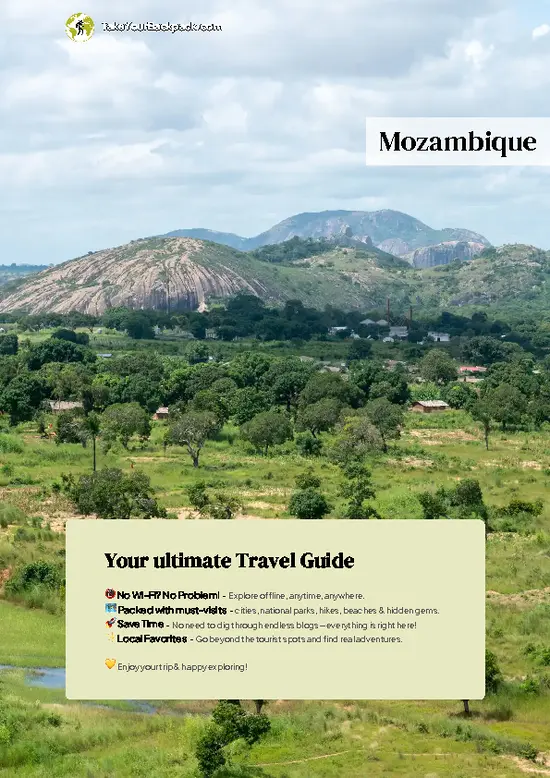
example page 0 from our offline Travel Guide for Mozambique
example page 1 from our offline Travel Guide for Mozambique
example page 2 from our offline Travel Guide for Mozambique
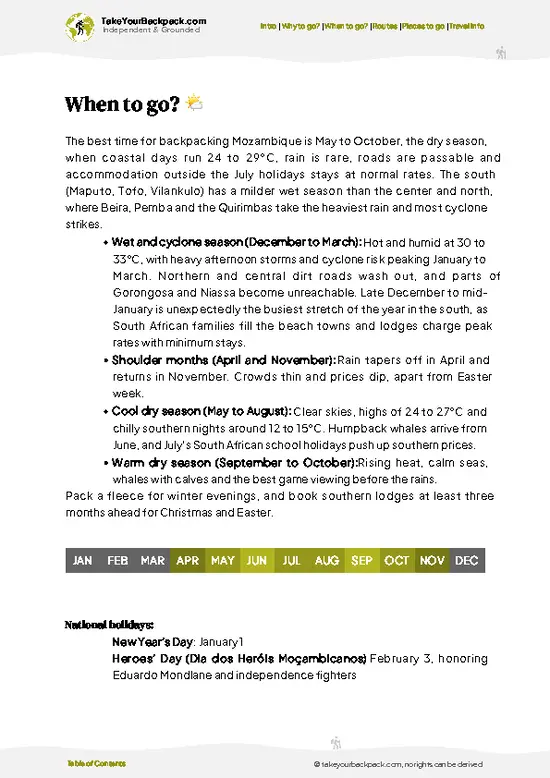
example page 3 from our offline Travel Guide for Mozambique
example page 4 from our offline Travel Guide for Mozambique
example page 5 from our offline Travel Guide for Mozambique
example page 6 from our offline Travel Guide for Mozambique
example page 7 from our offline Travel Guide for Mozambique
Loading the map 🌍
CLICK TO FILTER
cities
towns
national parks
hikes
beaches
attractions
festivals
regions
SHOW COUNTRY’S BESTSHOW ALL

✨ Why go?
Ranked #3 national park in Mozambique
What makes it a must-see national park

Quirimbas National Park suits travelers who like to work out their own days. On Ibo you can wander the old Portuguese quarter without a guide or a ticket queue, and local boat captains will take you to sandbanks and reefs for a negotiated fee. That freedom is the main reason people come. The second draw is the Ibo silversmiths, who still make filigree jewelry by hand inside the old fort. You can watch them work, buy direct and skip the markup you would pay in any city shop. Then there is the water. The reefs around the southern islands have good snorkeling and diving, and a dhow trip over the shallows costs far less than the resort boat transfers. Add the mainland miombo woodland, where elephants, lions and wild dogs live, and the park gives you a rare mix of history, sea and bush. The reward … read more 👉
Quirimbas National Park suits travelers who like to work out their own days. On Ibo you can wander the old Portuguese quarter without a guide or a ticket queue, and local boat captains will take you to sandbanks and reefs for a negotiated fee. That freedom is the main reason people come. The second draw is the Ibo silversmiths, who still make filigree jewelry by hand inside the old fort. You can watch them work, buy direct and skip the markup you would pay in any city shop. Then there is the water. The reefs around the southern islands have good snorkeling and diving, and a dhow trip over the shallows costs far less than the resort boat transfers. Add the mainland miombo woodland, where elephants, lions and wild dogs live, and the park gives you a rare mix of history, sea and bush. The reward comes to those who plan around the tides and bring cash.

💡 HighlightsEssential experiences to have while exploring Quirimbas

  1. Ibo Island Old Town: Faded colonial mansions, shuttered shopfronts and sandy lanes make this the park’s best-known stop. Ibo was once a trading and slaving post, and you can walk the whole town in an easy morning.
  2. Fort São João Baptista: This star-shaped fort dates from the late 1700s and has thick coral-stone walls. Today it houses the silversmiths’ workshops.
  3. Ibo Silversmiths: Artisans hammer and twist fine silver wire into rings, bracelets and earrings. Prices are negotiable, and you can commission a piece and wait.
  4. Quirimba Island: The archipelago’s namesake is a quiet island of fishing villages, with palm groves and rough coral-stone ruins. Dhows reach it according to the tides.
  5. Dhow Sailing Between the Islands: Hand-sewn sails carry you over the shallow channels. Sunset trips and sandbank
… read more 👉
  1. Ibo Island Old Town: Faded colonial mansions, shuttered shopfronts and sandy lanes make this the park’s best-known stop. Ibo was once a trading and slaving post, and you can walk the whole town in an easy morning.
  2. Fort São João Baptista: This star-shaped fort dates from the late 1700s and has thick coral-stone walls. Today it houses the silversmiths’ workshops.
  3. Ibo Silversmiths: Artisans hammer and twist fine silver wire into rings, bracelets and earrings. Prices are negotiable, and you can commission a piece and wait.
  4. Quirimba Island: The archipelago’s namesake is a quiet island of fishing villages, with palm groves and rough coral-stone ruins. Dhows reach it according to the tides.
  5. Dhow Sailing Between the Islands: Hand-sewn sails carry you over the shallow channels. Sunset trips and sandbank picnics are the most popular outings.
  6. Reefs for Snorkeling and Diving: Fringing coral around Ibo, Matemo and Medjumbe holds reef fish and turtles. Visibility is usually best when the water is calm.
  7. Mangrove Channels and Tidal Flats: At low tide, sandbars and mangrove creeks open up around Ibo. Birds feed on the flats, and fiddler crabs scatter underfoot.
  8. Mainland Miombo Woodland: The park’s inland section shelters elephants, lions and wild dogs. Sightings are uncommon, so visit for the wild atmosphere rather than a guaranteed safari.
Quirimbas National Park lends itself to pairing the fort with the silversmiths in one morning, then taking a late-afternoon dhow trip over the shallows.
Spotted a mistake or missing something? Contact us.

🌤️ When to go?Weather, crowds, and seasonal trade-offs

  • Cool Dry Season (June to September): Days run 24 to 29°C (75 to 84°F), nights drop to 17 to 20°C (63 to 68°F), and rain is rare. Sea breezes keep Ibo and the beaches comfortable, visibility for snorkeling and diving around the outer islands is at its best, and you get roughly 11 hours of daylight.
  • Hot Dry Season (October to November): Highs climb to 30 to 34°C (86 to 93°F) with building humidity. Crowds thin, dhow trips stay reliable, and lodges often drop rates slightly before the holidays.
  • Wet Season (December to April): Expect 28 to 34°C (82 to 93°F), heavy downpours, and cyclone risk, mainly January to March. Dirt roads from Pemba to the mainland sectors turn to mud, some lodges close, and boat crossings get rough. Daylight stretches to about 13 hours.
  • Late Wet Season (May): Rains fade, the
… read more 👉
  • Cool Dry Season (June to September): Days run 24 to 29°C (75 to 84°F), nights drop to 17 to 20°C (63 to 68°F), and rain is rare. Sea breezes keep Ibo and the beaches comfortable, visibility for snorkeling and diving around the outer islands is at its best, and you get roughly 11 hours of daylight.
  • Hot Dry Season (October to November): Highs climb to 30 to 34°C (86 to 93°F) with building humidity. Crowds thin, dhow trips stay reliable, and lodges often drop rates slightly before the holidays.
  • Wet Season (December to April): Expect 28 to 34°C (82 to 93°F), heavy downpours, and cyclone risk, mainly January to March. Dirt roads from Pemba to the mainland sectors turn to mud, some lodges close, and boat crossings get rough. Daylight stretches to about 13 hours.
  • Late Wet Season (May): Rains fade, the bush is green, and prices stay low before the June to September rush.
  • Peak Pricing (July to August): Island lodges fill and charge their highest rates, so book ahead.
Aim for September: the water is still clear, the heat is manageable, and rooms are easier to find.


source: climatestotravel.comJANJanuary: fair for travelingFEBFebruary: fair for travelingMARMarch: fair for travelingAPRApril: fair for travelingMAYMay: highly recommended for travelingJUNJune: excellent for travelingJULJuly: excellent for travelingAUGAugust: excellent for travelingSEPSeptember: excellent for travelingOCTOctober: highly recommended for travelingNOVNovember: fair for travelingDECDecember: fair for traveling
when-to-go

✈️ The backpacker research shortcutMozambique Travel Guide

An offline-friendly backpacking guide with optimized travel routes, ranked highlights, transport advice, and the best areas to stay.
example page 0 from our offline Travel Guide for Mozambique
example page 1 from our offline Travel Guide for Mozambique
example page 2 from our offline Travel Guide for Mozambique
example page 3 from our offline Travel Guide for Mozambique
example page 4 from our offline Travel Guide for Mozambique
example page 5 from our offline Travel Guide for Mozambique
example page 6 from our offline Travel Guide for Mozambique
example page 7 from our offline Travel Guide for Mozambique
The digital guide (324 pages) contains:
✅ 78 highlights, ranked by travel appeal
✅ Optimized 5, 10 & 15-day travel routes
✅ Cities, national parks, landmarks, beaches
✅ How to get around
✅ Offline-friendly for travel without Wi-Fi
👉 Click to see all 30+ guide features

📅 Plan smarter in minutes, not weeks
✅ Month by month travel advice
✅ Festivals & national holidays
✅ Budget expectations

🗺️ Go to the right places, skip the overrated ones
✅ Honest pros & cons of destinations
✅ Top hikes, parks & viewpoints
✅ Lesser-known places most travelers miss
✅ Clear “worth it vs skip it” guidance

🛏️ Travel smoothly without rookie mistakes
✅ Best areas to stay
✅ Transport systems explained simply
✅ Common scams & safety advice
✅ SIM cards, money & practical tips

🌍 Understand the country, not just visit it
✅ Culture & traditions
✅ 52 Essential phrases & customs
✅ Festivals worth planning around
✅ Traveler-friendly historical context
✅ Insights that make places more meaningful

📱 Built for real travel conditions
✅ Fully downloadable PDF
✅ Works completely offline
✅ Optimized for phone use
✅ Useful in remote areas & buses
✅ Everything in one place
Stop searching, start planning
Get instant access to your full guide. 30‑day money-back guarantee.
+ Add another guide for just

By proceeding you agree to our terms.
Sent to your inbox immediately after payment • 100% Secure Checkout
Best Backpacking Travel Advisor 2025 tourism awardBest Backpacking
Travel Advisor
2025
What others say about Take Your Backpack Guides:
⭐⭐⭐⭐⭐
Fantastic, amazing amount of information!
⭐⭐⭐⭐⭐
My goodness this is amazing, it's what I've been looking for hats off too you!
⭐⭐⭐⭐⭐
I think this is absolutely BRILLIANT
⭐⭐⭐⭐
Very complete and informative. It's still missing places, but I gotta to commend you
⭐⭐⭐⭐⭐
This is truly amazing, thank you, can't wait to explore it with my kids!
⭐⭐⭐⭐⭐
Awesome resource, thank you!
⭐⭐⭐⭐⭐
This is amazing! Can't wait to explore the ones I haven't seen
⭐⭐⭐⭐
I love this! Well done, great idea.
⭐⭐⭐⭐⭐
Thanks for taking the time to make this gem!
⭐⭐⭐⭐⭐
This might be the best website I've ever seen.
⭐⭐⭐⭐⭐
Congratulations, and thank you so much for your work; it's incredibly valuable.
⭐⭐⭐⭐
In all seriousness I think you did a great job pointing out the important spots
⭐⭐⭐⭐⭐
10/10 very good
⭐⭐⭐⭐⭐
As someone who's only just starting to visit regularly this is awesome, thank you.
⭐⭐⭐⭐
Thank you very much! I'm going to visit my dad, it's going to be very useful!
⭐⭐⭐⭐⭐
This is really cool! We'll be travelling for the first time and this definitely come in handy.
⭐⭐⭐⭐⭐
You are now our minister of culture, congratulations 👨‍💼
⭐⭐⭐⭐⭐
Just wanted to tell you that this is a pearl! Going to follow your recommendations.
⭐⭐⭐⭐⭐
This is so cool. I'll definitely be using the resource for my travels soon.
⭐⭐⭐⭐⭐
This is very impressive! Good work.
⭐⭐⭐⭐⭐
This is an amazing and informative site. Very well done!

🛏️ Where to stay?Best areas and accommodation options

The best base for most backpackers is Ibo Island, a small, crumbling Portuguese-era town with a few guesthouses, though inside the park itself you will find only remote lodges on private islands. Pemba, the gateway city, has the widest choice of hostels and cheap guesthouses, and Wimbi Beach there has budget rooms for US$20 to 40 a night.

On Ibo, simple guesthouses and family-run pousadas cost roughly US$25 to 60 for a double, with a few boutique restorations costing more. Rooms are basic, power can be patchy, and meals are usually arranged with your host, so ask when you book. Camping is possible … read more 👉
The best base for most backpackers is Ibo Island, a small, crumbling Portuguese-era town with a few guesthouses, though inside the park itself you will find only remote lodges on private islands. Pemba, the gateway city, has the widest choice of hostels and cheap guesthouses, and Wimbi Beach there has budget rooms for US$20 to 40 a night.

On Ibo, simple guesthouses and family-run pousadas cost roughly US$25 to 60 for a double, with a few boutique restorations costing more. Rooms are basic, power can be patchy, and meals are usually arranged with your host, so ask when you book. Camping is possible at some spots with permission, and a few hosts rent a hammock or a mattress cheaply.

Further out, Matemo and Medjumbe have upscale island lodges that run well above US$200 a night, so they suit a one-night splurge rather than a budget stay. Quirimbas National Park’s mainland sector has very little accommodation and is mostly visited as a day trip or by organized ranger-led visits from Pemba. Quissanga and Macomia are small towns on the road north with a handful of basic guesthouses for around US$15 to 30, handy when you break up the long drive.

👛 Costs (as of 22 October 2026)Travel costs and budget guide for Quirimbas

Plan on roughly US$58 to 103 per person per day on a backpacker budget in Quirimbas National Park, with most of your money going to boats and island lodging.
CategoryBudget RangeLocal Reality
Park EntranceUS$5 to 10Fees are modest for non-resident visitors and usually collected at park offices or through your lodge or operator.
Accommodation (high season)US$25 to 35Basic guesthouse rooms on Ibo; Pemba has some cheaper rooms. Island lodges run far higher.
Accommodation (low season)US$18 to 28Some guesthouses close or discount during the rains.
FoodUS$10 to 18Grilled fish, rice, and coconut sauces in small restaurants or cooked by your host; supplies are limited, so bring snacks from Pemba.
Local TransportUS$8 to 15Shared minibuses (chapas) along the coast road cost a few dollars; reaching Ibo from
… read more 👉
Plan on roughly US$58 to 103 per person per day on a backpacker budget in Quirimbas National Park, with most of your money going to boats and island lodging.
CategoryBudget RangeLocal Reality
Park EntranceUS$5 to 10Fees are modest for non-resident visitors and usually collected at park offices or through your lodge or operator.
Accommodation (high season)US$25 to 35Basic guesthouse rooms on Ibo; Pemba has some cheaper rooms. Island lodges run far higher.
Accommodation (low season)US$18 to 28Some guesthouses close or discount during the rains.
FoodUS$10 to 18Grilled fish, rice, and coconut sauces in small restaurants or cooked by your host; supplies are limited, so bring snacks from Pemba.
Local TransportUS$8 to 15Shared minibuses (chapas) along the coast road cost a few dollars; reaching Ibo from the mainland usually means a boat ride.
ActivitiesUS$10 to 25A shared dhow trip or snorkeling outing costs less when split with others; guided walks are cheaper than boats.
Total Daily BudgetUS$58 to 103About US$65 for a typical day
Cash is essential, since ATMs are only reliable in Pemba, and payments on the islands are made in the local currency or sometimes US dollars.


source: visitmozambique.net
⚠️ Prices can change and everyone travels differently, so take this as a rough guide. Hope it helps you plan your adventure!

🥾 TrailsBest hikes in Quirimbas national park

Quirimbas National Park offers walking that is gentle, flat and sandy rather than a network of marked trails. Most people explore on foot, and everything below is an informal route rather than a signed path.
  • Ibo Town Loop: Start at the waterfront, pass the old mansions and churches, and finish at the fort. It takes about two to three hours at a slow pace on level, sandy lanes. Easy.
  • Fort and Silversmiths: A short stroll inside the star-shaped walls. Allow an hour if you want to watch the artisans and bargain.
  • Mangrove and Tidal Flat Walk: At low tide you can walk out from Ibo along sand and mud toward
… read more 👉
Quirimbas National Park offers walking that is gentle, flat and sandy rather than a network of marked trails. Most people explore on foot, and everything below is an informal route rather than a signed path.
  • Ibo Town Loop: Start at the waterfront, pass the old mansions and churches, and finish at the fort. It takes about two to three hours at a slow pace on level, sandy lanes. Easy.
  • Fort and Silversmiths: A short stroll inside the star-shaped walls. Allow an hour if you want to watch the artisans and bargain.
  • Mangrove and Tidal Flat Walk: At low tide you can walk out from Ibo along sand and mud toward the mangroves. Birdlife is good, but check the tide so you are not cut off. Easy to moderate, with wet feet likely.
  • Island Village Walks: On Quirimba and other islands, sandy tracks link fishing villages and palm groves. Distances are short, but there is little shade, so carry water.
  • Mainland Bush Walks: Inland, the miombo woodland is wild and mostly unmarked. Go only with a local guide or an operator, because elephants and other large animals roam the area.
Wildlife on the islands means birds, crabs and reef fish rather than large mammals. The mainland holds elephants, lions, leopards and wild dogs, though sightings are rare.
Reaching the park takes patience. Pemba is the gateway, and onward travel to the coast and islands combines minibus or shared transport with a boat ride that follows the tide. Crowds are minimal, even in peak season, and you will often have a beach to yourself. A modest park fee applies and is usually collected at park offices, so carry cash in US dollars. Bring sun protection, a water bottle and sandals you can wade in.
⚠️ Hiking info can sometimes be outdated or inaccurate. Before you hit the trail, check the latest conditions with locals. If you do spot anything that's off, I'd love to hear from you, so I can update it for fellow travelers.

🛡️ SafetyStaying Safe: What Travelers Should Know

Quirimbas National Park is calm for most hikers and paddlers, and the real hazards are sun, sea, and remoteness. Heat and humidity are strong, so carry at least 3 liters of water per person, wear a hat, and plan walks for early morning. Mosquitoes carry malaria, so take prophylaxis and cover up at dusk.

On the water, wind and tide change quickly between islands. Use only dhows with life jackets and local captains, and skip crossings when the wind picks up. Tidal flats around Ibo can be crossed on foot only with a guide who knows the timing.

On the mainland, elephants, buffalo, and the occasional lion live in the park’s bush. Do not walk in the bush alone, keep your distance, and go with rangers or a registered operator. Roads are rough and signal is patchy, so carry cash, a downloaded map, … read more 👉
Quirimbas National Park is calm for most hikers and paddlers, and the real hazards are sun, sea, and remoteness. Heat and humidity are strong, so carry at least 3 liters of water per person, wear a hat, and plan walks for early morning. Mosquitoes carry malaria, so take prophylaxis and cover up at dusk.

On the water, wind and tide change quickly between islands. Use only dhows with life jackets and local captains, and skip crossings when the wind picks up. Tidal flats around Ibo can be crossed on foot only with a guide who knows the timing.

On the mainland, elephants, buffalo, and the occasional lion live in the park’s bush. Do not walk in the bush alone, keep your distance, and go with rangers or a registered operator. Roads are rough and signal is patchy, so carry cash, a downloaded map, and a basic first-aid kit. Be aware that the Cabo Delgado region north of the park has had security issues, so check current advice and local guidance before heading to the mainland north of Macomia.

FAQTraveler FAQ

Plan on 3 to 5 days for Quirimbas National Park if you are based on Ibo, since a day each for the old town, a dhow trip to nearby islands, and a snorkeling outing fills a short stay. Add a day or two at each end for the journey from Pemba, and extend to a week if you want to reach farther islands like Matemo or the mainland sector.
Yes, you can visit Quirimbas National Park without a car, and most backpackers do. Fly or take a bus to Pemba, then use shared minibuses toward Quissanga and the coast, and hop on a dhow to Ibo Island; the whole trip takes about a day. Once on Ibo, everything is walkable or reachable by bicycle, and boats cover the other islands.
Yes, Quirimbas National Park charges an entrance fee, typically around US$5 to 10 per person for foreign visitors, and some activities such as guided walks or island visits can add separate charges. You normally pay at park offices or through your lodge or operator, and no special hiking permit is usually required for island stays. Check with the park office in Pemba or your host before heading out, as rules and rates for the mainland sector can differ.
⚠️ Things can change over time, so always validate details locally before you go.

Other Mozambican national parks near Quirimbas

Explore more nearby:


💡 Not sure where to go next?
Create a personalized itinerary for Mozambique including Quirimbas and the places that fit your trip.

Generate my itinerary

👉 Discover all national parks

Or checkout all Mozambique has to offer (think cities, towns, villages, national parks, hikes, beaches, festivals)
Country photo of Mozambique

We 💚 feedbackKey takeaways before you go

Quirimbas National Park rewards a stay of four or five nights, long enough to see Ibo, take a dhow to a second island and still absorb a slow tide-ruled day. Two nights feels rushed once boats start dictating your plans. I would build in a spare day and carry plenty of cash.

✍️ Help improve this page!
The information on this page is based on in-depth research, insights shared by experienced travelers, and feedback from the local travel community in Mozambique. While every effort is made to keep the information accurate and current, conditions can change — so if you spot anything incorrect or outdated, please get in touch.


🙋‍♂️ Give feedback

👋 Meet the founderWho’s Behind Take Your Backpack?

Johan, backpacker and founder of TakeYourBackpackHi, I’m Johan (Netherlands 🇳🇱), the creator of TakeYourBackpack. Over the past 3 decades, I’ve backpacked through 90+ countries across six continents, gaining extensive experience with independent travel, long-term trips, and overland routes.

This site is built on a combination of firsthand travel experience and carefully curated insights from other backpackers. Many guides are based on places I’ve personally visited, while others bring together tips, observations, and practical advice shared by trusted travelers I’ve met along the way.

The goal is to provide realistic, experience-driven guidance — not generic itineraries — so you can explore destinations with better context, clearer expectations, and more confidence.