×

Mozambique🇲🇿 | best national parksDiscover the 9 Best national parks Across Mozambique

Mozambique’s national parks offer a raw, unfiltered glimpse into Africa’s wild heart. Defined by diverse ecosystems, from coastal wetlands to rugged mountains, these parks are gateways to adventure. Each park presents unique landscapes and wildlife, influencing your backpacking experience. For instance, Gorongosa National Park is a haven for those seeking rich biodiversity and immersive cultural encounters, while Bazaruto Archipelago tempts with pristine beaches and marine life. Seasonal variations affect accessibility and wildlife sightings, making timing crucial. Choosing the right park shapes your vibe, budget, and safety, ensuring that every trek, every sunset, and every local interaction resonates deeply with the spirit of Mozambique.

By Johan Kruseman 🇳🇱 | Updated June 6, 2026
Explore the best hikes in Mozambique

Why go?What Makes Them Special

Mozambique’s national parks stand out in the African landscape, offering a unique blend of biodiversity and rugged beauty. The country’s geographic diversity ranges from coastal wetlands to vast savannas, creating habitats for an array of wildlife. This rich tapestry supports species like the African wild dog and elephants, which are less commonly found in other regions.

However, accessing these parks can be a double-edged sword. While some areas are remote and require significant travel time, this often leads to a more immersive experience. The trade-off is clear: the longer journey can yield deeper connections with the land and its inhabitants, but it demands patience and planning.

Mozambique’s climatic conditions also play a role. The wet season can make certain trails impassable, while … read more 👉
Mozambique’s national parks stand out in the African landscape, offering a unique blend of biodiversity and rugged beauty. The country’s geographic diversity ranges from coastal wetlands to vast savannas, creating habitats for an array of wildlife. This rich tapestry supports species like the African wild dog and elephants, which are less commonly found in other regions.

However, accessing these parks can be a double-edged sword. While some areas are remote and require significant travel time, this often leads to a more immersive experience. The trade-off is clear: the longer journey can yield deeper connections with the land and its inhabitants, but it demands patience and planning.

Mozambique’s climatic conditions also play a role. The wet season can make certain trails impassable, while the dry season reveals the parks’ full splendor. This variability means that timing your visit is crucial for maximizing adventure opportunities.

Infrastructural challenges exist, too. Limited roads and facilities can deter some travelers, but those willing to embrace the grit will find themselves rewarded with unspoiled landscapes and a sense of solitude. The essence of Mozambique’s national parks lies in their ability to offer raw, authentic experiences that resonate long after the journey ends.
Our Approach to Ranking
The list of best national parks in Mozambique is created based on landscapes, wildlife, adventure opportunities, facilities, and overall experience. If you feel a national park is missing in this list, please let us know.

When to go?When to Plan Your Trip

Wildlife visibility in Mozambique’s national parks is closely tied to the seasons. The dry season, typically from May to October, offers the best opportunities for spotting wildlife. Animals congregate around water sources, making them easier to find. Temperatures are cooler, especially in the evenings, but daytime heat can still be intense.

Rainfall peaks from November to April, transforming the landscape into a lush paradise. However, heavy rains can lead to muddy trails and limited access to certain areas. Wildlife is less visible during this time, as animals disperse into denser vegetation. The humidity can be stifling, and temperatures often soar, especially in January and February.

Optimal months for visits are generally June to September. These months strike a balance between pleasant … read more 👉
Wildlife visibility in Mozambique’s national parks is closely tied to the seasons. The dry season, typically from May to October, offers the best opportunities for spotting wildlife. Animals congregate around water sources, making them easier to find. Temperatures are cooler, especially in the evenings, but daytime heat can still be intense.

Rainfall peaks from November to April, transforming the landscape into a lush paradise. However, heavy rains can lead to muddy trails and limited access to certain areas. Wildlife is less visible during this time, as animals disperse into denser vegetation. The humidity can be stifling, and temperatures often soar, especially in January and February.

Optimal months for visits are generally June to September. These months strike a balance between pleasant weather and wildlife activity. The shoulder seasons, like late April and early October, can also be rewarding. Fewer crowds mean a more intimate experience, but conditions may vary. Expect some rain in April and lingering humidity in October.

Peak periods coincide with school holidays and major events, leading to busier trails and higher costs. Planning around these times can enhance the experience, allowing for quieter exploration. Understanding these seasonal patterns is crucial for maximizing the adventure in Mozambique’s national parks.

national park hoppingHow to Combine national parks Into One Trip

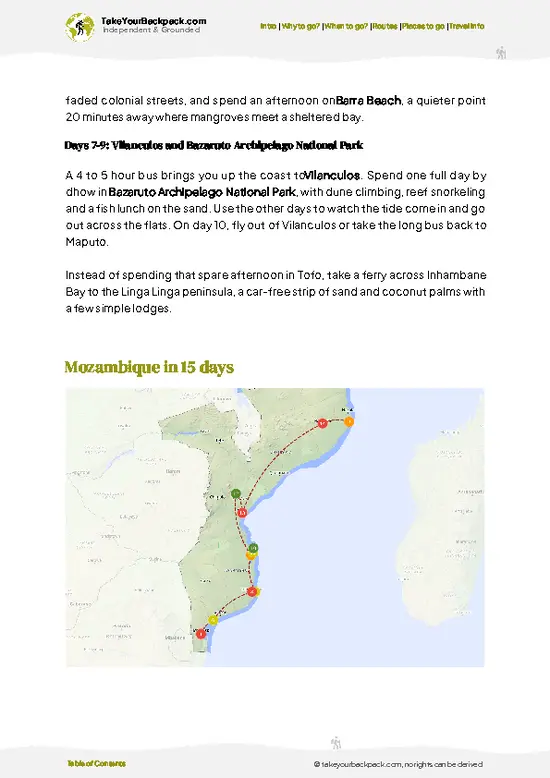
Combining national parks in Mozambique requires strategic planning and a sense of adventure. Start by clustering parks regionally. The northern parks, like Gorongosa and Niassa, offer rich biodiversity but demand more time due to their size and remoteness. In contrast, the southern parks, such as Maputo Special Reserve and Bazaruto, are more accessible and can be explored in shorter bursts.

Travelers should consider the direction of travel. A logical route might begin in the south and move north, or vice versa, depending on entry points. This minimizes backtracking and maximizes time spent in nature. Allocate at least two to three days per park for a deeper experience, especially in Gorongosa, where the trails can be challenging yet rewarding.

Common pitfalls include over-scheduling and read more 👉
Combining national parks in Mozambique requires strategic planning and a sense of adventure. Start by clustering parks regionally. The northern parks, like Gorongosa and Niassa, offer rich biodiversity but demand more time due to their size and remoteness. In contrast, the southern parks, such as Maputo Special Reserve and Bazaruto, are more accessible and can be explored in shorter bursts.

Travelers should consider the direction of travel. A logical route might begin in the south and move north, or vice versa, depending on entry points. This minimizes backtracking and maximizes time spent in nature. Allocate at least two to three days per park for a deeper experience, especially in Gorongosa, where the trails can be challenging yet rewarding.

Common pitfalls include over-scheduling and underestimating travel times. Mozambique’s roads can be rough, and distances between parks may seem short but can take longer than expected. Balancing speed with depth is crucial; rushing through parks sacrifices the chance to connect with the landscape and wildlife.

Flexibility is key. Weather can change plans, and wildlife sightings can dictate schedules. Prioritize comfort versus budget; some parks offer basic facilities while others provide more luxurious options. Ultimately, the effort invested in planning will yield rich rewards in unforgettable experiences.

The ListTop national parks of Mozambique

1 Bazaruto Archipelago National Park

coral reefs, sand dunes, turquoise lagoons, marine life

Snorkel among vibrant reefs, watch dugongs glide through clear waters, and wander shifting dunes on remote Indian Ocean islands.

2 Gorongosa National Park

floodplains, rainforest escarpment, wildlife restoration, birdwatching

Track herds across open plains, listen for rare birds in dense forest, and witness a landscape shaped by ambitious conservation efforts.

3 Quirimbas National Park

mangrove forests, coral islands, dhow channels, traditional villages

Sail between coral islands, explore mangrove-lined creeks, and visit coastal communities that have shaped this unique marine and terrestrial park.

4 Niassa National Reserve

miombo woodland, granite inselbergs, wild dog territory, remote wilderness

Venture into vast, rugged terrain where wild dogs hunt and granite outcrops rise above endless woodlands, far from major settlements.

5 Maputo Special Reserve

coastal lakes, palm savanna, elephant herds, wetland mosaics

Spot elephants grazing near freshwater lakes, traverse palm-dotted grasslands, and encounter diverse wetland habitats close to the Indian Ocean.

mozambique-national-park-maputo-special-reserve
© Google |

6 Limpopo National Park

savanna wilderness, cross-border migration, riverine forests, seasonal pans

Travel through open savanna where elephants roam freely, and experience the wild, unfenced borderlands adjoining South Africa’s Kruger Park.

mozambique-national-park-limpopo-national-park
© Google |

7 Zinave National Park

riverine woodland, reintroduced wildlife, baobab groves, sandveld

Observe rewilded herds among ancient baobabs and sandy woodlands, where the Save River shapes a recovering ecosystem.

8 Chimanimani National Reserve

mountain peaks, montane forest, waterfalls, endemic flora

Hike through misty highlands, discover rare plants, and follow trails past waterfalls in Mozambique’s most dramatic mountain landscape.

9 Magoe National Park

Cahora Bassa lake, mopane woodland, fishing villages, aquatic birds

Watch fishermen on the lake’s edge, spot waterbirds in quiet coves, and explore woodlands bordering Mozambique’s largest reservoir.

Loading the map 🌍

Expert viewExpert Commentary on national parks

Terrain Mozambique’s national parks are a wild mix of landscapes, from coastal dunes to rugged mountains. Gorongosa National Park, for instance, is a sprawling expanse where the terrain shifts dramatically. You’ll find savannahs, wetlands, and dense forests. The trails can be challenging, often requiring a solid level of fitness and a willingness to get your boots muddy. The park’s infrastructure is improving, but expect some rough patches. Roads can be bumpy, and access to certain areas may be limited during the rainy season. If you’re keen on tackling multiple parks, plan for a mix of easy and tough trails to balance your energy.

Park Infrastructure The infrastructure in Mozambique’s parks is a work in progress. While some parks like Gorongosa have established lodges and campsites, others … read more 👉
Terrain Mozambique’s national parks are a wild mix of landscapes, from coastal dunes to rugged mountains. Gorongosa National Park, for instance, is a sprawling expanse where the terrain shifts dramatically. You’ll find savannahs, wetlands, and dense forests. The trails can be challenging, often requiring a solid level of fitness and a willingness to get your boots muddy. The park’s infrastructure is improving, but expect some rough patches. Roads can be bumpy, and access to certain areas may be limited during the rainy season. If you’re keen on tackling multiple parks, plan for a mix of easy and tough trails to balance your energy.

Park Infrastructure The infrastructure in Mozambique’s parks is a work in progress. While some parks like Gorongosa have established lodges and campsites, others might offer only basic facilities. This means you’ll need to be flexible. Bring your own supplies, especially food and water, as options can be sparse. If you’re looking to cover several parks, consider the time it takes to travel between them. Distances can be deceiving; what looks like a short drive can turn into a long haul due to road conditions. Factor in travel time when planning your itinerary.

Wildlife Activity Wildlife viewing is a highlight, but it’s not guaranteed. In places like Limpopo National Park, the animal activity can vary significantly depending on the season. Early mornings and late afternoons are prime times for spotting wildlife, but be prepared for some downtime. Patience is key. If you’re visiting during the dry season, expect more animals congregating around water sources, making sightings more likely. However, if you’re short on time, prioritize parks known for their biodiversity, like Gorongosa, where the chances of seeing a variety of species are higher.

Time and Trade-offs I recommend aiming for two to three parks if you want a well-rounded experience without feeling rushed. Spending at least three to four days in each park allows you to soak in the environment and engage in activities like guided walks or night drives. If you try to squeeze in more parks, you risk missing out on the unique character of each area. The trade-off is clear: more parks mean less depth in your experience. Choose wisely based on what excites you most—whether it’s the thrill of tracking wildlife or the serenity of untouched landscapes.

Safety and Cultural Considerations Safety is paramount. While Mozambique is generally safe for travelers, be aware of your surroundings, especially in remote areas. Wildlife encounters can be unpredictable, so always follow park guidelines. Cultural sensitivity is also important. Engage with local communities respectfully; they often have valuable insights into the land and its history. Learning a few words in Portuguese can go a long way in building rapport.

Planning and Prioritizing When planning your trip, consider the time of year. The dry season (May to October) is ideal for wildlife viewing, but the wet season (November to April) offers lush landscapes and fewer tourists. Prioritize parks based on your interests—whether it’s birdwatching, hiking, or simply soaking in the natural beauty. Each park has its own rhythm, and understanding that will enhance your experience.

Mozambique’s national parks are a canvas of adventure, each stroke revealing a different aspect of this vibrant country. Embrace the grit of the trails and the thrill of the unknown; the rewards are well worth the effort.

✈️ The backpacker research shortcutMozambique Travel Guide

An offline-friendly backpacking guide with optimized travel routes, ranked highlights, transport advice, and the best areas to stay.
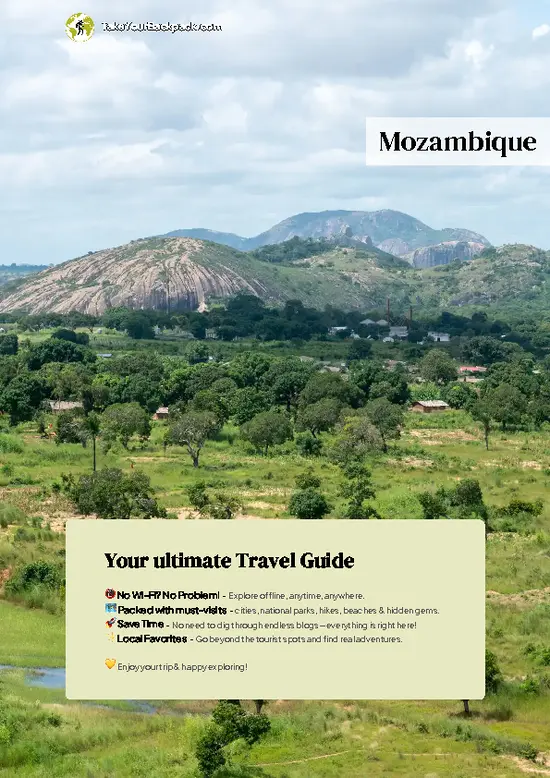
example page 0 from our offline Travel Guide for Mozambique
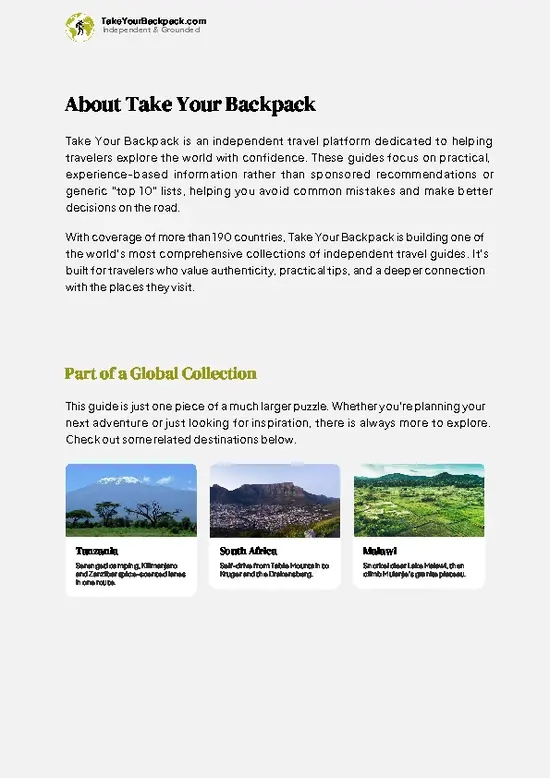
example page 1 from our offline Travel Guide for Mozambique
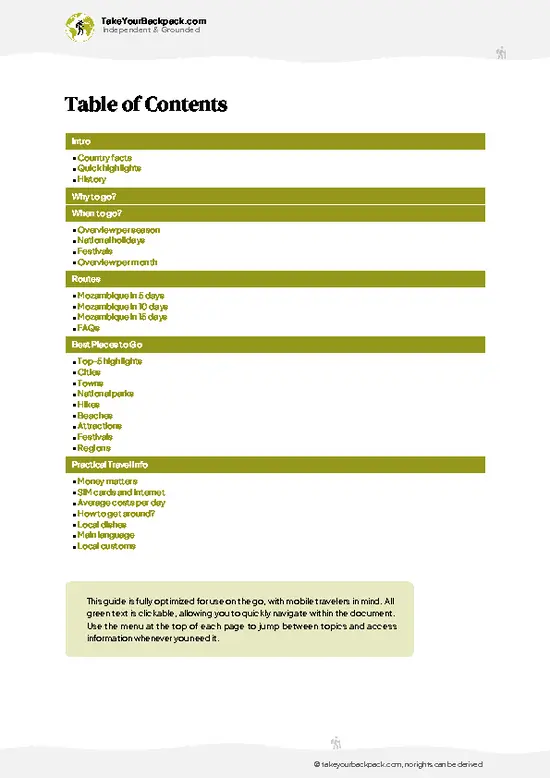
example page 2 from our offline Travel Guide for Mozambique
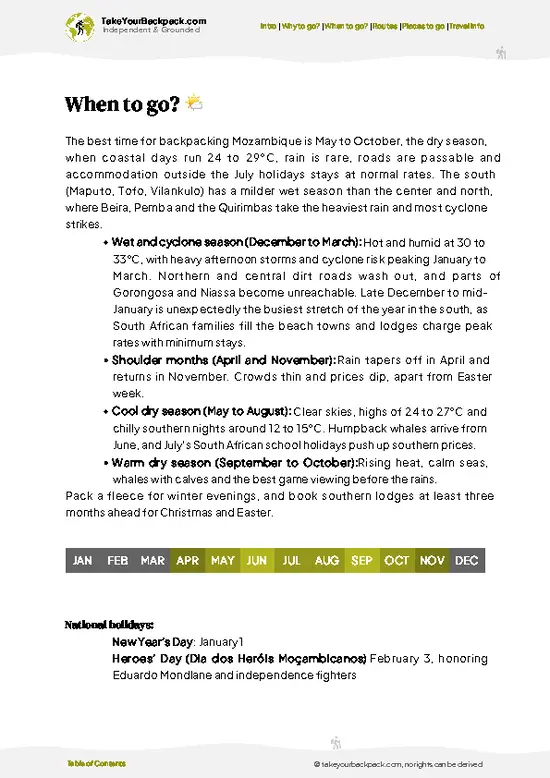
example page 3 from our offline Travel Guide for Mozambique
example page 4 from our offline Travel Guide for Mozambique
example page 5 from our offline Travel Guide for Mozambique
example page 6 from our offline Travel Guide for Mozambique
example page 7 from our offline Travel Guide for Mozambique
The digital guide (345 pages) contains:
86 highlights, ranked by travel appeal
Optimized 5, 10 & 15-day travel routes
Cities, national parks, landmarks, beaches
How to get around
Offline-friendly for travel without Wi-Fi
👉 Click to see all 30+ guide features

📅 Plan smarter in minutes, not weeks
Month by month travel advice
Festivals & national holidays
Budget expectations

🗺️ Go to the right places, skip the overrated ones
Honest pros & cons of destinations
Top hikes, parks & viewpoints
Lesser-known places most travelers miss
Clear “worth it vs skip it” guidance

🛏️ Travel smoothly without rookie mistakes
Best areas to stay
Transport systems explained simply
Common scams & safety advice
SIM cards, money & practical tips

🌍 Understand the country, not just visit it
Culture & traditions
52 Essential phrases & customs
Festivals worth planning around
Traveler-friendly historical context
Insights that make places more meaningful

📱 Built for real travel conditions
Fully downloadable PDF
Works completely offline
Optimized for phone use
Useful in remote areas & buses
Everything in one place
Save weeks of stressful planning
Get instant access to your full guide. 30‑day money-back guarantee.


By proceeding you agree to our terms.
Sent to your inbox immediately after payment • 100% Secure Checkout
Best Backpacking Travel Advisor 2025 tourism awardBest Backpacking
Travel Advisor
2025
What others say about Take Your Backpack Guides:
⭐⭐⭐⭐⭐
Fantastic, amazing amount of information!
⭐⭐⭐⭐⭐
My goodness this is amazing, it's what I've been looking for hats off too you!
⭐⭐⭐⭐⭐
I think this is absolutely BRILLIANT
⭐⭐⭐⭐
Very complete and informative. It's still missing places, but I gotta to commend you
⭐⭐⭐⭐⭐
This is truly amazing, thank you, can't wait to explore it with my kids!
⭐⭐⭐⭐⭐
Awesome resource, thank you!
⭐⭐⭐⭐⭐
This is amazing! Can't wait to explore the ones I haven't seen
⭐⭐⭐⭐
I love this! Well done, great idea.
⭐⭐⭐⭐⭐
Thanks for taking the time to make this gem!
⭐⭐⭐⭐⭐
This might be the best website I've ever seen.
⭐⭐⭐⭐⭐
Congratulations, and thank you so much for your work; it's incredibly valuable.
⭐⭐⭐⭐
In all seriousness I think you did a great job pointing out the important spots
⭐⭐⭐⭐⭐
10/10 very good
⭐⭐⭐⭐⭐
As someone who's only just starting to visit regularly this is awesome, thank you.
⭐⭐⭐⭐
Thank you very much! I'm going to visit my dad, it's going to be very useful!
⭐⭐⭐⭐⭐
This is really cool! We'll be travelling for the first time and this definitely come in handy.
⭐⭐⭐⭐⭐
You are now our minister of culture, congratulations 👨‍💼
⭐⭐⭐⭐⭐
Just wanted to tell you that this is a pearl! Going to follow your recommendations.
⭐⭐⭐⭐⭐
This is so cool. I'll definitely be using the resource for my travels soon.
⭐⭐⭐⭐⭐
This is very impressive! Good work.
⭐⭐⭐⭐⭐
This is an amazing and informative site. Very well done!

🛏️ Where to stay?Where to Stay in Mozambique

Hostels in Mozambique and other budget accommodation are widely available, concentrated in Maputo (Baixa/City Centre and Polana), Tofo/Inhambane, Vilanculos, Ilha de Moçambique, Ponta do Ouro and Nampula.
Maputo has the most options with good transport links and nightlife but can be pricier and less safe after dark; Tofo/Inhambane and Vilanculos are best for diving, beaches and backpacker social life but get crowded in high season and have basic infrastructure; Ilha de Moçambique and Nampula are quieter and cheaper with historic or gateway value but offer very limited facilities and transport; Ponta do Ouro offers diving and weekend nightlife but is quieter on weekdays and requires careful … read more 👉
Hostels in Mozambique and other budget accommodation are widely available, concentrated in Maputo (Baixa/City Centre and Polana), Tofo/Inhambane, Vilanculos, Ilha de Moçambique, Ponta do Ouro and Nampula.
Maputo has the most options with good transport links and nightlife but can be pricier and less safe after dark; Tofo/Inhambane and Vilanculos are best for diving, beaches and backpacker social life but get crowded in high season and have basic infrastructure; Ilha de Moçambique and Nampula are quieter and cheaper with historic or gateway value but offer very limited facilities and transport; Ponta do Ouro offers diving and weekend nightlife but is quieter on weekdays and requires careful border/transfer planning.
Book ahead for high season, carry cash, expect simple rooms with intermittent power and variable Wi‑Fi, and plan transfers and activities in advance to avoid being stranded.

If you enjoy meeting fellow travelers, consider choosing hostels with high ratings for atmosphere. On the other hand, if you prefer having your own space, a hotel might be a better option.

MozambiqueMore of Mozambique

👋 Meet the founderWho’s Behind Take Your Backpack?

Johan, backpacker and founder of TakeYourBackpackHi, I’m Johan (Netherlands 🇳🇱), the creator of TakeYourBackpack. Over the past decade, I’ve backpacked through 80+ countries across six continents, gaining extensive experience with independent travel, long-term trips, and overland routes.

This site is built on a combination of firsthand travel experience and carefully curated insights from other backpackers. Many guides are based on places I’ve personally visited, while others bring together tips, observations, and practical advice shared by trusted travelers I’ve met along the way.

The goal is to provide realistic, experience-driven guidance — not generic itineraries — so you can explore destinations with better context, clearer expectations, and more confidence.

Get full Mozambique guide •
Instant download • 86 highlights • Full Offline guide