×

Myanmar🇲🇲 | attractionsBagan Archaeological Museumancient artifacts, temple models, mural fragments | things to do and best time to go

Explore Mandalay PalaceExplore National Museum Yangon

Backpacking in Bagan Archaeological Museum
🏆 Top pickattraction ranked #1
By Johan Kruseman 🇳🇱 | Updated May 18, 2026

Everyone shows up at the Bagan Archaeological Museum expecting some Indiana Jones moment—ancient relics, mystical secrets, maybe a selfie with a thousand-year-old Buddha. Here’s the truth: the museum’s not the main event in Bagan, and it never will be. The real magic is what happens when you step outside and realize this place is the nerve center for understanding the bones of an empire that shaped Myanmar. The museum itself sits right in Old Bagan, surrounded by the sprawl of temples and pagodas that make this region famous. For backpackers, it’s a mixed bag (and yes, I mean that literally—expect to check your backpack at the door). The exhibits are solid, especially if you want context for what you’re seeing in the fields, but the crowds can be thick with tour groups, and the entry fee is steeper than most local attractions. Still, if you want to connect the dots between the ruins and the civilization that built them, this is where you get the backstory. It’s not the wildest adrenaline rush in Myanmar, but it’s a reality check that makes the rest of Bagan’s magic hit harder.

Discover everything you want to know in the 📖 Myanmar Travel Guide.
Safety warning

The current risk level for Myanmar is high. Check the advice before going.


Get your Myanmar guide
110 ranked highlights, routes & tips, works offline (405 pages)
Loading the map 🌍
CLICK TO FILTER
cities
towns
landmarks
national parks
hikes
beaches
attractions
festivals
regions
SHOW COUNTRY’S BESTSHOW ALL

✨ Why go?
Ranked #1 attraction in Myanmar
Why visitors keep coming back

The Bagan Archaeological Museum isn’t just another stop on the Myanmar backpacker trail—it’s a checkpoint for anyone serious about understanding the country’s soul. Sure, the sprawling temples of Bagan steal the spotlight, but this museum is where the real story gets its depth. It’s not flashy or Instagram-ready, so don’t expect crowds or selfie lines. Instead, you get a quiet, intense dive into the historical layers that built those iconic pagodas. The artifacts here—ancient manuscripts, intricate sculptures, and relics—are the tangible proof of a civilization that shaped Southeast Asia’s religious and cultural landscape.

Backpackers who make time for this place aren’t just ticking a box; they’re connecting dots. It’s a major milestone on the Myanmar route because it grounds the awe of the … read more 👉
The Bagan Archaeological Museum isn’t just another stop on the Myanmar backpacker trail—it’s a checkpoint for anyone serious about understanding the country’s soul. Sure, the sprawling temples of Bagan steal the spotlight, but this museum is where the real story gets its depth. It’s not flashy or Instagram-ready, so don’t expect crowds or selfie lines. Instead, you get a quiet, intense dive into the historical layers that built those iconic pagodas. The artifacts here—ancient manuscripts, intricate sculptures, and relics—are the tangible proof of a civilization that shaped Southeast Asia’s religious and cultural landscape.

Backpackers who make time for this place aren’t just ticking a box; they’re connecting dots. It’s a major milestone on the Myanmar route because it grounds the awe of the temples in real human history. The effort to get here pays off with a richer, more nuanced understanding of Bagan’s significance. If you want to move beyond surface-level beauty and grasp why this region mattered centuries ago, the museum is your shortcut to that insight. It’s the kind of place that rewards patience and curiosity with a genuine sense of discovery.
Want to include Bagan Archaeological Museum in your Myanmar route?
Create a personalized Myanmar itinerary that includes Bagan Archaeological Museum and the places that fit your trip — based on your travel style, budget, and available time. Get your route in seconds.

Generate my trip

💡 HighlightsDon't-miss highlights and experiences

The Original Bagan Relics Room
Let’s cut through the travel brochure fog: most people come to Bagan for the temples, not the museum. But if you want to see the bones of Bagan’s history—literally—this is where the story gets real. The Relics Room houses original stone inscriptions, ancient Buddha images, and relics excavated from the pagodas themselves. These aren’t replicas or tourist-friendly facsimiles; these are the actual objects that survived centuries of conquest, earthquakes, and monsoon rot. The energy in this room is dense. You’re face-to-face with the physical evidence that Bagan was a powerhouse of Southeast Asian civilization, not just a pretty backdrop for sunrise photos.


The Pagan-Era Mural Fragments
Instagram can’t show you this: the museum’s collection of mural fragments, … read more 👉
The Original Bagan Relics Room
Let’s cut through the travel brochure fog: most people come to Bagan for the temples, not the museum. But if you want to see the bones of Bagan’s history—literally—this is where the story gets real. The Relics Room houses original stone inscriptions, ancient Buddha images, and relics excavated from the pagodas themselves. These aren’t replicas or tourist-friendly facsimiles; these are the actual objects that survived centuries of conquest, earthquakes, and monsoon rot. The energy in this room is dense. You’re face-to-face with the physical evidence that Bagan was a powerhouse of Southeast Asian civilization, not just a pretty backdrop for sunrise photos.


The Pagan-Era Mural Fragments
Instagram can’t show you this: the museum’s collection of mural fragments, rescued from crumbling temples, is a crash course in Bagan’s lost color and artistry. The fragments are battered, sure, but the pigment and detail that remain are a gut-punch reminder that Bagan’s temples were once riotously painted, not the sun-bleached brick you see today. You get a rare, unfiltered look at the original visual language—mythical beasts, courtly processions, and Buddhist cosmology—rendered in a style that’s both alien and familiar. If you want to understand what’s missing from the ruins outside, start here.


The Royal Regalia Display
This is where the museum flexes. The regalia—crowns, scepters, and ritual objects—are not just shiny distractions. They’re proof that Bagan’s kings played for keeps. The craftsmanship is meticulous, but what really lands is the sense of ambition and self-mythologizing. These objects were designed to project power, intimidate rivals, and dazzle the faithful. You can almost hear the clink of gold and the hush of a royal procession. It’s a reminder that Bagan wasn’t just a religious center; it was a stage for political theater.


The Model of Ancient Bagan
Forget the drone shots—this scale model is the only way to grasp the true sprawl of ancient Bagan. It’s not just a map; it’s a time machine. You can trace the river, spot the major temples, and see how the city was engineered to impress both pilgrims and invaders. The model is a reality check: Bagan was a metropolis, not a sleepy backwater. It’s the best tool for decoding the chaos of the site before you head out to the real thing. This one’s my personal favorite—nothing else gives you such a clear, tactile sense of the city’s original ambition.


The Epigraphy Gallery
If you’re the type who wants receipts, the Epigraphy Gallery is your proof. Here, you’ll find stone inscriptions in Old Burmese, Pali, and Mon—some of the oldest written records in Myanmar. These aren’t just dry artifacts; they’re the tweets and status updates of their day, recording donations, royal decrees, and the occasional curse. The gallery is a crash course in how Bagan’s rulers used language to cement their legacy. It’s dense, but if you want to get under the skin of Bagan’s history, this is where the real voices live.
Spotted a mistake or missing something? Contact us.

Things to do around Bagan Archaeological Museum

Ratings based on Tripadvisor reviews. When you book through this link, you support our work at no extra cost to you.

🌤️ When to go?Seasonal considerations and timing


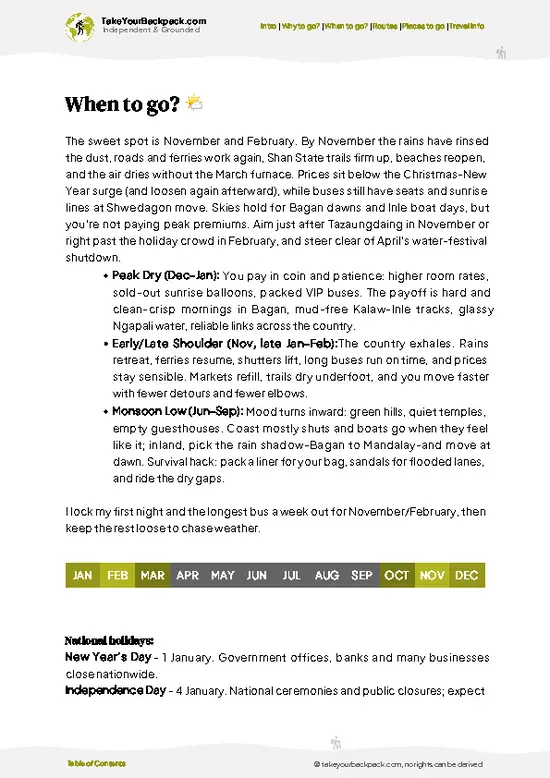
  • Weather: The best time to visit Bagan Archaeological Museum is during the cool, dry season from November to February. Expect clear skies and minimal rain, which means no soggy shoes or ruined photos. Avoid the monsoon months of June to September when heavy rains can make exploring miserable and some areas muddy and slippery.

  • Temperature: From November to February, temperatures hover between 20-30°C (68-86°F), perfect for wandering without melting. The hot season from March to May can push temps above 40°C (104°F), turning your visit into a sweaty slog.

  • Daylight Hours: Daylight is fairly consistent year-round, roughly 11 to 12 hours daily. Early mornings and late afternoons are your best bets to avoid the heat and catch the museum in softer light.

  • Crowds: Peak tourist season aligns
read more 👉

  • Weather: The best time to visit Bagan Archaeological Museum is during the cool, dry season from November to February. Expect clear skies and minimal rain, which means no soggy shoes or ruined photos. Avoid the monsoon months of June to September when heavy rains can make exploring miserable and some areas muddy and slippery.

  • Temperature: From November to February, temperatures hover between 20-30°C (68-86°F), perfect for wandering without melting. The hot season from March to May can push temps above 40°C (104°F), turning your visit into a sweaty slog.

  • Daylight Hours: Daylight is fairly consistent year-round, roughly 11 to 12 hours daily. Early mornings and late afternoons are your best bets to avoid the heat and catch the museum in softer light.

  • Crowds: Peak tourist season aligns with the cool months, so expect more visitors from November to February. If you want fewer people, aim for shoulder months like October or March, but be ready for warmer weather.

  • Seasonal Activities: The museum itself is steady year-round, but nearby festivals like the Ananda Pagoda Festival in January add cultural depth if your timing is right.

  • Price Fluctuations: Entrance fees and local prices tend to rise slightly during peak season. Booking accommodations early in the cool months can save you some cash and hassle.


Pro-tip: Visit early in the morning during the cool season to beat both the crowds and the heat, making your museum experience far more enjoyable and immersive.


source: climatestotravel.comJANJanuary: excellent for travelingFEBFebruary: excellent for travelingMARMarch: highly recommended for travelingAPRApril: fair for travelingMAYMay: fair for travelingJUNJune: below average for travelingJULJuly: below average for travelingAUGAugust: below average for travelingSEPSeptember: below average for travelingOCTOctober: highly recommended for travelingNOVNovember: excellent for travelingDECDecember: excellent for traveling
when-to-go

✈️ The backpacker research shortcutMyanmar Travel Guide

An offline-friendly backpacking guide with optimized travel routes, ranked highlights, transport advice, and the best areas to stay.
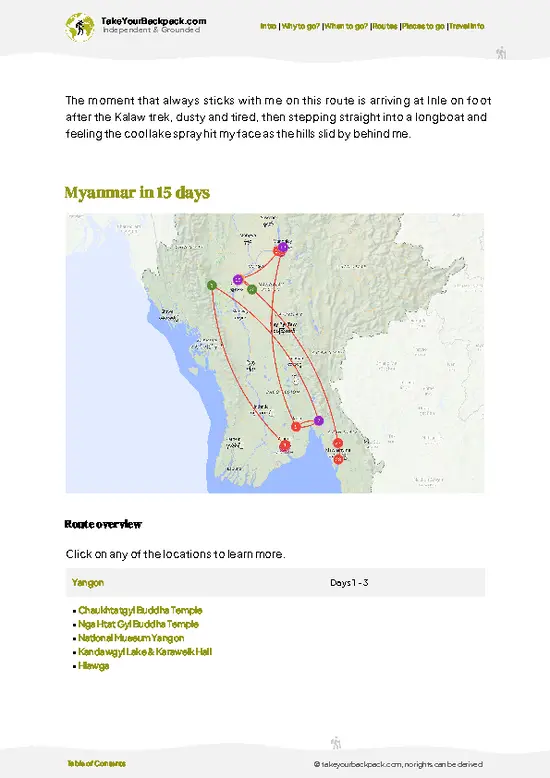
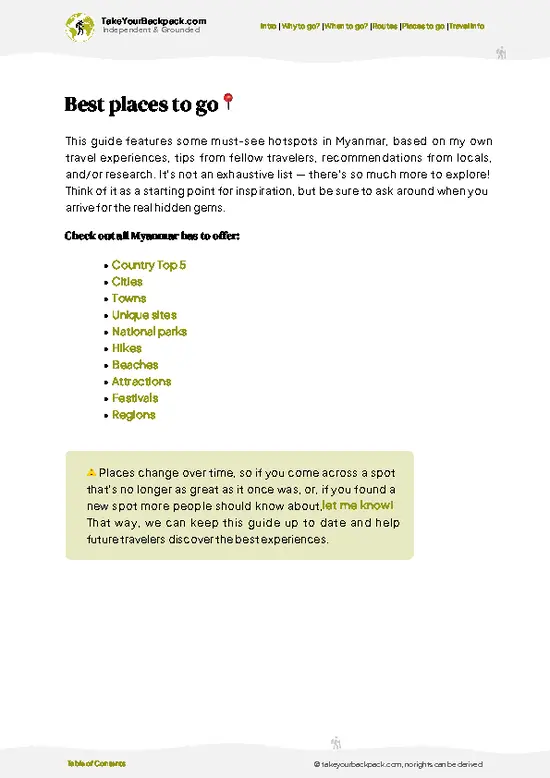
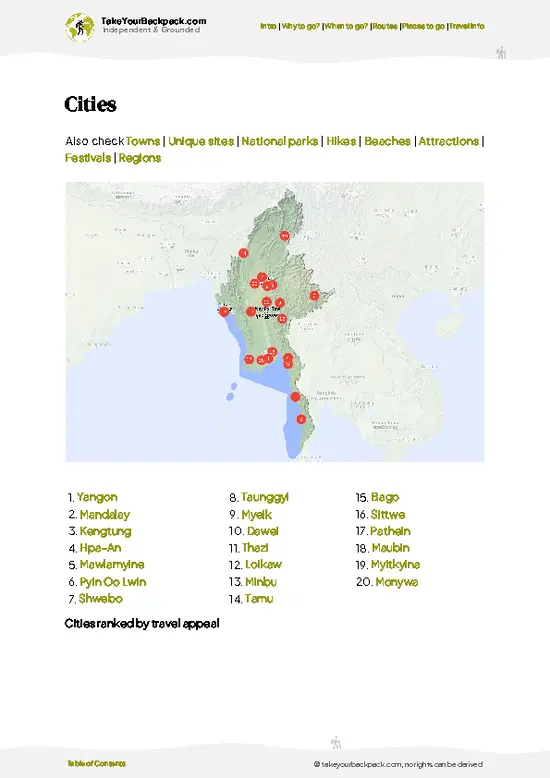
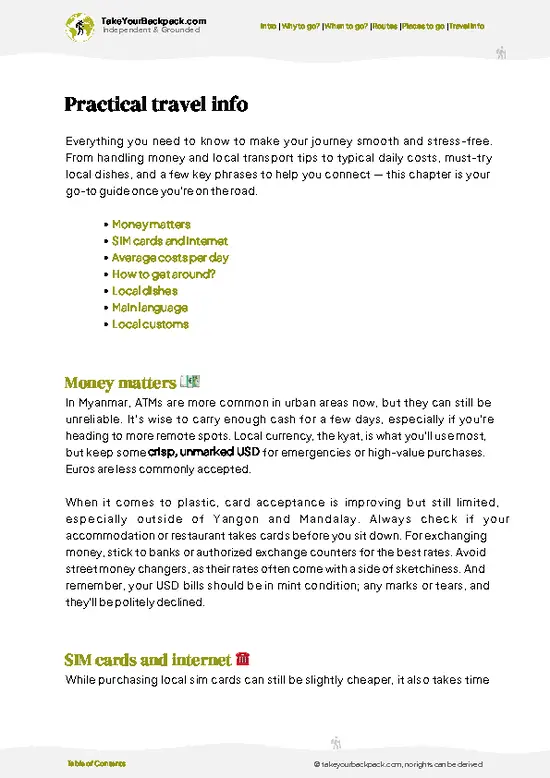
example page 0 from our offline Travel Guide for Myanmar
example page 1 from our offline Travel Guide for Myanmar
example page 2 from our offline Travel Guide for Myanmar
example page 3 from our offline Travel Guide for Myanmar
example page 4 from our offline Travel Guide for Myanmar
example page 5 from our offline Travel Guide for Myanmar
example page 6 from our offline Travel Guide for Myanmar
example page 7 from our offline Travel Guide for Myanmar
The digital guide (405 pages) contains:
110 highlights, ranked by travel appeal
Optimized 5, 10 & 15-day travel routes
Cities, national parks, landmarks, beaches
How to get around
Offline-friendly for travel without Wi-Fi
👉 Click to see all 30+ guide features

📅 Plan smarter in minutes, not weeks
Month by month travel advice
Festivals & national holidays
Budget expectations

🗺️ Go to the right places, skip the overrated ones
Honest pros & cons of destinations
Top hikes, parks & viewpoints
Lesser-known places most travelers miss
Clear “worth it vs skip it” guidance

🛏️ Travel smoothly without rookie mistakes
Best areas to stay
Transport systems explained simply
Common scams & safety advice
SIM cards, money & practical tips

🌍 Understand the country, not just visit it
Culture & traditions
52 Essential phrases & customs
Festivals worth planning around
Traveler-friendly historical context
Insights that make places more meaningful

📱 Built for real travel conditions
Fully downloadable PDF
Works completely offline
Optimized for phone use
Useful in remote areas & buses
Everything in one place
Save weeks of stressful planning
Get instant access to your full guide. 30‑day money-back guarantee.


By proceeding you agree to our terms.
Sent to your inbox immediately after payment • 100% Secure Checkout
Best Backpacking Travel Advisor 2025 tourism awardBest Backpacking
Travel Advisor
2025
What others say about Take Your Backpack Guides:
⭐⭐⭐⭐⭐
Fantastic, amazing amount of information!
⭐⭐⭐⭐⭐
My goodness this is amazing, it's what I've been looking for hats off too you!
⭐⭐⭐⭐⭐
I think this is absolutely BRILLIANT
⭐⭐⭐⭐
Very complete and informative. It's still missing places, but I gotta to commend you
⭐⭐⭐⭐⭐
This is truly amazing, thank you, can't wait to explore it with my kids!
⭐⭐⭐⭐⭐
Awesome resource, thank you!
⭐⭐⭐⭐⭐
This is amazing! Can't wait to explore the ones I haven't seen
⭐⭐⭐⭐
I love this! Well done, great idea.
⭐⭐⭐⭐⭐
Thanks for taking the time to make this gem!
⭐⭐⭐⭐⭐
This might be the best website I've ever seen.
⭐⭐⭐⭐⭐
Congratulations, and thank you so much for your work; it's incredibly valuable.
⭐⭐⭐⭐
In all seriousness I think you did a great job pointing out the important spots
⭐⭐⭐⭐⭐
10/10 very good
⭐⭐⭐⭐⭐
As someone who's only just starting to visit regularly this is awesome, thank you.
⭐⭐⭐⭐
Thank you very much! I'm going to visit my dad, it's going to be very useful!
⭐⭐⭐⭐⭐
This is really cool! We'll be travelling for the first time and this definitely come in handy.
⭐⭐⭐⭐⭐
You are now our minister of culture, congratulations 👨‍💼
⭐⭐⭐⭐⭐
Just wanted to tell you that this is a pearl! Going to follow your recommendations.
⭐⭐⭐⭐⭐
This is so cool. I'll definitely be using the resource for my travels soon.
⭐⭐⭐⭐⭐
This is very impressive! Good work.
⭐⭐⭐⭐⭐
This is an amazing and informative site. Very well done!

🛏️ Where to stay?Best areas and accommodation options

If you’re heading to the Bagan Archaeological Museum, brace yourself: this isn’t a quiet, off-the-beaten-path hideaway. The area around New Bagan, just a few kilometers from the museum, is where most backpackers land. It’s the practical choice—safe, easy to navigate, and packed with guesthouses and budget spots that cater to solo travelers and groups alike. You’ll find a decent social scene here, with fellow backpackers swapping stories over cheap beers or planning sunrise temple runs. It’s not a party town, but it’s lively enough to keep you connected without feeling like a tourist trap.

Old … read more 👉
If you’re heading to the Bagan Archaeological Museum, brace yourself: this isn’t a quiet, off-the-beaten-path hideaway. The area around New Bagan, just a few kilometers from the museum, is where most backpackers land. It’s the practical choice—safe, easy to navigate, and packed with guesthouses and budget spots that cater to solo travelers and groups alike. You’ll find a decent social scene here, with fellow backpackers swapping stories over cheap beers or planning sunrise temple runs. It’s not a party town, but it’s lively enough to keep you connected without feeling like a tourist trap.

Old Bagan, closer to the temples themselves, offers a different vibe. It’s quieter, more atmospheric, but also pricier and less social. If you want to be near the ruins at dawn without the crowds, this is your spot. But for budget travelers looking to meet people and keep costs down, New Bagan wins hands down.

Don’t expect luxury or endless nightlife. The charm here is in the dusty roads, the slow pace, and the chance to wake up to a landscape dotted with thousands of ancient pagodas. Staying near the museum means you’re close to the history, but also plugged into the backpacker circuit that makes Bagan feel like a shared adventure, not just a photo op.

👛 Costs (as of 11 January 2026)Money, prices, and spending tips

The Bagan Archaeological Museum charges an entrance fee of 5,000 MMK (approximately €2.50) for foreign visitors. This fee is typically included in the Bagan Archaeological Zone ticket, which costs 25,000 MMK (approximately €12.50) and is valid for multiple days. ([asiazawgyitravels.com](https://www.asiazawgyitravels.com/our-services/museum-and-attraction-ticket/?utm_source=openai))

source: asiazawgyitravels.com
⚠️ Prices can change and everyone travels differently, so take this as a rough guide. Hope it helps you plan your adventure!

Other Burmese attractions near Bagan Archaeological Museum

Explore more nearby:

  • Shwesandaw Pagoda—steep staircases, sunset viewpoint, whitewashed terraces| 1 km away
  • Ananda Temple—symmetrical architecture, gilded spires, sandstone reliefs| 1 km away
  • Dhammayangyi Temple—massive brickwork, mysterious corridors, unfinished interior| 2 km away

💡 Not sure where to go next?
Create a personalized itinerary for Myanmar including Bagan Archaeological Museum and the places that fit your trip.

Generate my itinerary

👉 Discover all attractions

Or checkout all Myanmar has to offer (think cities, towns, villages, national parks, hikes, beaches, festivals)
Country photo of Myanmar

We 💚 feedbackWhat to keep in mind

The Bagan Archaeological Museum isn’t just a dusty relic stop—it’s where the real story of Bagan’s temples comes alive through artifacts that put the sprawling ruins into sharp, human perspective. But heads up: it can feel a bit sterile compared to the raw energy outside, and the entry fee isn’t exactly pocket change. Still, if you want to understand why those temples matter beyond the postcard, this place is worth carving out an hour.

✈️ When did I visit Myanmar?
In November 2013 I backpacked through Myanmar, bringing a full stack of pristine dollar bills as they had no ATMs back then.

✍️ Help improve this page!
The information on this page is based on my own backpacking experience in Myanmar, supplemented with up-to-date research and feedback from other travelers. Travel details can change, so if you notice anything outdated or incomplete, feel free to let me know.


🙋‍♂️ Give feedback

👋 Meet the founderWho’s Behind Take Your Backpack?

Johan, backpacker and founder of TakeYourBackpackHi, I’m Johan (Netherlands 🇳🇱), the creator of TakeYourBackpack. Over the past decade, I’ve backpacked through 80+ countries across six continents, gaining extensive experience with independent travel, long-term trips, and overland routes.

This site is built on a combination of firsthand travel experience and carefully curated insights from other backpackers. Many guides are based on places I’ve personally visited, while others bring together tips, observations, and practical advice shared by trusted travelers I’ve met along the way.

The goal is to provide realistic, experience-driven guidance — not generic itineraries — so you can explore destinations with better context, clearer expectations, and more confidence.

Get full Myanmar guide •
Instant download • 110 highlights • Full Offline guide