×

Myanmar🇲🇲 | best attractionsTop-Rated 10 attractions in Myanmar

Myanmar (previously Burma) offers a distinct set of attractions shaped by its complex history, diverse landscapes, and regional disparities that directly influence a backpacker’s journey. Understanding the seasonal rhythms—from the dry, cooler months in the central plains to the monsoon-soaked coastal regions—is crucial for timing visits to key sites without wasting energy on weather-related delays. The geographic spread means that attractions in Yangon, Bagan, and Inle Lake each demand different levels of effort, budget, and local navigation skills. Choosing the right destination affects not just the vibe and cultural immersion, but also practical concerns like safety, transport reliability, and accommodation options—all vital for independent travel in Myanmar.

By Johan Kruseman 🇳🇱 | Updated June 7, 2026
Explore the best festivals in Myanmar

Why go?Key Factors That Shape the Experience

Why These Attractions Matter

Myanmar’s attractions stand apart because they demand a deliberate pace and a willingness to navigate infrastructural challenges. Unlike destinations where rapid transit and polished tourist circuits dominate, Myanmar offers a raw, often rugged experience shaped by its complex history and geography. The country’s cultural sites are deeply intertwined with centuries of Buddhist tradition and colonial legacies, providing layers of meaning that reward those who invest time in understanding local contexts rather than skimming surface-level highlights.

Travelers should recognize that accessibility is uneven. Roads can be rough, and public transport options limited, which means reaching many attractions requires patience and flexibility. This trade-off often results in … read more 👉
Why These Attractions Matter

Myanmar’s attractions stand apart because they demand a deliberate pace and a willingness to navigate infrastructural challenges. Unlike destinations where rapid transit and polished tourist circuits dominate, Myanmar offers a raw, often rugged experience shaped by its complex history and geography. The country’s cultural sites are deeply intertwined with centuries of Buddhist tradition and colonial legacies, providing layers of meaning that reward those who invest time in understanding local contexts rather than skimming surface-level highlights.

Travelers should recognize that accessibility is uneven. Roads can be rough, and public transport options limited, which means reaching many attractions requires patience and flexibility. This trade-off often results in fewer crowds and a more authentic encounter but comes at the cost of convenience. The climate further complicates timing; monsoon seasons can render some routes impassable, while the dry season’s heat can be intense, influencing when and how long visitors can comfortably explore.

Myanmar’s attractions are less about quick sightseeing and more about immersive engagement. The country’s slower pace and less commercialized tourism infrastructure mean that visitors must be prepared for logistical hurdles and occasional unpredictability. However, these constraints preserve the integrity of the experience, allowing travelers to connect with Myanmar’s cultural and natural landscapes in a way that more developed destinations cannot replicate. Understanding these trade-offs upfront is essential to making the most of what Myanmar uniquely offers.
Our Approach to Ranking
The list of best attractions in Myanmar is created based on cultural significance or entertainment value. If you feel a attraction is missing in this list, please let us know.

When to go?Timing Your Visit for the Best Experience

Seasonal Patterns and Their Impact on Myanmar’s Attractions


Myanmar’s climate is dominated by a clear division between the wet and dry seasons, which shapes the experience of visiting its attractions. The dry season offers the most reliable weather, with lower humidity and minimal rainfall, making it the safest bet for exploring outdoor sites without interruption. Temperatures remain warm but manageable, allowing for longer days outside without the discomfort of heavy rain or oppressive heat.

The wet season, by contrast, brings heavy monsoon rains that can disrupt travel plans and limit access to certain areas. Roads may become muddy or impassable, and some attractions may close or be less enjoyable due to the weather. However, this period also transforms the landscape, turning it lush and … read more 👉

Seasonal Patterns and Their Impact on Myanmar’s Attractions


Myanmar’s climate is dominated by a clear division between the wet and dry seasons, which shapes the experience of visiting its attractions. The dry season offers the most reliable weather, with lower humidity and minimal rainfall, making it the safest bet for exploring outdoor sites without interruption. Temperatures remain warm but manageable, allowing for longer days outside without the discomfort of heavy rain or oppressive heat.

The wet season, by contrast, brings heavy monsoon rains that can disrupt travel plans and limit access to certain areas. Roads may become muddy or impassable, and some attractions may close or be less enjoyable due to the weather. However, this period also transforms the landscape, turning it lush and green, which can appeal to travelers willing to accept the trade-offs.

Shoulder seasons—those transitional periods just before or after the peak dry months—offer a mixed bag. Crowds tend to be thinner, and prices for accommodations and tours may drop, but the weather can be unpredictable. Visitors during these times should prepare for occasional showers and fluctuating temperatures, balancing the benefits of fewer tourists against the risk of less stable conditions.

Peak travel periods align closely with the dry season’s heart, when the weather is most dependable. This means higher demand and costs, but also the smoothest access to Myanmar’s attractions. Planning around these seasonal rhythms is essential to avoid wasting energy and budget on weather-related setbacks.

attraction hoppingOptimizing Your Multi-Stop Itinerary

Efficiently Combining Myanmar’s Attractions

Travelers aiming to cover Myanmar’s highlights should think regionally, grouping destinations by geographic proximity to avoid backtracking. The country naturally divides into clusters: the cultural heartland around Mandalay and Bagan, the bustling urban experience in Yangon, and the serene landscapes of Inle Lake and the Shan Hills. Moving in a logical flow—often north to south or vice versa—minimizes wasted travel time and preserves energy for exploration.

Expect to spend at least two full days at major cultural sites to absorb their scale and history without rushing. Nature and lake regions typically demand a similar pace, allowing for slow mornings and afternoon treks or boat rides. Attempting to cram too many stops into a short window leads … read more 👉

Efficiently Combining Myanmar’s Attractions

Travelers aiming to cover Myanmar’s highlights should think regionally, grouping destinations by geographic proximity to avoid backtracking. The country naturally divides into clusters: the cultural heartland around Mandalay and Bagan, the bustling urban experience in Yangon, and the serene landscapes of Inle Lake and the Shan Hills. Moving in a logical flow—often north to south or vice versa—minimizes wasted travel time and preserves energy for exploration.

Expect to spend at least two full days at major cultural sites to absorb their scale and history without rushing. Nature and lake regions typically demand a similar pace, allowing for slow mornings and afternoon treks or boat rides. Attempting to cram too many stops into a short window leads to superficial visits and travel fatigue.

Common pitfalls include underestimating travel times on Myanmar’s often unpredictable roads and overloading itineraries with distant locations that require multiple transport modes. Balancing speed with depth means accepting fewer stops but richer experiences. Budget constraints often force choices between comfort and convenience; opting for faster flights can save time but at a higher cost, while slower buses require patience but stretch funds.

Flexibility is key. Weather, local festivals, and transport schedules can shift plans unexpectedly. Prioritize strategic planning over rigid timetables to maintain momentum without sacrificing the moments that make Myanmar’s attractions truly worthwhile.

The ListTop attractions of Myanmar

1 Bagan Archaeological Museum

ancient artifacts, temple models, mural fragments

Discover the evolution of Bagan’s religious art and craftsmanship through curated displays of relics, sculptures, and historical objects.

2 Ananda Temple

symmetrical architecture, gilded spires, sandstone reliefs

Admire intricate stone carvings and golden Buddha images while wandering through cool corridors of this well-preserved Buddhist sanctuary.

3 Dhammayangyi Temple

massive brickwork, mysterious corridors, unfinished interior

Walk through shadowy passageways and examine the precise masonry of Bagan’s largest temple, known for its enigmatic construction.

4 Sulamani Temple

frescoed walls, arched corridors, brick lattice windows

Examine faded murals and walk through airy passageways, noting the blend of architectural styles and filtered natural light.

5 Htilominlo Temple

red brick façade, glazed plaques, tiered terraces

Climb narrow stairways to upper levels for panoramic views and study decorative plaques depicting Buddhist stories along the walls.

6 Shwesandaw Pagoda

steep staircases, sunset viewpoint, whitewashed terraces

Climb to upper terraces for sweeping views of Bagan’s temple plain, especially striking at sunrise or sunset.

7 U Bein Bridge

teakwood span, lakeside silhouettes, local crossings

Cross the world’s longest teak bridge at dawn or dusk, sharing the walkway with monks, villagers, and fishermen.

8 Kuthodaw Pagoda

marble slabs, Buddhist scriptures, white stupas

Read the world’s largest book inscribed on stone tablets, set among hundreds of small shrines in a tranquil complex.

9 Mahamuni Buddha Temple

bronze Buddha, gold leaf rituals, morning ceremonies

Witness daily rituals as pilgrims apply gold leaf to the revered Buddha image, surrounded by incense and rhythmic chanting.

10 Mandalay Palace

moated citadel, wooden halls, royal artifacts

Tour reconstructed throne rooms and climb the watchtower for a sense of Mandalay’s royal heritage and city layout.

11 Chaukhtatgyi Buddha Temple

reclining Buddha, glass mosaic, spiritual offerings

Observe the immense reclining Buddha statue, detailed with expressive facial features and surrounded by local devotees making offerings.

12 Nga Htat Gyi Buddha Temple

seated Buddha, ornate backdrop, quiet hall

Sit in the spacious hall before a towering Buddha statue, framed by intricate woodwork and peaceful surroundings.

13 Kandawgyi Lake & Karaweik Hall

urban lake, floating palace, city skyline views

Stroll along lakeside paths, photograph the ornate Karaweik barge, and relax with views of Yangon’s skyline reflected in the water.

14 Bogyoke Aung San Museum

colonial residence, personal memorabilia, independence history

Trace the life of Myanmar’s independence leader by viewing original furnishings, family photographs, and rare personal effects.

15 National Museum Yangon

royal regalia, ethnographic displays, ancient manuscripts

View the Lion Throne and explore galleries showcasing Myanmar’s diverse cultures, traditional crafts, and historical treasures.

16 National Theatre of Yangon

performance venue, Burmese drama, cultural events

Attend a live show to experience traditional music, dance, and theatrical performances in a purpose-built cultural space.

Think you know Myanmar?

Prove you’re a true local — uncover 6 lesser-known attractions in Myanmar that locals tend to keep to themselves.
Loading the map 🌍

Expert viewInsights from Locals and Experts

Expert Commentary


When planning your visit to Myanmar’s attractions, the first thing to understand is that less is often more. The country’s appeal lies in its depth, not breadth. Trying to cram in too many sites will drain your energy and budget without letting you savor what makes each place unique. Aim for a handful of well-chosen attractions—three to five is a practical range for most travelers. This allows you to experience the cultural and historical layers without feeling rushed or overwhelmed.

Myanmar’s infrastructure varies widely, and this affects how you prioritize. Roads can be rough, and public transport is often slow and unpredictable. Flights are an option but can be irregular and pricey compared to neighboring countries. This means travel between attractions can take longer … read more 👉

Expert Commentary


When planning your visit to Myanmar’s attractions, the first thing to understand is that less is often more. The country’s appeal lies in its depth, not breadth. Trying to cram in too many sites will drain your energy and budget without letting you savor what makes each place unique. Aim for a handful of well-chosen attractions—three to five is a practical range for most travelers. This allows you to experience the cultural and historical layers without feeling rushed or overwhelmed.

Myanmar’s infrastructure varies widely, and this affects how you prioritize. Roads can be rough, and public transport is often slow and unpredictable. Flights are an option but can be irregular and pricey compared to neighboring countries. This means travel between attractions can take longer and cost more than expected, so factor in extra time and a flexible budget. If you underestimate these logistics, you’ll spend more on transport and less on the experiences themselves. Planning for a slower pace is not a concession but a strategy to preserve your energy and appreciation.

Budget-wise, Myanmar is generally affordable, but costs can spike in tourist-heavy areas or during peak seasons. Entrance fees to major sites are usually modest, but don’t overlook the cumulative expense of guides, permits, and local transportation. Hiring a knowledgeable local guide can enrich your visit and help navigate cultural nuances, but it’s an additional cost that should be anticipated. If you’re on a tighter budget, prioritize fewer attractions and invest in quality experiences rather than quantity.

Cultural sensitivity is paramount. Myanmar’s social fabric is complex, with diverse ethnic groups and religious traditions. Dress codes and behavior expectations vary, especially at religious sites. Modesty is key, and photography restrictions are common. Ignoring these can lead to uncomfortable situations or even being denied entry. Respecting local customs isn’t just polite—it’s essential for a smooth visit. A little preparation here saves you from awkward moments and preserves the dignity of the communities you’re visiting.

Safety considerations are straightforward but non-negotiable. Political tensions and regional conflicts persist in some areas, so sticking to well-traveled routes and official advice is wise. Health infrastructure outside major centers is limited, so bring necessary medications and be prepared for basic conditions. The real risk is overestimating your ability to navigate remote areas without support. Err on the side of caution to avoid disruptions that can derail your trip.

One trade-off to accept is the balance between accessibility and authenticity. The most iconic attractions often attract crowds and commercialism, which can dilute the experience. Conversely, off-the-beaten-path sites offer richer encounters but demand more effort, time, and sometimes a local fixer to arrange access. Deciding where to draw this line depends on your priorities—whether you want polished convenience or raw cultural immersion. Both have value, but mixing them without a plan leads to frustration.

In summary, the key to enjoying Myanmar’s attractions lies in thoughtful selection and realistic expectations. Focus on a manageable number of sites, allow for travel delays, respect cultural norms, and prepare for basic conditions. This approach preserves your resources for the moments that truly matter—the quiet, unhurried encounters with history, spirituality, and everyday life that define Myanmar’s character.

✈️ The backpacker research shortcutMyanmar Travel Guide

An offline-friendly backpacking guide with optimized travel routes, ranked highlights, transport advice, and the best areas to stay.
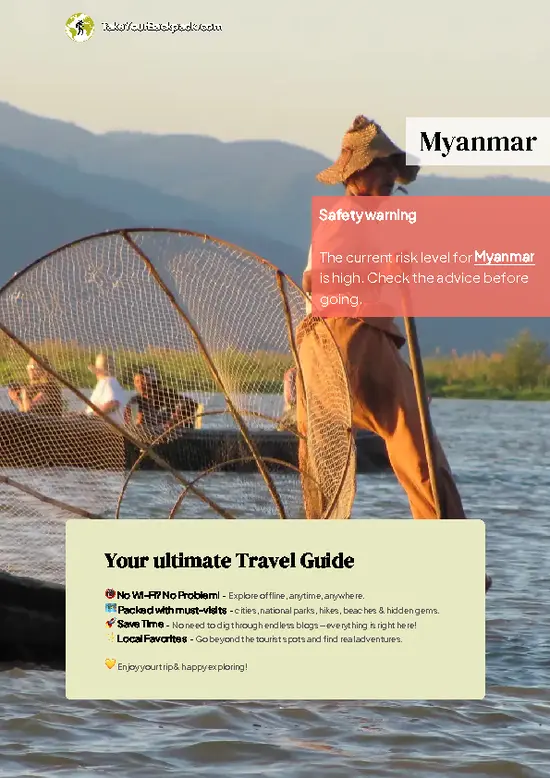
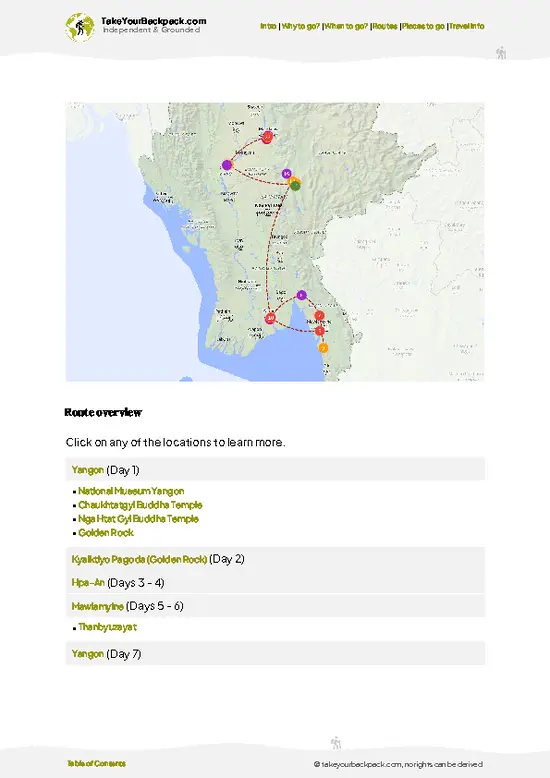
example page 0 from our offline Travel Guide for Myanmar
example page 1 from our offline Travel Guide for Myanmar
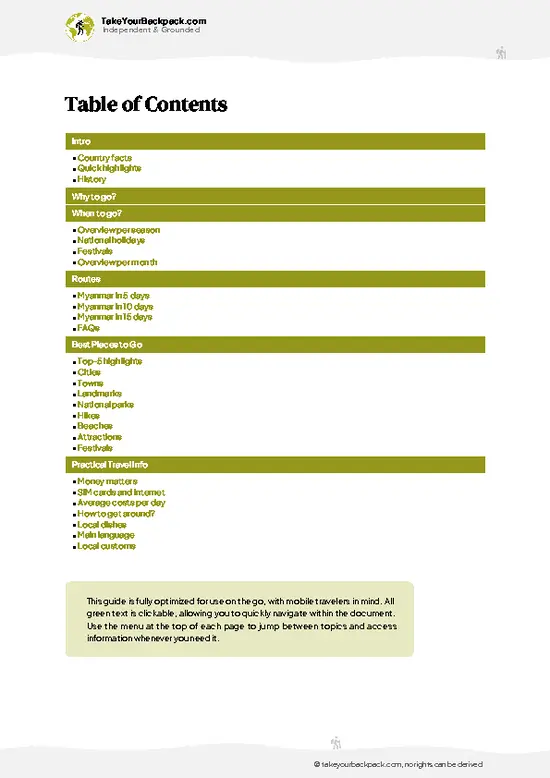
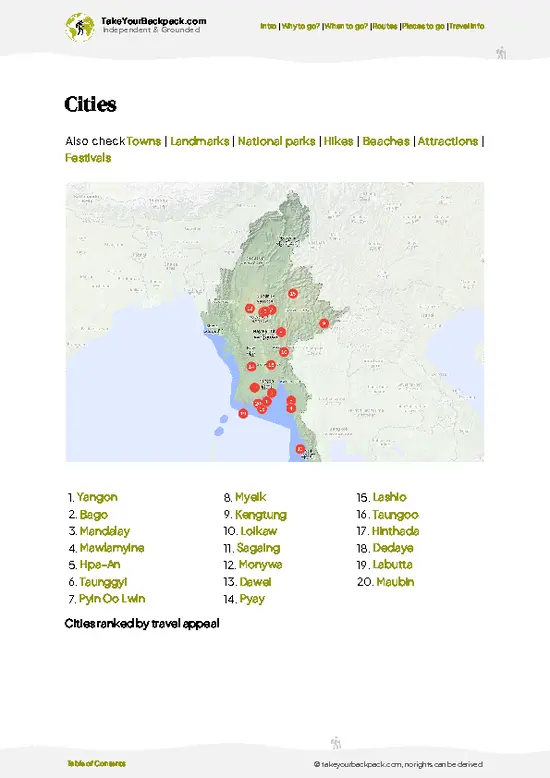
example page 2 from our offline Travel Guide for Myanmar
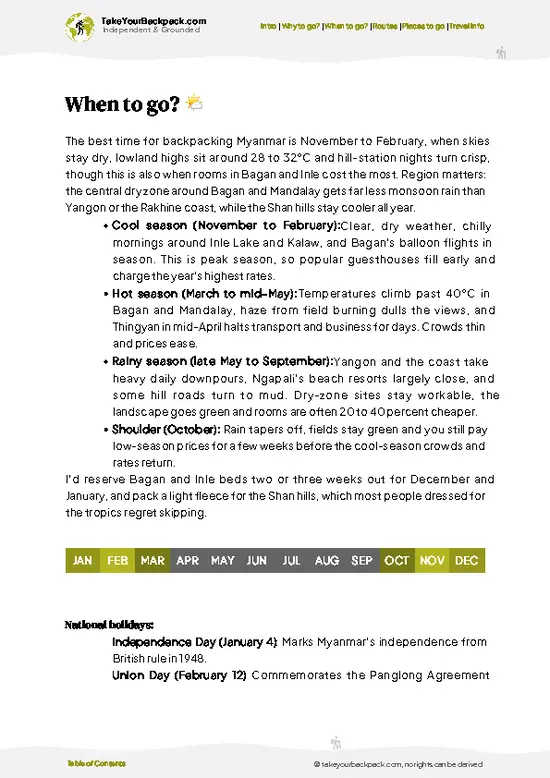
example page 3 from our offline Travel Guide for Myanmar
example page 4 from our offline Travel Guide for Myanmar
example page 5 from our offline Travel Guide for Myanmar
example page 6 from our offline Travel Guide for Myanmar
example page 7 from our offline Travel Guide for Myanmar
The digital guide (405 pages) contains:
110 highlights, ranked by travel appeal
Optimized 5, 10 & 15-day travel routes
Cities, national parks, landmarks, beaches
How to get around
Offline-friendly for travel without Wi-Fi
👉 Click to see all 30+ guide features

📅 Plan smarter in minutes, not weeks
Month by month travel advice
Festivals & national holidays
Budget expectations

🗺️ Go to the right places, skip the overrated ones
Honest pros & cons of destinations
Top hikes, parks & viewpoints
Lesser-known places most travelers miss
Clear “worth it vs skip it” guidance

🛏️ Travel smoothly without rookie mistakes
Best areas to stay
Transport systems explained simply
Common scams & safety advice
SIM cards, money & practical tips

🌍 Understand the country, not just visit it
Culture & traditions
52 Essential phrases & customs
Festivals worth planning around
Traveler-friendly historical context
Insights that make places more meaningful

📱 Built for real travel conditions
Fully downloadable PDF
Works completely offline
Optimized for phone use
Useful in remote areas & buses
Everything in one place
Save weeks of stressful planning
Get instant access to your full guide. 30‑day money-back guarantee.


By proceeding you agree to our terms.
Sent to your inbox immediately after payment • 100% Secure Checkout
Best Backpacking Travel Advisor 2025 tourism awardBest Backpacking
Travel Advisor
2025
What others say about Take Your Backpack Guides:
⭐⭐⭐⭐⭐
Fantastic, amazing amount of information!
⭐⭐⭐⭐⭐
My goodness this is amazing, it's what I've been looking for hats off too you!
⭐⭐⭐⭐⭐
I think this is absolutely BRILLIANT
⭐⭐⭐⭐
Very complete and informative. It's still missing places, but I gotta to commend you
⭐⭐⭐⭐⭐
This is truly amazing, thank you, can't wait to explore it with my kids!
⭐⭐⭐⭐⭐
Awesome resource, thank you!
⭐⭐⭐⭐⭐
This is amazing! Can't wait to explore the ones I haven't seen
⭐⭐⭐⭐
I love this! Well done, great idea.
⭐⭐⭐⭐⭐
Thanks for taking the time to make this gem!
⭐⭐⭐⭐⭐
This might be the best website I've ever seen.
⭐⭐⭐⭐⭐
Congratulations, and thank you so much for your work; it's incredibly valuable.
⭐⭐⭐⭐
In all seriousness I think you did a great job pointing out the important spots
⭐⭐⭐⭐⭐
10/10 very good
⭐⭐⭐⭐⭐
As someone who's only just starting to visit regularly this is awesome, thank you.
⭐⭐⭐⭐
Thank you very much! I'm going to visit my dad, it's going to be very useful!
⭐⭐⭐⭐⭐
This is really cool! We'll be travelling for the first time and this definitely come in handy.
⭐⭐⭐⭐⭐
You are now our minister of culture, congratulations 👨‍💼
⭐⭐⭐⭐⭐
Just wanted to tell you that this is a pearl! Going to follow your recommendations.
⭐⭐⭐⭐⭐
This is so cool. I'll definitely be using the resource for my travels soon.
⭐⭐⭐⭐⭐
This is very impressive! Good work.
⭐⭐⭐⭐⭐
This is an amazing and informative site. Very well done!

🛏️ Where to stay?Where to Base Yourself

Yes — Myanmar has hostels and budget accommodation concentrated in major tourist hubs: Yangon (downtown/Sule/Chinatown), Mandalay (near the palace/Zegyo market), Bagan (Nyaung-U), Inle Lake (Nyaung Shwe), Ngapali (Thandwe), and trekking towns like Hsipaw.
Yangon is cheapest and best for transport, markets and nightlife but can be noisy and crowded; Mandalay gives easy access to the palace and onward transport but has fewer hostel options; Nyaung-U/Bagan puts you closest to temples and bike rental but is touristy and dusty; Nyaung Shwe/Inle offers lakeside access and boat tours yet is more remote with limited nightlife; Ngapali means beach quiet and higher prices with fewer true hostels; Hsipawread more 👉
Yes — Myanmar has hostels and budget accommodation concentrated in major tourist hubs: Yangon (downtown/Sule/Chinatown), Mandalay (near the palace/Zegyo market), Bagan (Nyaung-U), Inle Lake (Nyaung Shwe), Ngapali (Thandwe), and trekking towns like Hsipaw.
Yangon is cheapest and best for transport, markets and nightlife but can be noisy and crowded; Mandalay gives easy access to the palace and onward transport but has fewer hostel options; Nyaung-U/Bagan puts you closest to temples and bike rental but is touristy and dusty; Nyaung Shwe/Inle offers lakeside access and boat tours yet is more remote with limited nightlife; Ngapali means beach quiet and higher prices with fewer true hostels; Hsipaw is small, safe and ideal for treks with basic guesthouses rather than full-service hostels.

If you enjoy meeting fellow travelers, consider choosing hostels with high ratings for atmosphere. On the other hand, if you prefer having your own space, a hotel might be a better option.

MyanmarExpand Your Journey

👋 Meet the founderWho’s Behind Take Your Backpack?

Johan, backpacker and founder of TakeYourBackpackHi, I’m Johan (Netherlands 🇳🇱), the creator of TakeYourBackpack. Over the past decade, I’ve backpacked through 80+ countries across six continents, gaining extensive experience with independent travel, long-term trips, and overland routes.

This site is built on a combination of firsthand travel experience and carefully curated insights from other backpackers. Many guides are based on places I’ve personally visited, while others bring together tips, observations, and practical advice shared by trusted travelers I’ve met along the way.

The goal is to provide realistic, experience-driven guidance — not generic itineraries — so you can explore destinations with better context, clearer expectations, and more confidence.

Get full Myanmar guide •
Instant download • 110 highlights • Full Offline guide