×

Myanmar🇲🇲 | festivalsNaga New Year Festivalmountain villages, warrior dances, tribal feasts | things to do and best time to go

Explore Taunggyi Balloon FestivalExplore Maha Thingyan Water Festival

Backpacking in Naga New Year
🌟 Highlightfestival ranked #7
By Johan Kruseman 🇳🇱 | Updated May 24, 2026

Most people picture Naga New Year as a single wild mega-festival with perfect logistics and easy access. It’s not. It’s remote, rough around the edges, and that’s exactly its power. The Naga New Year Festival happens in Myanmar’s far north-west, in Naga territory around Lahe, Leshi, and Nanyun in the hills near the India border. You get pounding log drums, hypnotic chanting, and warrior-style dances instead of EDM stages or backpacker bar playlists. The crowd is mostly Naga communities plus a thin sprinkling of outsiders, so you’re a guest, not the target market. It runs just a few intense days in mid-January, with everything compressed into ceremonies, feasts, and dance circles. Worth it if you crave raw culture and don’t mind hard travel; not worth it if you want comfort, nightlife, or easy transport.

Discover everything you want to know in the 📖 Myanmar Travel Guide.
Safety warning

The current risk level for Myanmar is high. Check the advice before going.


Get your Myanmar guide
110 ranked highlights, routes & tips, works offline (405 pages)
Loading the map 🌍
CLICK TO FILTER
cities
towns
landmarks
national parks
hikes
beaches
attractions
festivals
regions
SHOW COUNTRY’S BESTSHOW ALL

✨ Why go?
Ranked #7 festival in Myanmar
Why Naga New Year should be on your travel list

Backpackers flock to the Naga New Year Festival in Myanmar for a jolt of social energy and a taste of temporary community. This vibrant celebration is more than just a party; it’s a deep dive into cultural immersion. You’ll find locals dressed in traditional attire, sharing stories and laughter, creating connections that last beyond the festival days.

Planning your route around this event isn’t just smart; it’s a savvy way to stretch your budget. Compared to similar festivals worldwide, the Naga New Year offers an affordable experience packed with authenticity.

Plus, it seamlessly fits into longer travel plans. After soaking in the festivities, you can explore the stunning landscapes of northern Myanmar or head to nearby towns. This festival isn’t just a stop; it’s a highlight that fuels your journey, making every moment count.
Want to include Naga New Year Festival in your Myanmar route?
Create a personalized Myanmar itinerary that includes Naga New Year Festival and the places that fit your trip — based on your travel style, budget, and available time. Get your route in seconds.

Generate my trip

💡 HighlightsMust-see experiences and standout moments

  • Explosive traditional dances and striking costumes — Watching groups perform synchronized dances in hand-woven shawls, beadwork and feathered headgear is the showstopper. The movement, the colours and the stories behind each dance make it a living history lesson you can actually feel. (My personal favorite.)
  • Raw tribal music and percussion ensembles — Big, rhythmic drum patterns, gongs and bamboo instruments drive the whole festival. It’s not background ambience; the music pulls people into the circle and makes everything feel immediate and tribal in the best way.
  • Ceremonies, blessings and ancestral rituals — Elders lead blessings, symbolic rites and communal prayers that connect present-day celebrations with older cosmologies. These quieter moments give the festival depth and are the
read more 👉
  • Explosive traditional dances and striking costumes — Watching groups perform synchronized dances in hand-woven shawls, beadwork and feathered headgear is the showstopper. The movement, the colours and the stories behind each dance make it a living history lesson you can actually feel. (My personal favorite.)
  • Raw tribal music and percussion ensembles — Big, rhythmic drum patterns, gongs and bamboo instruments drive the whole festival. It’s not background ambience; the music pulls people into the circle and makes everything feel immediate and tribal in the best way.
  • Ceremonies, blessings and ancestral rituals — Elders lead blessings, symbolic rites and communal prayers that connect present-day celebrations with older cosmologies. These quieter moments give the festival depth and are the best way to sense what the event really means to local communities.
  • Traditional sports and competitive displays — From wrestling and spear-throwing to test-of-skill games, the competitions are lively and intensely social. They’re fun to watch, easy to understand, and great for striking up conversations with locals cheering on their champions.
  • Local food, rice brews and handicraft markets — Food stalls serve smoky meats, sticky rice and fermented drinks; markets sell woven textiles, beads and carved goods. It’s the place to taste regional flavours, pick up handmade souvenirs and support village artisans directly.
Spotted a mistake or missing something? Contact us.
🌤️ When to go?When is the celebration of Naga New Year Festival?


  • Topic: Weather – The festival falls in mid-April, right at the tail end of Myanmar’s hot season. Expect highs around 35-40°C (95-104°F). It’s dry but blistering, so hydration and sun protection are non-negotiable.

  • Topic: Temperature – Nights cool slightly to about 25°C (77°F), offering some relief. Days demand stamina; plan your outdoor activities early or late to dodge the peak heat.

  • Topic: Daylight Hours – April delivers roughly 12.5 hours of daylight, plenty of time to soak in the festival’s energy. The sun rises early and sets late, so pace yourself to avoid burnout.

  • Topic: Crowds – This is peak festival time, so expect throngs of locals and tourists. The buzz is electric but book accommodations early to dodge inflated prices and sold-out rooms.

  • Topic: Seasonal Activities
read more 👉

  • Topic: Weather – The festival falls in mid-April, right at the tail end of Myanmar’s hot season. Expect highs around 35-40°C (95-104°F). It’s dry but blistering, so hydration and sun protection are non-negotiable.

  • Topic: Temperature – Nights cool slightly to about 25°C (77°F), offering some relief. Days demand stamina; plan your outdoor activities early or late to dodge the peak heat.

  • Topic: Daylight Hours – April delivers roughly 12.5 hours of daylight, plenty of time to soak in the festival’s energy. The sun rises early and sets late, so pace yourself to avoid burnout.

  • Topic: Crowds – This is peak festival time, so expect throngs of locals and tourists. The buzz is electric but book accommodations early to dodge inflated prices and sold-out rooms.

  • Topic: Seasonal Activities – The festival coincides with traditional water blessings and cultural performances. These are the moments that justify enduring the heat and crowds.

  • Topic: Price Fluctuations – Accommodation and transport costs spike sharply during the festival. Lock in your bookings well in advance to avoid last-minute price gouging.


Pro-tip: Arrive a day early to acclimate, secure your base, and hit the festival fresh—this timing hack saves energy and maximizes your immersion.


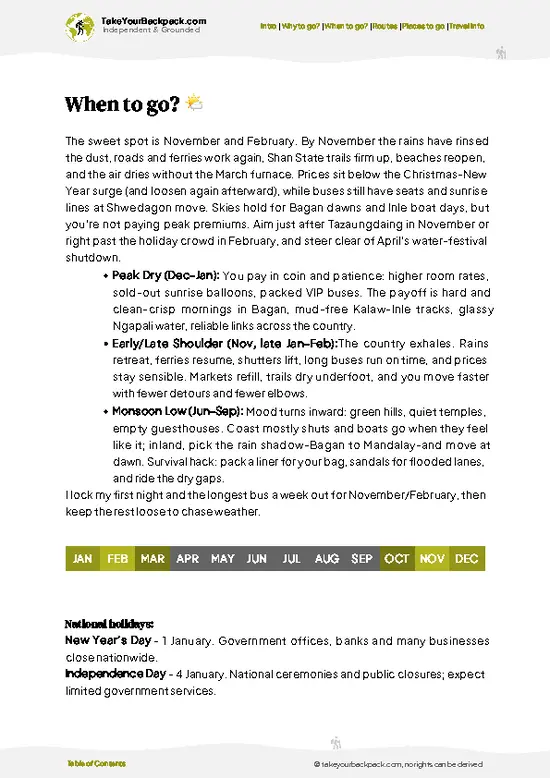
source: climatestotravel.comJANJanuary: not recommended for travelingFEBFebruary: not recommended for travelingMARMarch: not recommended for travelingAPRApril: excellent for travelingMAYMay: not recommended for travelingJUNJune: not recommended for travelingJULJuly: not recommended for travelingAUGAugust: not recommended for travelingSEPSeptember: not recommended for travelingOCTOctober: not recommended for travelingNOVNovember: not recommended for travelingDECDecember: not recommended for traveling

✈️ The backpacker research shortcutMyanmar Travel Guide

An offline-friendly backpacking guide with optimized travel routes, ranked highlights, transport advice, and the best areas to stay.
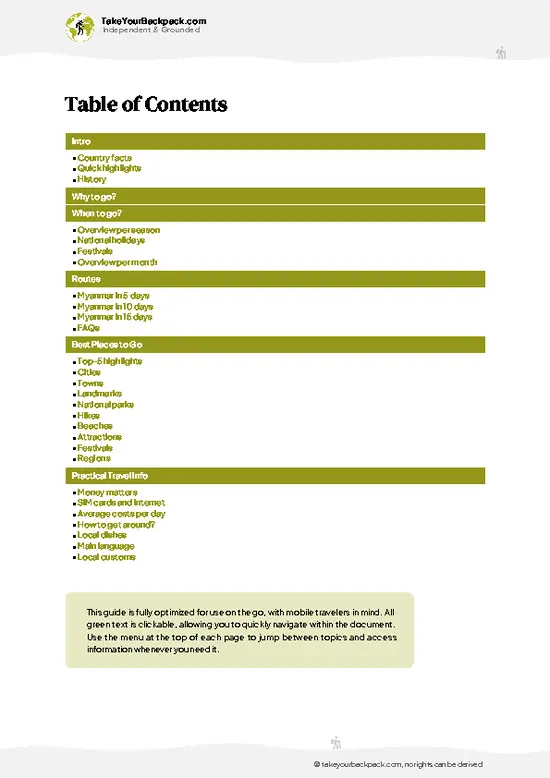
example page 0 from our offline Travel Guide for Myanmar
example page 1 from our offline Travel Guide for Myanmar
example page 2 from our offline Travel Guide for Myanmar
example page 3 from our offline Travel Guide for Myanmar
example page 4 from our offline Travel Guide for Myanmar
example page 5 from our offline Travel Guide for Myanmar
example page 6 from our offline Travel Guide for Myanmar
example page 7 from our offline Travel Guide for Myanmar
The digital guide (405 pages) contains:
110 highlights, ranked by travel appeal
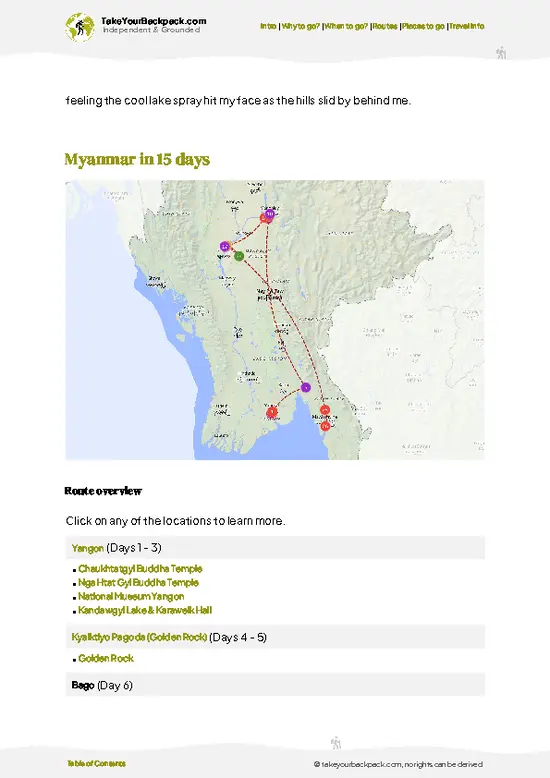
Optimized 5, 10 & 15-day travel routes
Cities, national parks, landmarks, beaches
How to get around
Offline-friendly for travel without Wi-Fi
👉 Click to see all 30+ guide features

📅 Plan smarter in minutes, not weeks
Month by month travel advice
Festivals & national holidays
Budget expectations

🗺️ Go to the right places, skip the overrated ones
Honest pros & cons of destinations
Top hikes, parks & viewpoints
Lesser-known places most travelers miss
Clear “worth it vs skip it” guidance

🛏️ Travel smoothly without rookie mistakes
Best areas to stay
Transport systems explained simply
Common scams & safety advice
SIM cards, money & practical tips

🌍 Understand the country, not just visit it
Culture & traditions
52 Essential phrases & customs
Festivals worth planning around
Traveler-friendly historical context
Insights that make places more meaningful

📱 Built for real travel conditions
Fully downloadable PDF
Works completely offline
Optimized for phone use
Useful in remote areas & buses
Everything in one place
Save weeks of stressful planning
Get instant access to your full guide. 30‑day money-back guarantee.


By proceeding you agree to our terms.
Sent to your inbox immediately after payment • 100% Secure Checkout
Best Backpacking Travel Advisor 2025 tourism awardBest Backpacking
Travel Advisor
2025
What others say about Take Your Backpack Guides:
⭐⭐⭐⭐⭐
Fantastic, amazing amount of information!
⭐⭐⭐⭐⭐
My goodness this is amazing, it's what I've been looking for hats off too you!
⭐⭐⭐⭐⭐
I think this is absolutely BRILLIANT
⭐⭐⭐⭐
Very complete and informative. It's still missing places, but I gotta to commend you
⭐⭐⭐⭐⭐
This is truly amazing, thank you, can't wait to explore it with my kids!
⭐⭐⭐⭐⭐
Awesome resource, thank you!
⭐⭐⭐⭐⭐
This is amazing! Can't wait to explore the ones I haven't seen
⭐⭐⭐⭐
I love this! Well done, great idea.
⭐⭐⭐⭐⭐
Thanks for taking the time to make this gem!
⭐⭐⭐⭐⭐
This might be the best website I've ever seen.
⭐⭐⭐⭐⭐
Congratulations, and thank you so much for your work; it's incredibly valuable.
⭐⭐⭐⭐
In all seriousness I think you did a great job pointing out the important spots
⭐⭐⭐⭐⭐
10/10 very good
⭐⭐⭐⭐⭐
As someone who's only just starting to visit regularly this is awesome, thank you.
⭐⭐⭐⭐
Thank you very much! I'm going to visit my dad, it's going to be very useful!
⭐⭐⭐⭐⭐
This is really cool! We'll be travelling for the first time and this definitely come in handy.
⭐⭐⭐⭐⭐
You are now our minister of culture, congratulations 👨‍💼
⭐⭐⭐⭐⭐
Just wanted to tell you that this is a pearl! Going to follow your recommendations.
⭐⭐⭐⭐⭐
This is so cool. I'll definitely be using the resource for my travels soon.
⭐⭐⭐⭐⭐
This is very impressive! Good work.
⭐⭐⭐⭐⭐
This is an amazing and informative site. Very well done!

🛏️ Where to stay?Best areas and accommodation options

The Naga New Year Festival in Myanmar is a vibrant explosion of culture, and where you stay can amplify that experience. Head to the town of Hakha, the heart of Naga territory. It’s buzzing with energy, and you’ll find plenty of fellow travelers eager to share stories. The local guesthouses are affordable and often run by families who can give you insider tips on the festival.

Another solid option is Falam. This area has a laid-back vibe, perfect for solo backpackers. You’ll meet like-minded adventurers in cozy lodges, and the communal spaces often spark spontaneous conversations. Plus, the scenery … read more 👉
The Naga New Year Festival in Myanmar is a vibrant explosion of culture, and where you stay can amplify that experience. Head to the town of Hakha, the heart of Naga territory. It’s buzzing with energy, and you’ll find plenty of fellow travelers eager to share stories. The local guesthouses are affordable and often run by families who can give you insider tips on the festival.

Another solid option is Falam. This area has a laid-back vibe, perfect for solo backpackers. You’ll meet like-minded adventurers in cozy lodges, and the communal spaces often spark spontaneous conversations. Plus, the scenery is breathtaking, with rolling hills that invite exploration.

Stay away from overly commercialized spots. They can drain your budget and energy. Instead, embrace the local scene. Engage with the community, and soak in the festival’s spirit. This is where the real magic happens, and you’ll leave with stories that outshine any tourist trap.

👛 Costs (as of 16 January 2026)Travel costs and budget guide for Naga New Year

The Naga New Year Festival in Myanmar is a vibrant celebration, but navigating the costs can be tricky. Here’s how to budget effectively, ensuring you keep your energy and funds for the experiences that truly matter.
  • Festival Tickets: Entry to the festival is generally free, but some events may charge a small fee, typically around $5 to $10 USD. Keep an eye out for special performances or activities that might have a cover charge.
  • Accommodation: Options vary widely. Budget travelers can find dormitory beds in hostels for about $10 to $15 USD per night. Private rooms in guesthouses range from $20 to $40 USD. If you want a bit more comfort, mid-range hotels can cost between $50 to $100 USD. Book early, as places fill up fast during the festival.
  • Local Transport: Getting around can be done cheaply.
read more 👉
The Naga New Year Festival in Myanmar is a vibrant celebration, but navigating the costs can be tricky. Here’s how to budget effectively, ensuring you keep your energy and funds for the experiences that truly matter.
  • Festival Tickets: Entry to the festival is generally free, but some events may charge a small fee, typically around $5 to $10 USD. Keep an eye out for special performances or activities that might have a cover charge.
  • Accommodation: Options vary widely. Budget travelers can find dormitory beds in hostels for about $10 to $15 USD per night. Private rooms in guesthouses range from $20 to $40 USD. If you want a bit more comfort, mid-range hotels can cost between $50 to $100 USD. Book early, as places fill up fast during the festival.
  • Local Transport: Getting around can be done cheaply. Local buses and shared taxis are available for $1 to $3 USD per ride. If you prefer more flexibility, consider renting a motorbike for about $5 to $10 USD per day. Just remember to check the condition of the bike before you hit the road.
  • Food & Drinks: Street food is your best friend here. Meals can cost as little as $1 to $3 USD. If you opt for sit-down restaurants, expect to pay around $5 to $10 USD for a decent meal. Don’t forget to budget for drinks; local beers are about $1 to $2 USD, while bottled water is usually around $0.50 USD.
  • Miscellaneous Expenses: This includes souvenirs, tips, and any unexpected costs. Set aside around $20 to $50 USD for this category. It’s wise to have a little extra for spontaneous experiences or local crafts that catch your eye.

By keeping these costs in mind, you’ll preserve your energy and budget for the moments that truly make the Naga New Year Festival special.
⚠️ Prices can change and everyone travels differently, so take this as a rough guide. Hope it helps you plan your adventure!

🍲 FoodLocal Cuisine & Drinks

At the **Naga New Year Festival** in Myanmar, food and drinks pulse with local flavor and communal spirit. Dive into **Naga specialties** like **pork curry** simmered with spices that dance on your palate, or **sticky rice** served with a side of **fermented bamboo shoots**—a must-try for the adventurous eater.

Festival stalls buzz with energy, offering **grilled meats** and **fresh vegetables** skewered and charred to perfection. Don’t miss the **Naga chili sauce**; it packs a punch that’ll leave you craving more. For drinks, grab a cup of **local rice beer**—it’s a refreshing way to toast the festivities and connect with fellow festival-goers.

Etiquette here is all about **sharing**. Don’t hesitate to swap bites with new friends; it’s part of the experience. Be prepared for lines, especially … read more 👉
At the **Naga New Year Festival** in Myanmar, food and drinks pulse with local flavor and communal spirit. Dive into **Naga specialties** like **pork curry** simmered with spices that dance on your palate, or **sticky rice** served with a side of **fermented bamboo shoots**—a must-try for the adventurous eater.

Festival stalls buzz with energy, offering **grilled meats** and **fresh vegetables** skewered and charred to perfection. Don’t miss the **Naga chili sauce**; it packs a punch that’ll leave you craving more. For drinks, grab a cup of **local rice beer**—it’s a refreshing way to toast the festivities and connect with fellow festival-goers.

Etiquette here is all about **sharing**. Don’t hesitate to swap bites with new friends; it’s part of the experience. Be prepared for lines, especially at popular stalls, and remember to bring cash—many vendors don’t accept cards. Serving sizes can be generous, so pace yourself and savor each bite. This festival isn’t just about food; it’s about the **connections** you make over shared meals.

Other Burmese festivals near Naga New Year

Explore more nearby:


💡 Not sure where to go next?
Create a personalized itinerary for Myanmar including Naga New Year and the places that fit your trip.

Generate my itinerary

👉 Discover all festivals

Or checkout all Myanmar has to offer (think cities, towns, villages, national parks, hikes, beaches, festivals)
Country photo of Myanmar

We 💚 feedbackKey takeaways before you go

The Naga New Year Festival is a vibrant explosion of culture, where you’ll feel the pulse of community through music and dance. But brace yourself: the logistics can be a maze. Limited transport options and crowded accommodations can drain your energy if you’re not prepared. Embrace the chaos, plan ahead, and you’ll unlock an experience that’s as rewarding as it is exhilarating.

✈️ When did I visit Myanmar?
In November 2013 I backpacked through Myanmar, bringing a full stack of pristine dollar bills as they had no ATMs back then.

✍️ Help improve this page!
The information on this page is based on my own backpacking experience in Myanmar, supplemented with up-to-date research and feedback from other travelers. Travel details can change, so if you notice anything outdated or incomplete, feel free to let me know.


🙋‍♂️ Give feedback

👋 Meet the founderWho’s Behind Take Your Backpack?

Johan, backpacker and founder of TakeYourBackpackHi, I’m Johan (Netherlands 🇳🇱), the creator of TakeYourBackpack. Over the past decade, I’ve backpacked through 80+ countries across six continents, gaining extensive experience with independent travel, long-term trips, and overland routes.

This site is built on a combination of firsthand travel experience and carefully curated insights from other backpackers. Many guides are based on places I’ve personally visited, while others bring together tips, observations, and practical advice shared by trusted travelers I’ve met along the way.

The goal is to provide realistic, experience-driven guidance — not generic itineraries — so you can explore destinations with better context, clearer expectations, and more confidence.

Get full Myanmar guide •
Instant download • 110 highlights • Full Offline guide