×

Myanmar🇲🇲 | attractionsNga Htat Gyi Buddha Templeseated Buddha, ornate backdrop, quiet hall | things to do and best time to go

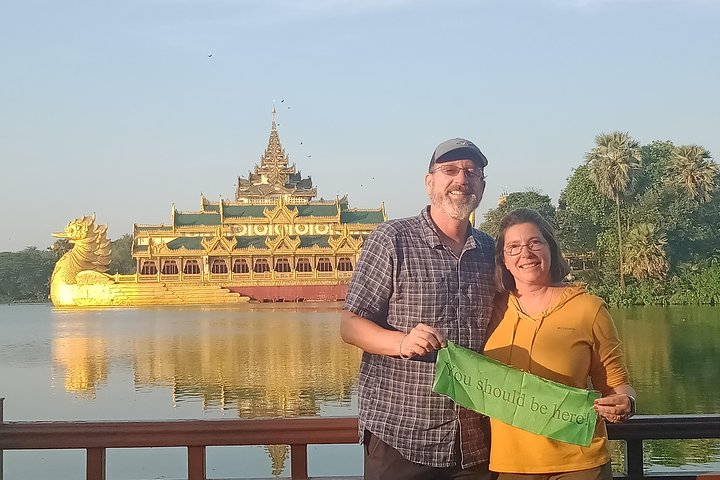
Explore Chaukhtatgyi Buddha TempleExplore Kandawgyi Lake & Karaweik Hall

Backpacking in Nga Htat Gyi Buddha Temple
👌 Worth visitingattraction ranked #12
By Johan Kruseman 🇳🇱 | Updated May 21, 2026

Here’s what nobody tells you: Nga Htat Gyi Buddha Temple is one of the rare Yangon sites where you can actually breathe. Most travelers stumble in expecting another tourist conveyor belt, but the crowds here are manageable—even at midday. Tucked in a residential pocket of Bahan Township, Yangon, this temple isn’t splashed across every travel feed, which means you get space to actually look up at that colossal, five-story-high Buddha without a sea of selfie sticks. The wow-factor is real: the sheer scale and serene expression of the statue hit harder than most pagodas in Myanmar, but you won’t find the feverish energy (or the touts) of Shwedagon. Entry is cheap, shoes off, and the vibe is contemplative—more local families than backpacker circus. If you want a moment of genuine calm in Yangon, this is it.

Discover everything you want to know in the 📖 Myanmar Travel Guide.
Safety warning

The current risk level for Myanmar is high. Check the advice before going.


Get your Myanmar guide
110 ranked highlights, routes & tips, works offline (405 pages)
Loading the map 🌍
CLICK TO FILTER
cities
towns
landmarks
national parks
hikes
beaches
attractions
festivals
regions
SHOW COUNTRY’S BESTSHOW ALL

✨ Why go?
Ranked #12 attraction in Myanmar
What makes it a must-see attraction

Nga Htat Gyi Buddha Temple isn’t just another photo op on Myanmar’s backpacker trail—it’s a heavyweight in the country’s spiritual and cultural arena. Sure, it draws crowds, especially midday when the sun hits the giant reclining Buddha’s face just right, but that’s part of the deal. This isn’t a quiet shrine tucked away; it’s a pulsating hub where locals come to pray, monks chant, and history breathes through every carved detail. The statue itself, towering and vivid, is a masterclass in Burmese craftsmanship and religious symbolism, making it a must-see milestone for anyone serious about understanding Myanmar beyond the surface. The temple’s energy, the mix of incense, chatter, and devotion, offers a raw, unfiltered glimpse into daily life here—something no glossy Instagram shot can capture. … read more 👉
Nga Htat Gyi Buddha Temple isn’t just another photo op on Myanmar’s backpacker trail—it’s a heavyweight in the country’s spiritual and cultural arena. Sure, it draws crowds, especially midday when the sun hits the giant reclining Buddha’s face just right, but that’s part of the deal. This isn’t a quiet shrine tucked away; it’s a pulsating hub where locals come to pray, monks chant, and history breathes through every carved detail. The statue itself, towering and vivid, is a masterclass in Burmese craftsmanship and religious symbolism, making it a must-see milestone for anyone serious about understanding Myanmar beyond the surface. The temple’s energy, the mix of incense, chatter, and devotion, offers a raw, unfiltered glimpse into daily life here—something no glossy Instagram shot can capture. It’s worth the hustle and the crowd for that real, unvarnished connection.
Want to include Nga Htat Gyi Buddha Temple in your Myanmar route?
Create a personalized Myanmar itinerary that includes Nga Htat Gyi Buddha Temple and the places that fit your trip — based on your travel style, budget, and available time. Get your route in seconds.

Generate my trip

💡 HighlightsWhat this place is best known for

The Seated Buddha: Scale and Presence
Let’s get real: you’ve seen Buddha statues before, but Nga Htat Gyi’s main event is a five-story, white-robed colossus that dominates the hall with a kind of serene swagger. This isn’t just big for the sake of big. The proportions are precise, the gaze is gentle but unwavering, and the sheer size—over 14 meters high—makes you feel like you’ve stumbled into a myth. The Instagram crowd will try to crop out the steel beams and the fans, but the real magic is standing at the base and feeling the hush settle over the room. It’s not about the photo; it’s about the atmosphere.

The Intricate Throne: Woodwork Worth the Trip
Look past the Buddha and you’ll see a throne that’s a fever dream of Burmese woodcarving. Dragons, celestial beings, and floral motifs spiral … read more 👉
The Seated Buddha: Scale and Presence
Let’s get real: you’ve seen Buddha statues before, but Nga Htat Gyi’s main event is a five-story, white-robed colossus that dominates the hall with a kind of serene swagger. This isn’t just big for the sake of big. The proportions are precise, the gaze is gentle but unwavering, and the sheer size—over 14 meters high—makes you feel like you’ve stumbled into a myth. The Instagram crowd will try to crop out the steel beams and the fans, but the real magic is standing at the base and feeling the hush settle over the room. It’s not about the photo; it’s about the atmosphere.

The Intricate Throne: Woodwork Worth the Trip
Look past the Buddha and you’ll see a throne that’s a fever dream of Burmese woodcarving. Dragons, celestial beings, and floral motifs spiral up in a riot of detail. This is not mass-produced temple bling. It’s a century-old masterpiece, carved with a level of obsession that borders on madness. If you care about craftsmanship, this is the real showstopper.

The Local Devotion: Candles, Offerings, and Real Life
Nga Htat Gyi isn’t a museum piece. It’s a living temple, and you’ll see locals lighting candles, offering flowers, and kneeling in prayer. The vibe is respectful but never stiff. You’re a guest, not a customer. Watch the regulars—especially the elderly women in crisp longyis—move through their rituals with a kind of practiced grace. This is where the temple’s soul lives.

The Side Shrines: Quirky and Unfiltered
Don’t skip the smaller shrines tucked around the main hall. You’ll find everything from neon-lit Bodhisattvas to a slightly surreal display of guardian spirits. It’s a little chaotic, a little kitsch, and totally honest. These corners are where the temple’s personality leaks through the cracks.

The Soundscape: Fans, Chants, and City Life
My personal favorite. Forget the silence you expect from a sacred site. Here, the whir of ceiling fans, the low hum of traffic, and the occasional burst of chanting blend into a soundtrack that’s pure Yangon. It’s not polished, but it’s real—and it roots you in the here and now.
Spotted a mistake or missing something? Contact us.
Things to do around Nga Htat Gyi Buddha Temple

Ratings based on Tripadvisor reviews. When you book through this link, you support our work at no extra cost to you.

🌤️ When to go?Best time to visit Nga Htat Gyi Buddha Temple


  • Topic: Weather – The dry season from November to February is your best bet. Expect clear skies and low humidity, making the temple’s intricate details easier to appreciate. Avoid the monsoon months of June to September when heavy rains can turn Yangon’s streets into mud traps.

  • Topic: Temperature – Between November and February, temperatures hover between 20°C and 30°C (68°F to 86°F). It’s warm but not oppressive, perfect for wandering without melting into a puddle of sweat.

  • Topic: Daylight Hours – Around 11 to 12 hours of daylight during the dry season give you plenty of time to explore without rushing. Early mornings and late afternoons offer softer light for photos and cooler air.

  • Topic: Crowds – Peak tourist season aligns with the dry months, so expect more visitors at Nga Htat
read more 👉

  • Topic: Weather – The dry season from November to February is your best bet. Expect clear skies and low humidity, making the temple’s intricate details easier to appreciate. Avoid the monsoon months of June to September when heavy rains can turn Yangon’s streets into mud traps.

  • Topic: Temperature – Between November and February, temperatures hover between 20°C and 30°C (68°F to 86°F). It’s warm but not oppressive, perfect for wandering without melting into a puddle of sweat.

  • Topic: Daylight Hours – Around 11 to 12 hours of daylight during the dry season give you plenty of time to explore without rushing. Early mornings and late afternoons offer softer light for photos and cooler air.

  • Topic: Crowds – Peak tourist season aligns with the dry months, so expect more visitors at Nga Htat Gyi Buddha Temple from November through January. However, it’s never overwhelmingly packed, especially if you visit early or late in the day.

  • Topic: Seasonal Activities – The temple doesn’t have flashy seasonal events, but nearby festivals like Thingyan (April) bring a lively buzz to Yangon. Visiting outside these times means fewer distractions and a more contemplative experience.

  • Topic: Price Fluctuations – Accommodation and flights spike during the dry season, especially December and January. Budget travelers might find better deals in the shoulder months of October or February, balancing decent weather with lower costs.


Pro-tip: Aim for late November or early February—good weather, manageable crowds, and a bit of breathing room on prices. Early mornings at the temple are pure gold for soaking in the atmosphere without the tourist chatter.


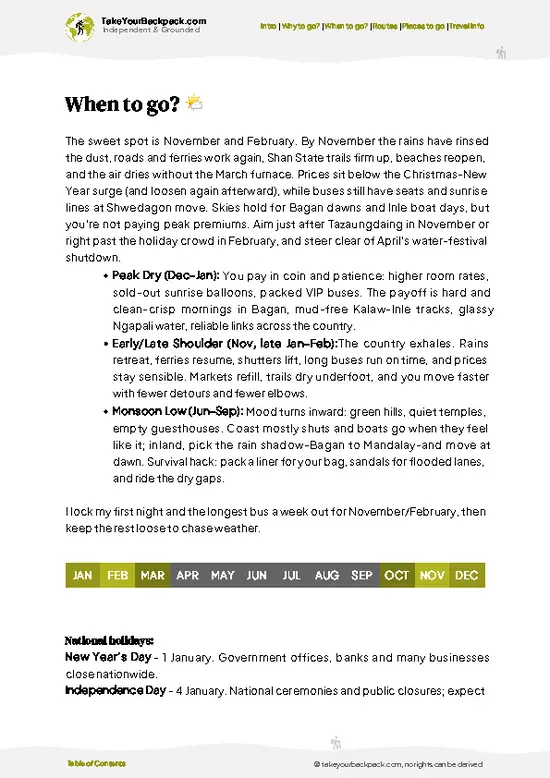
source: climatestotravel.comJANJanuary: highly recommended for travelingFEBFebruary: highly recommended for travelingMARMarch: good for travelingAPRApril: good for travelingMAYMay: fair for travelingJUNJune: below average for travelingJULJuly: below average for travelingAUGAugust: below average for travelingSEPSeptember: below average for travelingOCTOctober: good for travelingNOVNovember: excellent for travelingDECDecember: highly recommended for traveling
when-to-go

✈️ The backpacker research shortcutMyanmar Travel Guide

An offline-friendly backpacking guide with optimized travel routes, ranked highlights, transport advice, and the best areas to stay.
example page 0 from our offline Travel Guide for Myanmar
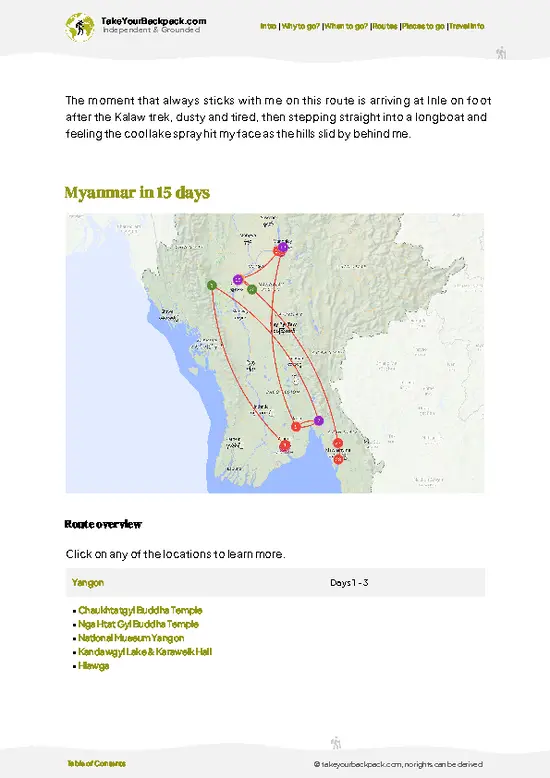
example page 1 from our offline Travel Guide for Myanmar
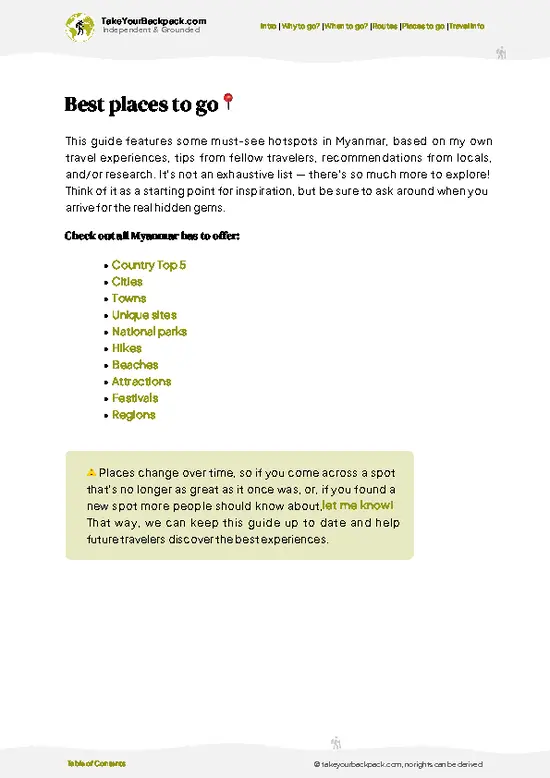
example page 2 from our offline Travel Guide for Myanmar
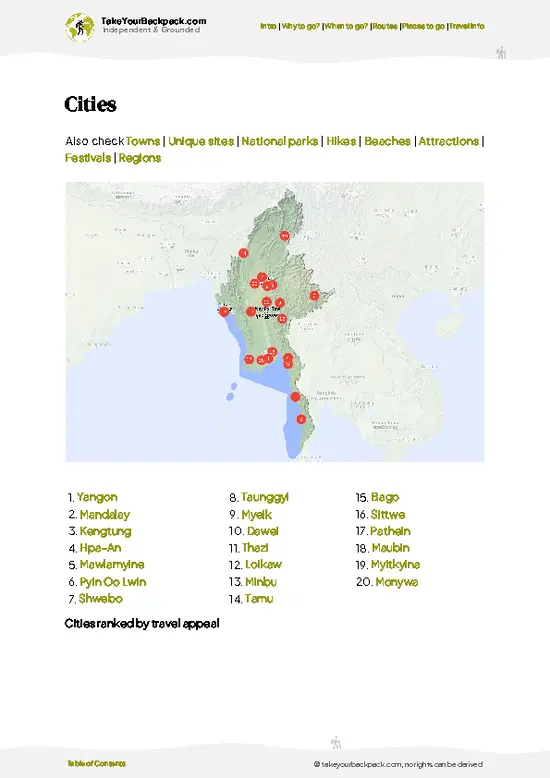
example page 3 from our offline Travel Guide for Myanmar
example page 4 from our offline Travel Guide for Myanmar
example page 5 from our offline Travel Guide for Myanmar
example page 6 from our offline Travel Guide for Myanmar
example page 7 from our offline Travel Guide for Myanmar
The digital guide (405 pages) contains:
110 highlights, ranked by travel appeal
Optimized 5, 10 & 15-day travel routes
Cities, national parks, landmarks, beaches
How to get around
Offline-friendly for travel without Wi-Fi
👉 Click to see all 30+ guide features

📅 Plan smarter in minutes, not weeks
Month by month travel advice
Festivals & national holidays
Budget expectations

🗺️ Go to the right places, skip the overrated ones
Honest pros & cons of destinations
Top hikes, parks & viewpoints
Lesser-known places most travelers miss
Clear “worth it vs skip it” guidance

🛏️ Travel smoothly without rookie mistakes
Best areas to stay
Transport systems explained simply
Common scams & safety advice
SIM cards, money & practical tips

🌍 Understand the country, not just visit it
Culture & traditions
52 Essential phrases & customs
Festivals worth planning around
Traveler-friendly historical context
Insights that make places more meaningful

📱 Built for real travel conditions
Fully downloadable PDF
Works completely offline
Optimized for phone use
Useful in remote areas & buses
Everything in one place
Save weeks of stressful planning
Get instant access to your full guide. 30‑day money-back guarantee.


By proceeding you agree to our terms.
Sent to your inbox immediately after payment • 100% Secure Checkout
Best Backpacking Travel Advisor 2025 tourism awardBest Backpacking
Travel Advisor
2025
What others say about Take Your Backpack Guides:
⭐⭐⭐⭐⭐
Fantastic, amazing amount of information!
⭐⭐⭐⭐⭐
My goodness this is amazing, it's what I've been looking for hats off too you!
⭐⭐⭐⭐⭐
I think this is absolutely BRILLIANT
⭐⭐⭐⭐
Very complete and informative. It's still missing places, but I gotta to commend you
⭐⭐⭐⭐⭐
This is truly amazing, thank you, can't wait to explore it with my kids!
⭐⭐⭐⭐⭐
Awesome resource, thank you!
⭐⭐⭐⭐⭐
This is amazing! Can't wait to explore the ones I haven't seen
⭐⭐⭐⭐
I love this! Well done, great idea.
⭐⭐⭐⭐⭐
Thanks for taking the time to make this gem!
⭐⭐⭐⭐⭐
This might be the best website I've ever seen.
⭐⭐⭐⭐⭐
Congratulations, and thank you so much for your work; it's incredibly valuable.
⭐⭐⭐⭐
In all seriousness I think you did a great job pointing out the important spots
⭐⭐⭐⭐⭐
10/10 very good
⭐⭐⭐⭐⭐
As someone who's only just starting to visit regularly this is awesome, thank you.
⭐⭐⭐⭐
Thank you very much! I'm going to visit my dad, it's going to be very useful!
⭐⭐⭐⭐⭐
This is really cool! We'll be travelling for the first time and this definitely come in handy.
⭐⭐⭐⭐⭐
You are now our minister of culture, congratulations 👨‍💼
⭐⭐⭐⭐⭐
Just wanted to tell you that this is a pearl! Going to follow your recommendations.
⭐⭐⭐⭐⭐
This is so cool. I'll definitely be using the resource for my travels soon.
⭐⭐⭐⭐⭐
This is very impressive! Good work.
⭐⭐⭐⭐⭐
This is an amazing and informative site. Very well done!

🛏️ Where to stay?Choosing the right base

Forget the postcard-perfect image of Nga Htat Gyi Buddha Temple as a serene, crowd-free sanctuary. It’s a major draw for locals and tourists alike, so expect a steady stream of visitors, especially mid-morning and weekends. The temple’s size and intricate details are impressive, but the real magic happens in the surrounding neighborhoods where backpackers find their groove.

If you want to be close, the areas around Pabedan and Latha townships are your best bets. These neighborhoods pulse with life—street food vendors, local markets, and a mix of budget guesthouses and hostels that attract solo … read more 👉
Forget the postcard-perfect image of Nga Htat Gyi Buddha Temple as a serene, crowd-free sanctuary. It’s a major draw for locals and tourists alike, so expect a steady stream of visitors, especially mid-morning and weekends. The temple’s size and intricate details are impressive, but the real magic happens in the surrounding neighborhoods where backpackers find their groove.

If you want to be close, the areas around Pabedan and Latha townships are your best bets. These neighborhoods pulse with life—street food vendors, local markets, and a mix of budget guesthouses and hostels that attract solo travelers and small groups. It’s safe enough to wander after dark, and the social vibe is strong without the touristy gloss. You’ll meet other backpackers, share tips, and soak in the city’s raw energy. It’s not polished, but it’s authentic—and that’s what makes staying here worth it.

👛 Costs (as of 12 January 2026)Travel costs and budget guide for Nga Htat Gyi Buddha Temple

The entrance fee for the Nga Htat Gyi Pagoda is 2,000 Kyat (approximately €2), which includes a bottle of cold water. This fee contributes to the upkeep and restoration of the pagoda.

source: renown-travel.com
⚠️ Prices can change and everyone travels differently, so take this as a rough guide. Hope it helps you plan your adventure!

Other Burmese attractions near Nga Htat Gyi Buddha Temple

Explore more nearby:


💡 Not sure where to go next?
Create a personalized itinerary for Myanmar including Nga Htat Gyi Buddha Temple and the places that fit your trip.

Generate my itinerary

👉 Discover all attractions

Or checkout all Myanmar has to offer (think cities, towns, villages, national parks, hikes, beaches, festivals)
Country photo of Myanmar

We 💚 feedbackKey takeaways before you go

Nga Htat Gyi Buddha Temple isn’t some quiet sanctuary; it’s a bustling hive of local worship and curious tourists, so expect noise and crowds. But that’s exactly why it’s worth your time—the giant reclining Buddha, with its intricate glass eyes and vibrant murals, feels alive, not staged. It’s a raw slice of Myanmar’s spiritual heartbeat, unfiltered and unapologetic.

✈️ When did I visit Myanmar?
In November 2013 I backpacked through Myanmar, bringing a full stack of pristine dollar bills as they had no ATMs back then.

✍️ Help improve this page!
The information on this page is based on my own backpacking experience in Myanmar, supplemented with up-to-date research and feedback from other travelers. Travel details can change, so if you notice anything outdated or incomplete, feel free to let me know.


🙋‍♂️ Give feedback

👋 Meet the founderWho’s Behind Take Your Backpack?

Johan, backpacker and founder of TakeYourBackpackHi, I’m Johan (Netherlands 🇳🇱), the creator of TakeYourBackpack. Over the past decade, I’ve backpacked through 80+ countries across six continents, gaining extensive experience with independent travel, long-term trips, and overland routes.

This site is built on a combination of firsthand travel experience and carefully curated insights from other backpackers. Many guides are based on places I’ve personally visited, while others bring together tips, observations, and practical advice shared by trusted travelers I’ve met along the way.

The goal is to provide realistic, experience-driven guidance — not generic itineraries — so you can explore destinations with better context, clearer expectations, and more confidence.

Get full Myanmar guide •
Instant download • 110 highlights • Full Offline guide