×

Myanmar🇲🇲 | townsWakemadelta crossroads, river port, market town | things to do and best time to go

Explore BogaleExplore Pyapon

Backpacking in Wakema
👍 Recommendedtown ranked #16
By Johan Kruseman 🇳🇱 | Updated June 10, 2026

Most people only realize after leaving Wakema that it’s the easiest, cheapest place in the Ayeyarwady Delta to quietly hop onto real river life without a tour or a schedule. Sitting southwest of Yangon, between the bigger hubs of Pathein and Myaungmya, it’s a low-rise, riverfront town that works best as a slow overnight stop, not a headline destination. You get muddy lanes, a compact market that smells of fish and jaggery, teashops with plastic stools, and boats sliding past at dusk. It’s calmer and more authentic than Pathein, but with fewer comforts and almost no hostel scene, so you’ll likely be the only foreigner. Buses in are straightforward, everything in town is walkable, and boats fan out to smaller villages if you’re patient. Costs are low, people are curious but generally kind, and evenings are quiet enough that you hear the river before you see it.

Discover everything you want to know in the 📖 Myanmar Travel Guide.
Safety warning

The current risk level for Myanmar is high. Check the advice before going.


Get your Myanmar guide
110 ranked highlights, routes & tips, works offline (405 pages)
Loading the map 🌍
CLICK TO FILTER
cities
towns
landmarks
national parks
hikes
beaches
attractions
festivals
regions
SHOW COUNTRY’S BESTSHOW ALL

✨ Why go?
Ranked #16 town in Myanmar
Why Wakema should be on your travel list

Wakema serves as a gateway for backpackers exploring Myanmar’s hidden treasures. Its convenient location makes it a perfect base for nearby hikes and cultural sites, allowing you to dive into the local landscape without the hassle of long travel days. The walkable streets are lined with small-scale guesthouses and hostels, fostering a friendly, communal vibe. You’ll find yourself sharing stories over local food at street stalls, where the scent of spices fills the air. Most travelers stay for a few days, soaking in the slow pace and connecting with fellow adventurers. This town is ideal for solo travelers and small groups who appreciate a blend of quiet charm and authentic experiences. If you’re seeking a quick stop or a place to linger, Wakema has the right mix.
Want to include Wakema in your Myanmar route?
Create a personalized Myanmar itinerary that includes Wakema and the places that fit your trip — based on your travel style, budget, and available time. Get your route in seconds.

Generate my trip

💡 HighlightsMust-see experiences and standout moments

  • Wakema Morning Market — The town’s heartbeat at dawn: vendors selling fresh fish, delta vegetables and sticky rice. Great for tasting cheap street mohinga, practicing bargaining, and watching daily life unfold.
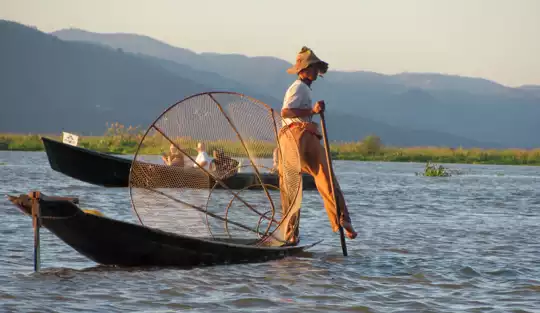
  • Wakema Riverside Jetty / Ferry Landing — Where boats from the surrounding villages tie up. Perfect for river photography, hopping on a local ferry, or just sitting and watching the delta’s traffic and tides.
  • Main Town Pagoda and Monastic Complex — The local Buddhist monastery is the spiritual center: observe chanting, alms rounds, and traditional architecture without needing a temple guide. Quiet, culturally rich, and welcoming if you’re respectful.
  • Boat-building & Carpentry Yards — Small workshops along the canals where wooden fishing boats are built and repaired. You’ll see traditional
read more 👉
  • Wakema Morning Market — The town’s heartbeat at dawn: vendors selling fresh fish, delta vegetables and sticky rice. Great for tasting cheap street mohinga, practicing bargaining, and watching daily life unfold.
  • Wakema Riverside Jetty / Ferry Landing — Where boats from the surrounding villages tie up. Perfect for river photography, hopping on a local ferry, or just sitting and watching the delta’s traffic and tides.
  • Main Town Pagoda and Monastic Complex — The local Buddhist monastery is the spiritual center: observe chanting, alms rounds, and traditional architecture without needing a temple guide. Quiet, culturally rich, and welcoming if you’re respectful.
  • Boat-building & Carpentry Yards — Small workshops along the canals where wooden fishing boats are built and repaired. You’ll see traditional joinery and can talk to craftsmen about boat-making techniques that haven’t changed much.
  • Fish-drying and Salting Areas — Open-air racks of drying fish and small salting operations are a defining delta sight. It’s pungent but fascinating—good for understanding local livelihoods and for photography if you don’t mind the smell.
  • Handicraft and Mat-weaving Workshops — Local women’s workshops where mats, baskets and simple textiles are made from reed or palm. Small-scale, authentic souvenirs and a chance to see techniques handed down through generations.
  • Main Street Tea Shops — Simple tea houses where locals gather for tea, snacks and gossip. The best place to meet people, try local snacks, and get practical tips from residents about what’s happening in town.
  • Canal-side Stilt Houses and Alleyways — Walkable neighborhoods on the water that give a real sense of delta life: kids playing, laundry hung out to dry, and narrow paths that invite slow exploration.
  • Seasonal Festival Grounds — When a pagoda festival or Thingyan celebrations are on, the temporary stages, food stalls and performances make for an unforgettable, very local experience. Timing matters—ask in town when festivals fall.
  • Local Produce Wharfs and Small-scale Rice Mills — Small docks where rice and produce are loaded, plus tiny mills that process paddy into rice. Good for seeing the agricultural backbone of Wakema up close and for picking up cheap snacks or sacks of rice.
Nearby day trips worth considering are Pathein (umbrella workshops and Pathein Beach), Myaungmya (lively river markets and delta life), and Kyaiklat (rural pagodas and boat traffic); my personal favorite for a day trip is Pathein’s umbrella workshops — they’re colorful, photogenic, and wonderfully hands-on.
Spotted a mistake or missing something? Contact us.
🏘️ NeighborhoodsUnderstanding the local layout

Wakema is a charming town that offers a blend of local culture and backpacker-friendly vibes. Here’s how to navigate its neighborhoods for the best experience.

Downtown Wakema: This is the heart of the town. Expect bustling markets and street food stalls that fill the air with the scent of grilled meats and spices. It’s affordable, with plenty of guesthouses. Walkability is high; you can easily explore on foot. Nightlife is low-key, perfect for winding down after a day of exploration. Ideal for short stays.

Riverfront Area: Here, the Ayeyarwady River provides a serene backdrop. The atmosphere is tranquil, with cozy cafés where you can sip tea while watching boats drift by. Accommodations are slightly pricier but worth it for the views. This area is great for longer stays, offering a peaceful … read more 👉
Wakema is a charming town that offers a blend of local culture and backpacker-friendly vibes. Here’s how to navigate its neighborhoods for the best experience.

Downtown Wakema: This is the heart of the town. Expect bustling markets and street food stalls that fill the air with the scent of grilled meats and spices. It’s affordable, with plenty of guesthouses. Walkability is high; you can easily explore on foot. Nightlife is low-key, perfect for winding down after a day of exploration. Ideal for short stays.

Riverfront Area: Here, the Ayeyarwady River provides a serene backdrop. The atmosphere is tranquil, with cozy cafés where you can sip tea while watching boats drift by. Accommodations are slightly pricier but worth it for the views. This area is great for longer stays, offering a peaceful retreat with easy access to transport for day trips.

Old Town: A step back in time, this area features colonial architecture and quiet streets. It’s less touristy, giving you a genuine feel of local life. Costs are moderate, and it’s perfect for leisurely strolls. While nightlife is minimal, the charm lies in its stillness, making it suitable for both short and extended visits.

⌛️ 1 daySeeing the highlights in 24 hours

Wakema, Myanmar, is a slice of authentic life, where the rhythm of daily existence unfolds against a backdrop of lush greenery and the gentle flow of the Irrawaddy River. It’s a town that feels untouched by the rush of modern tourism, offering a genuine glimpse into local culture.

Start your morning with a stroll through the bustling market in the heart of town. The air is thick with the scent of fresh produce and spices, and the vibrant colors of fruits and vegetables pop against the earthy tones of the stalls. Grab a cup of sweet, milky tea from a local vendor and chat with the friendly faces around you. This is where you’ll feel the pulse of Wakema.

In the afternoon, head to the lesser-known Shwe San Daw Pagoda. It’s a short walk from the market, and while it may not be on every tourist’s … read more 👉
Wakema, Myanmar, is a slice of authentic life, where the rhythm of daily existence unfolds against a backdrop of lush greenery and the gentle flow of the Irrawaddy River. It’s a town that feels untouched by the rush of modern tourism, offering a genuine glimpse into local culture.

Start your morning with a stroll through the bustling market in the heart of town. The air is thick with the scent of fresh produce and spices, and the vibrant colors of fruits and vegetables pop against the earthy tones of the stalls. Grab a cup of sweet, milky tea from a local vendor and chat with the friendly faces around you. This is where you’ll feel the pulse of Wakema.

In the afternoon, head to the lesser-known Shwe San Daw Pagoda. It’s a short walk from the market, and while it may not be on every tourist’s radar, the tranquility here is palpable. The golden stupa glimmers in the sunlight, and you can often find locals offering prayers. Take a moment to soak in the atmosphere; the soft rustle of leaves and distant laughter create a serene backdrop.

As evening approaches, wander along the riverbank. The sunset casts a warm glow, and the reflections on the water are mesmerizing. Find a local eatery nearby and indulge in a plate of mohinga, the beloved fish soup that warms the soul. The day wraps up with the sounds of crickets and the faint chatter of families enjoying the night, leaving you with a sense of connection to this charming town.
Turn your Wakema visit into an Myanmar adventure
Build a complete Myanmar route with Wakema, hidden gems, must-see destinations, and realistic travel times included.

Generate my trip

🌤️ When to go?Best time to visit Wakema


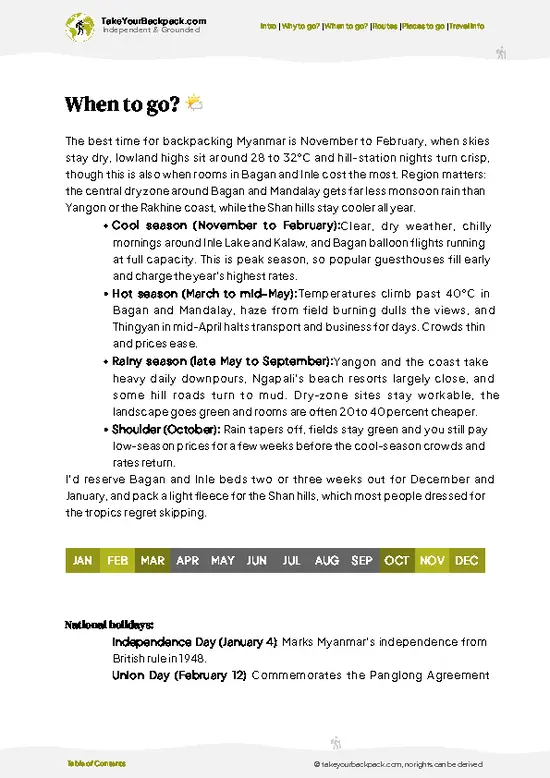
  • Topic: Weather – The dry season from November to February offers clear skies and minimal rain, making trails less slippery and the air crisp around 20-25°C (68-77°F). Avoid the monsoon months (June to September) when heavy rains flood paths and dampen spirits.

  • Topic: Temperature – Daytime highs in the dry season hover comfortably between 20-30°C (68-86°F), perfect for trekking without overheating. The hot season (March to May) can spike above 35°C (95°F), turning walks into a sweat test.

  • Topic: Daylight Hours – Around 11-12 hours of daylight in the dry season means you can start early and still have time to explore without rushing, catching the golden light that makes the rice paddies glow.

  • Topic: Crowds – Wakema remains off the beaten path, but the dry season draws local visitors.
read more 👉

  • Topic: Weather – The dry season from November to February offers clear skies and minimal rain, making trails less slippery and the air crisp around 20-25°C (68-77°F). Avoid the monsoon months (June to September) when heavy rains flood paths and dampen spirits.

  • Topic: Temperature – Daytime highs in the dry season hover comfortably between 20-30°C (68-86°F), perfect for trekking without overheating. The hot season (March to May) can spike above 35°C (95°F), turning walks into a sweat test.

  • Topic: Daylight Hours – Around 11-12 hours of daylight in the dry season means you can start early and still have time to explore without rushing, catching the golden light that makes the rice paddies glow.

  • Topic: Crowds – Wakema remains off the beaten path, but the dry season draws local visitors. You’ll find a quiet rhythm in shoulder months like November and February, balancing solitude with some local buzz.

  • Topic: Seasonal Activities – The dry season aligns with harvest time, when fields turn golden and local markets brim with fresh produce—perfect for engaging with the community and tasting authentic flavors.

  • Topic: Price Fluctuations – Accommodation and transport costs rise slightly in peak dry months due to demand but remain reasonable compared to Myanmar’s hotspots. Booking ahead in November and December secures better rates.


Pro-tip: Aim for late November—when the air is fresh, the crowds are thin, and the landscape is alive with harvest hues. It’s the sweet spot where comfort meets culture.


source: climatestotravel.comJANJanuary: excellent for travelingFEBFebruary: highly recommended for travelingMARMarch: fair for travelingAPRApril: fair for travelingMAYMay: fair for travelingJUNJune: below average for travelingJULJuly: below average for travelingAUGAugust: below average for travelingSEPSeptember: below average for travelingOCTOctober: good for travelingNOVNovember: excellent for travelingDECDecember: excellent for traveling
when-to-go

✈️ The backpacker research shortcutMyanmar Travel Guide

An offline-friendly backpacking guide with optimized travel routes, ranked highlights, transport advice, and the best areas to stay.
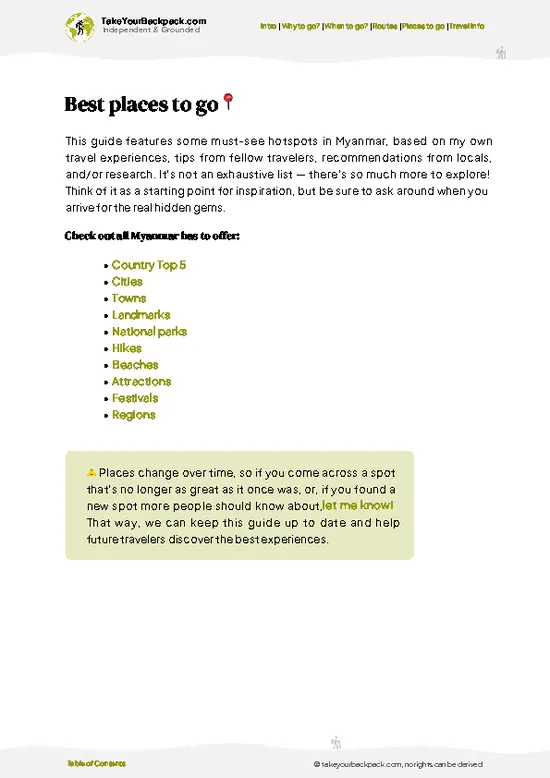
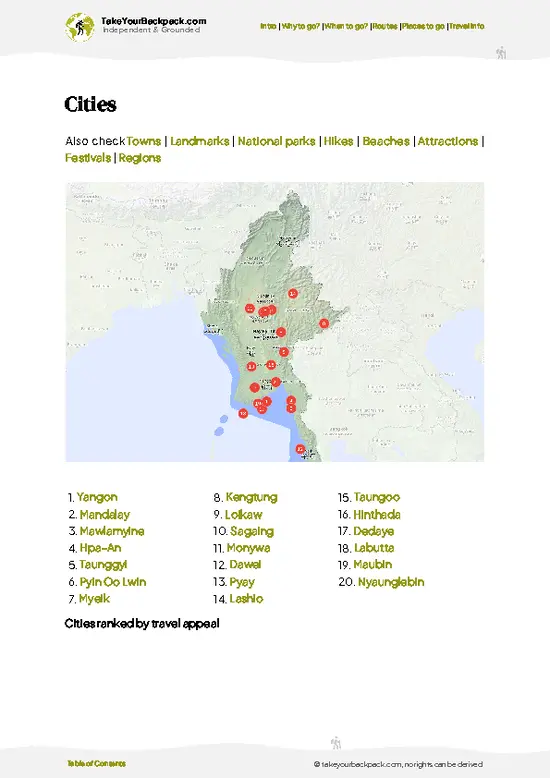
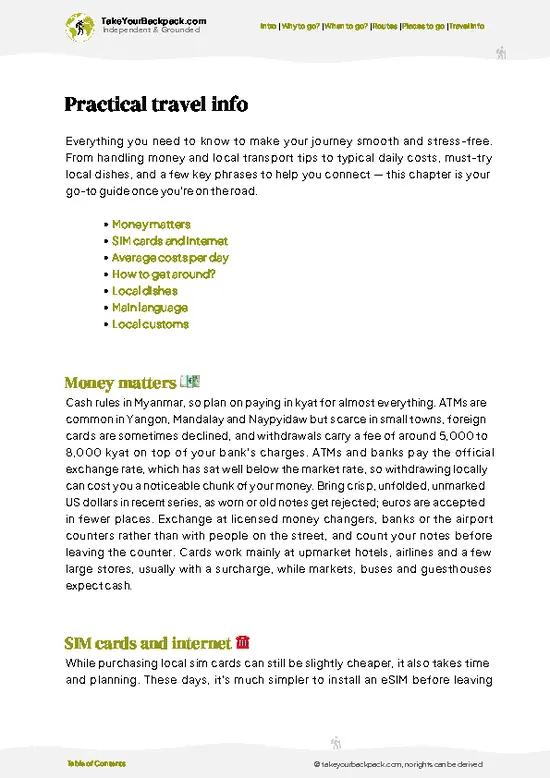
example page 0 from our offline Travel Guide for Myanmar
example page 1 from our offline Travel Guide for Myanmar
example page 2 from our offline Travel Guide for Myanmar
example page 3 from our offline Travel Guide for Myanmar
example page 4 from our offline Travel Guide for Myanmar
example page 5 from our offline Travel Guide for Myanmar
example page 6 from our offline Travel Guide for Myanmar
example page 7 from our offline Travel Guide for Myanmar
The digital guide (405 pages) contains:
110 highlights, ranked by travel appeal
Optimized 5, 10 & 15-day travel routes
Cities, national parks, landmarks, beaches
How to get around
Offline-friendly for travel without Wi-Fi
👉 Click to see all 30+ guide features

📅 Plan smarter in minutes, not weeks
Month by month travel advice
Festivals & national holidays
Budget expectations

🗺️ Go to the right places, skip the overrated ones
Honest pros & cons of destinations
Top hikes, parks & viewpoints
Lesser-known places most travelers miss
Clear “worth it vs skip it” guidance

🛏️ Travel smoothly without rookie mistakes
Best areas to stay
Transport systems explained simply
Common scams & safety advice
SIM cards, money & practical tips

🌍 Understand the country, not just visit it
Culture & traditions
52 Essential phrases & customs
Festivals worth planning around
Traveler-friendly historical context
Insights that make places more meaningful

📱 Built for real travel conditions
Fully downloadable PDF
Works completely offline
Optimized for phone use
Useful in remote areas & buses
Everything in one place
Save weeks of stressful planning
Get instant access to your full guide. 30‑day money-back guarantee.


By proceeding you agree to our terms.
Sent to your inbox immediately after payment • 100% Secure Checkout
Best Backpacking Travel Advisor 2025 tourism awardBest Backpacking
Travel Advisor
2025
What others say about Take Your Backpack Guides:
⭐⭐⭐⭐⭐
Fantastic, amazing amount of information!
⭐⭐⭐⭐⭐
My goodness this is amazing, it's what I've been looking for hats off too you!
⭐⭐⭐⭐⭐
I think this is absolutely BRILLIANT
⭐⭐⭐⭐
Very complete and informative. It's still missing places, but I gotta to commend you
⭐⭐⭐⭐⭐
This is truly amazing, thank you, can't wait to explore it with my kids!
⭐⭐⭐⭐⭐
Awesome resource, thank you!
⭐⭐⭐⭐⭐
This is amazing! Can't wait to explore the ones I haven't seen
⭐⭐⭐⭐
I love this! Well done, great idea.
⭐⭐⭐⭐⭐
Thanks for taking the time to make this gem!
⭐⭐⭐⭐⭐
This might be the best website I've ever seen.
⭐⭐⭐⭐⭐
Congratulations, and thank you so much for your work; it's incredibly valuable.
⭐⭐⭐⭐
In all seriousness I think you did a great job pointing out the important spots
⭐⭐⭐⭐⭐
10/10 very good
⭐⭐⭐⭐⭐
As someone who's only just starting to visit regularly this is awesome, thank you.
⭐⭐⭐⭐
Thank you very much! I'm going to visit my dad, it's going to be very useful!
⭐⭐⭐⭐⭐
This is really cool! We'll be travelling for the first time and this definitely come in handy.
⭐⭐⭐⭐⭐
You are now our minister of culture, congratulations 👨‍💼
⭐⭐⭐⭐⭐
Just wanted to tell you that this is a pearl! Going to follow your recommendations.
⭐⭐⭐⭐⭐
This is so cool. I'll definitely be using the resource for my travels soon.
⭐⭐⭐⭐⭐
This is very impressive! Good work.
⭐⭐⭐⭐⭐
This is an amazing and informative site. Very well done!

🛏️ Where to stay?Best areas to stay in Myanmar

In Wakema, the best spot for backpackers is the town center near the main market street. This area hums with local life from dawn till dusk—the scent of fresh fish mingles with the earthy aroma of wet soil after a rain. It’s safe, with plenty of street vendors and small eateries where you can chat with locals and fellow travelers alike. Hostels here are modest but clean, offering a social vibe that’s rare in smaller Myanmar towns. Staying closer to the riverfront or outskirts means quieter nights but fewer chances to connect or find budget-friendly spots. The town center’s compact layout means … read more 👉
In Wakema, the best spot for backpackers is the town center near the main market street. This area hums with local life from dawn till dusk—the scent of fresh fish mingles with the earthy aroma of wet soil after a rain. It’s safe, with plenty of street vendors and small eateries where you can chat with locals and fellow travelers alike. Hostels here are modest but clean, offering a social vibe that’s rare in smaller Myanmar towns. Staying closer to the riverfront or outskirts means quieter nights but fewer chances to connect or find budget-friendly spots. The town center’s compact layout means you can wander on foot, soaking in the rhythms of daily life without the hassle of transport. It’s where the pulse of Wakema beats strongest for those traveling light and curious.

🚌 Getting aroundMoving around without the hassle

Wakema moves at its own rhythm—less a clockwork town and more a pulse you feel underfoot. The air carries a mix of earth and salt from nearby waterways, and the streets hum with a blend of purposeful chatter and spontaneous calls from vendors. Here, schedules are suggestions, not laws. You’ll find that the best way to navigate isn’t by rigid timetables but by tuning into the flow of local life, catching rides when they come, and savoring the slow moments between.


  • Walking: The heart of Wakema is compact enough to explore on foot, with dusty lanes lined by low, sunbaked houses and the occasional burst of tropical greenery. Walking costs nothing, lets you soak in the scent of fresh fish and wood smoke, and reveals the town’s quiet corners that buses miss.


  • Shared Motorbike Taxis: These
read more 👉
Wakema moves at its own rhythm—less a clockwork town and more a pulse you feel underfoot. The air carries a mix of earth and salt from nearby waterways, and the streets hum with a blend of purposeful chatter and spontaneous calls from vendors. Here, schedules are suggestions, not laws. You’ll find that the best way to navigate isn’t by rigid timetables but by tuning into the flow of local life, catching rides when they come, and savoring the slow moments between.


  • Walking: The heart of Wakema is compact enough to explore on foot, with dusty lanes lined by low, sunbaked houses and the occasional burst of tropical greenery. Walking costs nothing, lets you soak in the scent of fresh fish and wood smoke, and reveals the town’s quiet corners that buses miss.


  • Shared Motorbike Taxis: These are the lifeblood of local transit—cheap (around 500-1000 kyat per ride), quick, and flexible. They don’t run on a strict schedule; instead, they leave when full, so timing is a mix of patience and luck. The wind in your face and the occasional jolt over uneven roads are part of the experience.


  • Local Buses: Buses connect Wakema to nearby towns and markets. They start early, around 6:00 AM, and run until late afternoon, with fares typically under 2000 kyat. Expect basic comfort—wooden benches, open windows, and a slow pace that lets you watch the countryside roll by.


  • Long-Distance Minibuses: For budget travelers aiming beyond Wakema, minibuses offer a faster, slightly more comfortable ride to regional hubs. They depart once filled, usually mid-morning and early afternoon, costing about 3000-4000 kyat. Seats are tight but the direct routes save hours.

👛 Costs (as of 1 February 2026)Travel costs and budget guide for Wakema

Backpacking in Wakema, Myanmar, offers a raw, authentic slice of life in the Irrawaddy Delta, and knowing the daily costs helps you plan without surprises.
  • Dorm Accommodation: Expect basic guesthouses or hostels with shared rooms, often simple but clean enough. Prices hover around $5 to $10 USD per night. Don’t expect fancy linens or hot showers, but the fan-cooled rooms are a relief in the humid air.
  • Meals: Street food and local eateries dominate here. A filling meal of mohinga (fish noodle soup) or fried rice will set you back about $1 to $2. If you want something a bit more substantial or Western-style, budget closer to $3 to $5. Fresh fruit and snacks are cheap and refreshing in the tropical heat.
  • Local Transport: Transport options are limited but affordable. Bicycle rentals cost around
read more 👉
Backpacking in Wakema, Myanmar, offers a raw, authentic slice of life in the Irrawaddy Delta, and knowing the daily costs helps you plan without surprises.
  • Dorm Accommodation: Expect basic guesthouses or hostels with shared rooms, often simple but clean enough. Prices hover around $5 to $10 USD per night. Don’t expect fancy linens or hot showers, but the fan-cooled rooms are a relief in the humid air.
  • Meals: Street food and local eateries dominate here. A filling meal of mohinga (fish noodle soup) or fried rice will set you back about $1 to $2. If you want something a bit more substantial or Western-style, budget closer to $3 to $5. Fresh fruit and snacks are cheap and refreshing in the tropical heat.
  • Local Transport: Transport options are limited but affordable. Bicycle rentals cost around $2 to $3 per day, the best way to explore at your own pace. Motorbike taxis or short tuk-tuk rides are about $0.50 to $1 per trip, perfect for quick hops around town or to nearby villages.
  • Basic Activities/Entry Fees: Wakema isn’t packed with tourist traps, so entry fees are minimal or nonexistent. Visiting local markets, pagodas, or taking a riverboat ride might cost $1 to $3. These low costs make it easy to soak in the culture without breaking the bank.
  • Miscellaneous Expenses: Bottled water, snacks, and occasional phone top-ups add up to about $1 to $2 daily. Keep cash handy, as card payments are rare, and ATMs can be scarce.

All told, you’re looking at roughly $10 to $20 USD per day to cover the essentials in Wakema. This modest budget unlocks a genuine experience—no frills, just the scent of river mud, the chatter of local markets, and the slow rhythm of delta life. Planning ahead for cash and embracing simplicity here pays off in full sensory immersion.


source: myanmar.travel
⚠️ Prices can change and everyone travels differently, so take this as a rough guide. Hope it helps you plan your adventure!

🚌 Day tripsEasy escapes and nearby places

Wakema, Myanmar, is a backpacker’s dream base for exploring the rich tapestry of the Irrawaddy Delta. With its laid-back vibe and local charm, you can dive into authentic experiences without the tourist rush.

**Mandalay Day Trip**
A trip to Mandalay is a must. It’s about a two-hour bus ride, and you’ll want to leave early to soak in the sights. The city buzzes with energy, from the golden spires of Mandalay Hill to the bustling markets filled with the scent of street food. Budget around $5 for the bus and a few dollars more for snacks. The best time to visit is during the cooler months, from November to February. A common mistake? Underestimating the heat—bring plenty of water and a hat.
👉 Explore Mandalay

**Inwa (Ava) Exploration**
Just a short boat ride from Mandalay, Inwa offers … read more 👉
Wakema, Myanmar, is a backpacker’s dream base for exploring the rich tapestry of the Irrawaddy Delta. With its laid-back vibe and local charm, you can dive into authentic experiences without the tourist rush.

**Mandalay Day Trip**
A trip to Mandalay is a must. It’s about a two-hour bus ride, and you’ll want to leave early to soak in the sights. The city buzzes with energy, from the golden spires of Mandalay Hill to the bustling markets filled with the scent of street food. Budget around $5 for the bus and a few dollars more for snacks. The best time to visit is during the cooler months, from November to February. A common mistake? Underestimating the heat—bring plenty of water and a hat.
👉 Explore Mandalay

**Inwa (Ava) Exploration**
Just a short boat ride from Mandalay, Inwa offers a glimpse into Myanmar’s past. Rent a bike for about $1 and pedal through ancient ruins and serene landscapes. The ride is a blend of history and nature, with the scent of blooming flowers wafting through the air. Plan for a half-day trip, and don’t forget your camera; the sunset views are breathtaking. Many first-timers miss the small, local eateries—grab a bite to fuel your adventure.


**Bago Adventure**
Bago is a bit further, about a three-hour bus ride, but the journey is worth it. The city is dotted with impressive pagodas and the famous reclining Buddha. Expect to spend around $10 for transport and snacks. The best time to visit is early morning to avoid the crowds and heat. A rookie mistake? Skipping the local market—it’s a sensory overload of colors and flavors that you won’t want to miss.
👉 Explore Bago

**Hpa-An Day Trip**
Hpa-An is a hidden treasure, roughly a three-hour bus ride from Wakema. The limestone mountains create a stunning backdrop as you explore caves and local villages. Budget around $10 for the trip. The dry season, from November to March, is ideal for clear views. Many backpackers overlook the local guides; hiring one can enrich your experience with stories and insights that you won’t find in guidebooks.
👉 Explore Hpa-An
Want to know what more Myanmar offers?
The Myanmar Travel Guide describes 110 highlights, from cities to national parks, from beaches to hikes

Get the Travel Guide -

🛡️ SafetyStaying Safe: What Travelers Should Know

Wakema is generally safe, but a few mindful practices can enhance your experience. Stay alert in crowded markets; pickpockets can be crafty. When wandering solo, especially after dark, stick to well-lit areas and avoid empty streets.

Common scams are rare, but be cautious with overly friendly locals offering unsolicited help—politely decline and trust your instincts. Transportation can be a hassle; always agree on fares upfront to sidestep misunderstandings.

Embrace the local vibe, but keep your belongings close. A confident demeanor goes a long way in blending in and enjoying the rich tapestry of daily life without unnecessary distractions.

Other Burmese towns near Wakema

Explore more nearby:

  • Bogale—Ayeyarwady delta, mangrove forests, cyclone history| 43 km away
  • Pyapon—fishing fleets, tidal rivers, delta town| 64 km away
  • Nyaungdon—delta waterways, rice fields, river ferries| 70 km away

💡 Not sure where to go next?
Create a personalized itinerary for Myanmar including Wakema and the places that fit your trip.

Generate my itinerary

👉 Discover all towns

Or checkout all Myanmar has to offer (think cities, towns, villages, national parks, hikes, beaches, festivals)
Country photo of Myanmar

We 💚 feedbackSumming up the experience

Wakema’s riverside charm is a breath of fresh air, with the scent of street food wafting through the air as locals go about their day. But be ready for the heat; it can be stifling. Embrace the sweat—it’s part of the experience. The payoff? Authentic interactions and a slice of life that feels real, not staged.

✈️ When did I visit Myanmar?
In November 2013 I backpacked through Myanmar, bringing a full stack of pristine dollar bills as they had no ATMs back then.

✍️ Help improve this page!
The information on this page is based on my own backpacking experience in Myanmar, supplemented with up-to-date research and feedback from other travelers. Travel details can change, so if you notice anything outdated or incomplete, feel free to let me know.


🙋‍♂️ Give feedback

👋 Meet the founderWho’s Behind Take Your Backpack?

Johan, backpacker and founder of TakeYourBackpackHi, I’m Johan (Netherlands 🇳🇱), the creator of TakeYourBackpack. Over the past decade, I’ve backpacked through 80+ countries across six continents, gaining extensive experience with independent travel, long-term trips, and overland routes.

This site is built on a combination of firsthand travel experience and carefully curated insights from other backpackers. Many guides are based on places I’ve personally visited, while others bring together tips, observations, and practical advice shared by trusted travelers I’ve met along the way.

The goal is to provide realistic, experience-driven guidance — not generic itineraries — so you can explore destinations with better context, clearer expectations, and more confidence.

Get full Myanmar guide •
Instant download • 110 highlights • Full Offline guide