×

Myanmar🇲🇲 | citiesBagoreclining Buddha, ancient capitals, monastery life | things to do and best time to go

Explore TamuExplore Kengtung

Backpacking in Bago
👍 Recommendedcity ranked #13
By Johan Kruseman 🇳🇱 | Updated June 12, 2026

Most people realize too late that Bago is the easiest “big temple hit” you can do as a day trip from Yangon, instead of burning days on long, exhausting transfers. It sits just northeast of Yangon in southern Myanmar, on the main road and rail line, so getting in is cheap and simple. As a backpacker stop, Bago is all about density: Shwemawdaw Pagoda, the giant reclining Buddhas, and crumbling old palace ruins packed into a compact, walkable sprawl. It’s low-key, a bit grimy, light on nightlife and other travelers, but very budget-friendly and calmer than Yangon, with just enough chaos to feel alive, not draining.

Discover everything you want to know in the 📖 Myanmar Travel Guide.
Safety warning

The current risk level for Myanmar is high. Check the advice before going.


Get your Myanmar guide
110 ranked highlights, routes & tips, works offline (405 pages)
Loading the map 🌍
CLICK TO FILTER
cities
towns
landmarks
national parks
hikes
beaches
attractions
festivals
regions
SHOW COUNTRY’S BESTSHOW ALL

✨ Why go?
Ranked #13 city in Myanmar
The unique appeal for travelers

Bago is a strategic stop for backpackers weaving through Myanmar. It offers a basecamp value that’s hard to beat, with easy access to day trips that showcase the region’s charm. The hostels here are budget-friendly and social, making it simple to connect with fellow travelers. You’ll find a variety of food options, from street stalls to local eateries, satisfying your cravings without breaking the bank. The city is walkable, allowing you to soak in the atmosphere while exploring. As for nightlife, it’s low-key but enjoyable, perfect for unwinding after a day of adventures. Plus, Bago’s location makes onward travel a breeze, whether you’re heading to Yangon or beyond. If you’re looking for a place to recharge and explore, Bago fits the bill.
Want to include Bago in your Myanmar route?
Create a personalized Myanmar itinerary that includes Bago and the places that fit your trip — based on your travel style, budget, and available time. Get your route in seconds.

Generate my trip

💡 HighlightsPlaces and moments you shouldn't skip

  1. Shwemawdaw Pagoda — The giant golden stupa that defines Bago’s skyline; climb around its base, watch pilgrims in full swing and feel why locals call this one the “spine” of the city (best at sunrise or during festival times).
  2. Shwethalyaung Reclining Buddha — One of the world’s largest reclining Buddhas, gorgeously restored and surprisingly atmospheric: big, quiet indoor space, close-up views of the sculpted feet and intricate murals that reward a slow wander.
  3. Kyaik Pun Pagoda (Four Seated Buddhas) — Four colossal Buddhas sitting back-to-back; they look almost cartoonish from a distance but up close the expressions and gilding tell centuries of devotional care — a compact, very photogenic stop.
  4. Kanbawzathadi Palace — A careful reconstruction of King Bayinnaung’s 16th-century royal palace
read more 👉
  1. Shwemawdaw Pagoda — The giant golden stupa that defines Bago’s skyline; climb around its base, watch pilgrims in full swing and feel why locals call this one the “spine” of the city (best at sunrise or during festival times).
  2. Shwethalyaung Reclining Buddha — One of the world’s largest reclining Buddhas, gorgeously restored and surprisingly atmospheric: big, quiet indoor space, close-up views of the sculpted feet and intricate murals that reward a slow wander.
  3. Kyaik Pun Pagoda (Four Seated Buddhas) — Four colossal Buddhas sitting back-to-back; they look almost cartoonish from a distance but up close the expressions and gilding tell centuries of devotional care — a compact, very photogenic stop.
  4. Kanbawzathadi Palace — A careful reconstruction of King Bayinnaung’s 16th-century royal palace with scale models, timberwork and small museum rooms; good for understanding Bago’s role as a former capital and for casual history nerding.
  5. Shwesandaw Pagoda — A slimmer stupa you can climb for a bird’s-eye view across Bago’s rooftops and paddy fringes; climb at sunset if you like warm light and local life unfolding below.
  6. Mahazedi Pagoda and site — A historically important stupa with layers of stories tied to the old Hanthawaddy kingdom; it’s quieter than the main pagodas so you get space to soak in the ruins, votive shrines and local rhythms.
  7. Hinthagon Hill & Pagoda — Small hilltop pagoda popular with locals for short pilgrimages, with peacock imagery and a nice lookout over the town — a short, low-effort climb for good neighborhood vibes and photos.
  8. Bago Central Market (Zay) — Packed, noisy, cheap and honest: fresh produce, grilled snacks, tea shops and stalls selling monastery offerings. It’s the best place to see everyday life and pick up inexpensive street food.
  9. Bago Regional (Archaeology) Museum — Modest but useful: displays of Hanthawaddy-era artefacts, religious iconography and explanatory plaques that give context to the temples you’ll visit around town.
  10. Remains of the Old Hanthawaddy City (walls, gates and ruins) — Scattered fragments of the old city defenses and foundations give a tangible sense of Bago’s former size and importance; good for wandering and imagining the old capital without the tourist crush.
A few easy day-trip highlights outside Bago: the famous Kyaiktiyo (Golden Rock) shrine, the temples of Taungoo to the north, and rural Mon-state villages and coastal mangroves — personal favorite for a nearby excursion: Kyaiktiyo (the overnight/early-start pilgrimage vibe is unforgettable).
Spotted a mistake or missing something? Contact us.

Things to do around Bago

Ratings based on Tripadvisor reviews. When you book through this link, you support our work at no extra cost to you.

🏘️ NeighborhoodsUnderstanding the local layout

Bago, Myanmar, offers a unique blend of history and local culture, making it a rewarding stop for backpackers. Here’s how the neighborhoods stack up:

City Center: This is the heartbeat of Bago. It’s bustling with markets and street food stalls. Costs are low, and you can easily walk to major sights like the Shwethalyaung Buddha. Nightlife is minimal, but you’ll find cozy cafes. Ideal for short stays.

Shwe Myaung: A quieter area, perfect for those seeking peace. It’s a bit farther from the main attractions, but the tranquility is worth it. Accommodations are affordable, and you can enjoy leisurely walks. Great for longer stays if you want to immerse yourself in local life.

Kyauk Taw Gyi: Known for its impressive pagoda, this neighborhood has a spiritual vibe. It’s walkable, but transport … read more 👉
Bago, Myanmar, offers a unique blend of history and local culture, making it a rewarding stop for backpackers. Here’s how the neighborhoods stack up:

City Center: This is the heartbeat of Bago. It’s bustling with markets and street food stalls. Costs are low, and you can easily walk to major sights like the Shwethalyaung Buddha. Nightlife is minimal, but you’ll find cozy cafes. Ideal for short stays.

Shwe Myaung: A quieter area, perfect for those seeking peace. It’s a bit farther from the main attractions, but the tranquility is worth it. Accommodations are affordable, and you can enjoy leisurely walks. Great for longer stays if you want to immerse yourself in local life.

Kyauk Taw Gyi: Known for its impressive pagoda, this neighborhood has a spiritual vibe. It’s walkable, but transport options are limited. Costs are moderate, and the area is quieter, making it suitable for reflective travelers. Perfect for a short visit to soak in the atmosphere.

⌛️ 1 dayHow to make the most of one day

Bago, Myanmar, is a city that whispers stories of ancient kingdoms and vibrant local life. It’s a place where the golden spires of pagodas rise against the backdrop of everyday hustle, offering a glimpse into both history and culture.

Start your morning at the Shwethalyaung Pagoda, home to a colossal reclining Buddha. Arrive early to beat the crowds and soak in the serene atmosphere. The soft morning light casts a warm glow on the golden statue, making it a perfect spot for reflection. Afterward, wander through the nearby local market in the downtown area. The scents of fresh produce and street food fill the air, and you can grab a quick breakfast of mohinga, a traditional fish soup that’s a local favorite.

In the afternoon, head to the Kyaik Pun Pagoda, where four giant Buddhas sit back-to-back. … read more 👉
Bago, Myanmar, is a city that whispers stories of ancient kingdoms and vibrant local life. It’s a place where the golden spires of pagodas rise against the backdrop of everyday hustle, offering a glimpse into both history and culture.

Start your morning at the Shwethalyaung Pagoda, home to a colossal reclining Buddha. Arrive early to beat the crowds and soak in the serene atmosphere. The soft morning light casts a warm glow on the golden statue, making it a perfect spot for reflection. Afterward, wander through the nearby local market in the downtown area. The scents of fresh produce and street food fill the air, and you can grab a quick breakfast of mohinga, a traditional fish soup that’s a local favorite.

In the afternoon, head to the Kyaik Pun Pagoda, where four giant Buddhas sit back-to-back. It’s less touristy, allowing you to enjoy the tranquility. Take your time exploring the surrounding gardens, where locals often gather for picnics.

As evening approaches, make your way to the bustling streets of Bago’s downtown. Find a local eatery for dinner; try the spicy tea leaf salad. It’s a flavor explosion that’ll leave you craving more. End your day at the serene Kanbawzathadi Palace, where the sunset casts a magical hue over the ruins. Bago may be small, but it’s packed with experiences that linger long after you leave.
Turn your Bago visit into an Myanmar adventure
Build a complete Myanmar route with Bago, hidden gems, must-see destinations, and realistic travel times included.

Generate my trip

🌤️ When to go?Best time to visit Bago


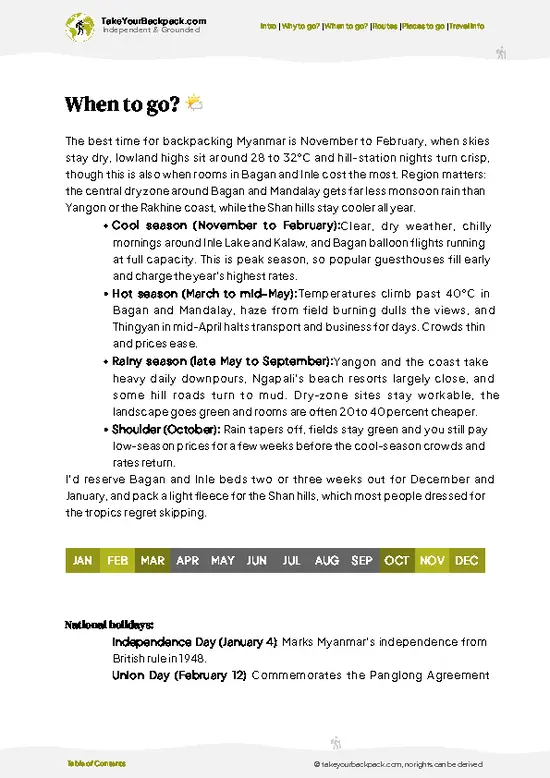
  • Topic: Weather – The dry season from November to February is your best bet. Expect minimal rain, making trails and temples accessible without mud or monsoon interruptions.

  • Topic: Temperature – Daytime highs hover around 25-30°C (77-86°F) in the dry season, perfect for exploring without overheating. Avoid April and May when temps spike above 35°C (95°F), turning sightseeing into a sweat fest.

  • Topic: Daylight Hours – Roughly 11 to 12 hours of daylight year-round, but the dry season offers clearer skies, so you get more usable daylight for trekking and temple hopping.

  • Topic: Crowds – Peak tourist influx aligns with the dry season, especially December and January. It’s livelier but expect higher prices and busier sites.

  • Topic: Seasonal Activities – November to February hosts cultural
read more 👉

  • Topic: Weather – The dry season from November to February is your best bet. Expect minimal rain, making trails and temples accessible without mud or monsoon interruptions.

  • Topic: Temperature – Daytime highs hover around 25-30°C (77-86°F) in the dry season, perfect for exploring without overheating. Avoid April and May when temps spike above 35°C (95°F), turning sightseeing into a sweat fest.

  • Topic: Daylight Hours – Roughly 11 to 12 hours of daylight year-round, but the dry season offers clearer skies, so you get more usable daylight for trekking and temple hopping.

  • Topic: Crowds – Peak tourist influx aligns with the dry season, especially December and January. It’s livelier but expect higher prices and busier sites.

  • Topic: Seasonal Activities – November to February hosts cultural festivals like the Shwe Settaw Pagoda Festival, adding rich local flavor to your visit.

  • Topic: Price Fluctuations – Accommodation and transport costs rise during the dry season’s peak months. Shoulder months like November and February offer a sweet spot between comfort and cost.


Pro-tip: Aim for late November or early February to dodge crowds and heat while still enjoying dry, comfortable conditions and local festivities.


source: climatestotravel.comJANJanuary: highly recommended for travelingFEBFebruary: highly recommended for travelingMARMarch: good for travelingAPRApril: fair for travelingMAYMay: fair for travelingJUNJune: below average for travelingJULJuly: below average for travelingAUGAugust: below average for travelingSEPSeptember: below average for travelingOCTOctober: fair for travelingNOVNovember: highly recommended for travelingDECDecember: excellent for traveling
when-to-go

✈️ The backpacker research shortcutMyanmar Travel Guide

An offline-friendly backpacking guide with optimized travel routes, ranked highlights, transport advice, and the best areas to stay.
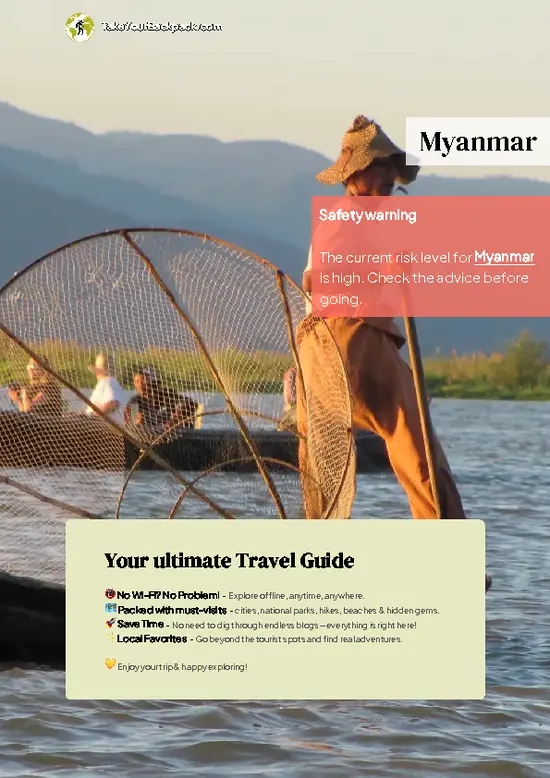
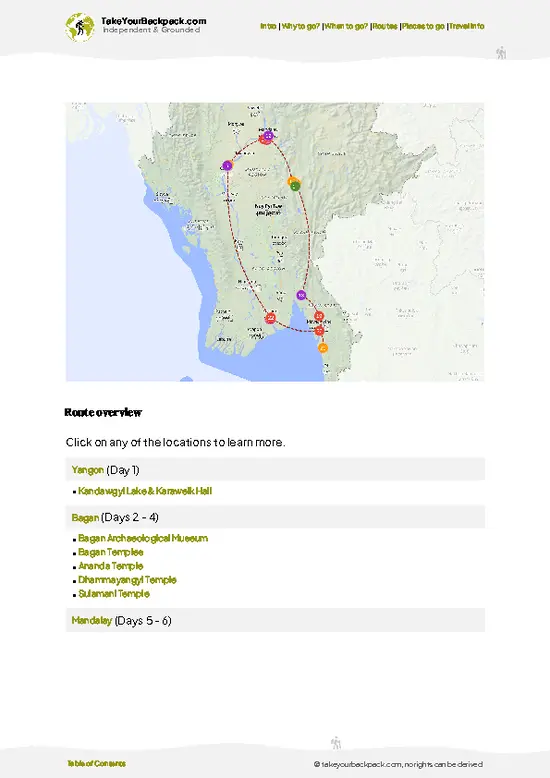
example page 0 from our offline Travel Guide for Myanmar
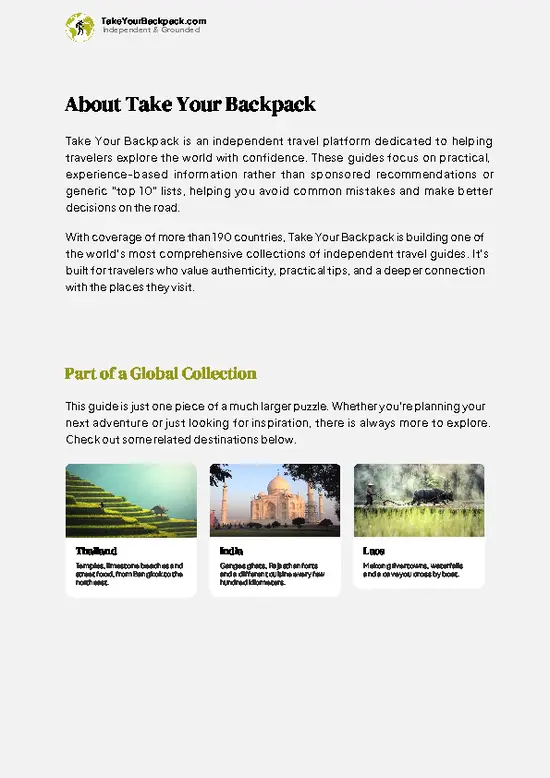
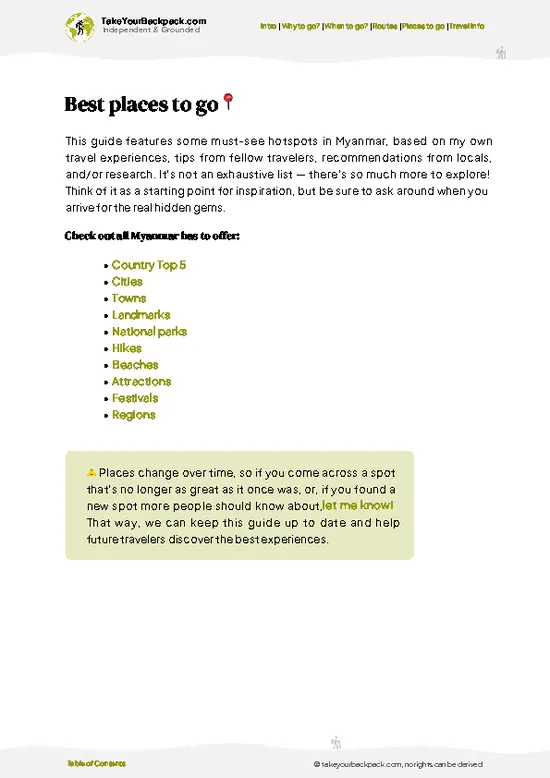
example page 1 from our offline Travel Guide for Myanmar
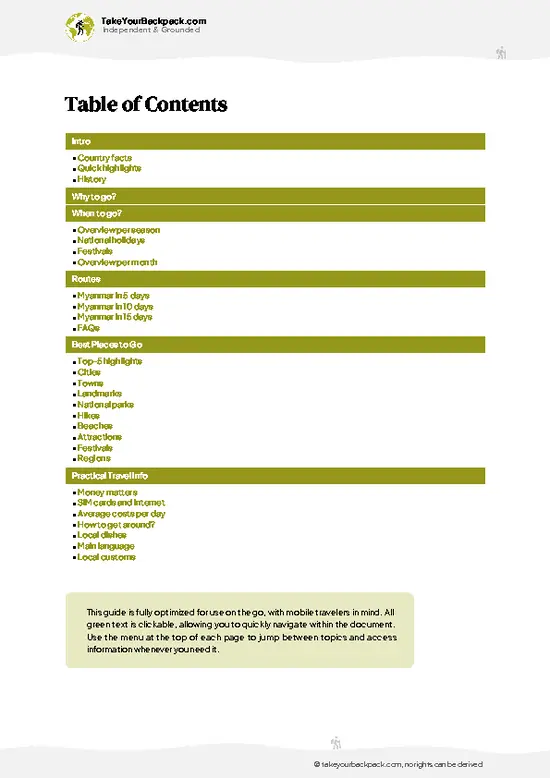
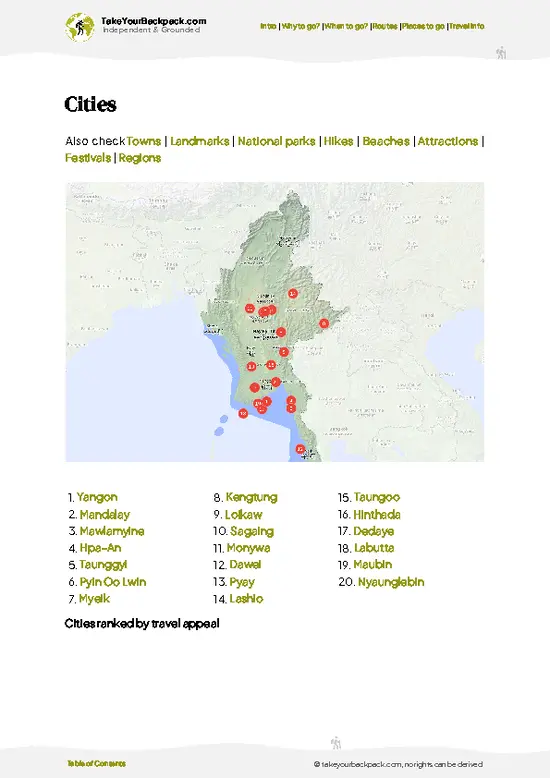
example page 2 from our offline Travel Guide for Myanmar
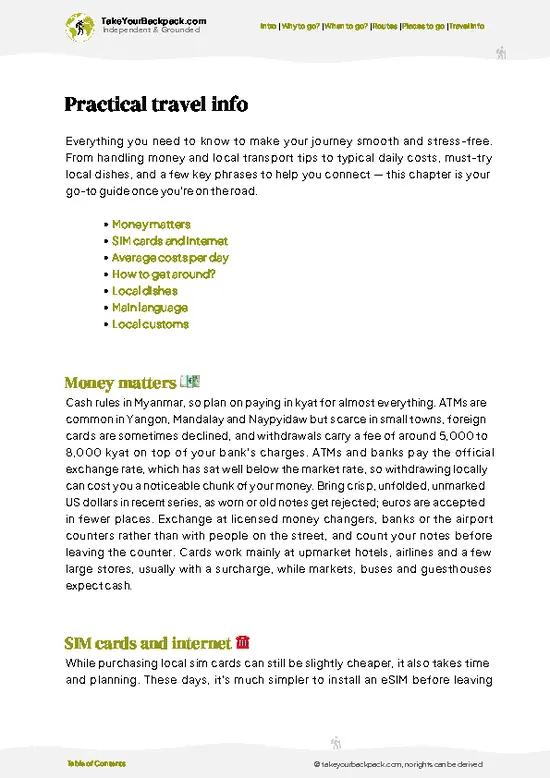
example page 3 from our offline Travel Guide for Myanmar
example page 4 from our offline Travel Guide for Myanmar
example page 5 from our offline Travel Guide for Myanmar
example page 6 from our offline Travel Guide for Myanmar
example page 7 from our offline Travel Guide for Myanmar
The digital guide (405 pages) contains:
110 highlights, ranked by travel appeal
Optimized 5, 10 & 15-day travel routes
Cities, national parks, landmarks, beaches
How to get around
Offline-friendly for travel without Wi-Fi
👉 Click to see all 30+ guide features

📅 Plan smarter in minutes, not weeks
Month by month travel advice
Festivals & national holidays
Budget expectations

🗺️ Go to the right places, skip the overrated ones
Honest pros & cons of destinations
Top hikes, parks & viewpoints
Lesser-known places most travelers miss
Clear “worth it vs skip it” guidance

🛏️ Travel smoothly without rookie mistakes
Best areas to stay
Transport systems explained simply
Common scams & safety advice
SIM cards, money & practical tips

🌍 Understand the country, not just visit it
Culture & traditions
52 Essential phrases & customs
Festivals worth planning around
Traveler-friendly historical context
Insights that make places more meaningful

📱 Built for real travel conditions
Fully downloadable PDF
Works completely offline
Optimized for phone use
Useful in remote areas & buses
Everything in one place
Save weeks of stressful planning
Get instant access to your full guide. 30‑day money-back guarantee.


By proceeding you agree to our terms.
Sent to your inbox immediately after payment • 100% Secure Checkout
Best Backpacking Travel Advisor 2025 tourism awardBest Backpacking
Travel Advisor
2025
What others say about Take Your Backpack Guides:
⭐⭐⭐⭐⭐
Fantastic, amazing amount of information!
⭐⭐⭐⭐⭐
My goodness this is amazing, it's what I've been looking for hats off too you!
⭐⭐⭐⭐⭐
I think this is absolutely BRILLIANT
⭐⭐⭐⭐
Very complete and informative. It's still missing places, but I gotta to commend you
⭐⭐⭐⭐⭐
This is truly amazing, thank you, can't wait to explore it with my kids!
⭐⭐⭐⭐⭐
Awesome resource, thank you!
⭐⭐⭐⭐⭐
This is amazing! Can't wait to explore the ones I haven't seen
⭐⭐⭐⭐
I love this! Well done, great idea.
⭐⭐⭐⭐⭐
Thanks for taking the time to make this gem!
⭐⭐⭐⭐⭐
This might be the best website I've ever seen.
⭐⭐⭐⭐⭐
Congratulations, and thank you so much for your work; it's incredibly valuable.
⭐⭐⭐⭐
In all seriousness I think you did a great job pointing out the important spots
⭐⭐⭐⭐⭐
10/10 very good
⭐⭐⭐⭐⭐
As someone who's only just starting to visit regularly this is awesome, thank you.
⭐⭐⭐⭐
Thank you very much! I'm going to visit my dad, it's going to be very useful!
⭐⭐⭐⭐⭐
This is really cool! We'll be travelling for the first time and this definitely come in handy.
⭐⭐⭐⭐⭐
You are now our minister of culture, congratulations 👨‍💼
⭐⭐⭐⭐⭐
Just wanted to tell you that this is a pearl! Going to follow your recommendations.
⭐⭐⭐⭐⭐
This is so cool. I'll definitely be using the resource for my travels soon.
⭐⭐⭐⭐⭐
This is very impressive! Good work.
⭐⭐⭐⭐⭐
This is an amazing and informative site. Very well done!

🛏️ Where to stay?Where staying makes the most sense

In Bago, the prime spot for backpackers is the area around the city center, especially near the Shwemawdaw Pagoda. This neighborhood strikes a smart balance: it’s safe, lively, and packed with budget-friendly guesthouses and hostels. You’re close enough to the main attractions to save on transport time and costs, which is a big win when your hours are limited. The vibe here leans toward social—travelers gather in common areas, making it easy to swap stories or plan day trips. Compared to the quieter, more residential outskirts, staying central means you’re plugged into the pulse of the city without … read more 👉
In Bago, the prime spot for backpackers is the area around the city center, especially near the Shwemawdaw Pagoda. This neighborhood strikes a smart balance: it’s safe, lively, and packed with budget-friendly guesthouses and hostels. You’re close enough to the main attractions to save on transport time and costs, which is a big win when your hours are limited. The vibe here leans toward social—travelers gather in common areas, making it easy to swap stories or plan day trips. Compared to the quieter, more residential outskirts, staying central means you’re plugged into the pulse of the city without sacrificing comfort or safety. Other parts of Bago might offer cheaper digs, but they often come with trade-offs in convenience or atmosphere. For solo backpackers, this area is a no-brainer: it’s where you maximize your experience while keeping your logistics straightforward and your wallet intact.

🚌 Getting aroundGetting around like a local

Bago moves at its own pace—neither a frantic rush nor a lazy drift. It’s a city where schedules exist but bend to local rhythms, where the clock is a guideline, not a dictator. You’ll find moments of precision, like the morning market’s opening bell, but much of the day flows on intuition: shared rides that leave when full, buses that wait for no one, and streets where honks replace timetables. Understanding this flow is your first win. It’s about reading the room, knowing when to wait and when to jump in, and balancing your time, money, and comfort like a chess game where every move counts.


  • Walking: The ultimate budget option—free, flexible, and immersive. Bago’s compact center means you can cover major sights on foot within a few hours. It’s slow but lets you catch the city’s texture
read more 👉
Bago moves at its own pace—neither a frantic rush nor a lazy drift. It’s a city where schedules exist but bend to local rhythms, where the clock is a guideline, not a dictator. You’ll find moments of precision, like the morning market’s opening bell, but much of the day flows on intuition: shared rides that leave when full, buses that wait for no one, and streets where honks replace timetables. Understanding this flow is your first win. It’s about reading the room, knowing when to wait and when to jump in, and balancing your time, money, and comfort like a chess game where every move counts.


  • Walking: The ultimate budget option—free, flexible, and immersive. Bago’s compact center means you can cover major sights on foot within a few hours. It’s slow but lets you catch the city’s texture up close. Comfort depends on weather; avoid midday heat.

  • Local Bus: Runs roughly from 6:00 AM to 7:00 PM, fares under $0.50. Slow and crowded, but unbeatable for cost. Expect basic seating and frequent stops. Perfect if you’re patient and want to blend with locals.

  • Shared Trishaw (Cycle Rickshaw): Available all day, fares around $1-$2 depending on distance. Faster than walking, more comfortable in heat, but less predictable on timing since they wait to fill seats. Great for short hops with a bit of breeze.

  • Motorbike Taxi: Operates 24/7, fares vary from $1 to $3. Fast and flexible, ideal for tight schedules or reaching outskirts. Comfort is minimal—helmet optional, wind guaranteed. Best for solo travelers who prioritize speed over ease.

  • Private Car Hire: Negotiable rates, typically $20+ per day. Offers maximum comfort and control over your itinerary but at a steep price. Useful if you’re traveling in a group or want to escape the city’s unpredictable transit flow.

👛 Costs (as of 3 February 2026)How expensive it really is

Backpacking in Bago, Myanmar, offers a clear trade-off between cost and comfort, with prices that let you stretch your budget or indulge a little without breaking the bank. Here’s the breakdown of what you’re likely to spend daily as an independent traveler navigating this city.
  • Dorm Accommodation (High Season): Expect to pay around $6 to $10 per night. High season drives prices up slightly due to demand, but dorms remain basic—think simple beds, shared bathrooms, and minimal frills.
  • Dorm Accommodation (Off-Season): Prices drop to about $4 to $7 per night. Off-season means fewer tourists and better bargaining power, so you can snag a bed at a discount without sacrificing safety or cleanliness.
  • Meals: Street food and local eateries dominate here, with meals costing between $1.50 and $3.50
read more 👉
Backpacking in Bago, Myanmar, offers a clear trade-off between cost and comfort, with prices that let you stretch your budget or indulge a little without breaking the bank. Here’s the breakdown of what you’re likely to spend daily as an independent traveler navigating this city.
  • Dorm Accommodation (High Season): Expect to pay around $6 to $10 per night. High season drives prices up slightly due to demand, but dorms remain basic—think simple beds, shared bathrooms, and minimal frills.
  • Dorm Accommodation (Off-Season): Prices drop to about $4 to $7 per night. Off-season means fewer tourists and better bargaining power, so you can snag a bed at a discount without sacrificing safety or cleanliness.
  • Meals: Street food and local eateries dominate here, with meals costing between $1.50 and $3.50 each. You’ll find filling dishes like mohinga or fried rice that keep you fueled without emptying your wallet.
  • Local Transport: Short rides on trishaws or motorbike taxis typically cost $0.50 to $1.50. It’s a quick, cheap way to get around, but be ready for a bit of an adventure in traffic.
  • City Transport Pass: Bago doesn’t have a formal city transport pass system. Instead, budget around $2 to $4 daily if you plan to use multiple rides or hire a bike for the day.
  • Basic Activities/Entry Fees: Visiting key sites like the Shwemawdaw Pagoda or Kyaikpun Buddha usually costs $2 to $5. These fees are modest but add up if you’re hitting several spots in a day.
  • Miscellaneous Expenses: This covers bottled water, snacks, occasional tips, or small souvenirs—budget around $1 to $3 daily to stay covered without surprises.

Add it all up, and you’re looking at a daily budget roughly between $15 and $30, depending on how much you lean into comfort or scrimp on extras. Bago’s charm is in its simplicity, so spending smart here means you get more authentic experiences without the tourist markup.


source: myanmar.travel
⚠️ Prices can change and everyone travels differently, so take this as a rough guide. Hope it helps you plan your adventure!

🚌 Day tripsEasy escapes and nearby places

Bago, Myanmar, is a backpacker’s dream base for day trips, offering a blend of culture, history, and stunning landscapes without breaking the bank.

Shwemawdaw Pagoda
This iconic pagoda towers over the city, boasting a golden stupa that glimmers in the sun. It’s a short 30-minute ride from Bago, and the entrance fee is minimal. The best time to visit is early morning when the light hits just right and the crowds are thin. Don’t miss the chance to chat with local monks; they often share fascinating insights. A common mistake? Rushing through without taking a moment to soak in the atmosphere.


Kyaik Pun Pagoda
Just 20 minutes away, this site features four massive seated Buddhas, each facing a different direction. The serene vibe here is palpable, making it a perfect spot for reflection. … read more 👉
Bago, Myanmar, is a backpacker’s dream base for day trips, offering a blend of culture, history, and stunning landscapes without breaking the bank.

Shwemawdaw Pagoda
This iconic pagoda towers over the city, boasting a golden stupa that glimmers in the sun. It’s a short 30-minute ride from Bago, and the entrance fee is minimal. The best time to visit is early morning when the light hits just right and the crowds are thin. Don’t miss the chance to chat with local monks; they often share fascinating insights. A common mistake? Rushing through without taking a moment to soak in the atmosphere.


Kyaik Pun Pagoda
Just 20 minutes away, this site features four massive seated Buddhas, each facing a different direction. The serene vibe here is palpable, making it a perfect spot for reflection. Expect to spend around $2 for transport and entry. Late afternoon is ideal for fewer visitors and softer light. Many first-timers overlook the small market nearby, where you can grab a snack or two.


Kanbawzathadi Palace
A 45-minute journey leads you to the reconstructed palace of King Bayinnaung. The intricate woodwork and historical displays are captivating, and the entry fee is around $5. Visit during the cooler months, from November to February, for the best experience. A common oversight is not allowing enough time to explore the gardens, which are just as enchanting as the palace itself.


Hanthawaddy Bridge
For a change of pace, take a scenic bike ride to this bridge, about 30 minutes from Bago. The views of the river and surrounding countryside are stunning, especially at sunset. Renting a bike costs around $3 for the day. Many backpackers miss the chance to pack a picnic and enjoy it by the water, so don’t skip that!
Want to know what more Myanmar offers?
The Myanmar Travel Guide describes 110 highlights, from cities to national parks, from beaches to hikes

Get the Travel Guide -

🍲 FoodEating & Drinking in Bago

In Bago, **food** is a vibrant tapestry of flavors that beckons you to dive in. Don’t miss the **Mohinga**, a fragrant fish soup that’s a breakfast staple, or the **Tea Leaf Salad**, a crunchy, tangy delight that’s perfect for sharing. Street vendors line the bustling markets, serving up **grilled skewers** and **samosas** that are both cheap and delicious.

As you wander, the aroma of **curry** wafts through the air, inviting you to try a plate served with fluffy rice. The **drinking culture** here is equally engaging; locals sip on **sweet tea** throughout the day, often accompanied by lively conversations.

Etiquette is simple: share your food and drinks, and don’t hesitate to join a table. It’s all about connection, so embrace the communal spirit and savor every bite.

🛡️ SafetyStaying Safe: What Travelers Should Know

Bago is generally safe for backpackers, but a few situational awareness tips can enhance your experience. Stick to well-lit areas at night, especially around the bustling markets. Solo travelers should trust their instincts; if something feels off, it probably is.

Common scams are rare, but be cautious of overly friendly locals who may offer unsolicited tours or rides. Politely decline if it feels pushy. Everyday annoyances include the occasional tout at popular sites, so keep your cool and walk away if needed. Carry yourself confidently, and you’ll navigate Bago’s charm without a hitch.

Other Burmese cities near Bago

Explore more nearby:

  • Yangon—Shwedagon Pagoda, teahouses, colonial downtown| 62 km away
  • Nyaunglebin—transport hub, highway junction, central Myanmar| 76 km away
  • Maubin—canal town, rice barges, delta bridges| 109 km away

💡 Not sure where to go next?
Create a personalized itinerary for Myanmar including Bago and the places that fit your trip.

Generate my itinerary

👉 Discover all cities

Or checkout all Myanmar has to offer (think cities, towns, villages, national parks, hikes, beaches, festivals)
Country photo of Myanmar

We 💚 feedbackSumming up the experience

Bago’s charm lies in its rich tapestry of history and spirituality. The Shwethalyaung Pagoda, with its colossal reclining Buddha, is a must-see that leaves you in awe. But be prepared: the heat can be relentless, and public transport isn’t always reliable. Embrace the quirks, and you’ll find Bago’s soul is worth the effort.

✈️ When did I visit Myanmar?
In November 2013 I backpacked through Myanmar, bringing a full stack of pristine dollar bills as they had no ATMs back then.

✍️ Help improve this page!
The information on this page is based on my own backpacking experience in Myanmar, supplemented with up-to-date research and feedback from other travelers. Travel details can change, so if you notice anything outdated or incomplete, feel free to let me know.


🙋‍♂️ Give feedback

👋 Meet the founderWho’s Behind Take Your Backpack?

Johan, backpacker and founder of TakeYourBackpackHi, I’m Johan (Netherlands 🇳🇱), the creator of TakeYourBackpack. Over the past decade, I’ve backpacked through 80+ countries across six continents, gaining extensive experience with independent travel, long-term trips, and overland routes.

This site is built on a combination of firsthand travel experience and carefully curated insights from other backpackers. Many guides are based on places I’ve personally visited, while others bring together tips, observations, and practical advice shared by trusted travelers I’ve met along the way.

The goal is to provide realistic, experience-driven guidance — not generic itineraries — so you can explore destinations with better context, clearer expectations, and more confidence.

Get full Myanmar guide •
Instant download • 110 highlights • Full Offline guide