×

Namibia🇳🇦 | townsGobabiscattle ranching, Trans-Kalahari Highway, frontier feel, local markets | things to do and best time to go

Explore MarientalExplore Karasburg

Backpacking in Gobabis
👍 Recommendedtown ranked #13
By Johan Kruseman 🇳🇱 | Updated September 3, 2026

If you crave nightlife, boutique shopping, or a city that hums after dark, Gobabis will feel like a layover, not a destination. But that’s exactly why it works for backpackers: it’s Namibia stripped of pretense, a sun-bleached crossroads where the Kalahari’s red dust settles on your boots and the air smells faintly of acacia and cattle. Sitting east of Windhoek, Gobabis is a practical pause before the Botswana border or a launchpad for bushveld adventures. The town’s rhythm is slow, with a handful of local cafés and a market that’s more about biltong than buzz. You’ll find basic hostels and a few friendly faces, but don’t expect a backpacker scene—conversations happen over shared rides, not hostel bar crawls. Costs are lower than Windhoek, and safety is straightforward: keep your wits, but the vibe is more sleepy than sketchy. Compared to the capital, Gobabis is quieter, less polished, and more about the journey than the destination.

Discover everything you want to know in the 📖 Namibia Travel Guide.


Get your Namibia guide
75 ranked highlights, routes & tips, works offline (305 pages)
Loading the map 🌍
CLICK TO FILTER
cities
towns
villages
landmarks
national parks
hikes
beaches
attractions
festivals
regions
SHOW COUNTRY’S BESTSHOW ALL

✨ Why go?
Ranked #13 town in Namibia
Why visitors keep coming back

Gobabis serves as a gateway for backpackers exploring Namibia’s rugged beauty. Its convenient location makes it a strategic stop for those heading to the Kalahari Desert or the Fish River Canyon. The town’s walkable streets invite you to wander, with small-scale hostels and guesthouses offering a cozy base. You’ll find local eateries where the aroma of grilled meat mingles with the scent of fresh bread, creating a genuine taste of Namibian culture.

Travelers often linger here for a few days, soaking in the friendly social atmosphere that encourages connection among solo travelers and small groups. It’s not a party town, but the laid-back vibe is perfect for those who appreciate a slower pace. Whether you’re gearing up for a hike or simply enjoying the local scene, Gobabis strikes a balance … read more 👉
Gobabis serves as a gateway for backpackers exploring Namibia’s rugged beauty. Its convenient location makes it a strategic stop for those heading to the Kalahari Desert or the Fish River Canyon. The town’s walkable streets invite you to wander, with small-scale hostels and guesthouses offering a cozy base. You’ll find local eateries where the aroma of grilled meat mingles with the scent of fresh bread, creating a genuine taste of Namibian culture.

Travelers often linger here for a few days, soaking in the friendly social atmosphere that encourages connection among solo travelers and small groups. It’s not a party town, but the laid-back vibe is perfect for those who appreciate a slower pace. Whether you’re gearing up for a hike or simply enjoying the local scene, Gobabis strikes a balance between convenience and authenticity. It’s a place where the journey feels just as rewarding as the destination.
Want to include Gobabis in your Namibia route?
Create a personalized Namibia itinerary that includes Gobabis and the places that fit your trip — based on your travel style, budget, and available time. Get your route in seconds.

Generate my trip

💡 HighlightsEssential experiences to have while visiting Gobabis

  • Gobabis Cattle Monument — The oversized cattle statue (you’ll see it coming into town) sums up what Gobabis is about: cattle, ranching culture and pride. Good photo stop and a conversation starter with local farmers pulling in to town.
  • Gobabis Livestock Auction/Yard — Watch a real working cattle market (auction days vary) and see the business side of “cattle country” up close: handlers, prices being called and old-school ranching know-how.
  • Central Market (Town Market) — A compact, lively place to buy fresh produce, dried meat, beads and crafts; best early morning for the full local vibe and sampling street food.
  • Rhenish/Lutheran Church — The town’s historic church building and its cemetery tell the story of missionary presence and settler life; architecture and grave inscriptions are
read more 👉
  • Gobabis Cattle Monument — The oversized cattle statue (you’ll see it coming into town) sums up what Gobabis is about: cattle, ranching culture and pride. Good photo stop and a conversation starter with local farmers pulling in to town.
  • Gobabis Livestock Auction/Yard — Watch a real working cattle market (auction days vary) and see the business side of “cattle country” up close: handlers, prices being called and old-school ranching know-how.
  • Central Market (Town Market) — A compact, lively place to buy fresh produce, dried meat, beads and crafts; best early morning for the full local vibe and sampling street food.
  • Rhenish/Lutheran Church — The town’s historic church building and its cemetery tell the story of missionary presence and settler life; architecture and grave inscriptions are quietly revealing.
  • Old Railway Station — The station building and platform are part of the town’s transport history; it’s worth a wander to see the rail-era signage and imagine the line that linked Gobabis with the rest of Namibia.
  • Omaheke Regional Heritage Display / Local History Corner — Small local exhibits (often in municipal or museum space) covering Herero and San histories, the cattle trade and the settlement of the region—short, useful context for what you’re seeing on the streets.
  • Main Street & Town Hall — Not just administration: Main Street is where daily life, shops and small cafés cluster; the Town Hall square often hosts community events and is a good place to listen in on local stories.
  • Community Craft Shops and Beadwork Stalls — Independent artisans sell Herero-style beaded jewellery, embroidered hats and leatherwork; cheaper and more authentic than tourist traps and a great way to support local makers.
  • Local Eateries & Braai Spots — Small restaurants and street grills serve up game and beef cuts, local sides and the informal social life of Gobabis—eat where the locals eat for the most honest flavors.
  • War Memorials & Cemetery Walks — Scattered memorials and cemeteries hold personal histories of the region: reading headstones and plaques gives an immediate sense of the people who shaped the town and its ranching economy.
A few good day trips near Gobabis: the Buitepos border area into Botswana, visits to working cattle ranches and the nearby Otjinene/Epukiro districts to see rural Omaheke life and remote cultural sites.
Spotted a mistake or missing something? Contact us.

Things to do near Gobabis

Ratings based on Tripadvisor reviews. When you book through this link, you support our work at no extra cost to you.

🏘️ NeighborhoodsHow different areas shape the experience

Gobabis, a small town in Namibia, offers a unique blend of culture and convenience for backpackers. Here’s how to navigate its neighborhoods like a pro.

Central Gobabis
This area is the heartbeat of the town. You’ll find local markets buzzing with vendors selling fresh produce and crafts. The vibe is laid-back, perfect for soaking in the local culture. Walkability is high; everything is within a few blocks. Budget-friendly accommodations abound, making it ideal for both short and longer stays. Nightlife is minimal, but you can enjoy a quiet evening at a local café.

Gobabis East
A bit quieter, this neighborhood is where you’ll find more residential areas. It’s less touristy, giving you a genuine feel of daily life. The cost of living here is lower, and you can score some great deals on … read more 👉
Gobabis, a small town in Namibia, offers a unique blend of culture and convenience for backpackers. Here’s how to navigate its neighborhoods like a pro.

Central Gobabis
This area is the heartbeat of the town. You’ll find local markets buzzing with vendors selling fresh produce and crafts. The vibe is laid-back, perfect for soaking in the local culture. Walkability is high; everything is within a few blocks. Budget-friendly accommodations abound, making it ideal for both short and longer stays. Nightlife is minimal, but you can enjoy a quiet evening at a local café.

Gobabis East
A bit quieter, this neighborhood is where you’ll find more residential areas. It’s less touristy, giving you a genuine feel of daily life. The cost of living here is lower, and you can score some great deals on food. While it’s not as walkable, public transport is accessible, connecting you to the rest of town. This area suits longer stays, especially if you want to immerse yourself in the community.

Gobabis West
This area is more spread out, with a mix of guesthouses and local eateries. The atmosphere is relaxed, making it a good spot for unwinding after a day of exploring. While nightlife is sparse, the local bars offer a cozy vibe. Transport options are decent, but you might need to walk a bit more. Perfect for those looking to stay a while and enjoy a slower pace.

⌛️ 1 dayA smart one-day plan

Gobabis, Namibia, is a town that pulses with the spirit of the Kalahari. It’s a place where the sun paints the sky in hues of orange and pink, and the air carries the earthy scent of acacia trees. While many travelers rush through, Gobabis offers a glimpse into the heart of Namibian culture, making it a rewarding stop.

Start your morning at the local market, where the vibrant chatter of vendors fills the air. The stalls brim with fresh produce, handmade crafts, and the aroma of traditional dishes. Grab a cup of strong, local coffee and a slice of biltong—it’s the perfect fuel for your day. Afterward, stroll through the nearby residential neighborhoods, where you can admire the charming, colorful homes and the friendly waves from locals.

In the afternoon, head to the Gobabis Museum. This … read more 👉
Gobabis, Namibia, is a town that pulses with the spirit of the Kalahari. It’s a place where the sun paints the sky in hues of orange and pink, and the air carries the earthy scent of acacia trees. While many travelers rush through, Gobabis offers a glimpse into the heart of Namibian culture, making it a rewarding stop.

Start your morning at the local market, where the vibrant chatter of vendors fills the air. The stalls brim with fresh produce, handmade crafts, and the aroma of traditional dishes. Grab a cup of strong, local coffee and a slice of biltong—it’s the perfect fuel for your day. Afterward, stroll through the nearby residential neighborhoods, where you can admire the charming, colorful homes and the friendly waves from locals.

In the afternoon, head to the Gobabis Museum. This lesser-known spot is a treasure trove of history, showcasing the town’s rich heritage and the stories of its people. The museum’s exhibits are engaging, and the staff is eager to share tales that breathe life into the artifacts.

As the sun begins to dip, make your way to the outskirts of town for a sunset hike at the nearby Kalahari Desert. The shifting sands and vast skies create a breathtaking backdrop. Find a quiet spot to soak in the beauty, and let the stillness wash over you.

Wrap up your day with dinner at a local eatery. Try the traditional Namibian stew, rich with flavors that reflect the land. Gobabis may not be on every tourist’s radar, but its warmth and authenticity will linger long after you leave.
Turn your Gobabis visit into an Namibia adventure
Build a complete Namibia route with Gobabis, hidden gems, must-see destinations, and realistic travel times included.

Generate my trip

🌤️ When to go?When to go for the best experience


  • Weather: Gobabis sits in a semi-arid zone, so the dry season from May to September offers clear skies and minimal rain, perfect for dusty trails and open-air camping without soggy gear.

  • Temperature: Daytime highs hover around 20-25°C (68-77°F) in winter, cooling the heat that can spike to 35°C (95°F) in summer. Nights get chilly, dipping to 5°C (41°F), so pack layers.

  • Daylight Hours: Winter days are shorter, about 10 hours of light, while summer stretches to nearly 14 hours, giving you more time to explore or relax under the vast Namibian sky.

  • Crowds: Tourist flow is low year-round, but the dry season sees a slight uptick as travelers chase Namibia’s best trekking weather, meaning you’ll have space but not solitude.

  • Seasonal Activities: Wildlife spotting peaks in the dry months
read more 👉

  • Weather: Gobabis sits in a semi-arid zone, so the dry season from May to September offers clear skies and minimal rain, perfect for dusty trails and open-air camping without soggy gear.

  • Temperature: Daytime highs hover around 20-25°C (68-77°F) in winter, cooling the heat that can spike to 35°C (95°F) in summer. Nights get chilly, dipping to 5°C (41°F), so pack layers.

  • Daylight Hours: Winter days are shorter, about 10 hours of light, while summer stretches to nearly 14 hours, giving you more time to explore or relax under the vast Namibian sky.

  • Crowds: Tourist flow is low year-round, but the dry season sees a slight uptick as travelers chase Namibia’s best trekking weather, meaning you’ll have space but not solitude.

  • Seasonal Activities: Wildlife spotting peaks in the dry months when animals gather around waterholes; summer’s sporadic rains bring bursts of green and bird activity, rewarding patient hikers.

  • Price Fluctuations: Accommodation and tours tend to be pricier in the dry season due to demand, while the wet season offers better deals but with the risk of muddy roads and fewer open campsites.


Pro-tip: Aim for late dry season—August to September—when the air is crisp, wildlife is active, and the landscape begins to hint at the coming rains, balancing comfort and spectacle.


source: climatestotravel.comJANJanuary: good for travelingFEBFebruary: good for travelingMARMarch: good for travelingAPRApril: good for travelingMAYMay: highly recommended for travelingJUNJune: highly recommended for travelingJULJuly: highly recommended for travelingAUGAugust: excellent for travelingSEPSeptember: excellent for travelingOCTOctober: good for travelingNOVNovember: good for travelingDECDecember: good for traveling
when-to-go

✈️ The backpacker research shortcutNamibia Travel Guide

An offline-friendly backpacking guide with optimized travel routes, ranked highlights, transport advice, and the best areas to stay.
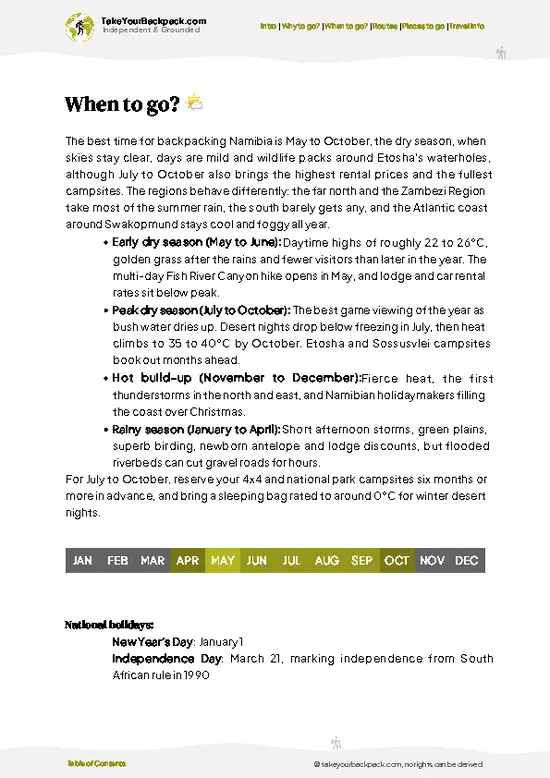
example page 0 from our offline Travel Guide for Namibia
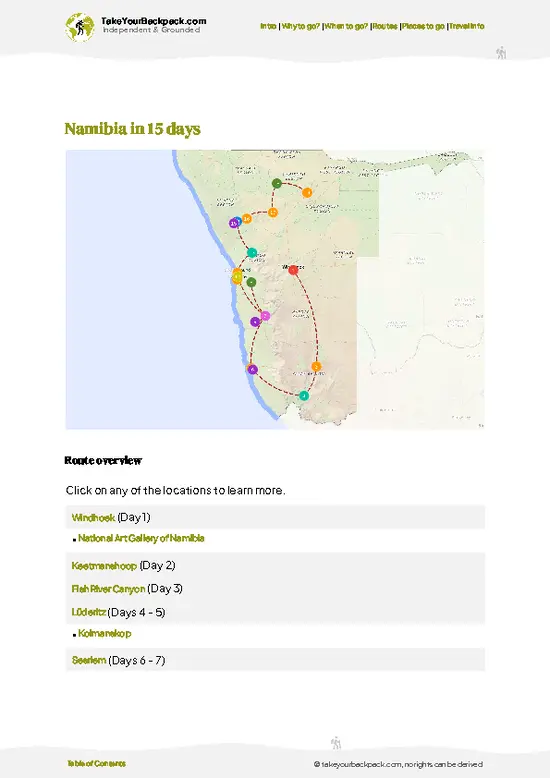
example page 1 from our offline Travel Guide for Namibia
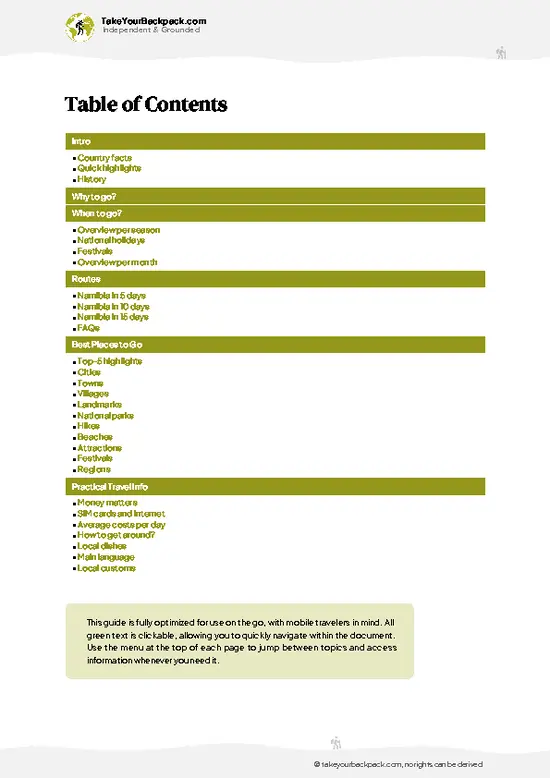
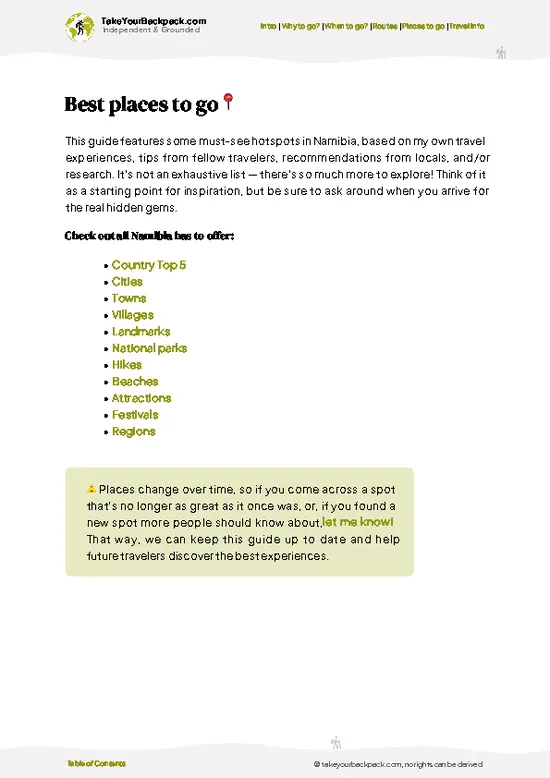
example page 2 from our offline Travel Guide for Namibia
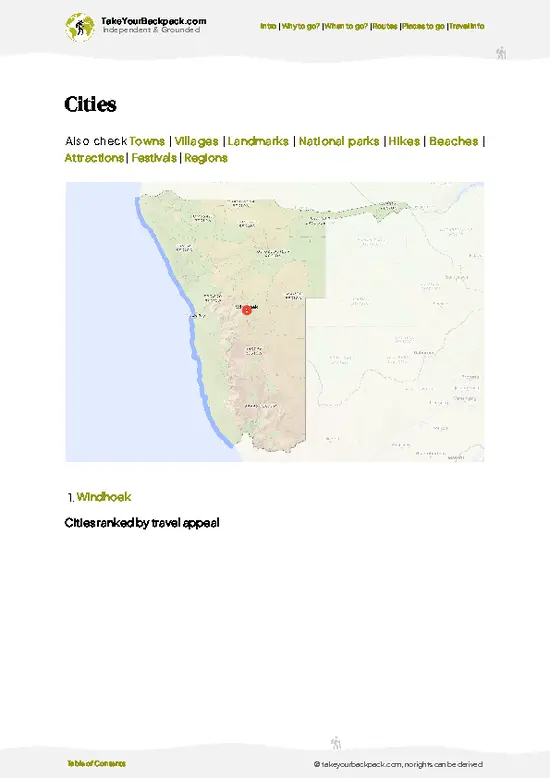
example page 3 from our offline Travel Guide for Namibia
example page 4 from our offline Travel Guide for Namibia
example page 5 from our offline Travel Guide for Namibia
example page 6 from our offline Travel Guide for Namibia
example page 7 from our offline Travel Guide for Namibia
The digital guide (305 pages) contains:
75 highlights, ranked by travel appeal
Optimized 5, 10 & 15-day travel routes
Cities, national parks, landmarks, beaches
How to get around
Offline-friendly for travel without Wi-Fi
👉 Click to see all 30+ guide features

📅 Plan smarter in minutes, not weeks
Month by month travel advice
Festivals & national holidays
Budget expectations

🗺️ Go to the right places, skip the overrated ones
Honest pros & cons of destinations
Top hikes, parks & viewpoints
Lesser-known places most travelers miss
Clear “worth it vs skip it” guidance

🛏️ Travel smoothly without rookie mistakes
Best areas to stay
Transport systems explained simply
Common scams & safety advice
SIM cards, money & practical tips

🌍 Understand the country, not just visit it
Culture & traditions
52 Essential phrases & customs
Festivals worth planning around
Traveler-friendly historical context
Insights that make places more meaningful

📱 Built for real travel conditions
Fully downloadable PDF
Works completely offline
Optimized for phone use
Useful in remote areas & buses
Everything in one place
Save weeks of stressful planning
Get instant access to your full guide. 30‑day money-back guarantee.
+ Add another guide for just US$7.80

By proceeding you agree to our terms.
Sent to your inbox immediately after payment • 100% Secure Checkout
Best Backpacking Travel Advisor 2025 tourism awardBest Backpacking
Travel Advisor
2025
What others say about Take Your Backpack Guides:
⭐⭐⭐⭐⭐
Fantastic, amazing amount of information!
⭐⭐⭐⭐⭐
My goodness this is amazing, it's what I've been looking for hats off too you!
⭐⭐⭐⭐⭐
I think this is absolutely BRILLIANT
⭐⭐⭐⭐
Very complete and informative. It's still missing places, but I gotta to commend you
⭐⭐⭐⭐⭐
This is truly amazing, thank you, can't wait to explore it with my kids!
⭐⭐⭐⭐⭐
Awesome resource, thank you!
⭐⭐⭐⭐⭐
This is amazing! Can't wait to explore the ones I haven't seen
⭐⭐⭐⭐
I love this! Well done, great idea.
⭐⭐⭐⭐⭐
Thanks for taking the time to make this gem!
⭐⭐⭐⭐⭐
This might be the best website I've ever seen.
⭐⭐⭐⭐⭐
Congratulations, and thank you so much for your work; it's incredibly valuable.
⭐⭐⭐⭐
In all seriousness I think you did a great job pointing out the important spots
⭐⭐⭐⭐⭐
10/10 very good
⭐⭐⭐⭐⭐
As someone who's only just starting to visit regularly this is awesome, thank you.
⭐⭐⭐⭐
Thank you very much! I'm going to visit my dad, it's going to be very useful!
⭐⭐⭐⭐⭐
This is really cool! We'll be travelling for the first time and this definitely come in handy.
⭐⭐⭐⭐⭐
You are now our minister of culture, congratulations 👨‍💼
⭐⭐⭐⭐⭐
Just wanted to tell you that this is a pearl! Going to follow your recommendations.
⭐⭐⭐⭐⭐
This is so cool. I'll definitely be using the resource for my travels soon.
⭐⭐⭐⭐⭐
This is very impressive! Good work.
⭐⭐⭐⭐⭐
This is an amazing and informative site. Very well done!

🛏️ Where to stay?Where staying makes the most sense

Gobabis is a small town where the best spot for backpackers is the central area around the main street. This neighborhood hums with local life—shops, markets, and eateries spill their scents of fresh bread and grilled meat into the dry air. It’s safe, well-lit after dark, and easy to navigate on foot, which matters when you’re carrying your pack and scouting for a place to crash. Hostels and guesthouses cluster here, offering a social vibe where solo travelers swap stories over cold drinks. Compared to the quieter, more residential outskirts, staying central means you’re plugged into the pulse … read more 👉
Gobabis is a small town where the best spot for backpackers is the central area around the main street. This neighborhood hums with local life—shops, markets, and eateries spill their scents of fresh bread and grilled meat into the dry air. It’s safe, well-lit after dark, and easy to navigate on foot, which matters when you’re carrying your pack and scouting for a place to crash. Hostels and guesthouses cluster here, offering a social vibe where solo travelers swap stories over cold drinks. Compared to the quieter, more residential outskirts, staying central means you’re plugged into the pulse of Gobabis without the hassle of taxis or long walks. The atmosphere is relaxed but lively enough to keep you connected, making it the practical choice for budget travelers who want to feel part of the town rather than just pass through.

🚌 Getting aroundTransportation options and practical tips

Gobabis moves at its own pace—neither frantic nor slow, but a steady rhythm shaped by dusty streets and the hum of daily life. The sun casts long shadows on corrugated iron roofs by mid-afternoon, and the scent of fresh mopane wood smoke drifts from small kitchens. Here, schedules exist but flex with the mood of the town. You won’t find strict timetables, but a reliable pulse of movement that locals and travelers alike learn to read like a second language. Understanding this flow means you don’t just get from A to B—you glide through the town’s character, catching its subtle shifts in light and sound.


  • Walking: Gobabis is compact enough to explore on foot, especially the town center. Walking lets you soak in the dry heat, the chatter from market stalls, and the occasional bark of a stray
read more 👉
Gobabis moves at its own pace—neither frantic nor slow, but a steady rhythm shaped by dusty streets and the hum of daily life. The sun casts long shadows on corrugated iron roofs by mid-afternoon, and the scent of fresh mopane wood smoke drifts from small kitchens. Here, schedules exist but flex with the mood of the town. You won’t find strict timetables, but a reliable pulse of movement that locals and travelers alike learn to read like a second language. Understanding this flow means you don’t just get from A to B—you glide through the town’s character, catching its subtle shifts in light and sound.


  • Walking: Gobabis is compact enough to explore on foot, especially the town center. Walking lets you soak in the dry heat, the chatter from market stalls, and the occasional bark of a stray dog. It’s free, flexible, and the best way to catch the town’s texture up close.


  • Minibus Taxis: These are the town’s informal lifeline. They don’t run on strict schedules but start filling up around 7 AM and taper off by early evening. Fares are cheap—usually a few Namibian dollars—and the ride is bumpy but fast enough to cover longer distances within town or to nearby settlements.


  • Shared Kombis: For trips outside Gobabis, shared kombis (vans) leave when full, often mid-morning or early afternoon. They’re a budget-friendly way to reach places like Windhoek or smaller villages, though expect a tight squeeze and a bit of dust on the windows.


  • Bicycle Rentals: If you want to cover more ground without losing the open-air feel, renting a bike is a solid option. The terrain is mostly flat, and the dry air keeps things cool in the early morning and late afternoon. Rentals are affordable and give you freedom beyond walking distance.

👛 Costs (as of 3 September 2026)How expensive it really is

Backpacking through Gobabis, Namibia, means balancing rugged charm with practical spending. Here’s what you can expect to shell out day-to-day.
  • Dorm Accommodation: Dorm beds in guesthouses or small lodges hover around $15 to $25 per night. These places are basic but clean, often with shared bathrooms and a chance to meet other travelers. Expect simple furnishings and a quiet, laid-back vibe.
  • Meals: Eating out is straightforward but not flashy. A local meal—think grilled meat or a hearty stew with maize—runs about $5 to $10. If you hit a small café or tuck shop, you can grab snacks or sandwiches for under $3. Cooking your own food is an option if your accommodation has kitchen access, which can save money.
  • Local Transport: Public transport options are limited. Minibus taxis or shared rides
read more 👉
Backpacking through Gobabis, Namibia, means balancing rugged charm with practical spending. Here’s what you can expect to shell out day-to-day.
  • Dorm Accommodation: Dorm beds in guesthouses or small lodges hover around $15 to $25 per night. These places are basic but clean, often with shared bathrooms and a chance to meet other travelers. Expect simple furnishings and a quiet, laid-back vibe.
  • Meals: Eating out is straightforward but not flashy. A local meal—think grilled meat or a hearty stew with maize—runs about $5 to $10. If you hit a small café or tuck shop, you can grab snacks or sandwiches for under $3. Cooking your own food is an option if your accommodation has kitchen access, which can save money.
  • Local Transport: Public transport options are limited. Minibus taxis or shared rides cost roughly $2 to $5 for short trips around town. Renting a bicycle or walking is common since Gobabis is compact, but for longer trips, expect to pay more for private taxis or car hires.
  • Basic Activities/Entry Fees: Gobabis itself is more of a gateway town than a tourist hotspot, so entry fees are minimal or nonexistent. Visiting local markets or cultural spots is usually free or costs a small donation ($1 to $3). Organized tours or safaris from here will push your budget higher, but day-to-day wandering stays cheap.
  • Miscellaneous Expenses: Water, snacks, and small essentials like toiletries or SIM cards typically add $2 to $5 daily. Internet access can be patchy, so plan for occasional top-ups at local shops.

All told, you’re looking at roughly $25 to $45 per day to keep things comfortable but unpretentious in Gobabis. It’s a place where the modest price tags reflect a slower pace and a chance to soak in the raw edges of Namibia’s east.
⚠️ Prices can change and everyone travels differently, so take this as a rough guide. Hope it helps you plan your adventure!

🚌 Day tripsShort trips worth adding

Gobabis, Namibia, is a backpacker’s dream base, offering access to stunning landscapes and rich culture without the hassle of long travel times. Here are some day trips that make the most of your adventure.

Waterberg Plateau
Just a two-hour drive from Gobabis, the Waterberg Plateau is a striking sandstone formation that rises dramatically from the surrounding plains. The trails here wind through diverse ecosystems, where you might catch a whiff of wild sage and the earthy scent of the bush. Spend a day hiking to the summit for panoramic views that make the effort worthwhile. The best time to visit is during the cooler months from May to September. A common mistake? Underestimating the sun—bring plenty of water and sunscreen. Expect to spend around $10 for transport and park fees.
👉 Explore read more 👉
Gobabis, Namibia, is a backpacker’s dream base, offering access to stunning landscapes and rich culture without the hassle of long travel times. Here are some day trips that make the most of your adventure.

Waterberg Plateau
Just a two-hour drive from Gobabis, the Waterberg Plateau is a striking sandstone formation that rises dramatically from the surrounding plains. The trails here wind through diverse ecosystems, where you might catch a whiff of wild sage and the earthy scent of the bush. Spend a day hiking to the summit for panoramic views that make the effort worthwhile. The best time to visit is during the cooler months from May to September. A common mistake? Underestimating the sun—bring plenty of water and sunscreen. Expect to spend around $10 for transport and park fees.
👉 Explore Waterberg Plateau

Namib Desert Dunes
A bit further afield, about three hours from Gobabis, the Namib Desert offers a surreal landscape of towering red dunes. The early morning light casts a golden hue, perfect for photography. You can hike Dune 45 or explore the eerie Deadvlei, where ancient trees stand against a backdrop of orange sand. The trip can cost around $30 for transport and entry fees. Aim for a visit between June and August for milder temperatures. First-timers often miss the sunrise; don’t let that happen—set your alarm!


Himba Village Experience
Immerse yourself in local culture with a visit to a Himba village, just an hour’s drive from Gobabis. This trip offers a unique glimpse into the lives of one of Namibia’s most iconic tribes. Engage with the community, learn about their customs, and savor traditional foods. The experience typically costs around $15, including transport and a small donation to the village. The best time to go is during the dry season, when the village is more active. A common misstep is rushing through; take your time to connect and absorb the atmosphere.


Grootfontein
About an hour and a half from Gobabis, Grootfontein is home to the fascinating Hoba Meteorite, the largest known meteorite on Earth. The site is a quick stop but offers a chance to marvel at this cosmic visitor. The surrounding area is also rich in history, with local museums showcasing the region’s past. Expect to spend around $20 for transport and entry. The best time to visit is in the cooler months, and be sure to check the opening hours to avoid disappointment. Many first-timers overlook the museum; don’t skip it—it adds depth to your visit.
Want to know what more Namibia offers?
The Namibia Travel Guide describes 75 highlights, from cities to national parks, from beaches to hikes

Get the Travel Guide -

🛡️ SafetySafety Tips and Common Scams in Gobabis

Gobabis is generally safe, but a few practical tips can enhance your experience. Stay aware in crowded areas, especially near markets where distractions can lead to petty theft. If you’re solo, stick to well-lit streets after dark; the atmosphere shifts, and it’s best to avoid wandering too far from the main roads.

While scams are rare, be cautious with overly friendly locals offering unsolicited help. Politely decline and trust your instincts. Everyday annoyances might include slow service in cafes; patience is key. Embrace the laid-back pace, and use the time to soak in the local vibe. Carry a small amount of cash for small purchases, as not all places accept cards. With these strategies, you’ll navigate Gobabis like a pro, enjoying its unique charm without a hitch.

FAQCommon questions from travelers

Gobabis is primarily a stopover rather than a destination for extended visits. It serves as a convenient rest point on the way to the eastern regions of Namibia or Botswana, with limited tourist attractions. The town is known for its cattle farming and local markets but lacks major sights.
One day is sufficient to explore Gobabis if you plan to visit the local market and get a sense of the town. Two days might be needed if you want to relax and explore nearby farms or nature reserves. Most travelers use it mainly for overnight rest before continuing their journey.
Yes, Gobabis can be visited as a day trip from Windhoek, which is about 200 kilometers away, roughly a 2.5 to 3-hour drive each way. This allows enough time to explore the town and return the same day, though it will be a long day of travel.
⚠️ Things can change over time, so always validate details locally before you go.

Other Namibian towns near Gobabis

Explore more nearby:

  • Aranos—Kalahari edge, red sand dunes, sheep farming, small-town quiet| 188 km away
  • Okahandja—woodcraft markets, Herero graves, weekend trading, river crossing| 219 km away
  • Mariental—Hardap Dam, irrigated farmlands, roadside lodges, desert transition| 263 km away

💡 Not sure where to go next?
Create a personalized itinerary for Namibia including Gobabis and the places that fit your trip.

Generate my itinerary

👉 Discover all towns

Or checkout all Namibia has to offer (think cities, towns, villages, national parks, hikes, beaches, festivals)
Country photo of Namibia

We 💚 feedbackWhat to keep in mind

Gobabis has a raw, unfiltered vibe that pulses with the rhythm of everyday life. The best surprise? The local markets, where the scent of spices mingles with laughter and chatter. You’ll find handmade crafts that tell stories of the land. Just a heads-up: the heat can be intense, so plan your explorations for early morning or late afternoon. Embrace the slower pace; it’s where the real magic happens.

✍️ Help improve this page!
The information on this page is based on in-depth research, insights shared by experienced travelers, and feedback from the local travel community in Namibia. While every effort is made to keep the information accurate and current, conditions can change — so if you spot anything incorrect or outdated, please get in touch.


🙋‍♂️ Give feedback

👋 Meet the founderWho’s Behind Take Your Backpack?

Johan, backpacker and founder of TakeYourBackpackHi, I’m Johan (Netherlands 🇳🇱), the creator of TakeYourBackpack. Over the past decade, I’ve backpacked through 80+ countries across six continents, gaining extensive experience with independent travel, long-term trips, and overland routes.

This site is built on a combination of firsthand travel experience and carefully curated insights from other backpackers. Many guides are based on places I’ve personally visited, while others bring together tips, observations, and practical advice shared by trusted travelers I’ve met along the way.

The goal is to provide realistic, experience-driven guidance — not generic itineraries — so you can explore destinations with better context, clearer expectations, and more confidence.

Get full Namibia guide •
Instant download • 75 highlights • Full Offline guide