×

Namibia🇳🇦 | citiesWindhoekGerman colonial buildings, craft markets, city hills, local breweries | things to do and best time to go

Explore Swakopmund BeachExplore Kalahari Desert Festival

Backpacking in Windhoek
🏆 Top pickcity ranked #1
By Johan Kruseman 🇳🇱 | Updated June 14, 2026

Most travelers only realize after arrival that Windhoek’s best trick is how easy it makes logistics: you can book a bus, stock up on gear, and find a working ATM all within a single city block—no frantic cross-town dashes required. Windhoek sits almost dead-center in Namibia, making it the country’s nerve center for transport and supplies. For backpackers, it’s a city of trade-offs. On the plus side, you get a safe, walkable downtown with German colonial buildings, a handful of solid museums (the Independence Memorial Museum is worth an hour), and a few parks where locals actually hang out. The nightlife is lively but not wild—think beer gardens and rooftop bars, not all-night raves. Meeting other travelers is easy at hostels and bus stations, but the city empties out on weekends. Costs are higher than in Swakopmund or Lüderitz, but you get better infrastructure and more reliable transport. The vibe? Efficient, a bit reserved, but with a pulse if you know where to look.

Discover everything you want to know in the 📖 Namibia Travel Guide.


Get your Namibia guide
79 ranked highlights, routes & tips, works offline (318 pages)
Loading the map 🌍
CLICK TO FILTER
cities
towns
villages
landmarks
national parks
hikes
beaches
attractions
festivals
regions
SHOW COUNTRY’S BESTSHOW ALL

✨ Why go?
Ranked #1 city in Namibia
Reasons people choose to visit here

Windhoek is a strategic hub for backpackers navigating Namibia. It’s not just a stopover; it’s a place that offers a blend of affordability and accessibility. The hostels here are budget-friendly and often buzzing with fellow travelers, making it easy to swap stories and tips. You’ll find a range of food options, from local delicacies to international fare, all at prices that won’t break the bank.

The city’s walkability is a huge plus. You can easily explore the central area on foot, soaking in the local culture without the hassle of transport. When it comes to nightlife, Windhoek has a laid-back vibe, with bars and cafes that cater to a diverse crowd, perfect for unwinding after a day of exploration.

As a basecamp for day trips, Windhoek connects you to some of Namibia’s most stunning landscapes … read more 👉
Windhoek is a strategic hub for backpackers navigating Namibia. It’s not just a stopover; it’s a place that offers a blend of affordability and accessibility. The hostels here are budget-friendly and often buzzing with fellow travelers, making it easy to swap stories and tips. You’ll find a range of food options, from local delicacies to international fare, all at prices that won’t break the bank.

The city’s walkability is a huge plus. You can easily explore the central area on foot, soaking in the local culture without the hassle of transport. When it comes to nightlife, Windhoek has a laid-back vibe, with bars and cafes that cater to a diverse crowd, perfect for unwinding after a day of exploration.

As a basecamp for day trips, Windhoek connects you to some of Namibia’s most stunning landscapes and experiences. Whether you’re heading to the desert or the coast, the transport options are straightforward. This city may not be the main event, but it’s a crucial piece of the puzzle, allowing you to maximize your time and money while enjoying a taste of Namibian life.
Want to include Windhoek in your Namibia route?
Create a personalized Namibia itinerary that includes Windhoek and the places that fit your trip — based on your travel style, budget, and available time. Get your route in seconds.

Generate my trip

💡 HighlightsKey sights and experiences for travelers

  1. Christuskirche (Christ Church) — Windhoek’s most photographed landmark: a striking stone-and-brick Lutheran church built in 1910 that mixes Gothic and Art Nouveau details, great for photos and a quick feel of the city’s colonial-era architecture.
  2. Tintenpalast (Parliament Building) — The historic seat of Namibia’s parliament, set by neat lawns and statues; pop by for the exterior architecture, the grounds, and occasional public exhibitions or guided visits when parliament isn’t sitting.
  3. Independence Memorial Museum — A compact, well-curated museum that tells Namibia’s independence story through objects, photos and multimedia; climb to the rooftop for a good city vista and a dose of modern national history.
  4. Alte Feste (Old Fortress) — The 1890s fortress in the heart of town that anchors
read more 👉
  1. Christuskirche (Christ Church) — Windhoek’s most photographed landmark: a striking stone-and-brick Lutheran church built in 1910 that mixes Gothic and Art Nouveau details, great for photos and a quick feel of the city’s colonial-era architecture.
  2. Tintenpalast (Parliament Building) — The historic seat of Namibia’s parliament, set by neat lawns and statues; pop by for the exterior architecture, the grounds, and occasional public exhibitions or guided visits when parliament isn’t sitting.
  3. Independence Memorial Museum — A compact, well-curated museum that tells Namibia’s independence story through objects, photos and multimedia; climb to the rooftop for a good city vista and a dose of modern national history.
  4. Alte Feste (Old Fortress) — The 1890s fortress in the heart of town that anchors Windhoek’s colonial past; the building houses museum exhibits and is worth visiting for the historic rooms and occasional cultural events.
  5. National Art Gallery of Namibia — Small but focused museum showcasing contemporary Namibian artists; excellent place to see local talent, rotating shows, and buy prints or catalogs that reflect the country’s visual culture.
  6. Namibia Craft Centre — A practical and pleasant stop to see and buy authentic Namibian handcrafts—woodcarving, basketry, jewelry and textiles—supporting local artisans and offering a real take-home piece of Windhoek.
  7. Zoo Park — The leafy, colonial-era central park (there’s no zoo) where Windhoekers meet for coffee, chess and people-watching; a peaceful slice of everyday life a short walk from the city center and cafés.
  8. Katutura township and Open Market — A visit here gives a direct look at Windhoek’s vibrant township life: bustling markets, food stalls, community shops and local guides who can show you the area’s history and contemporary culture.
  9. National Botanical Research Institute (Botanical Gardens) — Quiet public gardens and plant collections showcasing Namibia’s flora; great for a stroll or to learn about indigenous plants and conservation right inside the city.
  10. Joe’s Beerhouse — More than a restaurant: a Windhoek institution known for hearty Namibian food, quirky décor and a convivial atmosphere; visit for food, local brews and a slice of city nightlife culture.
For day trips, consider Daan Viljoen Game Park (wildlife and short hikes about 20 km out), the Okahandja woodcarvers’ market (handmade crafts along the B1 north), or a hike in the nearby Auas Mountains for easy nature escapes from Windhoek.
Spotted a mistake or missing something? Contact us.

Things to do in Windhoek

Ratings based on Tripadvisor reviews. When you book through this link, you support our work at no extra cost to you.

🏘️ NeighborhoodsNeighborhood guide to Windhoek

Windhoek, the capital of Namibia, is a unique blend of cultures and landscapes, making it a fascinating stop for backpackers. Here’s a breakdown of key neighborhoods to help you navigate your stay.

City Center
The heartbeat of Windhoek, the City Center is bustling with shops, cafes, and restaurants. It’s walkable, making it easy to explore on foot. Prices can vary, but budget options are available. Nightlife is lively, with bars and clubs that cater to a younger crowd. Perfect for short stays, you’ll find everything you need within a few blocks.

Windhoek West
This area offers a more residential vibe, with a mix of local eateries and markets. It’s quieter than the City Center, ideal for those seeking a laid-back atmosphere. While public transport is accessible, walking can be less convenient. … read more 👉
Windhoek, the capital of Namibia, is a unique blend of cultures and landscapes, making it a fascinating stop for backpackers. Here’s a breakdown of key neighborhoods to help you navigate your stay.

City Center
The heartbeat of Windhoek, the City Center is bustling with shops, cafes, and restaurants. It’s walkable, making it easy to explore on foot. Prices can vary, but budget options are available. Nightlife is lively, with bars and clubs that cater to a younger crowd. Perfect for short stays, you’ll find everything you need within a few blocks.

Windhoek West
This area offers a more residential vibe, with a mix of local eateries and markets. It’s quieter than the City Center, ideal for those seeking a laid-back atmosphere. While public transport is accessible, walking can be less convenient. It’s a good choice for longer stays, especially if you want to immerse yourself in local life.

Katutura
Known for its rich cultural history, Katutura is a must-visit for those wanting to experience authentic Namibian life. The area is less touristy, with vibrant markets and community events. Prices are generally lower, but be prepared for a more rugged experience. Public transport is available, but walking may not be as safe after dark. Great for adventurous souls looking to stay longer.

Schanzengrund
A quieter suburb, Schanzengrund is perfect for those who want a peaceful retreat. It’s a bit further from the action, so transport is essential. Costs are moderate, and you’ll find cozy guesthouses. Ideal for longer stays, it offers a chance to recharge before heading back into the city buzz.

⌛️ 1 daySeeing the highlights in 24 hours

Windhoek, the capital of Namibia, is a fascinating blend of cultures, history, and modernity. It’s a city where German colonial architecture meets vibrant African markets, creating a unique atmosphere that’s both relaxed and invigorating. You can explore its charm in just one day, making it a perfect stop on your Namibian adventure.

Start your morning at the bustling Namibia Craft Centre in the Old Breweries Complex. Here, you can sip on a strong cup of local coffee while browsing handmade crafts. The artisans here showcase their work, from intricate jewelry to colorful textiles. It’s a great way to support local talent and pick up a unique souvenir. Afterward, take a short walk to the Christ Church, an iconic landmark with its striking red and white façade. Snap a few photos and soak in … read more 👉
Windhoek, the capital of Namibia, is a fascinating blend of cultures, history, and modernity. It’s a city where German colonial architecture meets vibrant African markets, creating a unique atmosphere that’s both relaxed and invigorating. You can explore its charm in just one day, making it a perfect stop on your Namibian adventure.

Start your morning at the bustling Namibia Craft Centre in the Old Breweries Complex. Here, you can sip on a strong cup of local coffee while browsing handmade crafts. The artisans here showcase their work, from intricate jewelry to colorful textiles. It’s a great way to support local talent and pick up a unique souvenir. Afterward, take a short walk to the Christ Church, an iconic landmark with its striking red and white façade. Snap a few photos and soak in the peaceful vibe of the surrounding gardens.

As the sun climbs higher, head to the vibrant Katutura neighborhood. This area is often overlooked by tourists, but it’s a treasure trove of local culture. Join a guided tour to explore the lively markets and taste traditional dishes like kapana (street-side grilled meat) or pap (a maize porridge). Engaging with the locals here will give you a deeper understanding of Windhoek’s spirit.

In the afternoon, make your way to the Independence Memorial Museum. This striking building offers insights into Namibia’s history and struggle for independence. The exhibits are well-curated, and the rooftop view provides a panoramic glimpse of the city.

As evening approaches, unwind at Joe’s Beerhouse, a beloved local spot. The atmosphere is electric, filled with laughter and music. Try a Namibian beer and indulge in a hearty meal, perhaps some game meat. The blend of flavors and the lively ambiance will cap off your day perfectly.

Windhoek may not be the largest city, but its character and warmth make it a rewarding stop. Each moment spent here is a conscious choice, turning logistics into a delightful experience.
Turn your Windhoek visit into an Namibia adventure
Build a complete Namibia route with Windhoek, hidden gems, must-see destinations, and realistic travel times included.

Generate my trip

🌤️ When to go?Choosing the right time of year


  • Topic: Weather – Windhoek’s climate is semi-arid, meaning dry and sunny most of the year. The rainy season runs from November to April, bringing sporadic thunderstorms and muddy trails, which can slow you down. For backpackers, the dry months from May to October offer clear skies and reliable hiking conditions.

  • Topic: Temperature – Daytime highs in the dry season hover around 20-26°C (68-79°F), perfect for trekking without overheating. Nights can dip to 5-10°C (41-50°F), so pack layers. The rainy season heats up to 28-32°C (82-90°F), which can sap your energy on long walks.

  • Topic: Daylight Hours – Around 11 to 12 hours of daylight year-round, with a slight peak in summer (December). This steady light window lets you plan full days without rushing or wasting daylight.

  • Topic: Crowds
read more 👉

  • Topic: Weather – Windhoek’s climate is semi-arid, meaning dry and sunny most of the year. The rainy season runs from November to April, bringing sporadic thunderstorms and muddy trails, which can slow you down. For backpackers, the dry months from May to October offer clear skies and reliable hiking conditions.

  • Topic: Temperature – Daytime highs in the dry season hover around 20-26°C (68-79°F), perfect for trekking without overheating. Nights can dip to 5-10°C (41-50°F), so pack layers. The rainy season heats up to 28-32°C (82-90°F), which can sap your energy on long walks.

  • Topic: Daylight Hours – Around 11 to 12 hours of daylight year-round, with a slight peak in summer (December). This steady light window lets you plan full days without rushing or wasting daylight.

  • Topic: Crowds – Peak tourist season aligns with the dry months, especially July and August, when European travelers escape their winter. Expect more fellow backpackers and higher prices then. Off-peak months see fewer visitors but more unpredictable weather.

  • Topic: Seasonal Activities – Dry season is prime for wildlife spotting in nearby reserves and exploring dusty trails. The rainy season transforms the landscape into a green oasis, ideal for birdwatchers and photographers craving lush scenery.

  • Topic: Price Fluctuations – Accommodation and tours spike in the dry season, especially mid-year. Booking early can lock in better rates. The rainy season offers bargains but comes with trade-offs in comfort and accessibility.


Pro-tip: Aim for the shoulder months of May or September to balance pleasant weather, manageable crowds, and better prices—your sweet spot for a smart, high-value Windhoek adventure.


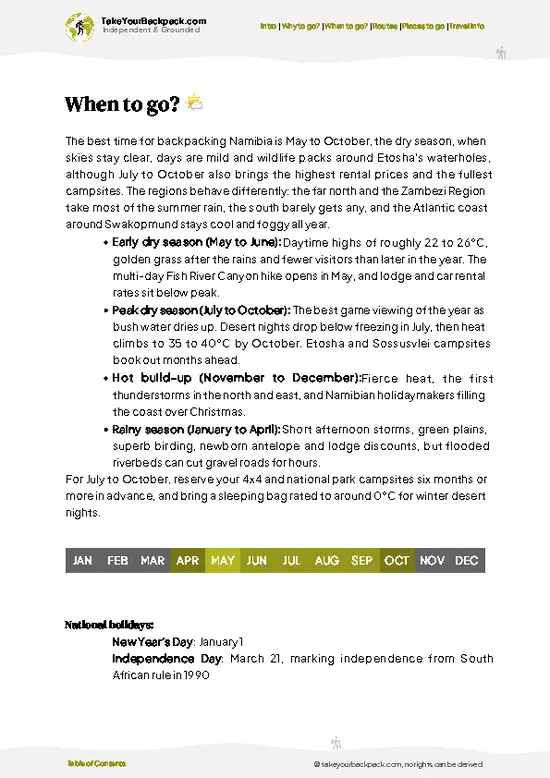
source: climatestotravel.comJANJanuary: fair for travelingFEBFebruary: fair for travelingMARMarch: fair for travelingAPRApril: fair for travelingMAYMay: highly recommended for travelingJUNJune: highly recommended for travelingJULJuly: excellent for travelingAUGAugust: excellent for travelingSEPSeptember: highly recommended for travelingOCTOctober: highly recommended for travelingNOVNovember: fair for travelingDECDecember: fair for traveling
when-to-go

✈️ The backpacker research shortcutNamibia Travel Guide

An offline-friendly backpacking guide with optimized travel routes, ranked highlights, transport advice, and the best areas to stay.
example page 0 from our offline Travel Guide for Namibia
example page 1 from our offline Travel Guide for Namibia
example page 2 from our offline Travel Guide for Namibia
example page 3 from our offline Travel Guide for Namibia
example page 4 from our offline Travel Guide for Namibia
example page 5 from our offline Travel Guide for Namibia
example page 6 from our offline Travel Guide for Namibia
example page 7 from our offline Travel Guide for Namibia
The digital guide (318 pages) contains:
79 highlights, ranked by travel appeal
Optimized 5, 10 & 15-day travel routes
Cities, national parks, landmarks, beaches
How to get around
Offline-friendly for travel without Wi-Fi
👉 Click to see all 30+ guide features

📅 Plan smarter in minutes, not weeks
Month by month travel advice
Festivals & national holidays
Budget expectations

🗺️ Go to the right places, skip the overrated ones
Honest pros & cons of destinations
Top hikes, parks & viewpoints
Lesser-known places most travelers miss
Clear “worth it vs skip it” guidance

🛏️ Travel smoothly without rookie mistakes
Best areas to stay
Transport systems explained simply
Common scams & safety advice
SIM cards, money & practical tips

🌍 Understand the country, not just visit it
Culture & traditions
52 Essential phrases & customs
Festivals worth planning around
Traveler-friendly historical context
Insights that make places more meaningful

📱 Built for real travel conditions
Fully downloadable PDF
Works completely offline
Optimized for phone use
Useful in remote areas & buses
Everything in one place
Save weeks of stressful planning
Get instant access to your full guide. 30‑day money-back guarantee.


By proceeding you agree to our terms.
Sent to your inbox immediately after payment • 100% Secure Checkout
Best Backpacking Travel Advisor 2025 tourism awardBest Backpacking
Travel Advisor
2025
What others say about Take Your Backpack Guides:
⭐⭐⭐⭐⭐
Fantastic, amazing amount of information!
⭐⭐⭐⭐⭐
My goodness this is amazing, it's what I've been looking for hats off too you!
⭐⭐⭐⭐⭐
I think this is absolutely BRILLIANT
⭐⭐⭐⭐
Very complete and informative. It's still missing places, but I gotta to commend you
⭐⭐⭐⭐⭐
This is truly amazing, thank you, can't wait to explore it with my kids!
⭐⭐⭐⭐⭐
Awesome resource, thank you!
⭐⭐⭐⭐⭐
This is amazing! Can't wait to explore the ones I haven't seen
⭐⭐⭐⭐
I love this! Well done, great idea.
⭐⭐⭐⭐⭐
Thanks for taking the time to make this gem!
⭐⭐⭐⭐⭐
This might be the best website I've ever seen.
⭐⭐⭐⭐⭐
Congratulations, and thank you so much for your work; it's incredibly valuable.
⭐⭐⭐⭐
In all seriousness I think you did a great job pointing out the important spots
⭐⭐⭐⭐⭐
10/10 very good
⭐⭐⭐⭐⭐
As someone who's only just starting to visit regularly this is awesome, thank you.
⭐⭐⭐⭐
Thank you very much! I'm going to visit my dad, it's going to be very useful!
⭐⭐⭐⭐⭐
This is really cool! We'll be travelling for the first time and this definitely come in handy.
⭐⭐⭐⭐⭐
You are now our minister of culture, congratulations 👨‍💼
⭐⭐⭐⭐⭐
Just wanted to tell you that this is a pearl! Going to follow your recommendations.
⭐⭐⭐⭐⭐
This is so cool. I'll definitely be using the resource for my travels soon.
⭐⭐⭐⭐⭐
This is very impressive! Good work.
⭐⭐⭐⭐⭐
This is an amazing and informative site. Very well done!

🛏️ Where to stay?Choosing the right base

Windhoek’s backpacker sweet spot is the central area around the city center and the adjacent Klein Windhoek neighborhood. This zone nails the balance between safety, social buzz, and budget-friendly options. It’s where you’ll find the densest cluster of hostels, which means easy access to fellow travelers and a built-in social scene without having to hunt for it. The vibe here is relaxed but lively—think casual bars, local eateries, and a steady flow of people swapping stories over cheap drinks.

Compared to the more residential suburbs or the business-heavy districts, this area feels more approachable … read more 👉
Windhoek’s backpacker sweet spot is the central area around the city center and the adjacent Klein Windhoek neighborhood. This zone nails the balance between safety, social buzz, and budget-friendly options. It’s where you’ll find the densest cluster of hostels, which means easy access to fellow travelers and a built-in social scene without having to hunt for it. The vibe here is relaxed but lively—think casual bars, local eateries, and a steady flow of people swapping stories over cheap drinks.

Compared to the more residential suburbs or the business-heavy districts, this area feels more approachable for solo backpackers. It’s compact enough to walk or bike around, which saves time and money on transport, but still offers enough variety to keep things interesting. Safety-wise, it’s generally solid, especially around the main streets where hostels and cafes are concentrated, though standard urban caution applies.

If you stray too far into the outskirts or upscale neighborhoods, you’ll trade off social opportunities and budget options for quiet and comfort—but that’s a different game. For backpackers who want to maximize interaction and keep costs low without sacrificing a sense of security, the city center and Klein Windhoek form the logical base camp. It’s the sweet spot where your time, money, and comfort align to fuel a memorable Windhoek experience.

🚌 Getting aroundMoving around without the hassle

Windhoek moves at its own rhythm—neither a frantic rush nor a laid-back drift. The city’s pulse is a blend of orderly beats and spontaneous bursts, where formal schedules exist but are often bent by the realities of local life. You’ll find that time here is a flexible concept, shaped by a mix of official timetables and the improvisational spirit of its people. Understanding this flow is your first win: it means you can plan smartly but stay open to the unexpected, turning transit into a strategic game rather than a frustrating chore.


  • Walking: The most reliable and cost-free way to navigate central Windhoek. The city’s compact layout means many key spots are within a 20-30 minute stroll, giving you control over your pace and route. No schedules, no fares, just your own two feet and the
read more 👉
Windhoek moves at its own rhythm—neither a frantic rush nor a laid-back drift. The city’s pulse is a blend of orderly beats and spontaneous bursts, where formal schedules exist but are often bent by the realities of local life. You’ll find that time here is a flexible concept, shaped by a mix of official timetables and the improvisational spirit of its people. Understanding this flow is your first win: it means you can plan smartly but stay open to the unexpected, turning transit into a strategic game rather than a frustrating chore.


  • Walking: The most reliable and cost-free way to navigate central Windhoek. The city’s compact layout means many key spots are within a 20-30 minute stroll, giving you control over your pace and route. No schedules, no fares, just your own two feet and the chance to soak in street life and local markets.


  • Minibus Taxis: The backbone of budget transit, these shared vans run on semi-fixed routes but rarely on strict timetables. Expect departures when full, which can mean waiting or quick departures depending on the time of day. Fares hover around N$5-10 (roughly $0.30-$0.60), making them unbeatable for price, though comfort and predictability take a hit—crowded and sometimes chaotic, but a genuine local experience.


  • City Buses: Operated by the Windhoek City Council, these buses have set routes and schedules, typically running from early morning (around 6:00 AM) until early evening (about 6:00 PM). Tickets cost around N$10-15 ($0.60-$1), offering a balance of affordability and comfort. They’re slower than taxis but more predictable, ideal if you want to avoid the unpredictability of minibus taxis.


  • Car Rentals: For those who prioritize comfort and flexibility over cost, renting a car is the way to go. Prices start around N$400 ($25) per day, with the freedom to explore beyond the city limits on your own schedule. This option trades money for time and comfort, especially useful if your itinerary includes outlying attractions or if you’re traveling in a group.


  • Bicycle Rentals: A niche but growing option for the budget traveler who wants speed and independence without the cost of a car. Rentals typically run N$50-100 ($3-$6) per day. Windhoek’s terrain is moderately hilly, so this choice demands some fitness but rewards with quick, flexible movement and a fresh perspective on the city’s layout.


Mastering Windhoek’s transit means balancing these trade-offs: sacrifice a bit of comfort for the authentic buzz of minibus taxis, or spend more for the predictability of city buses and car rentals. Walking and biking offer zero-cost freedom but require time and energy. Your smartest move is to mix and match based on your daily priorities—turning the city’s transit into a puzzle you solve with savvy, not stress.

👛 Costs (as of 16 January 2025)What things cost and how to budget

Backpacking in Windhoek, Namibia, offers a clear-cut trade-off between cost and comfort, with prices that reward savvy planning and local insight.
  • Dorm Accommodation (High Season): Expect to pay around $15 to $25 per night. High season pushes prices up due to demand, but you still get clean, basic hostels with essential amenities.
  • Dorm Accommodation (Off-Season): Prices drop to about $10 to $18 per night. Off-season is quieter, so you can negotiate or find deals, making it easier to stretch your budget without sacrificing safety or cleanliness.
  • Meals: Budget meals from street vendors or local eateries run about $3 to $7. If you opt for a mid-range restaurant, expect to pay $8 to $15 for a decent meal. Cooking your own food can cut costs further but requires access to kitchen facilities.
read more 👉
Backpacking in Windhoek, Namibia, offers a clear-cut trade-off between cost and comfort, with prices that reward savvy planning and local insight.
  • Dorm Accommodation (High Season): Expect to pay around $15 to $25 per night. High season pushes prices up due to demand, but you still get clean, basic hostels with essential amenities.
  • Dorm Accommodation (Off-Season): Prices drop to about $10 to $18 per night. Off-season is quieter, so you can negotiate or find deals, making it easier to stretch your budget without sacrificing safety or cleanliness.
  • Meals: Budget meals from street vendors or local eateries run about $3 to $7. If you opt for a mid-range restaurant, expect to pay $8 to $15 for a decent meal. Cooking your own food can cut costs further but requires access to kitchen facilities.
  • Local Transport: Minibus taxis are the backbone here, costing roughly $0.50 to $1 per trip within the city. They’re frequent but can be crowded and unpredictable, so factor in some patience.
  • City Transport Pass: Windhoek doesn’t have a formal city transport pass system for tourists, so daily transport costs depend on usage of minibus taxis or occasional car hires, which can run $20 to $40 per day if you prefer convenience over local transport.
  • Basic Activities/Entry Fees: Museums, cultural sites, and parks typically charge between $3 and $10. Some attractions might be free or ask for a small donation, but plan for a few paid visits to get the full experience.
  • Miscellaneous Expenses: This covers bottled water, snacks, occasional internet cafes, or small tips. Budget around $3 to $7 daily, depending on your habits and needs.

Add it all up, and you’re looking at a daily budget roughly between $25 and $50. The lower end demands a strict budget and local transport use, while the upper end buys more comfort and flexibility. Knowing these trade-offs lets you decide exactly where to invest your time and money for the best experience in Windhoek.
⚠️ Prices can change and everyone travels differently, so take this as a rough guide. Hope it helps you plan your adventure!

🚌 Day tripsWhere to go beyond the main area

Windhoek serves as an excellent launchpad for exploring Namibia’s diverse landscapes and cultures. With a bit of planning, you can dive into unforgettable experiences without the hassle of overnight stays. Here are some top day trips that pack a punch.

Sossusvlei
A trip to Sossusvlei is like stepping into another world. The iconic red dunes are a photographer’s dream, especially at sunrise when the light dances across the sand. It’s about a 5-hour drive from Windhoek, so an early start is essential. Budget around $30 for fuel and park entry. The best time to visit is during the cooler months from May to September. A common mistake is underestimating the time needed to explore; plan to spend a good part of the day here to soak it all in.
👉 Explore Sossusvlei

Okahandja Craft Market
Just … read more 👉
Windhoek serves as an excellent launchpad for exploring Namibia’s diverse landscapes and cultures. With a bit of planning, you can dive into unforgettable experiences without the hassle of overnight stays. Here are some top day trips that pack a punch.

Sossusvlei
A trip to Sossusvlei is like stepping into another world. The iconic red dunes are a photographer’s dream, especially at sunrise when the light dances across the sand. It’s about a 5-hour drive from Windhoek, so an early start is essential. Budget around $30 for fuel and park entry. The best time to visit is during the cooler months from May to September. A common mistake is underestimating the time needed to explore; plan to spend a good part of the day here to soak it all in.
👉 Explore Sossusvlei

Okahandja Craft Market
Just a short 45-minute drive from Windhoek, the Okahandja Craft Market is a treasure trove of local art and crafts. You can find everything from traditional carvings to vibrant textiles. It’s a great way to support local artisans while picking up unique souvenirs. Expect to spend around $10 for transport and a few bucks more if you decide to splurge on a piece of art. Weekends are particularly lively, but weekdays offer a quieter experience. First-timers often miss the chance to haggle; don’t be shy—it’s part of the fun!


Waterberg Plateau
The Waterberg Plateau is a stunning natural formation that offers both hiking and wildlife viewing. It’s about a 3-hour drive from Windhoek, making it a manageable day trip. The park entrance fee is around $10, plus fuel costs. The best time to visit is during the dry season when animals congregate around water sources. A common pitfall is not bringing enough water for hikes; pack extra to stay hydrated.
👉 Explore Waterberg Plateau

Windhoek City Tour
If you prefer to stay close to home, a city tour of Windhoek itself can be surprisingly enriching. Explore the Independence Memorial Museum, the vibrant local markets, and sample traditional Namibian cuisine. You can easily walk or take a local taxi, keeping costs under $20 for the day. The best time to explore is in the cooler mornings or late afternoons. Many first-timers overlook the local food scene; don’t miss out on trying a boerewors roll!


Spitzkoppe
Spitzkoppe, often called the ”Matterhorn of Namibia,” is about a 4-hour drive from Windhoek. The granite peaks are breathtaking, and the area is rich in rock art. Plan for around $25 for fuel and park entry. The cooler months are ideal for hiking and exploring. A common mistake is not allowing enough time for the drive; the scenery is worth stopping for, so take your time.
👉 Explore Spitzkoppe
Want to know what more Namibia offers?
The Namibia Travel Guide describes 79 highlights, from cities to national parks, from beaches to hikes

Get the Travel Guide -

🍲 FoodEating & Drinking in Windhoek

In Windhoek, local cuisine is a feast for the senses. You can’t leave without trying biltong, a dried meat snack that’s a staple here. It’s like beef jerky but with a unique spice blend that’ll have you reaching for more. Pair it with kapana, street-side grilled meat served with a spicy sauce. The aroma wafts through the air, drawing you in like a moth to a flame.

For a true taste of Namibia, sample pap, a maize porridge that’s often served with stews. It’s filling and comforting, perfect after a day of exploring. Don’t skip the Oshikoto, a traditional beer made from millet. It’s often enjoyed in communal settings, so grab a cup and join the locals.

Backpackers will find their culinary adventures in markets and street food stalls. The Windhoek Craft Market is a vibrant spot where you can … read more 👉
In Windhoek, local cuisine is a feast for the senses. You can’t leave without trying biltong, a dried meat snack that’s a staple here. It’s like beef jerky but with a unique spice blend that’ll have you reaching for more. Pair it with kapana, street-side grilled meat served with a spicy sauce. The aroma wafts through the air, drawing you in like a moth to a flame.

For a true taste of Namibia, sample pap, a maize porridge that’s often served with stews. It’s filling and comforting, perfect after a day of exploring. Don’t skip the Oshikoto, a traditional beer made from millet. It’s often enjoyed in communal settings, so grab a cup and join the locals.

Backpackers will find their culinary adventures in markets and street food stalls. The Windhoek Craft Market is a vibrant spot where you can nibble on local bites while mingling with artisans. Casual eateries dot the city, offering hearty meals without breaking the bank.

When dining, embrace the communal spirit. Sharing food is common, and you’ll often see groups gathered around a table, laughing and enjoying each other’s company. Just remember to greet your hosts; it’s a sign of respect and opens the door to deeper connections.

🛡️ SafetySafety Tips and Common Scams in Windhoek

Windhoek is generally safe for backpackers, but like any city, it has its quirks. Stay alert in crowded areas like the central market, where pickpockets may lurk. Keep your valuables close and avoid flashy displays of wealth.

If you’re traveling solo, especially at night, stick to well-lit streets and avoid wandering into less populated areas. Taxis are a reliable option after dark; just ensure you use reputable services or ride-hailing apps.

Scams are rare, but be cautious of overly friendly locals who might offer unsolicited help. They may expect a tip or try to steer you toward shops where they earn a commission.

Everyday annoyances include aggressive street vendors; a polite but firm “no, thank you” usually does the trick. Overall, Windhoek is manageable with a bit of awareness. … read more 👉
Windhoek is generally safe for backpackers, but like any city, it has its quirks. Stay alert in crowded areas like the central market, where pickpockets may lurk. Keep your valuables close and avoid flashy displays of wealth.

If you’re traveling solo, especially at night, stick to well-lit streets and avoid wandering into less populated areas. Taxis are a reliable option after dark; just ensure you use reputable services or ride-hailing apps.

Scams are rare, but be cautious of overly friendly locals who might offer unsolicited help. They may expect a tip or try to steer you toward shops where they earn a commission.

Everyday annoyances include aggressive street vendors; a polite but firm “no, thank you” usually does the trick. Overall, Windhoek is manageable with a bit of awareness. Carry yourself confidently, and you’ll navigate the city like a pro.

More places to explore across Namibia

Windhoek isn’t the only highlight in Namibia. Explore all what Namibia has to offer.
Country photo of Namibia

We 💚 feedbackParting advice and final tips

Windhoek has a laid-back vibe that feels refreshingly authentic. You’ll find a mix of German colonial architecture and vibrant local markets. The best surprise? The craft beer scene—don’t skip the local breweries. Just a heads-up: the city can be a bit spread out, so plan your transport wisely. Embrace the slower pace; it’s part of the charm. Take time to chat with locals; their stories add depth to your experience. Windhoek isn’t just a stopover; it’s a place that invites you to linger.

✍️ Help improve this page!
The information on this page is based on in-depth research, insights shared by experienced travelers, and feedback from the local travel community in Namibia. While every effort is made to keep the information accurate and current, conditions can change — so if you spot anything incorrect or outdated, please get in touch.


🙋‍♂️ Give feedback

👋 Meet the founderWho’s Behind Take Your Backpack?

Johan, backpacker and founder of TakeYourBackpackHi, I’m Johan (Netherlands 🇳🇱), the creator of TakeYourBackpack. Over the past decade, I’ve backpacked through 80+ countries across six continents, gaining extensive experience with independent travel, long-term trips, and overland routes.

This site is built on a combination of firsthand travel experience and carefully curated insights from other backpackers. Many guides are based on places I’ve personally visited, while others bring together tips, observations, and practical advice shared by trusted travelers I’ve met along the way.

The goal is to provide realistic, experience-driven guidance — not generic itineraries — so you can explore destinations with better context, clearer expectations, and more confidence.

Get full Namibia guide •
Instant download • 79 highlights • Full Offline guide