×

Nauru🇳🇷 | festivalsNauru Cultural Festivaltraditional dance, indigenous crafts, local storytelling, island cuisine | things to do and best time to go

Explore Buada Lagoon BeachExplore Nauru Sports Festival

Backpacking in Nauru Cultural
🏆 Top pickfestival ranked #1
By Johan Kruseman 🇳🇱 | Updated September 4, 2026

Most write-ups sell Nauru Cultural Festival as a big, polished “national showcase”; in reality it feels more like an island-wide community gathering where you can accidentally end up dancing next to the guy who stamped your passport that morning. The festival usually centers around Aiwo and Yaren districts on the southwest of Nauru, close to the government area and main services, so you’re never far from the airstrip or the island’s thin strip of guesthouses.

This is a proudly local event: traditional chants, pan-Pacific dance, church choirs, and youth crews mixing island beats with pop tracks blasted from slightly overworked speakers. Expect families, school groups, church elders, and a handful of curious outsiders. The vibe is direct and unscripted, with performances, food stalls, and sports or craft demos spread over a few days rather than a single marathon night. It’s worth visiting if you want raw, small-island culture over big-stage production and don’t mind rough edges, variable schedules, and zero anonymity.

Discover everything you want to know in the 📖 Nauru Travel Guide.


Get your Nauru guide
17 ranked highlights, routes & tips, works offline (87 pages)
Loading the map 🌍
CLICK TO FILTER
villages
landmarks
national parks
hikes
beaches
attractions
festivals
SHOW COUNTRY’S BESTSHOW ALL

✨ Why go?
Ranked #1 festival in Nauru
What sets this place apart

Backpackers flock to the Nauru Cultural Festival for a reason: it’s a dynamic hub of social energy. Picture this: vibrant performances, traditional dances, and the palpable buzz of a temporary community forming around you. This isn’t just a festival; it’s a chance to dive deep into cultural immersion. You’ll taste local dishes, hear stories passed down through generations, and connect with the islanders in a way that transcends typical tourist experiences.

Planning your route around this festival isn’t just smart; it’s essential. The affordability of Nauru compared to similar events elsewhere means you can stretch your budget without sacrificing authenticity. Think about it: while others are shelling out for overpriced experiences, you’re soaking in the real deal.

Plus, the festival fits … read more 👉
Backpackers flock to the Nauru Cultural Festival for a reason: it’s a dynamic hub of social energy. Picture this: vibrant performances, traditional dances, and the palpable buzz of a temporary community forming around you. This isn’t just a festival; it’s a chance to dive deep into cultural immersion. You’ll taste local dishes, hear stories passed down through generations, and connect with the islanders in a way that transcends typical tourist experiences.

Planning your route around this festival isn’t just smart; it’s essential. The affordability of Nauru compared to similar events elsewhere means you can stretch your budget without sacrificing authenticity. Think about it: while others are shelling out for overpriced experiences, you’re soaking in the real deal.

Plus, the festival fits seamlessly into longer travel plans. It’s a perfect pit stop on your journey through the Pacific, allowing you to recharge your spirit and gather stories that will fuel your adventures ahead. Don’t miss this chance to be part of something bigger. The festival is a launchpad for exploration, where every moment spent is an investment in your travel narrative.
Want to include Nauru Cultural Festival in your Nauru route?
Create a personalized Nauru itinerary that includes Nauru Cultural Festival and the places that fit your trip — based on your travel style, budget, and available time. Get your route in seconds.

Generate my trip

💡 HighlightsPlaces and moments you shouldn't skip

  • Traditional music and dance performances — The live singing and island rhythms are raw and immediate, not polished for tourists. Because Nauru is tiny, performances feel like a family event: close-up, participatory, and full of small local variations you won’t see on big stages elsewhere.
  • Storytelling and oral-history sessions — Elders share origin stories, personal memories, and local legends in a conversational way that keeps language and nuance alive. It’s special because you get an intimate window into community memory rather than a museumified version of history.
  • Hands-on craft demonstrations — Local makers show weaving, shell jewelry and other traditional crafts, often using materials from the island. Watching and trying these techniques connects you to everyday creativity and practical
read more 👉
  • Traditional music and dance performances — The live singing and island rhythms are raw and immediate, not polished for tourists. Because Nauru is tiny, performances feel like a family event: close-up, participatory, and full of small local variations you won’t see on big stages elsewhere.
  • Storytelling and oral-history sessions — Elders share origin stories, personal memories, and local legends in a conversational way that keeps language and nuance alive. It’s special because you get an intimate window into community memory rather than a museumified version of history.
  • Hands-on craft demonstrations — Local makers show weaving, shell jewelry and other traditional crafts, often using materials from the island. Watching and trying these techniques connects you to everyday creativity and practical knowledge that’s been passed down through families.
  • Local food stalls and communal feasts — Expect simple, delicious island fare: fresh fish, coconut-based dishes and snacks prepared in traditional styles. The vibe is communal—eating together, swapping plates, and tasting recipes that are tied to place and family rather than restaurant menus.
  • Workshops and participatory activities — Short lessons in dance steps, language phrases, or crafting let visitors join in instead of just watching. That hands-on access, plus the friendly scale of the event, makes the festival feel like being invited into someone’s home celebration rather than a distant spectacle.
Spotted a mistake or missing something? Contact us.

🌤️ When to go?When is the celebration of Nauru Cultural Festival?


  • Topic: Weather – Nauru’s tropical climate means it’s hot and humid year-round, but the dry season from May to October offers more comfortable conditions with less rain, making it easier to move around and enjoy outdoor festival events without soggy gear or slippery trails.

  • Topic: Temperature – Expect highs around 29-31°C (84-88°F) during the dry season, which is manageable if you pace yourself and stay hydrated. The wet season can push temps higher with added humidity, turning simple walks into sweat sessions.

  • Topic: Daylight Hours – Near the equator, daylight stays steady at about 12 hours year-round, so no need to rush daylight-wise. You can plan your festival days knowing you’ll have consistent light from roughly 6 AM to 6 PM.

  • Topic: Crowds – The festival draws a local crowd and
read more 👉

  • Topic: Weather – Nauru’s tropical climate means it’s hot and humid year-round, but the dry season from May to October offers more comfortable conditions with less rain, making it easier to move around and enjoy outdoor festival events without soggy gear or slippery trails.

  • Topic: Temperature – Expect highs around 29-31°C (84-88°F) during the dry season, which is manageable if you pace yourself and stay hydrated. The wet season can push temps higher with added humidity, turning simple walks into sweat sessions.

  • Topic: Daylight Hours – Near the equator, daylight stays steady at about 12 hours year-round, so no need to rush daylight-wise. You can plan your festival days knowing you’ll have consistent light from roughly 6 AM to 6 PM.

  • Topic: Crowds – The festival draws a local crowd and a smattering of tourists. Visiting during the dry season means you’ll catch the event at its liveliest without the crush of peak tourist influx, preserving your vibe and space.

  • Topic: Seasonal Activities – The dry season aligns with traditional fishing and cultural performances, adding layers to the festival experience. Wet season events can be sporadic or canceled due to weather, so timing here is key for full immersion.

  • Topic: Price Fluctuations – Flights and accommodations tend to spike slightly during the dry season festival window. Booking early locks in better rates, but the premium is worth it to avoid the discomfort and unpredictability of the wet season.


Pro-tip: Aim for the early dry season—May or June—to catch the festival’s full energy before prices peak and crowds swell, keeping your budget and stamina intact for the moments that count.


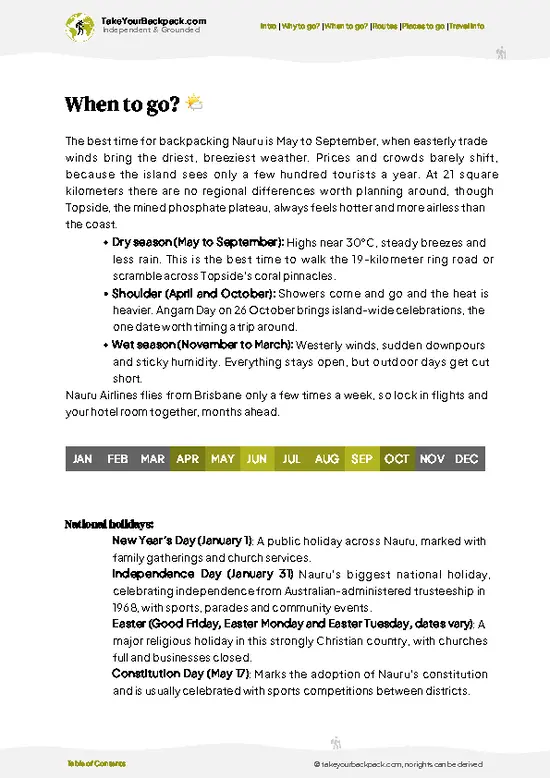
source: climatestotravel.comJANJanuary: not recommended for travelingFEBFebruary: not recommended for travelingMARMarch: not recommended for travelingAPRApril: not recommended for travelingMAYMay: excellent for travelingJUNJune: not recommended for travelingJULJuly: not recommended for travelingAUGAugust: not recommended for travelingSEPSeptember: not recommended for travelingOCTOctober: not recommended for travelingNOVNovember: not recommended for travelingDECDecember: not recommended for traveling

✈️ The backpacker research shortcutNauru Travel Guide

An offline-friendly backpacking guide with optimized travel routes, ranked highlights, transport advice, and the best areas to stay.
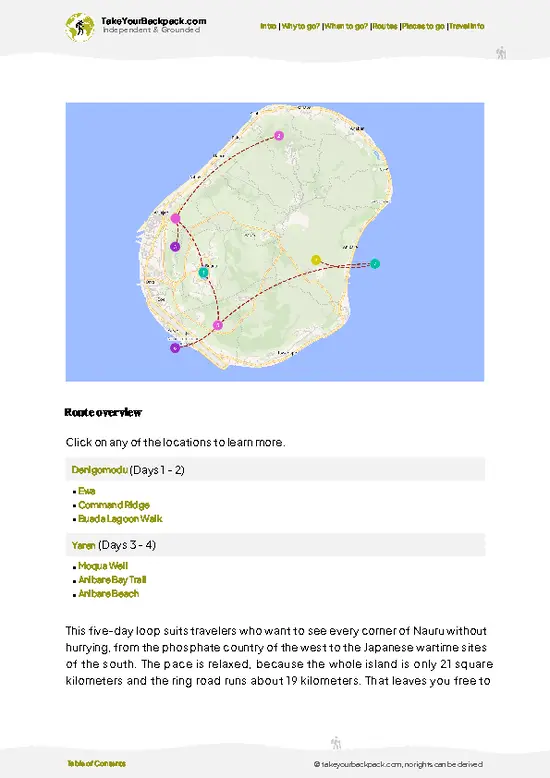
example page 0 from our offline Travel Guide for Nauru
example page 1 from our offline Travel Guide for Nauru
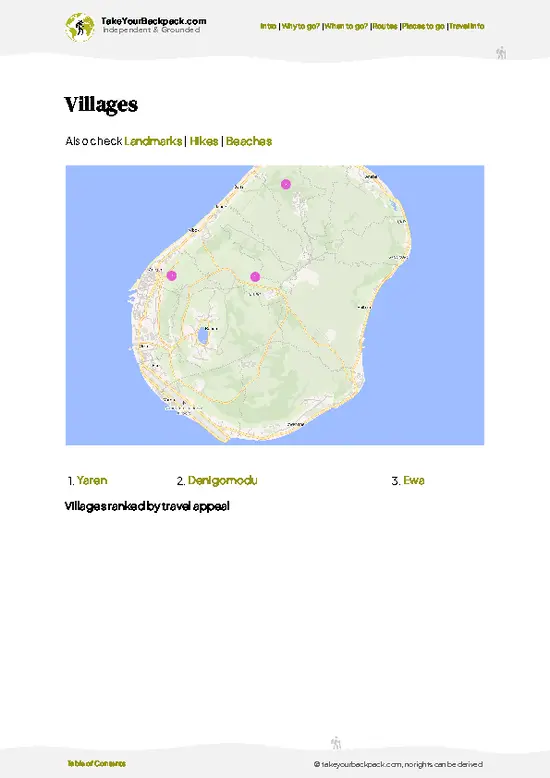
example page 2 from our offline Travel Guide for Nauru
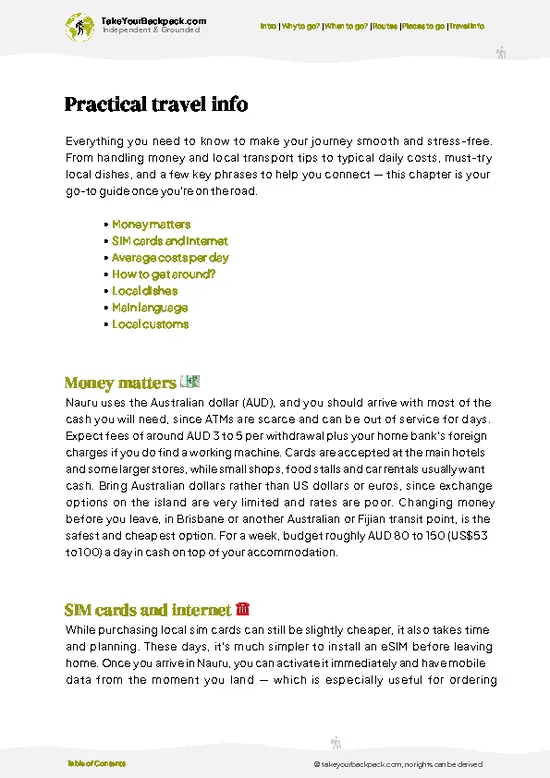
example page 3 from our offline Travel Guide for Nauru
example page 4 from our offline Travel Guide for Nauru
example page 5 from our offline Travel Guide for Nauru
example page 6 from our offline Travel Guide for Nauru
example page 7 from our offline Travel Guide for Nauru
The digital guide (87 pages) contains:
17 highlights, ranked by travel appeal
Optimized 2, 3 & 5-day travel routes
Cities, national parks, landmarks, beaches
How to get around
Offline-friendly for travel without Wi-Fi
👉 Click to see all 30+ guide features

📅 Plan smarter in minutes, not weeks
Month by month travel advice
Festivals & national holidays
Budget expectations

🗺️ Go to the right places, skip the overrated ones
Honest pros & cons of destinations
Top hikes, parks & viewpoints
Lesser-known places most travelers miss
Clear “worth it vs skip it” guidance

🛏️ Travel smoothly without rookie mistakes
Best areas to stay
Transport systems explained simply
Common scams & safety advice
SIM cards, money & practical tips

🌍 Understand the country, not just visit it
Culture & traditions
52 Essential phrases & customs
Festivals worth planning around
Traveler-friendly historical context
Insights that make places more meaningful

📱 Built for real travel conditions
Fully downloadable PDF
Works completely offline
Optimized for phone use
Useful in remote areas & buses
Everything in one place
Save weeks of stressful planning
Get instant access to your full guide. 30‑day money-back guarantee.
+ Add another guide for just R$44.25

By proceeding you agree to our terms.
Sent to your inbox immediately after payment • 100% Secure Checkout
Best Backpacking Travel Advisor 2025 tourism awardBest Backpacking
Travel Advisor
2025
What others say about Take Your Backpack Guides:
⭐⭐⭐⭐⭐
Fantastic, amazing amount of information!
⭐⭐⭐⭐⭐
My goodness this is amazing, it's what I've been looking for hats off too you!
⭐⭐⭐⭐⭐
I think this is absolutely BRILLIANT
⭐⭐⭐⭐
Very complete and informative. It's still missing places, but I gotta to commend you
⭐⭐⭐⭐⭐
This is truly amazing, thank you, can't wait to explore it with my kids!
⭐⭐⭐⭐⭐
Awesome resource, thank you!
⭐⭐⭐⭐⭐
This is amazing! Can't wait to explore the ones I haven't seen
⭐⭐⭐⭐
I love this! Well done, great idea.
⭐⭐⭐⭐⭐
Thanks for taking the time to make this gem!
⭐⭐⭐⭐⭐
This might be the best website I've ever seen.
⭐⭐⭐⭐⭐
Congratulations, and thank you so much for your work; it's incredibly valuable.
⭐⭐⭐⭐
In all seriousness I think you did a great job pointing out the important spots
⭐⭐⭐⭐⭐
10/10 very good
⭐⭐⭐⭐⭐
As someone who's only just starting to visit regularly this is awesome, thank you.
⭐⭐⭐⭐
Thank you very much! I'm going to visit my dad, it's going to be very useful!
⭐⭐⭐⭐⭐
This is really cool! We'll be travelling for the first time and this definitely come in handy.
⭐⭐⭐⭐⭐
You are now our minister of culture, congratulations 👨‍💼
⭐⭐⭐⭐⭐
Just wanted to tell you that this is a pearl! Going to follow your recommendations.
⭐⭐⭐⭐⭐
This is so cool. I'll definitely be using the resource for my travels soon.
⭐⭐⭐⭐⭐
This is very impressive! Good work.
⭐⭐⭐⭐⭐
This is an amazing and informative site. Very well done!

🛏️ Where to stay?Choosing the right base

When you’re gearing up for the Nauru Cultural Festival, the right place to stay can amplify your experience. Head to the area around Yaren, the capital. It’s not just central; it’s buzzing with energy. You’ll find a mix of locals and fellow travelers, creating a vibrant atmosphere.

Look for accommodations near the festival grounds. This keeps you close to the action, so you can dive into the festivities without wasting time on long commutes. Plus, being in the thick of it means you can easily join impromptu gatherings or late-night conversations that spark new friendships.

Don’t overlook the … read more 👉
When you’re gearing up for the Nauru Cultural Festival, the right place to stay can amplify your experience. Head to the area around Yaren, the capital. It’s not just central; it’s buzzing with energy. You’ll find a mix of locals and fellow travelers, creating a vibrant atmosphere.

Look for accommodations near the festival grounds. This keeps you close to the action, so you can dive into the festivities without wasting time on long commutes. Plus, being in the thick of it means you can easily join impromptu gatherings or late-night conversations that spark new friendships.

Don’t overlook the coastal areas, either. Staying near the beach offers a refreshing escape after a day of cultural immersion. You can unwind with stunning ocean views, and the sound of waves crashing is the perfect backdrop for reflection on your adventures.

Safety is key, especially for solo backpackers. Stick to well-lit areas and choose spots that are known for their welcoming vibe. This way, you can focus on soaking in the festival’s rich traditions and lively performances, rather than worrying about logistics.

In Nauru, the journey is as rewarding as the destination. Choose wisely, and you’ll preserve your energy and budget for the moments that truly matter.

👛 Costs (as of 4 September 2026)How expensive it really is

The Nauru Cultural Festival is a vibrant celebration, but navigating the costs can be tricky. Here’s how to budget effectively for an authentic experience without breaking the bank.
  • Festival Tickets: Expect to pay around $10 to $20 USD for entry. This fee typically covers access to various performances and activities, but check if there are any special events that might cost extra.
  • Accommodation: Options range from budget guesthouses at about $50 to $100 USD per night to mid-range hotels that can go up to $150 USD. Book early, as places fill up quickly during the festival.
  • Local Transport: Public transport is limited, so budget around $5 to $15 USD for local buses or shared taxis. Renting a bicycle can be a fun and economical way to explore, costing about $10 USD per day.
  • Food & Drinks: Meals
read more 👉
The Nauru Cultural Festival is a vibrant celebration, but navigating the costs can be tricky. Here’s how to budget effectively for an authentic experience without breaking the bank.
  • Festival Tickets: Expect to pay around $10 to $20 USD for entry. This fee typically covers access to various performances and activities, but check if there are any special events that might cost extra.
  • Accommodation: Options range from budget guesthouses at about $50 to $100 USD per night to mid-range hotels that can go up to $150 USD. Book early, as places fill up quickly during the festival.
  • Local Transport: Public transport is limited, so budget around $5 to $15 USD for local buses or shared taxis. Renting a bicycle can be a fun and economical way to explore, costing about $10 USD per day.
  • Food & Drinks: Meals at local eateries will set you back about $5 to $15 USD. If you want to try some festival specialties, budget for a few splurges at food stalls, which can range from $3 to $10 USD per dish.
  • Miscellaneous Expenses: Set aside $20 to $50 USD for souvenirs, tips, or unexpected costs. This cushion will help you enjoy spontaneous moments without stress.

Keep these figures in mind to preserve your energy and budget for the experiences that truly matter.
⚠️ Prices can change and everyone travels differently, so take this as a rough guide. Hope it helps you plan your adventure!

🍲 FoodWhat to Eat & Drink

At the Nauru Cultural Festival, food is more than sustenance; it’s a celebration. Dive into the local specialties like coconut crab and palauan, a traditional dish made from fish wrapped in banana leaves. These flavors are a direct line to Nauru’s heart, and you’ll want to savor every bite.

Festival stalls buzz with energy, offering everything from grilled fish to tropical fruits. Don’t miss out on sago pudding—a sweet, sticky treat that’s a crowd favorite. Pair it with a refreshing coconut drink or a local brew to wash it down. The drinks here are as vibrant as the atmosphere, and you’ll find yourself drawn to the cool, sweet flavors of the island.

When it comes to etiquette, be ready to share. It’s common to swap bites with fellow festival-goers, so don’t hesitate to offer a taste of … read more 👉
At the Nauru Cultural Festival, food is more than sustenance; it’s a celebration. Dive into the local specialties like coconut crab and palauan, a traditional dish made from fish wrapped in banana leaves. These flavors are a direct line to Nauru’s heart, and you’ll want to savor every bite.

Festival stalls buzz with energy, offering everything from grilled fish to tropical fruits. Don’t miss out on sago pudding—a sweet, sticky treat that’s a crowd favorite. Pair it with a refreshing coconut drink or a local brew to wash it down. The drinks here are as vibrant as the atmosphere, and you’ll find yourself drawn to the cool, sweet flavors of the island.

When it comes to etiquette, be ready to share. It’s common to swap bites with fellow festival-goers, so don’t hesitate to offer a taste of your dish. Lines can get long, so patience is key; this is part of the experience. Bring cash, as many stalls may not accept cards, and be prepared for generous serving sizes—sharing is encouraged, but you might just want to keep that sago pudding all to yourself! Embrace the chaos and let the flavors guide your adventure.

FAQFrequently asked questions about Nauru Cultural

The Nauru Cultural Festival typically takes place in July and lasts for about 3 days. It is scheduled to coincide with Nauru Day celebrations. Exact dates may vary slightly each year.
Attendance to the Nauru Cultural Festival is generally free of charge. Some special events or workshops during the festival might have a small fee, usually under 10 AUD. Budget accordingly for food and souvenirs.
No, tickets are not usually required in advance for the Nauru Cultural Festival. Most events are open to the public on a first-come, first-served basis. However, if there are special workshops or performances, it is advisable to check locally for any reservation requirements.
⚠️ Things can change over time, so always validate details locally before you go.

Other Nauruan festivals near Nauru Cultural

Explore more nearby:


💡 Not sure where to go next?
Create a personalized itinerary for Nauru including Nauru Cultural and the places that fit your trip.

Generate my itinerary

👉 Discover all festivals

Or checkout all Nauru has to offer (think cities, towns, villages, national parks, hikes, beaches, festivals)
Country photo of Nauru

We 💚 feedbackParting advice and final tips

The Nauru Cultural Festival is a whirlwind of energy and tradition. Expect to be swept up in vibrant dances and heartfelt music that echo the island’s spirit. The best surprise? The locals’ warmth; they’ll pull you into their celebrations like you belong. Just a heads-up: accommodations can fill up fast, so book early to avoid scrambling. Embrace the chaos, savor the flavors, and let the rhythm of Nauru carry you. This isn’t just a festival; it’s a pulse you’ll want to feel.

✍️ Help improve this page!
The information on this page is based on in-depth research, insights shared by experienced travelers, and feedback from the local travel community in Nauru. While every effort is made to keep the information accurate and current, conditions can change — so if you spot anything incorrect or outdated, please get in touch.


🙋‍♂️ Give feedback

👋 Meet the founderWho’s Behind Take Your Backpack?

Johan, backpacker and founder of TakeYourBackpackHi, I’m Johan (Netherlands 🇳🇱), the creator of TakeYourBackpack. Over the past decade, I’ve backpacked through 80+ countries across six continents, gaining extensive experience with independent travel, long-term trips, and overland routes.

This site is built on a combination of firsthand travel experience and carefully curated insights from other backpackers. Many guides are based on places I’ve personally visited, while others bring together tips, observations, and practical advice shared by trusted travelers I’ve met along the way.

The goal is to provide realistic, experience-driven guidance — not generic itineraries — so you can explore destinations with better context, clearer expectations, and more confidence.

Get full Nauru guide •
Instant download • 17 highlights • Full Offline guide