×

Nauru🇳🇷 | beachesBuada Lagoon BeachInland lagoon, banana groves, still dark water, coconut shade | things to do and best time to go

Explore Anibare BeachExplore Nauru Cultural Festival

Backpacking in Buada Lagoon Beach
By Johan Kruseman 🇳🇱 | Updated October 13, 2026

Coconut fronds clatter overhead as you push past a curtain of banana leaves, and then the water appears, flat and dark green, with a smell of wet earth instead of salt. This is Buada Lagoon, in the interior of Nauru, and it is not a beach in the sandy sense. There is no surf, no reef and no snorkeling. The upside is real, though: shade, quiet, birdsong and a fringe of pandanus and gardens in the one fertile pocket of an island otherwise scarred by phosphate mining. It is clean, almost always empty, and a gentle place to cool off or simply sit. Skip it if you want sand and waves, because the coast does that better. Go if you want the island’s softest, greenest corner and an hour of peace. Food and beds are back toward the coast, so eat first. Bring water and repellent, and greet anyone you meet, since the land around the shore is family-owned.

Discover everything you want to know in the 📖 Nauru Travel Guide.


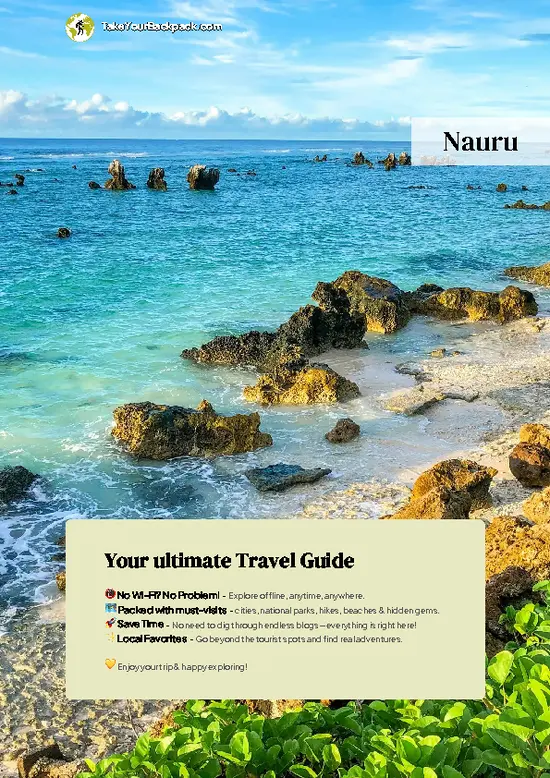
example page 0 from our offline Travel Guide for Nauru
example page 1 from our offline Travel Guide for Nauru
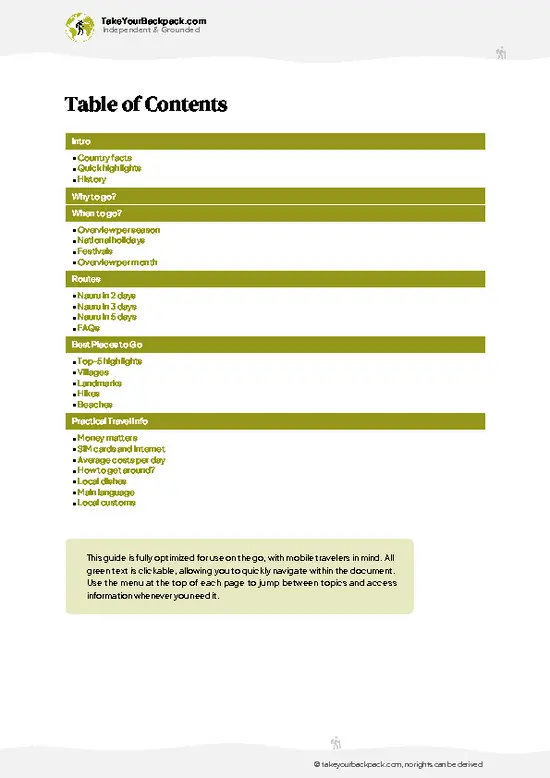
example page 2 from our offline Travel Guide for Nauru
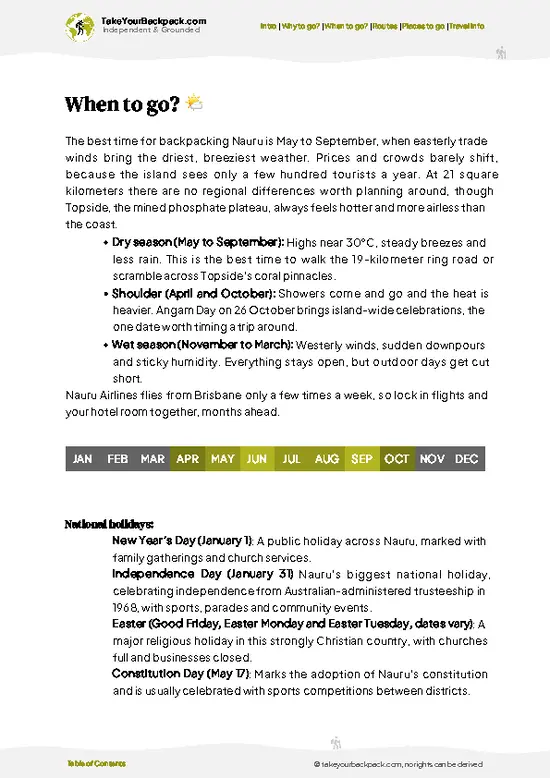
example page 3 from our offline Travel Guide for Nauru
example page 4 from our offline Travel Guide for Nauru
example page 5 from our offline Travel Guide for Nauru
example page 6 from our offline Travel Guide for Nauru
example page 7 from our offline Travel Guide for Nauru
Loading the map 🌍
CLICK TO FILTER
villages
landmarks
hikes
beaches
SHOW COUNTRY’S BESTSHOW ALL

✨ Why go?
Ranked #99 beach in Nauru
What makes this beach worth visiting

Nobody comes to Buada for a postcard beach. Backpackers stop because it shows you a side of Nauru that the coastal ring road never does. The Buada depression is the lowest, greenest ground on the island, and walking down into it from the dry, rocky plateau is a small shock. Coconut, banana, pandanus and almond trees crowd the water, and the air feels a few degrees softer under the canopy.

The second reason is people. The lagoon is a working part of village life, so you are likely to see locals fishing the still water and tending gardens along the edge. A wave and a few words usually lead to a conversation, and on an island this small that is how you learn where to eat and what to see next. It is also a rare spot for sitting under trees without a soundtrack of traffic.

Finally, it works as … read more 👉
Nobody comes to Buada for a postcard beach. Backpackers stop because it shows you a side of Nauru that the coastal ring road never does. The Buada depression is the lowest, greenest ground on the island, and walking down into it from the dry, rocky plateau is a small shock. Coconut, banana, pandanus and almond trees crowd the water, and the air feels a few degrees softer under the canopy.

The second reason is people. The lagoon is a working part of village life, so you are likely to see locals fishing the still water and tending gardens along the edge. A wave and a few words usually lead to a conversation, and on an island this small that is how you learn where to eat and what to see next. It is also a rare spot for sitting under trees without a soundtrack of traffic.

Finally, it works as a pause between the coast and the interior. Pair it with the wartime relics and mined plateau nearby, and you get a half-day loop that explains the whole island: the old phosphate wealth, the damage, and the patch of green that survived.

💡 HighlightsWhat this place is best known for

  1. Buada Lagoon shoreline: The reason to come. The still, dark water sits in a hollow ringed by tall coconut palms, and a slow walk along the edge takes in the best views. Mornings are calm and mirror-like, and the shade stays thick even at midday.
  2. Fishing and a quiet dip: Locals fish the lagoon, and you will often see lines in the water from the bank. Swimming here is a freshwater-style cool-down with no waves or current, best for a short float after a hot walk. Ask a local about the best entry point, since the edges can be muddy.
  3. Buada district gardens and groves: This is the only part of Nauru with real soil, and it shows. Banana plants, pandanus, breadfruit and vegetable plots surround the water, and the lanes between them are a gentle way to see how villagers live. Greet people as you go and
… read more 👉
  1. Buada Lagoon shoreline: The reason to come. The still, dark water sits in a hollow ringed by tall coconut palms, and a slow walk along the edge takes in the best views. Mornings are calm and mirror-like, and the shade stays thick even at midday.
  2. Fishing and a quiet dip: Locals fish the lagoon, and you will often see lines in the water from the bank. Swimming here is a freshwater-style cool-down with no waves or current, best for a short float after a hot walk. Ask a local about the best entry point, since the edges can be muddy.
  3. Buada district gardens and groves: This is the only part of Nauru with real soil, and it shows. Banana plants, pandanus, breadfruit and vegetable plots surround the water, and the lanes between them are a gentle way to see how villagers live. Greet people as you go and ask before photographing anyone’s plot.
  4. Command Ridge: A short ride from the lagoon, this is the highest ground on the island, where the Japanese garrison built a command post in World War II. Rusting guns and a concrete bunker still sit among the trees, and the lookout gives a wide view of the island and the surrounding ocean. It is the best history stop in the interior.
  5. Topside phosphate pinnacles: Around the lagoon, the plateau turns to rows of gray limestone spires left by decades of mining. It looks like a lunar landscape, and it makes the green hollow of Buada feel even more remarkable. A short wander through the edge of the mined fields tells the island’s story better than any museum label. Wear closed shoes, because the rock is sharp and uneven.
All five fit comfortably into a relaxed half day, with about an hour at the water itself.
Spotted a mistake or missing something? Contact us.

🌤️ When to go?Weather, crowds, and seasonal trade-offs

  • Wetter months, roughly November to February: Buada Lagoon sits inland, so rain here means freshwater and mud, not surf. Showers come in heavy bursts, and the western monsoon can bring a few gray, breezy days. Highs run about 28 to 31°C (82 to 88°F).
  • Drier months, roughly March to October: Rain is lighter and less frequent, though Nauru is prone to drought spells in some years. Days reach 30 to 32°C (86 to 90°F), nights stay near 25 to 26°C (77 to 79°F), and the paths around the lagoon are firmer underfoot.
  • Daylight: Sunrise and sunset barely shift, with about 12 hours of light all year, so plan around 6 am to 6 pm.
  • Crowds and prices: The lagoon is a local hangout, not a tourist draw, so you will share it with a few families and fishermen at most. Flights are infrequent and limited, so book those
… read more 👉
  • Wetter months, roughly November to February: Buada Lagoon sits inland, so rain here means freshwater and mud, not surf. Showers come in heavy bursts, and the western monsoon can bring a few gray, breezy days. Highs run about 28 to 31°C (82 to 88°F).
  • Drier months, roughly March to October: Rain is lighter and less frequent, though Nauru is prone to drought spells in some years. Days reach 30 to 32°C (86 to 90°F), nights stay near 25 to 26°C (77 to 79°F), and the paths around the lagoon are firmer underfoot.
  • Daylight: Sunrise and sunset barely shift, with about 12 hours of light all year, so plan around 6 am to 6 pm.
  • Crowds and prices: The lagoon is a local hangout, not a tourist draw, so you will share it with a few families and fishermen at most. Flights are infrequent and limited, so book those first, as seats and rooms tighten around holidays and Independence Day on January 31.
Aim for a weekday visit, when the banana and coconut groves around the water are quietest.


source: climatestotravel.comJANJanuary: fair for travelingFEBFebruary: fair for travelingMARMarch: fair for travelingAPRApril: fair for travelingMAYMay: excellent for travelingJUNJune: excellent for travelingJULJuly: excellent for travelingAUGAugust: excellent for travelingSEPSeptember: excellent for travelingOCTOctober: excellent for travelingNOVNovember: fair for travelingDECDecember: fair for traveling
nauru-beach-buada-lagoon-beach
© Google | Jonas Oeschger

✈️ The backpacker research shortcutNauru Travel Guide

An offline-friendly backpacking guide with optimized travel routes, ranked highlights, transport advice, and the best areas to stay.
example page 0 from our offline Travel Guide for Nauru
example page 1 from our offline Travel Guide for Nauru
example page 2 from our offline Travel Guide for Nauru
example page 3 from our offline Travel Guide for Nauru
example page 4 from our offline Travel Guide for Nauru
example page 5 from our offline Travel Guide for Nauru
example page 6 from our offline Travel Guide for Nauru
example page 7 from our offline Travel Guide for Nauru
The digital guide (57 pages) contains:
✅ 8 highlights, ranked by travel appeal
✅ Optimized 2, 3 & 5-day travel routes
✅ Cities, national parks, landmarks, beaches
✅ How to get around
✅ Offline-friendly for travel without Wi-Fi
👉 Click to see all 30+ guide features

📅 Plan smarter in minutes, not weeks
✅ Month by month travel advice
✅ Festivals & national holidays
✅ Budget expectations

🗺️ Go to the right places, skip the overrated ones
✅ Honest pros & cons of destinations
✅ Top hikes, parks & viewpoints
✅ Lesser-known places most travelers miss
✅ Clear “worth it vs skip it” guidance

🛏️ Travel smoothly without rookie mistakes
✅ Best areas to stay
✅ Transport systems explained simply
✅ Common scams & safety advice
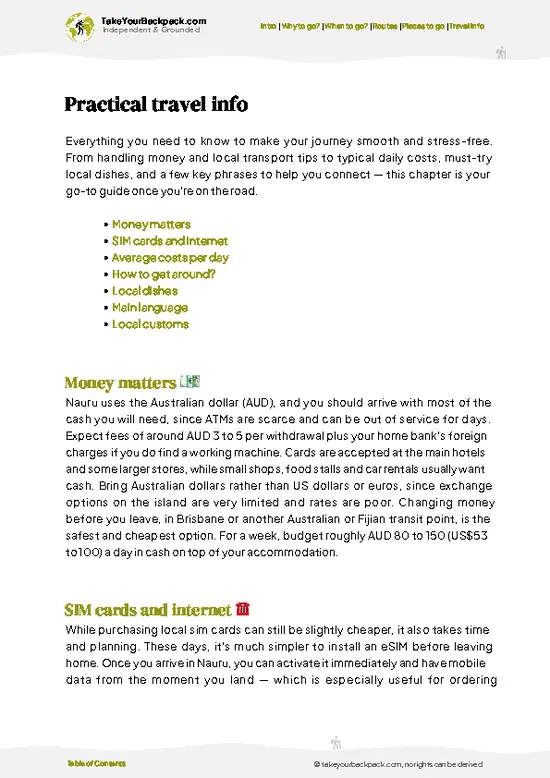
✅ SIM cards, money & practical tips

🌍 Understand the country, not just visit it
✅ Culture & traditions
✅ 52 Essential phrases & customs
✅ Festivals worth planning around
✅ Traveler-friendly historical context
✅ Insights that make places more meaningful

📱 Built for real travel conditions
✅ Fully downloadable PDF
✅ Works completely offline
✅ Optimized for phone use
✅ Useful in remote areas & buses
✅ Everything in one place
Stop searching, start planning
Get instant access to your full guide. 30‑day money-back guarantee.
+ Add another guide for just

By proceeding you agree to our terms.
Sent to your inbox immediately after payment • 100% Secure Checkout
Best Backpacking Travel Advisor 2025 tourism awardBest Backpacking
Travel Advisor
2025
What others say about Take Your Backpack Guides:
⭐⭐⭐⭐⭐
Fantastic, amazing amount of information!
⭐⭐⭐⭐⭐
My goodness this is amazing, it's what I've been looking for hats off too you!
⭐⭐⭐⭐⭐
I think this is absolutely BRILLIANT
⭐⭐⭐⭐
Very complete and informative. It's still missing places, but I gotta to commend you
⭐⭐⭐⭐⭐
This is truly amazing, thank you, can't wait to explore it with my kids!
⭐⭐⭐⭐⭐
Awesome resource, thank you!
⭐⭐⭐⭐⭐
This is amazing! Can't wait to explore the ones I haven't seen
⭐⭐⭐⭐
I love this! Well done, great idea.
⭐⭐⭐⭐⭐
Thanks for taking the time to make this gem!
⭐⭐⭐⭐⭐
This might be the best website I've ever seen.
⭐⭐⭐⭐⭐
Congratulations, and thank you so much for your work; it's incredibly valuable.
⭐⭐⭐⭐
In all seriousness I think you did a great job pointing out the important spots
⭐⭐⭐⭐⭐
10/10 very good
⭐⭐⭐⭐⭐
As someone who's only just starting to visit regularly this is awesome, thank you.
⭐⭐⭐⭐
Thank you very much! I'm going to visit my dad, it's going to be very useful!
⭐⭐⭐⭐⭐
This is really cool! We'll be travelling for the first time and this definitely come in handy.
⭐⭐⭐⭐⭐
You are now our minister of culture, congratulations 👨‍💼
⭐⭐⭐⭐⭐
Just wanted to tell you that this is a pearl! Going to follow your recommendations.
⭐⭐⭐⭐⭐
This is so cool. I'll definitely be using the resource for my travels soon.
⭐⭐⭐⭐⭐
This is very impressive! Good work.
⭐⭐⭐⭐⭐
This is an amazing and informative site. Very well done!

🛏️ Where to stay?Best areas and accommodation options

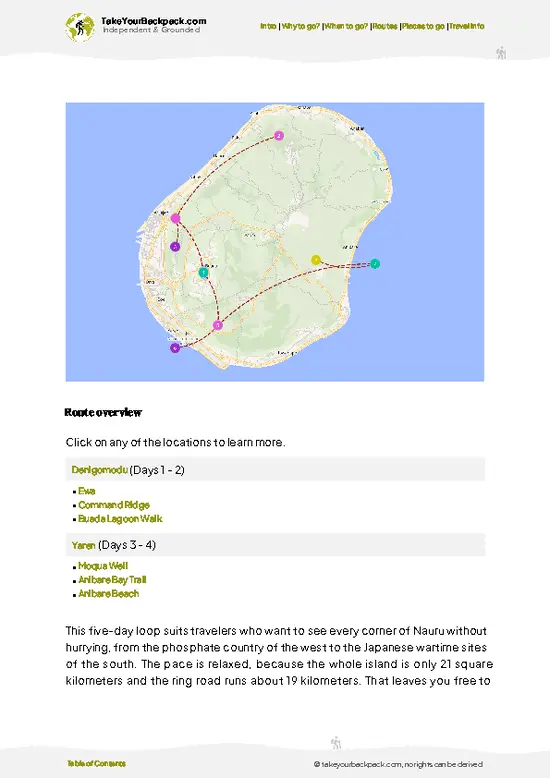
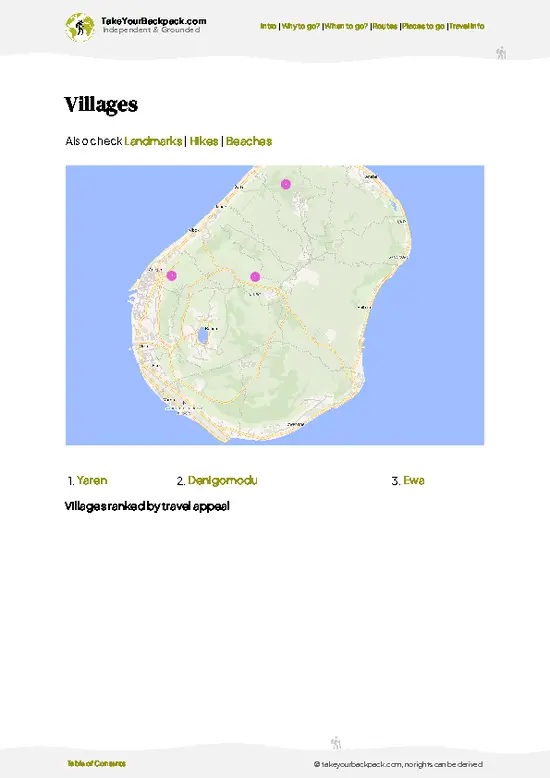
The best base is the Aiwo and Denig side of the island, a short ride from Buada, since the lagoon itself has no accommodation. Nauru is only about 21 square kilometers, with one ring road of roughly 19 kilometers, so nothing is far. Buada District sits in the middle of the island, ringed by the old coastal strip, and the lagoon is reached by a short inland road from the ring road.

For budget travelers, the Aiwo area near the harbor and the Menen district near the Menen Hotel zone on the east coast are the practical choices. Aiwo is close to the port, shops, and the main commercial cluster, which … read more 👉
The best base is the Aiwo and Denig side of the island, a short ride from Buada, since the lagoon itself has no accommodation. Nauru is only about 21 square kilometers, with one ring road of roughly 19 kilometers, so nothing is far. Buada District sits in the middle of the island, ringed by the old coastal strip, and the lagoon is reached by a short inland road from the ring road.

For budget travelers, the Aiwo area near the harbor and the Menen district near the Menen Hotel zone on the east coast are the practical choices. Aiwo is close to the port, shops, and the main commercial cluster, which suits solo travelers who want food and supplies within walking distance. Meneng is quieter, closer to the airport, and has the most guesthouse-style stays and the island’s best-known beach strip, so you can swim at the coast and ride inland to the lagoon later.

Social hostel scenes do not exist here. You meet people through guesthouse owners, shared meals, and the small expat and aid-worker community. Book ahead, because rooms are few, and ask your host about a rental bicycle or scooter, since public transport is minimal and you will want your own wheels to loop the island.

🛡️ SafetyStaying Safe: What Travelers Should Know

Buada Lagoon is a calm, enclosed freshwater pond, so there are no rips, tides, or surf to worry about. The water is brackish to fresh, fairly murky, and edged with vegetation, and most locals use it for fishing, not serious swimming. If you wade in, wear sandals, since the bottom is soft and uneven. Sharks and jellyfish are not an issue here, unlike on the ocean reef side of the island.

The real exposure is the sun. Shade is patchy near the water, and the equatorial light is strong from about 10 am to 3 pm, so bring a hat, cover up, and carry plenty of water. Mosquitoes gather near dusk, so pack repellent.

The area is quiet and the community is close-knit. Petty theft is uncommon, but keep your phone and cash out of sight on the bike. Ask before photographing people or the gardens and plots … read more 👉
Buada Lagoon is a calm, enclosed freshwater pond, so there are no rips, tides, or surf to worry about. The water is brackish to fresh, fairly murky, and edged with vegetation, and most locals use it for fishing, not serious swimming. If you wade in, wear sandals, since the bottom is soft and uneven. Sharks and jellyfish are not an issue here, unlike on the ocean reef side of the island.

The real exposure is the sun. Shade is patchy near the water, and the equatorial light is strong from about 10 am to 3 pm, so bring a hat, cover up, and carry plenty of water. Mosquitoes gather near dusk, so pack repellent.

The area is quiet and the community is close-knit. Petty theft is uncommon, but keep your phone and cash out of sight on the bike. Ask before photographing people or the gardens and plots around the lagoon, as these belong to local families.

FAQTraveler FAQ

Rent a scooter or bicycle, or arrange a taxi or a lift from your guesthouse, since Buada is in the island’s interior. From the airport in Yaren district the lagoon is roughly 10 to 15 minutes by road, and from Aiwo it is about 10 minutes. Taxis and informal rides usually cost around A$10 to 25 depending on the driver and wait time. Nauru has very little public transport, so arranging a ride in advance helps.
It is more of a local freshwater spot than a swimming or snorkeling beach, and there is no surf at all. Swimming is possible in the calm, murky water, but visitors usually come for the scenery, fishing, and quiet banana and coconut groves around the shore. For real snorkeling or surf, go to the ocean reef edges along the coast, such as around Anibare or Meneng, about 15 to 25 minutes away by road. Tides there are strong over the reef, so go with a local.
Yes, there is no entrance fee and no gate, and you can walk to the water any time of day. Land around the lagoon is held by local families, so ask before entering gardens or private plots and avoid taking fruit. Your only costs are the ride there, typically A$10 to 25 by taxi, and anything you bring for water and snacks, as there are no shops right at the lagoon.
⚠️ Things can change over time, so always validate details locally before you go.

Ideas for continuing your journey

Buada Lagoon Beach isn’t the only highlight in Nauru. Explore all what Nauru has to offer.
Country photo of Nauru

We 💚 feedbackIs it worth it?

Treat Buada as the green middle of a loop, not a destination in itself. Start at Command Ridge for the wartime history and the view, drop down to the lagoon for shade and a slow walk, then finish on the coast road for a swim in the sea. I would go on a weekday, take a snack and water, and keep the afternoon free for the shoreline.

✍️ Help improve this page!
The information on this page is based on in-depth research, insights shared by experienced travelers, and feedback from the local travel community in Nauru. While every effort is made to keep the information accurate and current, conditions can change — so if you spot anything incorrect or outdated, please get in touch.


🙋‍♂️ Give feedback

👋 Meet the founderWho’s Behind Take Your Backpack?

Johan, backpacker and founder of TakeYourBackpackHi, I’m Johan (Netherlands 🇳🇱), the creator of TakeYourBackpack. Over the past 3 decades, I’ve backpacked through 90+ countries across six continents, gaining extensive experience with independent travel, long-term trips, and overland routes.

This site is built on a combination of firsthand travel experience and carefully curated insights from other backpackers. Many guides are based on places I’ve personally visited, while others bring together tips, observations, and practical advice shared by trusted travelers I’ve met along the way.

The goal is to provide realistic, experience-driven guidance — not generic itineraries — so you can explore destinations with better context, clearer expectations, and more confidence.