
×

Nauru🇳🇷 | attractionsNauru MuseumPhosphate exhibits, shell fishing hooks, frigatebird lore, Yaren area | things to do and best time to go

Explore Command Ridge WWII RelicsExplore Anibare Beach

Backpacking in Nauru Museum
By Johan Kruseman 🇳🇱 | Updated October 13, 2026

The ceiling fan ticks, the floor is cool under your sandals, and a case of fishing hooks carved from shell stops you before you have read a single label. That is the Nauru Museum, in the south of Nauru near Yaren. It is small, quiet and rarely holds more than a handful of visitors, so you can read every caption at your own pace. Entry costs very little. Don’t expect polished interactive displays: this is a modest, local-run collection, and its strength is the story it tells about a 21 square kilometer island that was mined, occupied, deported and then made independent. Nauruans often staff it, which means a short question can turn into a real conversation. Go in the morning, before the heat builds in the afternoon, then ride the ring road to Moqua Well and the Yaren waterfront with fresh context.

Discover everything you want to know in the 📖 Nauru Travel Guide.


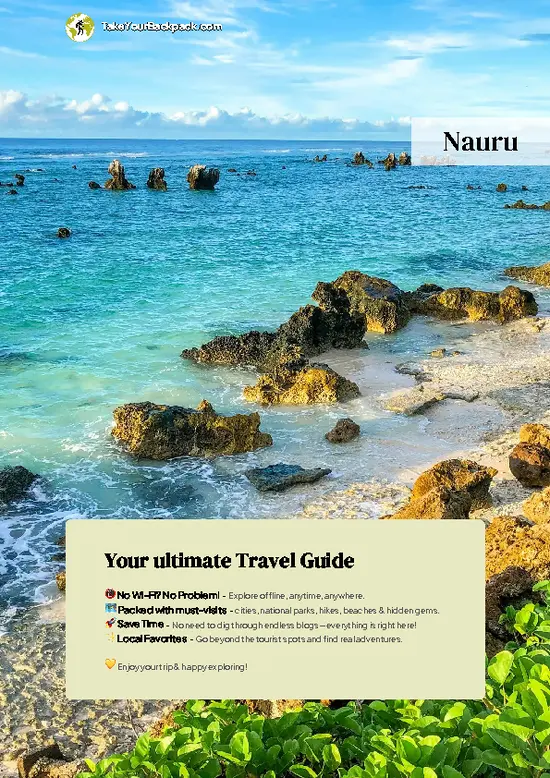
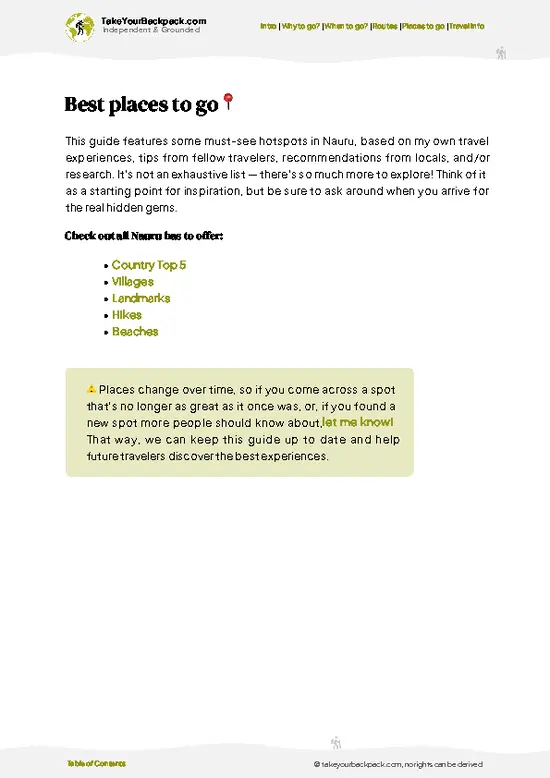
example page 0 from our offline Travel Guide for Nauru
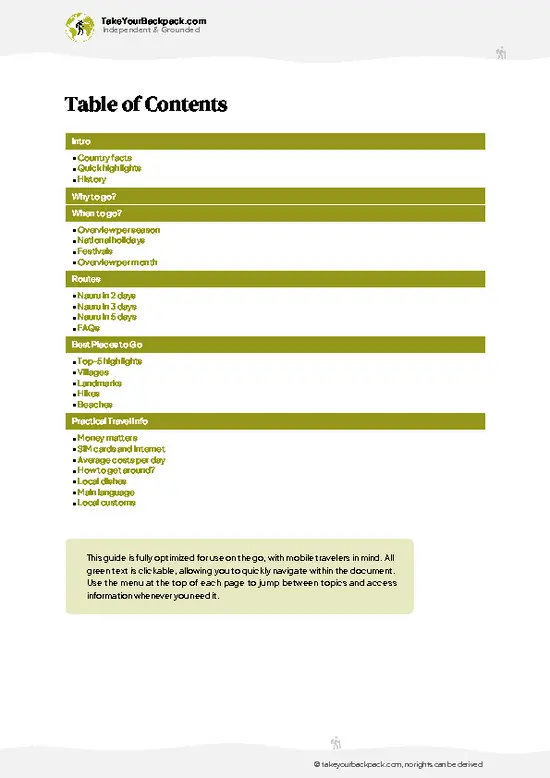
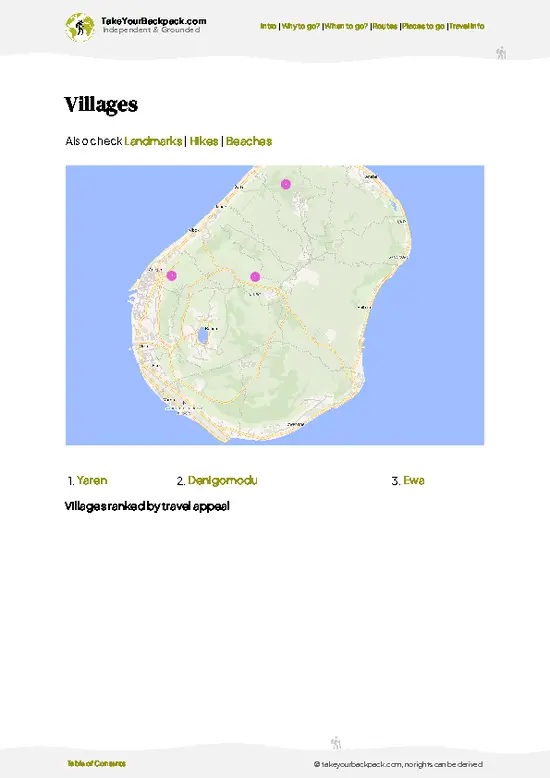
example page 1 from our offline Travel Guide for Nauru
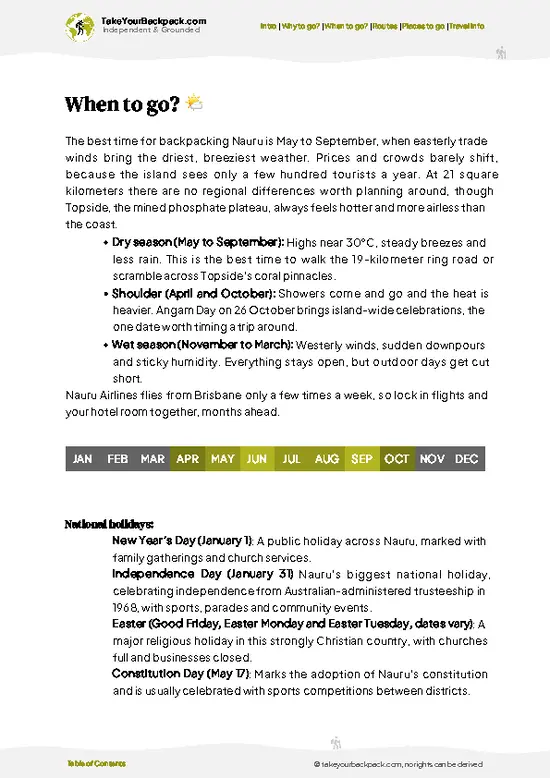
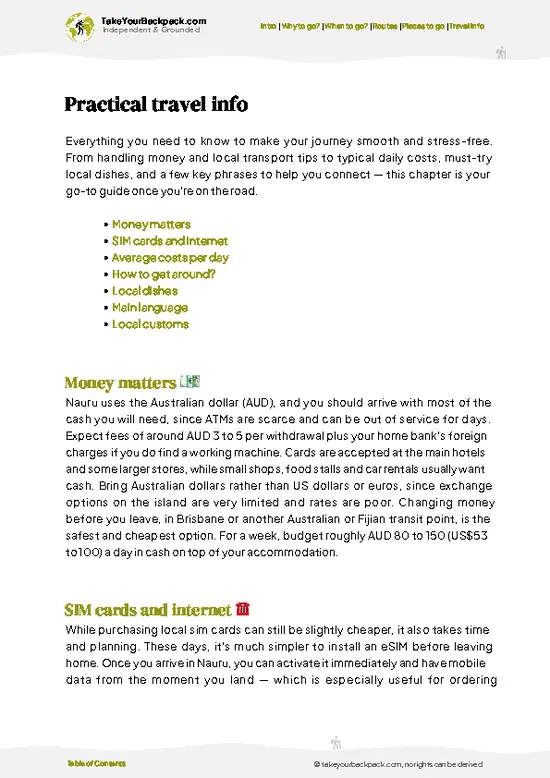
example page 2 from our offline Travel Guide for Nauru
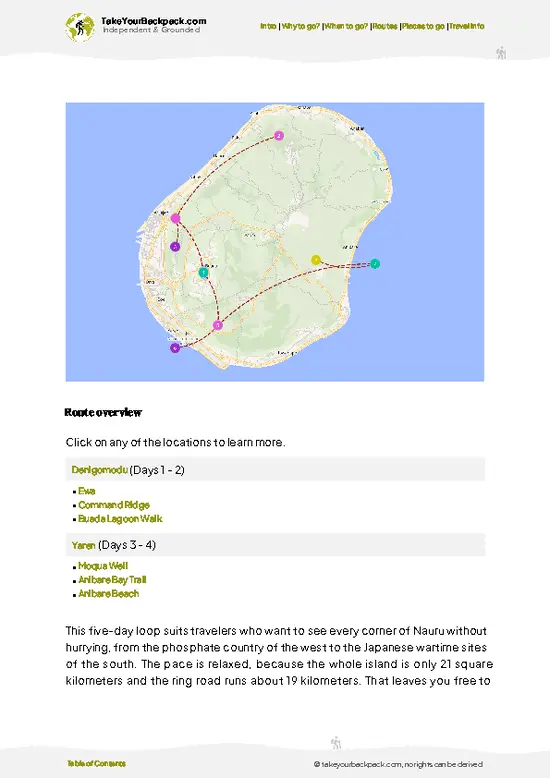
example page 3 from our offline Travel Guide for Nauru
example page 4 from our offline Travel Guide for Nauru
example page 5 from our offline Travel Guide for Nauru
example page 6 from our offline Travel Guide for Nauru
example page 7 from our offline Travel Guide for Nauru
Loading the map 🌍
CLICK TO FILTER
villages
landmarks
hikes
beaches
attractions
SHOW COUNTRY’S BESTSHOW ALL

✨ Why go?
Ranked #99 attraction in Nauru
Why Nauru Museum should be on your travel list

Nauru’s story is one of the strangest on Earth, and this museum is where it gets told in objects. The island was strip-mined for phosphate for most of a century, which made it briefly one of the richest countries per person anywhere and then left its interior a field of jagged coral pinnacles. Seeing the phosphate mining displays before you ride out to the plateau changes how that gray, broken landscape reads. You stop seeing wasteland and start seeing the price of fertilizer for farms in Australia and New Zealand.

The second reason is the Second World War section. Japan occupied Nauru, and around 1,200 Nauruans were shipped to Chuuk (Truk) as laborers, where nearly half died. That loss shapes the national memory, and a few photographs and artifacts here carry more weight than any plaque … read more 👉
Nauru’s story is one of the strangest on Earth, and this museum is where it gets told in objects. The island was strip-mined for phosphate for most of a century, which made it briefly one of the richest countries per person anywhere and then left its interior a field of jagged coral pinnacles. Seeing the phosphate mining displays before you ride out to the plateau changes how that gray, broken landscape reads. You stop seeing wasteland and start seeing the price of fertilizer for farms in Australia and New Zealand.

The second reason is the Second World War section. Japan occupied Nauru, and around 1,200 Nauruans were shipped to Chuuk (Truk) as laborers, where nearly half died. That loss shapes the national memory, and a few photographs and artifacts here carry more weight than any plaque at a rusting gun site.

The third is the culture itself. Traditional fishing tools, shell ornaments and the string game of Nauruan life sit alongside the mining history, so you get the island before and after the money. Visits are short, usually under an hour, and nobody rushes you. For a country with few formal sights, that makes it the best single orientation stop on Nauru, and a fine milestone before you circle the coast road.

💡 HighlightsTop highlights of Nauru Museum

  1. Phosphate mining exhibits: The core of the story. Photos, tools and displays show how the island’s bird-dropping-derived rock was dug, loaded and shipped from the early twentieth century, and why the interior looks the way it does today.
  2. Wartime displays: The section on the Japanese occupation covers the deportation of Nauruans to Chuuk and the survivors’ return after the war. It is sobering, plainly told and easy to absorb in a few minutes.
  3. Traditional fishing gear: Hooks, lures and tools reflect how Nauruans fished the reef and open water long before motorboats. Look closely at the craftsmanship in each small piece.
  4. Frigatebird catching and cultural objects: Nauruans traditionally caught and tamed frigatebirds, a practice that sets the island apart from its neighbors. Items and explanations
… read more 👉
  1. Phosphate mining exhibits: The core of the story. Photos, tools and displays show how the island’s bird-dropping-derived rock was dug, loaded and shipped from the early twentieth century, and why the interior looks the way it does today.
  2. Wartime displays: The section on the Japanese occupation covers the deportation of Nauruans to Chuuk and the survivors’ return after the war. It is sobering, plainly told and easy to absorb in a few minutes.
  3. Traditional fishing gear: Hooks, lures and tools reflect how Nauruans fished the reef and open water long before motorboats. Look closely at the craftsmanship in each small piece.
  4. Frigatebird catching and cultural objects: Nauruans traditionally caught and tamed frigatebirds, a practice that sets the island apart from its neighbors. Items and explanations here give you the background you will not get anywhere else on Nauru.
  5. Independence and national identity material: Displays on the move to independence on 31 January 1968 explain how a tiny island built its own government, flag and sense of itself. It also helps you understand why Independence Day matters locally.
  6. Moqua Well: A short trip away, this underground freshwater pool sits in a cave with a staircase down to the water. It is small and cool, and it shows how islanders once relied on fresh water in a place with few natural sources.
  7. Yaren district waterfront: Often called the unofficial capital, Yaren has no formal city center but plenty of daily life. You can watch fishing boats, pass the Parliament building and get a feel for the everyday pace of the island.
Combine the museum with Moqua Well in the same morning, since the cool cave is a good follow-up after the museum’s history.
Spotted a mistake or missing something? Contact us.

🌤️ When to go?Choosing the right time of year

The best window for the Nauru Museum is roughly March to October, when rain is lighter and the walk or scooter ride around the island's single ring road stays comfortable.
  • Drier Months (about March to October): Daytime highs sit around 28 to 31°C (82 to 88°F), nights around 25°C (77°F). Showers are short, and the island is usually calmer for outdoor wandering between the museum and the coast.
  • Wetter Months (about November to February): Rain is heavier and more frequent, with around 28 to 30°C (82 to 86°F) and sticky air. Downpours can drench the road, so plan the visit between squalls.
  • Drought Spells: Nauru is prone to dry spells tied to the El Niño cycle, so rain is never fully predictable in any month.
  • Daylight: Sunrise and sunset change by only minutes through the year, with about 12 hours
… read more 👉
The best window for the Nauru Museum is roughly March to October, when rain is lighter and the walk or scooter ride around the island's single ring road stays comfortable.
  • Drier Months (about March to October): Daytime highs sit around 28 to 31°C (82 to 88°F), nights around 25°C (77°F). Showers are short, and the island is usually calmer for outdoor wandering between the museum and the coast.
  • Wetter Months (about November to February): Rain is heavier and more frequent, with around 28 to 30°C (82 to 86°F) and sticky air. Downpours can drench the road, so plan the visit between squalls.
  • Drought Spells: Nauru is prone to dry spells tied to the El Niño cycle, so rain is never fully predictable in any month.
  • Daylight: Sunrise and sunset change by only minutes through the year, with about 12 hours of light. Dusk falls around 6 pm.
  • Crowds and Prices: Visitors are few in every month. Flights are limited, so seat availability and fares matter more than season, and Nauru Airlines schedules drive price swings.
  • Events: Angam Day on October 26 celebrates the population recovering to 1,500, and it is a fine moment to visit.
Book flights and a room early, since both are scarce, and fit your dates around the weekly flight schedule.


source: climatestotravel.comJANJanuary: fair for travelingFEBFebruary: fair for travelingMARMarch: fair for travelingAPRApril: fair for travelingMAYMay: highly recommended for travelingJUNJune: excellent for travelingJULJuly: excellent for travelingAUGAugust: excellent for travelingSEPSeptember: excellent for travelingOCTOctober: highly recommended for travelingNOVNovember: fair for travelingDECDecember: fair for traveling
when-to-go

✈️ The backpacker research shortcutNauru Travel Guide

An offline-friendly backpacking guide with optimized travel routes, ranked highlights, transport advice, and the best areas to stay.
example page 0 from our offline Travel Guide for Nauru
example page 1 from our offline Travel Guide for Nauru
example page 2 from our offline Travel Guide for Nauru
example page 3 from our offline Travel Guide for Nauru
example page 4 from our offline Travel Guide for Nauru
example page 5 from our offline Travel Guide for Nauru
example page 6 from our offline Travel Guide for Nauru
example page 7 from our offline Travel Guide for Nauru
The digital guide (57 pages) contains:
✅ 8 highlights, ranked by travel appeal
✅ Optimized 2, 3 & 5-day travel routes
✅ Cities, national parks, landmarks, beaches
✅ How to get around
✅ Offline-friendly for travel without Wi-Fi
👉 Click to see all 30+ guide features

📅 Plan smarter in minutes, not weeks
✅ Month by month travel advice
✅ Festivals & national holidays
✅ Budget expectations

🗺️ Go to the right places, skip the overrated ones
✅ Honest pros & cons of destinations
✅ Top hikes, parks & viewpoints
✅ Lesser-known places most travelers miss
✅ Clear “worth it vs skip it” guidance

🛏️ Travel smoothly without rookie mistakes
✅ Best areas to stay
✅ Transport systems explained simply
✅ Common scams & safety advice
✅ SIM cards, money & practical tips

🌍 Understand the country, not just visit it
✅ Culture & traditions
✅ 52 Essential phrases & customs
✅ Festivals worth planning around
✅ Traveler-friendly historical context
✅ Insights that make places more meaningful

📱 Built for real travel conditions
✅ Fully downloadable PDF
✅ Works completely offline
✅ Optimized for phone use
✅ Useful in remote areas & buses
✅ Everything in one place
Stop searching, start planning
Get instant access to your full guide. 30‑day money-back guarantee.
+ Add another guide for just

By proceeding you agree to our terms.
Sent to your inbox immediately after payment • 100% Secure Checkout
Best Backpacking Travel Advisor 2025 tourism awardBest Backpacking
Travel Advisor
2025
What others say about Take Your Backpack Guides:
⭐⭐⭐⭐⭐
Fantastic, amazing amount of information!
⭐⭐⭐⭐⭐
My goodness this is amazing, it's what I've been looking for hats off too you!
⭐⭐⭐⭐⭐
I think this is absolutely BRILLIANT
⭐⭐⭐⭐
Very complete and informative. It's still missing places, but I gotta to commend you
⭐⭐⭐⭐⭐
This is truly amazing, thank you, can't wait to explore it with my kids!
⭐⭐⭐⭐⭐
Awesome resource, thank you!
⭐⭐⭐⭐⭐
This is amazing! Can't wait to explore the ones I haven't seen
⭐⭐⭐⭐
I love this! Well done, great idea.
⭐⭐⭐⭐⭐
Thanks for taking the time to make this gem!
⭐⭐⭐⭐⭐
This might be the best website I've ever seen.
⭐⭐⭐⭐⭐
Congratulations, and thank you so much for your work; it's incredibly valuable.
⭐⭐⭐⭐
In all seriousness I think you did a great job pointing out the important spots
⭐⭐⭐⭐⭐
10/10 very good
⭐⭐⭐⭐⭐
As someone who's only just starting to visit regularly this is awesome, thank you.
⭐⭐⭐⭐
Thank you very much! I'm going to visit my dad, it's going to be very useful!
⭐⭐⭐⭐⭐
This is really cool! We'll be travelling for the first time and this definitely come in handy.
⭐⭐⭐⭐⭐
You are now our minister of culture, congratulations 👨‍💼
⭐⭐⭐⭐⭐
Just wanted to tell you that this is a pearl! Going to follow your recommendations.
⭐⭐⭐⭐⭐
This is so cool. I'll definitely be using the resource for my travels soon.
⭐⭐⭐⭐⭐
This is very impressive! Good work.
⭐⭐⭐⭐⭐
This is an amazing and informative site. Very well done!

🛏️ Where to stay?Where staying makes the most sense

The best area to stay for the Nauru Museum is the Meneng or Aiwo district side of the island, where a short ride gets you to the museum in Yaren district.
Nauru is only about 21 square kilometers (8 square miles), so everything is within roughly 20 minutes of anywhere else. That makes the choice simpler than on most islands.
Meneng is the most practical base. It sits on the east side, close to the airport, and has the island's main guesthouse-style lodgings, shops and a few eateries. It also has easy access to the coast road, so renting a scooter or arranging a ride to the museum is quick.
Aiwo, … read more 👉
The best area to stay for the Nauru Museum is the Meneng or Aiwo district side of the island, where a short ride gets you to the museum in Yaren district.
Nauru is only about 21 square kilometers (8 square miles), so everything is within roughly 20 minutes of anywhere else. That makes the choice simpler than on most islands.
Meneng is the most practical base. It sits on the east side, close to the airport, and has the island's main guesthouse-style lodgings, shops and a few eateries. It also has easy access to the coast road, so renting a scooter or arranging a ride to the museum is quick.
Aiwo, on the west side near the harbor and the old phosphate loading area, is a good second option. It's a working district with more local life, small stores and the feel of how residents live day to day.
Yaren, home to the museum and the parliament, has very little lodging, but staying there puts you within walking distance of the main sights. Availability is limited, so book ahead.
Nauru has no hostel scene and few solo travelers, so expect to meet people through local hosts, dive operators or other guests at small guesthouses. Crime is low and the island is generally safe, though dogs roam and the roads are dark at night, so a flashlight helps after dark.

👛 Costs (as of 13 October 2026)How expensive it really is

A visit to the Nauru Museum fits into a daily budget of roughly US$75 to 160, with accommodation making up most of it.
CategoryBudget RangeLocal Reality
Museum EntryA$0 to 5 (US$0 to 3)Entry is free or a small donation. Opening hours can vary, so confirm locally.
Accommodation (high season)US$50 to 100Mostly small guesthouses and a few hotels. Options are limited, and demand from business and government visitors can fill rooms.
FoodUS$15 to 30Local cafes and Chinese-style restaurants serve rice and noodle dishes. Groceries are imported and pricey.
Local TransportUS$5 to 15Scooter rental or a ride with your host. There is no public bus network, and the ring road is about 19 km (12 miles).
ExtrasUS$5 to 15Bottled water, snacks, a SIM card, and small tips or donations for guides.
Total Daily BudgetUS$75
… read more 👉
A visit to the Nauru Museum fits into a daily budget of roughly US$75 to 160, with accommodation making up most of it.
CategoryBudget RangeLocal Reality
Museum EntryA$0 to 5 (US$0 to 3)Entry is free or a small donation. Opening hours can vary, so confirm locally.
Accommodation (high season)US$50 to 100Mostly small guesthouses and a few hotels. Options are limited, and demand from business and government visitors can fill rooms.
FoodUS$15 to 30Local cafes and Chinese-style restaurants serve rice and noodle dishes. Groceries are imported and pricey.
Local TransportUS$5 to 15Scooter rental or a ride with your host. There is no public bus network, and the ring road is about 19 km (12 miles).
ExtrasUS$5 to 15Bottled water, snacks, a SIM card, and small tips or donations for guides.
Total Daily BudgetUS$75 to 160Per person, per day, in high season.
Nauru uses the Australian dollar (A$), and ATMs are few, so bring cash. Card acceptance is patchy outside larger businesses. Flights into Nauru are the biggest expense and are not included here.
⚠️ Prices can change and everyone travels differently, so take this as a rough guide. Hope it helps you plan your adventure!

FAQTraveler FAQ

Plan on one to two hours for the Nauru Museum. The collection covers phosphate mining, Japanese occupation during World War II and traditional Nauruan life, and it is small enough to see in a single visit. Combine it with other Yaren district sights, such as the Parliament area and Moqua Well, for a half day.
Yes, since entry is free or a small donation of roughly A$0 to 5 (US$0 to 3). The displays on phosphate mining, wartime history and island culture explain why the interior is stripped and the coast is where people live. With little else of the kind on the island, it is a cheap and useful first stop.
Most visitors fly into Nauru International Airport, with Nauru Airlines linking the island to Brisbane (about 3.5 hours) and Fiji or the Marshall Islands on limited schedules. From the airport, the museum is in Yaren district, a 5 to 10 minute drive away. Taxis and hosts are the usual option, or rent a scooter for roughly US$15 to 30 a day.
⚠️ Things can change over time, so always validate details locally before you go.

Ideas for continuing your journey

Nauru Museum isn’t the only highlight in Nauru. Explore all what Nauru has to offer.
Country photo of Nauru

We 💚 feedbackKey takeaways before you go

Aim for mid-morning on a weekday, when the building is quiet and the heat has not yet pushed you toward the shade. Dry months make the ring road easier afterward. Carry small local cash for entry, take your time with the wartime panels, then ride out to Moqua Well before lunch.

✍️ Help improve this page!
The information on this page is based on in-depth research, insights shared by experienced travelers, and feedback from the local travel community in Nauru. While every effort is made to keep the information accurate and current, conditions can change — so if you spot anything incorrect or outdated, please get in touch.


🙋‍♂️ Give feedback

👋 Meet the founderWho’s Behind Take Your Backpack?

Johan, backpacker and founder of TakeYourBackpackHi, I’m Johan (Netherlands 🇳🇱), the creator of TakeYourBackpack. Over the past 3 decades, I’ve backpacked through 90+ countries across six continents, gaining extensive experience with independent travel, long-term trips, and overland routes.

This site is built on a combination of firsthand travel experience and carefully curated insights from other backpackers. Many guides are based on places I’ve personally visited, while others bring together tips, observations, and practical advice shared by trusted travelers I’ve met along the way.

The goal is to provide realistic, experience-driven guidance — not generic itineraries — so you can explore destinations with better context, clearer expectations, and more confidence.