×

Nauru🇳🇷 | beachesAnibare BeachEast-facing sunrise, reef-edge surf, boat channel, low-tide pools | things to do and best time to go

Explore Nauru MuseumExplore Buada Lagoon Beach

Backpacking in Anibare Beach
🏆 Top pickbeach ranked #1
By Johan Kruseman 🇳🇱 | Updated October 15, 2026

Anibare Bay faces east, so the show here is sunrise, and anyone who turns up at dusk hoping for a sunset gets a gray wall of shadow behind the palms. It sits on Nauru’s east coast, a quiet curve of sand and coral rubble on the island’s ring road. Come early, walk the sand, and skip any plan to swim laps. The reef edge throws up swells and currents, and the water is best treated as a paddle at low tide. Snorkeling is not the draw, and I would save it for calmer spots. The beach itself is fairly clean, with driftwood and coconut husks more than litter, and you will often have it to yourself. There is no beach-bar strip, so pack water and a snack from a shop in town, which are cheap and basic. Compared with Meneng, which has easier shallows and a hotel nearby, Anibare is wilder, emptier and better for atmosphere than for lounging.

Discover everything you want to know in the 📖 Nauru Travel Guide.


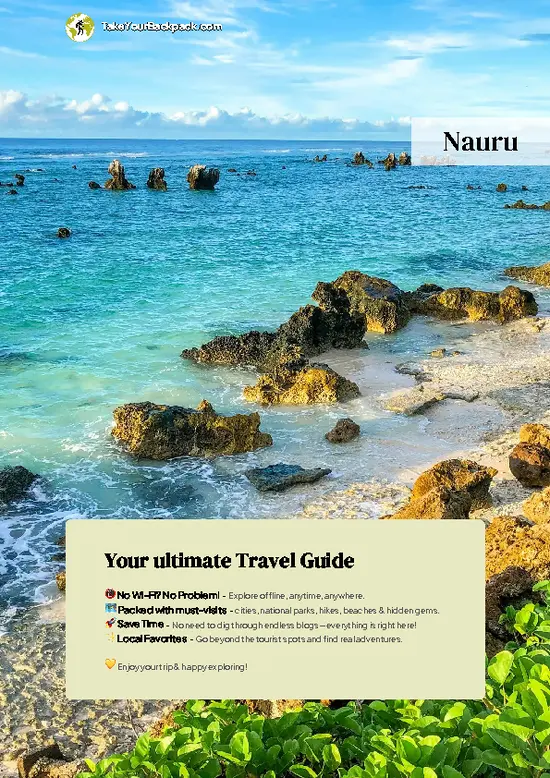
example page 0 from our offline Travel Guide for Nauru
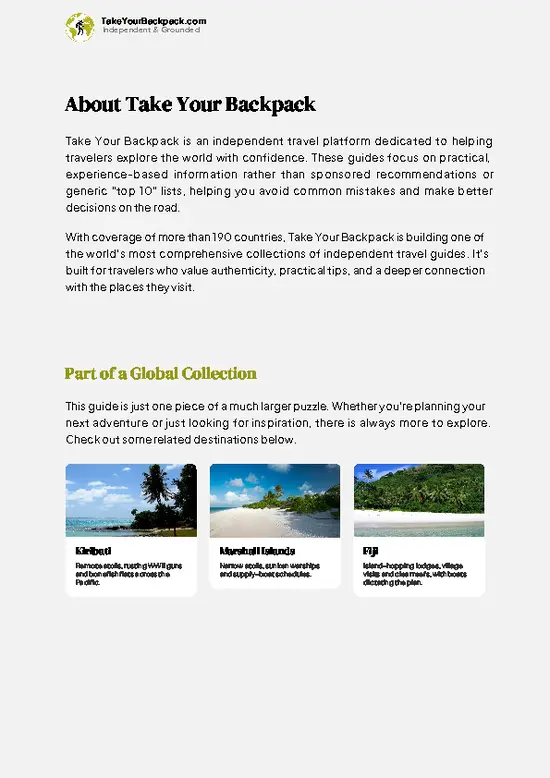
example page 1 from our offline Travel Guide for Nauru
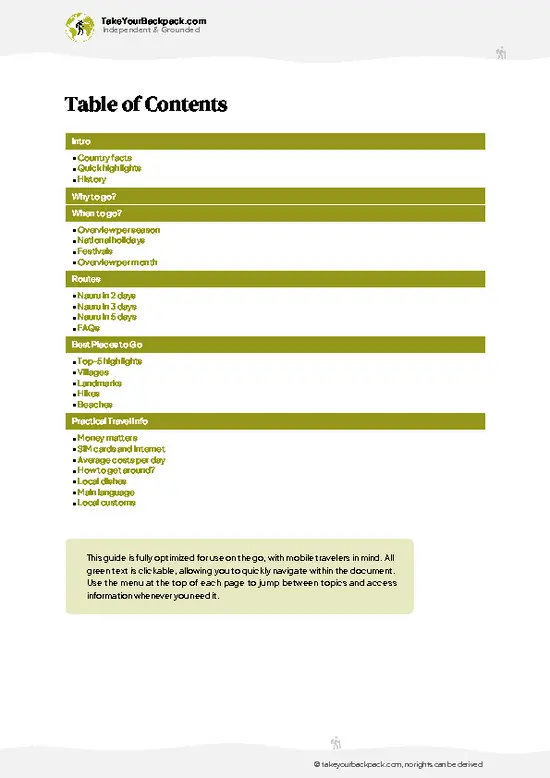
example page 2 from our offline Travel Guide for Nauru
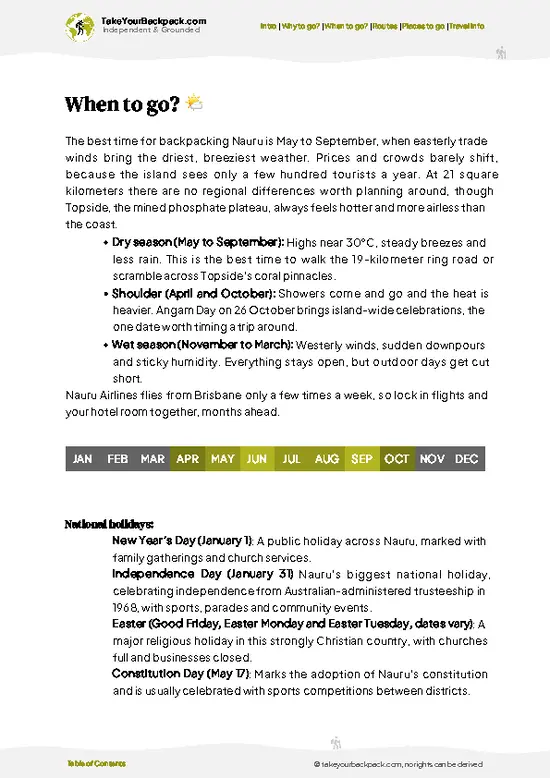
example page 3 from our offline Travel Guide for Nauru
example page 4 from our offline Travel Guide for Nauru
example page 5 from our offline Travel Guide for Nauru
example page 6 from our offline Travel Guide for Nauru
example page 7 from our offline Travel Guide for Nauru
Loading the map 🌍
CLICK TO FILTER
villages
landmarks
hikes
beaches
SHOW COUNTRY’S BESTSHOW ALL

✨ Why go?
Ranked #1 beach in Nauru
Reasons people choose to visit here

Nobody comes to Anibare for a resort day. You stop because it is the one place on Nauru where the east-facing bay gives you a proper sunrise, with light spilling over the reef before the island’s heat builds. That alone justifies a short ride from wherever you are staying, and the quiet means you can sit on the sand for an hour without a single hawker or tour group. The second reason is the Anibare Boat Harbour. Local fishers still work out of this cut in the reef, and if you arrive when boats are coming or going, you get a real look at island life instead of a staged one. Conversation comes easily, and people are curious about visitors, which on an island with so few of them is a gift. Finally, the bay works as a natural pause on the ring road. You are circling a small island with limited … read more 👉
Nobody comes to Anibare for a resort day. You stop because it is the one place on Nauru where the east-facing bay gives you a proper sunrise, with light spilling over the reef before the island’s heat builds. That alone justifies a short ride from wherever you are staying, and the quiet means you can sit on the sand for an hour without a single hawker or tour group. The second reason is the Anibare Boat Harbour. Local fishers still work out of this cut in the reef, and if you arrive when boats are coming or going, you get a real look at island life instead of a staged one. Conversation comes easily, and people are curious about visitors, which on an island with so few of them is a gift. Finally, the bay works as a natural pause on the ring road. You are circling a small island with limited sights, and a stretch of empty shore with shade from coconut palms is the best place to slow down, cool off and let the day catch up.

💡 HighlightsKey sights and experiences for travelers

  1. Sunrise over Anibare Bay: This is what the beach is known for. The bay opens straight onto the eastern horizon, so the sky turns orange and pink over the reef line, and the sand and palms catch the first light. Arrive before the sun clears the water, since the color fades quickly.
  2. Anibare Boat Harbour: A narrow channel cut through the reef where small fishing boats launch and return. It is the practical heart of the bay. Watch crews load nets and lines, and talk to anyone around if you are curious about what they catch.
  3. Reef flat at low tide: When the tide drops, the coral shelf exposes small pools with fish, crabs and sea urchins. Wear sturdy sandals, because the coral is sharp. The seaward edge drops off into heavy surf, so stay well back from it.
  4. Island Ring Road by bike: Anibare sits on the
… read more 👉
  1. Sunrise over Anibare Bay: This is what the beach is known for. The bay opens straight onto the eastern horizon, so the sky turns orange and pink over the reef line, and the sand and palms catch the first light. Arrive before the sun clears the water, since the color fades quickly.
  2. Anibare Boat Harbour: A narrow channel cut through the reef where small fishing boats launch and return. It is the practical heart of the bay. Watch crews load nets and lines, and talk to anyone around if you are curious about what they catch.
  3. Reef flat at low tide: When the tide drops, the coral shelf exposes small pools with fish, crabs and sea urchins. Wear sturdy sandals, because the coral is sharp. The seaward edge drops off into heavy surf, so stay well back from it.
  4. Island Ring Road by bike: Anibare sits on the road that circles the island, so riding in from either direction makes a good half-day loop. The bay is a natural place to stop, and the flat road makes it easy even if you are not an experienced cyclist.
  5. Night sky on the bay: With so little light pollution on this side of the island, the stars show up clearly once the sun sets behind the island. Sit on the sand away from any buildings and give your eyes time to adjust. It is a quiet evening, not a nightlife scene.
If time is short, skip the reef flat unless the tide is clearly low, since a high tide leaves little to see.
Spotted a mistake or missing something? Contact us.

🌤️ When to go?Weather, crowds, and seasonal trade-offs

  • Drier months (roughly April to October): Rain is lighter and the sea on Nauru’s eastern coast is calmer for wading, with days around 28 to 31°C (82 to 88°F) and nights near 25°C (77°F). Daylight runs close to 12 hours, with sunrise near 6 a.m. and sunset near 6 p.m.
  • Wetter months (roughly November to March): Squalls roll in from the west, and the island is greener and muggier, though temperatures barely shift. Showers are usually short, but swell can get heavier along the reef edge.
  • Crowds: Anibare is never crowded. You will share it with local families on weekends and the odd swimmer after work.
  • Events and prices: Independence Day on January 31 and Angam Day on October 26 bring public holidays and busier flights. Nauru has few lodgings, so rooms fill around government meetings and flights are
… read more 👉
  • Drier months (roughly April to October): Rain is lighter and the sea on Nauru’s eastern coast is calmer for wading, with days around 28 to 31°C (82 to 88°F) and nights near 25°C (77°F). Daylight runs close to 12 hours, with sunrise near 6 a.m. and sunset near 6 p.m.
  • Wetter months (roughly November to March): Squalls roll in from the west, and the island is greener and muggier, though temperatures barely shift. Showers are usually short, but swell can get heavier along the reef edge.
  • Crowds: Anibare is never crowded. You will share it with local families on weekends and the odd swimmer after work.
  • Events and prices: Independence Day on January 31 and Angam Day on October 26 bring public holidays and busier flights. Nauru has few lodgings, so rooms fill around government meetings and flights are limited to a few a week, which matters more than any season.
Book your flight and bed first, then pick a weekday for a quiet bay.


source: climatestotravel.comJANJanuary: fair for travelingFEBFebruary: fair for travelingMARMarch: fair for travelingAPRApril: good for travelingMAYMay: highly recommended for travelingJUNJune: excellent for travelingJULJuly: excellent for travelingAUGAugust: excellent for travelingSEPSeptember: highly recommended for travelingOCTOctober: excellent for travelingNOVNovember: fair for travelingDECDecember: fair for traveling
nauru-beach-anibare-beach
© Google | Fature 10k

✈️ The backpacker research shortcutNauru Travel Guide

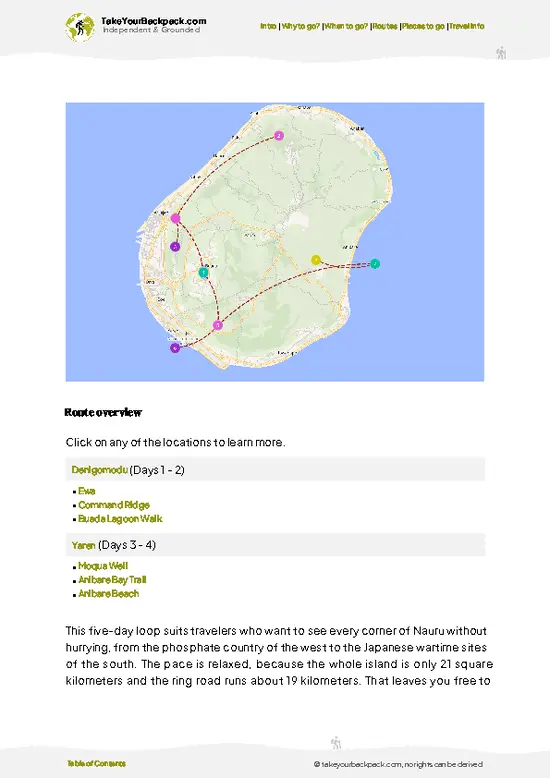
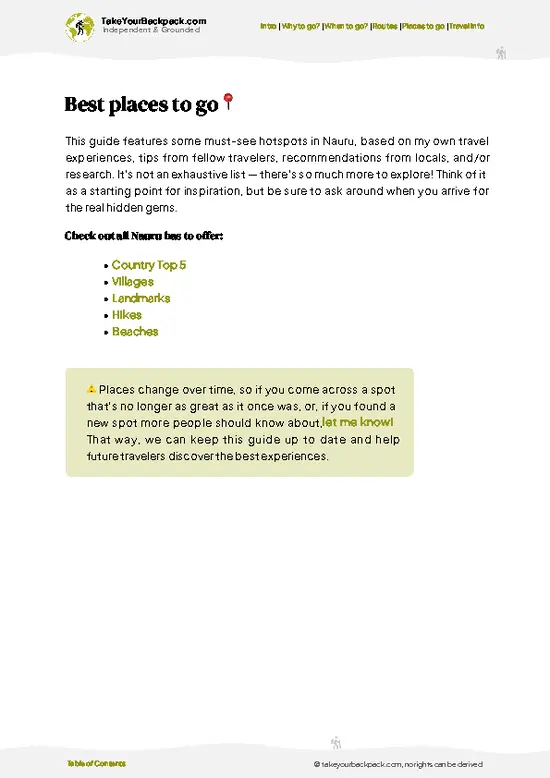
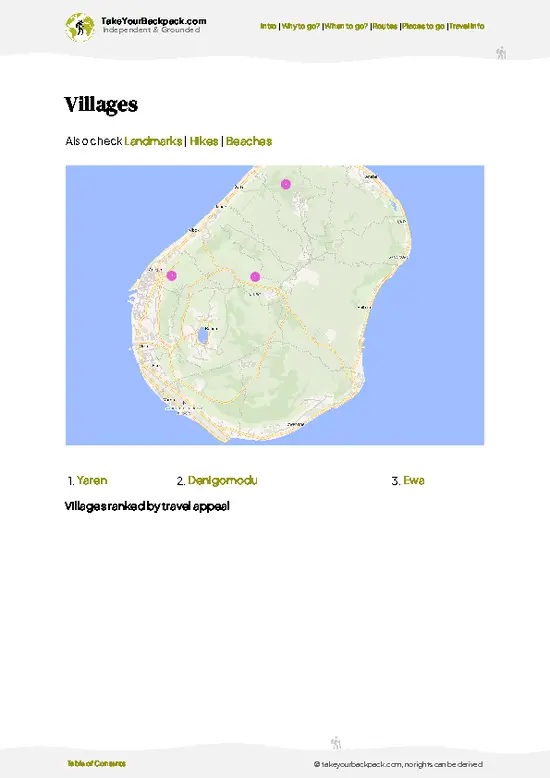
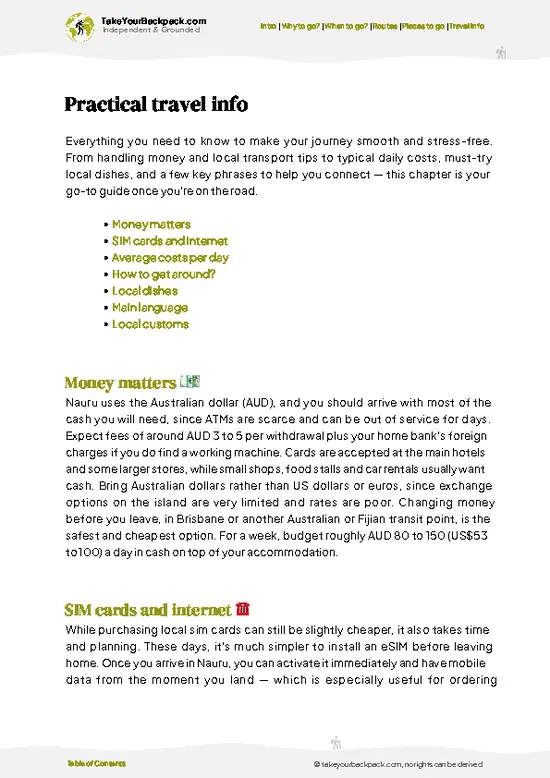
An offline-friendly backpacking guide with optimized travel routes, ranked highlights, transport advice, and the best areas to stay.
example page 0 from our offline Travel Guide for Nauru
example page 1 from our offline Travel Guide for Nauru
example page 2 from our offline Travel Guide for Nauru
example page 3 from our offline Travel Guide for Nauru
example page 4 from our offline Travel Guide for Nauru
example page 5 from our offline Travel Guide for Nauru
example page 6 from our offline Travel Guide for Nauru
example page 7 from our offline Travel Guide for Nauru
The digital guide (57 pages) contains:
✅ 8 highlights, ranked by travel appeal
✅ Optimized 2, 3 & 5-day travel routes
✅ Cities, national parks, landmarks, beaches
✅ How to get around
✅ Offline-friendly for travel without Wi-Fi
👉 Click to see all 30+ guide features

📅 Plan smarter in minutes, not weeks
✅ Month by month travel advice
✅ Festivals & national holidays
✅ Budget expectations

🗺️ Go to the right places, skip the overrated ones
✅ Honest pros & cons of destinations
✅ Top hikes, parks & viewpoints
✅ Lesser-known places most travelers miss
✅ Clear “worth it vs skip it” guidance

🛏️ Travel smoothly without rookie mistakes
✅ Best areas to stay
✅ Transport systems explained simply
✅ Common scams & safety advice
✅ SIM cards, money & practical tips

🌍 Understand the country, not just visit it
✅ Culture & traditions
✅ 52 Essential phrases & customs
✅ Festivals worth planning around
✅ Traveler-friendly historical context
✅ Insights that make places more meaningful

📱 Built for real travel conditions
✅ Fully downloadable PDF
✅ Works completely offline
✅ Optimized for phone use
✅ Useful in remote areas & buses
✅ Everything in one place
Stop searching, start planning
Get instant access to your full guide. 30‑day money-back guarantee.
+ Add another guide for just

By proceeding you agree to our terms.
Sent to your inbox immediately after payment • 100% Secure Checkout
Best Backpacking Travel Advisor 2025 tourism awardBest Backpacking
Travel Advisor
2025
What others say about Take Your Backpack Guides:
⭐⭐⭐⭐⭐
Fantastic, amazing amount of information!
⭐⭐⭐⭐⭐
My goodness this is amazing, it's what I've been looking for hats off too you!
⭐⭐⭐⭐⭐
I think this is absolutely BRILLIANT
⭐⭐⭐⭐
Very complete and informative. It's still missing places, but I gotta to commend you
⭐⭐⭐⭐⭐
This is truly amazing, thank you, can't wait to explore it with my kids!
⭐⭐⭐⭐⭐
Awesome resource, thank you!
⭐⭐⭐⭐⭐
This is amazing! Can't wait to explore the ones I haven't seen
⭐⭐⭐⭐
I love this! Well done, great idea.
⭐⭐⭐⭐⭐
Thanks for taking the time to make this gem!
⭐⭐⭐⭐⭐
This might be the best website I've ever seen.
⭐⭐⭐⭐⭐
Congratulations, and thank you so much for your work; it's incredibly valuable.
⭐⭐⭐⭐
In all seriousness I think you did a great job pointing out the important spots
⭐⭐⭐⭐⭐
10/10 very good
⭐⭐⭐⭐⭐
As someone who's only just starting to visit regularly this is awesome, thank you.
⭐⭐⭐⭐
Thank you very much! I'm going to visit my dad, it's going to be very useful!
⭐⭐⭐⭐⭐
This is really cool! We'll be travelling for the first time and this definitely come in handy.
⭐⭐⭐⭐⭐
You are now our minister of culture, congratulations 👨‍💼
⭐⭐⭐⭐⭐
Just wanted to tell you that this is a pearl! Going to follow your recommendations.
⭐⭐⭐⭐⭐
This is so cool. I'll definitely be using the resource for my travels soon.
⭐⭐⭐⭐⭐
This is very impressive! Good work.
⭐⭐⭐⭐⭐
This is an amazing and informative site. Very well done!

🛏️ Where to stay?Choosing the right base

The best place to stay is the Anibare district on the east coast, or the nearby Meneng area, because Nauru has no hostel scene and everything is within a short ride of everything else. Nauru is only about 21 square kilometers, and a ring road of roughly 19 kilometers circles it, so you can sleep anywhere and reach Anibare Bay in 10 to 25 minutes by scooter or car.
Anibare itself is the quietest option. Guesthouses and a few small lodgings sit close to the bay, with the sea at your doorstep, but shops and restaurants are thin, so you will cook or pre-arrange meals. Expect to pay roughly US$60 to … read more 👉
The best place to stay is the Anibare district on the east coast, or the nearby Meneng area, because Nauru has no hostel scene and everything is within a short ride of everything else. Nauru is only about 21 square kilometers, and a ring road of roughly 19 kilometers circles it, so you can sleep anywhere and reach Anibare Bay in 10 to 25 minutes by scooter or car.
Anibare itself is the quietest option. Guesthouses and a few small lodgings sit close to the bay, with the sea at your doorstep, but shops and restaurants are thin, so you will cook or pre-arrange meals. Expect to pay roughly US$60 to 120 (AU$90 to 180) a night, since Nauru has few budget beds.
Meneng, just south of Anibare, has the main hotel on the island and easy access to the lagoon and some eateries. It is more social, since visiting officials, contractors and other travelers gather there, and that is where you will meet people to share rides with.
Aiwo, near the port and the Aiwo Boat Harbour, puts you close to shops, ATMs and the daily rhythm of the island. It is less scenic, but practical for solo travelers who want to get around on foot.
Hire a scooter or arrange a ride whichever area you choose, because there is no public transport network to rely on, and book early because beds are few.

🛡️ SafetySafety Tips and Common Scams in Anibare Beach

Anibare is a calm, low-risk beach by backpacking standards, with the main hazards coming from the sea itself. The bay is open to the east, so swell can arrive with real energy, and waves break on the fringing reef, which drops off steeply into deep water. Swim at the sheltered, shallow stretches at mid to high tide, when the reef flat is covered, and be wary of strong currents flowing out through gaps in the reef. At low tide the rock and coral shelf is sharp, so wear reef shoes. There are no lifeguards, so swim with someone and ask locals which section is gentle that day, since they know the bay well.
Sharks live in the open waters beyond the reef, though sightings in the shallows are rare.
The sun is fierce with little natural shade, so bring a hat and strong sunscreen, and carry water. Theft … read more 👉
Anibare is a calm, low-risk beach by backpacking standards, with the main hazards coming from the sea itself. The bay is open to the east, so swell can arrive with real energy, and waves break on the fringing reef, which drops off steeply into deep water. Swim at the sheltered, shallow stretches at mid to high tide, when the reef flat is covered, and be wary of strong currents flowing out through gaps in the reef. At low tide the rock and coral shelf is sharp, so wear reef shoes. There are no lifeguards, so swim with someone and ask locals which section is gentle that day, since they know the bay well.
Sharks live in the open waters beyond the reef, though sightings in the shallows are rare.
The sun is fierce with little natural shade, so bring a hat and strong sunscreen, and carry water. Theft is uncommon, though keep your valuables out of sight when you leave a bag on the sand. Afternoon squalls pass quickly.

FAQCommon questions from travelers

Anibare Beach is on Nauru’s east coast, about 5 kilometers by road from Nauru International Airport, roughly a 10-minute drive. There is no real public transit, so most travelers hire a scooter or car, or ask their guesthouse for a ride. The coastal ring road is about 19 kilometers long, so the whole island can be circled in under an hour.
Swimming is good at calm, high-tide moments, but surfing and snorkeling are limited. The bay is open to eastern swell and fringed by a sharp reef, so wade or swim in the shallower sections at mid to high tide. There are no surf schools or rental shops, and snorkeling is best done only with local advice about currents. Bring reef shoes, as the coral edge is rough.
Yes, the beach itself is free to visit, with no entry fee or gate. Land in Nauru is held by local landowners, so respect any private plots and ask before using a path across them. You will pay only for getting there, such as a scooter or car rental at roughly US$30 to 60 a day, plus the Nauru visa, which needs to be arranged before you fly.
⚠️ Things can change over time, so always validate details locally before you go.

Ideas for continuing your journey

Anibare Beach isn’t the only highlight in Nauru. Explore all what Nauru has to offer.
Country photo of Nauru

We 💚 feedbackIs it worth it?

Give Anibare a single morning and no more. One sunrise plus an hour on the sand and around the harbor covers it, and a second visit rarely adds anything unless you want to fish or ride the ring road again. I would go on a falling tide so the reef pools are open, bring water and a hat, and plan the rest of your day elsewhere on the island.

✍️ Help improve this page!
The information on this page is based on in-depth research, insights shared by experienced travelers, and feedback from the local travel community in Nauru. While every effort is made to keep the information accurate and current, conditions can change — so if you spot anything incorrect or outdated, please get in touch.


🙋‍♂️ Give feedback

👋 Meet the founderWho’s Behind Take Your Backpack?

Johan, backpacker and founder of TakeYourBackpackHi, I’m Johan (Netherlands 🇳🇱), the creator of TakeYourBackpack. Over the past 3 decades, I’ve backpacked through 90+ countries across six continents, gaining extensive experience with independent travel, long-term trips, and overland routes.

This site is built on a combination of firsthand travel experience and carefully curated insights from other backpackers. Many guides are based on places I’ve personally visited, while others bring together tips, observations, and practical advice shared by trusted travelers I’ve met along the way.

The goal is to provide realistic, experience-driven guidance — not generic itineraries — so you can explore destinations with better context, clearer expectations, and more confidence.