×

Nepal🇳🇵 | festivalsMani RimduMonastic dances, Sherpa culture, Tengboche Monastery | things to do and best time to go

Explore Indra JatraExplore Maghe Sankranti

Backpacking in Mani Rimdu
👍 Recommendedfestival ranked #8
By Johan Kruseman 🇳🇱 | Updated June 14, 2026

Ten years ago Mani Rimdu felt like you’d crashed a private village ritual: a few trekkers, monks chanting under dim butter-lamp light, yaks snorting in the cold outside Tengboche Monastery. Now, word’s out. You still get deep Buddhist ceremony, masked dances, and long horn blasts echoing off Everest-region peaks, but you share it with organized trekking groups and a lot more cameras. Mani Rimdu happens in the Khumbu, mainly at Tengboche (and also Chiwong/Thame), usually over several days of puja, dance, and blessings. The crowd is a mix of serious trekkers, amateur photographers, and spiritual tourists. It’s slow, hypnotic, and very structured, not a party. Worth it if you’re already trekking Everest; not worth a special trip if you only want quick thrills or Instagram fireworks.

Discover everything you want to know in the 📖 Nepal Travel Guide.


Get your Nepal guide
107 ranked highlights, routes & tips, works offline (402 pages)
Loading the map 🌍
CLICK TO FILTER
cities
towns
villages
landmarks
national parks
hikes
attractions
festivals
regions
SHOW COUNTRY’S BESTSHOW ALL

✨ Why go?
Ranked #8 festival in Nepal
Why visitors keep coming back

Backpackers flock to Mani Rimdu in Nepal for a reason: it’s a cultural explosion that transforms the landscape into a vibrant tapestry of community and celebration. This festival isn’t just an event; it’s a temporary tribe where you’ll share laughter, stories, and maybe even a dance or two with locals and fellow travelers. The social energy is palpable, creating connections that last long after the last drumbeat fades.

Planning your route around Mani Rimdu means you’re not just visiting; you’re immersing yourself in a rich tradition that’s both affordable and accessible. Compared to similar festivals worldwide, the costs here are a steal, allowing you to save your budget for trekking or exploring the stunning landscapes of the Himalayas. Plus, it fits seamlessly into longer travel plans, … read more 👉
Backpackers flock to Mani Rimdu in Nepal for a reason: it’s a cultural explosion that transforms the landscape into a vibrant tapestry of community and celebration. This festival isn’t just an event; it’s a temporary tribe where you’ll share laughter, stories, and maybe even a dance or two with locals and fellow travelers. The social energy is palpable, creating connections that last long after the last drumbeat fades.

Planning your route around Mani Rimdu means you’re not just visiting; you’re immersing yourself in a rich tradition that’s both affordable and accessible. Compared to similar festivals worldwide, the costs here are a steal, allowing you to save your budget for trekking or exploring the stunning landscapes of the Himalayas. Plus, it fits seamlessly into longer travel plans, making it a perfect pit stop on your journey. Embrace the experience; it’s where the real adventure begins!
Want to include Mani Rimdu in your Nepal route?
Create a personalized Nepal itinerary that includes Mani Rimdu and the places that fit your trip — based on your travel style, budget, and available time. Get your route in seconds.

Generate my trip

💡 HighlightsKey sights and experiences for travelers

  1. Cham (masked) dances — Slow, loud, and hypnotic: monks in carved masks perform stylized dances that act out Buddhist myths, moral lessons and the triumph over ignorance. The choreography, drums and cymbals are uncanny — you feel the whole place hold its breath. (Personal favorite — they’re theatrical, weirdly joyful, and impossible to forget.)
  2. Public rituals, blessings and empowerments — Monks conduct intricate rituals that include chanting, consecrations and the distribution of blessed items to the crowd. It’s not just spectator theatre; locals queue for personal blessings and you can feel the ceremony’s practical role in community life rather than it being a staged show.
  3. Monastic pageantry and ritual art — Bright brocade robes, hand-carved masks, long horns, ritual knives and ornate
read more 👉
  1. Cham (masked) dances — Slow, loud, and hypnotic: monks in carved masks perform stylized dances that act out Buddhist myths, moral lessons and the triumph over ignorance. The choreography, drums and cymbals are uncanny — you feel the whole place hold its breath. (Personal favorite — they’re theatrical, weirdly joyful, and impossible to forget.)
  2. Public rituals, blessings and empowerments — Monks conduct intricate rituals that include chanting, consecrations and the distribution of blessed items to the crowd. It’s not just spectator theatre; locals queue for personal blessings and you can feel the ceremony’s practical role in community life rather than it being a staged show.
  3. Monastic pageantry and ritual art — Bright brocade robes, hand-carved masks, long horns, ritual knives and ornate thangkas make every procession visually dense. The attention to material detail — the music, the instruments, the painted faces — is a living museum of Himalayan Buddhist craftwork.
  4. Community atmosphere and Sherpa hospitality — Mani Rimdu is as much a village party as a religious event: local stalls, traditional food, friendly conversations and informal dancing after the formal rites. It’s a great chance to hang with residents, try local dishes, and see how faith and daily life are woven together.
  5. Monastery setting and the pilgrimage feel — The festival is held at active monasteries perched above valleys, so the landscape — prayer flags, cold clear air and mountain light — amplifies everything. Even if you don’t buy into the theology, the place’s combination of altitude, silence between chants, and sweeping views makes the rituals feel cinematic and grounded at once.
Spotted a mistake or missing something? Contact us.

Things to do around Mani Rimdu

Ratings based on Tripadvisor reviews. When you book through this link, you support our work at no extra cost to you.

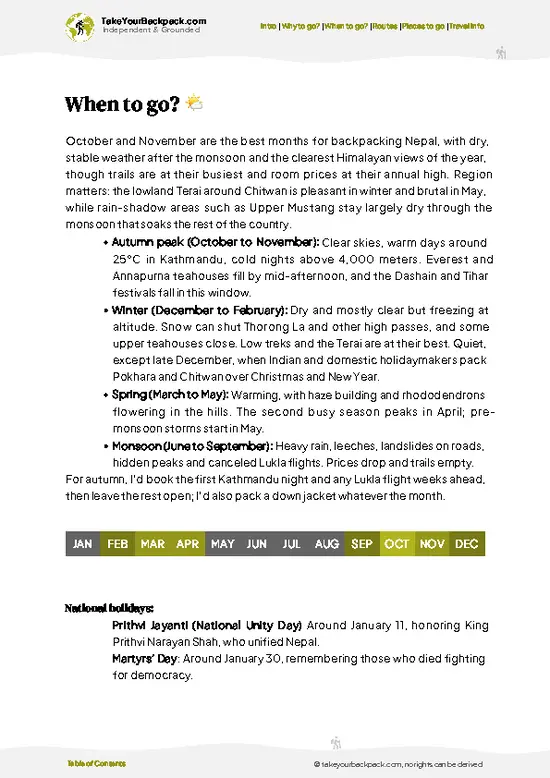
🌤️ When to go?When is the celebration of Mani Rimdu?


  • Weather: Mani Rimdu takes place in autumn, typically October or November, when the skies clear and the air crisps up. Expect daytime temps around 15-20°C (59-68°F), perfect for trekking without sweating buckets or freezing your fingers off.

  • Temperature: Nights can dip to 5°C (41°F) or lower, so pack layers. The cool evenings keep the festival fires and dances feeling magical but demand a warm jacket to stay comfortable.

  • Daylight Hours: With roughly 10-11 hours of daylight, you get enough time to soak in the festival rituals and explore the surrounding Everest region without rushing.

  • Crowds: This is peak trekking season, so expect a buzz of fellow adventurers. The festival draws locals and tourists alike, but the crowd size is manageable compared to spring’s Everest rush.

  • Seasonal
read more 👉

  • Weather: Mani Rimdu takes place in autumn, typically October or November, when the skies clear and the air crisps up. Expect daytime temps around 15-20°C (59-68°F), perfect for trekking without sweating buckets or freezing your fingers off.

  • Temperature: Nights can dip to 5°C (41°F) or lower, so pack layers. The cool evenings keep the festival fires and dances feeling magical but demand a warm jacket to stay comfortable.

  • Daylight Hours: With roughly 10-11 hours of daylight, you get enough time to soak in the festival rituals and explore the surrounding Everest region without rushing.

  • Crowds: This is peak trekking season, so expect a buzz of fellow adventurers. The festival draws locals and tourists alike, but the crowd size is manageable compared to spring’s Everest rush.

  • Seasonal Activities: Autumn’s stable weather opens trails for trekking and mountain views that reward every step. Mani Rimdu’s spiritual ceremonies blend perfectly with the crisp, clear air and vibrant mountain colors.

  • Price Fluctuations: Expect higher prices for accommodation and permits during the festival and trekking season. Booking early saves cash and stress, letting you focus your budget on experiences, not last-minute markups.


Pro-tip: Arrive a few days early to acclimate and catch pre-festival rituals—this timing sharpens your senses and energy for the full Mani Rimdu experience without burning out.


source: climatestotravel.comJANJanuary: not recommended for travelingFEBFebruary: not recommended for travelingMARMarch: not recommended for travelingAPRApril: not recommended for travelingMAYMay: not recommended for travelingJUNJune: not recommended for travelingJULJuly: not recommended for travelingAUGAugust: not recommended for travelingSEPSeptember: not recommended for travelingOCTOctober: excellent for travelingNOVNovember: not recommended for travelingDECDecember: not recommended for traveling

✈️ The backpacker research shortcutNepal Travel Guide

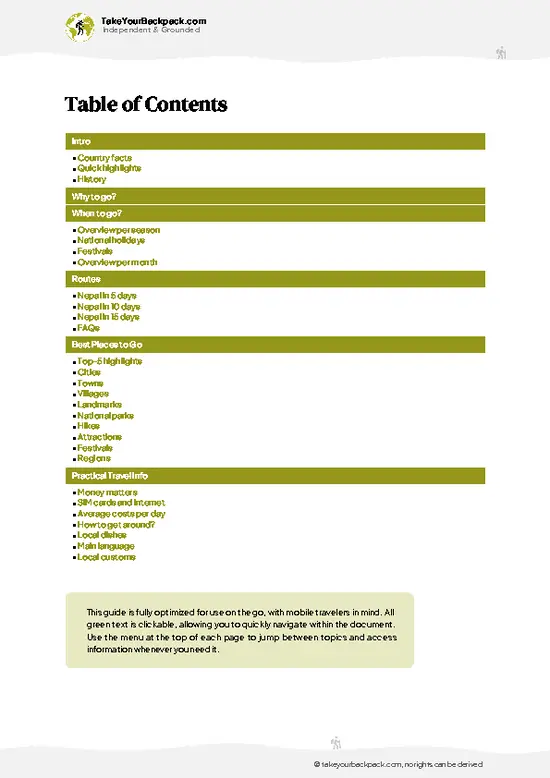
An offline-friendly backpacking guide with optimized travel routes, ranked highlights, transport advice, and the best areas to stay.
example page 0 from our offline Travel Guide for Nepal
example page 1 from our offline Travel Guide for Nepal
example page 2 from our offline Travel Guide for Nepal
example page 3 from our offline Travel Guide for Nepal
example page 4 from our offline Travel Guide for Nepal
example page 5 from our offline Travel Guide for Nepal
example page 6 from our offline Travel Guide for Nepal
example page 7 from our offline Travel Guide for Nepal
The digital guide (402 pages) contains:
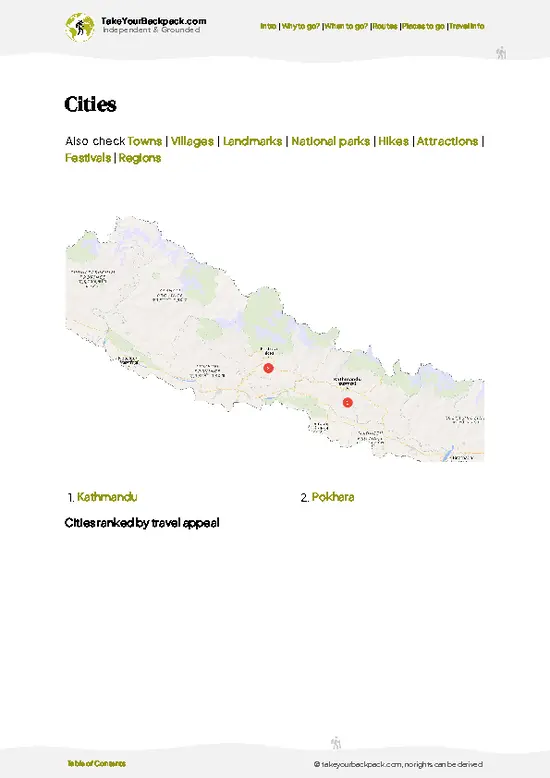
107 highlights, ranked by travel appeal
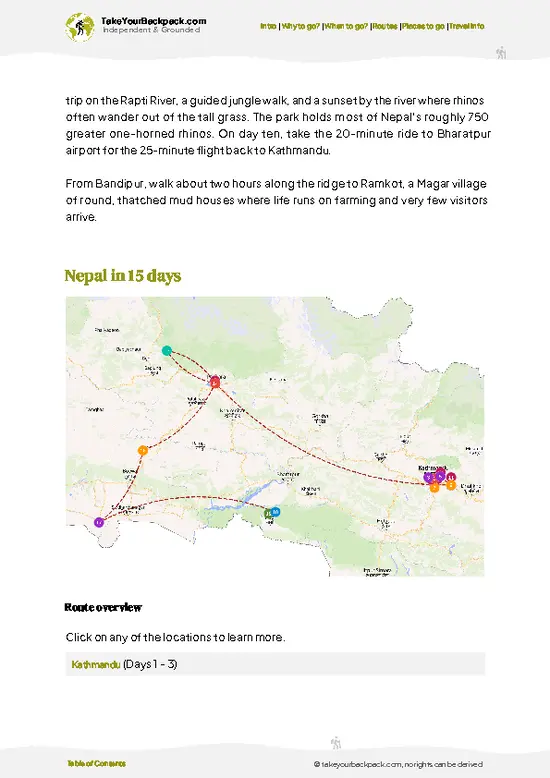
Optimized 5, 10 & 15-day travel routes
Cities, national parks, landmarks, beaches
How to get around
Offline-friendly for travel without Wi-Fi
👉 Click to see all 30+ guide features

📅 Plan smarter in minutes, not weeks
Month by month travel advice
Festivals & national holidays
Budget expectations

🗺️ Go to the right places, skip the overrated ones
Honest pros & cons of destinations
Top hikes, parks & viewpoints
Lesser-known places most travelers miss
Clear “worth it vs skip it” guidance

🛏️ Travel smoothly without rookie mistakes
Best areas to stay
Transport systems explained simply
Common scams & safety advice
SIM cards, money & practical tips

🌍 Understand the country, not just visit it
Culture & traditions
52 Essential phrases & customs
Festivals worth planning around
Traveler-friendly historical context
Insights that make places more meaningful

📱 Built for real travel conditions
Fully downloadable PDF
Works completely offline
Optimized for phone use
Useful in remote areas & buses
Everything in one place
Save weeks of stressful planning
Get instant access to your full guide. 30‑day money-back guarantee.


By proceeding you agree to our terms.
Sent to your inbox immediately after payment • 100% Secure Checkout
Best Backpacking Travel Advisor 2025 tourism awardBest Backpacking
Travel Advisor
2025
What others say about Take Your Backpack Guides:
⭐⭐⭐⭐⭐
Fantastic, amazing amount of information!
⭐⭐⭐⭐⭐
My goodness this is amazing, it's what I've been looking for hats off too you!
⭐⭐⭐⭐⭐
I think this is absolutely BRILLIANT
⭐⭐⭐⭐
Very complete and informative. It's still missing places, but I gotta to commend you
⭐⭐⭐⭐⭐
This is truly amazing, thank you, can't wait to explore it with my kids!
⭐⭐⭐⭐⭐
Awesome resource, thank you!
⭐⭐⭐⭐⭐
This is amazing! Can't wait to explore the ones I haven't seen
⭐⭐⭐⭐
I love this! Well done, great idea.
⭐⭐⭐⭐⭐
Thanks for taking the time to make this gem!
⭐⭐⭐⭐⭐
This might be the best website I've ever seen.
⭐⭐⭐⭐⭐
Congratulations, and thank you so much for your work; it's incredibly valuable.
⭐⭐⭐⭐
In all seriousness I think you did a great job pointing out the important spots
⭐⭐⭐⭐⭐
10/10 very good
⭐⭐⭐⭐⭐
As someone who's only just starting to visit regularly this is awesome, thank you.
⭐⭐⭐⭐
Thank you very much! I'm going to visit my dad, it's going to be very useful!
⭐⭐⭐⭐⭐
This is really cool! We'll be travelling for the first time and this definitely come in handy.
⭐⭐⭐⭐⭐
You are now our minister of culture, congratulations 👨‍💼
⭐⭐⭐⭐⭐
Just wanted to tell you that this is a pearl! Going to follow your recommendations.
⭐⭐⭐⭐⭐
This is so cool. I'll definitely be using the resource for my travels soon.
⭐⭐⭐⭐⭐
This is very impressive! Good work.
⭐⭐⭐⭐⭐
This is an amazing and informative site. Very well done!

🛏️ Where to stay?Where staying makes the most sense

For the Mani Rimdu festival, your best bet is to set up camp in the heart of Namche Bazaar. This bustling hub is a magnet for backpackers, offering a vibrant atmosphere where you can swap stories over a cup of chai. The energy here is infectious, and the camaraderie among travelers is palpable.

Stay close to the main square to soak in the festival’s pulse. You’ll find plenty of budget-friendly lodges and guesthouses that welcome solo adventurers and groups alike. The social scene is alive, making it easy to connect with fellow trekkers and locals.

Another solid option is Tengboche, just a … read more 👉
For the Mani Rimdu festival, your best bet is to set up camp in the heart of Namche Bazaar. This bustling hub is a magnet for backpackers, offering a vibrant atmosphere where you can swap stories over a cup of chai. The energy here is infectious, and the camaraderie among travelers is palpable.

Stay close to the main square to soak in the festival’s pulse. You’ll find plenty of budget-friendly lodges and guesthouses that welcome solo adventurers and groups alike. The social scene is alive, making it easy to connect with fellow trekkers and locals.

Another solid option is Tengboche, just a short trek from Namche. It’s quieter but still offers a sense of community. The views of the Himalayas are breathtaking, and you’ll be right near the monastery where the festival unfolds.

Avoid the temptation to splurge on luxury; instead, invest in experiences. The real magic lies in the connections you make and the stories you gather along the way.

👛 Costs (as of 18 February 2026)What things cost and how to budget

The Mani Rimdu festival in Nepal is a vibrant celebration that draws travelers from all over the globe. But before you dive headfirst into the festivities, let’s break down the costs to keep your energy and budget intact.
  • Festival Tickets: Expect to pay around $10 to $20 for a ticket. This grants you access to the main events, including the mesmerizing masked dances and rituals. Prices can vary based on the specific day you attend, so plan accordingly.
  • Accommodation: Lodging options range from budget guesthouses to mid-range hotels. You’ll find dorm beds starting at about $5 to $10 per night, while private rooms can go for $20 to $50. Book early, as places fill up fast during the festival.
  • Local Transport: Getting around can be straightforward. Local buses or shared taxis cost between $1 to $5,
read more 👉
The Mani Rimdu festival in Nepal is a vibrant celebration that draws travelers from all over the globe. But before you dive headfirst into the festivities, let’s break down the costs to keep your energy and budget intact.
  • Festival Tickets: Expect to pay around $10 to $20 for a ticket. This grants you access to the main events, including the mesmerizing masked dances and rituals. Prices can vary based on the specific day you attend, so plan accordingly.
  • Accommodation: Lodging options range from budget guesthouses to mid-range hotels. You’ll find dorm beds starting at about $5 to $10 per night, while private rooms can go for $20 to $50. Book early, as places fill up fast during the festival.
  • Local Transport: Getting around can be straightforward. Local buses or shared taxis cost between $1 to $5, depending on the distance. If you’re venturing further, consider hiring a private vehicle, which might set you back $30 to $50 for a day.
  • Food & Drinks: Street food is your best friend here. Meals can cost as little as $2 to $5. If you opt for restaurants, budget around $5 to $15 per meal. Don’t forget to hydrate; bottled water is about $0.50 to $1.
  • Miscellaneous Expenses: This includes souvenirs, tips, and any extra activities. Set aside $20 to $50 for these. It’s easy to get caught up in the moment, so keep an eye on your spending.

Being aware of these costs helps you navigate the festival without breaking the bank. Enjoy the experience, but keep your budget in check to savor every moment.


source: welcomenepal.com
⚠️ Prices can change and everyone travels differently, so take this as a rough guide. Hope it helps you plan your adventure!

🍲 FoodWhat to Eat & Drink

At the **Mani Rimdu** festival in Nepal, food and drink are as vibrant as the celebrations themselves. You’ll find **local specialties** like **momos**—steamed dumplings stuffed with spiced veggies or meat—served hot and fresh from stalls. Don’t miss the **thukpa**, a hearty noodle soup that warms you up after a day of festivities.

For drinks, **buttermilk** (lassi) is a refreshing choice, perfect for cooling off. If you’re feeling adventurous, try **chang**, a traditional fermented drink that packs a punch.

Embrace the **sharing culture** here; it’s common to swap bites with fellow festival-goers. Lines can get long, so be patient and enjoy the chatter around you. Cash is king; don’t rely on cards. Serving sizes are generous, so pace yourself—there’s plenty to savor throughout the event. … read more 👉
At the **Mani Rimdu** festival in Nepal, food and drink are as vibrant as the celebrations themselves. You’ll find **local specialties** like **momos**—steamed dumplings stuffed with spiced veggies or meat—served hot and fresh from stalls. Don’t miss the **thukpa**, a hearty noodle soup that warms you up after a day of festivities.

For drinks, **buttermilk** (lassi) is a refreshing choice, perfect for cooling off. If you’re feeling adventurous, try **chang**, a traditional fermented drink that packs a punch.

Embrace the **sharing culture** here; it’s common to swap bites with fellow festival-goers. Lines can get long, so be patient and enjoy the chatter around you. Cash is king; don’t rely on cards. Serving sizes are generous, so pace yourself—there’s plenty to savor throughout the event.

Dive into the flavors, and let the experience fuel your spirit as much as the food fuels your body.

Other Nepali festivals near Mani Rimdu

Explore more nearby:

  • Dashain—Animal sacrifice, family reunions, bamboo swings| 1 km away
  • Rato Machhindranath Jatra—Chariot pulling, rain prayers, Patan festival| 2 km away
  • Buddha Jayanti—Lumbini pilgrimage, butter lamps, Buddhist chants| 2 km away

💡 Not sure where to go next?
Create a personalized itinerary for Nepal including Mani Rimdu and the places that fit your trip.

Generate my itinerary

👉 Discover all festivals

Or checkout all Nepal has to offer (think cities, towns, villages, national parks, hikes, beaches, festivals)
Country photo of Nepal

We 💚 feedbackSumming up the experience

Mani Rimdu is a vibrant explosion of culture and spirituality that’ll leave you buzzing. The chants, the masks, the energy—it’s a feast for the senses. But brace yourself: the altitude can hit hard. Take it slow, hydrate, and don’t rush into the festivities. This isn’t just a festival; it’s a journey into the heart of Sherpa life. Embrace the challenge, and you’ll find the rewards are endless.

✈️ When did I visit Nepal?
Being a mountain lover, Nepal is one of my favorites. I visited it in November 2006, hiking the full Annapurna circuit as my highlight.

✍️ Help improve this page!
The information on this page is based on my own backpacking experience in Nepal, supplemented with up-to-date research and feedback from other travelers. Travel details can change, so if you notice anything outdated or incomplete, feel free to let me know.


🙋‍♂️ Give feedback

👋 Meet the founderWho’s Behind Take Your Backpack?

Johan, backpacker and founder of TakeYourBackpackHi, I’m Johan (Netherlands 🇳🇱), the creator of TakeYourBackpack. Over the past decade, I’ve backpacked through 80+ countries across six continents, gaining extensive experience with independent travel, long-term trips, and overland routes.

This site is built on a combination of firsthand travel experience and carefully curated insights from other backpackers. Many guides are based on places I’ve personally visited, while others bring together tips, observations, and practical advice shared by trusted travelers I’ve met along the way.

The goal is to provide realistic, experience-driven guidance — not generic itineraries — so you can explore destinations with better context, clearer expectations, and more confidence.

Get full Nepal guide •
Instant download • 107 highlights • Full Offline guide