v2.webp)
Westkapelse Zeedijk (Westkapelle Sea Dike)
The dike isn’t just a wall against the North Sea—it’s the backbone of West Kapelle’s existence. Walk or cycle along the top and you’ll feel the wind whip in from the Atlantic, carrying the briny tang of salt and the distant echo of gulls. The dike is massive, built after the 1953 floods, and you can see the scars and triumphs of Dutch engineering in every slab of concrete. Locals use it as a running track, a fishing spot, and a place to watch the sun drop into the sea in a blaze of orange. Go at golden hour, when the light turns the grass and stone into something cinematic. Free, open all day, and you’ll want at least an hour to soak it in—longer if you bring a picnic or a sketchbook.
Polderhuis Westkapelle Dijk- en Oorlogsmuseum
This isn’t your … read more 👉
The dike isn’t just a wall against the North Sea—it’s the backbone of West Kapelle’s existence. Walk or cycle along the top and you’ll feel the wind whip in from the Atlantic, carrying the briny tang of salt and the distant echo of gulls. The dike is massive, built after the 1953 floods, and you can see the scars and triumphs of Dutch engineering in every slab of concrete. Locals use it as a running track, a fishing spot, and a place to watch the sun drop into the sea in a blaze of orange. Go at golden hour, when the light turns the grass and stone into something cinematic. Free, open all day, and you’ll want at least an hour to soak it in—longer if you bring a picnic or a sketchbook.
Polderhuis Westkapelle Dijk- en Oorlogsmuseum
This isn’t your … read more 👉
Westkapelse Zeedijk (Westkapelle Sea Dike)
The dike isn’t just a wall against the North Sea—it’s the backbone of West Kapelle’s existence. Walk or cycle along the top and you’ll feel the wind whip in from the Atlantic, carrying the briny tang of salt and the distant echo of gulls. The dike is massive, built after the 1953 floods, and you can see the scars and triumphs of Dutch engineering in every slab of concrete. Locals use it as a running track, a fishing spot, and a place to watch the sun drop into the sea in a blaze of orange. Go at golden hour, when the light turns the grass and stone into something cinematic. Free, open all day, and you’ll want at least an hour to soak it in—longer if you bring a picnic or a sketchbook.
Polderhuis Westkapelle Dijk- en Oorlogsmuseum
This isn’t your average local museum. The Polderhuis is built right into the dike, and it’s a living memory of how West Kapelle has survived war and water. Inside, you’ll find relics from WWII—shell casings, uniforms, and haunting photos of the 1944 bombardment that nearly wiped the village off the map. The museum doesn’t sugarcoat: you’ll see how the sea and conflict shaped every family here. There’s a lighthouse you can climb for a panoramic view—on clear days, you’ll see the curve of Zeeland’s coast and the endless churn of the North Sea. Go in the late morning to beat the school groups. Entry is around €8 for adults, less for kids, and you’ll want 1.5-2 hours to do it justice.
Westkapelle Lighthouse (’t Hoge Licht)
This red-brick tower is the village’s exclamation point. Built in the 15th century as a church tower, it was converted into a lighthouse in the 19th century. The climb is steep—spiral stairs, stone worn smooth by centuries of footsteps—but the reward is a 360-degree view that makes you understand why people have fought so hard to keep this place above water. The air up top is sharp and clean, tinged with the scent of seaweed and diesel from distant fishing boats. The best time is late afternoon, when the sun slants over the rooftops and the sea glows silver. Entry is about €3, and you’ll need 30-45 minutes, depending on your pace and how long you linger at the top.
If you want to stretch your legs beyond the village, the beaches of Zoutelande, the WWII bunkers at Dishoek, and the wild dunes of Oranjezon are all within cycling distance—Oranjezon is my personal favorite for its raw, windblown beauty and the chance to spot wild horses among the sand dunes.
The dike isn’t just a wall against the North Sea—it’s the backbone of West Kapelle’s existence. Walk or cycle along the top and you’ll feel the wind whip in from the Atlantic, carrying the briny tang of salt and the distant echo of gulls. The dike is massive, built after the 1953 floods, and you can see the scars and triumphs of Dutch engineering in every slab of concrete. Locals use it as a running track, a fishing spot, and a place to watch the sun drop into the sea in a blaze of orange. Go at golden hour, when the light turns the grass and stone into something cinematic. Free, open all day, and you’ll want at least an hour to soak it in—longer if you bring a picnic or a sketchbook.
Polderhuis Westkapelle Dijk- en Oorlogsmuseum
This isn’t your average local museum. The Polderhuis is built right into the dike, and it’s a living memory of how West Kapelle has survived war and water. Inside, you’ll find relics from WWII—shell casings, uniforms, and haunting photos of the 1944 bombardment that nearly wiped the village off the map. The museum doesn’t sugarcoat: you’ll see how the sea and conflict shaped every family here. There’s a lighthouse you can climb for a panoramic view—on clear days, you’ll see the curve of Zeeland’s coast and the endless churn of the North Sea. Go in the late morning to beat the school groups. Entry is around €8 for adults, less for kids, and you’ll want 1.5-2 hours to do it justice.
Westkapelle Lighthouse (’t Hoge Licht)
This red-brick tower is the village’s exclamation point. Built in the 15th century as a church tower, it was converted into a lighthouse in the 19th century. The climb is steep—spiral stairs, stone worn smooth by centuries of footsteps—but the reward is a 360-degree view that makes you understand why people have fought so hard to keep this place above water. The air up top is sharp and clean, tinged with the scent of seaweed and diesel from distant fishing boats. The best time is late afternoon, when the sun slants over the rooftops and the sea glows silver. Entry is about €3, and you’ll need 30-45 minutes, depending on your pace and how long you linger at the top.
If you want to stretch your legs beyond the village, the beaches of Zoutelande, the WWII bunkers at Dishoek, and the wild dunes of Oranjezon are all within cycling distance—Oranjezon is my personal favorite for its raw, windblown beauty and the chance to spot wild horses among the sand dunes.
Spotted a mistake or missing something? Contact us.
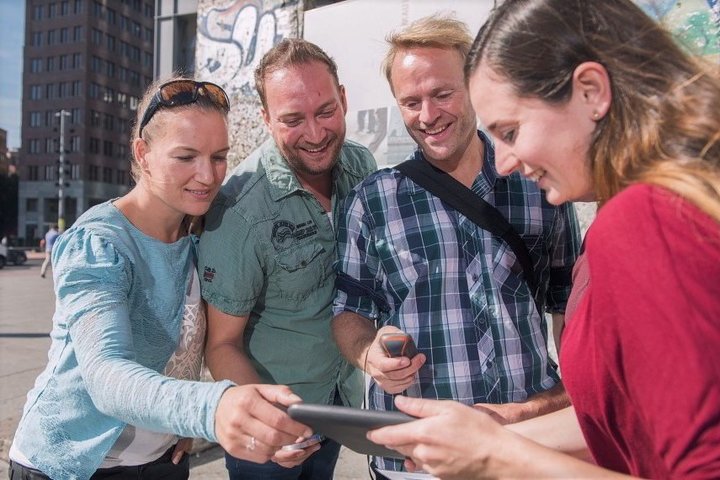
e-Scavenger hunt Middelburg: Explore the city at your own pace
✓ Free cancellation

Zeeland seals Beach safari NL/DE
✓ Free cancellation

Discover Middleburg by playing Escape game The Alchemist
✓ Free cancellation

Discover Middelburg with a Self Guided Outside Escape City Game
✓ Free cancellation

Pub Trail Middelburg: an adventure full of surprises
✓ Free cancellation

Escape The City Middelburg City Walk With Puzzles
✓ Free cancellation

Self-Guided Secrets of Middelburg Exploration Game Tour
✓ Free cancellation
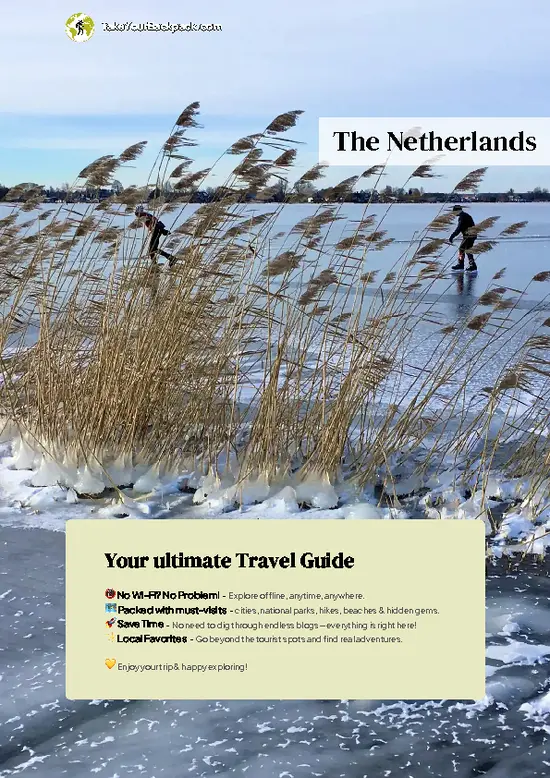
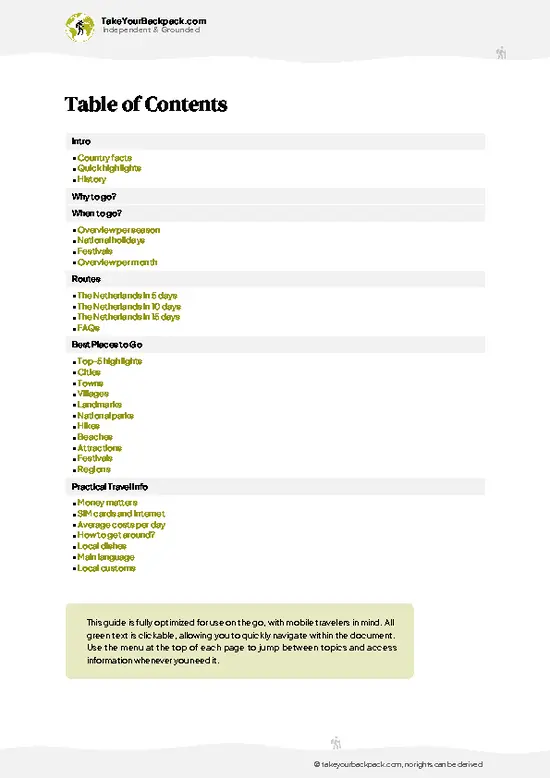


 Best Backpacking
.jpg) Hi, I’m Johan (Netherlands 🇳🇱), the creator of TakeYourBackpack. Over the past decade, I’ve backpacked through 80+ countries across six continents, gaining extensive experience with independent travel, long-term trips, and overland routes.
Hi, I’m Johan (Netherlands 🇳🇱), the creator of TakeYourBackpack. Over the past decade, I’ve backpacked through 80+ countries across six continents, gaining extensive experience with independent travel, long-term trips, and overland routes.