×

New Caledonia🇳🇨 | landmarksNokanhui AtollSand cays, shallow lagoon, outer reef drop, beach lunch | things to do and best time to go

Explore Île des PinsExplore Chutes de la Madeleine

Backpacking in Nokanhui Atoll
👍 Recommendedunique site ranked #3
By Johan Kruseman 🇳🇱 | Updated October 15, 2026

Nokanhui Atoll is known for its sand cays, each one a pale crescent of coral sand sitting in water so shallow and clear that the bottom looks like it’s inches from your fins. It lies in the southern lagoon of New Caledonia, off the Île des Pins side, and you reach it by boat across the reef. Expect hot sun, no shade on the open sand, and wind that can chop the crossing. A boat trip is the main expense here, and you share the sand with the other day-trip groups, usually in the middle hours. That is the price of entry. What you get is glare off white sand, the dry rattle of coral pieces under your feet, a salt-and-sunscreen smell, and turtles gliding through the shallows. Unlike Île des Pins itself, with its roads, bungalows and pine-lined beaches, the atoll has no village or traffic. It is just sand, reef and sky.

Discover everything you want to know in the 📖 New Caledonia Travel Guide.


example page 0 from our offline Travel Guide for New Caledonia
example page 1 from our offline Travel Guide for New Caledonia
example page 2 from our offline Travel Guide for New Caledonia
example page 3 from our offline Travel Guide for New Caledonia
example page 4 from our offline Travel Guide for New Caledonia
example page 5 from our offline Travel Guide for New Caledonia
example page 6 from our offline Travel Guide for New Caledonia
example page 7 from our offline Travel Guide for New Caledonia
Loading the map 🌍
CLICK TO FILTER
cities
towns
villages
landmarks
national parks
hikes
beaches
attractions
festivals
regions
SHOW COUNTRY’S BESTSHOW ALL

✨ Why go?
Ranked #3 unique site in New Caledonia
What sets this place apart

Go because the atoll is the clearest picture of the UNESCO-listed New Caledonian lagoon that you can reach without a long expedition. The water is shallow and calm inside the reef, so first-time snorkelers can float over coral gardens, small reef fish and the occasional green turtle with little fear. Strong swimmers can drift along the outer edge, where the color shifts from pale green to deep blue.

It also works as a break in a bigger route. After days of road travel on Grande Terre or hiking and cycling around Île des Pins, a day on a boat and a sandbar resets your body clock. There is nothing to book beyond the boat, and the picnic on the sand is a simple way to see how islanders eat by the sea. Pack your own water, a long-sleeved rash guard and reef-safe sunscreen, because the shade is … read more 👉
Go because the atoll is the clearest picture of the UNESCO-listed New Caledonian lagoon that you can reach without a long expedition. The water is shallow and calm inside the reef, so first-time snorkelers can float over coral gardens, small reef fish and the occasional green turtle with little fear. Strong swimmers can drift along the outer edge, where the color shifts from pale green to deep blue.

It also works as a break in a bigger route. After days of road travel on Grande Terre or hiking and cycling around Île des Pins, a day on a boat and a sandbar resets your body clock. There is nothing to book beyond the boat, and the picnic on the sand is a simple way to see how islanders eat by the sea. Pack your own water, a long-sleeved rash guard and reef-safe sunscreen, because the shade is minimal and the sun is strong. Bring a dry bag for your phone and camera, since spray over the bow soaks everything.

💡 HighlightsKey sights and experiences for travelers

  1. The sand cays of Nokanhoui: the main attraction, small islets of white coral sand that shift slightly with the tides and winds. You can walk all the way around the larger ones in a few minutes, and the light on the sand is dazzling at midday.
  2. Snorkeling the inner lagoon: shallow, calm water over coral heads, with small colorful reef fish. It suits beginners, and visibility is usually excellent when the wind is light.
  3. Turtle spotting: green turtles feed in the seagrass and shallows around the islets. Slow, quiet swimming gets you the best look. Keep your distance and never touch or chase them.
  4. The outer reef edge: where the shallow turquoise abruptly drops into deep blue water. Confident swimmers can see larger fish here, but currents can pick up, so stay close to your boat guide.
  5. The boat crossing:
… read more 👉
  1. The sand cays of Nokanhoui: the main attraction, small islets of white coral sand that shift slightly with the tides and winds. You can walk all the way around the larger ones in a few minutes, and the light on the sand is dazzling at midday.
  2. Snorkeling the inner lagoon: shallow, calm water over coral heads, with small colorful reef fish. It suits beginners, and visibility is usually excellent when the wind is light.
  3. Turtle spotting: green turtles feed in the seagrass and shallows around the islets. Slow, quiet swimming gets you the best look. Keep your distance and never touch or chase them.
  4. The outer reef edge: where the shallow turquoise abruptly drops into deep blue water. Confident swimmers can see larger fish here, but currents can pick up, so stay close to your boat guide.
  5. The boat crossing: the trip itself is part of the experience, with the lagoon changing from green to turquoise to deep blue and the reef line breaking into white surf in the distance. Sit on the side that gets the view, and expect some spray.
  6. Beach picnic: most trips stop for a meal on the sand, often with fresh fish, salads and fruit eaten under a simple shelter or shade cloth. It is a relaxed, unhurried lunch with an unbeatable setting.
If time is short, skip the extended beach lounging and spend your hours in the water, where the best of the atoll is.
Spotted a mistake or missing something? Contact us.

🌤️ When to go?Choosing the right time of year

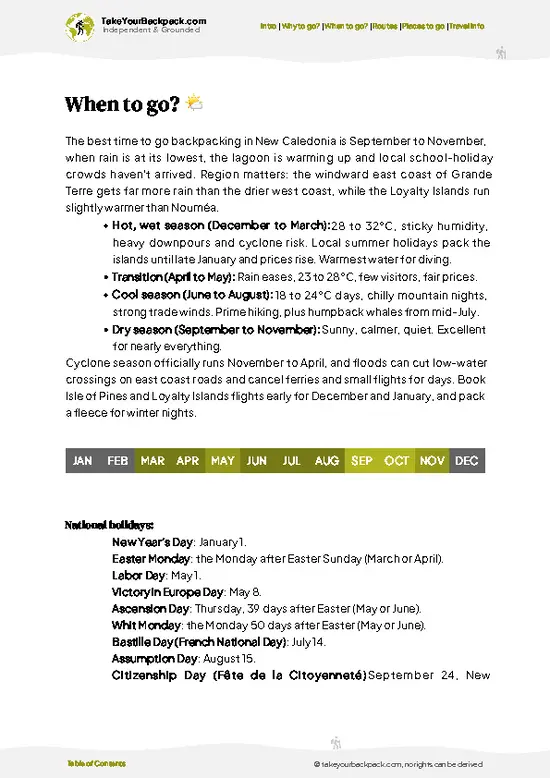
  • Cool Season (May to September): Highs of 21 to 25°C (70 to 77°F), lows near 16 to 18°C (61 to 64°F), and the clearest water for snorkeling. Days run about 11 hours of light. Humpback whales pass through the southern lagoon from July to September.
  • Hot Season (November to April): Highs of 28 to 32°C (82 to 90°F) with humid air and warm, calm lagoon mornings. Daylight stretches to about 13.5 hours. Cyclone risk peaks from January to March, and boat trips get canceled in rough seas.
  • School Holidays (July and mid-December to January): Local and Australian families fill the island and the boats to Nokanhui. Lodgings and tours book out, and rates sit at their highest.
  • Transitional Months (April, May, October, November): Water is warm, wind is lighter, and boats run with fewer passengers.
Book the Nokanhui … read more 👉
  • Cool Season (May to September): Highs of 21 to 25°C (70 to 77°F), lows near 16 to 18°C (61 to 64°F), and the clearest water for snorkeling. Days run about 11 hours of light. Humpback whales pass through the southern lagoon from July to September.
  • Hot Season (November to April): Highs of 28 to 32°C (82 to 90°F) with humid air and warm, calm lagoon mornings. Daylight stretches to about 13.5 hours. Cyclone risk peaks from January to March, and boat trips get canceled in rough seas.
  • School Holidays (July and mid-December to January): Local and Australian families fill the island and the boats to Nokanhui. Lodgings and tours book out, and rates sit at their highest.
  • Transitional Months (April, May, October, November): Water is warm, wind is lighter, and boats run with fewer passengers.
Book the Nokanhui boat for your first morning on the island, so a weather delay still leaves you a spare day.


source: climatestotravel.comJANJanuary: below average for travelingFEBFebruary: below average for travelingMARMarch: fair for travelingAPRApril: fair for travelingMAYMay: highly recommended for travelingJUNJune: excellent for travelingJULJuly: excellent for travelingAUGAugust: excellent for travelingSEPSeptember: excellent for travelingOCTOctober: highly recommended for travelingNOVNovember: fair for travelingDECDecember: below average for traveling
when-to-go

✈️ The backpacker research shortcutNew Caledonia Travel Guide

An offline-friendly backpacking guide with optimized travel routes, ranked highlights, transport advice, and the best areas to stay.
example page 0 from our offline Travel Guide for New Caledonia
example page 1 from our offline Travel Guide for New Caledonia
example page 2 from our offline Travel Guide for New Caledonia
example page 3 from our offline Travel Guide for New Caledonia
example page 4 from our offline Travel Guide for New Caledonia
example page 5 from our offline Travel Guide for New Caledonia
example page 6 from our offline Travel Guide for New Caledonia
example page 7 from our offline Travel Guide for New Caledonia
The digital guide (158 pages) contains:
✅ 42 highlights, ranked by travel appeal
✅ Optimized 2, 3 & 5-day travel routes
✅ Cities, national parks, landmarks, beaches
✅ How to get around
✅ Offline-friendly for travel without Wi-Fi
👉 Click to see all 30+ guide features

📅 Plan smarter in minutes, not weeks
✅ Month by month travel advice
✅ Festivals & national holidays
✅ Budget expectations

🗺️ Go to the right places, skip the overrated ones
✅ Honest pros & cons of destinations
✅ Top hikes, parks & viewpoints
✅ Lesser-known places most travelers miss
✅ Clear “worth it vs skip it” guidance

🛏️ Travel smoothly without rookie mistakes
✅ Best areas to stay
✅ Transport systems explained simply
✅ Common scams & safety advice
✅ SIM cards, money & practical tips

🌍 Understand the country, not just visit it
✅ Culture & traditions
✅ 52 Essential phrases & customs
✅ Festivals worth planning around
✅ Traveler-friendly historical context
✅ Insights that make places more meaningful

📱 Built for real travel conditions
✅ Fully downloadable PDF
✅ Works completely offline
✅ Optimized for phone use
✅ Useful in remote areas & buses
✅ Everything in one place
Stop searching, start planning
Get instant access to your full guide. 30‑day money-back guarantee.
+ Add another guide for just

By proceeding you agree to our terms.
Sent to your inbox immediately after payment • 100% Secure Checkout
Best Backpacking Travel Advisor 2025 tourism awardBest Backpacking
Travel Advisor
2025
What others say about Take Your Backpack Guides:
⭐⭐⭐⭐⭐
Fantastic, amazing amount of information!
⭐⭐⭐⭐⭐
My goodness this is amazing, it's what I've been looking for hats off too you!
⭐⭐⭐⭐⭐
I think this is absolutely BRILLIANT
⭐⭐⭐⭐
Very complete and informative. It's still missing places, but I gotta to commend you
⭐⭐⭐⭐⭐
This is truly amazing, thank you, can't wait to explore it with my kids!
⭐⭐⭐⭐⭐
Awesome resource, thank you!
⭐⭐⭐⭐⭐
This is amazing! Can't wait to explore the ones I haven't seen
⭐⭐⭐⭐
I love this! Well done, great idea.
⭐⭐⭐⭐⭐
Thanks for taking the time to make this gem!
⭐⭐⭐⭐⭐
This might be the best website I've ever seen.
⭐⭐⭐⭐⭐
Congratulations, and thank you so much for your work; it's incredibly valuable.
⭐⭐⭐⭐
In all seriousness I think you did a great job pointing out the important spots
⭐⭐⭐⭐⭐
10/10 very good
⭐⭐⭐⭐⭐
As someone who's only just starting to visit regularly this is awesome, thank you.
⭐⭐⭐⭐
Thank you very much! I'm going to visit my dad, it's going to be very useful!
⭐⭐⭐⭐⭐
This is really cool! We'll be travelling for the first time and this definitely come in handy.
⭐⭐⭐⭐⭐
You are now our minister of culture, congratulations 👨‍💼
⭐⭐⭐⭐⭐
Just wanted to tell you that this is a pearl! Going to follow your recommendations.
⭐⭐⭐⭐⭐
This is so cool. I'll definitely be using the resource for my travels soon.
⭐⭐⭐⭐⭐
This is very impressive! Good work.
⭐⭐⭐⭐⭐
This is an amazing and informative site. Very well done!

🛏️ Where to stay?Best areas to stay in New Caledonia

Kuto and Kanumera, the twin bays on the island’s southwest side, are where most backpackers end up. Kuto has the wide white-sand beach, a handful of small restaurants, and the easiest access to bike rentals, snorkel gear and boat excursion bookings. Kanumera, a short walk over the headland, is calmer and shallower, with a more relaxed beach-camp feel. Both suit solo travelers because you will keep running into the same faces at the beach and at dinner.

Vao, the main village, sits on the south coast of the island, a few kilometers east of Kuto. It has the church, the bakery, the shops, and the … read more 👉
Kuto and Kanumera, the twin bays on the island’s southwest side, are where most backpackers end up. Kuto has the wide white-sand beach, a handful of small restaurants, and the easiest access to bike rentals, snorkel gear and boat excursion bookings. Kanumera, a short walk over the headland, is calmer and shallower, with a more relaxed beach-camp feel. Both suit solo travelers because you will keep running into the same faces at the beach and at dinner.

Vao, the main village, sits on the south coast of the island, a few kilometers east of Kuto. It has the church, the bakery, the shops, and the bulk of the supermarket-type supplies. Staying here puts you among locals rather than other travelers, and it is the most practical base if you want to cook for yourself or save on food.

Small family gîtes and campsites are scattered between these spots. They are quieter and cheaper, but you will want a bike or a ride for dinner. Nights are dark and still, and the island is considered very safe. Book ahead for school holidays, because the island has limited beds.

👛 Costs (as of 15 October 2026)How expensive it really is

A day at Nokanhui Atoll costs roughly €135 to 228 per person, and the boat excursion is by far the biggest line.
CategoryBudget RangeLocal Reality
Boat excursion€70 to 100Day trips by motorboat leave from the Île des Pins coast, usually with a picnic lunch. Prices drop a little in a group, and sea conditions can cancel departures.
Accommodation (high season)€35 to 60Simple guesthouse rooms, bungalows or campsites on Île des Pins. Beds are limited, so book well ahead for the September to December peak.
Food€20 to 35Breakfast and dinner from small snack bars, supermarkets and local restaurants. Lunch is often included in the excursion. Everything is pricey because supplies arrive by ship.
Local transport€10 to 25Bike or scooter rental, or a transfer to the departure point. Taxis are scarce, so arrange
… read more 👉
A day at Nokanhui Atoll costs roughly €135 to 228 per person, and the boat excursion is by far the biggest line.
CategoryBudget RangeLocal Reality
Boat excursion€70 to 100Day trips by motorboat leave from the Île des Pins coast, usually with a picnic lunch. Prices drop a little in a group, and sea conditions can cancel departures.
Accommodation (high season)€35 to 60Simple guesthouse rooms, bungalows or campsites on Île des Pins. Beds are limited, so book well ahead for the September to December peak.
Food€20 to 35Breakfast and dinner from small snack bars, supermarkets and local restaurants. Lunch is often included in the excursion. Everything is pricey because supplies arrive by ship.
Local transport€10 to 25Bike or scooter rental, or a transfer to the departure point. Taxis are scarce, so arrange pickups in advance.
Snorkel gear€0 to 8Often included on the boat. Bringing your own mask and fins saves money and gives a better fit.
Total Daily Budget€135 to 228Cash in the local currency is needed for small purchases, and card machines are unreliable outside the main village.
⚠️ Prices can change and everyone travels differently, so take this as a rough guide. Hope it helps you plan your adventure!

FAQTraveler FAQ

Nokanhui is a cluster of small sandy islets and reef flats in the southern lagoon of the Isle of Pines, part of New Caledonia’s UNESCO-listed lagoons. The water is shallow and clear, with turtles, rays and coral close to the sand. It is mostly visited for snorkeling and picnics, and there are no hotels on the islets.
Allow one full day for the Nokanhui trip itself, usually 6 to 8 hours including the boat crossing and snorkeling stops. Most travelers pair it with 2 to 4 days on the Isle of Pines to see Kuto and Kanumera bays, so that a weather delay does not cost you the trip. Leave a spare day in the cyclone months from January to March.
Reach the Isle of Pines first from Nouméa, by a 20-minute Air Calédonie flight from Magenta airport or by a ferry of about 2.5 hours. Flights and ferries run several times a week, and both cost roughly 15,000 to 25,000 XPF return. From the island you join a boat excursion to Nokanhui, usually 10,000 to 15,000 XPF per person, booked through your lodging or local operators.
⚠️ Things can change over time, so always validate details locally before you go.

Other New Caledonian landmarks near Nokanhui Atoll

Explore more nearby:


💡 Not sure where to go next?
Create a personalized itinerary for New Caledonia including Nokanhui Atoll and the places that fit your trip.

Generate my itinerary

👉 Discover all landmarks

Or checkout all New Caledonia has to offer (think cities, towns, villages, national parks, hikes, beaches, festivals)
Country photo of New Caledonia

We 💚 feedbackParting advice and final tips

Look at the sand itself. It’s mostly crushed coral and shell, and it gets scorching by noon, so I’d bring thin reef shoes or sandals for the walk between boat and water. I’d also stay in the water longer than feels necessary, because the quiet fish and turtles tend to appear once the splashing group has moved on.

✍️ Help improve this page!
The information on this page is based on in-depth research, insights shared by experienced travelers, and feedback from the local travel community in New Caledonia. While every effort is made to keep the information accurate and current, conditions can change — so if you spot anything incorrect or outdated, please get in touch.


🙋‍♂️ Give feedback

👋 Meet the founderWho’s Behind Take Your Backpack?

Johan, backpacker and founder of TakeYourBackpackHi, I’m Johan (Netherlands 🇳🇱), the creator of TakeYourBackpack. Over the past 3 decades, I’ve backpacked through 90+ countries across six continents, gaining extensive experience with independent travel, long-term trips, and overland routes.

This site is built on a combination of firsthand travel experience and carefully curated insights from other backpackers. Many guides are based on places I’ve personally visited, while others bring together tips, observations, and practical advice shared by trusted travelers I’ve met along the way.

The goal is to provide realistic, experience-driven guidance — not generic itineraries — so you can explore destinations with better context, clearer expectations, and more confidence.