

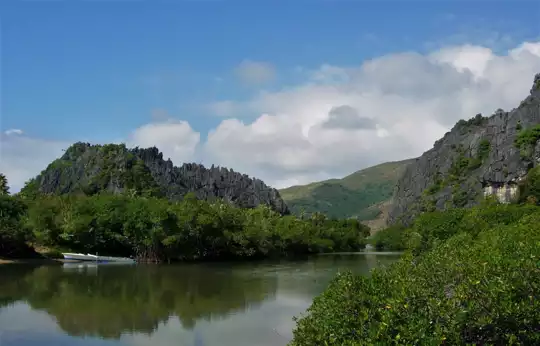
- Piscine Naturelle, Oro Bay: a natural lagoon pool of calm, shallow, clear water, reached on foot from the Oro Bay shore. Snorkelers float over coral heads and small reef fish in water that is almost body temperature. Go at low tide and early, before the tour groups arrive.
- Kuto Bay and Kanumera Bay: two bays on either side of a narrow sandy isthmus, one calm and sheltered, the other more open. The sand is white, soft and fine, and the pines lean right over the water. Kuto is the classic sunset spot.
- Pic N’Ga: the island’s high point at about 262 meters. A path climbs through scrub and rock to a bare summit with a view over the lagoon, the bays and the pine forest. Start early, because there is almost no shade.
- Ruins of the penal colony: stone remains of the prison and the cells from the era of
- Piscine Naturelle, Oro Bay: a natural lagoon pool of calm, shallow, clear water, reached on foot from the Oro Bay shore. Snorkelers float over coral heads and small reef fish in water that is almost body temperature. Go at low tide and early, before the tour groups arrive.
- Kuto Bay and Kanumera Bay: two bays on either side of a narrow sandy isthmus, one calm and sheltered, the other more open. The sand is white, soft and fine, and the pines lean right over the water. Kuto is the classic sunset spot.
- Pic N’Ga: the island’s high point at about 262 meters. A path climbs through scrub and rock to a bare summit with a view over the lagoon, the bays and the pine forest. Start early, because there is almost no shade.
- Ruins of the penal colony: stone remains of the prison and the cells from the era of Communard and other deportees. There is not much to see beyond low walls and foundations, but the setting among the trees explains how isolated it was.
- Saint-Maurice Bay and the Vao church: the landing place of the first missionaries, with a statue of Jesus ringed by carved totem poles near the shore. In Vao village, the church and the nearby grotto are still used for services, and visitors are welcome to look around quietly.
- Grotte de la Troisième and Queen Hortense Cave: limestone caves with dark, cool chambers and a few small pools of water. A flashlight helps. Bring sandals with grip, as the rocks are slick.
- Columnar pines: the tall, narrow Araucaria columnaris trees that gave the island its name. They are found around the beaches and roads, and the best photos come from low light in the morning or late afternoon.
Spotted a mistake or missing something? Contact us.

 Best Backpacking
 Hi, I’m Johan (Netherlands 🇳🇱), the creator of TakeYourBackpack. Over the past 3 decades, I’ve backpacked through 90+ countries across six continents, gaining extensive experience with independent travel, long-term trips, and overland routes.