×

New Zealand🇳🇿 | regionsCoromandel PeninsulaLimestone arch, tide-dug hot pools, Highway 25, goldmining gorge | things to do and best time to go

Explore Bay of IslandsExplore Great Barrier Island

Backpacking in Coromandel Peninsula
🌟 Highlightregion ranked #2
By Johan Kruseman 🇳🇱 | Updated October 15, 2026

A rental car or a thumb out on State Highway 25 gets you to the best of Coromandel faster than any bus timetable, because the peninsula’s single coastal road links nearly every beach and village. The Coromandel Peninsula sits in the north of New Zealand, jutting east of Auckland and the Firth of Thames. It has real strengths: forest-covered ranges, surf and swimming beaches, and artsy small towns like Coromandel Town. The cost is geography. Distances look short on a map, but the road twists, so a lot of your time goes to driving. In summer, Whitianga and Hot Water Beach fill with holiday crowds. I once drove to Hot Water Beach at high tide, spade in hand, and found only cold surf, because the hot springs surface only around low tide. Check the tide tables first. A first day could run from Coromandel Town’s cafés to a late-afternoon walk to Cathedral Cove.

Discover everything you want to know in the 📖 New Zealand Travel Guide.


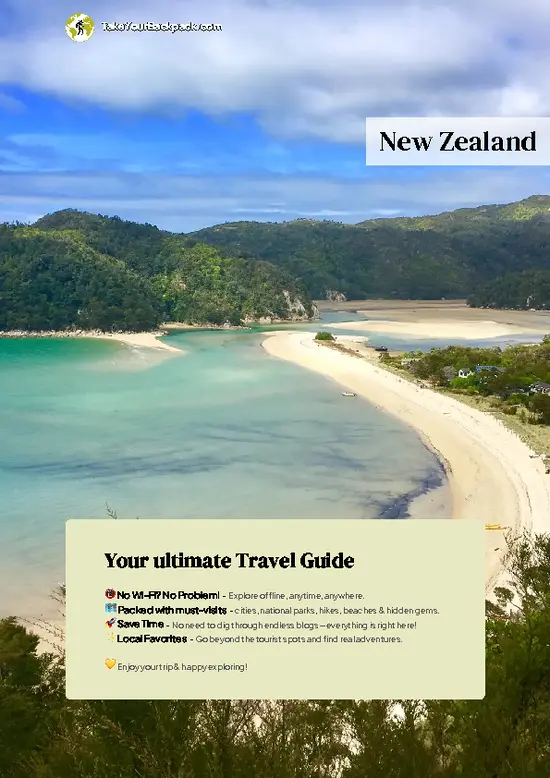
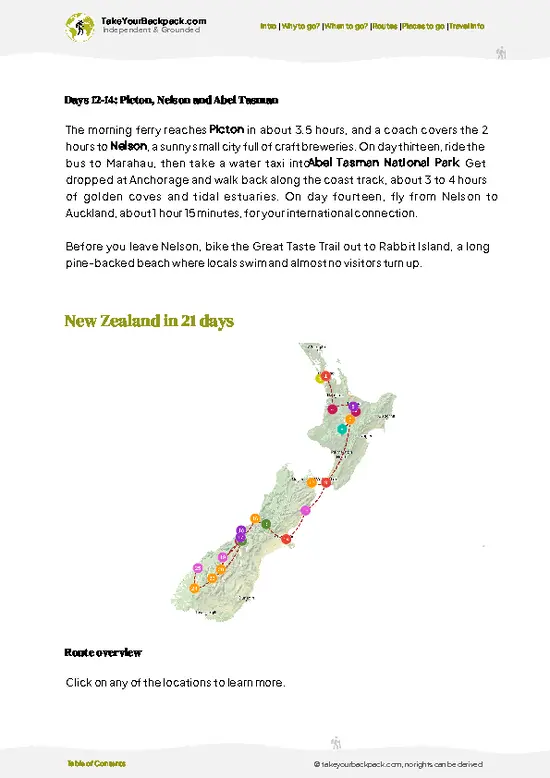
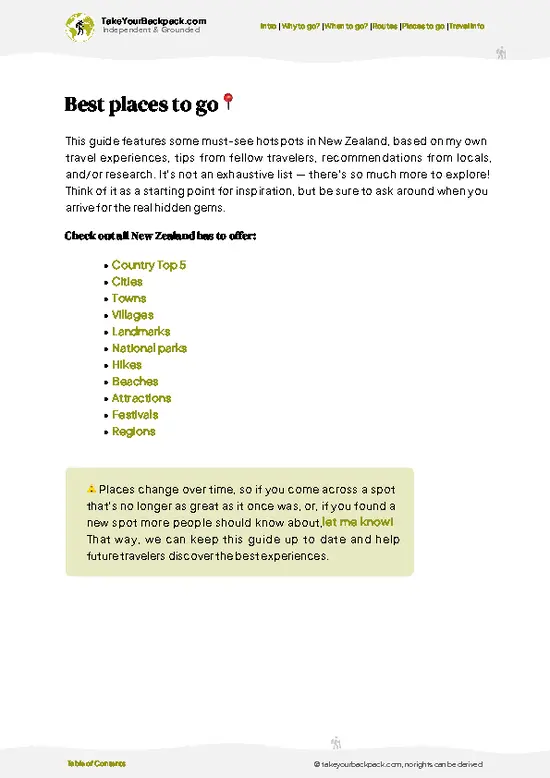
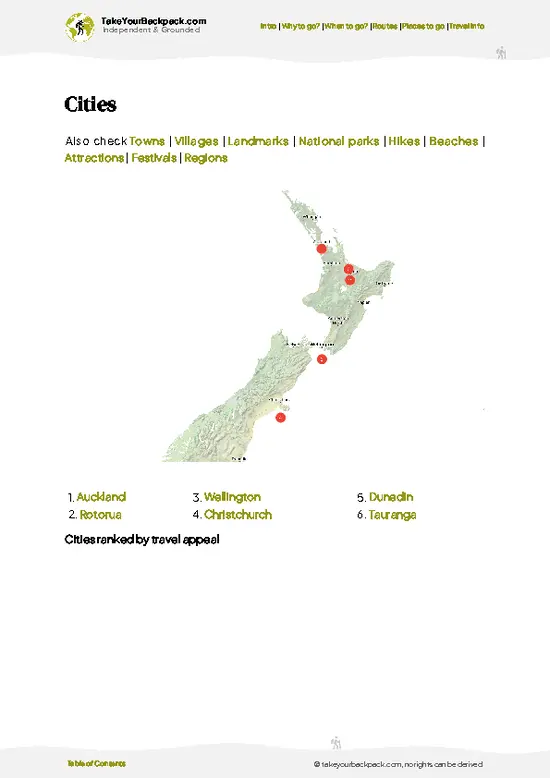
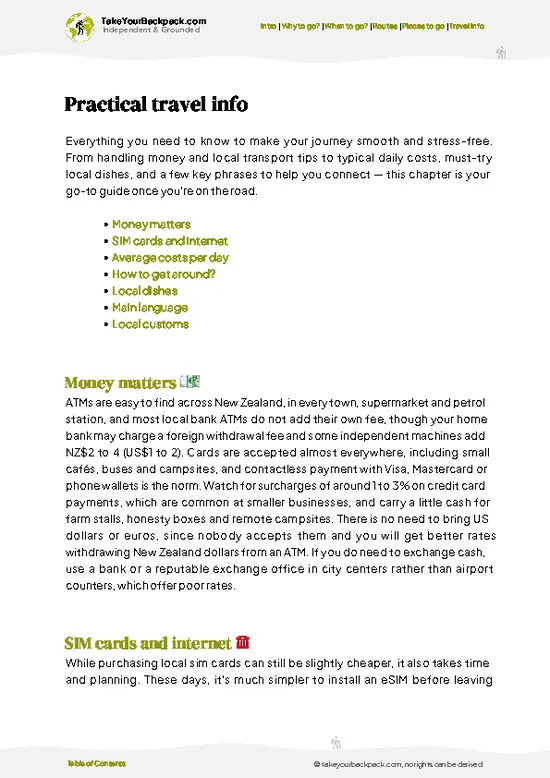
example page 0 from our offline Travel Guide for New Zealand
example page 1 from our offline Travel Guide for New Zealand
example page 2 from our offline Travel Guide for New Zealand
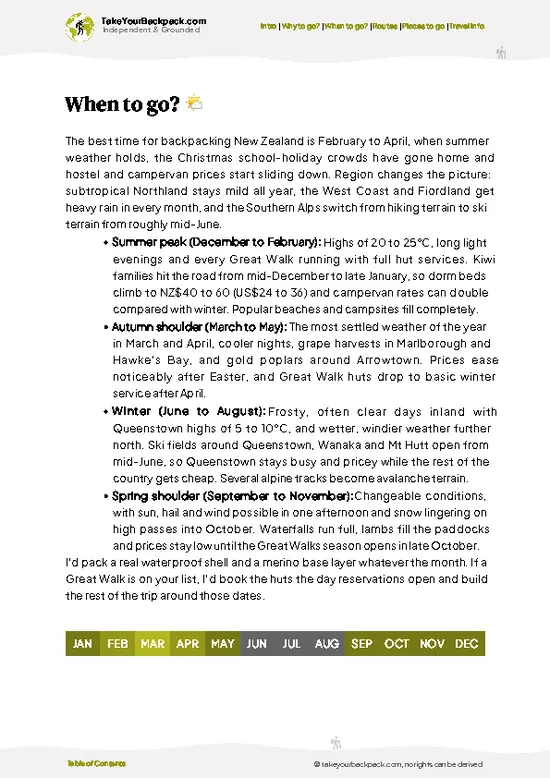
example page 3 from our offline Travel Guide for New Zealand
example page 4 from our offline Travel Guide for New Zealand
example page 5 from our offline Travel Guide for New Zealand
example page 6 from our offline Travel Guide for New Zealand
example page 7 from our offline Travel Guide for New Zealand
Loading the map 🌍
CLICK TO FILTER
cities
towns
villages
landmarks
national parks
hikes
beaches
attractions
festivals
regions
SHOW COUNTRY’S BESTSHOW ALL

✨ Why go?
Ranked #2 region in New Zealand
What makes this region worth visiting

Backpackers come for a compact peninsula that packs in several different experiences without a lot of repacking. In a single stretch you can go from the oyster-lined shores near Coromandel Town to the surf at Whangamata, with forest tracks in between. That variety is the main draw, and you can roll it into a slow loop rather than a rush.

The second reason is the Coromandel Forest Park, where walks run from short bush strolls to full-day climbs, and the old gold-mining history shows up in tunnels and tramways you can actually walk through. Pair that with the Hauraki Rail Trail on the southern side, and you can swap driving for cycling when your legs want a change.

The third is flexibility. Towns are small enough to cover on foot, and many hostels, holiday parks and DOC campsites sit right … read more 👉
Backpackers come for a compact peninsula that packs in several different experiences without a lot of repacking. In a single stretch you can go from the oyster-lined shores near Coromandel Town to the surf at Whangamata, with forest tracks in between. That variety is the main draw, and you can roll it into a slow loop rather than a rush.

The second reason is the Coromandel Forest Park, where walks run from short bush strolls to full-day climbs, and the old gold-mining history shows up in tunnels and tramways you can actually walk through. Pair that with the Hauraki Rail Trail on the southern side, and you can swap driving for cycling when your legs want a change.

The third is flexibility. Towns are small enough to cover on foot, and many hostels, holiday parks and DOC campsites sit right by the water. You can base yourself in two or three places and still reach most highlights, so the peninsula suits both a tight long weekend and a lazy week. Because State Highway 25 hugs the coast, the drive itself becomes part of the trip.

💡 HighlightsKey sights and experiences for travelers

  1. Cathedral Cove: the white limestone arch between two beaches is the peninsula’s most photographed sight. Reach it on a walking track from Hahei, and go early for quieter sand.
  2. Hot Water Beach: dig your own pool in the sand at low tide, where geothermal water seeps up. Rent a spade nearby and time your visit about two hours either side of low tide.
  3. Hahei Beach: a sheltered, pale-sand bay with calm swimming and a café scene that stays small-scale.
  4. Driving Creek Railway and Potteries: a narrow-gauge train climbs through native forest to a lookout above Coromandel Town, built by potter Barry Brickell. It is a quirky, hands-on place with a working pottery.
  5. Pinnacles Walk: a tough day hike in Kauaeranga Valley up to a large hut and rocky peaks, with sweeping views across the range. Many sections have
… read more 👉
  1. Cathedral Cove: the white limestone arch between two beaches is the peninsula’s most photographed sight. Reach it on a walking track from Hahei, and go early for quieter sand.
  2. Hot Water Beach: dig your own pool in the sand at low tide, where geothermal water seeps up. Rent a spade nearby and time your visit about two hours either side of low tide.
  3. Hahei Beach: a sheltered, pale-sand bay with calm swimming and a café scene that stays small-scale.
  4. Driving Creek Railway and Potteries: a narrow-gauge train climbs through native forest to a lookout above Coromandel Town, built by potter Barry Brickell. It is a quirky, hands-on place with a working pottery.
  5. Pinnacles Walk: a tough day hike in Kauaeranga Valley up to a large hut and rocky peaks, with sweeping views across the range. Many sections have steep stairs.
  6. Karangahake Gorge Historic Walkway: easy paths through old goldmining tunnels and along a river, including the lit Windows Walk. Bring a torch if you want to explore deeper.
  7. Waihi Beach: a long surf beach on the southern edge, with calm patrolled stretches and a laid-back local feel.
  8. Fletcher Bay to Stony Bay Track: a coastal walk at the peninsula’s northern tip, rarely crowded, reached by a long gravel road. It rewards you with farmland, cliffs and quiet bays.
  9. Whangamata Beach: a reliable surf break and a sandy harbor mouth where locals fish and paddle.
  10. Waiau Waterworks: a whimsical garden park on the 309 Road near Coromandel Town where water-powered sculptures splash and clank among the trees.
Most visitors miss the Fletcher Bay to Stony Bay Track, which sits at the end of a slow unsealed road and feels far from the crowds.
Spotted a mistake or missing something? Contact us.

Things to do around Coromandel Peninsula

Ratings based on Tripadvisor reviews. When you book through this link, you support our work at no extra cost to you.

⌛️ 5 daysSeeing the highlights in 5 days

A drive-and-beach day opens this plan, because the peninsula’s road system sets the pace: one main highway, slow curves, and few quick shortcuts, so each hop takes real time.

Day 1: Coromandel Town: Start on the west coast, where cafés, galleries and the Driving Creek Railway make an easy first stop. Staying here keeps the first day short, so you use daylight for the winding road and not for rushing.

Day 2: Hahei: Cross the peninsula to Hahei and walk to Cathedral Cove in the morning, when the track is calm. In the afternoon, stay near the coast and explore the beach, since driving after dark on bendy roads is slow work.

Day 3: Hot Water Beach: Plan around the tide. Dig your pool at low tide, then use the quiet hours for a swim or a stroll back toward Hahei. This day is built around … read more 👉
A drive-and-beach day opens this plan, because the peninsula’s road system sets the pace: one main highway, slow curves, and few quick shortcuts, so each hop takes real time.

Day 1: Coromandel Town: Start on the west coast, where cafés, galleries and the Driving Creek Railway make an easy first stop. Staying here keeps the first day short, so you use daylight for the winding road and not for rushing.

Day 2: Hahei: Cross the peninsula to Hahei and walk to Cathedral Cove in the morning, when the track is calm. In the afternoon, stay near the coast and explore the beach, since driving after dark on bendy roads is slow work.

Day 3: Hot Water Beach: Plan around the tide. Dig your pool at low tide, then use the quiet hours for a swim or a stroll back toward Hahei. This day is built around the clock, not distance.

Day 4: Whangamata: Move south for surf and relaxed café time. A day here lets the coastline do the work, with lessons or beach walks and an easy evening.

Detour: from here, head inland to Karangahake Gorge for the tunnel walks. It adds history and shade without bending your route much, since it sits near the road south.

Day 5: Pinnacles Walk: Finish with the Pinnacles. It is a long, steep day, but the summit views above the hut make it the one day that justifies the whole trip. Start early, bring plenty of water, and leave the car at the road end.

🌤️ When to go?When to go for the best experience

Summer, December to February, is the easiest window for beaches and hiking on the Coromandel Peninsula. Here is how the year breaks down.
  • Summer (Dec to Feb): Days run 22 to 26°C (72 to 79°F) with about 14 hours of light. Beaches like Hahei and Whangamatā fill up, and beds and campsites book out over Christmas and New Year, with prices at their yearly peak.
  • Autumn (Mar to May): Highs of 17 to 22°C (63 to 72°F), calmer seas and warm water into March. Crowds thin quickly after Easter.
  • Winter (Jun to Aug): Highs of 12 to 15°C (54 to 59°F), nights near 5°C (41°F), and about 9.5 hours of daylight. Rain is frequent, and some forest tracks turn to mud. Rates drop and the hot water beaches are nearly empty.
  • Spring (Sep to Nov): 14 to 19°C (57 to 66°F), lengthening days and wildflowers. Weather swings
… read more 👉
Summer, December to February, is the easiest window for beaches and hiking on the Coromandel Peninsula. Here is how the year breaks down.
  • Summer (Dec to Feb): Days run 22 to 26°C (72 to 79°F) with about 14 hours of light. Beaches like Hahei and Whangamatā fill up, and beds and campsites book out over Christmas and New Year, with prices at their yearly peak.
  • Autumn (Mar to May): Highs of 17 to 22°C (63 to 72°F), calmer seas and warm water into March. Crowds thin quickly after Easter.
  • Winter (Jun to Aug): Highs of 12 to 15°C (54 to 59°F), nights near 5°C (41°F), and about 9.5 hours of daylight. Rain is frequent, and some forest tracks turn to mud. Rates drop and the hot water beaches are nearly empty.
  • Spring (Sep to Nov): 14 to 19°C (57 to 66°F), lengthening days and wildflowers. Weather swings between sun and showers.
  • Summer bloom: Pōhutukawa trees flower red along the coast from late November into early January.
Book Christmas week accommodation months ahead, or arrive in March and get the same warmth with elbow room.


source: climatestotravel.comJANJanuary: highly recommended for travelingFEBFebruary: highly recommended for travelingMARMarch: excellent for travelingAPRApril: excellent for travelingMAYMay: good for travelingJUNJune: fair for travelingJULJuly: fair for travelingAUGAugust: fair for travelingSEPSeptember: good for travelingOCTOctober: good for travelingNOVNovember: excellent for travelingDECDecember: highly recommended for traveling

✈️ The backpacker research shortcutNew Zealand Travel Guide

An offline-friendly backpacking guide with optimized travel routes, ranked highlights, transport advice, and the best areas to stay.
example page 0 from our offline Travel Guide for New Zealand
example page 1 from our offline Travel Guide for New Zealand
example page 2 from our offline Travel Guide for New Zealand
example page 3 from our offline Travel Guide for New Zealand
example page 4 from our offline Travel Guide for New Zealand
example page 5 from our offline Travel Guide for New Zealand
example page 6 from our offline Travel Guide for New Zealand
example page 7 from our offline Travel Guide for New Zealand
The digital guide (327 pages) contains:
✅ 110 highlights, ranked by travel appeal
✅ Optimized 7, 14 & 21-day travel routes
✅ Cities, national parks, landmarks, beaches
✅ How to get around
✅ Offline-friendly for travel without Wi-Fi
👉 Click to see all 30+ guide features

📅 Plan smarter in minutes, not weeks
✅ Month by month travel advice
✅ Festivals & national holidays
✅ Budget expectations

🗺️ Go to the right places, skip the overrated ones
✅ Honest pros & cons of destinations
✅ Top hikes, parks & viewpoints
✅ Lesser-known places most travelers miss
✅ Clear “worth it vs skip it” guidance

🛏️ Travel smoothly without rookie mistakes
✅ Best areas to stay
✅ Transport systems explained simply
✅ Common scams & safety advice
✅ SIM cards, money & practical tips

🌍 Understand the country, not just visit it
✅ Culture & traditions
✅ Local customs
✅ Festivals worth planning around
✅ Traveler-friendly historical context
✅ Insights that make places more meaningful

📱 Built for real travel conditions
✅ Fully downloadable PDF
✅ Works completely offline
✅ Optimized for phone use
✅ Useful in remote areas & buses
✅ Everything in one place
Stop searching, start planning
Get instant access to your full guide. 30‑day money-back guarantee.
+ Add another guide for just

By proceeding you agree to our terms.
Sent to your inbox immediately after payment • 100% Secure Checkout
Best Backpacking Travel Advisor 2025 tourism awardBest Backpacking
Travel Advisor
2025
What others say about Take Your Backpack Guides:
⭐⭐⭐⭐⭐
Fantastic, amazing amount of information!
⭐⭐⭐⭐⭐
My goodness this is amazing, it's what I've been looking for hats off too you!
⭐⭐⭐⭐⭐
I think this is absolutely BRILLIANT
⭐⭐⭐⭐
Very complete and informative. It's still missing places, but I gotta to commend you
⭐⭐⭐⭐⭐
This is truly amazing, thank you, can't wait to explore it with my kids!
⭐⭐⭐⭐⭐
Awesome resource, thank you!
⭐⭐⭐⭐⭐
This is amazing! Can't wait to explore the ones I haven't seen
⭐⭐⭐⭐
I love this! Well done, great idea.
⭐⭐⭐⭐⭐
Thanks for taking the time to make this gem!
⭐⭐⭐⭐⭐
This might be the best website I've ever seen.
⭐⭐⭐⭐⭐
Congratulations, and thank you so much for your work; it's incredibly valuable.
⭐⭐⭐⭐
In all seriousness I think you did a great job pointing out the important spots
⭐⭐⭐⭐⭐
10/10 very good
⭐⭐⭐⭐⭐
As someone who's only just starting to visit regularly this is awesome, thank you.
⭐⭐⭐⭐
Thank you very much! I'm going to visit my dad, it's going to be very useful!
⭐⭐⭐⭐⭐
This is really cool! We'll be travelling for the first time and this definitely come in handy.
⭐⭐⭐⭐⭐
You are now our minister of culture, congratulations 👨‍💼
⭐⭐⭐⭐⭐
Just wanted to tell you that this is a pearl! Going to follow your recommendations.
⭐⭐⭐⭐⭐
This is so cool. I'll definitely be using the resource for my travels soon.
⭐⭐⭐⭐⭐
This is very impressive! Good work.
⭐⭐⭐⭐⭐
This is an amazing and informative site. Very well done!

🛏️ Where to stay?Where staying makes the most sense

Whitianga, Hahei and Thames are the three places most budget travelers choose to sleep. Whitianga sits on Mercury Bay and works as a hub: it has the widest mix of backpacker beds, supermarkets and bars, a calm beach, and the harbor ferry to the Ferry Landing side. It is also the best base for Cathedral Cove, Hot Water Beach and Hahei by car or shuttle.

Hahei is smaller and quieter, with a holiday-camp feel. You can walk to the beach and to the Cathedral Cove track, which makes mornings easy before day-trippers arrive. Evenings are mellow, mostly shared kitchens and campfire chatter, and it fills … read more 👉
Whitianga, Hahei and Thames are the three places most budget travelers choose to sleep. Whitianga sits on Mercury Bay and works as a hub: it has the widest mix of backpacker beds, supermarkets and bars, a calm beach, and the harbor ferry to the Ferry Landing side. It is also the best base for Cathedral Cove, Hot Water Beach and Hahei by car or shuttle.

Hahei is smaller and quieter, with a holiday-camp feel. You can walk to the beach and to the Cathedral Cove track, which makes mornings easy before day-trippers arrive. Evenings are mellow, mostly shared kitchens and campfire chatter, and it fills fast in summer.

Thames is the practical gateway on the western side. It is a former gold-mining town with old verandah-fronted streets, cheap cafés and a few lively hostels, and a good spot for the Kauaeranga Valley tramps and the Pinnacles. Coromandel Town, further north, attracts a slower, artsy crowd with a few small hostels and farm-style stays, and is useful for the Driving Creek Railway and the far-north coast.

Whangamatā suits surfers and sociable beach people, with a lively summer scene and an easy, safe feel. Winter is much quieter everywhere.

🚌 Getting aroundHow to get around Coromandel Peninsula

The towns here are small enough to walk end to end, but the peninsula itself is not. Thames, Whitianga, Coromandel Town and Whangamatā each have a compact center you can cross in ten minutes, yet the beaches, trailheads and neighboring towns sit 10 to 60 km apart along winding coastal roads with few buses. Most backpackers rely on a rental car, a campervan or hitchhiking, because public transport is thin and runs mainly in summer. That scarcity exists because the population is small and the road network follows the coast and a few steep ranges, so there is no efficient loop for a bus to run.
  • Rental car or campervan: About NZ$50 to 100 (US$30 to 60) a day for a small car, more for a van. Roads such as the 309 and the coast road north of Thames are narrow and twisty, so allow 1.5 to 2 hours from
… read more 👉
The towns here are small enough to walk end to end, but the peninsula itself is not. Thames, Whitianga, Coromandel Town and Whangamatā each have a compact center you can cross in ten minutes, yet the beaches, trailheads and neighboring towns sit 10 to 60 km apart along winding coastal roads with few buses. Most backpackers rely on a rental car, a campervan or hitchhiking, because public transport is thin and runs mainly in summer. That scarcity exists because the population is small and the road network follows the coast and a few steep ranges, so there is no efficient loop for a bus to run.
  • Rental car or campervan: About NZ$50 to 100 (US$30 to 60) a day for a small car, more for a van. Roads such as the 309 and the coast road north of Thames are narrow and twisty, so allow 1.5 to 2 hours from Thames to Coromandel Town. You get to pull over at a pōhutukawa-fringed bay whenever you like.
  • InterCity bus: Services link Auckland to Thames, Whitianga and Whangamatā via the Hauraki Plains, mostly NZ$25 to 50 each way, with 2 to 3 hours to Thames from Auckland. Frequency is low, but you arrive without driving and with luggage stowed.
  • Auckland ferry: The Coromandel Passenger Ferry crosses the Hauraki Gulf from Auckland to Coromandel Town in about 2 hours. It runs on summer weekends (late October to Easter), costs about NZ$135 return, and the approach past islands and dolphins is a good start.
  • Hitchhiking: Common in summer between Thames and the northern towns, with waits of 20 minutes to a couple of hours. Drivers are mostly holidaymakers and locals, so you pick up beach tips along the way.
  • Local shuttles and water taxis: Seasonal shuttles run to Cathedral Cove walking access from Hahei, and a ferry crosses the harbor between Whitianga and Ferry Landing for about NZ$8 to 10 return. This saves a long drive around the water and lands you at the Hahei-bound road.
Fill the tank in Thames, Whitianga or Whangamatā, since stations between them are rare, and start drives early to dodge summer traffic jams.

🍲 FoodLocal Cuisine & Drinks

Start with green-lipped mussels, farmed in the Coromandel’s clear waters and served steamed in garlic and white wine, or smoked and spread on crackers. Fresh scallops and crayfish show up in season, and fish and chips eaten on the sand, with seagulls watching, is the standard beach meal. Look for smoked fish in small shops around Whitianga and Coromandel Town, salty and oily and best with a squeeze of lemon.

For casual eating, farmers’ markets and roadside stalls sell fruit, honey, fresh bread and local cheese. Thames and Whitianga have plenty of cafés that serve strong flat whites and big breakfasts, while a few craft breweries and cideries pour local pints in sunny gardens. Pubs offer filling mains at moderate prices, and pie shops sell a hot steak-and-cheese pie for NZ$5 to 8 (US$3 to … read more 👉
Start with green-lipped mussels, farmed in the Coromandel’s clear waters and served steamed in garlic and white wine, or smoked and spread on crackers. Fresh scallops and crayfish show up in season, and fish and chips eaten on the sand, with seagulls watching, is the standard beach meal. Look for smoked fish in small shops around Whitianga and Coromandel Town, salty and oily and best with a squeeze of lemon.

For casual eating, farmers’ markets and roadside stalls sell fruit, honey, fresh bread and local cheese. Thames and Whitianga have plenty of cafés that serve strong flat whites and big breakfasts, while a few craft breweries and cideries pour local pints in sunny gardens. Pubs offer filling mains at moderate prices, and pie shops sell a hot steak-and-cheese pie for NZ$5 to 8 (US$3 to 5).

Some quirks help. Many places close early outside summer, often by 8 or 9 pm, so check hours in small towns. You order and pay at the counter in most cafés. Tipping is not expected. Some spots are BYO, so bring your own wine. Hot Water Beach is a popular spot to dig your own spa pool, and a thermos of tea afterward tastes unreasonably good.

FAQFrequently asked questions about Coromandel Peninsula

Three to five days covers the highlights of the Coromandel Peninsula without rushing. One day suits Thames and the Kauaeranga Valley, one or two days fit Hahei, Cathedral Cove and Hot Water Beach, and a day more takes in Coromandel Town and the northern coast. With a week you can add Whangamatā and the Pinnacles overnight hike.
A rental car or campervan is the simplest way, but you can manage without one. InterCity buses run from Auckland to Thames, Whitianga and Whangamatā for roughly NZ$25 to 50 each way, and a seasonal ferry crosses from Auckland to Coromandel Town in about 2 hours. Locally, a short harbor ferry links Whitianga and Ferry Landing for about NZ$8 to 10, and hitchhiking is common in summer.
The peninsula is known for its beaches and its coastal scenery. Cathedral Cove, a sea arch with a walking track from Hahei, and Hot Water Beach, where you dig a hot spring pool in the sand at low tide, are the biggest draws. It also has pōhutukawa trees flowering red in December, the Pinnacles hike in the Kauaeranga Valley, kauri forest, and a gold-mining past around Thames and Waihī.
⚠️ Things can change over time, so always validate details locally before you go.

Other New Zealander regions near Coromandel Peninsula

Explore more nearby:

  • Great Barrier Island—Off-grid island, kauri ridge, free hot springs, dark skies| 65 km away
  • Bay of Islands—Treaty grounds, Hole in the Rock cruises, Russell ferry, island beaches| 219 km away
  • Northern Island—geothermal valleys, Māori heritage, volcanic plateaus, subtropical forests| 349 km away

💡 Not sure where to go next?
Create a personalized itinerary for New Zealand including Coromandel Peninsula and the places that fit your trip.

Generate my itinerary

👉 Discover all regions

Or checkout all New Zealand has to offer (think cities, towns, villages, national parks, hikes, beaches, festivals)
Country photo of New Zealand

We 💚 feedbackKey takeaways before you go

Go at dawn, whatever the season. Early light on Cathedral Cove and the empty tide flats at Hot Water Beach beat the midday crowds, and the road is calm. The peninsula is slow to cross, so pick a few bases and skip the rush. I would start each day before eight.

✈️ When did I visit New Zealand?
All the way back in high school I have been visiting the North Island of New Zealand (1993).

✍️ Help improve this page!
The information on this page is based on my own backpacking experience in New Zealand, supplemented with up-to-date research and feedback from other travelers. Travel details can change, so if you notice anything outdated or incomplete, feel free to let me know.


🙋‍♂️ Give feedback

👋 Meet the founderWho’s Behind Take Your Backpack?

Johan, backpacker and founder of TakeYourBackpackHi, I’m Johan (Netherlands 🇳🇱), the creator of TakeYourBackpack. Over the past 3 decades, I’ve backpacked through 90+ countries across six continents, gaining extensive experience with independent travel, long-term trips, and overland routes.

This site is built on a combination of firsthand travel experience and carefully curated insights from other backpackers. Many guides are based on places I’ve personally visited, while others bring together tips, observations, and practical advice shared by trusted travelers I’ve met along the way.

The goal is to provide realistic, experience-driven guidance — not generic itineraries — so you can explore destinations with better context, clearer expectations, and more confidence.