×

New Zealand🇳🇿 | national parksNelson Lakes National ParkAlpine lakes, beech forest, mountain ridges, tramping routes | things to do and best time to go

Explore Paparoa National ParkExplore Arthur’s Pass National Park

Backpacking in Nelson Lakes
👍 Recommendednational park ranked #9
By Johan Kruseman 🇳🇱 | Updated May 20, 2026

A lot of people assume Nelson Lakes is just a quick photo stop on the way to Abel Tasman; it isn’t. It’s a compact, high-alpine park in the northern South Island, anchored by Lakes Rotoiti and Rotoroa, with real backcountry commitment once you leave the car park. The scenery is sharp: beech forest, clear lakes, scree ridges, and enough sandflies to keep your lunch breaks short. Tracks range from mellow lakeside walks to serious multi-day routes like the Travers–Sabine, with fewer huts and less infrastructure than nearby Abel Tasman or Kahurangi, so you feel the gaps if weather turns. Access from St Arnaud is easy, fees and hut passes are standard, crowds are light, and the vibe is quietly serious rather than social.

Discover everything you want to know in the 📖 New Zealand Travel Guide.
Loading the map 🌍
CLICK TO FILTER
cities
towns
villages
landmarks
national parks
hikes
beaches
attractions
festivals
regions
SHOW COUNTRY’S BESTSHOW ALL

✨ Why go?
Ranked #9 national park in New Zealand
Reasons people choose to explore here

Nelson Lakes National Park draws backpackers for its independent exploration opportunities. You can roam freely, choosing your own path without the constraints of guided tours. This park is a haven for those who prefer to camp on a budget; there are plenty of campsites and hostels nearby that won’t break the bank.

The trail variety is impressive, catering to all skill levels. Whether you’re after a leisurely lakeside stroll or a challenging mountain ascent, you’ll find it here. The well-marked trails make it easy for self-guided travelers to navigate, allowing you to set your own pace and soak in the stunning scenery without feeling rushed.

However, be mindful of the weather; conditions can change rapidly, so pack accordingly. By planning wisely and embracing the park’s offerings, you’ll … read more 👉
Nelson Lakes National Park draws backpackers for its independent exploration opportunities. You can roam freely, choosing your own path without the constraints of guided tours. This park is a haven for those who prefer to camp on a budget; there are plenty of campsites and hostels nearby that won’t break the bank.

The trail variety is impressive, catering to all skill levels. Whether you’re after a leisurely lakeside stroll or a challenging mountain ascent, you’ll find it here. The well-marked trails make it easy for self-guided travelers to navigate, allowing you to set your own pace and soak in the stunning scenery without feeling rushed.

However, be mindful of the weather; conditions can change rapidly, so pack accordingly. By planning wisely and embracing the park’s offerings, you’ll preserve your energy and budget for the moments that truly matter—like watching the sun set over the lake after a rewarding day on the trails.
Want to include Nelson Lakes National Park in your New Zealand route?
Create a personalized New Zealand itinerary that includes Nelson Lakes National Park and the places that fit your trip — based on your travel style, budget, and available time. Get your route in seconds.

Generate my trip

💡 HighlightsEssential experiences to have while exploring Nelson Lakes

  • Lake Rotoiti — The park’s most visited lake: big, clear water framed by beech forest and mountains. Great for kayaking, swimming, fishing for brown and rainbow trout, or just sitting with a thermos and watching light change on the peaks.
  • Conical Hill — A short but steep walk from St Arnaud that rewards you with sweeping 360° views over Lake Rotoiti, the Nelson Lakes basin and nearby ridgelines. Perfect if you want a big payoff without committing to a full-day tramp.
  • Robert Ridge / Angelus Peak & Lake Angelus — Classic alpine country: rocky ridges, tussock slopes and a tiny, glassy mountain lake (Angelus) right below the peak. A hut is there if you want to stay overnight and catch sunrise in the high country.
  • Travers-Sabine Circuit — The park’s multi-day staple. It threads native beech
read more 👉
  • Lake Rotoiti — The park’s most visited lake: big, clear water framed by beech forest and mountains. Great for kayaking, swimming, fishing for brown and rainbow trout, or just sitting with a thermos and watching light change on the peaks.
  • Conical Hill — A short but steep walk from St Arnaud that rewards you with sweeping 360° views over Lake Rotoiti, the Nelson Lakes basin and nearby ridgelines. Perfect if you want a big payoff without committing to a full-day tramp.
  • Robert Ridge / Angelus Peak & Lake Angelus — Classic alpine country: rocky ridges, tussock slopes and a tiny, glassy mountain lake (Angelus) right below the peak. A hut is there if you want to stay overnight and catch sunrise in the high country.
  • Travers-Sabine Circuit — The park’s multi-day staple. It threads native beech forest, valley floors and alpine passes, passing clear rivers, cascades and DOC huts. It’s the best way to experience the full variety of landscapes without backtracking.
  • Lake Rotoroa — Quieter and more reflective than Rotoiti, Rotoroa feels remote even though it’s road-accessible. Mountains crowd the far shore and the still water makes for superb photo opportunities and peaceful camping or fishing spots.
  • Sabine Valley & Waterways — A green, ferny river corridor with plenty of small falls and pools. The Sabine is a highlight for anglers, day trippers and tramping routes that slice into the heart of the park’s wilderness.
  • Native Beech Forest & Birdlife — The park’s beech forests are rich with tūī, bellbird, kererū and curious robins. Walk quietly in the mornings and you’ll hear the forest alive—great for birdwatching and an essential counterpoint to the alpine scenery.
Spotted a mistake or missing something? Contact us.

Things to do near Nelson Lakes National Park

Ratings based on Tripadvisor reviews. When you book through this link, you support our work at no extra cost to you.

🌤️ When to go?Seasonal considerations and timing


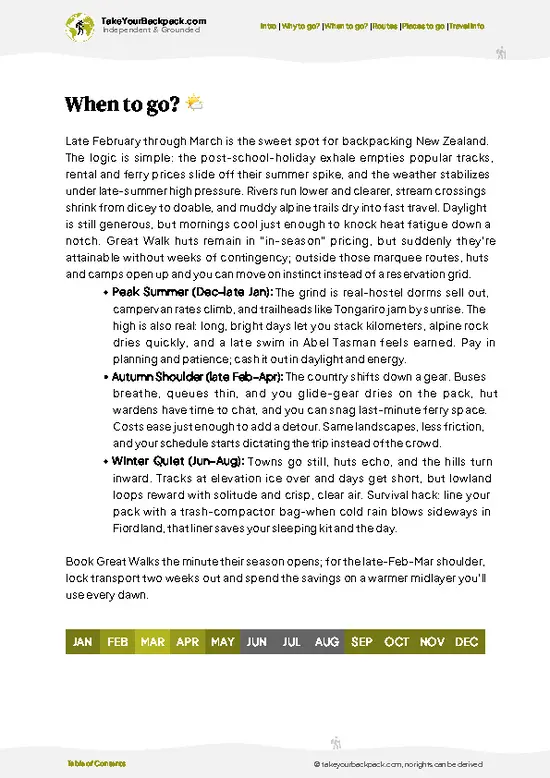
  • Weather: Summers (December to February) bring mild, stable weather with daytime highs around 20-25°C (68-77°F), ideal for hiking. Winters (June to August) are cold, often dropping below freezing, with snow common at higher elevations, limiting access.

  • Temperature: Spring and autumn offer cooler but manageable temps, ranging from 5-15°C (41-59°F). Nights can be chilly year-round, so pack layers.

  • Daylight Hours: Long summer days stretch up to 15-16 hours, giving you more daylight for trekking. Winter days shrink to about 8-9 hours, which means less time on the trail and more need for planning.

  • Crowds: Peak season in summer sees more hikers, especially on popular routes. Shoulder seasons (spring and autumn) are quieter, letting you enjoy solitude without harsh weather.

  • Seasonal Activities:
read more 👉

  • Weather: Summers (December to February) bring mild, stable weather with daytime highs around 20-25°C (68-77°F), ideal for hiking. Winters (June to August) are cold, often dropping below freezing, with snow common at higher elevations, limiting access.

  • Temperature: Spring and autumn offer cooler but manageable temps, ranging from 5-15°C (41-59°F). Nights can be chilly year-round, so pack layers.

  • Daylight Hours: Long summer days stretch up to 15-16 hours, giving you more daylight for trekking. Winter days shrink to about 8-9 hours, which means less time on the trail and more need for planning.

  • Crowds: Peak season in summer sees more hikers, especially on popular routes. Shoulder seasons (spring and autumn) are quieter, letting you enjoy solitude without harsh weather.

  • Seasonal Activities: Summer is prime for tramping and fishing. Winter opens up opportunities for snowshoeing and skiing nearby but expect limited trail access.

  • Price Fluctuations: Accommodation and transport costs spike in summer. Booking early is crucial. Off-season rates drop but some facilities close, so balance cost with convenience.


Pro-tip: Aim for late spring or early autumn to dodge crowds and extreme weather, maximizing your trail time and budget without sacrificing comfort.


source: climatestotravel.comJANJanuary: excellent for travelingFEBFebruary: excellent for travelingMARMarch: highly recommended for travelingAPRApril: highly recommended for travelingMAYMay: good for travelingJUNJune: fair for travelingJULJuly: below average for travelingAUGAugust: fair for travelingSEPSeptember: good for travelingOCTOctober: highly recommended for travelingNOVNovember: highly recommended for travelingDECDecember: excellent for traveling
when-to-go

✈️ The backpacker research shortcutNew Zealand Travel Guide

An offline-friendly backpacking guide with optimized travel routes, ranked highlights, transport advice, and the best areas to stay.
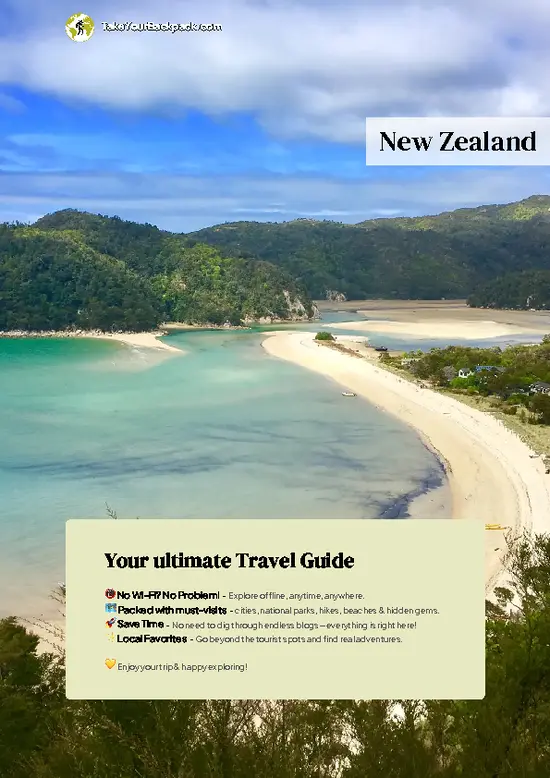
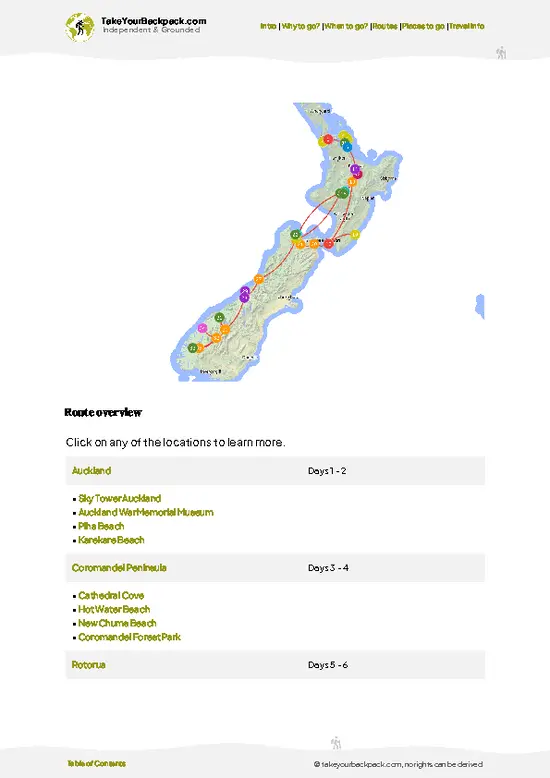
example page 0 from our offline Travel Guide for New Zealand
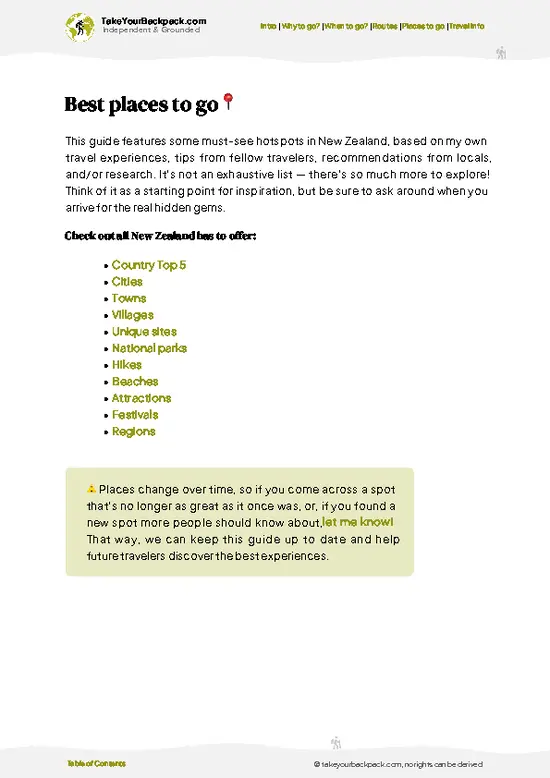
example page 1 from our offline Travel Guide for New Zealand
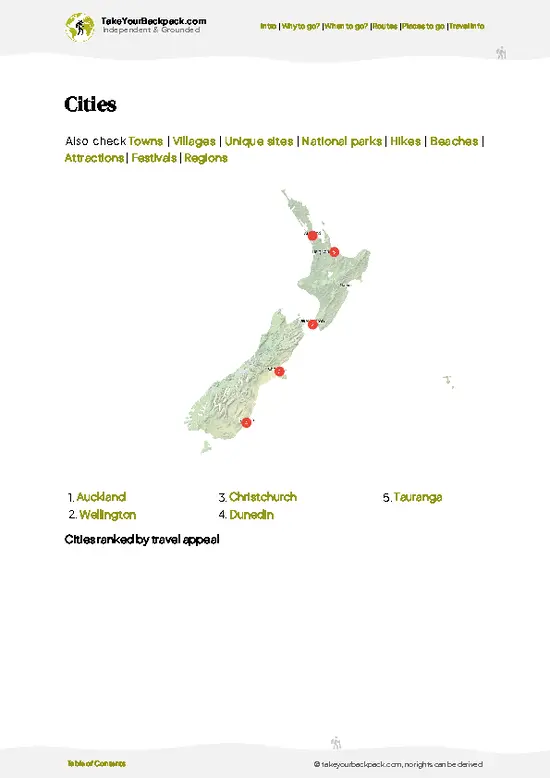
example page 2 from our offline Travel Guide for New Zealand
example page 3 from our offline Travel Guide for New Zealand
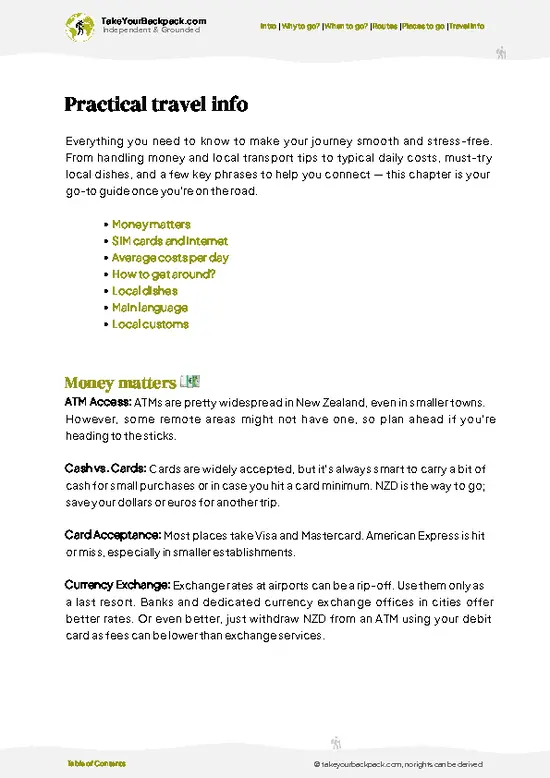
example page 4 from our offline Travel Guide for New Zealand
example page 5 from our offline Travel Guide for New Zealand
example page 6 from our offline Travel Guide for New Zealand
example page 7 from our offline Travel Guide for New Zealand
The digital guide (412 pages) contains:
113 highlights, ranked by travel appeal
Optimized 7, 14 & 21-day travel routes
Cities, national parks, landmarks, beaches
How to get around
Offline-friendly for travel without Wi-Fi
👉 Click to see all 30+ guide features

📅 Plan smarter in minutes, not weeks
Month by month travel advice
Festivals & national holidays
Budget expectations

🗺️ Go to the right places, skip the overrated ones
Honest pros & cons of destinations
Top hikes, parks & viewpoints
Lesser-known places most travelers miss
Clear “worth it vs skip it” guidance

🛏️ Travel smoothly without rookie mistakes
Best areas to stay
Transport systems explained simply
Common scams & safety advice
SIM cards, money & practical tips

🌍 Understand the country, not just visit it
Culture & traditions
Local customs
Festivals worth planning around
Traveler-friendly historical context
Insights that make places more meaningful

📱 Built for real travel conditions
Fully downloadable PDF
Works completely offline
Optimized for phone use
Useful in remote areas & buses
Everything in one place
Save weeks of stressful planning
Get instant access to your full guide. 30‑day money-back guarantee.


By proceeding you agree to our terms.
Sent to your inbox immediately after payment • 100% Secure Checkout
Best Backpacking Travel Advisor 2025 tourism awardBest Backpacking
Travel Advisor
2025
What others say about Take Your Backpack Guides:
⭐⭐⭐⭐⭐
Fantastic, amazing amount of information!
⭐⭐⭐⭐⭐
My goodness this is amazing, it's what I've been looking for hats off too you!
⭐⭐⭐⭐⭐
I think this is absolutely BRILLIANT
⭐⭐⭐⭐
Very complete and informative. It's still missing places, but I gotta to commend you
⭐⭐⭐⭐⭐
This is truly amazing, thank you, can't wait to explore it with my kids!
⭐⭐⭐⭐⭐
Awesome resource, thank you!
⭐⭐⭐⭐⭐
This is amazing! Can't wait to explore the ones I haven't seen
⭐⭐⭐⭐
I love this! Well done, great idea.
⭐⭐⭐⭐⭐
Thanks for taking the time to make this gem!
⭐⭐⭐⭐⭐
This might be the best website I've ever seen.
⭐⭐⭐⭐⭐
Congratulations, and thank you so much for your work; it's incredibly valuable.
⭐⭐⭐⭐
In all seriousness I think you did a great job pointing out the important spots
⭐⭐⭐⭐⭐
10/10 very good
⭐⭐⭐⭐⭐
As someone who's only just starting to visit regularly this is awesome, thank you.
⭐⭐⭐⭐
Thank you very much! I'm going to visit my dad, it's going to be very useful!
⭐⭐⭐⭐⭐
This is really cool! We'll be travelling for the first time and this definitely come in handy.
⭐⭐⭐⭐⭐
You are now our minister of culture, congratulations 👨‍💼
⭐⭐⭐⭐⭐
Just wanted to tell you that this is a pearl! Going to follow your recommendations.
⭐⭐⭐⭐⭐
This is so cool. I'll definitely be using the resource for my travels soon.
⭐⭐⭐⭐⭐
This is very impressive! Good work.
⭐⭐⭐⭐⭐
This is an amazing and informative site. Very well done!

🛏️ Where to stay?Best areas to stay in New Zealand

Nelson Lakes National Park offers a few solid options for backpackers. Inside the park, the Lake Rotoiti Lodge provides a cozy base with easy access to trails. It’s not fancy, but it’s clean and welcoming, perfect for unwinding after a day on the trails.

For a more rustic experience, check out the Rotoiti Nature Recovery Project Hut. It’s basic, but you’ll be right in the heart of nature. Just remember to book ahead, as spots fill up quickly.

If you prefer to stay outside the park, St. Arnaud is your best bet. This small village has a handful of budget-friendly lodges and hostels. The St. Arnaud read more 👉
Nelson Lakes National Park offers a few solid options for backpackers. Inside the park, the Lake Rotoiti Lodge provides a cozy base with easy access to trails. It’s not fancy, but it’s clean and welcoming, perfect for unwinding after a day on the trails.

For a more rustic experience, check out the Rotoiti Nature Recovery Project Hut. It’s basic, but you’ll be right in the heart of nature. Just remember to book ahead, as spots fill up quickly.

If you prefer to stay outside the park, St. Arnaud is your best bet. This small village has a handful of budget-friendly lodges and hostels. The St. Arnaud Mountain Lodge is a good choice, offering dorms and private rooms with a communal kitchen.

Keep in mind that food options are limited, so stock up on supplies before you head in. Also, be prepared for variable weather; it can change quickly, so pack accordingly. This way, you’ll preserve your energy and budget for the moments that truly matter.

👛 Costs (as of 5 February 2025)Typical daily expenses

Visiting Nelson Lakes National Park in New Zealand involves a few key costs that can sneak up on you if you’re not prepared.

First, there’s the entry fee. While many parks in New Zealand are free, Nelson Lakes does have a fee for certain areas, typically around $10 to $20 USD per vehicle for a day pass. If you plan to camp, expect to pay about $15 to $25 USD per night for a campsite.

Accommodation options vary. If you prefer staying in a hut, the Department of Conservation (DOC) huts range from $15 to $30 USD per person per night. Booking in advance is wise, especially during peak season.

Food is another consideration. If you’re cooking, budget around $10 to $15 USD per day for groceries. Eating out can quickly escalate your costs, with meals at local cafes averaging $20 to $30 USD.
read more 👉
Visiting Nelson Lakes National Park in New Zealand involves a few key costs that can sneak up on you if you’re not prepared.

First, there’s the entry fee. While many parks in New Zealand are free, Nelson Lakes does have a fee for certain areas, typically around $10 to $20 USD per vehicle for a day pass. If you plan to camp, expect to pay about $15 to $25 USD per night for a campsite.

Accommodation options vary. If you prefer staying in a hut, the Department of Conservation (DOC) huts range from $15 to $30 USD per person per night. Booking in advance is wise, especially during peak season.

Food is another consideration. If you’re cooking, budget around $10 to $15 USD per day for groceries. Eating out can quickly escalate your costs, with meals at local cafes averaging $20 to $30 USD.

Transport can also add up. If you’re renting a car, expect rates starting around $30 to $50 USD per day, plus fuel. Public transport options are limited, so having your own vehicle is often the best choice.

Lastly, consider any guided tours or activities. These can range from $50 to $200 USD depending on what you choose, like kayaking or guided hikes.

Plan for these expenses to keep your budget intact and your experience enjoyable.


source: doc.govt.nz
⚠️ Prices can change and everyone travels differently, so take this as a rough guide. Hope it helps you plan your adventure!

🥾 TrailsScenic routes and wildlife spotting in Nelson Lakes

Nestled in the heart of New Zealand’s South Island, Nelson Lakes National Park is a hiker’s paradise, offering stunning alpine scenery, serene lakes, and a variety of trails that cater to different skill levels. You can expect breathtaking views of the surrounding peaks and lush beech forests. Wildlife enthusiasts might spot native birds like the kea or the elusive kiwi, adding a bit of excitement to your trek.

One of the standout trails is the Lake Rotoiti Circuit, which is about 12 kilometers long. You can expect to spend around 3-4 hours on this loop, and it’s rated as moderate in difficulty. … read more 👉
Nestled in the heart of New Zealand’s South Island, Nelson Lakes National Park is a hiker’s paradise, offering stunning alpine scenery, serene lakes, and a variety of trails that cater to different skill levels. You can expect breathtaking views of the surrounding peaks and lush beech forests. Wildlife enthusiasts might spot native birds like the kea or the elusive kiwi, adding a bit of excitement to your trek.

One of the standout trails is the Lake Rotoiti Circuit, which is about 12 kilometers long. You can expect to spend around 3-4 hours on this loop, and it’s rated as moderate in difficulty. The trail meanders through beautiful forested areas and alongside the shimmering lake, giving you plenty of opportunities to soak in the views.
  • Length: 12 km
  • Estimated Duration: 3-4 hours
  • Difficulty Level: Moderate
  • Key Features: Scenic lake views, native forest, birdwatching
  • Terrain: Well-maintained track with some gentle inclines

Another great option is the Angelus Hut Track, which is a bit more challenging at around 16 kilometers one way. You’ll want to budget about 6-8 hours for this trek. The trail leads you to the stunning Angelus Lake, perched at a high altitude, surrounded by dramatic peaks.
  • Length: 16 km one way
  • Estimated Duration: 6-8 hours
  • Difficulty Level: Challenging
  • Key Features: High alpine lake, panoramic mountain views, Angelus Hut
  • Terrain: Steep sections, rocky paths, and some exposed areas

Reaching the park is fairly straightforward. You can hop on a bus from Nelson to St. Arnaud, which is the nearest village. It’s not overly crowded, especially if you go during the shoulder seasons, but expect some company on the popular trails in peak summer. As for the entrance fee, there’s no charge to enter the park, which is a nice bonus for budget travelers. Just remember to pack out what you pack in, and enjoy the natural beauty!
⚠️ Hiking info can sometimes be outdated or inaccurate. Before you hit the trail, check the latest conditions with locals. If you do spot anything that's off, I'd love to hear from you, so I can update it for fellow travelers.

🛡️ SafetyTraveler Safety Guide

Nelson Lakes National Park is generally welcoming for backpackers, but a few realities can help you navigate it smoothly. Weather can shift quickly; be ready for rain or sudden temperature drops, especially in the alpine areas. Layer your clothing and pack a reliable rain jacket.

The terrain varies, with some steep sections and rocky paths. Good footwear is essential. Pay attention to your footing, particularly on descents. River crossings can be tricky after heavy rain, so gauge conditions carefully before proceeding.

Wildlife is part of the experience, but keep a respectful distance from any animals you encounter. They’re often more curious than dangerous. Lastly, don’t underestimate the importance of a solid map and compass. Cell service is spotty, so trust your navigation skills. Prepare … read more 👉
Nelson Lakes National Park is generally welcoming for backpackers, but a few realities can help you navigate it smoothly. Weather can shift quickly; be ready for rain or sudden temperature drops, especially in the alpine areas. Layer your clothing and pack a reliable rain jacket.

The terrain varies, with some steep sections and rocky paths. Good footwear is essential. Pay attention to your footing, particularly on descents. River crossings can be tricky after heavy rain, so gauge conditions carefully before proceeding.

Wildlife is part of the experience, but keep a respectful distance from any animals you encounter. They’re often more curious than dangerous. Lastly, don’t underestimate the importance of a solid map and compass. Cell service is spotty, so trust your navigation skills. Prepare well, and you’ll have the energy and focus for the stunning views that await.

Other New Zealander national parks near Nelson Lakes

Explore more nearby:


💡 Not sure where to go next?
Create a personalized itinerary for New Zealand including Nelson Lakes and the places that fit your trip.

Generate my itinerary

👉 Discover all national parks

Or checkout all New Zealand has to offer (think cities, towns, villages, national parks, hikes, beaches, festivals)
Country photo of New Zealand

We 💚 feedbackParting advice and final tips

Nelson Lakes National Park is a slice of paradise for those who crave solitude and stunning alpine scenery. The crystal-clear lakes and rugged mountains offer a refreshing escape from the everyday grind. But be prepared: the weather can shift faster than you can say “raincoat.” Bring layers and a solid plan for your hikes. It’s all about balancing those breathtaking views with the reality of nature’s unpredictability.

✈️ When did I visit New Zealand?
All the way back in high school I have been visiting the Northern Island of New Zealand (1993).

✍️ Help improve this page!
The information on this page is based on my own backpacking experience in New Zealand, supplemented with up-to-date research and feedback from other travelers. Travel details can change, so if you notice anything outdated or incomplete, feel free to let me know.


🙋‍♂️ Give feedback

👋 Meet the founderWho’s Behind Take Your Backpack?

Johan, backpacker and founder of TakeYourBackpackHi, I’m Johan (Netherlands 🇳🇱), the creator of TakeYourBackpack. Over the past decade, I’ve backpacked through 80+ countries across six continents, gaining extensive experience with independent travel, long-term trips, and overland routes.

This site is built on a combination of firsthand travel experience and carefully curated insights from other backpackers. Many guides are based on places I’ve personally visited, while others bring together tips, observations, and practical advice shared by trusted travelers I’ve met along the way.

The goal is to provide realistic, experience-driven guidance — not generic itineraries — so you can explore destinations with better context, clearer expectations, and more confidence.

Get full country guide •
Instant download • 113 highlights • Full Offline guide