×

New Zealand🇳🇿 | national parksWhanganui National ParkWhanganui River, Māori heritage, deep gorges, canoe journeys | things to do and best time to go

Explore Egmont National ParkExplore Paparoa National Park

Backpacking in Whanganui
👌 Worth visitingnational park ranked #13
By Johan Kruseman 🇳🇱 | Updated May 23, 2026

A lot of people assume Whanganui National Park is “just a river you paddle once and forget.” That’s lazy thinking. This park sits in the central-west of New Zealand’s North Island, inland from Whanganui city and roughly between Tongariro and Taranaki. For backpackers, it’s about slow travel: multi-day river journeys, muddy side tracks, mossy forest, and more weka and goats than big headline wildlife. Access is awkward without a car or shuttle, and the river logistics add cost, though there’s no classic national park entrance fee. Campsites and basic huts are cheap but spartan, and crowds thin out fast compared with Tongariro’s conveyor-belt feel. I go here when I want New Zealand to feel quiet, slightly inconvenient, and very real.

Discover everything you want to know in the 📖 New Zealand Travel Guide.
Loading the map 🌍
CLICK TO FILTER
cities
towns
villages
landmarks
national parks
hikes
beaches
attractions
festivals
regions
SHOW COUNTRY’S BESTSHOW ALL

✨ Why go?
Ranked #13 national park in New Zealand
The unique appeal for travelers

Whanganui National Park attracts backpackers for several compelling reasons. Independent exploration is a major draw; the park’s extensive trail network allows you to wander at your own pace, soaking in the lush landscapes without a guide. For budget-conscious travelers, camping and hostels nearby offer affordable options that keep costs down while providing a base for adventure. The variety of trails caters to all skill levels, from easy riverside walks to challenging backcountry routes. This park is particularly suited for self-guided travelers; you can easily navigate the terrain with a good map and a sense of adventure. Avoid the tourist traps and embrace the freedom of the wild—Whanganui is all about making your own path.
Want to include Whanganui National Park in your New Zealand route?
Create a personalized New Zealand itinerary that includes Whanganui National Park and the places that fit your trip — based on your travel style, budget, and available time. Get your route in seconds.

Generate my trip

💡 HighlightsThe experiences that define the visit

  • Whanganui River Journey (multi-day canoe/kayak) — The park’s signature experience: paddle through deep gorges, native forest and slow, meandering river stretches. You can do anything from a day trip to the full classic several-day paddle with DOC campsites tucked into the riverbank. It’s remote, peaceful, and feels like stepping into another era.
  • Bridge to Nowhere (Mangapurua Valley) — A surreal concrete bridge stranded in the bush, built for early settlers and left when the valley was abandoned. You can reach it by a long walk (Mangapurua Track) or by jetboat; the site has old graves and a weirdly beautiful mix of history and forest reclaiming farmland.
  • Ancient podocarp forest and river gorges — Rimu, kahikatea and towering native trees line the Whanganui River and its tributaries, carving
read more 👉
  • Whanganui River Journey (multi-day canoe/kayak) — The park’s signature experience: paddle through deep gorges, native forest and slow, meandering river stretches. You can do anything from a day trip to the full classic several-day paddle with DOC campsites tucked into the riverbank. It’s remote, peaceful, and feels like stepping into another era.
  • Bridge to Nowhere (Mangapurua Valley) — A surreal concrete bridge stranded in the bush, built for early settlers and left when the valley was abandoned. You can reach it by a long walk (Mangapurua Track) or by jetboat; the site has old graves and a weirdly beautiful mix of history and forest reclaiming farmland.
  • Ancient podocarp forest and river gorges — Rimu, kahikatea and towering native trees line the Whanganui River and its tributaries, carving dramatic cliffs and peaceful pools. Great for photographers, botanists-at-heart, or anyone who enjoys quiet trails under big trees.
  • Tieke Kainga and native birdlife — A predator-managed area accessed from the river where tīeke (saddleback) and other native birds are often seen. Expect tūī, kererū and bellbird singing in the canopy; bring binoculars and keep noise down so the birds stick around.
  • Pipiriki and river settlements — The small river village that’s the gateway to many boat and canoe trips. It’s a good place to learn about local Māori history, hire gear, or join a guided cultural tour — handy if you want context for what you’re paddling through.
  • Whanganui River’s cultural story (Te Awa Tupua) — Unique worldwide: the Whanganui River was granted legal personhood in recognition of its Māori guardianship. That cultural depth changes how you experience the landscape — local guides and marae visits add meaning beyond the scenery.
  • Remote camping and night skies — Once you’re away from road access, campsites are quiet and dark, excellent for stargazing and waking to birdsong. Bring a stove, good insect repellent, and a sense of solitude — the park rewards simple, off-grid camping.
Spotted a mistake or missing something? Contact us.

Things to do near Whanganui National Park

Ratings based on Tripadvisor reviews. When you book through this link, you support our work at no extra cost to you.

🌤️ When to go?When to go for the best experience


  • Weather: The best window is late spring to early autumn (November to April). Rain is frequent year-round, but these months offer the driest spells. Expect occasional showers even then—pack waterproof gear.

  • Temperature: Summer highs hover around 20-25°C (68-77°F), comfortable for hiking. Winters dip to 5-10°C (41-50°F), which can be chilly and damp, making trails slippery and less enjoyable.

  • Daylight Hours: Summer days stretch to 14-15 hours, giving you more daylight for longer treks. Winter shrinks daylight to about 8-9 hours, limiting your hiking window.

  • Crowds: Peak season (December to February) sees more visitors, especially on popular routes. Shoulder seasons offer quieter trails and a more solitary experience.

  • Seasonal Activities: Summer is prime for river trips and camping.
read more 👉

  • Weather: The best window is late spring to early autumn (November to April). Rain is frequent year-round, but these months offer the driest spells. Expect occasional showers even then—pack waterproof gear.

  • Temperature: Summer highs hover around 20-25°C (68-77°F), comfortable for hiking. Winters dip to 5-10°C (41-50°F), which can be chilly and damp, making trails slippery and less enjoyable.

  • Daylight Hours: Summer days stretch to 14-15 hours, giving you more daylight for longer treks. Winter shrinks daylight to about 8-9 hours, limiting your hiking window.

  • Crowds: Peak season (December to February) sees more visitors, especially on popular routes. Shoulder seasons offer quieter trails and a more solitary experience.

  • Seasonal Activities: Summer is prime for river trips and camping. Spring brings wildflowers but can be muddy. Autumn offers crisp air and fewer bugs, ideal for those who prefer solitude.

  • Price Fluctuations: Accommodation and transport costs rise in peak summer. Booking ahead is essential. Off-peak months can save you money but expect fewer services.


Pro-tip: Aim for late spring or early autumn to dodge crowds and rain, stretch your daylight, and keep your gear light—this balance preserves your energy for the park’s best moments.


source: climatestotravel.comJANJanuary: highly recommended for travelingFEBFebruary: highly recommended for travelingMARMarch: excellent for travelingAPRApril: excellent for travelingMAYMay: good for travelingJUNJune: fair for travelingJULJuly: below average for travelingAUGAugust: below average for travelingSEPSeptember: fair for travelingOCTOctober: good for travelingNOVNovember: excellent for travelingDECDecember: highly recommended for traveling
when-to-go

✈️ The backpacker research shortcutNew Zealand Travel Guide

An offline-friendly backpacking guide with optimized travel routes, ranked highlights, transport advice, and the best areas to stay.
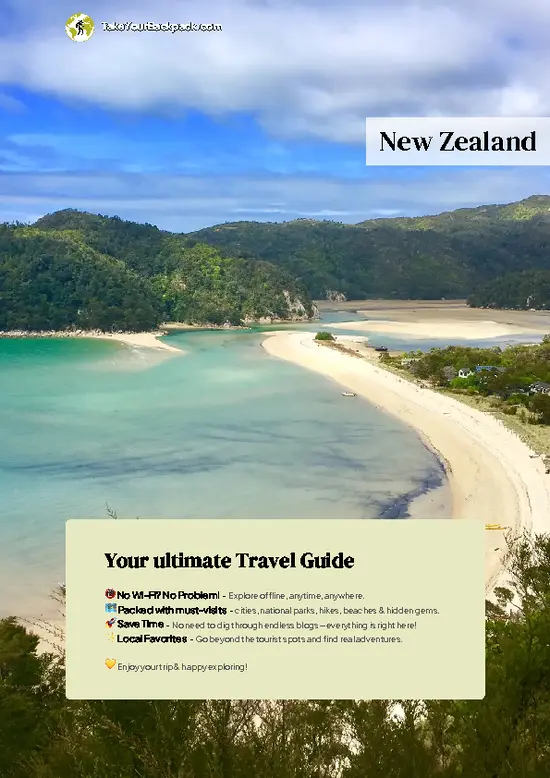
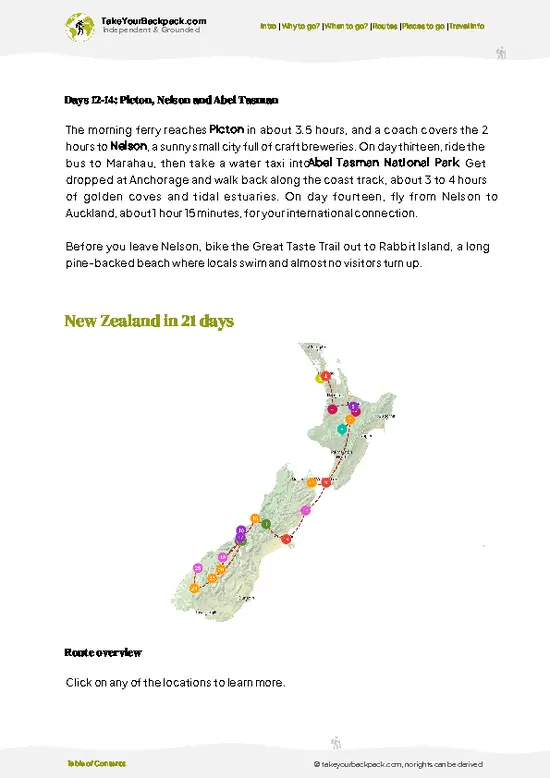
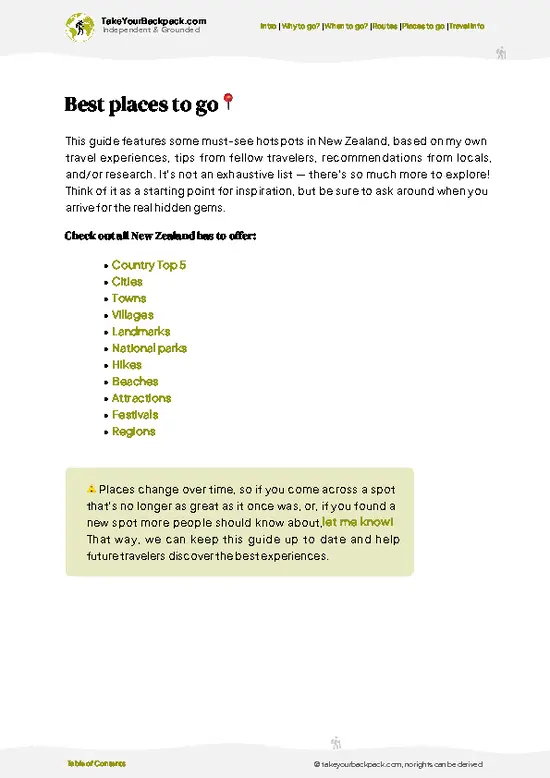
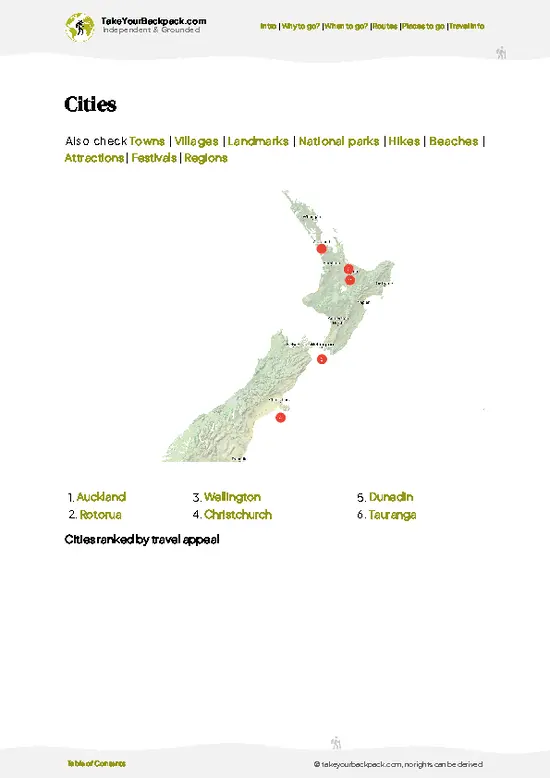
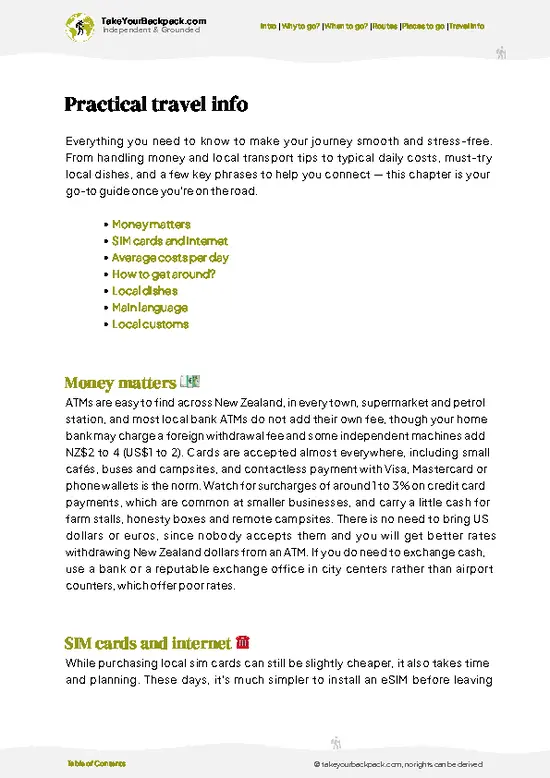
example page 0 from our offline Travel Guide for New Zealand
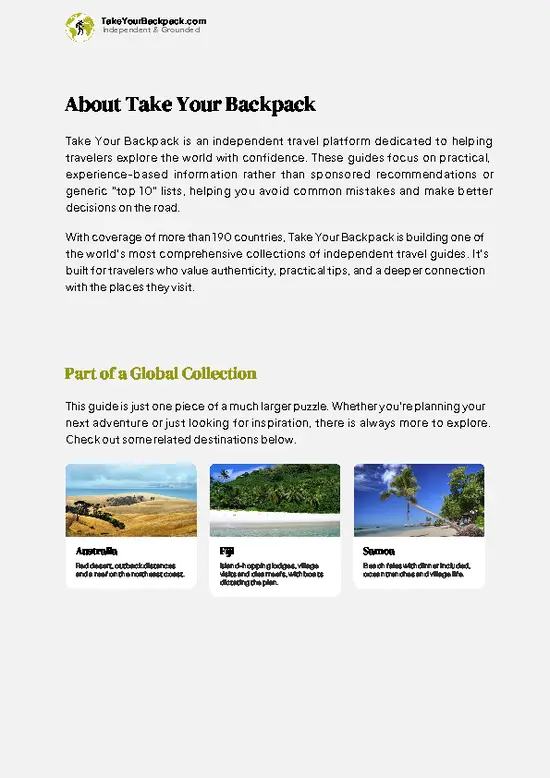
example page 1 from our offline Travel Guide for New Zealand
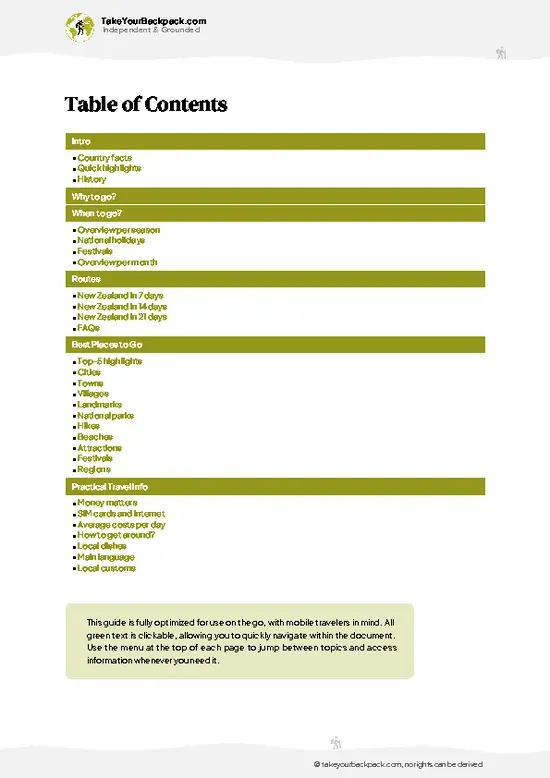
example page 2 from our offline Travel Guide for New Zealand
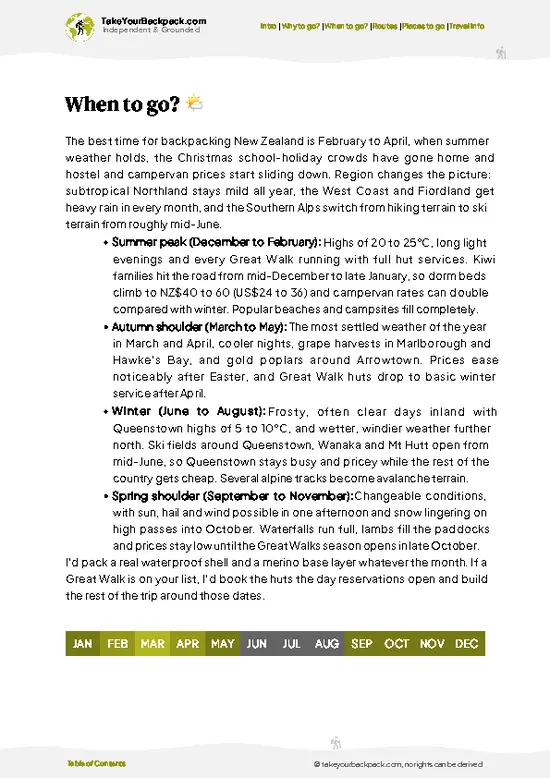
example page 3 from our offline Travel Guide for New Zealand
example page 4 from our offline Travel Guide for New Zealand
example page 5 from our offline Travel Guide for New Zealand
example page 6 from our offline Travel Guide for New Zealand
example page 7 from our offline Travel Guide for New Zealand
The digital guide (412 pages) contains:
113 highlights, ranked by travel appeal
Optimized 7, 14 & 21-day travel routes
Cities, national parks, landmarks, beaches
How to get around
Offline-friendly for travel without Wi-Fi
👉 Click to see all 30+ guide features

📅 Plan smarter in minutes, not weeks
Month by month travel advice
Festivals & national holidays
Budget expectations

🗺️ Go to the right places, skip the overrated ones
Honest pros & cons of destinations
Top hikes, parks & viewpoints
Lesser-known places most travelers miss
Clear “worth it vs skip it” guidance

🛏️ Travel smoothly without rookie mistakes
Best areas to stay
Transport systems explained simply
Common scams & safety advice
SIM cards, money & practical tips

🌍 Understand the country, not just visit it
Culture & traditions
Local customs
Festivals worth planning around
Traveler-friendly historical context
Insights that make places more meaningful

📱 Built for real travel conditions
Fully downloadable PDF
Works completely offline
Optimized for phone use
Useful in remote areas & buses
Everything in one place
Save weeks of stressful planning
Get instant access to your full guide. 30‑day money-back guarantee.


By proceeding you agree to our terms.
Sent to your inbox immediately after payment • 100% Secure Checkout
Best Backpacking Travel Advisor 2025 tourism awardBest Backpacking
Travel Advisor
2025
What others say about Take Your Backpack Guides:
⭐⭐⭐⭐⭐
Fantastic, amazing amount of information!
⭐⭐⭐⭐⭐
My goodness this is amazing, it's what I've been looking for hats off too you!
⭐⭐⭐⭐⭐
I think this is absolutely BRILLIANT
⭐⭐⭐⭐
Very complete and informative. It's still missing places, but I gotta to commend you
⭐⭐⭐⭐⭐
This is truly amazing, thank you, can't wait to explore it with my kids!
⭐⭐⭐⭐⭐
Awesome resource, thank you!
⭐⭐⭐⭐⭐
This is amazing! Can't wait to explore the ones I haven't seen
⭐⭐⭐⭐
I love this! Well done, great idea.
⭐⭐⭐⭐⭐
Thanks for taking the time to make this gem!
⭐⭐⭐⭐⭐
This might be the best website I've ever seen.
⭐⭐⭐⭐⭐
Congratulations, and thank you so much for your work; it's incredibly valuable.
⭐⭐⭐⭐
In all seriousness I think you did a great job pointing out the important spots
⭐⭐⭐⭐⭐
10/10 very good
⭐⭐⭐⭐⭐
As someone who's only just starting to visit regularly this is awesome, thank you.
⭐⭐⭐⭐
Thank you very much! I'm going to visit my dad, it's going to be very useful!
⭐⭐⭐⭐⭐
This is really cool! We'll be travelling for the first time and this definitely come in handy.
⭐⭐⭐⭐⭐
You are now our minister of culture, congratulations 👨‍💼
⭐⭐⭐⭐⭐
Just wanted to tell you that this is a pearl! Going to follow your recommendations.
⭐⭐⭐⭐⭐
This is so cool. I'll definitely be using the resource for my travels soon.
⭐⭐⭐⭐⭐
This is very impressive! Good work.
⭐⭐⭐⭐⭐
This is an amazing and informative site. Very well done!

🛏️ Where to stay?Where staying makes the most sense

Whanganui National Park is a treasure for backpackers, but your accommodation choices can make or break your experience. Inside the park, the Whanganui River Journey offers basic huts and campsites, perfect for those looking to immerse themselves in nature. Just remember to book in advance, especially during peak season, as spots fill up quickly.

If you prefer a bit more comfort, head to Whanganui City, about 45 minutes away. Here, you’ll find budget-friendly hostels like The Grand Hotel and YHA Whanganui, both offering a cozy atmosphere and a chance to meet fellow travelers.

Another option … read more 👉
Whanganui National Park is a treasure for backpackers, but your accommodation choices can make or break your experience. Inside the park, the Whanganui River Journey offers basic huts and campsites, perfect for those looking to immerse themselves in nature. Just remember to book in advance, especially during peak season, as spots fill up quickly.

If you prefer a bit more comfort, head to Whanganui City, about 45 minutes away. Here, you’ll find budget-friendly hostels like The Grand Hotel and YHA Whanganui, both offering a cozy atmosphere and a chance to meet fellow travelers.

Another option is Raetihi, a small town closer to the park’s entrance, where you can find motels and lodges. Keep an eye out for hidden fees, especially for park access and hut bookings. Planning ahead will save you both energy and money, letting you focus on the stunning landscapes instead.

👛 Costs (as of 8 February 2025)Typical daily expenses

Visiting Whanganui National Park in New Zealand can be a rewarding experience, but it’s essential to be aware of the costs involved to avoid surprises.

Entry to the park itself is free. However, if you plan to camp, expect to pay around $10 to $15 USD per person per night at designated campsites. Booking in advance is advisable during peak seasons, as spots can fill up quickly.

If you’re considering guided tours or activities, prices vary widely. A guided kayak trip on the Whanganui River can range from $100 to $200 USD per person, depending on the length and inclusions. Multi-day guided hikes can cost between $300 to $600 USD, which often includes meals and accommodation.

Transport to the park is another factor. If you’re driving, budget for fuel costs, which can be around $1.80 to $2. … read more 👉
Visiting Whanganui National Park in New Zealand can be a rewarding experience, but it’s essential to be aware of the costs involved to avoid surprises.

Entry to the park itself is free. However, if you plan to camp, expect to pay around $10 to $15 USD per person per night at designated campsites. Booking in advance is advisable during peak seasons, as spots can fill up quickly.

If you’re considering guided tours or activities, prices vary widely. A guided kayak trip on the Whanganui River can range from $100 to $200 USD per person, depending on the length and inclusions. Multi-day guided hikes can cost between $300 to $600 USD, which often includes meals and accommodation.

Transport to the park is another factor. If you’re driving, budget for fuel costs, which can be around $1.80 to $2.20 NZD per liter. If you opt for public transport, a bus from Wellington to Whanganui typically costs between $30 to $50 USD one way.

Food and supplies in the nearby towns can be pricier than expected. Grocery stores will have standard prices, but dining out can range from $15 to $30 USD for a basic meal.

Plan your budget carefully. Knowing these costs upfront will help you focus on enjoying the stunning landscapes and rich experiences without the stress of unexpected expenses.


source: doc.govt.nz
⚠️ Prices can change and everyone travels differently, so take this as a rough guide. Hope it helps you plan your adventure!

🥾 TrailsWhere to hike in Whanganui: trails for every level

Whanganui National Park is a hidden gem in New Zealand, offering a mix of lush forests, rugged river valleys, and stunning views that make it a hiker’s paradise. The terrain can vary quite a bit, from flat riverbanks to steep hills, so be prepared for a bit of everything. Wildlife is abundant here, with chances to spot everything from native birds like the kiwi to various reptiles.

One of the standout trails is the Whanganui Journey, which is more of a river route than a hike but definitely worth mentioning. Here are the details:
  • Length: 145 km
  • Estimated Duration: 5 days
  • Difficulty Level: Moderate
  • Key
read more 👉
Whanganui National Park is a hidden gem in New Zealand, offering a mix of lush forests, rugged river valleys, and stunning views that make it a hiker’s paradise. The terrain can vary quite a bit, from flat riverbanks to steep hills, so be prepared for a bit of everything. Wildlife is abundant here, with chances to spot everything from native birds like the kiwi to various reptiles.

One of the standout trails is the Whanganui Journey, which is more of a river route than a hike but definitely worth mentioning. Here are the details:
  • Length: 145 km
  • Estimated Duration: 5 days
  • Difficulty Level: Moderate
  • Key Features: Scenic river views, lush forest, historical sites
  • Terrain: Mostly flat with some steep sections near the riverbanks

Another great option is the Bridge to Nowhere Track, which leads you to a fascinating piece of history. Here’s what you need to know:
  • Length: 10 km return
  • Estimated Duration: 4-5 hours
  • Difficulty Level: Moderate
  • Key Features: The iconic bridge, stunning river views, native bush
  • Terrain: Well-marked track with some ups and downs

Getting to Whanganui National Park is relatively straightforward. You can catch a bus from major cities like Wellington to Whanganui, and from there, it’s a short drive or shuttle ride to the park entrance. As for crowds, it’s generally less busy than some of the more famous parks, so you can enjoy a bit of solitude. There’s no entrance fee, which is a bonus for budget travelers. Just pack your gear, and you’re set for an adventure!
⚠️ Hiking info can sometimes be outdated or inaccurate. Before you hit the trail, check the latest conditions with locals. If you do spot anything that's off, I'd love to hear from you, so I can update it for fellow travelers.

🛡️ SafetyTraveler Safety Guide

Whanganui National Park is generally straightforward for backpackers, but a few realities can help you navigate it smoothly. Weather can shift quickly, so pack layers and be ready for rain. The terrain varies; some trails are steep and can be slippery, especially after rain. Pay attention to your footing and take your time on descents.

River crossings are common; assess water levels before crossing and choose stable rocks. Wildlife encounters are rare, but if you see a kiwi, keep your distance and don’t disturb it. Lastly, many first-timers underestimate the park’s remoteness—carry enough food and water, and let someone know your plans. This preparation keeps your adventure enjoyable and safe.

Other New Zealander national parks near Whanganui

Explore more nearby:


💡 Not sure where to go next?
Create a personalized itinerary for New Zealand including Whanganui and the places that fit your trip.

Generate my itinerary

👉 Discover all national parks

Or checkout all New Zealand has to offer (think cities, towns, villages, national parks, hikes, beaches, festivals)
Country photo of New Zealand

We 💚 feedbackSumming up the experience

Whanganui National Park is a treasure for those who crave solitude and stunning river views. You’ll find peace here that’s hard to come by elsewhere. Just be ready for the weather—it can shift quickly. A sunny day can turn into a downpour, so pack accordingly. Embrace the unpredictability; it’s part of the adventure.

✈️ When did I visit New Zealand?
All the way back in high school I have been visiting the Northern Island of New Zealand (1993).

✍️ Help improve this page!
The information on this page is based on my own backpacking experience in New Zealand, supplemented with up-to-date research and feedback from other travelers. Travel details can change, so if you notice anything outdated or incomplete, feel free to let me know.


🙋‍♂️ Give feedback

👋 Meet the founderWho’s Behind Take Your Backpack?

Johan, backpacker and founder of TakeYourBackpackHi, I’m Johan (Netherlands 🇳🇱), the creator of TakeYourBackpack. Over the past decade, I’ve backpacked through 80+ countries across six continents, gaining extensive experience with independent travel, long-term trips, and overland routes.

This site is built on a combination of firsthand travel experience and carefully curated insights from other backpackers. Many guides are based on places I’ve personally visited, while others bring together tips, observations, and practical advice shared by trusted travelers I’ve met along the way.

The goal is to provide realistic, experience-driven guidance — not generic itineraries — so you can explore destinations with better context, clearer expectations, and more confidence.

Get full country guide •
Instant download • 113 highlights • Full Offline guide