×

Nicaragua🇳🇮 | townsBluefieldsCreole English, Moravian church, bayfront market, El Bluff boats | things to do and best time to go

Explore OmetepeExplore Corn Island

Backpacking in Bluefields
🏆 Top picktown ranked #6
By Johan Kruseman 🇳🇱 | Updated October 22, 2026

The decision most travelers face is whether to push on from the Rama Road and the Bluefields ferry dock into the Caribbean, or stop at the Pacific side. Bluefields tips it for anyone who wants Creole Nicaragua. It sits on the southeast coast of Nicaragua, on a bay now linked to the Pacific side by the highway through Nueva Guinea. I expected a rough port town and found English Creole spoken on porches, with reggae and punta drifting from open windows. Streets are flat, loud with motorbike taxis, and damp with the smell of coconut bread and diesel. Hostels are few, evenings are slow, and meeting other travelers takes effort. Finish at the waterfront, where pangas bump the dock and fish gets gutted by the hour.

Discover everything you want to know in the 📖 Nicaragua Travel Guide.


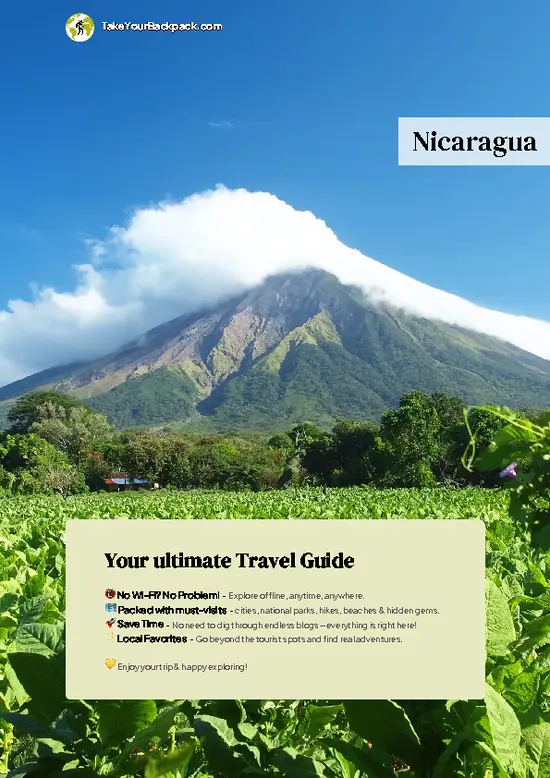
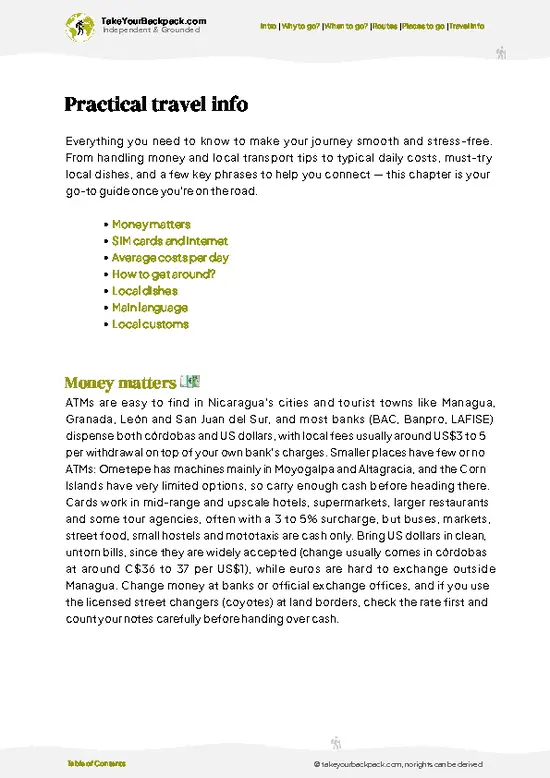
example page 0 from our offline Travel Guide for Nicaragua
example page 1 from our offline Travel Guide for Nicaragua
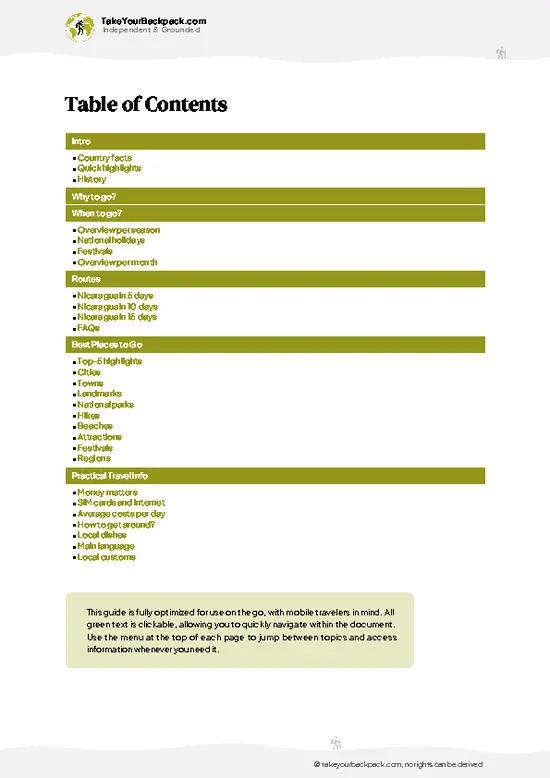
example page 2 from our offline Travel Guide for Nicaragua
example page 3 from our offline Travel Guide for Nicaragua
example page 4 from our offline Travel Guide for Nicaragua
example page 5 from our offline Travel Guide for Nicaragua
example page 6 from our offline Travel Guide for Nicaragua
example page 7 from our offline Travel Guide for Nicaragua
Loading the map 🌍
CLICK TO FILTER
cities
towns
landmarks
national parks
hikes
beaches
attractions
festivals
regions
SHOW COUNTRY’S BESTSHOW ALL

✨ Why go?
Ranked #6 town in Nicaragua
What makes this town worth visiting

Bluefields is where you go to hear Nicaragua speak in a different voice. The town gives you a base for the Corn Islands boat connection and for trips toward the Pearl Lagoon area, so most travelers stay one or two nights and then keep moving. Guesthouses are small and family-run, which means you will talk to locals more than to other backpackers. Food is the other strong reason: rundown, coconut-heavy Caribbean cooking, with rondón, a slow-simmered fish and coconut milk stew, as the dish to chase. Streets are walkable, though the heat and the odd rainstorm slow you down. Evenings are quiet, with a few bars and music spilling out. It suits slow travelers, solo travelers who like striking up conversation with strangers, and anyone building a route across the Caribbean coast. If you need hostel … read more 👉
Bluefields is where you go to hear Nicaragua speak in a different voice. The town gives you a base for the Corn Islands boat connection and for trips toward the Pearl Lagoon area, so most travelers stay one or two nights and then keep moving. Guesthouses are small and family-run, which means you will talk to locals more than to other backpackers. Food is the other strong reason: rundown, coconut-heavy Caribbean cooking, with rondón, a slow-simmered fish and coconut milk stew, as the dish to chase. Streets are walkable, though the heat and the odd rainstorm slow you down. Evenings are quiet, with a few bars and music spilling out. It suits slow travelers, solo travelers who like striking up conversation with strangers, and anyone building a route across the Caribbean coast. If you need hostel nightlife or a polished old center, skip it or pass through quickly.

💡 HighlightsDon't-miss highlights and experiences

  1. Malecón and waterfront: The bayfront strip is the town's living room, with fishing boats, ferries and vendors. Go late afternoon when it cools. Free, about 1 hour.
  2. Central Park and Moravian Church area: The wooden Moravian church reflects the Creole and Protestant heritage unusual in Nicaragua. Visit in the morning. Free, 30 to 45 minutes.
  3. Mercado Municipal: Fish, plantains, coconut bread and cheap meals fill the stalls. Come before noon for the best choice. Meals cost roughly US$3 to 6, 1 hour.
  4. Bluefields Indian and Caribbean University area: The campus gives a sense of the multi-ethnic town, with Miskito, Creole, Rama and mestizo students. Visit during the day. Free to walk around, 30 minutes.
  5. El Bluff: Across the bay, this fishing port is reached by a short boat hop and has a beach and seafood
… read more 👉
  1. Malecón and waterfront: The bayfront strip is the town's living room, with fishing boats, ferries and vendors. Go late afternoon when it cools. Free, about 1 hour.
  2. Central Park and Moravian Church area: The wooden Moravian church reflects the Creole and Protestant heritage unusual in Nicaragua. Visit in the morning. Free, 30 to 45 minutes.
  3. Mercado Municipal: Fish, plantains, coconut bread and cheap meals fill the stalls. Come before noon for the best choice. Meals cost roughly US$3 to 6, 1 hour.
  4. Bluefields Indian and Caribbean University area: The campus gives a sense of the multi-ethnic town, with Miskito, Creole, Rama and mestizo students. Visit during the day. Free to walk around, 30 minutes.
  5. El Bluff: Across the bay, this fishing port is reached by a short boat hop and has a beach and seafood shacks. Go in the morning. The boat costs about US$1 to 2, 2 to 3 hours.
For day trips from Bluefields, consider the Pearl Lagoon villages, the Rama Cay community and the Corn Islands.
All five fit comfortably into one full day.
Spotted a mistake or missing something? Contact us.

🏘️ NeighborhoodsKey areas and districts to know

Bluefields is a small port city on the Caribbean coast, and its few districts sit close together, so you can sample all of them on foot in a day.
  • Central Bluefields (around the market and Avenida Aberdeen): Flat, loud and hot. Reggae, Creole English and Spanish blur together over the stalls, and the air smells of fried fish, coconut bread and diesel. Buy rondón (coconut fish stew) at a market comedor and you eat one of the coast's signature dishes for a few dollars.
  • The Malecón and waterfront: A short, breezy strip facing the bay, with a few bars and a pier where pangas and cargo boats rock against the pilings. Come at dusk for a cold Toña, the water going gray-pink, and music drifting from open doors. Walk it in ten minutes.
  • Barrio Pointeen and Old Bank edge: Wooden stilted houses, mud after
… read more 👉
Bluefields is a small port city on the Caribbean coast, and its few districts sit close together, so you can sample all of them on foot in a day.
  • Central Bluefields (around the market and Avenida Aberdeen): Flat, loud and hot. Reggae, Creole English and Spanish blur together over the stalls, and the air smells of fried fish, coconut bread and diesel. Buy rondón (coconut fish stew) at a market comedor and you eat one of the coast's signature dishes for a few dollars.
  • The Malecón and waterfront: A short, breezy strip facing the bay, with a few bars and a pier where pangas and cargo boats rock against the pilings. Come at dusk for a cold Toña, the water going gray-pink, and music drifting from open doors. Walk it in ten minutes.
  • Barrio Pointeen and Old Bank edge: Wooden stilted houses, mud after rain, kids' voices and roosters. Less polished and a bit rougher, so go in daylight. You get a plain look at Creole life and often an invitation to chat on a porch.
  • El Bluff (across the bay): Reached by a short panga ride, this is quiet, with sand lanes, palms and the smell of drying seaweed and wood smoke. The reward is silence and a beach with almost nobody on it.

⌛️ 1 day1-day itinerary for Bluefields

Plan to walk the flat center on foot and take a motorbike or shared taxi for the bay crossing, with a long break at midday when the heat peaks.
7:30 AM: Mercado Municipal Start with coffee, fried plantain and fresh fish while stalls open. Walk toward the center when you finish.
9:00 AM: Moravian Church and Central Park Look at the wooden architecture and listen for Creole English among the locals. Continue downhill to the water.
10:30 AM: Malecón Watch pangas unload and vendors set up. Stroll the whole bayfront slowly.
12:00 PM: Lunch and siesta Order rondón at a local comedor and rest out of the sun.
2:30 PM: Barrio Pointeen This residential neighborhood is off the normal tourist route. Wooden houses on stilts and sleepy streets show everyday Creole life. Be polite when taking photos.
4:00 PM: … read more 👉
Plan to walk the flat center on foot and take a motorbike or shared taxi for the bay crossing, with a long break at midday when the heat peaks.
7:30 AM: Mercado Municipal Start with coffee, fried plantain and fresh fish while stalls open. Walk toward the center when you finish.
9:00 AM: Moravian Church and Central Park Look at the wooden architecture and listen for Creole English among the locals. Continue downhill to the water.
10:30 AM: Malecón Watch pangas unload and vendors set up. Stroll the whole bayfront slowly.
12:00 PM: Lunch and siesta Order rondón at a local comedor and rest out of the sun.
2:30 PM: Barrio Pointeen This residential neighborhood is off the normal tourist route. Wooden houses on stilts and sleepy streets show everyday Creole life. Be polite when taking photos.
4:00 PM: Boat to El Bluff Take a short panga across the bay. Walk the beach and sample grilled seafood.
6:00 PM: Back on the Malecón Return as the light drops and music starts up. Finish with a cold drink and a plate of coconut bread.

🌤️ When to go?Weather, crowds, and seasonal trade-offs

February to May is the driest stretch in Bluefields, and the easiest for river and bay trips.
  • Dry Season (February to May): Sunny, 28 to 33°C (82 to 91°F), with the least rain and about 12 hours of daylight. Boats run smoothly and May Pole festivities build toward the end of the period.
  • Wet Season (June to January): Rain falls on most days, and this is among the wettest places in Central America. Temperatures stay 24 to 30°C (75 to 86°F), streets turn to mud, and the humidity is heavy. Rivers swell and some boat trips get canceled.
  • May Pole Festival (all of May): Drumming, dancing and street parties fill the town. Rooms tighten and prices climb, but the energy is the best of the year.
  • Hurricane Season (June to November): Storms are possible, mostly late in the season. Cheap prices, thin crowds.
… read more 👉
February to May is the driest stretch in Bluefields, and the easiest for river and bay trips.
  • Dry Season (February to May): Sunny, 28 to 33°C (82 to 91°F), with the least rain and about 12 hours of daylight. Boats run smoothly and May Pole festivities build toward the end of the period.
  • Wet Season (June to January): Rain falls on most days, and this is among the wettest places in Central America. Temperatures stay 24 to 30°C (75 to 86°F), streets turn to mud, and the humidity is heavy. Rivers swell and some boat trips get canceled.
  • May Pole Festival (all of May): Drumming, dancing and street parties fill the town. Rooms tighten and prices climb, but the energy is the best of the year.
  • Hurricane Season (June to November): Storms are possible, mostly late in the season. Cheap prices, thin crowds.
Book a room two weeks ahead for May, and carry a rain jacket whatever the month.


source: climatestotravel.comJANJanuary: excellent for travelingFEBFebruary: excellent for travelingMARMarch: excellent for travelingAPRApril: highly recommended for travelingMAYMay: fair for travelingJUNJune: fair for travelingJULJuly: fair for travelingAUGAugust: fair for travelingSEPSeptember: fair for travelingOCTOctober: good for travelingNOVNovember: fair for travelingDECDecember: excellent for traveling
when-to-go

✈️ The backpacker research shortcutNicaragua Travel Guide

An offline-friendly backpacking guide with optimized travel routes, ranked highlights, transport advice, and the best areas to stay.
example page 0 from our offline Travel Guide for Nicaragua
example page 1 from our offline Travel Guide for Nicaragua
example page 2 from our offline Travel Guide for Nicaragua
example page 3 from our offline Travel Guide for Nicaragua
example page 4 from our offline Travel Guide for Nicaragua
example page 5 from our offline Travel Guide for Nicaragua
example page 6 from our offline Travel Guide for Nicaragua
example page 7 from our offline Travel Guide for Nicaragua
The digital guide (256 pages) contains:
✅ 71 highlights, ranked by travel appeal
✅ Optimized 5, 10 & 15-day travel routes
✅ Cities, national parks, landmarks, beaches
✅ How to get around
✅ Offline-friendly for travel without Wi-Fi
👉 Click to see all 30+ guide features

📅 Plan smarter in minutes, not weeks
✅ Month by month travel advice
✅ Festivals & national holidays
✅ Budget expectations

🗺️ Go to the right places, skip the overrated ones
✅ Honest pros & cons of destinations
✅ Top hikes, parks & viewpoints
✅ Lesser-known places most travelers miss
✅ Clear “worth it vs skip it” guidance

🛏️ Travel smoothly without rookie mistakes
✅ Best areas to stay
✅ Transport systems explained simply
✅ Common scams & safety advice
✅ SIM cards, money & practical tips

🌍 Understand the country, not just visit it
✅ Culture & traditions
✅ 52 Essential phrases & customs
✅ Festivals worth planning around
✅ Traveler-friendly historical context
✅ Insights that make places more meaningful

📱 Built for real travel conditions
✅ Fully downloadable PDF
✅ Works completely offline
✅ Optimized for phone use
✅ Useful in remote areas & buses
✅ Everything in one place
Stop searching, start planning
Get instant access to your full guide. 30‑day money-back guarantee.
+ Add another guide for just

By proceeding you agree to our terms.
Sent to your inbox immediately after payment • 100% Secure Checkout
Best Backpacking Travel Advisor 2025 tourism awardBest Backpacking
Travel Advisor
2025
What others say about Take Your Backpack Guides:
⭐⭐⭐⭐⭐
Fantastic, amazing amount of information!
⭐⭐⭐⭐⭐
My goodness this is amazing, it's what I've been looking for hats off too you!
⭐⭐⭐⭐⭐
I think this is absolutely BRILLIANT
⭐⭐⭐⭐
Very complete and informative. It's still missing places, but I gotta to commend you
⭐⭐⭐⭐⭐
This is truly amazing, thank you, can't wait to explore it with my kids!
⭐⭐⭐⭐⭐
Awesome resource, thank you!
⭐⭐⭐⭐⭐
This is amazing! Can't wait to explore the ones I haven't seen
⭐⭐⭐⭐
I love this! Well done, great idea.
⭐⭐⭐⭐⭐
Thanks for taking the time to make this gem!
⭐⭐⭐⭐⭐
This might be the best website I've ever seen.
⭐⭐⭐⭐⭐
Congratulations, and thank you so much for your work; it's incredibly valuable.
⭐⭐⭐⭐
In all seriousness I think you did a great job pointing out the important spots
⭐⭐⭐⭐⭐
10/10 very good
⭐⭐⭐⭐⭐
As someone who's only just starting to visit regularly this is awesome, thank you.
⭐⭐⭐⭐
Thank you very much! I'm going to visit my dad, it's going to be very useful!
⭐⭐⭐⭐⭐
This is really cool! We'll be travelling for the first time and this definitely come in handy.
⭐⭐⭐⭐⭐
You are now our minister of culture, congratulations 👨‍💼
⭐⭐⭐⭐⭐
Just wanted to tell you that this is a pearl! Going to follow your recommendations.
⭐⭐⭐⭐⭐
This is so cool. I'll definitely be using the resource for my travels soon.
⭐⭐⭐⭐⭐
This is very impressive! Good work.
⭐⭐⭐⭐⭐
This is an amazing and informative site. Very well done!

🛏️ Where to stay?Where staying makes the most sense

The best place for a budget bed in Bluefields is the central district around the market and the Malecón. Dorm-style hostels are scarce here, so most budget travelers pick small guesthouses and family-run hospedajes with private rooms at US$10 to 20 a night. Fan rooms are the norm, and air conditioning costs extra.

Staying central puts you within a ten-minute walk of the bus and panga docks, food stalls and ATMs. Traffic and music are the main noise, and the market wakes early with trucks and vendors, so bring earplugs. The waterfront side is breezier and usually a little quieter at night.

The … read more 👉
The best place for a budget bed in Bluefields is the central district around the market and the Malecón. Dorm-style hostels are scarce here, so most budget travelers pick small guesthouses and family-run hospedajes with private rooms at US$10 to 20 a night. Fan rooms are the norm, and air conditioning costs extra.

Staying central puts you within a ten-minute walk of the bus and panga docks, food stalls and ATMs. Traffic and music are the main noise, and the market wakes early with trucks and vendors, so bring earplugs. The waterfront side is breezier and usually a little quieter at night.

The streets between the market and the Malecón are lit and busy until mid-evening, which makes them easier for solo travelers and late arrivals. Take a taxi for the last stretch after dark rather than walking from the dock. Rooms fill during the May festival, so reserve ahead if you arrive then. A second option is the quieter Bluff side across the bay, where a few simple guesthouses offer calm and beach access, though food options are thinner and boats stop in the evening.

🚌 Getting aroundHow to get from A to B

Bluefields is flat and compact, and the center from the market to the waterfront takes under 20 minutes to cross on foot, so walking is the default until you head to the outer barrios or across the bay. Sidewalks are cracked and puddled, motorbikes and taxis honk constantly, and the air is thick with humidity and exhaust. There are no roads to the Pacific side beyond the long highway, and boats matter as much as buses here.
  • Walking: Free and the best way to see the center. Go early, before the heat builds, and you pass fish sellers laying out the morning catch.
  • Shared taxis: Cheap cars that run set routes and pick up other passengers. US$0.50 to 1 inside town, and they operate from early morning until about 9 or 10 pm. Expect to share the seat with strangers and groceries.
  • Private taxis: US$1.
… read more 👉
Bluefields is flat and compact, and the center from the market to the waterfront takes under 20 minutes to cross on foot, so walking is the default until you head to the outer barrios or across the bay. Sidewalks are cracked and puddled, motorbikes and taxis honk constantly, and the air is thick with humidity and exhaust. There are no roads to the Pacific side beyond the long highway, and boats matter as much as buses here.
  • Walking: Free and the best way to see the center. Go early, before the heat builds, and you pass fish sellers laying out the morning catch.
  • Shared taxis: Cheap cars that run set routes and pick up other passengers. US$0.50 to 1 inside town, and they operate from early morning until about 9 or 10 pm. Expect to share the seat with strangers and groceries.
  • Private taxis: US$1.50 to 3 for a ride across town, a little more at night. Useful after dark or in rain, when the streets flood at the edges.
  • Pangas (small boats): Boats cross the bay to Rama Cay, Pearl Lagoon and Bluff. A short hop to Bluff is US$1 to 2, while Pearl Lagoon runs about US$10 to 15 and takes 1.5 to 2 hours. Spray, engine roar and open sky are part of the ride.
  • Buses and the Rama road: Buses from the El Rama dock go to Managua, roughly 6 to 8 hours, at about US$10 to 15. Departures start before dawn, and the last leave in the early afternoon. The panga from Bluefields to El Rama takes about 1.5 hours, with the bus leaving from there.

👛 Costs (as of 22 October 2026)Money, prices, and spending tips

Bluefields costs about US$38 a day for a backpacker in high season, with lodging the biggest line.
CategoryBudget RangeLocal Reality
Dorm accommodationUS$10 to 15Dorms are rare, so expect a simple private room in a guesthouse; prices rise in May.
MealsUS$8 to 14Market comedores serve rondón, fried fish and rice and beans for US$3 to 6 a plate.
Local transportUS$1 to 4Shared taxis cost US$0.50 to 1 each ride; panga hops cost a bit more.
Basic activities/entry feesUS$5 to 15Most sights are free, but boat trips to nearby villages add up.
Miscellaneous expensesUS$2 to 5Water, snacks, a cold beer and the occasional SIM top-up.
Total Daily BudgetUS$38Based on the high-season room price plus mid-range figures for each other row.
Eat your biggest meal at a market comedor at lunch, when portions are large and prices are lowest.

source: visitnicaragua.us
⚠️ Prices can change and everyone travels differently, so take this as a rough guide. Hope it helps you plan your adventure!

🚌 Day tripsWhere to go beyond the main area

Bluefields works well as a base for water-based day trips, since most start from the docks and return by evening.
Pearl Lagoon:
A boat ride of 1.5 to 2 hours leads to Creole and Miskito villages on a wide lagoon with stilt houses and fresh seafood. Budget about US$25 to 40 return including food. Go in the dry months for calmer water, and leave early so you are not racing the last boat back.
👉 Explore Pearl Lagoon
Rama Cay:
This tiny island, home to the Rama people, is reached by a boat ride of about 45 minutes to an hour. Expect simple houses, shaded paths and an indigenous language still in use. A return trip costs around US$15 to 30. First-timers often arrive without a plan, so ask a local to arrange a guide.

Bluff:
A short panga ride across the bay brings you to the working port and quiet … read more 👉
Bluefields works well as a base for water-based day trips, since most start from the docks and return by evening.
Pearl Lagoon:
A boat ride of 1.5 to 2 hours leads to Creole and Miskito villages on a wide lagoon with stilt houses and fresh seafood. Budget about US$25 to 40 return including food. Go in the dry months for calmer water, and leave early so you are not racing the last boat back.
👉 Explore Pearl Lagoon
Rama Cay:
This tiny island, home to the Rama people, is reached by a boat ride of about 45 minutes to an hour. Expect simple houses, shaded paths and an indigenous language still in use. A return trip costs around US$15 to 30. First-timers often arrive without a plan, so ask a local to arrange a guide.

Bluff:
A short panga ride across the bay brings you to the working port and quiet beaches. It costs US$3 to 8 all-in plus lunch, and takes 15 to 20 minutes each way. Most people go in the morning for the shade and the fresh catch.

El Bluff Beaches and Monkey Point:
Along the coast, small communities offer sand and surf with few visitors. Boats take about an hour, and total costs are US$20 to 40 including a guide. Skip it in rough seas, since the water can get choppy and boats may not run.

🛡️ SafetyStaying Safe: What Travelers Should Know

Bluefields is a working port with a rough reputation in places, but visitors who use ordinary sense usually pass through without trouble. Petty theft is the most common issue, so keep phones and cameras out of sight in the market and near the docks. Avoid walking alone after dark, especially in outer barrios and along unlit stretches near the water, and take a taxi for the last stretch. Solo travelers do fine in the center during the day, but be more careful at night, and women alone may get persistent attention that is best met with a firm, polite no. Some touts at the docks quote inflated boat prices, so ask locals the going rate and agree on the fare before boarding. Carry only the cash you need, leave valuables at your guesthouse and keep a copy of your passport. Drug dealing exists, and declining is simple.

FAQCommon questions from travelers

Bluefields is worth a stop if you want Afro-Caribbean Nicaragua rather than the Pacific side, with Creole English, reggae and rondón soup. Most people spend one or two days in town and use it as a gateway to Pearl Lagoon and the Corn Islands. The May Pole festival in May is the strongest reason to plan a visit.
Two days is enough to cover Bluefields itself, covering the market, the Malecón and the bay crossing to Bluff. Add a third day for Pearl Lagoon or Rama Cay, which cost roughly US$15 to 40 by boat. Plan four or five days if you are timing it with the Corn Islands or the May festival.
Bluefields is hard to do as a day trip from a city, since the nearest large hub, Managua, is about 6 to 7 hours away by bus on the highway through Nueva Guinea. Flights from Managua take about an hour and cost roughly US$100 to 150 return. It makes more sense to stay at least one night and use the town as your base for boat trips.
⚠️ Things can change over time, so always validate details locally before you go.

Other Nicaraguan towns near Bluefields

Explore more nearby:

  • Pearl Lagoon—Lagoon docks, Pearl Cays, rondón stew, Moravian hymns| 38 km away
  • El Rama—Escondido River port, Bluefields pangas, river fish comedores| 52 km away
  • Corn Island—Long Bay sand, Kriol voices, Blowing Rock, lobster boats| 81 km away

💡 Not sure where to go next?
Create a personalized itinerary for Nicaragua including Bluefields and the places that fit your trip.

Generate my itinerary

👉 Discover all towns

Or checkout all Nicaragua has to offer (think cities, towns, villages, national parks, hikes, beaches, festivals)
Country photo of Nicaragua

We 💚 feedbackIs it worth it?

Bluefields rewards anyone who slows down, and first-timers tend to overlook the English-speaking Creole neighborhoods away from the waterfront. I would walk them in daylight and strike up a chat. Skip rushing to the islands the first day. Bring small bills and patience for boat schedules.

✈️ When did I visit Nicaragua?
Nicaragua I visited during my half year trip through South and Central America back in 2003

✍️ Help improve this page!
The information on this page is based on my own backpacking experience in Nicaragua, supplemented with up-to-date research and feedback from other travelers. Travel details can change, so if you notice anything outdated or incomplete, feel free to let me know.


🙋‍♂️ Give feedback

👋 Meet the founderWho’s Behind Take Your Backpack?

Johan, backpacker and founder of TakeYourBackpackHi, I’m Johan (Netherlands 🇳🇱), the creator of TakeYourBackpack. Over the past 3 decades, I’ve backpacked through 90+ countries across six continents, gaining extensive experience with independent travel, long-term trips, and overland routes.

This site is built on a combination of firsthand travel experience and carefully curated insights from other backpackers. Many guides are based on places I’ve personally visited, while others bring together tips, observations, and practical advice shared by trusted travelers I’ve met along the way.

The goal is to provide realistic, experience-driven guidance — not generic itineraries — so you can explore destinations with better context, clearer expectations, and more confidence.