×

Nicaragua🇳🇮 | regionsOmetepe IslandTwin volcanoes, freshwater lake, howler monkeys, farm villages | things to do and best time to go

Explore Las Corn IslandsExplore Corn Islands

Backpacking in Ometepe Island
🏆 Top pickregion ranked #1
By Johan Kruseman 🇳🇱 | Updated October 20, 2026

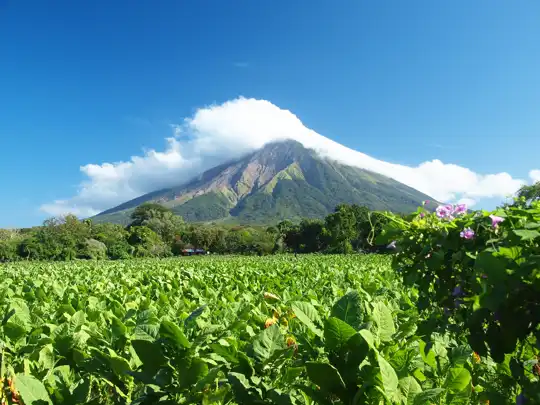
Not long ago, Ometepe Island meant a creaking wooden ferry, dirt tracks and farmhouses renting out a spare room. Today there are yoga hostels, scooter stands and a paved road around much of the island, yet it still feels like farmland first. Ometepe Island sits in Lake Nicaragua, in the southwest of Nicaragua, two volcanoes joined by a low isthmus. Buses loop the island on a loose schedule because roads are rough and fuel is dear, so experienced travelers pick one side, stay put and rent a scooter or bicycle for day loops. Concepción is active and clouds over by midday, which is why climbs start in the dark, with a guide. Expect dust and mosquitoes. My sound of the place is howler monkeys roaring down Maderas before sunrise, a low rasp like wind in a drainpipe. Then comes the clatter of a plantain truck, and pigs dozing under a mango tree outside Balgüe’s one-room shops.

Discover everything you want to know in the 📖 Nicaragua Travel Guide.


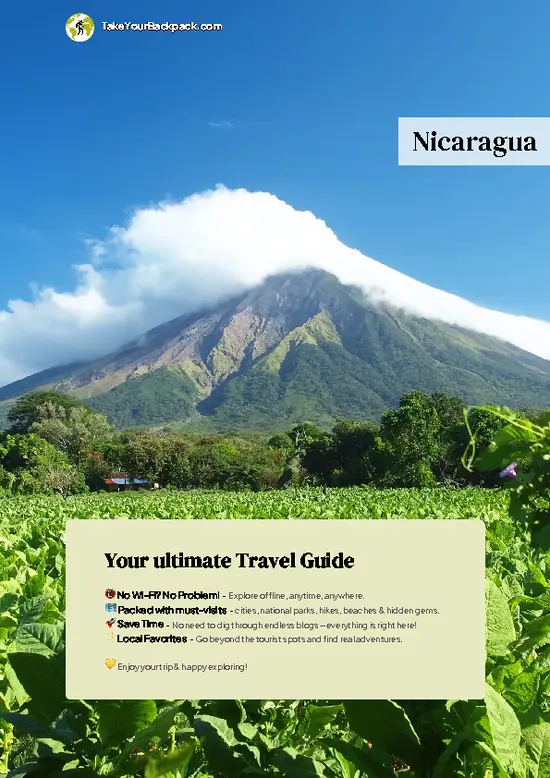
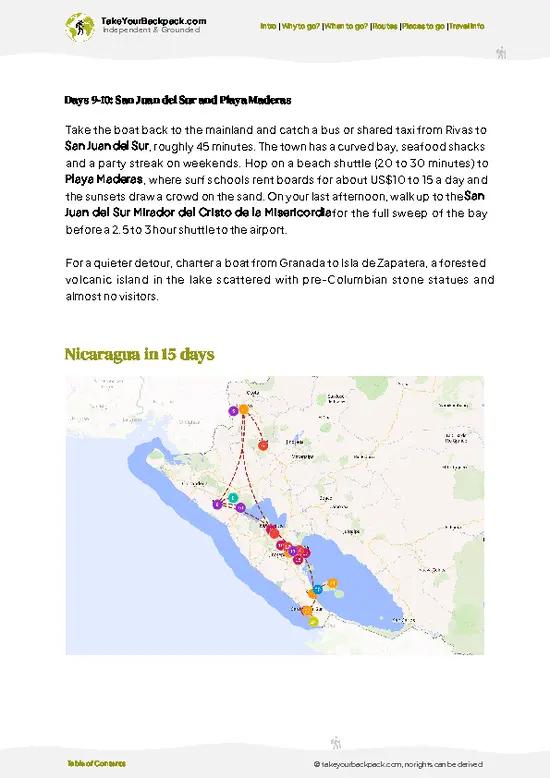
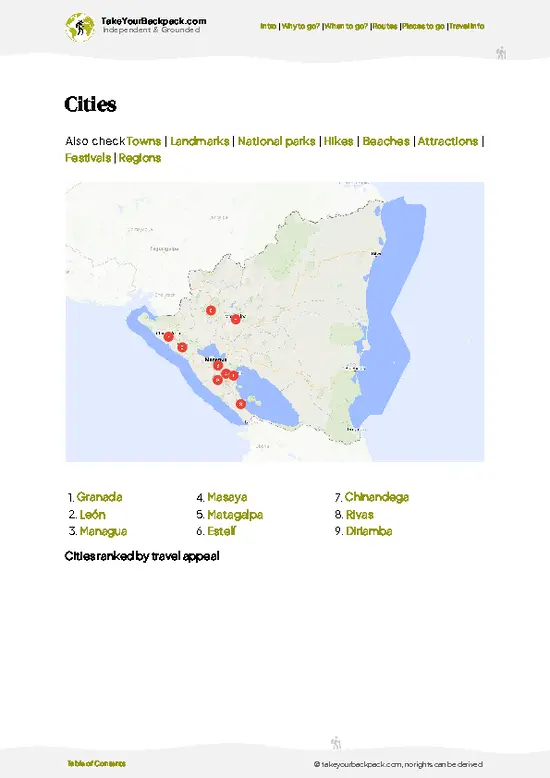
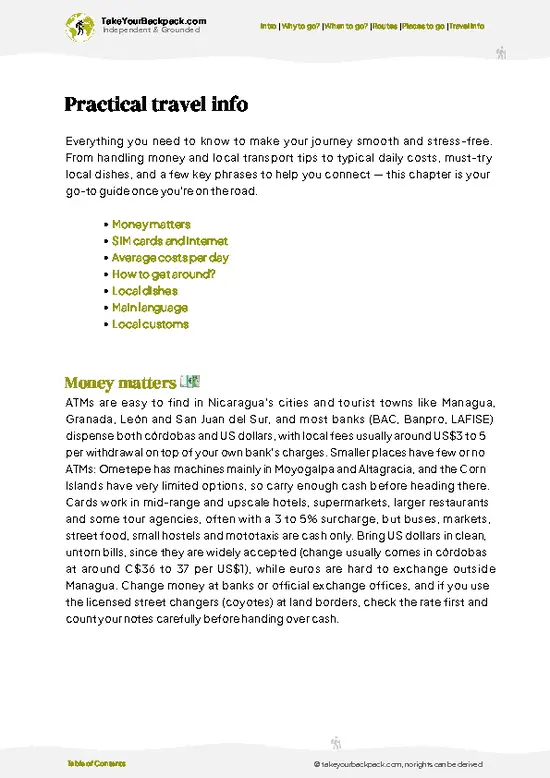
example page 0 from our offline Travel Guide for Nicaragua
example page 1 from our offline Travel Guide for Nicaragua
example page 2 from our offline Travel Guide for Nicaragua
example page 3 from our offline Travel Guide for Nicaragua
example page 4 from our offline Travel Guide for Nicaragua
example page 5 from our offline Travel Guide for Nicaragua
example page 6 from our offline Travel Guide for Nicaragua
example page 7 from our offline Travel Guide for Nicaragua
Loading the map 🌍
CLICK TO FILTER
cities
towns
landmarks
national parks
hikes
beaches
attractions
festivals
regions
SHOW COUNTRY’S BESTSHOW ALL

✨ Why go?
Ranked #1 region in Nicaragua
What sets this place apart

Ometepe Island lets you stack very different days without ever packing for a new region. Concepción and Maderas give you a hard, dawn-start summit climb on one side and a cooler, muddy cloud-forest hike down to a crater lagoon on the other. Between them you can swim in spring-fed pools, walk to a waterfall, kayak flat lake water and look at pre-Columbian stone carvings, all from one or two bases.

The island is small enough that slow travel works. Pick a village like Balgüe, rent a bicycle or scooter, and let the volcano in the window decide the day. Farm life is the backdrop: coffee, plantains, cattle on the lanes. Many hostels sit on working fincas, so your breakfast fruit has often been picked nearby.

The pace is the other draw. Buses are infrequent, so you stop rushing. Ojo de Agua is … read more 👉
Ometepe Island lets you stack very different days without ever packing for a new region. Concepción and Maderas give you a hard, dawn-start summit climb on one side and a cooler, muddy cloud-forest hike down to a crater lagoon on the other. Between them you can swim in spring-fed pools, walk to a waterfall, kayak flat lake water and look at pre-Columbian stone carvings, all from one or two bases.

The island is small enough that slow travel works. Pick a village like Balgüe, rent a bicycle or scooter, and let the volcano in the window decide the day. Farm life is the backdrop: coffee, plantains, cattle on the lanes. Many hostels sit on working fincas, so your breakfast fruit has often been picked nearby.

The pace is the other draw. Buses are infrequent, so you stop rushing. Ojo de Agua is a spring-fed swimming spot where locals gather on weekends, and Finca Magdalena is a coffee cooperative with rooms and trails. That mix of effort and idle time is hard to find in Central America.

💡 HighlightsKey sights and experiences for travelers

  1. Volcán Concepción climb: the island’s active, near-perfect cone is a long, steep day on loose volcanic rock, with a guide required. Cloud usually hides the summit by late morning, so pre-dawn starts matter.
  2. Volcán Maderas and its crater lagoon: a muddy, root-tangled hike through cloud forest ending at a cold green lake inside the crater. Allow most of a day, and expect howler monkeys on the way.
  3. San Ramón Waterfall: a walk up the flank of Maderas from the village of San Ramón ends at a tall cascade that runs strongest in the wet months. There is a small entry fee.
  4. Ojo de Agua: two clear, spring-fed pools under big trees with rope swings. Locals come at weekends, so weekdays are quieter.
  5. Reserva Charco Verde: a short trail near Moyogalpa through dry forest to a green lagoon and lakeshore, where
… read more 👉
  1. Volcán Concepción climb: the island’s active, near-perfect cone is a long, steep day on loose volcanic rock, with a guide required. Cloud usually hides the summit by late morning, so pre-dawn starts matter.
  2. Volcán Maderas and its crater lagoon: a muddy, root-tangled hike through cloud forest ending at a cold green lake inside the crater. Allow most of a day, and expect howler monkeys on the way.
  3. San Ramón Waterfall: a walk up the flank of Maderas from the village of San Ramón ends at a tall cascade that runs strongest in the wet months. There is a small entry fee.
  4. Ojo de Agua: two clear, spring-fed pools under big trees with rope swings. Locals come at weekends, so weekdays are quieter.
  5. Reserva Charco Verde: a short trail near Moyogalpa through dry forest to a green lagoon and lakeshore, where white-faced capuchins and howlers are common. It is easy to combine with a ferry arrival.
  6. Punta Jesús María: a long, narrow sandbar that pokes into the lake and is walkable in the dry months, good for sunset when the lake is calm. Locals come here to swim and fish.
  7. Museo de Ometepe: a small museum in Altagracia holding ceramics and carved stone figures from the island’s pre-Columbian past. Few backpackers stop, but it explains the statues you see around town.
  8. Finca Magdalena: a worker-owned coffee and cattle cooperative on the slopes of Maderas, with trails and carved stones on the property. It is a quiet alternative to the busier beach hostels.
  9. Playa Santo Domingo: a long strip of dark sand facing both volcanoes across the isthmus, with a laid-back beach-bar scene and plenty of room to walk.
  10. Mérida village and kayaking: a peaceful settlement at the foot of Maderas where you can paddle the flat, shallow lake in the early morning. It is a lesser-known corner locals prefer to the main strips.
Ometepe Island rewards doing the Concepción climb first, before your legs tire and while the dry-season mornings give you the best chance of a clear summit.
Spotted a mistake or missing something? Contact us.

Things to do around Ometepe Island

Ratings based on Tripadvisor reviews. When you book through this link, you support our work at no extra cost to you.

⌛️ 5 days5-day itinerary for Ometepe Island

Day 1: Moyogalpa: Start on the first ferry from the mainland so you reach Moyogalpa while the roads are still quiet and there is time to settle in. Buses run infrequently and thin out by late afternoon, so everything you do on a travel day should be close. Walk to Reserva Charco Verde, swim, and sleep near the port to make an early start tomorrow.

Day 2: Altagracia: Take a morning bus to Altagracia, the island’s main town, where the Museo de Ometepe and the church square give a feel for local life. The afternoon bus out is the last reliable one, so book your next bed before you leave town. Evening is for resting your legs.

Day 3: Balgüe: Balgüe is the best base for Maderas and San Ramón Waterfall, and the shared pickups here are cheap but irregular. Spend the day on the crater lagoon hike, … read more 👉
Day 1: Moyogalpa: Start on the first ferry from the mainland so you reach Moyogalpa while the roads are still quiet and there is time to settle in. Buses run infrequently and thin out by late afternoon, so everything you do on a travel day should be close. Walk to Reserva Charco Verde, swim, and sleep near the port to make an early start tomorrow.

Day 2: Altagracia: Take a morning bus to Altagracia, the island’s main town, where the Museo de Ometepe and the church square give a feel for local life. The afternoon bus out is the last reliable one, so book your next bed before you leave town. Evening is for resting your legs.

Day 3: Balgüe: Balgüe is the best base for Maderas and San Ramón Waterfall, and the shared pickups here are cheap but irregular. Spend the day on the crater lagoon hike, leaving at first light when the forest is cool and the monkeys are loud. Return muddy, eat at a farm kitchen and sleep early.

Day 4: Mérida: The detour: continue around the quiet south side to Mérida for a morning kayak on the flat lake. It adds a calm contrast to the hike and costs one extra bus connection, nothing more, since you are heading back toward the ferry side anyway.

Day 5: Ojo de Agua: Finish with a swim at Ojo de Agua, then take an afternoon bus to Moyogalpa for the last ferry. Keep a buffer, because buses do not wait for lakeside lunches.

If you only get one day, make it Day 3. The Maderas lagoon hike is the most varied day on the island and gives the clearest sense of what makes it different.

🌤️ When to go?Best time to visit Ometepe Island

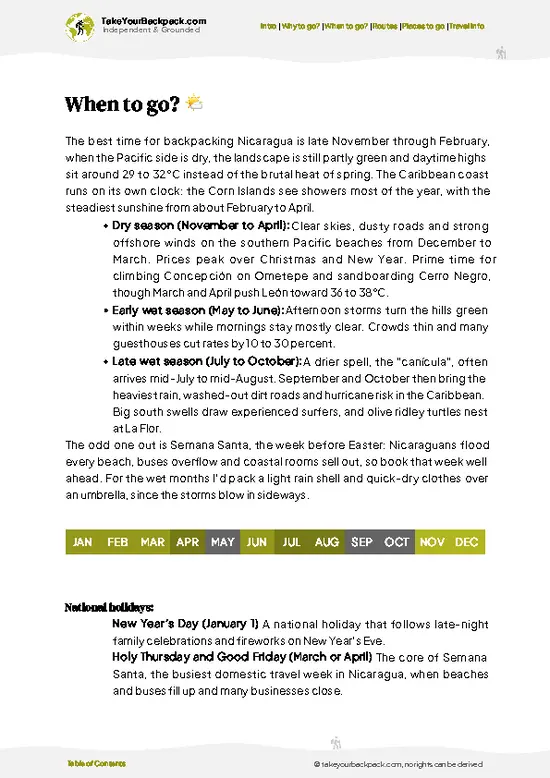
Ometepe Island is easiest from December through April, when rain stops and volcano trails dry out.
  • Dry Season (December to April): Days run 30 to 34°C (86 to 93°F) with steady lake wind, and roads and summit trails are firm. Daylight lasts about 11 to 12 hours. Christmas, New Year and Semana Santa fill the beaches, and rooms and tours cost more.
  • Green Season (May to October): Mornings are clear and afternoons bring downpours, with highs near 29 to 32°C (84 to 90°F). Unpaved roads turn to mud, and Volcán Maderas is slick and often cloaked in cloud at the top. Prices drop and trails are quiet, but views from the crater rim are a gamble.
  • Transition Months (November and May): Rain tapers off or begins, fields are bright green, and crowds are thin. Rates stay low until the holiday rush.
  • Windy Months
… read more 👉
Ometepe Island is easiest from December through April, when rain stops and volcano trails dry out.
  • Dry Season (December to April): Days run 30 to 34°C (86 to 93°F) with steady lake wind, and roads and summit trails are firm. Daylight lasts about 11 to 12 hours. Christmas, New Year and Semana Santa fill the beaches, and rooms and tours cost more.
  • Green Season (May to October): Mornings are clear and afternoons bring downpours, with highs near 29 to 32°C (84 to 90°F). Unpaved roads turn to mud, and Volcán Maderas is slick and often cloaked in cloud at the top. Prices drop and trails are quiet, but views from the crater rim are a gamble.
  • Transition Months (November and May): Rain tapers off or begins, fields are bright green, and crowds are thin. Rates stay low until the holiday rush.
  • Windy Months (January to March): Gusts churn the lake, so ferry crossings get rough and some sailings are delayed. Cooler nights hover around 22°C (72°F).
Start Volcán Concepción or Maderas before dawn, since cloud builds by late morning even in dry months.


source: climatestotravel.comJANJanuary: highly recommended for travelingFEBFebruary: highly recommended for travelingMARMarch: highly recommended for travelingAPRApril: good for travelingMAYMay: fair for travelingJUNJune: fair for travelingJULJuly: fair for travelingAUGAugust: fair for travelingSEPSeptember: fair for travelingOCTOctober: good for travelingNOVNovember: highly recommended for travelingDECDecember: highly recommended for traveling
when-to-go

✈️ The backpacker research shortcutNicaragua Travel Guide

An offline-friendly backpacking guide with optimized travel routes, ranked highlights, transport advice, and the best areas to stay.
example page 0 from our offline Travel Guide for Nicaragua
example page 1 from our offline Travel Guide for Nicaragua
example page 2 from our offline Travel Guide for Nicaragua
example page 3 from our offline Travel Guide for Nicaragua
example page 4 from our offline Travel Guide for Nicaragua
example page 5 from our offline Travel Guide for Nicaragua
example page 6 from our offline Travel Guide for Nicaragua
example page 7 from our offline Travel Guide for Nicaragua
The digital guide (256 pages) contains:
✅ 77 highlights, ranked by travel appeal
✅ Optimized 5, 10 & 15-day travel routes
✅ Cities, national parks, landmarks, beaches
✅ How to get around
✅ Offline-friendly for travel without Wi-Fi
👉 Click to see all 30+ guide features

📅 Plan smarter in minutes, not weeks
✅ Month by month travel advice
✅ Festivals & national holidays
✅ Budget expectations

🗺️ Go to the right places, skip the overrated ones
✅ Honest pros & cons of destinations
✅ Top hikes, parks & viewpoints
✅ Lesser-known places most travelers miss
✅ Clear “worth it vs skip it” guidance

🛏️ Travel smoothly without rookie mistakes
✅ Best areas to stay
✅ Transport systems explained simply
✅ Common scams & safety advice
✅ SIM cards, money & practical tips

🌍 Understand the country, not just visit it
✅ Culture & traditions
✅ 52 Essential phrases & customs
✅ Festivals worth planning around
✅ Traveler-friendly historical context
✅ Insights that make places more meaningful

📱 Built for real travel conditions
✅ Fully downloadable PDF
✅ Works completely offline
✅ Optimized for phone use
✅ Useful in remote areas & buses
✅ Everything in one place
Stop searching, start planning
Get instant access to your full guide. 30‑day money-back guarantee.
+ Add another guide for just

By proceeding you agree to our terms.
Sent to your inbox immediately after payment • 100% Secure Checkout
Best Backpacking Travel Advisor 2025 tourism awardBest Backpacking
Travel Advisor
2025
What others say about Take Your Backpack Guides:
⭐⭐⭐⭐⭐
Fantastic, amazing amount of information!
⭐⭐⭐⭐⭐
My goodness this is amazing, it's what I've been looking for hats off too you!
⭐⭐⭐⭐⭐
I think this is absolutely BRILLIANT
⭐⭐⭐⭐
Very complete and informative. It's still missing places, but I gotta to commend you
⭐⭐⭐⭐⭐
This is truly amazing, thank you, can't wait to explore it with my kids!
⭐⭐⭐⭐⭐
Awesome resource, thank you!
⭐⭐⭐⭐⭐
This is amazing! Can't wait to explore the ones I haven't seen
⭐⭐⭐⭐
I love this! Well done, great idea.
⭐⭐⭐⭐⭐
Thanks for taking the time to make this gem!
⭐⭐⭐⭐⭐
This might be the best website I've ever seen.
⭐⭐⭐⭐⭐
Congratulations, and thank you so much for your work; it's incredibly valuable.
⭐⭐⭐⭐
In all seriousness I think you did a great job pointing out the important spots
⭐⭐⭐⭐⭐
10/10 very good
⭐⭐⭐⭐⭐
As someone who's only just starting to visit regularly this is awesome, thank you.
⭐⭐⭐⭐
Thank you very much! I'm going to visit my dad, it's going to be very useful!
⭐⭐⭐⭐⭐
This is really cool! We'll be travelling for the first time and this definitely come in handy.
⭐⭐⭐⭐⭐
You are now our minister of culture, congratulations 👨‍💼
⭐⭐⭐⭐⭐
Just wanted to tell you that this is a pearl! Going to follow your recommendations.
⭐⭐⭐⭐⭐
This is so cool. I'll definitely be using the resource for my travels soon.
⭐⭐⭐⭐⭐
This is very impressive! Good work.
⭐⭐⭐⭐⭐
This is an amazing and informative site. Very well done!

🛏️ Where to stay?Best areas to stay in Nicaragua

Balgüe is the strongest pick for most backpackers on Ometepe Island, and Santa Cruz and Mérida sit within easy reach. Balgüe is a small farming village on the slope of Maderas, where dirt lanes run between organic farms, cafés and open-air common areas, and the crowd is a mix of volunteers, hikers and long-stayers. Dorm beds usually cost about US$8 to 15, and it’s the easiest place to find hiking partners for the Maderas climb and to split guide costs. Moyogalpa is the arrival point and has the most services, including ATMs, supermarkets, scooter rentals and the ferry dock. It’s handy for a first … read more 👉
Balgüe is the strongest pick for most backpackers on Ometepe Island, and Santa Cruz and Mérida sit within easy reach. Balgüe is a small farming village on the slope of Maderas, where dirt lanes run between organic farms, cafés and open-air common areas, and the crowd is a mix of volunteers, hikers and long-stayers. Dorm beds usually cost about US$8 to 15, and it’s the easiest place to find hiking partners for the Maderas climb and to split guide costs. Moyogalpa is the arrival point and has the most services, including ATMs, supermarkets, scooter rentals and the ferry dock. It’s handy for a first or last night, with plenty of bars and restaurants, but it’s louder and less atmospheric than the countryside. Altagracia is quieter and more local, with a plaza, a market feel and Concepción trailheads close by, so it suits those who want a Nicaraguan town rather than a backpacker hub. Mérida, on the southeast of Maderas, is remote, calm and ideal for swimming, kayaking and slow mornings, though evenings are quiet and transport is limited. Santa Cruz, on the south shore of the isthmus, has beaches and a few social spots with views of both volcanoes. Safety is generally good across all of them, though you should lock valuables and avoid riding unlit roads after dark.

🚌 Getting aroundHow to get from A to B

Ometepe Island is two volcanoes joined by a narrow isthmus, and its main towns, Moyogalpa and Altagracia, are small enough to cross on foot in 15 to 20 minutes, but walking stops making sense once you leave them. The loop road around Concepción runs about 35 km (22 miles) of paved and rough surface, and the stretch to Balgüe and Mérida on Maderas is longer and bumpier. Most backpackers combine buses, scooters and the odd taxi, and it works well if you plan around the schedule.
  • Ferry from San Jorge: The crossing to Moyogalpa takes 45 to 75 minutes and costs US$2 to 3 for the larger passenger ferry. Lake chop can make it a salty, rocking ride in windy months, and the smaller boats roll more. Early sailings are calmer, so catch one in the morning. Buy the ticket at the dock and keep your bag close.
… read more 👉
Ometepe Island is two volcanoes joined by a narrow isthmus, and its main towns, Moyogalpa and Altagracia, are small enough to cross on foot in 15 to 20 minutes, but walking stops making sense once you leave them. The loop road around Concepción runs about 35 km (22 miles) of paved and rough surface, and the stretch to Balgüe and Mérida on Maderas is longer and bumpier. Most backpackers combine buses, scooters and the odd taxi, and it works well if you plan around the schedule.
  • Ferry from San Jorge: The crossing to Moyogalpa takes 45 to 75 minutes and costs US$2 to 3 for the larger passenger ferry. Lake chop can make it a salty, rocking ride in windy months, and the smaller boats roll more. Early sailings are calmer, so catch one in the morning. Buy the ticket at the dock and keep your bag close.
  • Local buses: Rattling former school buses link Moyogalpa, Altagracia, Balgüe and Mérida for about US$1 to 3, and they smell of diesel, fruit and hot vinyl. Services thin out by mid-afternoon, and the last runs to Maderas often leave around 4 or 5 pm. They exist because most locals travel to market in the morning, so go then and don’t count on a late return.
  • Scooters and ATVs: Rentals run about US$20 to 30 a day for a scooter, and the wind is a pleasure on the paved roads. Potholes, loose gravel and sudden cattle make the dirt sections risky, so ride slowly and check the brakes and fuel before leaving the shop. Bring a license and ask for a helmet.
  • Taxis and shared pickups: A pickup truck or taxi costs roughly US$15 to 40 for longer hops, such as Moyogalpa to Balgüe. Fares are fixed per ride, so share with other travelers and split the cost. Pickups also take hikers to trailheads before dawn, which buses can’t do.
  • Bicycles: Rentals cost about US$8 to 12 a day and suit the flat isthmus and short beach rides. Hills and heat make a full loop hard going, so plan stops at lake beaches.
Base yourself near the volcano you want to climb, and shift sides in one bus or taxi ride instead of crisscrossing the island.

🍲 FoodLocal Flavors for Backpackers

Ometepe Island eats from its farms and the lake, so expect gallo pinto, rice and beans fried until the edges crisp, served at breakfast with fried cheese, plantain and a fried egg. At lunch look for fresh fish from the lake, including guapote and tilapia, often fried whole and served with tostones, crunchy green plantain with a salty bite. Plantains show up everywhere, as sweet maduros or as chips, and local nacatamales appear on weekends, steamed in banana leaf with pork and spices. Cacao and coffee grow on the slopes, so a cup of strong coffee or a thick chocolate drink in a farm café is part of the island routine. To drink, try fresco made with fruit such as tamarind or hibiscus, poured over ice, or a cold Toña beer and a glass of Flor de Caña rum in the evening. For eating, comedores in … read more 👉
Ometepe Island eats from its farms and the lake, so expect gallo pinto, rice and beans fried until the edges crisp, served at breakfast with fried cheese, plantain and a fried egg. At lunch look for fresh fish from the lake, including guapote and tilapia, often fried whole and served with tostones, crunchy green plantain with a salty bite. Plantains show up everywhere, as sweet maduros or as chips, and local nacatamales appear on weekends, steamed in banana leaf with pork and spices. Cacao and coffee grow on the slopes, so a cup of strong coffee or a thick chocolate drink in a farm café is part of the island routine. To drink, try fresco made with fruit such as tamarind or hibiscus, poured over ice, or a cold Toña beer and a glass of Flor de Caña rum in the evening. For eating, comedores in Moyogalpa and Altagracia serve plates for around US$3 to 6, and market stalls sell fruit, tortillas and snacks by the bag. Family-run kitchens in Balgüe and Mérida cook vegetarian and organic meals at open tables, often for US$5 to 9. Food is cooked to order and can take 30 to 45 minutes, so settle in. Greet people with a quick “buenas” when entering, and ask for the bill because it won’t arrive on its own. Pay in cash, since card machines are rare outside the main towns.

FAQTraveler FAQ

Three to four days is enough to explore Ometepe Island and cover one volcano climb, a beach or waterfall visit and time to relax. Volcán Maderas takes 8 to 10 hours round trip, and Concepción takes 8 to 10 hours as well, so you’ll want a rest day between them. With five or six days you can add San Ramón Waterfall, Ojo de Agua (a spring-fed swimming pool entry about US$5 to 6) and kayaking at Istian.
Without a car on Ometepe Island, you rely on local buses, taxis, scooters and bicycles. Buses cost roughly US$1 to 3 and run between Moyogalpa, Altagracia, Balgüe and Mérida, with the last services typically leaving mid to late afternoon. Scooters cost about US$20 to 30 a day and a taxi or pickup for longer trips costs around US$15 to 40, which becomes affordable when shared. Ferries from San Jorge to Moyogalpa take 45 to 75 minutes and cost about US$2 to 3.
Ometepe Island is known for its two volcanoes, Concepción (about 1,610 m or 5,282 ft, active) and Maderas (about 1,394 m or 4,573 ft, dormant with a crater lake), rising from Lake Nicaragua. Hikers come to climb them, and visitors also come for San Ramón Waterfall, Ojo de Agua, petroglyphs and the howler monkey forests. Organic farms, coffee and cacao, plus a laid-back backpacker scene in Balgüe and Mérida, round out its reputation.
⚠️ Things can change over time, so always validate details locally before you go.

Other Nicaraguan regions near Ometepe Island

Explore more nearby:

  • Las Corn Islands—coral reefs, Caribbean beaches, Creole villages| 215 km away
  • Corn Islands—Two Caribbean islands, car-free sandy footpaths, reef snorkeling, lobster boats| 284 km away

💡 Not sure where to go next?
Create a personalized itinerary for Nicaragua including Ometepe Island and the places that fit your trip.

Generate my itinerary

👉 Discover all regions

Or checkout all Nicaragua has to offer (think cities, towns, villages, national parks, hikes, beaches, festivals)
Country photo of Nicaragua

We 💚 feedbackSumming up the experience

Ometepe Island works best as a two-to-three-night break between Granada and San Juan del Sur or Rivas, a slower, greener stop between colonial streets and surf beaches. I would stay in Balgüe, skip rushing the volcano climb, and bring a rain shell and bug repellent. It is rough, muddy and quiet, which is exactly the point of coming.

✈️ When did I visit Nicaragua?
Nicaragua I visited during my half year trip through South and Central America back in 2003

✍️ Help improve this page!
The information on this page is based on my own backpacking experience in Nicaragua, supplemented with up-to-date research and feedback from other travelers. Travel details can change, so if you notice anything outdated or incomplete, feel free to let me know.


🙋‍♂️ Give feedback

👋 Meet the founderWho’s Behind Take Your Backpack?

Johan, backpacker and founder of TakeYourBackpackHi, I’m Johan (Netherlands 🇳🇱), the creator of TakeYourBackpack. Over the past 3 decades, I’ve backpacked through 90+ countries across six continents, gaining extensive experience with independent travel, long-term trips, and overland routes.

This site is built on a combination of firsthand travel experience and carefully curated insights from other backpackers. Many guides are based on places I’ve personally visited, while others bring together tips, observations, and practical advice shared by trusted travelers I’ve met along the way.

The goal is to provide realistic, experience-driven guidance — not generic itineraries — so you can explore destinations with better context, clearer expectations, and more confidence.