×

Nicaragua🇳🇮 | beachesPlaya La FlorOlive ridley arribadas, wildlife refuge, beach camping, sheltered bay | things to do and best time to go

Explore Playa GiganteExplore Playa Maderas

Backpacking in Playa La Flor
🌟 Highlightbeach ranked #3
By Johan Kruseman 🇳🇱 | Updated October 20, 2026

Playa La Flor pays off for anyone who arrives with a tent, a headlamp and no schedule, because the sand is wide and clean and the crowds are thin. It sits in the south of Nicaragua, on a protected bay south of San Juan del Sur, inside the La Flor Wildlife Refuge. The dirt road in is rutted and dusty, then it slides under dry forest where howler monkeys grumble overhead, and then the bay opens up in pale gray-gold sand. Swimming is easy in the calm water, but there is no real surf and the snorkeling is poor. Facilities are basic, so bring food and water from town, where budget meals and hostels are plentiful. When I asked the ranger at the gate if I should return in the morning, she grinned, tapped her bare wrist and said, “The turtles don’t own watches,” then pushed a trail map across the counter. A first day works best if you arrive by midday, pitch in the shade, swim in the afternoon and wait at dusk for the rangers’ briefing.

Discover everything you want to know in the 📖 Nicaragua Travel Guide.


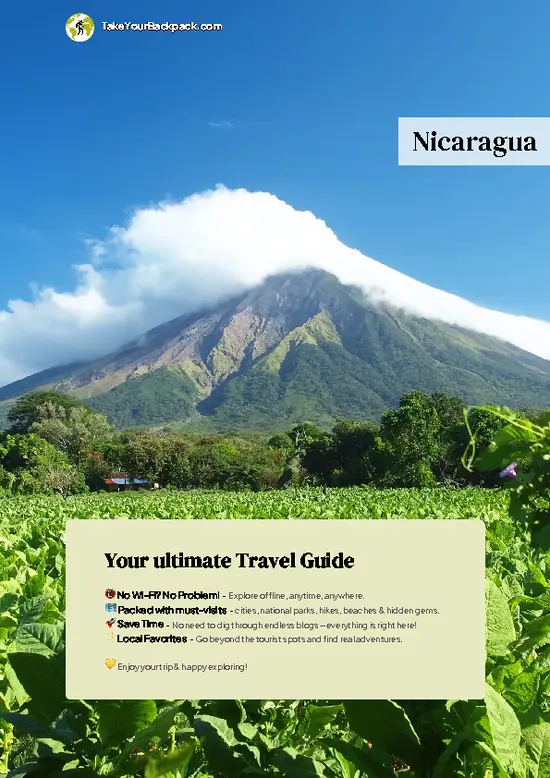
example page 0 from our offline Travel Guide for Nicaragua
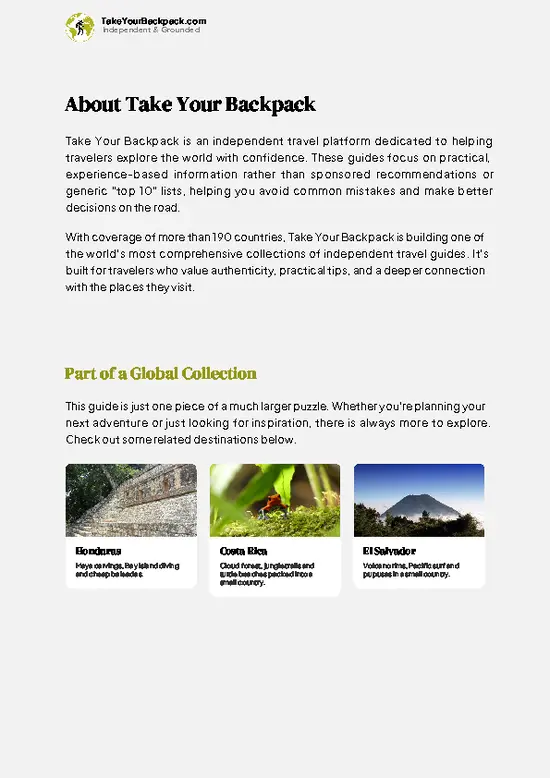
example page 1 from our offline Travel Guide for Nicaragua
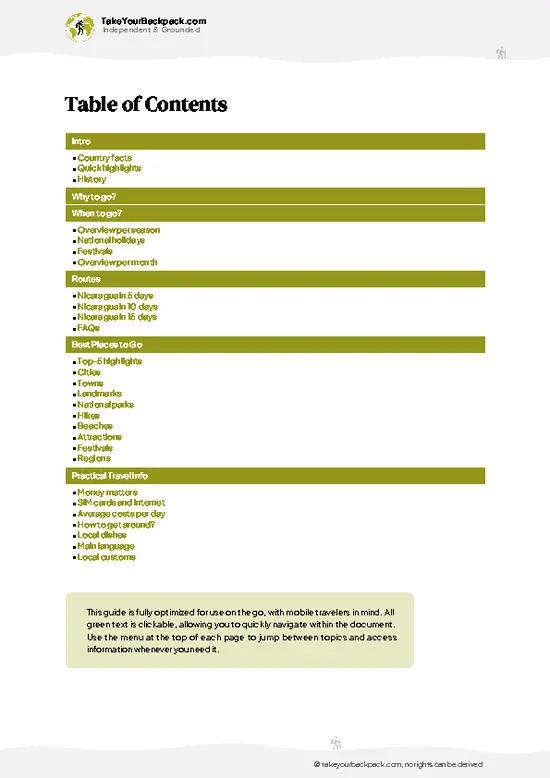
example page 2 from our offline Travel Guide for Nicaragua
example page 3 from our offline Travel Guide for Nicaragua
example page 4 from our offline Travel Guide for Nicaragua
example page 5 from our offline Travel Guide for Nicaragua
example page 6 from our offline Travel Guide for Nicaragua
example page 7 from our offline Travel Guide for Nicaragua
Loading the map 🌍
CLICK TO FILTER
cities
towns
landmarks
national parks
hikes
beaches
attractions
festivals
regions
SHOW COUNTRY’S BESTSHOW ALL

✨ Why go?
Ranked #3 beach in Nicaragua
What makes this beach worth visiting

Playa La Flor is a stop for one reason above all: the turtles. This is one of the most dependable places in Nicaragua to watch olive ridley arribadas, when hundreds of females haul themselves up the sand over a few nights, mostly between July and December. Leatherbacks also nest here, in much smaller numbers, in the months around the turn of the year. Few other beaches on this coast let you sleep a few steps from a nesting site with rangers who actually know the schedule.

The second reason is the setting. The beach has no resort strip, no row of bars and no loud music, just a protected bay inside the La Flor Wildlife Refuge with dry forest behind it. You camp or take a basic cabin, cook, read, swim and go to bed early. Backpackers who have spent a week in the party towns often use it as a … read more 👉
Playa La Flor is a stop for one reason above all: the turtles. This is one of the most dependable places in Nicaragua to watch olive ridley arribadas, when hundreds of females haul themselves up the sand over a few nights, mostly between July and December. Leatherbacks also nest here, in much smaller numbers, in the months around the turn of the year. Few other beaches on this coast let you sleep a few steps from a nesting site with rangers who actually know the schedule.

The second reason is the setting. The beach has no resort strip, no row of bars and no loud music, just a protected bay inside the La Flor Wildlife Refuge with dry forest behind it. You camp or take a basic cabin, cook, read, swim and go to bed early. Backpackers who have spent a week in the party towns often use it as a reset before moving south toward the border or north to Granada. It also suits anyone who likes a simple camp more than a hostel dorm, and the quiet is the main product.

💡 HighlightsKey sights and experiences for travelers

  1. Olive ridley arribadas: The beach is best known for these mass nestings, when hundreds of turtles come ashore on the same nights, usually in the wetter months from roughly July to December and peaking around the new moon. Rangers keep visitors at a distance and ask for no lights and no flash photography. Watching the dark shapes crawl up the sand is the reason most people come.
  2. Leatherback nesting nights: Giant leatherbacks nest here in far smaller numbers than the ridleys, mainly around the turn of the year. Seeing one is luck, but the rangers’ night patrols give you a real chance, and the size of the animal, often over a meter long in the shell, is startling.
  3. Hatchling releases: When nests hatch, rangers sometimes guide small groups to watch the tiny turtles scramble to the surf near dusk.
… read more 👉
  1. Olive ridley arribadas: The beach is best known for these mass nestings, when hundreds of turtles come ashore on the same nights, usually in the wetter months from roughly July to December and peaking around the new moon. Rangers keep visitors at a distance and ask for no lights and no flash photography. Watching the dark shapes crawl up the sand is the reason most people come.
  2. Leatherback nesting nights: Giant leatherbacks nest here in far smaller numbers than the ridleys, mainly around the turn of the year. Seeing one is luck, but the rangers’ night patrols give you a real chance, and the size of the animal, often over a meter long in the shell, is startling.
  3. Hatchling releases: When nests hatch, rangers sometimes guide small groups to watch the tiny turtles scramble to the surf near dusk. It is brief, quiet and moving, and it only happens in season, so ask at the gate rather than count on it.
  4. Camping behind the beach: The refuge has a camping area and simple cabins close to the sand. You wake to birdsong and surf noise, not a generator, and the stars are sharp because there is almost no light pollution. Bring a mosquito net and your own food and water.
  5. Swimming and walking the bay: The bay is sheltered, so the water is calm and easy for swimming, and the long, firm sand at low tide is good for walking from one rocky end to the other. Behind the beach, forest paths bring howler monkeys, iguanas and plenty of birds, especially early in the morning.
Walking the beach at first light costs nothing beyond what you already pay to enter Playa La Flor.
Spotted a mistake or missing something? Contact us.

Things to do near Playa La Flor

Ratings based on Tripadvisor reviews. When you book through this link, you support our work at no extra cost to you.

🌤️ When to go?Seasonal considerations and timing

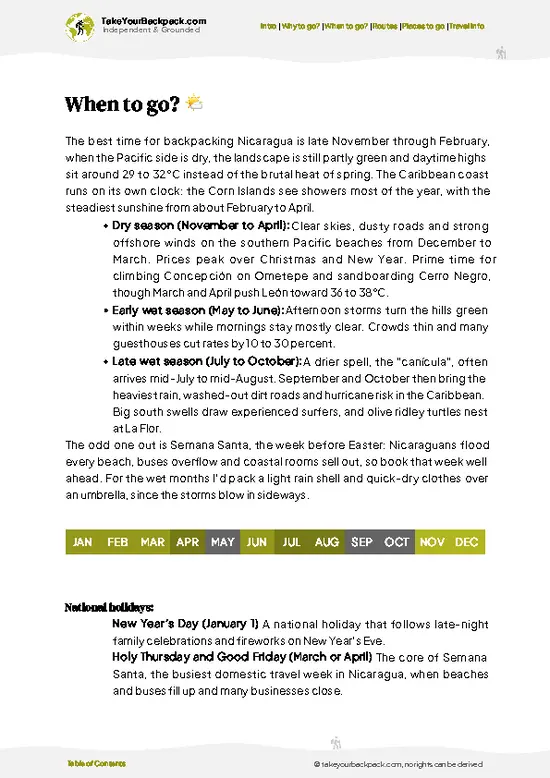
  • Dry Season (November to April): Playa La Flor sees almost no rain, with days around 31 to 34°C (88 to 93°F) and nights near 23 to 25°C (73 to 77°F). Daylight runs roughly 11 to 12 hours. Offshore winds blow hard from December to March, which keeps the heat tolerable.
  • Green Season (May to October): Expect mornings of sun and afternoon or evening downpours, with temperatures of 28 to 32°C (82 to 90°F). The hills turn green, the water clouds up after storms, and rooms cost less.
  • Turtle Season (July to January): Olive ridley and leatherback turtles nest at the refuge here, with the biggest arribadas of olive ridleys from September to November, usually in the rainy months.
  • Holidays: Semana Santa and the Christmas to New Year stretch bring Nicaraguan families, and prices in nearby San Juan del Sur
… read more 👉
  • Dry Season (November to April): Playa La Flor sees almost no rain, with days around 31 to 34°C (88 to 93°F) and nights near 23 to 25°C (73 to 77°F). Daylight runs roughly 11 to 12 hours. Offshore winds blow hard from December to March, which keeps the heat tolerable.
  • Green Season (May to October): Expect mornings of sun and afternoon or evening downpours, with temperatures of 28 to 32°C (82 to 90°F). The hills turn green, the water clouds up after storms, and rooms cost less.
  • Turtle Season (July to January): Olive ridley and leatherback turtles nest at the refuge here, with the biggest arribadas of olive ridleys from September to November, usually in the rainy months.
  • Holidays: Semana Santa and the Christmas to New Year stretch bring Nicaraguan families, and prices in nearby San Juan del Sur and Rivas rise.
  • Swell and Surf: Waves build between April and November, which suits surfers more than swimmers.
Come in late October or early November to catch the nesting turtles with the rains easing off.


source: climatestotravel.comJANJanuary: excellent for travelingFEBFebruary: excellent for travelingMARMarch: excellent for travelingAPRApril: highly recommended for travelingMAYMay: fair for travelingJUNJune: fair for travelingJULJuly: good for travelingAUGAugust: fair for travelingSEPSeptember: fair for travelingOCTOctober: fair for travelingNOVNovember: highly recommended for travelingDECDecember: good for traveling
when-to-go

✈️ The backpacker research shortcutNicaragua Travel Guide

An offline-friendly backpacking guide with optimized travel routes, ranked highlights, transport advice, and the best areas to stay.
example page 0 from our offline Travel Guide for Nicaragua
example page 1 from our offline Travel Guide for Nicaragua
example page 2 from our offline Travel Guide for Nicaragua
example page 3 from our offline Travel Guide for Nicaragua
example page 4 from our offline Travel Guide for Nicaragua
example page 5 from our offline Travel Guide for Nicaragua
example page 6 from our offline Travel Guide for Nicaragua
example page 7 from our offline Travel Guide for Nicaragua
The digital guide (256 pages) contains:
✅ 77 highlights, ranked by travel appeal
✅ Optimized 5, 10 & 15-day travel routes
✅ Cities, national parks, landmarks, beaches
✅ How to get around
✅ Offline-friendly for travel without Wi-Fi
👉 Click to see all 30+ guide features

📅 Plan smarter in minutes, not weeks
✅ Month by month travel advice
✅ Festivals & national holidays
✅ Budget expectations

🗺️ Go to the right places, skip the overrated ones
✅ Honest pros & cons of destinations
✅ Top hikes, parks & viewpoints
✅ Lesser-known places most travelers miss
✅ Clear “worth it vs skip it” guidance

🛏️ Travel smoothly without rookie mistakes
✅ Best areas to stay
✅ Transport systems explained simply
✅ Common scams & safety advice
✅ SIM cards, money & practical tips

🌍 Understand the country, not just visit it
✅ Culture & traditions
✅ 52 Essential phrases & customs
✅ Festivals worth planning around
✅ Traveler-friendly historical context
✅ Insights that make places more meaningful

📱 Built for real travel conditions
✅ Fully downloadable PDF
✅ Works completely offline
✅ Optimized for phone use
✅ Useful in remote areas & buses
✅ Everything in one place
Stop searching, start planning
Get instant access to your full guide. 30‑day money-back guarantee.
+ Add another guide for just

By proceeding you agree to our terms.
Sent to your inbox immediately after payment • 100% Secure Checkout
Best Backpacking Travel Advisor 2025 tourism awardBest Backpacking
Travel Advisor
2025
What others say about Take Your Backpack Guides:
⭐⭐⭐⭐⭐
Fantastic, amazing amount of information!
⭐⭐⭐⭐⭐
My goodness this is amazing, it's what I've been looking for hats off too you!
⭐⭐⭐⭐⭐
I think this is absolutely BRILLIANT
⭐⭐⭐⭐
Very complete and informative. It's still missing places, but I gotta to commend you
⭐⭐⭐⭐⭐
This is truly amazing, thank you, can't wait to explore it with my kids!
⭐⭐⭐⭐⭐
Awesome resource, thank you!
⭐⭐⭐⭐⭐
This is amazing! Can't wait to explore the ones I haven't seen
⭐⭐⭐⭐
I love this! Well done, great idea.
⭐⭐⭐⭐⭐
Thanks for taking the time to make this gem!
⭐⭐⭐⭐⭐
This might be the best website I've ever seen.
⭐⭐⭐⭐⭐
Congratulations, and thank you so much for your work; it's incredibly valuable.
⭐⭐⭐⭐
In all seriousness I think you did a great job pointing out the important spots
⭐⭐⭐⭐⭐
10/10 very good
⭐⭐⭐⭐⭐
As someone who's only just starting to visit regularly this is awesome, thank you.
⭐⭐⭐⭐
Thank you very much! I'm going to visit my dad, it's going to be very useful!
⭐⭐⭐⭐⭐
This is really cool! We'll be travelling for the first time and this definitely come in handy.
⭐⭐⭐⭐⭐
You are now our minister of culture, congratulations 👨‍💼
⭐⭐⭐⭐⭐
Just wanted to tell you that this is a pearl! Going to follow your recommendations.
⭐⭐⭐⭐⭐
This is so cool. I'll definitely be using the resource for my travels soon.
⭐⭐⭐⭐⭐
This is very impressive! Good work.
⭐⭐⭐⭐⭐
This is an amazing and informative site. Very well done!

🛏️ Where to stay?Best areas to stay in Nicaragua

The best base for backpackers near Playa La Flor is San Juan del Sur, about 18 km (11 miles) north, where dorm beds run roughly US$10 to 18 a night and most social hostels cluster. It has the town's bars, surf schools, cheap taco and fish spots, and shuttle services to the surrounding beaches. Solo travelers find company easily here, and nights out finish within walking distance of your bed.
A quieter option is the coast around Playa Marsella and Playa Madera, a short ride from San Juan del Sur. Madera has a smaller group of surf-oriented guesthouses and a younger crowd who go out early to catch … read more 👉
The best base for backpackers near Playa La Flor is San Juan del Sur, about 18 km (11 miles) north, where dorm beds run roughly US$10 to 18 a night and most social hostels cluster. It has the town's bars, surf schools, cheap taco and fish spots, and shuttle services to the surrounding beaches. Solo travelers find company easily here, and nights out finish within walking distance of your bed.
A quieter option is the coast around Playa Marsella and Playa Madera, a short ride from San Juan del Sur. Madera has a smaller group of surf-oriented guesthouses and a younger crowd who go out early to catch the swell.
Staying near La Flor itself is a different experience. The Chacocente-style coast has only a few simple lodgings and homestays, mostly run by locals connected to the wildlife refuge, and there is little nightlife. Rooms cost around US$15 to 40, and meals are basic, often served at the place where you sleep. Come here if you want silence and a chance of seeing turtles at night.
Most travelers sleep in San Juan del Sur and visit La Flor on a day or overnight trip, since transport from the town is easier than arranging it from the beach.

🛡️ SafetyStaying Safe: What Travelers Should Know

Playa La Flor is a calm, lightly visited beach where the main concerns are the sun and the sea. The bay is fairly sheltered and the water is usually good for a swim, but waves can get strong in the rainy months, and rips can form near the rocky ends. Swim where locals do, in front of the beach access, and stay out when the surf is big. There are no lifeguards, so go with a buddy.
Shade is scarce and midday heat is intense, so bring water, a hat and reef-safe sunscreen. Nights are the best time for turtle viewing, and you should visit only with ranger guides, keeping lights off and distance from the animals.
Petty theft is uncommon here, but leave valuables in town and don’t leave bags unattended on the sand. Cell signal is patchy, so tell someone where you’re going.

FAQFrequently asked questions about Playa La Flor

From San Juan del Sur, Playa La Flor is about 18 km (11 miles) south by road, roughly 30 to 40 minutes by car or taxi. A private taxi costs around US$20 to 35 each way, and shuttles or tours that include turtle watching cost roughly US$15 to 30. The last stretch of road can be rough in the rainy season, so a 4x4 or a driver who knows the route helps. Local buses from Rivas toward the coast are slower and need a connection.
Swimming at Playa La Flor is good in calm conditions, with a protected bay and clear water in the dry season, and snorkeling is limited. Surfing is better at nearby Playa Madera and Playa Maderas, around 20 to 30 minutes north, where lessons cost about US$30 to 50. The surf here gets bigger between April and November, so swim cautiously. Come from July to January and the real draw is the nesting turtles.
Playa La Flor is free to enter for the beach itself, but the wildlife refuge charges a small fee, roughly US$5 to 10 for foreigners, to visit and watch the turtles. Guides are required for night turtle viewing, and tips are expected. Parking and facilities are minimal, so bring water and cash, as there are no ATMs nearby. The nearest ATMs are in San Juan del Sur.
⚠️ Things can change over time, so always validate details locally before you go.

Other Nicaraguan beaches near Playa La Flor

Explore more nearby:

  • Playa El Coco—Turtle nights, gray-gold sand, morning surf, family kitchens| 2 km away
  • San Juan del Sur—Horseshoe bay, Cristo statue, fishing boats, waterfront bars| 16 km away
  • Playa Maderas—Beach-break surf, hillside hostels, howler monkeys, Marsella trail| 21 km away

💡 Not sure where to go next?
Create a personalized itinerary for Nicaragua including Playa La Flor and the places that fit your trip.

Generate my itinerary

👉 Discover all beaches

Or checkout all Nicaragua has to offer (think cities, towns, villages, national parks, hikes, beaches, festivals)
Country photo of Nicaragua

We 💚 feedbackSumming up the experience

Playa La Flor has almost no shade on the open sand, and that surprises first-timers. Pitch your tent or choose your cabin under the trees behind the beach, not near the waterline. I would also pack a red-filter headlamp and a long-sleeved shirt for the mosquitoes at dusk, and leave the speaker at home so the night stays about the turtles.

✈️ When did I visit Nicaragua?
Nicaragua I visited during my half year trip through South and Central America back in 2003

✍️ Help improve this page!
The information on this page is based on my own backpacking experience in Nicaragua, supplemented with up-to-date research and feedback from other travelers. Travel details can change, so if you notice anything outdated or incomplete, feel free to let me know.


🙋‍♂️ Give feedback

👋 Meet the founderWho’s Behind Take Your Backpack?

Johan, backpacker and founder of TakeYourBackpackHi, I’m Johan (Netherlands 🇳🇱), the creator of TakeYourBackpack. Over the past 3 decades, I’ve backpacked through 90+ countries across six continents, gaining extensive experience with independent travel, long-term trips, and overland routes.

This site is built on a combination of firsthand travel experience and carefully curated insights from other backpackers. Many guides are based on places I’ve personally visited, while others bring together tips, observations, and practical advice shared by trusted travelers I’ve met along the way.

The goal is to provide realistic, experience-driven guidance — not generic itineraries — so you can explore destinations with better context, clearer expectations, and more confidence.