×

Niger🇳🇪 | hikesAzawagh Valleyopen desert plains, nomadic encampments, fossil beds | things to do and best time to go

Explore Kaouar CliffsExplore Aïr Mountains

Backpacking in Azawagh Valley
👀 For curious travelershike ranked #5
By Johan Kruseman 🇳🇱 | Updated September 3, 2026

You land in Niger and face a real fork in the sand: do you brave the Azawagh Valley’s raw emptiness, or stick to the more accessible, Instagram-friendly trails near Agadez? This isn’t a casual stroll. The Azawagh Valley sprawls across Niger’s northwest, a hard-baked corridor of wind-carved rock, fossil beds, and endless, sun-hammered gravel. The hike itself is a test—long, exposed, and utterly indifferent to your comfort. Scenery? Stark and lunar, with the kind of silence that presses on your eardrums. You’ll earn every horizon. Getting to the trailhead by public transport is a logistical headache; you’ll likely need to negotiate with local drivers or hitch a ride with traders. Compared to the Air Mountains’ gentler slopes or the more trafficked Tenere routes, Azawagh is pure grit—fewer people, fewer comforts, but a payoff that’s all yours: the first cool dusk, the sky erupting with stars, and the fierce pride of having crossed a place that doesn’t care if you make it.

Discover everything you want to know in the 📖 Niger Travel Guide.
Best time to go: October - February
Duration: 5 to 7 days
Distance: 100 kilometers
Total ascent: 1,200 meters
Safety warning

The current risk level for Niger is high. Check the advice before going.


Get your Niger guide
67 ranked highlights, routes & tips, works offline (284 pages)
Loading the map 🌍
CLICK TO FILTER
cities
towns
villages
landmarks
national parks
hikes
attractions
festivals
regions
SHOW COUNTRY’S BESTSHOW ALL

✨ Why go?
Ranked #5 hike in Niger
Why Azawagh Valley should be on your travel list

The Azawagh Valley in Niger is a backpacker’s playground, where every step is a dance with the desert. The scenery-to-effort ratio here is off the charts; you’ll be rewarded with sweeping vistas of ochre dunes and rugged mountains after just a few hours of trekking. It’s not just about the destination; the journey through this stark beauty is a visceral experience.

Getting there is a breeze. Public transport access is surprisingly good, with shared taxis zipping you from city to trailhead without breaking the bank. Speaking of costs, this hike is a low-cost adventure that won’t drain your wallet.

You can tailor your trek to fit your vibe, whether you want a quick jaunt or a multi-day exploration. The flexible distances allow you to soak in the landscape at your own pace. Plus, it seamlessly … read more 👉
The Azawagh Valley in Niger is a backpacker’s playground, where every step is a dance with the desert. The scenery-to-effort ratio here is off the charts; you’ll be rewarded with sweeping vistas of ochre dunes and rugged mountains after just a few hours of trekking. It’s not just about the destination; the journey through this stark beauty is a visceral experience.

Getting there is a breeze. Public transport access is surprisingly good, with shared taxis zipping you from city to trailhead without breaking the bank. Speaking of costs, this hike is a low-cost adventure that won’t drain your wallet.

You can tailor your trek to fit your vibe, whether you want a quick jaunt or a multi-day exploration. The flexible distances allow you to soak in the landscape at your own pace. Plus, it seamlessly fits into a longer backpacking route through West Africa, making it a must-do. The moment you crest that final ridge and take in the view, you’ll know every drop of sweat was worth it.
Want to include Azawagh Valley in your Niger route?
Create a personalized Niger itinerary that includes Azawagh Valley and the places that fit your trip — based on your travel style, budget, and available time. Get your route in seconds.

Generate my trip

💡 HighlightsWhat this place is best known for

  1. The wide dry wadi (the valley floor) — Walking the flat, gravel-strewn floor of Azawagh is a lesson in scale: kilometers of open space, unexpected ripples of wind-blown sand and the sparse shrubs that survive here. The sheer emptiness makes every sound and step feel amplified, and it’s a very different kind of hike from a forest trail — more about navigation, endurance and the strange beauty of minimalism than switchbacks or waterfalls.
  2. Ochre cliffs and rim viewpoints — The valley’s rims and escarpments give you those classic Sahara panoramas: layered red and yellow rock, long shadows at sunrise/sunset, and a horizon that seems to fall away forever. Climb a short ridge and you suddenly get instant reward — perfect for photos, geology nerding, or just sitting and letting the light change.
read more 👉
  1. The wide dry wadi (the valley floor) — Walking the flat, gravel-strewn floor of Azawagh is a lesson in scale: kilometers of open space, unexpected ripples of wind-blown sand and the sparse shrubs that survive here. The sheer emptiness makes every sound and step feel amplified, and it’s a very different kind of hike from a forest trail — more about navigation, endurance and the strange beauty of minimalism than switchbacks or waterfalls.
  2. Ochre cliffs and rim viewpoints — The valley’s rims and escarpments give you those classic Sahara panoramas: layered red and yellow rock, long shadows at sunrise/sunset, and a horizon that seems to fall away forever. Climb a short ridge and you suddenly get instant reward — perfect for photos, geology nerding, or just sitting and letting the light change.
  3. Nomad camps and Tuareg culture — Azawagh is lived-in country. On the trail you’ll encounter Tuareg and Wodaabe herding camps, salt-caravan routes and seasonal markets (the Cure Salée gathering near Ingall is the big cultural show if your timing lines up). These encounters make the hike more than scenery — you’ll see tents, hear music, and get a real feel for how people adapt to this place.
  4. Ephemeral pools and migrating life — After rains the valley briefly transforms: wadis fill, tiny lakes appear and grasses and flowers pop up. Those short-lived waters attract migrant birds and desert-adapted animals, so if you’re there at the right moment the contrast between dry gravel and watery birdlife is striking. It’s a reminder that desert landscapes are alive on their own clock.
  5. Wind-sculpted rock, yardangs and ancient river traces — Scattered across the valley are sculpted rock forms and old riverbeds that tell a deep-time story: wind-carved ridges (yardangs), flattened paleosols and outcrops that hint at wetter eras. For hikers this means interesting short detours, unexpected textures underfoot and a sense that the place has been changing for millennia — not just a pretty backdrop, but a landscape with stories.
Spotted a mistake or missing something? Contact us.
🌤️ When to go?When to go for the best experience


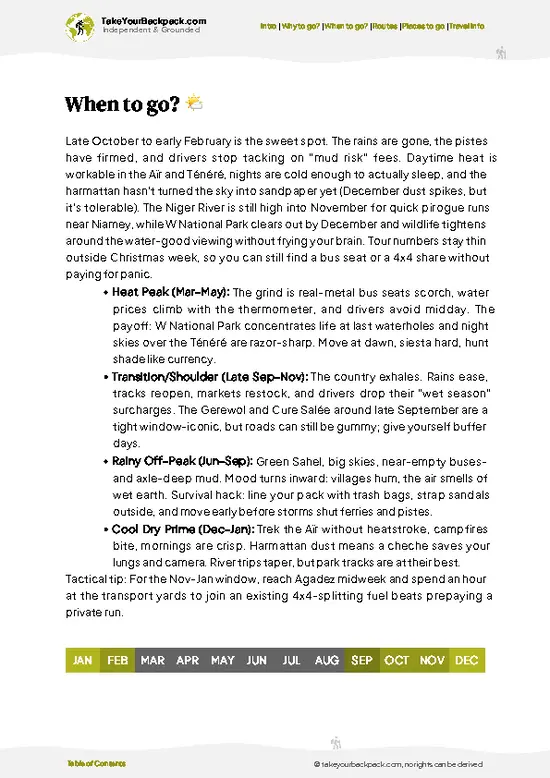
  • Weather: The Azawagh Valley bakes under a brutal sun most of the year. The best window is the cooler dry season from November to February, when temperatures drop to a manageable 20-30°C (68-86°F). Outside this, expect scorching heat that drains your energy fast.

  • Temperature: Daytime highs can soar above 40°C (104°F) in the hot season, making hiking a slog. Nights in the dry season can dip sharply to around 10°C (50°F), so pack layers for the chill after sunset.

  • Daylight Hours: Daylight remains fairly consistent year-round, roughly 11-12 hours. Start early to beat the heat and maximize your trekking time before the sun drags the temperature back up.

  • Crowds: The Azawagh Valley is remote and rarely crowded. The dry season sees a slight uptick in adventurous travelers, but expect solitude
read more 👉

  • Weather: The Azawagh Valley bakes under a brutal sun most of the year. The best window is the cooler dry season from November to February, when temperatures drop to a manageable 20-30°C (68-86°F). Outside this, expect scorching heat that drains your energy fast.

  • Temperature: Daytime highs can soar above 40°C (104°F) in the hot season, making hiking a slog. Nights in the dry season can dip sharply to around 10°C (50°F), so pack layers for the chill after sunset.

  • Daylight Hours: Daylight remains fairly consistent year-round, roughly 11-12 hours. Start early to beat the heat and maximize your trekking time before the sun drags the temperature back up.

  • Crowds: The Azawagh Valley is remote and rarely crowded. The dry season sees a slight uptick in adventurous travelers, but expect solitude and wide-open spaces most of the year.

  • Seasonal Activities: The dry season aligns with local nomadic festivals and market days, adding cultural spice to your trek. The rainy season, though lush, can make trails impassable and transport unreliable.

  • Price Fluctuations: Costs for guides and accommodations peak in the dry season due to demand. Off-season rates drop but come with the risk of extreme heat and limited services.


Pro-tip: Aim for late November to early February to balance cool temps, cultural encounters, and manageable prices—this is when the Azawagh Valley reveals its raw, unfiltered soul.


source: climatestotravel.comJANJanuary: excellent for travelingFEBFebruary: excellent for travelingMARMarch: fair for travelingAPRApril: below average for travelingMAYMay: below average for travelingJUNJune: below average for travelingJULJuly: below average for travelingAUGAugust: below average for travelingSEPSeptember: fair for travelingOCTOctober: good for travelingNOVNovember: highly recommended for travelingDECDecember: excellent for traveling
when-to-go

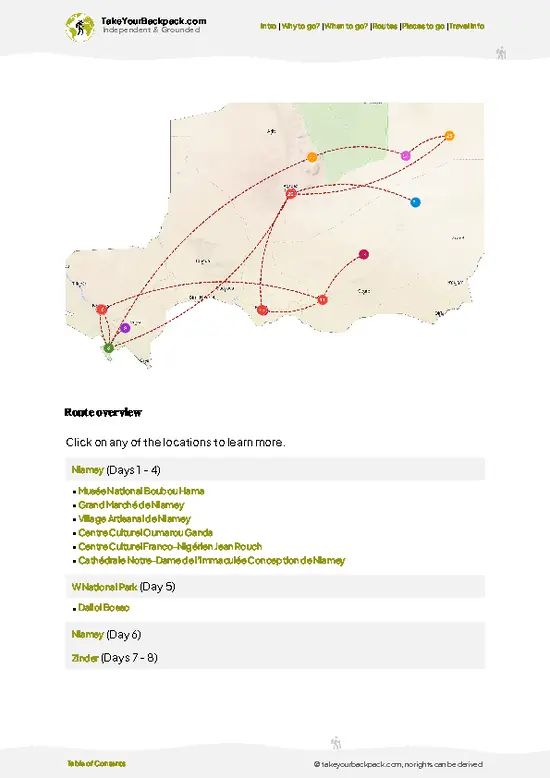
✈️ The backpacker research shortcutNiger Travel Guide

An offline-friendly backpacking guide with optimized travel routes, ranked highlights, transport advice, and the best areas to stay.
example page 0 from our offline Travel Guide for Niger
example page 1 from our offline Travel Guide for Niger
example page 2 from our offline Travel Guide for Niger
example page 3 from our offline Travel Guide for Niger
example page 4 from our offline Travel Guide for Niger
example page 5 from our offline Travel Guide for Niger
example page 6 from our offline Travel Guide for Niger
example page 7 from our offline Travel Guide for Niger
The digital guide (284 pages) contains:
67 highlights, ranked by travel appeal
Optimized 5, 10 & 15-day travel routes
Cities, national parks, landmarks, beaches
How to get around
Offline-friendly for travel without Wi-Fi
👉 Click to see all 30+ guide features

📅 Plan smarter in minutes, not weeks
Month by month travel advice
Festivals & national holidays
Budget expectations

🗺️ Go to the right places, skip the overrated ones
Honest pros & cons of destinations
Top hikes, parks & viewpoints
Lesser-known places most travelers miss
Clear “worth it vs skip it” guidance

🛏️ Travel smoothly without rookie mistakes
Best areas to stay
Transport systems explained simply
Common scams & safety advice
SIM cards, money & practical tips

🌍 Understand the country, not just visit it
Culture & traditions
52 Essential phrases & customs
Festivals worth planning around
Traveler-friendly historical context
Insights that make places more meaningful

📱 Built for real travel conditions
Fully downloadable PDF
Works completely offline
Optimized for phone use
Useful in remote areas & buses
Everything in one place
Save weeks of stressful planning
Get instant access to your full guide. 30‑day money-back guarantee.
+ Add another guide for just US$7.80

By proceeding you agree to our terms.
Sent to your inbox immediately after payment • 100% Secure Checkout
Best Backpacking Travel Advisor 2025 tourism awardBest Backpacking
Travel Advisor
2025
What others say about Take Your Backpack Guides:
⭐⭐⭐⭐⭐
Fantastic, amazing amount of information!
⭐⭐⭐⭐⭐
My goodness this is amazing, it's what I've been looking for hats off too you!
⭐⭐⭐⭐⭐
I think this is absolutely BRILLIANT
⭐⭐⭐⭐
Very complete and informative. It's still missing places, but I gotta to commend you
⭐⭐⭐⭐⭐
This is truly amazing, thank you, can't wait to explore it with my kids!
⭐⭐⭐⭐⭐
Awesome resource, thank you!
⭐⭐⭐⭐⭐
This is amazing! Can't wait to explore the ones I haven't seen
⭐⭐⭐⭐
I love this! Well done, great idea.
⭐⭐⭐⭐⭐
Thanks for taking the time to make this gem!
⭐⭐⭐⭐⭐
This might be the best website I've ever seen.
⭐⭐⭐⭐⭐
Congratulations, and thank you so much for your work; it's incredibly valuable.
⭐⭐⭐⭐
In all seriousness I think you did a great job pointing out the important spots
⭐⭐⭐⭐⭐
10/10 very good
⭐⭐⭐⭐⭐
As someone who's only just starting to visit regularly this is awesome, thank you.
⭐⭐⭐⭐
Thank you very much! I'm going to visit my dad, it's going to be very useful!
⭐⭐⭐⭐⭐
This is really cool! We'll be travelling for the first time and this definitely come in handy.
⭐⭐⭐⭐⭐
You are now our minister of culture, congratulations 👨‍💼
⭐⭐⭐⭐⭐
Just wanted to tell you that this is a pearl! Going to follow your recommendations.
⭐⭐⭐⭐⭐
This is so cool. I'll definitely be using the resource for my travels soon.
⭐⭐⭐⭐⭐
This is very impressive! Good work.
⭐⭐⭐⭐⭐
This is an amazing and informative site. Very well done!

🛏️ Where to stay?Choosing the right base

If you enjoy meeting fellow travelers, consider choosing hostels with high ratings for atmosphere. On the other hand, if you prefer having your own space, a hotel might be a better option.

🥾 Hike detailsTrail overview: what to expect on the hike

Total Distance: The Azawagh Valley trail stretches approximately 120 kilometers, making it a solid trek for those looking to immerse themselves in the beauty of Niger’s landscapes.

Estimated Duration: Most hikers take about 6 to 8 days to complete the trail, depending on their pace and how much time they want to spend soaking in the views or resting.

Difficulty Level: This trail is considered moderate to challenging. You’ll encounter some rugged terrain, and the heat can be intense, so it’s not for the faint-hearted or those unprepared.

Starting Point: The trail typically begins in the town … read more 👉
Total Distance: The Azawagh Valley trail stretches approximately 120 kilometers, making it a solid trek for those looking to immerse themselves in the beauty of Niger’s landscapes.

Estimated Duration: Most hikers take about 6 to 8 days to complete the trail, depending on their pace and how much time they want to spend soaking in the views or resting.

Difficulty Level: This trail is considered moderate to challenging. You’ll encounter some rugged terrain, and the heat can be intense, so it’s not for the faint-hearted or those unprepared.

Starting Point: The trail typically begins in the town of Agadez. You can get there by taking a bus from Niamey, which takes about 14 to 16 hours. Buses are frequent, but be ready for a bumpy ride. Once in Agadez, local guides can help you navigate to the trailhead.

Major Landmarks Along the Route:
  • Ancient Caravanserai: A historic resting place for traders, this spot offers a glimpse into the region’s rich history.
  • Mount Tenoumer: A striking rock formation that provides a fantastic viewpoint of the valley below.
  • Oasis of Tchirozerine: A refreshing stop where you can refill your water supplies and take a breather.

Type of Terrain and Scenery: Expect a mix of sandy tracks, rocky paths, and occasional flat stretches. The scenery is stunning—think vast desert landscapes punctuated by rocky outcrops and the occasional lush oasis. Sunsets here are particularly breathtaking.

Typical Vegetation and Wildlife:
  • Vegetation: You’ll find scattered acacia trees, hardy grasses, and the occasional palm oasis. The flora is adapted to the arid conditions, so it’s not overly lush.
  • Wildlife: Keep an eye out for various desert animals, including lizards, snakes, and birds like the African hoopoe. If you’re lucky, you might spot a gazelle or two in the more remote areas.

Be sure to carry plenty of water, sunscreen, and a good map or GPS device. And don’t forget to respect the local culture and environment while you enjoy this incredible adventure!
⚠️ Hiking info can sometimes be outdated or inaccurate. Before you hit the trail, check the latest conditions with locals. If you do spot anything that's off, I'd love to hear from you, so I can update it for fellow travelers.

🛡️ SafetyScams, Hazards, and Annoyances

The Azawagh Valley hike is a raw, immersive experience. Expect heat that can swing wildly, so pack layers and stay hydrated. The terrain is mostly flat, but watch for loose rocks and sandy patches that can trip you up. Navigation is straightforward, but a good map or GPS is your best friend—don’t rely solely on trail markers.

Wildlife is present, but encounters are rare. If you spot a gazelle or a desert fox, keep your distance and enjoy the moment quietly. Respect their space; you’re a visitor here.

Timing is crucial. Early mornings or late afternoons are ideal for cooler temps and softer light. Pace yourself; the valley’s beauty unfolds gradually, rewarding your efforts with sweeping vistas and the thrill of discovery. After a long day, nothing beats that first cold drink at camp, a well-earned toast to the journey.

FAQTraveler FAQ

The Azawagh Valley hike typically takes about 5 to 7 days to complete, depending on the route and pace. The distance covered can be around 100 to 150 kilometers. Plan for daily walking segments of 20 to 30 kilometers in desert conditions.
The hike is moderately difficult due to the harsh desert environment, high temperatures, and limited water sources. It requires good physical fitness and experience with long-distance trekking in arid conditions. Navigation skills are important as trails are not always clearly marked.
Yes, a guide is strongly recommended for safety and navigation, as the area is remote and challenging. A permit is usually required, which can be arranged through local authorities or tour operators. Hiring a guide also helps with logistics and communication with local communities.
⚠️ Things can change over time, so always validate details locally before you go.

Other Nigerien hikes near Azawagh Valley

Explore more nearby:

  • Termit Massif—limestone ridges, wildlife reserves, remote canyons| 654 km away
  • Air Mountains—granite peaks, rock art sites, seasonal oases| 719 km away
  • Kaouar Cliffs—towering escarpments, palm-filled gueltas, ancient wells| 779 km away

💡 Not sure where to go next?
Create a personalized itinerary for Niger including Azawagh Valley and the places that fit your trip.

Generate my itinerary

👉 Discover all hikes

Or checkout all Niger has to offer (think cities, towns, villages, national parks, hikes, beaches, festivals)
Country photo of Niger

We 💚 feedbackWhat to keep in mind

The Azawagh Valley is raw and real, a place where the desert whispers stories of resilience. Expect heat that wraps around you like a heavy blanket, but the sunsets? They’ll stop you in your tracks. The best surprise? The warmth of the Tuareg people; their hospitality is a balm for the soul. Just a heads-up: water is gold here. Stay hydrated and be ready for the unexpected. Embrace the grit, and you’ll find beauty in every grain of sand.

✍️ Help improve this page!
The information on this page is based on in-depth research, insights shared by experienced travelers, and feedback from the local travel community in Niger. While every effort is made to keep the information accurate and current, conditions can change — so if you spot anything incorrect or outdated, please get in touch.


🙋‍♂️ Give feedback

👋 Meet the founderWho’s Behind Take Your Backpack?

Johan, backpacker and founder of TakeYourBackpackHi, I’m Johan (Netherlands 🇳🇱), the creator of TakeYourBackpack. Over the past decade, I’ve backpacked through 80+ countries across six continents, gaining extensive experience with independent travel, long-term trips, and overland routes.

This site is built on a combination of firsthand travel experience and carefully curated insights from other backpackers. Many guides are based on places I’ve personally visited, while others bring together tips, observations, and practical advice shared by trusted travelers I’ve met along the way.

The goal is to provide realistic, experience-driven guidance — not generic itineraries — so you can explore destinations with better context, clearer expectations, and more confidence.

Get full Niger guide •
Instant download • 67 highlights • Full Offline guide