×

Niger🇳🇪 | festivalsFestival de l’AïrAïr Mountains, Tuareg music, desert encampments | things to do and best time to go

Explore FIMA (Festival International de la Mode Africaine)Explore Festival de l’Artisanat de Niamey

Backpacking in de l’Aïr
🌟 Highlightfestival ranked #4
By Johan Kruseman 🇳🇱 | Updated September 3, 2026

Forget the fantasy of a slick, Instagram-ready desert rave—Festival de l’Aïr is not a mirage conjured for tourists, but a living, breathing Tuareg gathering deep in Niger’s Agadez region, on the edge of the Sahara. This isn’t a place where you’ll find polished stages or curated playlists. Instead, you get raw, hypnotic rhythms—think tindé drums, ululating vocals, and the metallic twang of the imzad—echoing across the sand as nomadic clans converge to celebrate survival, courtship, and the end of the dry season. The crowd is a wild mix: Tuareg families, camel caravans, a handful of intrepid travelers, and local dignitaries, all swirling in a dust-kicked, kinetic dance that stretches for several days. The vibe is fiercely communal, sometimes chaotic, always real. If you crave authenticity and don’t mind trading comfort for connection, this festival delivers a jolt of Saharan soul you won’t find anywhere else.

Discover everything you want to know in the 📖 Niger Travel Guide.
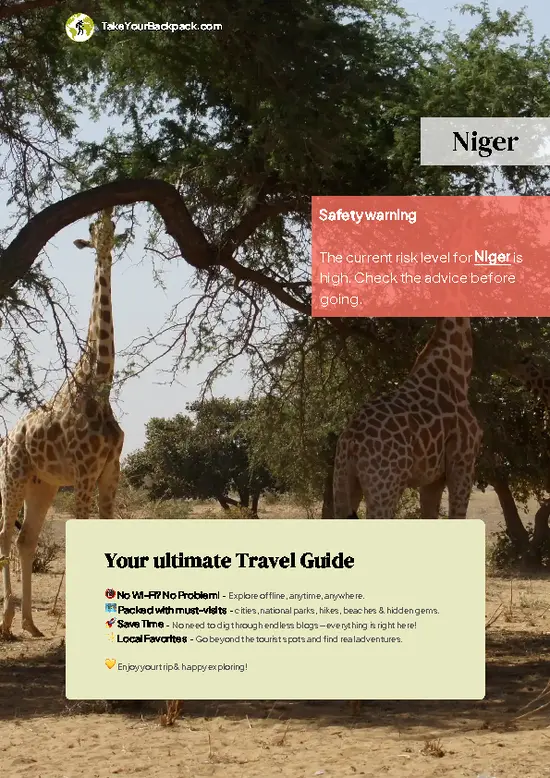
Safety warning

The current risk level for Niger is high. Check the advice before going.


Get your Niger guide
67 ranked highlights, routes & tips, works offline (284 pages)
Loading the map 🌍
CLICK TO FILTER
cities
towns
villages
landmarks
national parks
hikes
attractions
festivals
regions
SHOW COUNTRY’S BESTSHOW ALL

✨ Why go?
Ranked #4 festival in Niger
Why visitors keep coming back

Backpackers flock to the Festival de l’Aïr in Niger for a reason. This isn’t just another event; it’s a social energy powerhouse. Imagine thousands of people converging in the desert, united by music, dance, and shared stories. You’re not just a spectator; you’re part of a temporary community that pulses with life.

The festival offers a deep dive into cultural immersion. Traditional Tuareg music and vibrant crafts surround you, making every moment feel alive. Plus, it’s surprisingly affordable compared to similar festivals worldwide. You can enjoy top-notch performances without breaking the bank, leaving more room in your budget for those unforgettable local meals or desert excursions.

Planning your route around this festival isn’t just smart; it’s essential. It fits seamlessly into longer … read more 👉
Backpackers flock to the Festival de l’Aïr in Niger for a reason. This isn’t just another event; it’s a social energy powerhouse. Imagine thousands of people converging in the desert, united by music, dance, and shared stories. You’re not just a spectator; you’re part of a temporary community that pulses with life.

The festival offers a deep dive into cultural immersion. Traditional Tuareg music and vibrant crafts surround you, making every moment feel alive. Plus, it’s surprisingly affordable compared to similar festivals worldwide. You can enjoy top-notch performances without breaking the bank, leaving more room in your budget for those unforgettable local meals or desert excursions.

Planning your route around this festival isn’t just smart; it’s essential. It fits seamlessly into longer travel plans, allowing you to explore the stunning landscapes of Niger while soaking up the rich culture. Don’t miss out on this chance to connect, celebrate, and recharge your spirit. The festival is a highlight that transforms your journey into something truly special.
Want to include Festival de l’Aïr in your Niger route?
Create a personalized Niger itinerary that includes Festival de l’Aïr and the places that fit your trip — based on your travel style, budget, and available time. Get your route in seconds.

Generate my trip

💡 HighlightsThe experiences that define the visit

  • Desert music and Tuareg bands — Electric guitars and modal scales meet traditional rhythms here; expect meditative desert blues, call-and-response singing and trance-like sets that feel like a ceremony as much as a concert. The music’s rooted in nomadic life and history, so it’s as much storytelling as entertainment.
  • Equestrian and camel displays — Riders in indigo robes, fast camel races and skillful horsemanship put a show on the sand. These displays aren’t just sport; they’re a living showcase of status, technique and the relationship between people and animals in Saharan life.
  • Handicraft souk and silversmiths — A compact market of leatherworkers, silversmiths and dye masters selling intricate Tuareg jewelry, knives and textiles. Watching artisans work and buying a small piece of jewelry
read more 👉
  • Desert music and Tuareg bands — Electric guitars and modal scales meet traditional rhythms here; expect meditative desert blues, call-and-response singing and trance-like sets that feel like a ceremony as much as a concert. The music’s rooted in nomadic life and history, so it’s as much storytelling as entertainment.
  • Equestrian and camel displays — Riders in indigo robes, fast camel races and skillful horsemanship put a show on the sand. These displays aren’t just sport; they’re a living showcase of status, technique and the relationship between people and animals in Saharan life.
  • Handicraft souk and silversmiths — A compact market of leatherworkers, silversmiths and dye masters selling intricate Tuareg jewelry, knives and textiles. Watching artisans work and buying a small piece of jewelry or a hand-stitched pouch connects you directly with regional design traditions.
  • Oral poetry, storytelling and ceremonies — Elders and poets recite praise songs, clan histories and improvised verses; you’ll hear wit, lament and memory woven together. The oral tradition is central to identity here, so these performances often carry real social weight beyond pure entertainment.
  • Camp nights, tea rituals and Sahara atmosphere — Nights around communal fires, endless stars, and elaborate mint-tea ceremonies create the festival’s slow, hospitable rhythm. It’s where music, food and conversation meet the desert silence—perfect for swapping stories with locals and other travelers.
Spotted a mistake or missing something? Contact us.
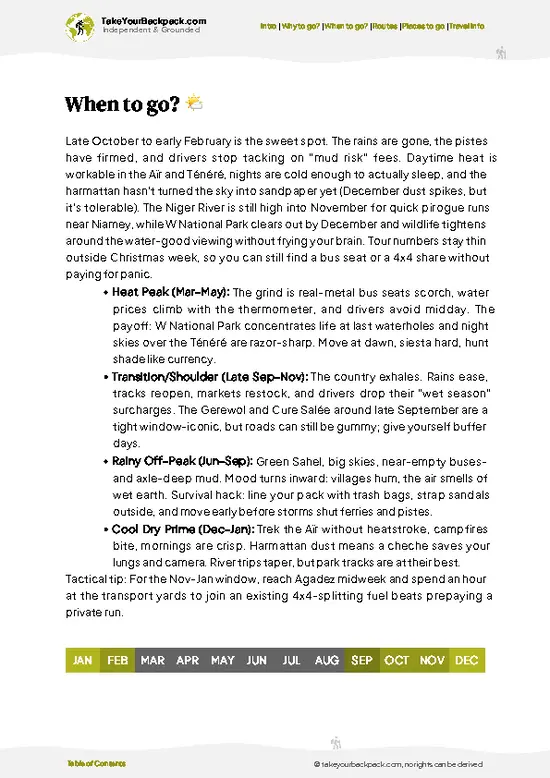
🌤️ When to go?When is the celebration of Festival de l’Aïr?


  • Topic: Weather – The Festival de l’Aïr happens in the dry season, roughly November to February. This is your window to dodge the brutal rains that turn roads into mud traps and kill your vibe. Expect clear skies and dust, not mudslides.

  • Topic: Temperature – Days hover around 25-30°C (77-86°F), perfect for trekking without frying your skin. Nights can dip to 10°C (50°F), so pack layers. Avoid the scorching 40°C+ heat of the summer months; it’s a stamina drain.

  • Topic: Daylight Hours – You get about 11 to 12 hours of daylight, enough to squeeze in long hikes and festival events without rushing. Early sunsets mean you’ll want a headlamp or flashlight for after-dark navigation.

  • Topic: Crowds – The festival draws a mix of locals and adventurous travelers, but it’s not a crush-fest. Arriving
read more 👉

  • Topic: Weather – The Festival de l’Aïr happens in the dry season, roughly November to February. This is your window to dodge the brutal rains that turn roads into mud traps and kill your vibe. Expect clear skies and dust, not mudslides.

  • Topic: Temperature – Days hover around 25-30°C (77-86°F), perfect for trekking without frying your skin. Nights can dip to 10°C (50°F), so pack layers. Avoid the scorching 40°C+ heat of the summer months; it’s a stamina drain.

  • Topic: Daylight Hours – You get about 11 to 12 hours of daylight, enough to squeeze in long hikes and festival events without rushing. Early sunsets mean you’ll want a headlamp or flashlight for after-dark navigation.

  • Topic: Crowds – The festival draws a mix of locals and adventurous travelers, but it’s not a crush-fest. Arriving early in the season means fewer tourists and better access to authentic experiences before the crowd swells.

  • Topic: Seasonal Activities – This is prime time for camel treks, traditional music, and market bartering. Outside these months, many cultural activities slow down or pause, so timing your visit here maximizes your engagement.

  • Topic: Price Fluctuations – Expect prices to spike during the festival’s peak days. Booking accommodations and transport early can save you from last-minute surges. Off-season travel might be cheaper but risks missing the festival’s core energy.


Pro-tip: Lock in your trip for late November to early December to catch the festival’s full pulse with manageable crowds, solid weather, and wallet-friendly rates before the peak crush hits.


source: climatestotravel.comJANJanuary: highly recommended for travelingFEBFebruary: highly recommended for travelingMARMarch: not recommended for travelingAPRApril: not recommended for travelingMAYMay: not recommended for travelingJUNJune: not recommended for travelingJULJuly: not recommended for travelingAUGAugust: not recommended for travelingSEPSeptember: not recommended for travelingOCTOctober: not recommended for travelingNOVNovember: highly recommended for travelingDECDecember: highly recommended for traveling

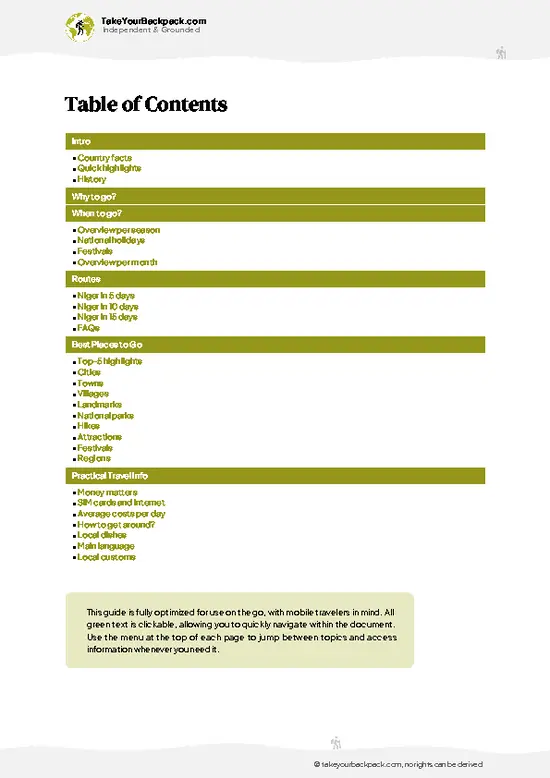
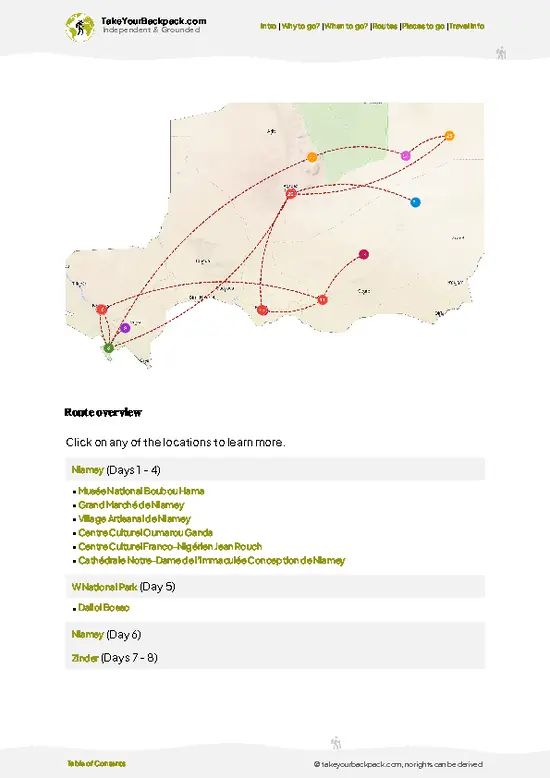
✈️ The backpacker research shortcutNiger Travel Guide

An offline-friendly backpacking guide with optimized travel routes, ranked highlights, transport advice, and the best areas to stay.
example page 0 from our offline Travel Guide for Niger
example page 1 from our offline Travel Guide for Niger
example page 2 from our offline Travel Guide for Niger
example page 3 from our offline Travel Guide for Niger
example page 4 from our offline Travel Guide for Niger
example page 5 from our offline Travel Guide for Niger
example page 6 from our offline Travel Guide for Niger
example page 7 from our offline Travel Guide for Niger
The digital guide (284 pages) contains:
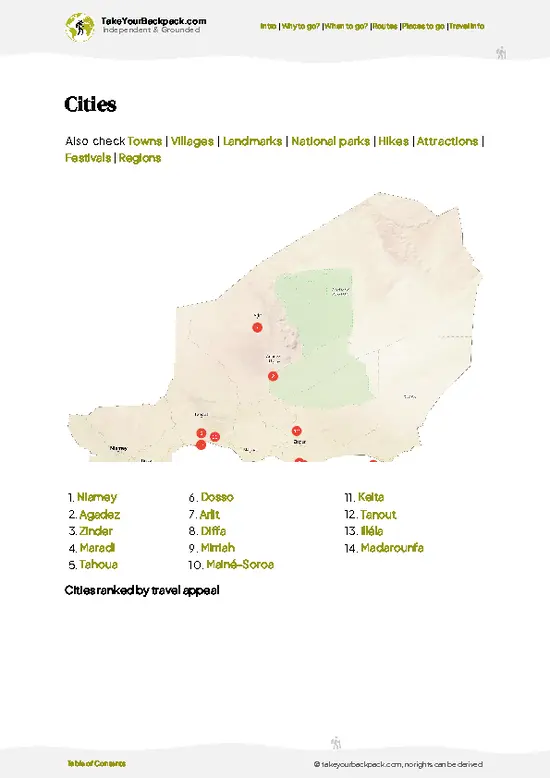
67 highlights, ranked by travel appeal
Optimized 5, 10 & 15-day travel routes
Cities, national parks, landmarks, beaches
How to get around
Offline-friendly for travel without Wi-Fi
👉 Click to see all 30+ guide features

📅 Plan smarter in minutes, not weeks
Month by month travel advice
Festivals & national holidays
Budget expectations

🗺️ Go to the right places, skip the overrated ones
Honest pros & cons of destinations
Top hikes, parks & viewpoints
Lesser-known places most travelers miss
Clear “worth it vs skip it” guidance

🛏️ Travel smoothly without rookie mistakes
Best areas to stay
Transport systems explained simply
Common scams & safety advice
SIM cards, money & practical tips

🌍 Understand the country, not just visit it
Culture & traditions
52 Essential phrases & customs
Festivals worth planning around
Traveler-friendly historical context
Insights that make places more meaningful

📱 Built for real travel conditions
Fully downloadable PDF
Works completely offline
Optimized for phone use
Useful in remote areas & buses
Everything in one place
Save weeks of stressful planning
Get instant access to your full guide. 30‑day money-back guarantee.
+ Add another guide for just US$7.80

By proceeding you agree to our terms.
Sent to your inbox immediately after payment • 100% Secure Checkout
Best Backpacking Travel Advisor 2025 tourism awardBest Backpacking
Travel Advisor
2025
What others say about Take Your Backpack Guides:
⭐⭐⭐⭐⭐
Fantastic, amazing amount of information!
⭐⭐⭐⭐⭐
My goodness this is amazing, it's what I've been looking for hats off too you!
⭐⭐⭐⭐⭐
I think this is absolutely BRILLIANT
⭐⭐⭐⭐
Very complete and informative. It's still missing places, but I gotta to commend you
⭐⭐⭐⭐⭐
This is truly amazing, thank you, can't wait to explore it with my kids!
⭐⭐⭐⭐⭐
Awesome resource, thank you!
⭐⭐⭐⭐⭐
This is amazing! Can't wait to explore the ones I haven't seen
⭐⭐⭐⭐
I love this! Well done, great idea.
⭐⭐⭐⭐⭐
Thanks for taking the time to make this gem!
⭐⭐⭐⭐⭐
This might be the best website I've ever seen.
⭐⭐⭐⭐⭐
Congratulations, and thank you so much for your work; it's incredibly valuable.
⭐⭐⭐⭐
In all seriousness I think you did a great job pointing out the important spots
⭐⭐⭐⭐⭐
10/10 very good
⭐⭐⭐⭐⭐
As someone who's only just starting to visit regularly this is awesome, thank you.
⭐⭐⭐⭐
Thank you very much! I'm going to visit my dad, it's going to be very useful!
⭐⭐⭐⭐⭐
This is really cool! We'll be travelling for the first time and this definitely come in handy.
⭐⭐⭐⭐⭐
You are now our minister of culture, congratulations 👨‍💼
⭐⭐⭐⭐⭐
Just wanted to tell you that this is a pearl! Going to follow your recommendations.
⭐⭐⭐⭐⭐
This is so cool. I'll definitely be using the resource for my travels soon.
⭐⭐⭐⭐⭐
This is very impressive! Good work.
⭐⭐⭐⭐⭐
This is an amazing and informative site. Very well done!

🛏️ Where to stay?Best areas and accommodation options

When you’re gearing up for the Festival de l’Aïr in Niger, your choice of where to stay can make or break your experience. Focus on the vibrant neighborhoods of Agadez and the surrounding areas. These spots buzz with energy and camaraderie, perfect for solo travelers and budget backpackers alike.

Agadez itself is a cultural hub. You’ll find a mix of locals and fellow travelers, making it easy to connect. Look for accommodations near the main square; it’s a hotspot for festival activities and a great place to soak in the atmosphere. The streets pulse with life, and you’ll want to be in the thick … read more 👉
When you’re gearing up for the Festival de l’Aïr in Niger, your choice of where to stay can make or break your experience. Focus on the vibrant neighborhoods of Agadez and the surrounding areas. These spots buzz with energy and camaraderie, perfect for solo travelers and budget backpackers alike.

Agadez itself is a cultural hub. You’ll find a mix of locals and fellow travelers, making it easy to connect. Look for accommodations near the main square; it’s a hotspot for festival activities and a great place to soak in the atmosphere. The streets pulse with life, and you’ll want to be in the thick of it.

Consider the outskirts of Agadez too. Places like the nearby villages offer a more laid-back vibe. You can still tap into the festival spirit while enjoying a quieter retreat after a day of exploration. Just be mindful of transportation options; ensure you have a reliable way to get back and forth.

Safety is key. Stick to well-trodden paths and engage with locals. They’re often your best resource for navigating the festival and avoiding any hidden costs. This way, you’ll keep your energy and budget intact for the unforgettable moments that await.

👛 Costs (as of 3 September 2026)Travel costs and budget guide for de l’Aïr

The Festival de l’Aïr in Niger is a vibrant celebration of culture and music, but navigating the costs can be tricky. Here’s a breakdown to keep your budget in check while you soak in the experience.
  • Festival Tickets: Expect to pay around €10 to €30 for a ticket. Prices can vary based on the day and events you want to attend. Grab your tickets early to avoid last-minute price hikes.
  • Accommodation: Options range from basic guesthouses to mid-range hotels. Budget about €15 to €50 per night. The closer you are to the festival grounds, the more you might pay, but it saves you energy on transport.
  • Local Transport: Getting around can be done via shared taxis or buses. Budget around €2 to €10 per trip, depending on distance. If you’re planning to explore beyond the festival, consider setting aside a
read more 👉
The Festival de l’Aïr in Niger is a vibrant celebration of culture and music, but navigating the costs can be tricky. Here’s a breakdown to keep your budget in check while you soak in the experience.
  • Festival Tickets: Expect to pay around €10 to €30 for a ticket. Prices can vary based on the day and events you want to attend. Grab your tickets early to avoid last-minute price hikes.
  • Accommodation: Options range from basic guesthouses to mid-range hotels. Budget about €15 to €50 per night. The closer you are to the festival grounds, the more you might pay, but it saves you energy on transport.
  • Local Transport: Getting around can be done via shared taxis or buses. Budget around €2 to €10 per trip, depending on distance. If you’re planning to explore beyond the festival, consider setting aside a bit more for longer rides.
  • Food & Drinks: Street food is your best friend here. You can eat well for about €5 to €15 per day. Local dishes are not only affordable but also a highlight of the experience. Just keep an eye on hygiene to avoid any surprises.
  • Miscellaneous Expenses: This includes souvenirs, tips, and any unexpected costs. Set aside around €20 to €50. It’s always good to have a buffer for those spontaneous moments that make travel memorable.

With this breakdown, you can focus on enjoying the festival without the stress of hidden costs. Keep your energy up and your budget balanced!
⚠️ Prices can change and everyone travels differently, so take this as a rough guide. Hope it helps you plan your adventure!

🍲 FoodLocal Flavors for Backpackers

At the Festival de l’Aïr in Niger, food and drink are not just sustenance; they’re a vibrant part of the experience. Expect to find local specialties like djerma, a savory stew made with meat and vegetables, served over a mound of fluffy rice. Don’t miss out on fufu, a starchy staple that pairs perfectly with the rich flavors of the region. Street stalls buzz with energy, offering grilled meats and spicy kebabs that sizzle and beckon you closer.

For drinks, try the bissap, a refreshing hibiscus tea that’s both tart and sweet, or kunu, a traditional millet-based beverage that’s a festival favorite. These drinks are not just thirst-quenchers; they’re a taste of local culture.

When diving into the food scene, remember the etiquette: sharing is key. If someone offers you a bite, accept it graciously; … read more 👉
At the Festival de l’Aïr in Niger, food and drink are not just sustenance; they’re a vibrant part of the experience. Expect to find local specialties like djerma, a savory stew made with meat and vegetables, served over a mound of fluffy rice. Don’t miss out on fufu, a starchy staple that pairs perfectly with the rich flavors of the region. Street stalls buzz with energy, offering grilled meats and spicy kebabs that sizzle and beckon you closer.

For drinks, try the bissap, a refreshing hibiscus tea that’s both tart and sweet, or kunu, a traditional millet-based beverage that’s a festival favorite. These drinks are not just thirst-quenchers; they’re a taste of local culture.

When diving into the food scene, remember the etiquette: sharing is key. If someone offers you a bite, accept it graciously; it’s a sign of friendship. Lines can be long, so patience is essential. Cash is king here; many stalls don’t accept cards, so stock up on local currency. Serving sizes can vary, so don’t hesitate to ask for recommendations on what to try. Embrace the chaos, savor the flavors, and let the festival fuel your adventure!

FAQTraveler FAQ

Festival de l’Aïr takes place annually in December, usually lasting about 3 days. The exact dates can vary slightly each year depending on local scheduling.
The cost to attend Festival de l’Aïr is generally low or free, as it is a community-focused cultural event. However, some specific activities or performances may have small fees around 1,000 to 2,000 CFA francs.
No, you typically do not need tickets in advance for Festival de l’Aïr. Entry is usually open to the public, but arriving early is recommended to secure a good spot for popular events.
⚠️ Things can change over time, so always validate details locally before you go.

Other Nigerien festivals near de l’Aïr

Explore more nearby:


💡 Not sure where to go next?
Create a personalized itinerary for Niger including de l’Aïr and the places that fit your trip.

Generate my itinerary

👉 Discover all festivals

Or checkout all Niger has to offer (think cities, towns, villages, national parks, hikes, beaches, festivals)
Country photo of Niger

We 💚 feedbackIs it worth it?

The Festival de l’Aïr is a whirlwind of sound and spirit. You’ll feel the pulse of the Tuareg culture in every beat. Expect a surprise: the late-night jam sessions that spill into dawn, where locals and travelers blend seamlessly. But here’s the catch—bring cash. ATMs are scarce, and vendors don’t always take cards. Embrace the chaos, soak in the music, and let the desert wind guide you. This isn’t just a festival; it’s a celebration of life.

✍️ Help improve this page!
The information on this page is based on in-depth research, insights shared by experienced travelers, and feedback from the local travel community in Niger. While every effort is made to keep the information accurate and current, conditions can change — so if you spot anything incorrect or outdated, please get in touch.


🙋‍♂️ Give feedback

👋 Meet the founderWho’s Behind Take Your Backpack?

Johan, backpacker and founder of TakeYourBackpackHi, I’m Johan (Netherlands 🇳🇱), the creator of TakeYourBackpack. Over the past decade, I’ve backpacked through 80+ countries across six continents, gaining extensive experience with independent travel, long-term trips, and overland routes.

This site is built on a combination of firsthand travel experience and carefully curated insights from other backpackers. Many guides are based on places I’ve personally visited, while others bring together tips, observations, and practical advice shared by trusted travelers I’ve met along the way.

The goal is to provide realistic, experience-driven guidance — not generic itineraries — so you can explore destinations with better context, clearer expectations, and more confidence.

Get full Niger guide •
Instant download • 67 highlights • Full Offline guide