×

Niger🇳🇪 | festivalsFIMA (Festival International de la Mode Africaine)African designers, runway shows, contemporary fashion | things to do and best time to go

Explore Bianou FestivalExplore Festival de l’Aïr

Backpacking in FIMA ( International de la Mode Africaine)
🏆 Top pickfestival ranked #3
By Johan Kruseman 🇳🇱 | Updated September 3, 2026

Most travel blogs gloss over this, but here’s the curveball: FIMA isn’t just a fashion show—it’s a kinetic, open-air collision of runway, live music, and Saharan grit, where the sand sometimes whips through the tents and models strut alongside Tuareg guitarists. FIMA (Festival International de la Mode Africaine) unfolds on the outskirts of Niamey, Niger’s capital, often in makeshift venues that feel more like a desert crossroads than a Parisian catwalk. This is not a sanitized, velvet-rope affair; you’ll find backpackers, local artisans, and international designers shoulder-to-shoulder, all drawn by the festival’s raw energy and pan-African creativity. Expect everything from pulsing Afrobeat to traditional nomad rhythms, with a crowd that’s equal parts style-hungry students, global press, and curious travelers. FIMA runs for several days, and if you crave authenticity over air-conditioning, it’s a rare chance to see fashion and music fuse in a place where nothing is staged and every detail is earned.

Discover everything you want to know in the 📖 Niger Travel Guide.
Safety warning

The current risk level for Niger is high. Check the advice before going.


Get your Niger guide
67 ranked highlights, routes & tips, works offline (284 pages)
Loading the map 🌍
CLICK TO FILTER
cities
towns
villages
landmarks
national parks
hikes
attractions
festivals
regions
SHOW COUNTRY’S BESTSHOW ALL

✨ Why go?
Ranked #3 festival in Niger
Reasons people choose to celebrate the here

Backpackers flock to FIMA (Festival International de la Mode Africaine) in Niger for a burst of social energy that transforms the landscape. This isn’t just a fashion show; it’s a temporary community where creativity and culture collide. You’ll find yourself immersed in local traditions, witnessing how fashion becomes a canvas for storytelling.

Planning your route around FIMA means you’re not just passing through; you’re diving deep into the heart of Niger. The festival is a cultural immersion that’s often more affordable than similar events elsewhere, allowing you to stretch your budget while soaking up rich experiences.

Plus, it fits seamlessly into longer travel plans. After FIMA, you can explore the breathtaking landscapes of the Sahara or connect with other travelers who share your … read more 👉
Backpackers flock to FIMA (Festival International de la Mode Africaine) in Niger for a burst of social energy that transforms the landscape. This isn’t just a fashion show; it’s a temporary community where creativity and culture collide. You’ll find yourself immersed in local traditions, witnessing how fashion becomes a canvas for storytelling.

Planning your route around FIMA means you’re not just passing through; you’re diving deep into the heart of Niger. The festival is a cultural immersion that’s often more affordable than similar events elsewhere, allowing you to stretch your budget while soaking up rich experiences.

Plus, it fits seamlessly into longer travel plans. After FIMA, you can explore the breathtaking landscapes of the Sahara or connect with other travelers who share your passion for adventure. This festival isn’t just a stop; it’s a launchpad for unforgettable moments that fuel your journey. Embrace the challenge, and let the energy of FIMA propel you forward!
Want to include FIMA (Festival International de la Mode Africaine) in your Niger route?
Create a personalized Niger itinerary that includes FIMA (Festival International de la Mode Africaine) and the places that fit your trip — based on your travel style, budget, and available time. Get your route in seconds.

Generate my trip

💡 HighlightsThe experiences that define the visit

  • Runways Where Tradition Meets Couture — Shows deliberately mash up haute fashion and age-old African dress: think modern silhouettes cut from indigo, bogolanfini or hand-woven cloth, theatrical staging and models who make heritage feel brand-new. It’s the core spectacle — serious design craft presented with theatrical flair.
  • Striking Outdoor Settings (Riverfront, City Squares, Desert Vibes) — FIMA often spills outside conventional halls, so you get evening shows with sunset light, open-air catwalks and a palpable sense of place. The combination of heat, dust, river breeze and wide skies gives everything a raw, cinematic quality you won’t get in an indoor fashion week.
  • Living Craftsmanship: Textile Demos & Artisan Market — Artisans demo dyeing, weaving, embroidery and leatherwork right
read more 👉
  • Runways Where Tradition Meets Couture — Shows deliberately mash up haute fashion and age-old African dress: think modern silhouettes cut from indigo, bogolanfini or hand-woven cloth, theatrical staging and models who make heritage feel brand-new. It’s the core spectacle — serious design craft presented with theatrical flair.
  • Striking Outdoor Settings (Riverfront, City Squares, Desert Vibes) — FIMA often spills outside conventional halls, so you get evening shows with sunset light, open-air catwalks and a palpable sense of place. The combination of heat, dust, river breeze and wide skies gives everything a raw, cinematic quality you won’t get in an indoor fashion week.
  • Living Craftsmanship: Textile Demos & Artisan Market — Artisans demo dyeing, weaving, embroidery and leatherwork right at the festival. You can watch a garment come together, buy one-off pieces, and chat with makers — which is far more memorable than buying a mass-produced souvenir.
  • Music, Dance and Street Parades — Fashion here sits alongside loud drumming, call-and-response singing and energetic processions. Traditional performers and contemporary bands keep the tempo up, so runway moments bleed into spontaneous streetside celebrations.
  • Emerging Designers, Workshops and Cultural Exchange — FIMA is as much about networking and learning as it is about shows: portfolio reviews, mentor sessions, and competitions spotlight young talent across Africa. It’s a place where ideas, techniques and sustainable approaches to traditional craft get traded — great if you like seeing where fashion will be next.
Spotted a mistake or missing something? Contact us.
🌤️ When to go?When is the celebration of FIMA (Festival International de la Mode Africaine)?


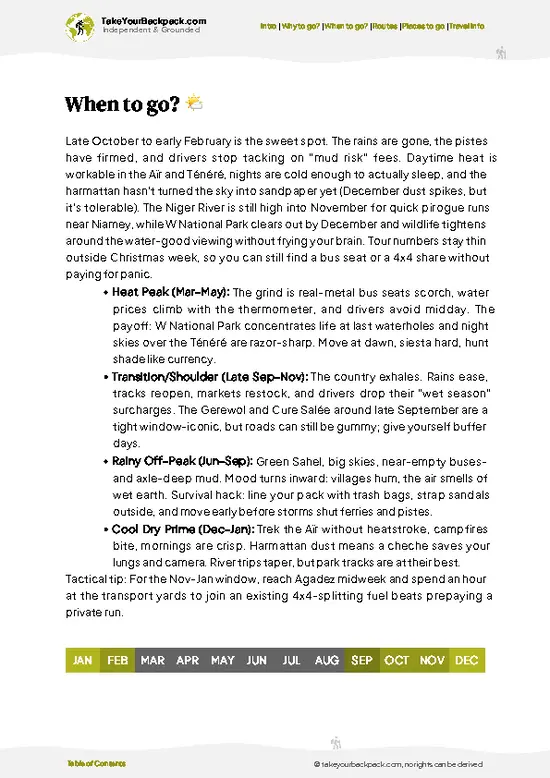
  • Topic: Weather – Aim for late October to early November. Niger’s scorching heat drops from 38–42°C (100–108°F) in the dry season to a more bearable 28–32°C (82–90°F). This window avoids the brutal highs and the rainy season’s mud and humidity.

  • Topic: Temperature – Daytime temps hover around a comfortable 28°C (82°F), perfect for long festival days without frying your energy. Nights can dip to 18°C (64°F), so pack a light layer for evening events.

  • Topic: Daylight Hours – Expect roughly 11 to 12 hours of daylight, enough to soak in the festival’s vibrant runway shows and street scenes without rushing or losing momentum.

  • Topic: Crowds – The festival draws a mix of locals and international fashion buffs. Arriving early in the season means fewer tourists, better access to events, and a
read more 👉

  • Topic: Weather – Aim for late October to early November. Niger’s scorching heat drops from 38–42°C (100–108°F) in the dry season to a more bearable 28–32°C (82–90°F). This window avoids the brutal highs and the rainy season’s mud and humidity.

  • Topic: Temperature – Daytime temps hover around a comfortable 28°C (82°F), perfect for long festival days without frying your energy. Nights can dip to 18°C (64°F), so pack a light layer for evening events.

  • Topic: Daylight Hours – Expect roughly 11 to 12 hours of daylight, enough to soak in the festival’s vibrant runway shows and street scenes without rushing or losing momentum.

  • Topic: Crowds – The festival draws a mix of locals and international fashion buffs. Arriving early in the season means fewer tourists, better access to events, and a more authentic vibe.

  • Topic: Seasonal Activities – Outside FIMA, the dry season offers desert excursions and cultural tours. Timing your visit here lets you layer in these adventures without weather disruptions.

  • Topic: Price Fluctuations – Festival time nudges prices up, but booking early locks in better rates on lodging and transport. Avoid last-minute hikes by securing your spot well ahead.


Pro-tip: Lock your trip for late October—beat the heat, dodge the crowds, and stretch your budget so you can focus on the festival’s pulse, not the pitfalls.


source: climatestotravel.comJANJanuary: not recommended for travelingFEBFebruary: not recommended for travelingMARMarch: not recommended for travelingAPRApril: not recommended for travelingMAYMay: not recommended for travelingJUNJune: not recommended for travelingJULJuly: not recommended for travelingAUGAugust: not recommended for travelingSEPSeptember: not recommended for travelingOCTOctober: excellent for travelingNOVNovember: not recommended for travelingDECDecember: not recommended for traveling

✈️ The backpacker research shortcutNiger Travel Guide

An offline-friendly backpacking guide with optimized travel routes, ranked highlights, transport advice, and the best areas to stay.
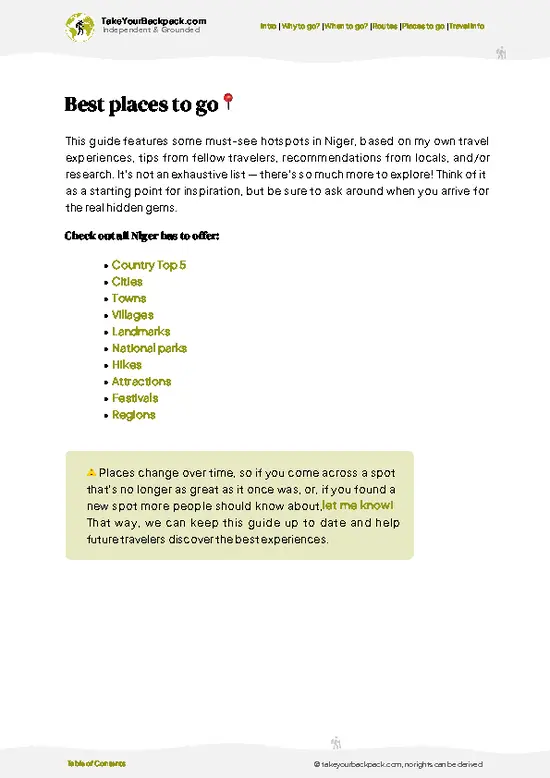
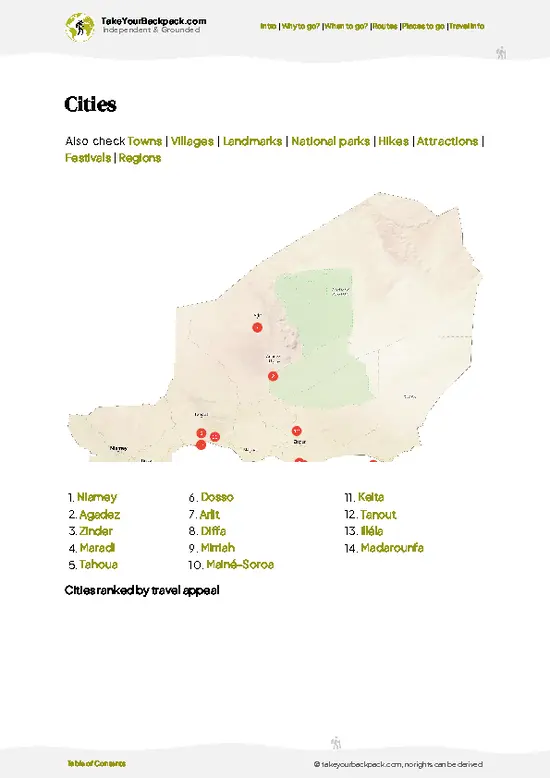
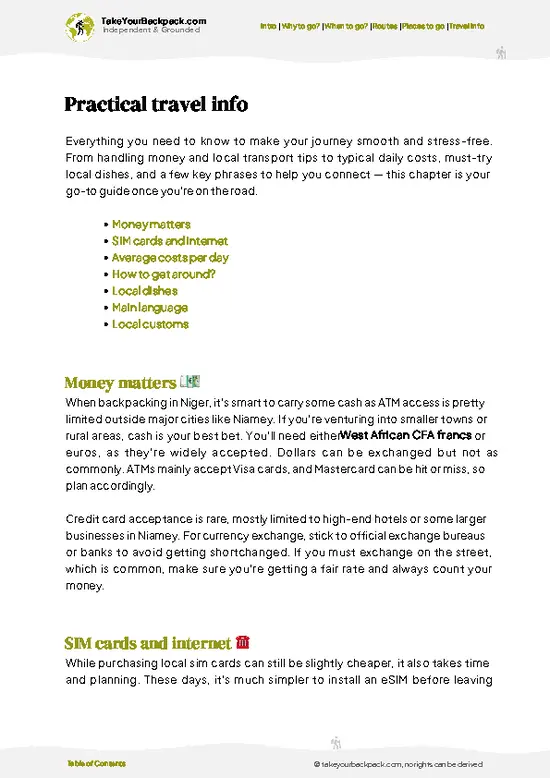
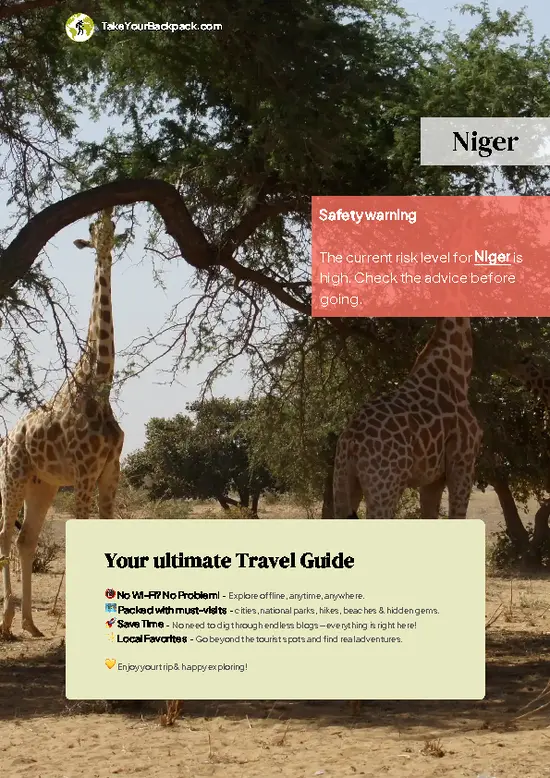
example page 0 from our offline Travel Guide for Niger
example page 1 from our offline Travel Guide for Niger
example page 2 from our offline Travel Guide for Niger
example page 3 from our offline Travel Guide for Niger
example page 4 from our offline Travel Guide for Niger
example page 5 from our offline Travel Guide for Niger
example page 6 from our offline Travel Guide for Niger
example page 7 from our offline Travel Guide for Niger
The digital guide (284 pages) contains:
67 highlights, ranked by travel appeal
Optimized 5, 10 & 15-day travel routes
Cities, national parks, landmarks, beaches
How to get around
Offline-friendly for travel without Wi-Fi
👉 Click to see all 30+ guide features

📅 Plan smarter in minutes, not weeks
Month by month travel advice
Festivals & national holidays
Budget expectations

🗺️ Go to the right places, skip the overrated ones
Honest pros & cons of destinations
Top hikes, parks & viewpoints
Lesser-known places most travelers miss
Clear “worth it vs skip it” guidance

🛏️ Travel smoothly without rookie mistakes
Best areas to stay
Transport systems explained simply
Common scams & safety advice
SIM cards, money & practical tips

🌍 Understand the country, not just visit it
Culture & traditions
52 Essential phrases & customs
Festivals worth planning around
Traveler-friendly historical context
Insights that make places more meaningful

📱 Built for real travel conditions
Fully downloadable PDF
Works completely offline
Optimized for phone use
Useful in remote areas & buses
Everything in one place
Save weeks of stressful planning
Get instant access to your full guide. 30‑day money-back guarantee.
+ Add another guide for just US$7.80

By proceeding you agree to our terms.
Sent to your inbox immediately after payment • 100% Secure Checkout
Best Backpacking Travel Advisor 2025 tourism awardBest Backpacking
Travel Advisor
2025
What others say about Take Your Backpack Guides:
⭐⭐⭐⭐⭐
Fantastic, amazing amount of information!
⭐⭐⭐⭐⭐
My goodness this is amazing, it's what I've been looking for hats off too you!
⭐⭐⭐⭐⭐
I think this is absolutely BRILLIANT
⭐⭐⭐⭐
Very complete and informative. It's still missing places, but I gotta to commend you
⭐⭐⭐⭐⭐
This is truly amazing, thank you, can't wait to explore it with my kids!
⭐⭐⭐⭐⭐
Awesome resource, thank you!
⭐⭐⭐⭐⭐
This is amazing! Can't wait to explore the ones I haven't seen
⭐⭐⭐⭐
I love this! Well done, great idea.
⭐⭐⭐⭐⭐
Thanks for taking the time to make this gem!
⭐⭐⭐⭐⭐
This might be the best website I've ever seen.
⭐⭐⭐⭐⭐
Congratulations, and thank you so much for your work; it's incredibly valuable.
⭐⭐⭐⭐
In all seriousness I think you did a great job pointing out the important spots
⭐⭐⭐⭐⭐
10/10 very good
⭐⭐⭐⭐⭐
As someone who's only just starting to visit regularly this is awesome, thank you.
⭐⭐⭐⭐
Thank you very much! I'm going to visit my dad, it's going to be very useful!
⭐⭐⭐⭐⭐
This is really cool! We'll be travelling for the first time and this definitely come in handy.
⭐⭐⭐⭐⭐
You are now our minister of culture, congratulations 👨‍💼
⭐⭐⭐⭐⭐
Just wanted to tell you that this is a pearl! Going to follow your recommendations.
⭐⭐⭐⭐⭐
This is so cool. I'll definitely be using the resource for my travels soon.
⭐⭐⭐⭐⭐
This is very impressive! Good work.
⭐⭐⭐⭐⭐
This is an amazing and informative site. Very well done!

🛏️ Where to stay?Where staying makes the most sense

When you’re heading to the Festival International de la Mode Africaine (FIMA) in Niger, your choice of where to stay can make or break your experience. Aim for the heart of Niamey, where the energy buzzes and the culture pulses.

The neighborhoods around the Grand Marché are a solid bet. You’ll find a mix of budget-friendly guesthouses and vibrant hostels that attract fellow backpackers. This area is not just about affordability; it’s a social hub. You can swap stories over a meal or join impromptu gatherings, all while being steps away from the festival action.

Consider the area near the Niger … read more 👉
When you’re heading to the Festival International de la Mode Africaine (FIMA) in Niger, your choice of where to stay can make or break your experience. Aim for the heart of Niamey, where the energy buzzes and the culture pulses.

The neighborhoods around the Grand Marché are a solid bet. You’ll find a mix of budget-friendly guesthouses and vibrant hostels that attract fellow backpackers. This area is not just about affordability; it’s a social hub. You can swap stories over a meal or join impromptu gatherings, all while being steps away from the festival action.

Consider the area near the Niger River too. It offers a more laid-back vibe, with spots that provide stunning views and a chance to unwind after a day of fashion and festivities. Just keep your wits about you; while it’s generally safe, being aware of your surroundings is key.

Stay flexible and open to new connections. The right spot will not only save you money but also fuel your adventure with camaraderie and local flavor. Embrace the journey; it’s all part of the festival experience!

👛 Costs (as of 3 September 2026)Typical daily expenses

The Festival International de la Mode Africaine (FIMA) in Niger is an exhilarating experience, but it’s essential to navigate the costs wisely to keep your energy and budget intact. Here’s a breakdown of what to expect:
  • Festival Tickets: Expect to pay between €10 to €30 for a single-day pass. Multi-day passes can range from €50 to €100. Prices vary based on seating and access to special events, so check early to snag the best deals.
  • Accommodation: Options vary widely. Budget travelers can find hostels or guesthouses for around €15 to €30 per night. Mid-range hotels typically charge €40 to €80. For a splurge, upscale hotels can go from €100 to €200. Book ahead to avoid last-minute price hikes.
  • Local Transport: Public transport is affordable. Buses and shared taxis usually cost between €1 to €5
read more 👉
The Festival International de la Mode Africaine (FIMA) in Niger is an exhilarating experience, but it’s essential to navigate the costs wisely to keep your energy and budget intact. Here’s a breakdown of what to expect:
  • Festival Tickets: Expect to pay between €10 to €30 for a single-day pass. Multi-day passes can range from €50 to €100. Prices vary based on seating and access to special events, so check early to snag the best deals.
  • Accommodation: Options vary widely. Budget travelers can find hostels or guesthouses for around €15 to €30 per night. Mid-range hotels typically charge €40 to €80. For a splurge, upscale hotels can go from €100 to €200. Book ahead to avoid last-minute price hikes.
  • Local Transport: Public transport is affordable. Buses and shared taxis usually cost between €1 to €5 for short distances. If you prefer more comfort, consider renting a car, which can range from €30 to €60 per day, plus fuel costs.
  • Food & Drinks: Street food is a budget-friendly delight, with meals costing around €2 to €5. Restaurants can range from €10 to €25 for a full meal. Factor in extra for drinks, as local beverages might add another €1 to €3 each.
  • Miscellaneous Expenses: Always budget for souvenirs, entry fees to other attractions, or unexpected costs. Set aside around €20 to €50 for these extras. It’s a good buffer to keep your adventure stress-free.

Planning ahead and understanding these costs will help you focus on the vibrant energy of FIMA without breaking the bank.
⚠️ Prices can change and everyone travels differently, so take this as a rough guide. Hope it helps you plan your adventure!

🍲 FoodLocal Cuisine & Drinks

At the FIMA in Niger, food and drink are as vibrant as the fashion on display. Dive into local specialties like djerma, a spicy stew made with meat and vegetables, or fufu, a starchy delight that pairs perfectly with rich sauces. Street stalls buzz with energy, serving up grilled skewers of marinated meat that sizzle with flavor. Don’t miss out on bissap, a refreshing hibiscus drink that’s both tart and sweet, perfect for cooling off in the heat.

For authenticity, try the tubani, a traditional dish of rice and sauce that embodies the essence of Nigerien cuisine. It’s hearty, filling, and a true taste of the culture. Be prepared to share; it’s common to pass dishes around, creating a communal vibe that enhances the experience.

Lines can get long, so embrace the wait—it’s part of the festival’s … read more 👉
At the FIMA in Niger, food and drink are as vibrant as the fashion on display. Dive into local specialties like djerma, a spicy stew made with meat and vegetables, or fufu, a starchy delight that pairs perfectly with rich sauces. Street stalls buzz with energy, serving up grilled skewers of marinated meat that sizzle with flavor. Don’t miss out on bissap, a refreshing hibiscus drink that’s both tart and sweet, perfect for cooling off in the heat.

For authenticity, try the tubani, a traditional dish of rice and sauce that embodies the essence of Nigerien cuisine. It’s hearty, filling, and a true taste of the culture. Be prepared to share; it’s common to pass dishes around, creating a communal vibe that enhances the experience.

Lines can get long, so embrace the wait—it’s part of the festival’s rhythm. Cash is king here; many stalls don’t accept cards, so stock up before you dive in. Serving sizes are generous, so pace yourself and savor every bite. This isn’t just a meal; it’s a celebration of flavors and community.

FAQTraveler FAQ

FIMA takes place every two years, usually in January. The festival lasts about 4 days, showcasing African fashion and culture in Niamey, Niger.
The cost to attend FIMA varies, but entry fees typically range from 5,000 to 10,000 CFA francs (approximately 8 to 16 USD). Additional costs may apply for special events or VIP access.
Yes, tickets are recommended in advance, especially for popular shows and events during FIMA. Buying tickets early helps avoid long lines and ensures entry to specific fashion shows.
⚠️ Things can change over time, so always validate details locally before you go.

Other Nigerien festivals near FIMA ( International de la Mode Africaine)

Explore more nearby:


💡 Not sure where to go next?
Create a personalized itinerary for Niger including FIMA ( International de la Mode Africaine) and the places that fit your trip.

Generate my itinerary

👉 Discover all festivals

Or checkout all Niger has to offer (think cities, towns, villages, national parks, hikes, beaches, festivals)
Country photo of Niger

We 💚 feedbackParting advice and final tips

The vibe at FIMA is electric—imagine a kaleidoscope of colors and cultures colliding in a celebration of creativity. You’ll be swept up in the energy, but don’t underestimate the heat; stay hydrated and pace yourself. The best surprise? The local designers’ raw talent will blow you away. Just remember, accommodations can get pricey during the festival, so book early to keep your budget intact for those must-have pieces. Embrace the chaos; it’s where the magic happens.

✍️ Help improve this page!
The information on this page is based on in-depth research, insights shared by experienced travelers, and feedback from the local travel community in Niger. While every effort is made to keep the information accurate and current, conditions can change — so if you spot anything incorrect or outdated, please get in touch.


🙋‍♂️ Give feedback

👋 Meet the founderWho’s Behind Take Your Backpack?

Johan, backpacker and founder of TakeYourBackpackHi, I’m Johan (Netherlands 🇳🇱), the creator of TakeYourBackpack. Over the past decade, I’ve backpacked through 80+ countries across six continents, gaining extensive experience with independent travel, long-term trips, and overland routes.

This site is built on a combination of firsthand travel experience and carefully curated insights from other backpackers. Many guides are based on places I’ve personally visited, while others bring together tips, observations, and practical advice shared by trusted travelers I’ve met along the way.

The goal is to provide realistic, experience-driven guidance — not generic itineraries — so you can explore destinations with better context, clearer expectations, and more confidence.

Get full Niger guide •
Instant download • 67 highlights • Full Offline guide