×

Niger🇳🇪 | attractionsPalais du Sultan d’Agadezadobe palace, ceremonial courtyard, sultan’s residence | things to do and best time to go

Explore Musée Régional d’AgadezExplore Grande Mosquée d’Agadez

Backpacking in Palais du Sultan d’Agadez
🏆 Top pickattraction ranked #2
By Johan Kruseman 🇳🇱 | Updated September 3, 2026

Forget the Instagram myth: the Palais du Sultan d’Agadez isn’t some deserted Saharan palace where you’ll wander alone in windswept silence. It’s the beating heart of Agadez, smack in the city’s old quarter, and it’s very much alive—sometimes crowded, always layered with history, and never just a backdrop for your next profile photo. Backpackers come here chasing the legend, but what you actually get is a rare, gritty immersion into Tuareg culture, with the Sultan’s court still active and the mudbrick fortress radiating centuries of power and intrigue. Yes, you’ll pay more than you’d expect for a guided visit, and yes, the logistics of reaching Agadez (deep in northern Niger, on the edge of the Sahara) are a test of patience and wallet. But the payoff? You’re not just ticking off a UNESCO site—you’re stepping into a living institution, where the line between past and present blurs. Compared to Niger’s other attractions, the Palais delivers raw, unfiltered history and a sense of place that’s impossible to fake.

Discover everything you want to know in the 📖 Niger Travel Guide.
Safety warning

The current risk level for Niger is high. Check the advice before going.


Get your Niger guide
67 ranked highlights, routes & tips, works offline (284 pages)
Loading the map 🌍
CLICK TO FILTER
cities
towns
villages
landmarks
national parks
hikes
attractions
festivals
regions
SHOW COUNTRY’S BESTSHOW ALL

✨ Why go?
Ranked #2 attraction in Niger
Reasons people choose to visit here

The Palais du Sultan d’Agadez isn’t some glossy postcard spot where you snap a quick selfie and move on. It’s a raw, living symbol of Niger’s heart and history, standing tall in the desert like a fortress of stories. Backpackers who make the trek here know it’s not about crowds or comfort—it’s about stepping into a place where centuries of Sahelian culture pulse through every mud-brick wall. This palace is iconic because it’s a rare, tangible link to the Sultanate era, a time when Agadez was a crossroads for traders, nomads, and empires.

Sure, it’s not a polished tourist trap with velvet ropes and guided tours in ten languages. The real magic is in the grit: the heat baking the clay, the intricate carvings that have weathered storms and sand, and the locals who still treat the palace as … read more 👉
The Palais du Sultan d’Agadez isn’t some glossy postcard spot where you snap a quick selfie and move on. It’s a raw, living symbol of Niger’s heart and history, standing tall in the desert like a fortress of stories. Backpackers who make the trek here know it’s not about crowds or comfort—it’s about stepping into a place where centuries of Sahelian culture pulse through every mud-brick wall. This palace is iconic because it’s a rare, tangible link to the Sultanate era, a time when Agadez was a crossroads for traders, nomads, and empires.

Sure, it’s not a polished tourist trap with velvet ropes and guided tours in ten languages. The real magic is in the grit: the heat baking the clay, the intricate carvings that have weathered storms and sand, and the locals who still treat the palace as a living part of their identity. For backpackers, it’s a milestone on the Niger route—a checkpoint where history, culture, and the sheer effort of getting there collide. The adrenaline rush isn’t from adrenaline parks but from knowing you’ve touched a piece of Africa’s deep, unfiltered soul. This isn’t just a stop; it’s a moment that rewires your sense of place and time.
Want to include Palais du Sultan d’Agadez in your Niger route?
Create a personalized Niger itinerary that includes Palais du Sultan d’Agadez and the places that fit your trip — based on your travel style, budget, and available time. Get your route in seconds.

Generate my trip

💡 HighlightsTop highlights of Palais du Sultan d’Agadez

The Grand Entrance and Courtyard
Forget the filtered photos—this isn’t some pristine, empty relic. The entrance is a living, breathing portal into centuries of Tuareg power. The mudbrick façade is battered by Saharan winds, and the courtyard is often alive with local kids darting between shadows. You’ll feel the weight of history, but also the pulse of daily life. The sense of arrival here is real: you’re not just stepping into a monument, you’re stepping into the ongoing story of Agadez.


The Sultan’s Audience Hall
This is the heart of the palace, and it’s not roped off or sanitized for tourists. The audience hall is where the Sultan still receives guests and holds court—yes, the tradition is alive, not just staged for visitors. The walls are thick, the air is cool, and the silence is heavy … read more 👉
The Grand Entrance and Courtyard
Forget the filtered photos—this isn’t some pristine, empty relic. The entrance is a living, breathing portal into centuries of Tuareg power. The mudbrick façade is battered by Saharan winds, and the courtyard is often alive with local kids darting between shadows. You’ll feel the weight of history, but also the pulse of daily life. The sense of arrival here is real: you’re not just stepping into a monument, you’re stepping into the ongoing story of Agadez.


The Sultan’s Audience Hall
This is the heart of the palace, and it’s not roped off or sanitized for tourists. The audience hall is where the Sultan still receives guests and holds court—yes, the tradition is alive, not just staged for visitors. The walls are thick, the air is cool, and the silence is heavy with the kind of authority you can’t fake. If you’re lucky enough to visit when the Sultan is present, you’ll witness a slice of living history that Instagram can’t touch.


The Ornate Wooden Doors
You’ll see doors like these all over the Sahel, but the palace’s are the real deal—massive, hand-carved, and studded with iron. Each one tells a story, with geometric Tuareg motifs and symbols of power. These aren’t just decorative; they’re statements. Run your hand over the wood and you’ll feel the grooves worn by generations. It’s tactile history, not just visual.


The Rooftop Views Over Agadez
Climb the narrow, twisting stairs and you’ll earn a view that’s worth every bead of sweat. The city sprawls below in a patchwork of mudbrick and minarets, with the endless desert pressing in at the edges. This isn’t a panorama for the faint-hearted—the wind can be fierce, and the drop is real—but it’s the best way to grasp Agadez’s role as a Saharan crossroads. At sunset, the light turns everything to gold and ochre. No filter needed.


The Sultan’s Regalia and Artifacts
If you’re allowed into the inner rooms (and that’s a big if—don’t expect guaranteed access), you’ll see robes, swords, and ceremonial objects that aren’t behind glass. These are still in use for festivals and ceremonies. There’s no velvet rope, just the implicit respect of being in a place where tradition isn’t a performance—it’s a lived reality.


The Human Element: Palace Staff and Local Guides
This isn’t a museum with bored docents. The people who work here—often descendants of palace staff—carry stories that don’t make it into guidebooks. If you speak a little French or Hausa, you’ll get anecdotes about sultans past and present, palace intrigue, and the realities of life in Agadez. The real magic is in these unscripted exchanges, not in any official tour.


The Palace During Festival Season
If you time it right, the palace transforms into the epicenter of Agadez’s biggest celebrations—think Cure Salée or the Sultan’s enthronement anniversary. The energy is off the charts: musicians, dancers, Tuareg nobles in full regalia. It’s chaotic, crowded, and absolutely electric. This is the palace at its most alive, and no amount of online hype can prepare you for the sensory overload.
Spotted a mistake or missing something? Contact us.

Things to do near Palais du Sultan d’Agadez

Ratings based on Tripadvisor reviews. When you book through this link, you support our work at no extra cost to you.

🌤️ When to go?When to go for the best experience


  • Weather: The best time to visit the Palais du Sultan d’Agadez is during the cooler months from November to February. Temperatures then hover between 20-30°C (68-86°F), a relief from the brutal heat of the rest of the year.

  • Temperature Extremes: From March to May, expect scorching highs pushing 40°C (104°F) or more, making daytime exploration exhausting and even risky without proper hydration and sun protection.

  • Daylight Hours: Daylight remains fairly consistent year-round, roughly 11 to 12 hours daily, so early starts or late afternoons are your best bets to avoid the peak sun.

  • Crowds: Tourist traffic is minimal year-round, but the cooler season sees a slight uptick as adventurous travelers escape colder climates elsewhere. Still, expect a quiet, authentic experience without the Instagram
read more 👉

  • Weather: The best time to visit the Palais du Sultan d’Agadez is during the cooler months from November to February. Temperatures then hover between 20-30°C (68-86°F), a relief from the brutal heat of the rest of the year.

  • Temperature Extremes: From March to May, expect scorching highs pushing 40°C (104°F) or more, making daytime exploration exhausting and even risky without proper hydration and sun protection.

  • Daylight Hours: Daylight remains fairly consistent year-round, roughly 11 to 12 hours daily, so early starts or late afternoons are your best bets to avoid the peak sun.

  • Crowds: Tourist traffic is minimal year-round, but the cooler season sees a slight uptick as adventurous travelers escape colder climates elsewhere. Still, expect a quiet, authentic experience without the Instagram hordes.

  • Seasonal Activities: The cooler months coincide with local festivals and markets, offering a richer cultural immersion. Avoid the rainy season (July to September), when dust storms and occasional rains can disrupt plans.

  • Price Fluctuations: Accommodation and guide prices peak slightly in the cooler months due to demand but remain reasonable compared to global hotspots. Off-season rates drop but come with the trade-off of extreme heat and less activity.


Pro-tip: Aim for late November or early February to catch the sweet spot of mild weather, manageable crowds, and vibrant local life without paying a premium.


source: climatestotravel.comJANJanuary: excellent for travelingFEBFebruary: excellent for travelingMARMarch: fair for travelingAPRApril: fair for travelingMAYMay: fair for travelingJUNJune: good for travelingJULJuly: below average for travelingAUGAugust: below average for travelingSEPSeptember: below average for travelingOCTOctober: good for travelingNOVNovember: excellent for travelingDECDecember: excellent for traveling
when-to-go

✈️ The backpacker research shortcutNiger Travel Guide

An offline-friendly backpacking guide with optimized travel routes, ranked highlights, transport advice, and the best areas to stay.
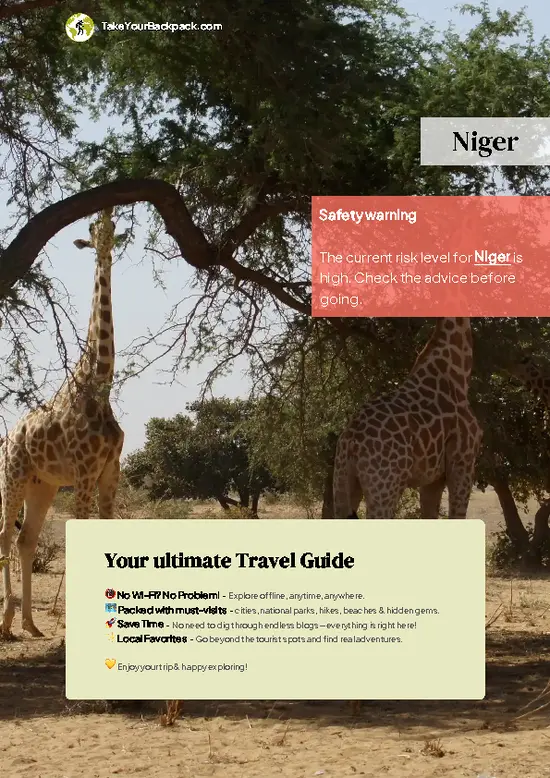
example page 0 from our offline Travel Guide for Niger
example page 1 from our offline Travel Guide for Niger
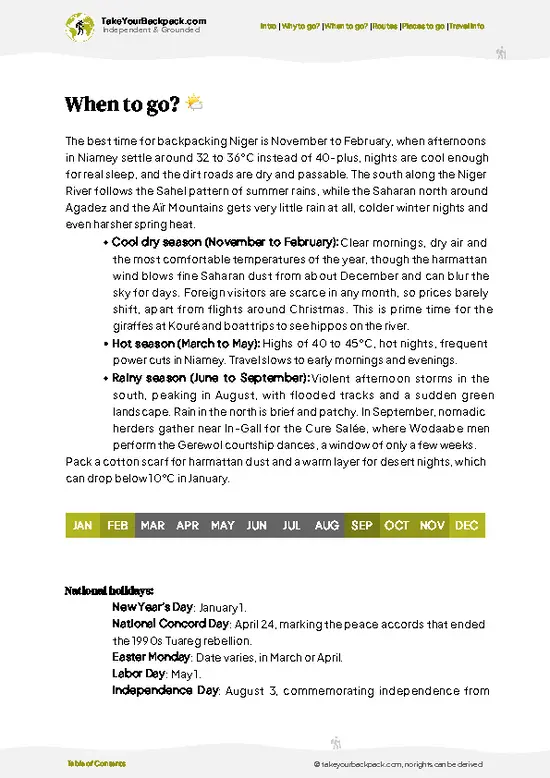
example page 2 from our offline Travel Guide for Niger
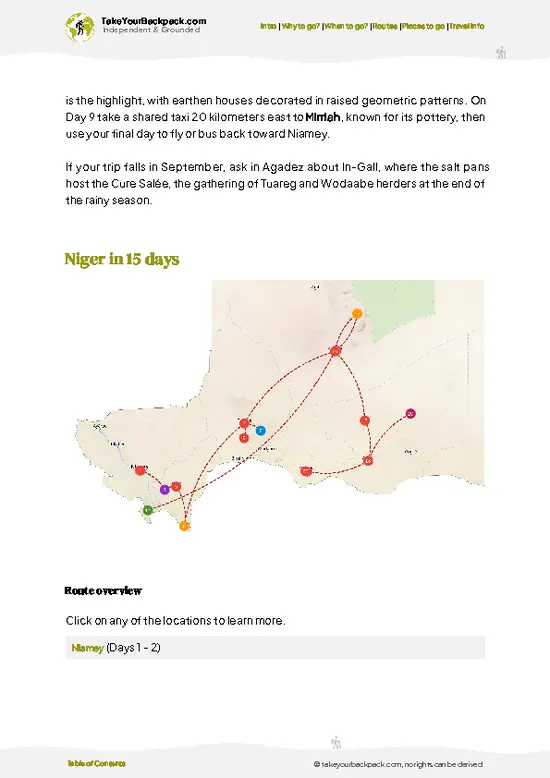
example page 3 from our offline Travel Guide for Niger
example page 4 from our offline Travel Guide for Niger
example page 5 from our offline Travel Guide for Niger
example page 6 from our offline Travel Guide for Niger
example page 7 from our offline Travel Guide for Niger
The digital guide (284 pages) contains:
67 highlights, ranked by travel appeal
Optimized 5, 10 & 15-day travel routes
Cities, national parks, landmarks, beaches
How to get around
Offline-friendly for travel without Wi-Fi
👉 Click to see all 30+ guide features

📅 Plan smarter in minutes, not weeks
Month by month travel advice
Festivals & national holidays
Budget expectations

🗺️ Go to the right places, skip the overrated ones
Honest pros & cons of destinations
Top hikes, parks & viewpoints
Lesser-known places most travelers miss
Clear “worth it vs skip it” guidance

🛏️ Travel smoothly without rookie mistakes
Best areas to stay
Transport systems explained simply
Common scams & safety advice
SIM cards, money & practical tips

🌍 Understand the country, not just visit it
Culture & traditions
52 Essential phrases & customs
Festivals worth planning around
Traveler-friendly historical context
Insights that make places more meaningful

📱 Built for real travel conditions
Fully downloadable PDF
Works completely offline
Optimized for phone use
Useful in remote areas & buses
Everything in one place
Save weeks of stressful planning
Get instant access to your full guide. 30‑day money-back guarantee.
+ Add another guide for just US$7.80

By proceeding you agree to our terms.
Sent to your inbox immediately after payment • 100% Secure Checkout
Best Backpacking Travel Advisor 2025 tourism awardBest Backpacking
Travel Advisor
2025
What others say about Take Your Backpack Guides:
⭐⭐⭐⭐⭐
Fantastic, amazing amount of information!
⭐⭐⭐⭐⭐
My goodness this is amazing, it's what I've been looking for hats off too you!
⭐⭐⭐⭐⭐
I think this is absolutely BRILLIANT
⭐⭐⭐⭐
Very complete and informative. It's still missing places, but I gotta to commend you
⭐⭐⭐⭐⭐
This is truly amazing, thank you, can't wait to explore it with my kids!
⭐⭐⭐⭐⭐
Awesome resource, thank you!
⭐⭐⭐⭐⭐
This is amazing! Can't wait to explore the ones I haven't seen
⭐⭐⭐⭐
I love this! Well done, great idea.
⭐⭐⭐⭐⭐
Thanks for taking the time to make this gem!
⭐⭐⭐⭐⭐
This might be the best website I've ever seen.
⭐⭐⭐⭐⭐
Congratulations, and thank you so much for your work; it's incredibly valuable.
⭐⭐⭐⭐
In all seriousness I think you did a great job pointing out the important spots
⭐⭐⭐⭐⭐
10/10 very good
⭐⭐⭐⭐⭐
As someone who's only just starting to visit regularly this is awesome, thank you.
⭐⭐⭐⭐
Thank you very much! I'm going to visit my dad, it's going to be very useful!
⭐⭐⭐⭐⭐
This is really cool! We'll be travelling for the first time and this definitely come in handy.
⭐⭐⭐⭐⭐
You are now our minister of culture, congratulations 👨‍💼
⭐⭐⭐⭐⭐
Just wanted to tell you that this is a pearl! Going to follow your recommendations.
⭐⭐⭐⭐⭐
This is so cool. I'll definitely be using the resource for my travels soon.
⭐⭐⭐⭐⭐
This is very impressive! Good work.
⭐⭐⭐⭐⭐
This is an amazing and informative site. Very well done!

🛏️ Where to stay?Choosing the right base

The Palais du Sultan d’Agadez is a magnet for travelers chasing the raw pulse of Niger’s desert culture, but let’s cut through the Instagram gloss: this isn’t a luxury resort zone. The real deal is in the neighborhoods that hug the old town, where the streets pulse with daily life and the air smells of spices and dust. Staying close to the palace means you’re in the heart of Agadez’s historic quarter, where the architecture is a living story and the locals are your best guides.

For backpackers, the best spots are those small clusters of guesthouses and family-run lodgings just a few minutes’ … read more 👉
The Palais du Sultan d’Agadez is a magnet for travelers chasing the raw pulse of Niger’s desert culture, but let’s cut through the Instagram gloss: this isn’t a luxury resort zone. The real deal is in the neighborhoods that hug the old town, where the streets pulse with daily life and the air smells of spices and dust. Staying close to the palace means you’re in the heart of Agadez’s historic quarter, where the architecture is a living story and the locals are your best guides.

For backpackers, the best spots are those small clusters of guesthouses and family-run lodgings just a few minutes’ walk from the palace. These areas are safe, yes, but more importantly, they’re social hubs where you’ll meet other travelers swapping stories over shared meals or evening tea. It’s not about polished amenities; it’s about authenticity and connection. The vibe here is low-key but lively, with a mix of solo adventurers and small groups who value experience over comfort.

Expect basic facilities—think clean, simple rooms and communal spaces that encourage interaction. The cost is modest, but don’t expect bargain-basement prices; you’re paying for proximity to a cultural icon and the chance to immerse yourself in a community that’s as much a part of the attraction as the palace itself. This is where you get the real Agadez, unfiltered and unforgettable.

👛 Costs (as of 3 September 2026)Money, prices, and spending tips

As of the most recent estimates, visiting the Palais du Sultan d’Agadez is free of charge. There are no entrance fees or additional costs associated with the visit.
⚠️ Prices can change and everyone travels differently, so take this as a rough guide. Hope it helps you plan your adventure!

FAQTraveler FAQ

1 to 2 hours is sufficient to visit Palais du Sultan d’Agadez. This allows time to explore the architecture and learn about its historical significance. Guided tours can enhance the experience but are not mandatory.
Yes, Palais du Sultan d’Agadez is worth the entrance fee, which is typically around 2,000 CFA francs (about $3 USD). The palace offers a unique glimpse into Tuareg culture and traditional Sahelian architecture, making it a valuable cultural visit.
You can get to Palais du Sultan d’Agadez by traveling to the city of Agadez, Niger, which is accessible by bus or shared taxi from Niamey or other major towns. The palace is located in the city center, within walking distance from most accommodations.
⚠️ Things can change over time, so always validate details locally before you go.

Other Nigerien attractions near Palais du Sultan d’Agadez

Explore more nearby:


💡 Not sure where to go next?
Create a personalized itinerary for Niger including Palais du Sultan d’Agadez and the places that fit your trip.

Generate my itinerary

👉 Discover all attractions

Or checkout all Niger has to offer (think cities, towns, villages, national parks, hikes, beaches, festivals)
Country photo of Niger

We 💚 feedbackParting advice and final tips

The Palais du Sultan d’Agadez isn’t some polished tourist showroom—expect dust, heat, and a crowd that’s more local than foreign. That’s the point. The real magic is in the raw, lived-in feel of the place: the carved mud walls that have weathered centuries, the way the light shifts through narrow alleys, and the quiet moments when the chatter fades and history seeps in. It’s not flashy, but it’s honest. Just bring patience, a good hat, and an appetite for stories that don’t come with a souvenir shop.

✍️ Help improve this page!
The information on this page is based on in-depth research, insights shared by experienced travelers, and feedback from the local travel community in Niger. While every effort is made to keep the information accurate and current, conditions can change — so if you spot anything incorrect or outdated, please get in touch.


🙋‍♂️ Give feedback

👋 Meet the founderWho’s Behind Take Your Backpack?

Johan, backpacker and founder of TakeYourBackpackHi, I’m Johan (Netherlands 🇳🇱), the creator of TakeYourBackpack. Over the past decade, I’ve backpacked through 80+ countries across six continents, gaining extensive experience with independent travel, long-term trips, and overland routes.

This site is built on a combination of firsthand travel experience and carefully curated insights from other backpackers. Many guides are based on places I’ve personally visited, while others bring together tips, observations, and practical advice shared by trusted travelers I’ve met along the way.

The goal is to provide realistic, experience-driven guidance — not generic itineraries — so you can explore destinations with better context, clearer expectations, and more confidence.

Get full Niger guide •
Instant download • 67 highlights • Full Offline guide