×

Niger🇳🇪 | festivalsSAFEMWomen’s crafts, Niamey halls, hammered metal, goat leather | things to do and best time to go

Explore Festival de l’AïrExplore Festival de la Jeunesse de Zinder

Backpacking in SAFEM
👀 For curious travelersfestival ranked #7
By Johan Kruseman 🇳🇱 | Updated October 22, 2026

A woman hammers a strip of copper at her stall while goat leather, charcoal smoke and shea butter drift down the aisle. That is SAFEM in motion. The festival is a showcase of women’s craft and artisan work, held in Niamey, Niger’s capital, and it draws Nigerien makers, traders, families and a thin sprinkle of foreign visitors. Expect leatherwork, woven mats, pottery, jewelry and clothing, plus music and cultural performances around the stalls. Skip it if you want nightclub-scale partying; this is a market with a stage, and that is the point. Go if you want to talk to the people who made what you are holding, and buy it without a middle layer. Spend your first day walking the whole hall once without buying, then circle back to the stalls you liked.

Discover everything you want to know in the 📖 Niger Travel Guide.
Safety warning

The current risk level for Niger is high. Check the advice before going.


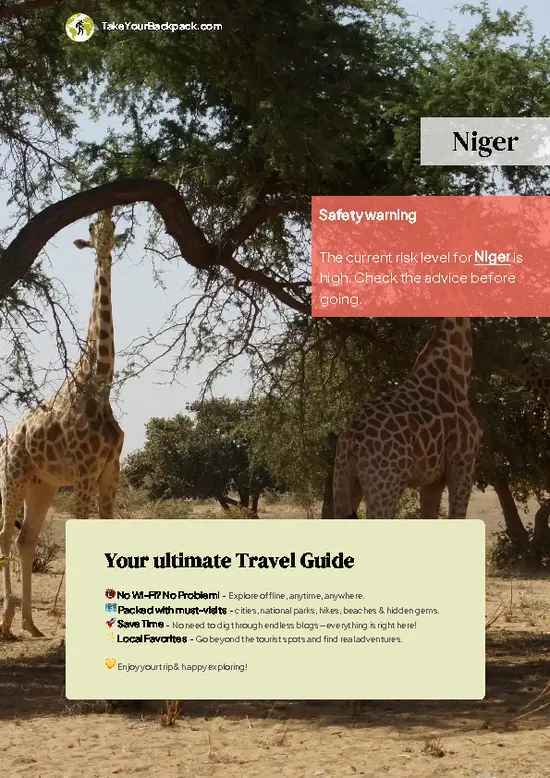
example page 0 from our offline Travel Guide for Niger
example page 1 from our offline Travel Guide for Niger
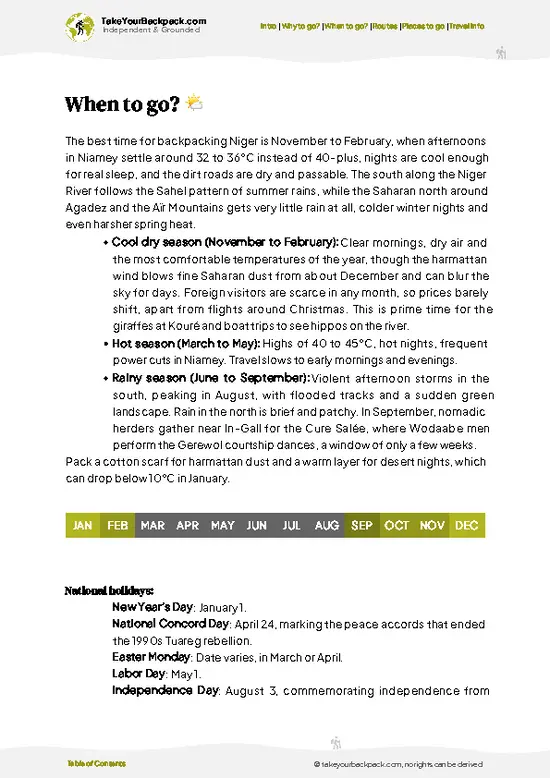
example page 2 from our offline Travel Guide for Niger
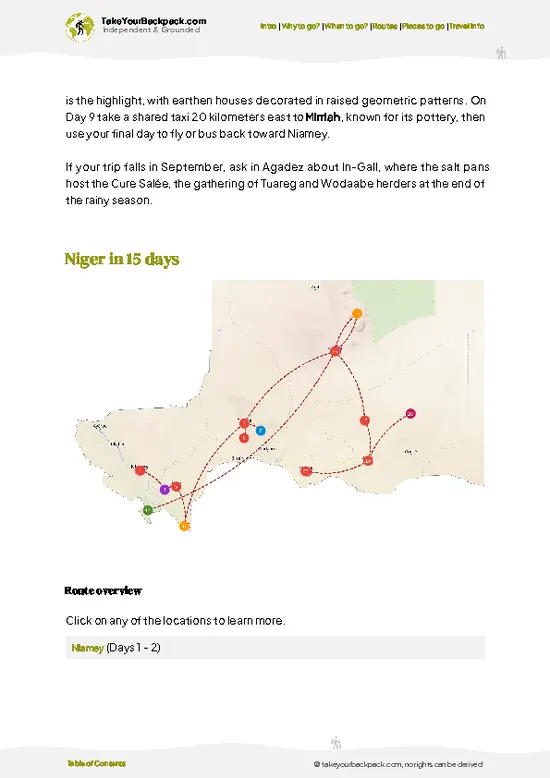
example page 3 from our offline Travel Guide for Niger
example page 4 from our offline Travel Guide for Niger
example page 5 from our offline Travel Guide for Niger
example page 6 from our offline Travel Guide for Niger
example page 7 from our offline Travel Guide for Niger
Loading the map 🌍
CLICK TO FILTER
cities
towns
villages
landmarks
national parks
hikes
attractions
festivals
regions
SHOW COUNTRY’S BESTSHOW ALL

✨ Why go?
Ranked #7 festival in Niger
Reasons people choose to celebrate the here

SAFEM gives you something rare in Niger: dozens of makers from different regions in one place, all willing to explain how an object is made. That is the main reason to route through Niamey for it. A Tuareg silversmith, a Hausa weaver and a leather worker can sit within a few steps of each other, so you cover in an afternoon what would otherwise take weeks of overland travel. The second reason is the social side. Because the festival is built around women artisans, you meet shopkeepers, cooperatives and regulars who return every edition, and conversation comes easily, especially if you manage some French. It also fits neatly into a longer trip. Niamey is the usual arrival and exit point for overland routes in the region, so SAFEM works as a start or finish to a West African loop. Prices at … read more 👉
SAFEM gives you something rare in Niger: dozens of makers from different regions in one place, all willing to explain how an object is made. That is the main reason to route through Niamey for it. A Tuareg silversmith, a Hausa weaver and a leather worker can sit within a few steps of each other, so you cover in an afternoon what would otherwise take weeks of overland travel. The second reason is the social side. Because the festival is built around women artisans, you meet shopkeepers, cooperatives and regulars who return every edition, and conversation comes easily, especially if you manage some French. It also fits neatly into a longer trip. Niamey is the usual arrival and exit point for overland routes in the region, so SAFEM works as a start or finish to a West African loop. Prices at the stalls are lower than in tourist shops, and bargaining is expected, with a smile.

💡 HighlightsDon't-miss highlights and experiences

  1. The artisan stall halls: The core of SAFEM is row after row of handmade goods, laid out so you can compare styles from different regions side by side. Handle things, ask who made them, and you leave with something you can trace.
  2. Tuareg silver and metalwork: Crosses, rings and amulets are hammered and filed by hand. Watching a piece take shape tells you more about its quality than any label would.
  3. Leather goods: Pouches, sandals, cushions and bags in dyed goat and sheep leather are a Nigerien specialty. Look at the stitching and the dye depth, and you will spot the better pieces quickly.
  4. Woven and dyed textiles: Mats, cloth and clothing show regional patterns and colors that you rarely see together outside a festival. A wrap or scarf makes a light, packable souvenir.
  5. Stage performances and food
… read more 👉
  1. The artisan stall halls: The core of SAFEM is row after row of handmade goods, laid out so you can compare styles from different regions side by side. Handle things, ask who made them, and you leave with something you can trace.
  2. Tuareg silver and metalwork: Crosses, rings and amulets are hammered and filed by hand. Watching a piece take shape tells you more about its quality than any label would.
  3. Leather goods: Pouches, sandals, cushions and bags in dyed goat and sheep leather are a Nigerien specialty. Look at the stitching and the dye depth, and you will spot the better pieces quickly.
  4. Woven and dyed textiles: Mats, cloth and clothing show regional patterns and colors that you rarely see together outside a festival. A wrap or scarf makes a light, packable souvenir.
  5. Stage performances and food stalls: Music, dance and cultural shows run alongside the selling, and stalls serve local snacks and drinks. Sit down between rounds of shopping, eat something grilled, and watch the crowd, which is half the entertainment.
SAFEM costs little to wander, and watching the demonstrations and performances is the cheapest item on the list, since you only pay if you decide to buy something.
Spotted a mistake or missing something? Contact us.

🌤️ When to go?When is the celebration of SAFEM?

SAFEM is held in the Niamey region of Niger, usually as a multi-day event in the dry season around November to February, and exact dates shift with each edition.
  • Best day: The opening day and the main weekend evening carry the biggest crowds and the best performances. Weekdays are calmer if you want to talk to artists.
  • Weather: Days run about 30 to 35°C (86 to 95°F), nights drop to roughly 15 to 20°C (59 to 68°F), and rain is very unlikely. Bring a hat, a scarf for dust, a light layer and a refillable bottle.
  • Booking: Reserve a bed two to three weeks ahead. Rooms in Niamey can rise by 20 to 30 percent around the event.
  • Getting around: Arrive a day early. Roads fill in the evening, so leave after the final act or wait until morning.
Confirm the dates with the organizers before you book flights.

source: climatestotravel.comJANJanuary: not recommended for travelingFEBFebruary: not recommended for travelingMARMarch: not recommended for travelingAPRApril: not recommended for travelingMAYMay: not recommended for travelingJUNJune: not recommended for travelingJULJuly: not recommended for travelingAUGAugust: not recommended for travelingSEPSeptember: not recommended for travelingOCTOctober: not recommended for travelingNOVNovember: not recommended for travelingDECDecember: excellent for traveling

✈️ The backpacker research shortcutNiger Travel Guide

An offline-friendly backpacking guide with optimized travel routes, ranked highlights, transport advice, and the best areas to stay.
example page 0 from our offline Travel Guide for Niger
example page 1 from our offline Travel Guide for Niger
example page 2 from our offline Travel Guide for Niger
example page 3 from our offline Travel Guide for Niger
example page 4 from our offline Travel Guide for Niger
example page 5 from our offline Travel Guide for Niger
example page 6 from our offline Travel Guide for Niger
example page 7 from our offline Travel Guide for Niger
The digital guide (254 pages) contains:
✅ 57 highlights, ranked by travel appeal
✅ Optimized 5, 10 & 15-day travel routes
✅ Cities, national parks, landmarks, beaches
✅ How to get around
✅ Offline-friendly for travel without Wi-Fi
👉 Click to see all 30+ guide features

📅 Plan smarter in minutes, not weeks
✅ Month by month travel advice
✅ Festivals & national holidays
✅ Budget expectations

🗺️ Go to the right places, skip the overrated ones
✅ Honest pros & cons of destinations
✅ Top hikes, parks & viewpoints
✅ Lesser-known places most travelers miss
✅ Clear “worth it vs skip it” guidance

🛏️ Travel smoothly without rookie mistakes
✅ Best areas to stay
✅ Transport systems explained simply
✅ Common scams & safety advice
✅ SIM cards, money & practical tips

🌍 Understand the country, not just visit it
✅ Culture & traditions
✅ 52 Essential phrases & customs
✅ Festivals worth planning around
✅ Traveler-friendly historical context
✅ Insights that make places more meaningful

📱 Built for real travel conditions
✅ Fully downloadable PDF
✅ Works completely offline
✅ Optimized for phone use
✅ Useful in remote areas & buses
✅ Everything in one place
Stop searching, start planning
Get instant access to your full guide. 30‑day money-back guarantee.
+ Add another guide for just

By proceeding you agree to our terms.
Sent to your inbox immediately after payment • 100% Secure Checkout
Best Backpacking Travel Advisor 2025 tourism awardBest Backpacking
Travel Advisor
2025
What others say about Take Your Backpack Guides:
⭐⭐⭐⭐⭐
Fantastic, amazing amount of information!
⭐⭐⭐⭐⭐
My goodness this is amazing, it's what I've been looking for hats off too you!
⭐⭐⭐⭐⭐
I think this is absolutely BRILLIANT
⭐⭐⭐⭐
Very complete and informative. It's still missing places, but I gotta to commend you
⭐⭐⭐⭐⭐
This is truly amazing, thank you, can't wait to explore it with my kids!
⭐⭐⭐⭐⭐
Awesome resource, thank you!
⭐⭐⭐⭐⭐
This is amazing! Can't wait to explore the ones I haven't seen
⭐⭐⭐⭐
I love this! Well done, great idea.
⭐⭐⭐⭐⭐
Thanks for taking the time to make this gem!
⭐⭐⭐⭐⭐
This might be the best website I've ever seen.
⭐⭐⭐⭐⭐
Congratulations, and thank you so much for your work; it's incredibly valuable.
⭐⭐⭐⭐
In all seriousness I think you did a great job pointing out the important spots
⭐⭐⭐⭐⭐
10/10 very good
⭐⭐⭐⭐⭐
As someone who's only just starting to visit regularly this is awesome, thank you.
⭐⭐⭐⭐
Thank you very much! I'm going to visit my dad, it's going to be very useful!
⭐⭐⭐⭐⭐
This is really cool! We'll be travelling for the first time and this definitely come in handy.
⭐⭐⭐⭐⭐
You are now our minister of culture, congratulations 👨‍💼
⭐⭐⭐⭐⭐
Just wanted to tell you that this is a pearl! Going to follow your recommendations.
⭐⭐⭐⭐⭐
This is so cool. I'll definitely be using the resource for my travels soon.
⭐⭐⭐⭐⭐
This is very impressive! Good work.
⭐⭐⭐⭐⭐
This is an amazing and informative site. Very well done!

🛏️ Where to stay?Where staying makes the most sense

Central Niamey is the most practical area to stay for SAFEM, because taxis, markets and the festival grounds are all within a short ride. Look at the neighborhoods near the Grand Marché and the Plateau district. They have the densest mix of cheap guesthouses, small auberges and mid-range rooms, and other travelers are easy to find at nearby cafés and restaurants.

The Plateau is the safer, calmer choice for solo travelers. Streets are wider, there is more lighting at night, and embassies and offices nearby mean regular patrols. Areas along the Niger River, such as Gamkalle and the Kennedy Bridge … read more 👉
Central Niamey is the most practical area to stay for SAFEM, because taxis, markets and the festival grounds are all within a short ride. Look at the neighborhoods near the Grand Marché and the Plateau district. They have the densest mix of cheap guesthouses, small auberges and mid-range rooms, and other travelers are easy to find at nearby cafés and restaurants.

The Plateau is the safer, calmer choice for solo travelers. Streets are wider, there is more lighting at night, and embassies and offices nearby mean regular patrols. Areas along the Niger River, such as Gamkalle and the Kennedy Bridge side, suit those who want terraces, evening breezes and a few expat-run spots.

Avoid staying far outside the center. Late-night rides back from events cost more and options thin out. Pick a place with a generator, because power cuts are common, and ask your guesthouse to arrange a trusted driver for night returns. Sharing a room or taxi with other budget travelers cuts costs and adds a layer of safety.

👛 Costs (as of 22 October 2026)How expensive it really is

SAFEM costs most independent travelers about €0 to 8 a day, and the total daily budget below comes to €52. Payments are in cash, so withdraw funds in Niamey before the event.
CategoryBudget RangeLocal Reality
Festival tickets€0 to 8Some events are free, while main evening shows charge a small entry fee at the gate.
Accommodation€12 to 30Basic guesthouse rooms in Niamey run at the lower end, and prices rise during the festival.
Local transport€4 to 8Shared taxis cost little per ride, while a private taxi to the venue and back costs more at night.
Food & drinks€6 to 12Street skewers, rice dishes and juices keep meals cheap, and a sit-down restaurant meal costs more.
Miscellaneous expenses€3 to 8Covers water, SIM data, small crafts and tips for guides or drivers.
Total Daily Budget€52A realistic daily figure for one traveler in high season.
⚠️ Prices can change and everyone travels differently, so take this as a rough guide. Hope it helps you plan your adventure!

🍲 FoodWhat to Eat & Drink

Expect the street-food smoke of Niamey to follow you into SAFEM. Grilled brochettes (spiced beef or mutton skewers) and suya-style spice rubs with sliced onion are the staple snack, cooked over charcoal and handed over in paper.

Try riz gras, rice cooked with tomato and meat, and dambou, a steamed grain dish often served with greens. Fried plantain and millet cakes turn up at smaller stalls. For drinks, look for bissap (hibiscus juice), zobo-style chilled infusions, ginger juice and sweet green tea poured in three rounds from tiny glasses. Tea is slow on purpose, so accept the second glass.

Bring small cash, since cards are rarely taken at stalls. Prices are usually a few hundred local francs per skewer or snack, so a full plate costs roughly €1 to 3. Eat with your right hand when sharing … read more 👉
Expect the street-food smoke of Niamey to follow you into SAFEM. Grilled brochettes (spiced beef or mutton skewers) and suya-style spice rubs with sliced onion are the staple snack, cooked over charcoal and handed over in paper.

Try riz gras, rice cooked with tomato and meat, and dambou, a steamed grain dish often served with greens. Fried plantain and millet cakes turn up at smaller stalls. For drinks, look for bissap (hibiscus juice), zobo-style chilled infusions, ginger juice and sweet green tea poured in three rounds from tiny glasses. Tea is slow on purpose, so accept the second glass.

Bring small cash, since cards are rarely taken at stalls. Prices are usually a few hundred local francs per skewer or snack, so a full plate costs roughly €1 to 3. Eat with your right hand when sharing a bowl, and wait for the host to start. Lines are loose, so make eye contact and speak up politely. Stick to freshly cooked, hot food and sealed water.

FAQCommon questions from travelers

SAFEM usually takes place over several days in the dry season, around November to February, though exact dates change with each edition. It is held in the Niamey area, so most travelers fly or arrive overland to the capital first. Check the organizers’ announcements a month or two ahead.
Attending SAFEM costs roughly €0 to 8 for entry, with some events free and evening shows charging a small gate fee. Add €12 to 30 a night for a guesthouse in Niamey and €6 to 12 a day for food. A realistic total is about €38 to 60 a day.
For SAFEM, tickets are usually sold at the gate or through local vendors rather than long in advance, so you rarely need to book weeks ahead. Reserve your bed two to three weeks early, because Niamey rooms fill and rise by 20 to 30 percent. Carry cash in small notes for entry.
⚠️ Things can change over time, so always validate details locally before you go.

Other Nigerien festivals near SAFEM

Explore more nearby:


💡 Not sure where to go next?
Create a personalized itinerary for Niger including SAFEM and the places that fit your trip.

Generate my itinerary

👉 Discover all festivals

Or checkout all Niger has to offer (think cities, towns, villages, national parks, hikes, beaches, festivals)
Country photo of Niger

We 💚 feedbackFinal thoughts on celebrating the SAFEM

SAFEM trips up visitors who rush the first stall they like and pay the opening price. Walk the whole hall first, note two or three prices for similar pieces, then return and bargain calmly. I would bring small notes, because change is slow to appear, and leave your bag space empty for leather and textiles.

✍️ Help improve this page!
The information on this page is based on in-depth research, insights shared by experienced travelers, and feedback from the local travel community in Niger. While every effort is made to keep the information accurate and current, conditions can change — so if you spot anything incorrect or outdated, please get in touch.


🙋‍♂️ Give feedback

👋 Meet the founderWho’s Behind Take Your Backpack?

Johan, backpacker and founder of TakeYourBackpackHi, I’m Johan (Netherlands 🇳🇱), the creator of TakeYourBackpack. Over the past 3 decades, I’ve backpacked through 90+ countries across six continents, gaining extensive experience with independent travel, long-term trips, and overland routes.

This site is built on a combination of firsthand travel experience and carefully curated insights from other backpackers. Many guides are based on places I’ve personally visited, while others bring together tips, observations, and practical advice shared by trusted travelers I’ve met along the way.

The goal is to provide realistic, experience-driven guidance — not generic itineraries — so you can explore destinations with better context, clearer expectations, and more confidence.