×

Nigeria🇳🇬 | landmarksAwhum MonasteryBenedictine community, forested retreat, spiritual silence | things to do and best time to go

Explore Aso RockExplore Awhum Waterfall

Backpacking in Awhum Monastery
👀 For curious travelersunique site ranked #8
By Johan Kruseman 🇳🇱 | Updated June 1, 2026

Most backpackers expect Awhum Monastery to be all about the famous waterfall, but here’s the twist: the real soul of this place is the living, breathing monastic community—yes, actual monks, not just ruins or photo ops. Tucked in the hills of Enugu State, southeastern Nigeria, Awhum isn’t the easiest spot to reach—think bumpy roads and a final hike that’ll remind you why you ditched rolling luggage. The waterfall is dramatic, especially in the rainy season, but you’ll share it with pilgrims, not just tourists angling for the perfect shot. Entry fees are modest, but guides (often required) can feel like a hustle. The vibe is contemplative, not commercial. If you want raw, spiritual energy and don’t mind a little mud, Awhum delivers something Instagram can’t fake.

Discover everything you want to know in the 📖 Nigeria Travel Guide.
Safety warning

The current risk level for Nigeria is high. Check the advice before going.


Get your Nigeria guide
89 ranked highlights, routes & tips, works offline (332 pages)
Loading the map 🌍
CLICK TO FILTER
cities
towns
landmarks
national parks
hikes
beaches
attractions
festivals
regions
SHOW COUNTRY’S BESTSHOW ALL

✨ Why go?
Ranked #8 unique site in Nigeria
What makes it a must-see unique site

Awhum Monastery is a must-visit for backpackers who crave more than just a photo op. Yes, it’s popular, and yes, you’ll encounter crowds, but the real magic lies in its serene atmosphere and stunning waterfalls. The journey to the monastery is part of the experience—winding through lush landscapes that feel untouched by time.

Entry is affordable, making it a no-brainer for budget travelers. You can soak in the spiritual energy of the place without breaking the bank. Plus, it fits perfectly into a broader route through Nigeria, allowing you to explore nearby attractions like the Ngwo Pine Forest or the Awhum Waterfall.

The authenticity of Awhum is palpable; it’s not just another Instagram backdrop. Engage with the local monks, who are often welcoming and eager to share their stories. This … read more 👉
Awhum Monastery is a must-visit for backpackers who crave more than just a photo op. Yes, it’s popular, and yes, you’ll encounter crowds, but the real magic lies in its serene atmosphere and stunning waterfalls. The journey to the monastery is part of the experience—winding through lush landscapes that feel untouched by time.

Entry is affordable, making it a no-brainer for budget travelers. You can soak in the spiritual energy of the place without breaking the bank. Plus, it fits perfectly into a broader route through Nigeria, allowing you to explore nearby attractions like the Ngwo Pine Forest or the Awhum Waterfall.

The authenticity of Awhum is palpable; it’s not just another Instagram backdrop. Engage with the local monks, who are often welcoming and eager to share their stories. This is where you’ll find the true essence of Nigeria—beyond the tourist traps and into the heart of its culture.
Want to include Awhum Monastery in your Nigeria route?
Create a personalized Nigeria itinerary that includes Awhum Monastery and the places that fit your trip — based on your travel style, budget, and available time. Get your route in seconds.

Generate my trip

💡 HighlightsWhat this place is best known for

  • Awhum Waterfall — A dramatic cascade that pours out of the cliff into a clear pool. It’s the site’s showpiece for photos, a refreshing swim in the dry season, and the reason most people make the trek out here.
  • The Awhum Cave (Grotto) — A cool, close-quartered grotto carved into the rock that locals use as a shrine. The atmosphere inside—dim light, dripping stone and whispered prayers—feels genuinely ancient and meditative.
  • Holy Spring / Perennial Stream — A steady stream that emerges from the rock and runs year-round. Pilgrims use it for blessings and many visitors note its unusually clear, crisp water—great for washing off the trail dust.
  • Monastery Church and Prayer Spaces — The simple stone church and surrounding chapels offer quiet, candle-lit spaces for reflection. If you time it
read more 👉
  • Awhum Waterfall — A dramatic cascade that pours out of the cliff into a clear pool. It’s the site’s showpiece for photos, a refreshing swim in the dry season, and the reason most people make the trek out here.
  • The Awhum Cave (Grotto) — A cool, close-quartered grotto carved into the rock that locals use as a shrine. The atmosphere inside—dim light, dripping stone and whispered prayers—feels genuinely ancient and meditative.
  • Holy Spring / Perennial Stream — A steady stream that emerges from the rock and runs year-round. Pilgrims use it for blessings and many visitors note its unusually clear, crisp water—great for washing off the trail dust.
  • Monastery Church and Prayer Spaces — The simple stone church and surrounding chapels offer quiet, candle-lit spaces for reflection. If you time it right you can attend a service or watch the monks’ daily rhythms—subtle but powerful.
  • Scenic Trails and Rock Formations — Short, rocky paths lead to viewpoints with sweeping views of the Udi hills and interesting boulders and cliffs. Good for a gentle hike, sunrise shots, or just hanging out above the waterfall.
  • Pilgrimage Atmosphere and Retreat Opportunities — The place draws pilgrims and retreat groups, so there’s a real sense of purpose in the air. You can join a retreat day, sit quietly with others, or simply soak in the communal stillness.
  • Local Stalls and Village Life — Small vendors around the entrance sell snacks, bottled spring water and handmade trinkets. It’s a handy, low-key way to support locals and pick up a simple souvenir.
Spotted a mistake or missing something? Contact us.
🌤️ When to go?Weather, crowds, and seasonal trade-offs


  • Topic: Weather – The dry season from November to March is your best bet. Expect clear skies and minimal rain, making the rocky terrain safer and more enjoyable. The wet season (April to October) turns the paths slippery and the monastery’s surroundings muddy, which can kill your vibe and your boots.

  • Topic: Temperature – Temperatures hover between 24°C to 32°C (75°F to 90°F) during the dry season, which feels warm but manageable. The wet season can feel hotter and more humid, pushing you into sweat-soaked misery if you’re not prepared.

  • Topic: Daylight Hours – Nigeria enjoys roughly 11 to 12 hours of daylight year-round. Early starts are key to beat the heat and the crowds, especially if you want to explore the caves and waterfalls around the monastery.

  • Topic: Crowds – The dry season
read more 👉

  • Topic: Weather – The dry season from November to March is your best bet. Expect clear skies and minimal rain, making the rocky terrain safer and more enjoyable. The wet season (April to October) turns the paths slippery and the monastery’s surroundings muddy, which can kill your vibe and your boots.

  • Topic: Temperature – Temperatures hover between 24°C to 32°C (75°F to 90°F) during the dry season, which feels warm but manageable. The wet season can feel hotter and more humid, pushing you into sweat-soaked misery if you’re not prepared.

  • Topic: Daylight Hours – Nigeria enjoys roughly 11 to 12 hours of daylight year-round. Early starts are key to beat the heat and the crowds, especially if you want to explore the caves and waterfalls around the monastery.

  • Topic: Crowds – The dry season draws more visitors, especially weekends and religious holidays. If you want solitude, aim for weekdays or the shoulder months of November and March when the crowds thin out but the weather stays decent.

  • Topic: Seasonal Activities – The dry season is prime for hiking, photography, and spiritual reflection without the hassle of rain. The wet season offers lush greenery but limits outdoor activities and can close off some trails.

  • Topic: Price Fluctuations – Accommodation and local transport prices spike during peak dry months and holidays. Visiting just before or after this window can save you cash without sacrificing the experience.


Pro-tip: Plan your trip for late November or early March—dry enough to enjoy every step, but quiet enough to feel like you’ve discovered something truly special.


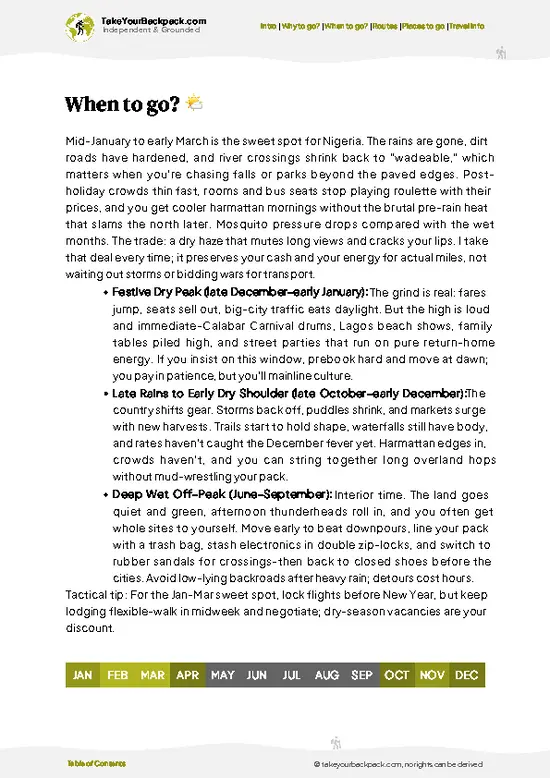
source: climatestotravel.comJANJanuary: excellent for travelingFEBFebruary: excellent for travelingMARMarch: highly recommended for travelingAPRApril: fair for travelingMAYMay: fair for travelingJUNJune: fair for travelingJULJuly: fair for travelingAUGAugust: fair for travelingSEPSeptember: fair for travelingOCTOctober: fair for travelingNOVNovember: highly recommended for travelingDECDecember: excellent for traveling
when-to-go

✈️ The backpacker research shortcutNigeria Travel Guide

An offline-friendly backpacking guide with optimized travel routes, ranked highlights, transport advice, and the best areas to stay.
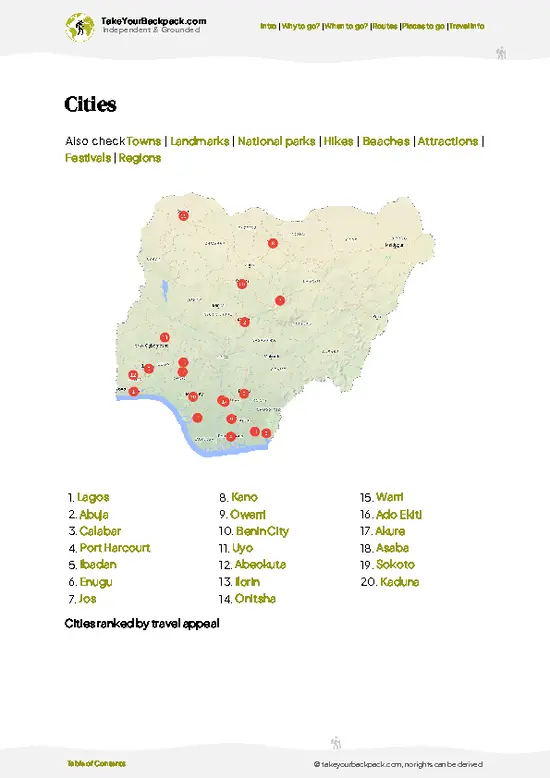
example page 0 from our offline Travel Guide for Nigeria
example page 1 from our offline Travel Guide for Nigeria
example page 2 from our offline Travel Guide for Nigeria
example page 3 from our offline Travel Guide for Nigeria
example page 4 from our offline Travel Guide for Nigeria
example page 5 from our offline Travel Guide for Nigeria
example page 6 from our offline Travel Guide for Nigeria
example page 7 from our offline Travel Guide for Nigeria
The digital guide (332 pages) contains:
89 highlights, ranked by travel appeal
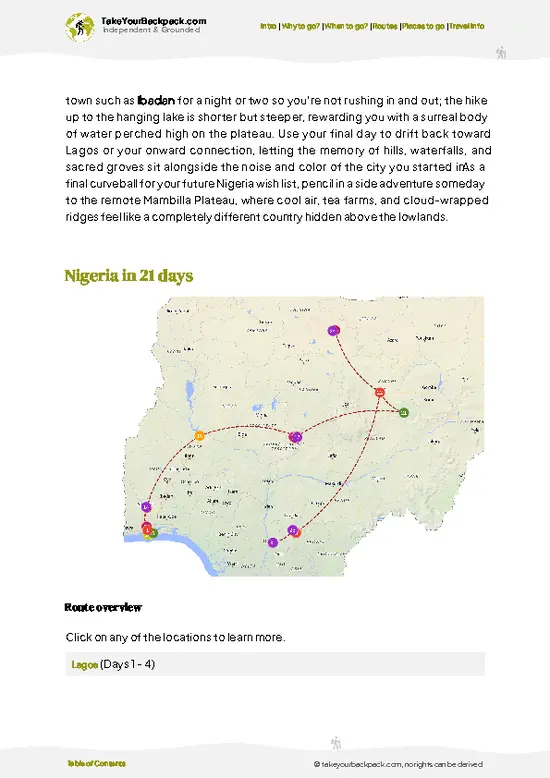
Optimized 7, 14 & 21-day travel routes
Cities, national parks, landmarks, beaches
How to get around
Offline-friendly for travel without Wi-Fi
👉 Click to see all 30+ guide features

📅 Plan smarter in minutes, not weeks
Month by month travel advice
Festivals & national holidays
Budget expectations

🗺️ Go to the right places, skip the overrated ones
Honest pros & cons of destinations
Top hikes, parks & viewpoints
Lesser-known places most travelers miss
Clear “worth it vs skip it” guidance

🛏️ Travel smoothly without rookie mistakes
Best areas to stay
Transport systems explained simply
Common scams & safety advice
SIM cards, money & practical tips

🌍 Understand the country, not just visit it
Culture & traditions
52 Essential phrases & customs
Festivals worth planning around
Traveler-friendly historical context
Insights that make places more meaningful

📱 Built for real travel conditions
Fully downloadable PDF
Works completely offline
Optimized for phone use
Useful in remote areas & buses
Everything in one place
Save weeks of stressful planning
Get instant access to your full guide. 30‑day money-back guarantee.


By proceeding you agree to our terms.
Sent to your inbox immediately after payment • 100% Secure Checkout
Best Backpacking Travel Advisor 2025 tourism awardBest Backpacking
Travel Advisor
2025
What others say about Take Your Backpack Guides:
⭐⭐⭐⭐⭐
Fantastic, amazing amount of information!
⭐⭐⭐⭐⭐
My goodness this is amazing, it's what I've been looking for hats off too you!
⭐⭐⭐⭐⭐
I think this is absolutely BRILLIANT
⭐⭐⭐⭐
Very complete and informative. It's still missing places, but I gotta to commend you
⭐⭐⭐⭐⭐
This is truly amazing, thank you, can't wait to explore it with my kids!
⭐⭐⭐⭐⭐
Awesome resource, thank you!
⭐⭐⭐⭐⭐
This is amazing! Can't wait to explore the ones I haven't seen
⭐⭐⭐⭐
I love this! Well done, great idea.
⭐⭐⭐⭐⭐
Thanks for taking the time to make this gem!
⭐⭐⭐⭐⭐
This might be the best website I've ever seen.
⭐⭐⭐⭐⭐
Congratulations, and thank you so much for your work; it's incredibly valuable.
⭐⭐⭐⭐
In all seriousness I think you did a great job pointing out the important spots
⭐⭐⭐⭐⭐
10/10 very good
⭐⭐⭐⭐⭐
As someone who's only just starting to visit regularly this is awesome, thank you.
⭐⭐⭐⭐
Thank you very much! I'm going to visit my dad, it's going to be very useful!
⭐⭐⭐⭐⭐
This is really cool! We'll be travelling for the first time and this definitely come in handy.
⭐⭐⭐⭐⭐
You are now our minister of culture, congratulations 👨‍💼
⭐⭐⭐⭐⭐
Just wanted to tell you that this is a pearl! Going to follow your recommendations.
⭐⭐⭐⭐⭐
This is so cool. I'll definitely be using the resource for my travels soon.
⭐⭐⭐⭐⭐
This is very impressive! Good work.
⭐⭐⭐⭐⭐
This is an amazing and informative site. Very well done!

🛏️ Where to stay?Best areas and accommodation options

Staying near Awhum Monastery? You’ll want to focus on a few key areas that balance safety, social vibes, and budget-friendly options.

First up, consider the town of Awhum itself. It’s a small, welcoming community where locals are friendly and eager to share their culture. You’ll find basic accommodations that won’t break the bank. Plus, being close means you can easily pop over to the monastery for sunrise views without the hassle of long commutes.

Next, check out the nearby city of Enugu. It’s a bit busier, but that’s where the social scene thrives. Hostels and guesthouses here cater to backpackers, … read more 👉
Staying near Awhum Monastery? You’ll want to focus on a few key areas that balance safety, social vibes, and budget-friendly options.

First up, consider the town of Awhum itself. It’s a small, welcoming community where locals are friendly and eager to share their culture. You’ll find basic accommodations that won’t break the bank. Plus, being close means you can easily pop over to the monastery for sunrise views without the hassle of long commutes.

Next, check out the nearby city of Enugu. It’s a bit busier, but that’s where the social scene thrives. Hostels and guesthouses here cater to backpackers, offering opportunities to meet fellow travelers. The nightlife is lively, and you can find local eateries serving up authentic Nigerian dishes.

Lastly, if you’re feeling adventurous, look into staying in the surrounding villages. They offer a more immersive experience. You’ll get a taste of rural life and have the chance to connect with locals. Just be sure to prioritize safety and ask around for recommendations.

These areas provide the real magic of Nigeria, far from the Instagram filters.

👛 Costs (as of 19 February 2026)How expensive it really is

Visiting Awhum Monastery in Nigeria is a unique experience, but let’s cut through the fluff and get real about the costs.
  • Entrance Fee: Expect to pay around $2 to $5 USD. This fee grants you access to the monastery and its serene surroundings. It’s a small price for a slice of tranquility.
  • Transportation: Getting there can vary. If you’re traveling from Enugu, a taxi or ride-share might set you back about $15 to $30 USD one way. Public transport is cheaper, around $2 to $5 USD, but it’s less direct and can be a hassle.
  • Food: Local eateries near the monastery offer meals for about $3 to $10 USD. You can savor traditional Nigerian dishes without breaking the bank. Just be ready for some spice!
  • Accommodation: If you plan to stay overnight, budget options start at around $15 to $30 USD per night.
read more 👉
Visiting Awhum Monastery in Nigeria is a unique experience, but let’s cut through the fluff and get real about the costs.
  • Entrance Fee: Expect to pay around $2 to $5 USD. This fee grants you access to the monastery and its serene surroundings. It’s a small price for a slice of tranquility.
  • Transportation: Getting there can vary. If you’re traveling from Enugu, a taxi or ride-share might set you back about $15 to $30 USD one way. Public transport is cheaper, around $2 to $5 USD, but it’s less direct and can be a hassle.
  • Food: Local eateries near the monastery offer meals for about $3 to $10 USD. You can savor traditional Nigerian dishes without breaking the bank. Just be ready for some spice!
  • Accommodation: If you plan to stay overnight, budget options start at around $15 to $30 USD per night. There are guesthouses nearby, but amenities can be basic. For a more comfortable stay, expect to pay $50 USD or more.
  • Guided Tours: If you want a deeper dive into the history and culture, guided tours can range from $10 to $50 USD, depending on the length and inclusions. This can enrich your visit significantly.

These costs can add up, but the experience at Awhum Monastery is worth every penny. The real magic lies in the peaceful atmosphere and the stunning natural beauty surrounding the site.
⚠️ Prices can change and everyone travels differently, so take this as a rough guide. Hope it helps you plan your adventure!

Other Nigerian landmarks near Awhum Monastery

Explore more nearby:

  • Awhum Waterfall—cascading water, limestone cliffs, cool grotto| 1 km away
  • Ogbunike Caves—underground chambers, sacred tunnels, bat colonies| 73 km away
  • Aso Rock—granite monolith, Abuja skyline, panoramic city views| 285 km away

💡 Not sure where to go next?
Create a personalized itinerary for Nigeria including Awhum Monastery and the places that fit your trip.

Generate my itinerary

👉 Discover all landmarks

Or checkout all Nigeria has to offer (think cities, towns, villages, national parks, hikes, beaches, festivals)
Country photo of Nigeria

We 💚 feedbackWhat to keep in mind

Awhum Monastery isn’t just a photo op; it’s a slice of serenity that feels worlds away from the chaos. Expect crowds, especially on weekends, but don’t let that deter you. The real magic? The sound of water cascading from the nearby waterfall, mingling with the chants from the monks. It’s an unexpected harmony that soothes the soul. Just be mindful of the slippery paths—those rocks can catch you off guard. Trust me, it’s worth every step.

✍️ Help improve this page!
The information on this page is based on in-depth research, insights shared by experienced travelers, and feedback from the local travel community in Nigeria. While every effort is made to keep the information accurate and current, conditions can change — so if you spot anything incorrect or outdated, please get in touch.


🙋‍♂️ Give feedback

👋 Meet the founderWho’s Behind Take Your Backpack?

Johan, backpacker and founder of TakeYourBackpackHi, I’m Johan (Netherlands 🇳🇱), the creator of TakeYourBackpack. Over the past decade, I’ve backpacked through 80+ countries across six continents, gaining extensive experience with independent travel, long-term trips, and overland routes.

This site is built on a combination of firsthand travel experience and carefully curated insights from other backpackers. Many guides are based on places I’ve personally visited, while others bring together tips, observations, and practical advice shared by trusted travelers I’ve met along the way.

The goal is to provide realistic, experience-driven guidance — not generic itineraries — so you can explore destinations with better context, clearer expectations, and more confidence.

Get full Nigeria guide •
Instant download • 89 highlights • Full Offline guide