×

Nigeria🇳🇬 | festivalsDurbar Festivalroyal procession, horse regalia, northern emirate palaces | things to do and best time to go

Explore Osun-OsogboExplore Sango Festival

Backpacking in Durbar
🏆 Top pickfestival ranked #2
By Johan Kruseman 🇳🇱 | Updated June 2, 2026

If you crave solitude, hate crowds, or flinch at the idea of dust in your teeth, Durbar Festival will chew you up and spit you out. But if you’re the kind of backpacker who sees chaos as choreography and wants to feel the pulse of a place through your boots, Durbar is your ticket. Held in northern Nigerian cities like Kano and Katsina, Durbar is a cavalry parade on steroids—thousands of horsemen in riotous color, pounding drums, and the kind of brass fanfare that rattles your ribcage. The festival is a centuries-old spectacle marking the end of Ramadan or Eid al-Adha, drawing locals, royalty, and the rare wide-eyed traveler into a swirl of pageantry and adrenaline. Expect a crowd that’s mostly Nigerian, with a few adventurous outsiders. It’s loud, proud, and over in a day or two, but the energy lingers. Durbar isn’t easy, but it’s the kind of challenge that pays you back in stories and street cred.

Discover everything you want to know in the 📖 Nigeria Travel Guide.
Safety warning

The current risk level for Nigeria is high. Check the advice before going.


Get your Nigeria guide
89 ranked highlights, routes & tips, works offline (332 pages)
Loading the map 🌍
CLICK TO FILTER
cities
towns
landmarks
national parks
hikes
beaches
attractions
festivals
regions
SHOW COUNTRY’S BESTSHOW ALL

✨ Why go?
Ranked #2 festival in Nigeria
Why visitors keep coming back

Backpackers flock to the Durbar Festival in Nigeria for a jolt of social energy and a taste of temporary community. This isn’t just a spectacle; it’s a vibrant celebration of culture, where you’ll witness majestic horse parades and colorful traditional attire that pulse with life. The festival offers an immersive experience, allowing you to connect with locals and fellow travelers alike, all while soaking in the rich heritage of the region.

Planning your route around Durbar isn’t just smart; it’s a savvy way to stretch your budget. Compared to similar events worldwide, the festival is surprisingly affordable, offering a wealth of experiences without breaking the bank. You’ll find that the cost of accommodation and food during the festival is often lower than during peak tourist seasons.

read more 👉
Backpackers flock to the Durbar Festival in Nigeria for a jolt of social energy and a taste of temporary community. This isn’t just a spectacle; it’s a vibrant celebration of culture, where you’ll witness majestic horse parades and colorful traditional attire that pulse with life. The festival offers an immersive experience, allowing you to connect with locals and fellow travelers alike, all while soaking in the rich heritage of the region.

Planning your route around Durbar isn’t just smart; it’s a savvy way to stretch your budget. Compared to similar events worldwide, the festival is surprisingly affordable, offering a wealth of experiences without breaking the bank. You’ll find that the cost of accommodation and food during the festival is often lower than during peak tourist seasons.

Integrating Durbar into your travel plans means you’re not just ticking boxes; you’re diving into a cultural tapestry that enriches your journey. The festival serves as a perfect anchor point, allowing you to explore the surrounding areas before and after, making every moment count. Embrace the challenge, and let the festival fuel your adventure!
Want to include Durbar Festival in your Nigeria route?
Create a personalized Nigeria itinerary that includes Durbar Festival and the places that fit your trip — based on your travel style, budget, and available time. Get your route in seconds.

Generate my trip

💡 HighlightsEssential experiences to have while celebrating the Durbar

  1. The Durbar Procession (Emirs and Chiefs) — A slow, ritual parade of mounted emirs, chiefs and their entourages that’s the beating heart of the festival. It’s not just a show; it’s a living display of authority, history and community respect, with each entourage announcing itself through route, cadence and ceremony.
  2. Horsemanship and Equestrian Displays — Riders perform precise, sometimes breath-stopping drills and formations on richly caparisoned horses. Expect synchronized charges, rapid turns and riders showing off balance and control — a real showcase of skill that’s been handed down through generations.
  3. Colorful Costumes and Horse Ornamentation — From embroidered robes and towering turbans to ornate bridles, tassels and painted saddles, the visual detail is insane. The mix of fabrics,
read more 👉
  1. The Durbar Procession (Emirs and Chiefs) — A slow, ritual parade of mounted emirs, chiefs and their entourages that’s the beating heart of the festival. It’s not just a show; it’s a living display of authority, history and community respect, with each entourage announcing itself through route, cadence and ceremony.
  2. Horsemanship and Equestrian Displays — Riders perform precise, sometimes breath-stopping drills and formations on richly caparisoned horses. Expect synchronized charges, rapid turns and riders showing off balance and control — a real showcase of skill that’s been handed down through generations.
  3. Colorful Costumes and Horse Ornamentation — From embroidered robes and towering turbans to ornate bridles, tassels and painted saddles, the visual detail is insane. The mix of fabrics, colors and beadwork turns every rider into a walking (or riding) piece of ceremonial art.
  4. Music, Drumming and Praise Singing — Layers of drums, horns and vocal praise create the festival’s soundtrack and push the energy through the crowds. Musicians and praise-singers don’t just entertain; they narrate lineage, achievements and local stories in real time.
  5. Community Rituals, Markets and Street Atmosphere — Beyond the pageant there’s a buzzing social scene: open courts, food vendors, artisan stalls and greetings between families and clans. It’s where politics, commerce and hospitality meet — perfect for people-watching, sampling local food and feeling how the festival knits a city together.
Spotted a mistake or missing something? Contact us.

🌤️ When to go?When is the celebration of Durbar Festival?


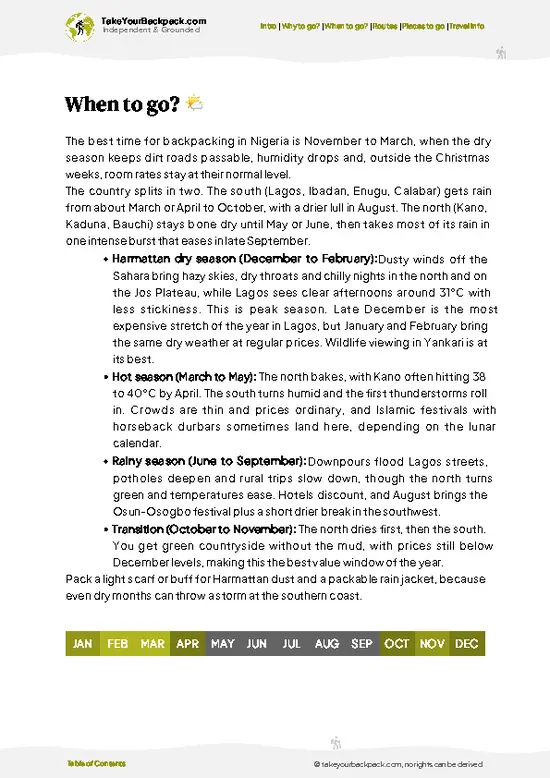
  • Topic: Weather – The Durbar Festival happens during Nigeria’s dry season, typically in January or February. Expect clear skies and low humidity, which means less sweat and more stamina for those long, vibrant parades. Avoid the rainy season (June to September) when mud and downpours can kill your vibe and slow your pace.

  • Topic: Temperature – Daytime highs hover around 28-32°C (82-90°F), perfect for active exploration without frying your brain. Nights dip to a cooler 18-22°C (64-72°F), so pack a light jacket for comfort after sunset.

  • Topic: Daylight Hours – Around this time, Nigeria enjoys roughly 11 to 12 hours of daylight. That’s enough time to soak in the festival’s full energy from dawn to dusk without rushing or missing key moments.

  • Topic: Crowds – The festival draws locals and
read more 👉

  • Topic: Weather – The Durbar Festival happens during Nigeria’s dry season, typically in January or February. Expect clear skies and low humidity, which means less sweat and more stamina for those long, vibrant parades. Avoid the rainy season (June to September) when mud and downpours can kill your vibe and slow your pace.

  • Topic: Temperature – Daytime highs hover around 28-32°C (82-90°F), perfect for active exploration without frying your brain. Nights dip to a cooler 18-22°C (64-72°F), so pack a light jacket for comfort after sunset.

  • Topic: Daylight Hours – Around this time, Nigeria enjoys roughly 11 to 12 hours of daylight. That’s enough time to soak in the festival’s full energy from dawn to dusk without rushing or missing key moments.

  • Topic: Crowds – The festival draws locals and tourists alike, but early dry season visits mean manageable crowds. Arrive early to snag prime viewing spots and avoid the crush that builds closer to major events.

  • Topic: Seasonal Activities – The Durbar Festival coincides with Islamic celebrations like Eid al-Fitr or Eid al-Adha, depending on the region. This timing layers cultural depth and additional festivities, enriching your experience beyond the horse parades.

  • Topic: Price Fluctuations – Prices for accommodation and transport spike during the festival’s peak days. Booking ahead or arriving just before the main events can save you cash and stress, letting you invest your budget in authentic local food and crafts instead.


Pro-tip: Lock in your trip for late January or early February to catch the festival at its liveliest, with dry weather and fewer crowds—your energy and wallet will thank you.


source: climatestotravel.comJANJanuary: excellent for travelingFEBFebruary: not recommended for travelingMARMarch: not recommended for travelingAPRApril: not recommended for travelingMAYMay: not recommended for travelingJUNJune: not recommended for travelingJULJuly: not recommended for travelingAUGAugust: not recommended for travelingSEPSeptember: not recommended for travelingOCTOctober: not recommended for travelingNOVNovember: not recommended for travelingDECDecember: not recommended for traveling

✈️ The backpacker research shortcutNigeria Travel Guide

An offline-friendly backpacking guide with optimized travel routes, ranked highlights, transport advice, and the best areas to stay.
example page 0 from our offline Travel Guide for Nigeria
example page 1 from our offline Travel Guide for Nigeria
example page 2 from our offline Travel Guide for Nigeria
example page 3 from our offline Travel Guide for Nigeria
example page 4 from our offline Travel Guide for Nigeria
example page 5 from our offline Travel Guide for Nigeria
example page 6 from our offline Travel Guide for Nigeria
example page 7 from our offline Travel Guide for Nigeria
The digital guide (332 pages) contains:
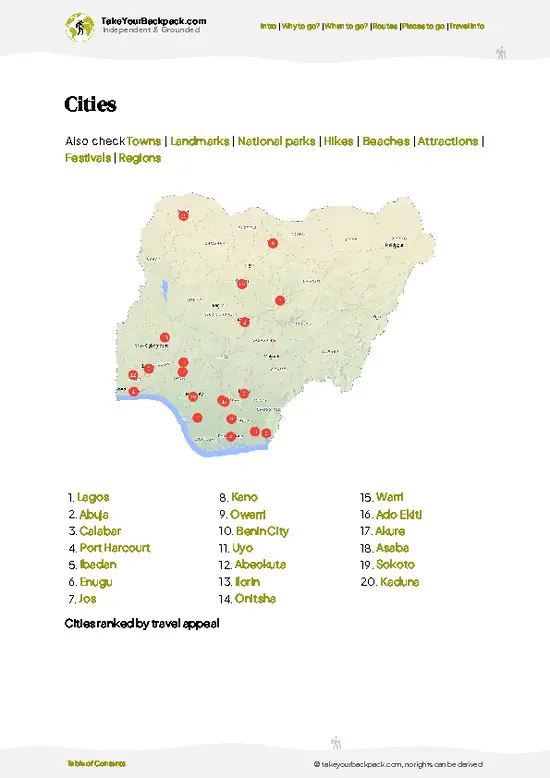
89 highlights, ranked by travel appeal
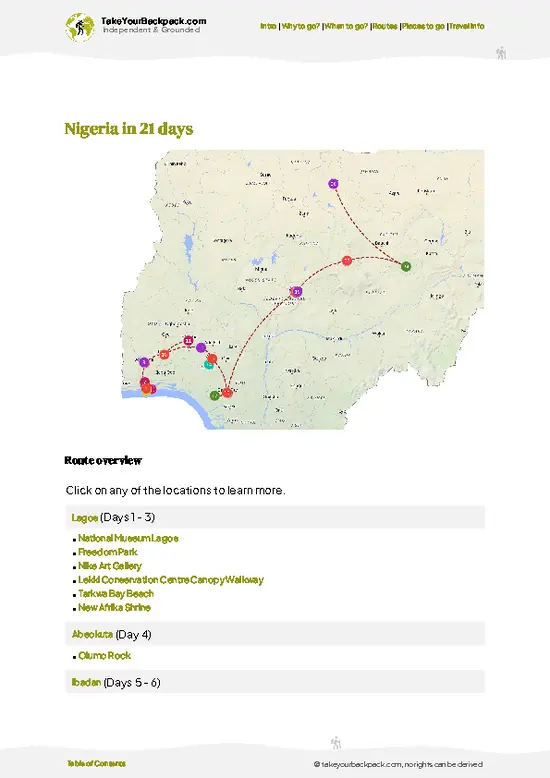
Optimized 7, 14 & 21-day travel routes
Cities, national parks, landmarks, beaches
How to get around
Offline-friendly for travel without Wi-Fi
👉 Click to see all 30+ guide features

📅 Plan smarter in minutes, not weeks
Month by month travel advice
Festivals & national holidays
Budget expectations

🗺️ Go to the right places, skip the overrated ones
Honest pros & cons of destinations
Top hikes, parks & viewpoints
Lesser-known places most travelers miss
Clear “worth it vs skip it” guidance

🛏️ Travel smoothly without rookie mistakes
Best areas to stay
Transport systems explained simply
Common scams & safety advice
SIM cards, money & practical tips

🌍 Understand the country, not just visit it
Culture & traditions
52 Essential phrases & customs
Festivals worth planning around
Traveler-friendly historical context
Insights that make places more meaningful

📱 Built for real travel conditions
Fully downloadable PDF
Works completely offline
Optimized for phone use
Useful in remote areas & buses
Everything in one place
Save weeks of stressful planning
Get instant access to your full guide. 30‑day money-back guarantee.


By proceeding you agree to our terms.
Sent to your inbox immediately after payment • 100% Secure Checkout
Best Backpacking Travel Advisor 2025 tourism awardBest Backpacking
Travel Advisor
2025
What others say about Take Your Backpack Guides:
⭐⭐⭐⭐⭐
Fantastic, amazing amount of information!
⭐⭐⭐⭐⭐
My goodness this is amazing, it's what I've been looking for hats off too you!
⭐⭐⭐⭐⭐
I think this is absolutely BRILLIANT
⭐⭐⭐⭐
Very complete and informative. It's still missing places, but I gotta to commend you
⭐⭐⭐⭐⭐
This is truly amazing, thank you, can't wait to explore it with my kids!
⭐⭐⭐⭐⭐
Awesome resource, thank you!
⭐⭐⭐⭐⭐
This is amazing! Can't wait to explore the ones I haven't seen
⭐⭐⭐⭐
I love this! Well done, great idea.
⭐⭐⭐⭐⭐
Thanks for taking the time to make this gem!
⭐⭐⭐⭐⭐
This might be the best website I've ever seen.
⭐⭐⭐⭐⭐
Congratulations, and thank you so much for your work; it's incredibly valuable.
⭐⭐⭐⭐
In all seriousness I think you did a great job pointing out the important spots
⭐⭐⭐⭐⭐
10/10 very good
⭐⭐⭐⭐⭐
As someone who's only just starting to visit regularly this is awesome, thank you.
⭐⭐⭐⭐
Thank you very much! I'm going to visit my dad, it's going to be very useful!
⭐⭐⭐⭐⭐
This is really cool! We'll be travelling for the first time and this definitely come in handy.
⭐⭐⭐⭐⭐
You are now our minister of culture, congratulations 👨‍💼
⭐⭐⭐⭐⭐
Just wanted to tell you that this is a pearl! Going to follow your recommendations.
⭐⭐⭐⭐⭐
This is so cool. I'll definitely be using the resource for my travels soon.
⭐⭐⭐⭐⭐
This is very impressive! Good work.
⭐⭐⭐⭐⭐
This is an amazing and informative site. Very well done!

🛏️ Where to stay?Where staying makes the most sense

When you’re gearing up for the Durbar Festival in Nigeria, the right base can make all the difference. Head to Kano, the heart of the action. This bustling city is alive with energy, and you’ll find plenty of budget-friendly accommodations. Look for spots near the Kano Emir’s Palace; it’s not just a landmark but a social hub. You’ll meet fellow travelers and locals, all buzzing with excitement for the festival.

Another solid choice is Zaria, a bit quieter but rich in culture. It’s a short ride from Kano, and you’ll find welcoming guesthouses that cater to backpackers. The vibe here is relaxed, … read more 👉
When you’re gearing up for the Durbar Festival in Nigeria, the right base can make all the difference. Head to Kano, the heart of the action. This bustling city is alive with energy, and you’ll find plenty of budget-friendly accommodations. Look for spots near the Kano Emir’s Palace; it’s not just a landmark but a social hub. You’ll meet fellow travelers and locals, all buzzing with excitement for the festival.

Another solid choice is Zaria, a bit quieter but rich in culture. It’s a short ride from Kano, and you’ll find welcoming guesthouses that cater to backpackers. The vibe here is relaxed, perfect for recharging after a day of festivities. Plus, the local markets are a treasure trove of experiences—snag some street food and chat with vendors.

Don’t overlook Kaduna either. It’s a bit further out but offers a unique perspective on the region. The accommodations are affordable, and the community is friendly. You’ll feel safe and connected, which is key when you’re navigating a new place.

Stay smart, stay social, and let the festival fuel your adventure!

👛 Costs (as of 19 February 2026)Travel costs and budget guide for Durbar

The Durbar Festival in Nigeria is a vibrant celebration, but navigating the costs can be tricky. Here’s a breakdown to keep your budget intact and your experience rich.
  • Festival Tickets: Expect to pay around $10 to $30 for entry. Prices can vary based on the specific events you want to attend. Some VIP experiences might push this higher, but the general festivities are accessible.
  • Accommodation: Budget options start at about $20 per night for hostels or guesthouses. Mid-range hotels can range from $50 to $100. If you’re looking for something more upscale, expect to pay upwards of $150. Booking in advance can save you some cash.
  • Local Transport: Public transport is affordable, with fares typically between $1 and $3 for short distances. If you prefer taxis, budget around $5 to $15 depending on
read more 👉
The Durbar Festival in Nigeria is a vibrant celebration, but navigating the costs can be tricky. Here’s a breakdown to keep your budget intact and your experience rich.
  • Festival Tickets: Expect to pay around $10 to $30 for entry. Prices can vary based on the specific events you want to attend. Some VIP experiences might push this higher, but the general festivities are accessible.
  • Accommodation: Budget options start at about $20 per night for hostels or guesthouses. Mid-range hotels can range from $50 to $100. If you’re looking for something more upscale, expect to pay upwards of $150. Booking in advance can save you some cash.
  • Local Transport: Public transport is affordable, with fares typically between $1 and $3 for short distances. If you prefer taxis, budget around $5 to $15 depending on the distance. Ride-sharing apps may also be available, offering a convenient alternative.
  • Food & Drinks: Street food is a fantastic way to experience local flavors, costing around $2 to $5 per meal. Dining in restaurants can range from $10 to $30, depending on the type of cuisine and location. Always keep an eye out for local specialties that won’t break the bank.
  • Miscellaneous Expenses: Set aside about $20 to $50 for souvenirs, tips, or unexpected costs. This buffer will help you enjoy spontaneous experiences without stress.

Planning ahead and keeping these costs in mind will help you focus on the festival’s energy rather than financial surprises.
⚠️ Prices can change and everyone travels differently, so take this as a rough guide. Hope it helps you plan your adventure!

🍲 FoodWhat to Eat & Drink

At the Durbar Festival in Nigeria, food and drink are as vibrant as the festivities themselves. You’ll find stalls brimming with local specialties like jollof rice, a spicy, tomato-infused dish that’s a must-try. Pair it with suya, skewered meat seasoned with a fiery spice mix that’ll make your taste buds dance. Don’t skip the pounded yam served with egusi soup, a rich melon seed stew that’s a staple in Nigerian cuisine.

For drinks, look for zobo, a refreshing hibiscus tea that’s both tangy and sweet. It’s the perfect antidote to the heat. If you’re feeling adventurous, try palm wine, a traditional drink that’s often served fresh and slightly fermented.

When it comes to etiquette, sharing is key. Don’t be surprised if someone offers you a taste of their dish; it’s a sign of camaraderie. … read more 👉
At the Durbar Festival in Nigeria, food and drink are as vibrant as the festivities themselves. You’ll find stalls brimming with local specialties like jollof rice, a spicy, tomato-infused dish that’s a must-try. Pair it with suya, skewered meat seasoned with a fiery spice mix that’ll make your taste buds dance. Don’t skip the pounded yam served with egusi soup, a rich melon seed stew that’s a staple in Nigerian cuisine.

For drinks, look for zobo, a refreshing hibiscus tea that’s both tangy and sweet. It’s the perfect antidote to the heat. If you’re feeling adventurous, try palm wine, a traditional drink that’s often served fresh and slightly fermented.

When it comes to etiquette, sharing is key. Don’t be surprised if someone offers you a taste of their dish; it’s a sign of camaraderie. Lines can get long, so be patient and ready to engage with fellow festival-goers. Cash is king here; many stalls won’t accept cards, so stock up before diving into the culinary chaos. Serving sizes can vary, so don’t hesitate to ask for recommendations on what to order. This festival isn’t just about eating; it’s about immersing yourself in the culture.

Other Nigerian festivals near Durbar

Explore more nearby:

  • Sango Festival—thunder deity, Yoruba shrines, fire displays| 67 km away
  • Osun-Osogbo—sacred grove, Osun river rituals, priestess procession| 81 km away
  • Argungu Fishing—river fishing contest, giant catfish, Kebbi traditions| 97 km away

💡 Not sure where to go next?
Create a personalized itinerary for Nigeria including Durbar and the places that fit your trip.

Generate my itinerary

👉 Discover all festivals

Or checkout all Nigeria has to offer (think cities, towns, villages, national parks, hikes, beaches, festivals)
Country photo of Nigeria

We 💚 feedbackFinal thoughts on celebrating the Durbar

The Durbar Festival is a whirlwind of color and culture, but don’t let the spectacle distract you from the logistics. The energy is electric, with horses prancing and drummers pounding, but be prepared for crowds that can feel overwhelming. The best surprise? The local food stalls—grab a plate of jollof rice and savor the flavors. Just remember, accommodations can spike during the festival, so book early to avoid a last-minute scramble. Embrace the chaos; it’s all part of the adventure.

✍️ Help improve this page!
The information on this page is based on in-depth research, insights shared by experienced travelers, and feedback from the local travel community in Nigeria. While every effort is made to keep the information accurate and current, conditions can change — so if you spot anything incorrect or outdated, please get in touch.


🙋‍♂️ Give feedback

👋 Meet the founderWho’s Behind Take Your Backpack?

Johan, backpacker and founder of TakeYourBackpackHi, I’m Johan (Netherlands 🇳🇱), the creator of TakeYourBackpack. Over the past decade, I’ve backpacked through 80+ countries across six continents, gaining extensive experience with independent travel, long-term trips, and overland routes.

This site is built on a combination of firsthand travel experience and carefully curated insights from other backpackers. Many guides are based on places I’ve personally visited, while others bring together tips, observations, and practical advice shared by trusted travelers I’ve met along the way.

The goal is to provide realistic, experience-driven guidance — not generic itineraries — so you can explore destinations with better context, clearer expectations, and more confidence.

Get full Nigeria guide •
Instant download • 89 highlights • Full Offline guide